

The worst career moves physicians make do not happen after fellowship. They happen during it—because they drift, wait, and then grab the first job that appears in April. You can do much better than that.
This is your year to move to a better practice state—taxes, lifestyle, malpractice climate, call burden, all of it. But you only get one clean shot at aligning fellowship timing, licensure, contracts, and relocation. If you wing it, you will end up stuck in the wrong city with a 3‑year contract and a house you do not really want.
Here is the fellowship‑year checklist, built as an actual timeline. Month‑by‑month, then week‑by‑week in the crunch period, then day‑by‑day for the move itself.
Big Picture: The Fellowship‑Year Calendar
First, anchor the whole year in your head. Assume a standard 1‑year fellowship starting July 1 and ending June 30.
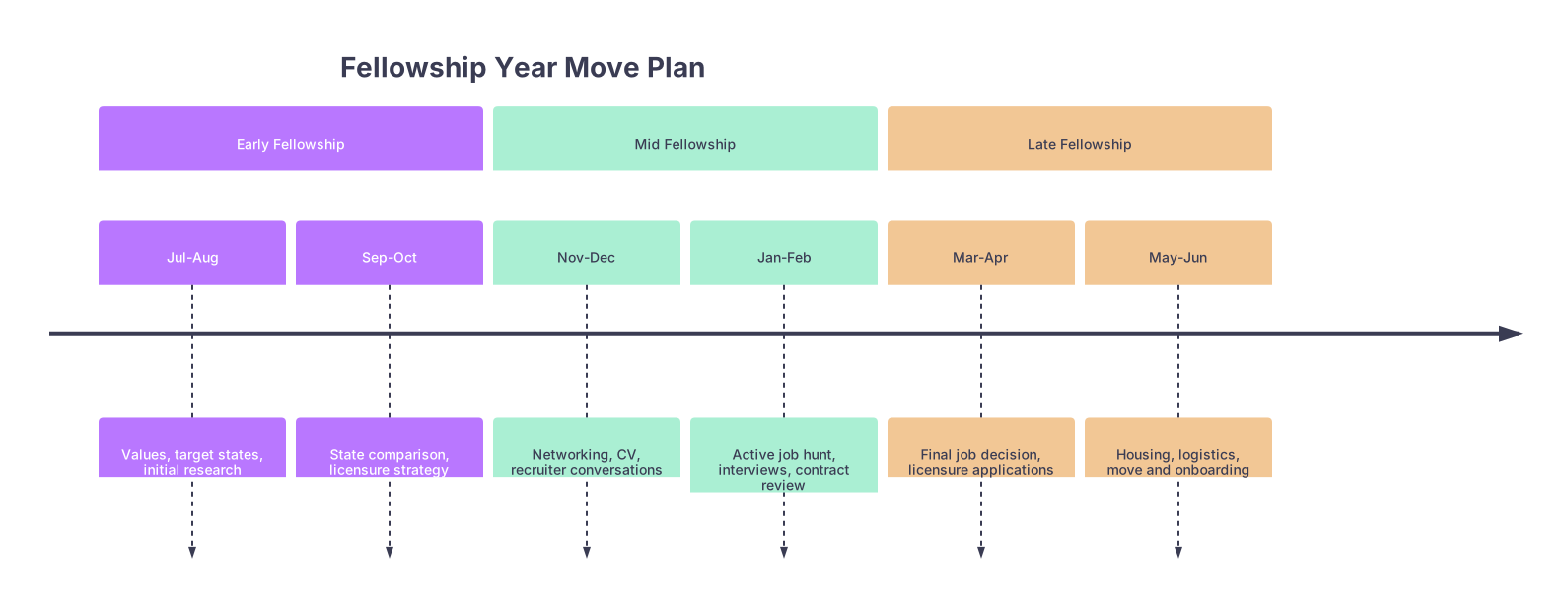
| Period | Event |
|---|---|
| Early Fellowship - Jul-Aug | Values, target states, initial research |
| Early Fellowship - Sep-Oct | State comparison, licensure strategy |
| Mid Fellowship - Nov-Dec | Networking, CV, recruiter conversations |
| Mid Fellowship - Jan-Feb | Active job hunt, interviews, contract review |
| Late Fellowship - Mar-Apr | Final job decision, licensure applications |
| Late Fellowship - May-Jun | Housing, logistics, move and onboarding |
At each phase, you should be doing different work:
- July–October: Decide where and why. No job applications yet; this is strategy.
- November–February: Build relationships and interview. Lock in the job and negotiate.
- March–June: Execute—licenses, housing, move, onboarding, family transitions.
If you start hunting in March, you are late. You will still land something, but it probably will not be your “best place to work” state.
July–August: Clarify Your “Better Practice State”
At this point you should be defining what “better” actually means for you, not scrolling Indeed.
In July (first 4 weeks):
Clarify non‑negotiables.
Sit down one evening and write 2 lists:- Must‑haves: e.g.
- No state income tax or low tax (TX, FL, TN, WA vs CA, NY, NJ)
- Reasonable call (q4 or better)
- Max 1 hospital to cover
- In‑network for your partner’s career
- Deal‑breakers:
- Rural call with solo coverage
- 1:1 supervision of 3 midlevels with your name on all charts
- Malpractice hell (certain counties, not just states)
- Must‑haves: e.g.
Shortlist 3–5 target states.
Use actual data, not vibes. Look at:- State income tax
- Cost of living
- Malpractice premiums
- Physician density and job market
- Scope‑of‑practice battles and legislative climate
Start a simple tracking table:
| State | Income Tax | Cost of Living | Malpractice Climate | Lifestyle Fit |
|---|---|---|---|---|
| Texas | None | Moderate | Favorable | Good |
| Florida | None | Moderate | Mixed | Good |
| Tennessee | None | Low | Favorable | Excellent |
| Washington | Moderate | High | Favorable | Fair |
| Colorado | Moderate | Moderate | Mixed | Excellent |
In August:
Drill to specific metros.
“Texas” is not a plan. “Austin vs San Antonio vs Dallas suburbs” is.- Pull actual job boards: your specialty society, PracticeLink, major systems (HCA, Kaiser, Mayo, etc.).
- Check hospital quality (CMS star ratings, Leapfrog, teaching vs community).
- Look at schooling if you have or want kids. Decide if you are OK with private or must have solid public schools.
Reality‑check with people already there.
Reach out to 2–3 attendings or recent grads in those states.Ask very specific questions:
- “How many patients per day to meet RVU expectations?”
- “Is weekend call actually in‑house or home with constant phone calls?”
- “Any counties or systems you would avoid?”
By end of August, you should have:
- 2–3 primary target metros
- 1–2 backup metros
- A clear picture of what you are optimizing for (money vs lifestyle vs academic profile)
September–October: Lay the Regulatory Groundwork
At this point you should be thinking about licenses and logistics, not yet contracts.
September: Licensure Strategy
Check each target state’s license timeline.
This is where many fellows get burned. For example:- Texas: often 4–6 months, can be longer.
- California: famously slow (6+ months).
- Compact states: can be faster if you qualify for the Interstate Medical Licensure Compact.
Decide if you need early licensure.
Two paths:- Path 1: License after you sign (lower cost risk; may delay start date).
- Path 2: Preemptive license in 1 high‑probability state (more cost now; gives you leverage and earlier start).
If all your top states are slow and not compact members, preemptive licensure in your top state is worth it.
Collect documents now.
You do not submit yet, you just assemble:- Medical school and residency/fellowship verifications
- USMLE/COMLEX transcripts
- References (know who you will ask)
- Any malpractice history or board actions documentation (if relevant)
October: Financial and Life Planning
- Run realistic post‑fellowship budgets by state.
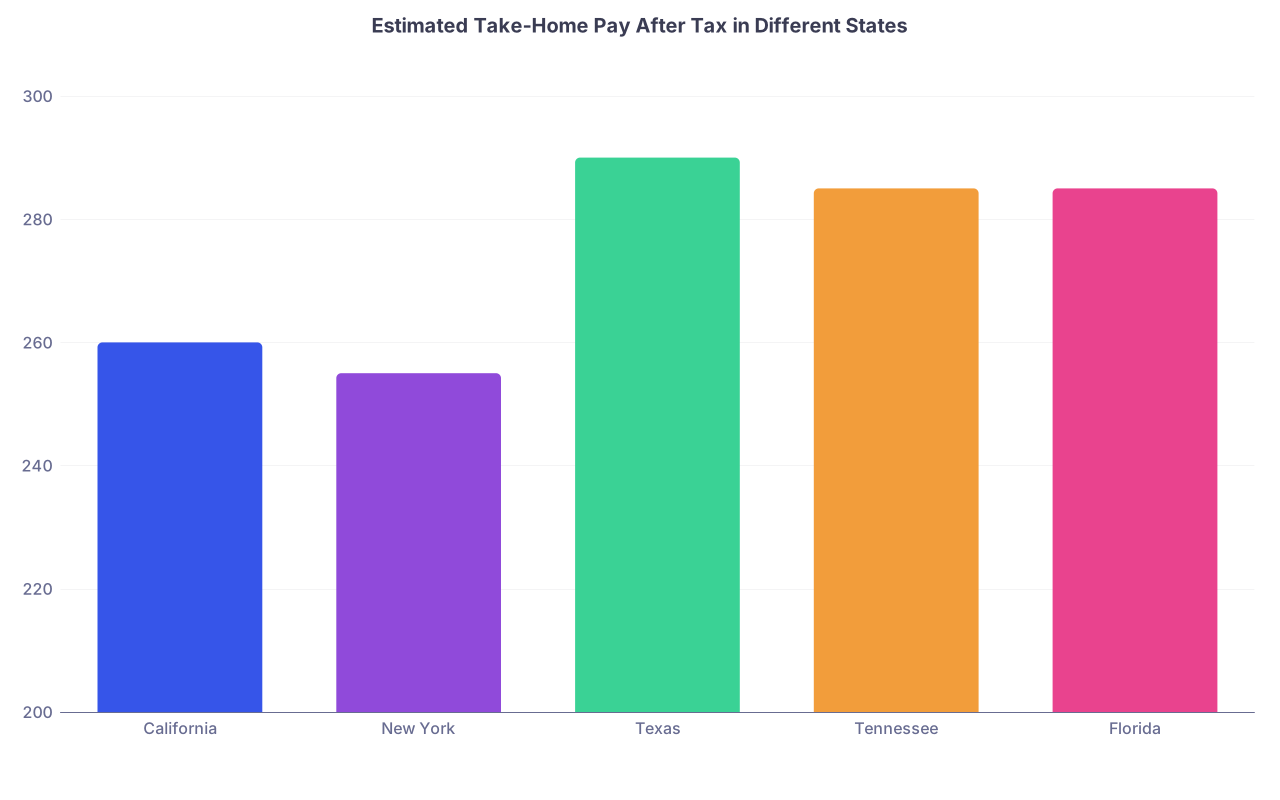
| Category | Value |
|---|---|
| California | 260 |
| New York | 255 |
| Texas | 290 |
| Tennessee | 285 |
| Florida | 285 |
(Assume same 400k salary; values are illustrative take‑home in thousands.)
Do a back‑of‑the‑envelope analysis:
- Income tax and typical effective rate
- Housing (buy vs rent for first 2–3 years)
- Loan payments under your repayment strategy
- Childcare if applicable
Decide: academic vs community vs private.
This matters more than people admit. At this point you should know:- Are you willing to take $30–80k less for academic branding and research time?
- Or do you want RVU‑heavy but better pay and more control in community practice?
- Are you comfortable in a hospital‑employed setting vs a true private group?
Once you know this, your job list in each state shrinks from “overwhelming” to “5 serious options.”
November–December: Build Your Job‑Hunt Infrastructure
Now you start preparing to actually hunt. Not yet clicking on every random posting.
November: Prep Your Professional Package
Update CV—fellowship version.
You should have:- Clear fellowship description with expected completion date
- Clean layout, 2–3 pages max
- Procedures/skills list if procedural specialty
- Publications, presentations, QI projects listed but not bloated
Draft a reusable cover email.
Not a generic paragraph. Something like:- One sentence about who you are (specialty, fellowship, training institutions)
- One sentence about what you are looking for (state, practice type, start date)
- One sentence explaining why that region/system interests you
- Attached CV
Start talking to 1–2 targeted recruiters.
Most physicians either over‑rely on recruiters or ignore them entirely. Both are mistakes.- Tell them: your states, your type of job, your no‑go items.
- Make them work: “I will not consider X, Y. I am open to A, B. Do not send me random rural positions.”
December: Quiet Networking and Early Interest
At this point you should be on the radar in your target regions.
Reach out to chairs and section chiefs directly.
One short email can open doors that never hit job boards.Example approach:
- “I am a [subspecialty] fellow at [institution], finishing June 30. Strong interest in settling in [city/region] long‑term. Would you be open to a brief conversation if you may have future hiring needs?”
Attend one key meeting with intent.
If your specialty conference falls in October/November, you go prepared:- Schedule coffee with folks from your target states.
- Drop by institutional booths and announce your timeline and regions.
Get your references lined up now.
You should know exactly which 2–3 attendings will write strong, prompt letters if required.
By end of December, you should have:
- A polished CV and cover email template
- 3–5 systems or groups aware that you exist
- 1–2 recruiters hunting in your preferred states
January–February: Active Job Search and Interviews
This is your heavy‑lift window. At this point you should be actively applying and interviewing.
January: Applications and Screening Interviews
Week 1–2 of January:
Send first wave of targeted applications.
- Focus on your top 2–3 metros and best‑fit practice type.
- 8–15 serious applications is enough to start. Not 50 scattershot submissions.
Track everything.
Create a simple spreadsheet:
- Institution / Group
- City, State
- Practice type (academic, hospital employed, private)
- Contact person
- Date applied
- Status (no response / screening / site interview / offer)
- Notes
Week 3–4 of January:
Do virtual interviews and screening calls.
By now you should be:- Clarifying call burden, schedule, compensation model.
- Quickly weeding out red flags (RVU targets that require 30–35 patients/day with minimal support, vague partnership terms, chronically understaffed units).
Pare down to 3–5 on‑site candidates.
Anything that looks mediocre on paper now will not magically improve in person.
February: Site Visits and Negotiation Positioning
February Weeks 1–4:
Schedule and attend on‑site interviews.
During the visit you should:- Ask front‑line nurses and APPs how physician turnover has been.
- Ask junior attendings what they wish they had known before signing.
- Get a feel for the town on your own time—commutes, neighborhoods, schools, traffic at 7 a.m.
Start building your comparison grid.
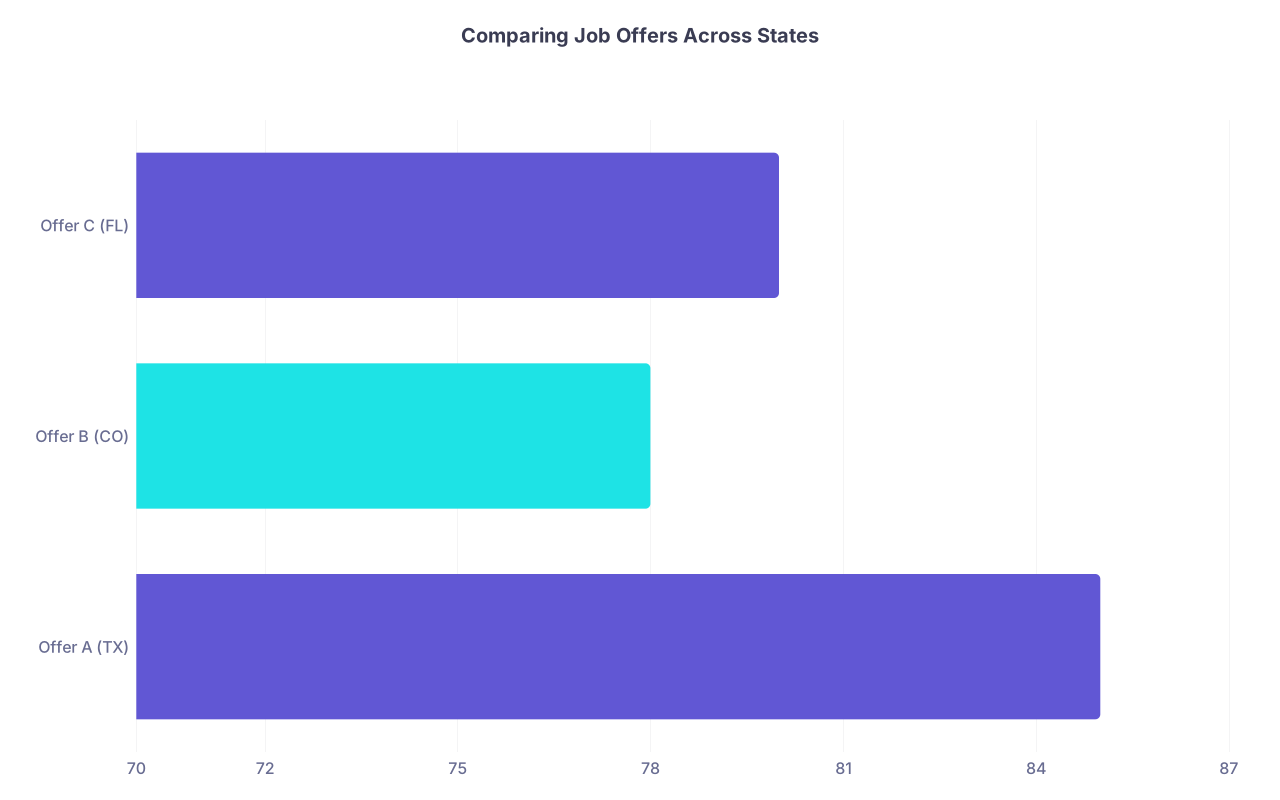
| Category | Value |
|---|---|
| Offer A (TX) | 85 |
| Offer B (CO) | 78 |
| Offer C (FL) | 80 |
(Score each offer 0–100 based on your priorities: comp, schedule, location, growth.)
- Clarify compensation structures in writing.
You should walk away from February knowing:
- Base salary year 1–3
- RVU or productivity expectations
- Call stipend or lack thereof
- Partnership track terms (buy‑in, timeline, governance)
- Non‑compete radius and duration
Do not rely on cheerful verbal assurances. Have HR or the group send a draft or at least a term sheet.
March–April: Lock the Job, Start the Licensure and Move Clock
At this point you should be moving from “exploring” to “committing.”
Early March: Decision and Contract Review
Week 1–2 of March:
Select your top 1–2 offers.
Use a brutal lens:- Will you tolerate this call schedule for 3–5 years?
- Does leadership seem competent and stable?
- Is the geographic location somewhere you would still want to live if the job changes?
Get a physician contract attorney.
Do not skip this and “just ask a colleague.” Pay for a real review.Ask the attorney to focus on:
- Non‑compete terms
- Termination clauses (for cause vs without cause notice periods)
- Tail coverage obligations
- Bonus and clawback language
Week 3–4 of March:
Negotiate deliberately, not timidly.
Reasonable asks:- Signing bonus increase or structured differently (e.g., split over 2 years to reduce repayment risk).
- Clear written call expectations.
- Protected time if you are doing research, admin, or teaching.
By end of March, you should have:
- Signed or nearly final contract for your chosen state
- Clear start date (typically Aug–Sept after fellowship)
April: Licenses and Credentialing Start Gun
Now the paperwork firehose turns on.
Submit state medical license application immediately.
Same week the contract is final. No delays.Start credentialing and payer enrollment.
You will get buried in forms:
- Hospital staff applications
- Insurance panels (Medicare, Medicaid, commercial)
- Background checks, immunization records
Nail down your exact start date.
Coordinate:- Fellowship end (June 30)
- Move window (July)
- Hospital orientation (often July/August set days)
- When they realistically expect you to start generating clinical revenue
May–June: Housing, Schools, and the Physical Move
At this point you should be executing, not still browsing Zillow “just for fun.”
May: Housing and Life Setup
Decide: rent vs buy for year 1.
My blunt advice: unless you know the city extremely well, rent for the first year. You will learn:- Which neighborhood actually matches your call and commute pattern
- How stable the job and group feel from the inside
- Whether you like the schools and lifestyle
Lock in a lease and move‑in date.
Aim for:- Lease start ~1–2 weeks before you move your family fully
- Enough buffer before your first day to unpack and fix small issues
If you have kids, confirm school enrollment and timing.
Check:- Enrollment deadlines
- Vaccination forms
- Special programs or support needs
Plan the physical move.
- Get 2–3 moving company quotes.
- Decide if you will do a partial move first (e.g., you move earlier solo) or all at once.
- Block out 5–7 days fully around the move. Do not assume you will “get some reading done” that week. You will not.
June: Final Month of Fellowship – Micro‑Timeline
Here is your last‑month, week‑by‑week guide.
Week 1 of June:
- Confirm:
- Start date and orientation with new employer
- License and credentialing status (push if anything is stalled)
- Give final notice to current landlord if applicable.
- Schedule utilities turnover for new place (electric, gas, internet).
Week 2 of June:
- Finish any remaining fellowship paperwork and logs.
- Nail down:
- Last clinic day
- Last call night
- Plan farewell meetings with mentors who actually mattered. Ask for:
- Final advice
- Future references
- Honest feedback
Week 3 of June:
- Do a realistic packing sprint.
2 evenings to sort “donate / trash / keep.” Do not move junk across states. - Prepare a “first 72 hours” box:
- Basic kitchen items
- Linens
- Work clothes for your first week
- Important documents (licenses, board certificates, passport, contracts)
Week 4 of June (final week): This is where days matter.
Day‑by‑day:
Day −5 to −4 before move
- Movers come for non‑essentials.
- Clean and do final walk‑through of your fellowship housing if required.
Day −3
- Last clinical day of fellowship.
- Return badges, pagers, equipment.
Day −2
- Goodbye rounds: mentors, nurses, staff who helped you survive.
- Get personal emails / LinkedIn contacts—not just hospital addresses.
Day −1
- Final night in fellowship city. Keep it low‑key. You are about to drive or fly and then start a new job. No hangovers.
Day 0 – Travel Day
- Travel to new state.
- Check into temporary or permanent housing.
Day +1
- Walk the neighborhood. Find:
- Grocery
- Pharmacy
- Nearest urgent care / ED
- Check internet, utilities, and basic safety issues (locks, smoke detectors).
- Walk the neighborhood. Find:
Day +2 to +3
- Begin unpacking in prioritized order: bedroom, kitchen, work area.
- Drive to your new hospital or clinic once without pressure. Learn the route and parking.
Day +4 to +7
- Attend HR orientation if it falls this week.
- Meet your direct supervisor and clinic/hospital admin.
- Clarify your first 4 weeks’ schedule in detail.
Post‑Move: First 90 Days Guardrails
You planned the move around a better practice state. Now do not sabotage it with poor boundaries.
In the first 3 months:
Say yes strategically.
You can help and be collegial without signing up for every committee and extra shift.Protect at least 1 full day off weekly.
In more than one “great” practice state I have watched new hires quietly drift into 6‑day weeks and then wonder why life still feels bad.Track your actual schedule and workload vs what was promised.
If there is drift, address it early while everyone still remembers the agreements.
Key Takeaways
- The decision to move to a better practice state is won or lost early—by October you should already know your target metros and practice type.
- Job search intensity belongs in January–February, with contracts and licensure locked by March–April; leaving it until spring is how you end up in the wrong job.
- Treat May–June as execution mode: housing, logistics, and a tightly controlled final‑month and move‑week timeline so you start your new role clear‑headed instead of exhausted and disorganized.


