

The biggest mistake doctors make when moving their families abroad is treating it like a job change instead of a multi‑year life project.
You’re not just changing hospitals. You’re rebuilding your finances, your kid’s education, your partner’s career, and your licensure from the ground up. That demands a timeline. A ruthless, structured one.
Here’s how I’d lay it out if we were sitting with a calendar and a pot of coffee.
18–24 Months Before the Move: Reality Check & Direction
At this point you should not be browsing Instagram expat reels. You should be doing a cold, data‑driven assessment.
1. Decide why you’re moving first, where second
You anchor the timeline around your primary driver:
- Higher pay and lower workload?
- Academic opportunity or research?
- Better education and safety for kids?
- Escape a broken health system or burnout?
Based on that, your short list of countries changes dramatically.
| Country | Main Draw for Doctors | Typical Time to Licensing | Language Requirement |
|---|---|---|---|
| Canada | Work-life balance, pay | 1–3 years | English/French |
| Australia | Pay, lifestyle | 6–18 months | English |
| UK | Training pathways, NHS | 6–18 months | English |
| UAE/Qatar | Tax-free income | 4–12 months | English (Arabic a plus) |
| Germany | Stability, social system | 1–3 years | German (B2–C1) |
If your key priority is schooling for three kids, London and Toronto look different than Doha. Be honest.
2. Screen destinations like a consultant, not a tourist
At this point you should:
- Pull hard data: OECD doctor salaries, cost‑of‑living indexes, school fees, tax brackets.
- Check visa categories specifically for physicians and skilled workers.
- Look at recognition of your current specialty training and board certification.
Don’t rely on recruiters’ promises. Read the medical council pages yourself. They’re painful, but they’re gospel.
15–18 Months Before: Country & Licensing Path Locked
By now you should have picked a primary target country and a backup.
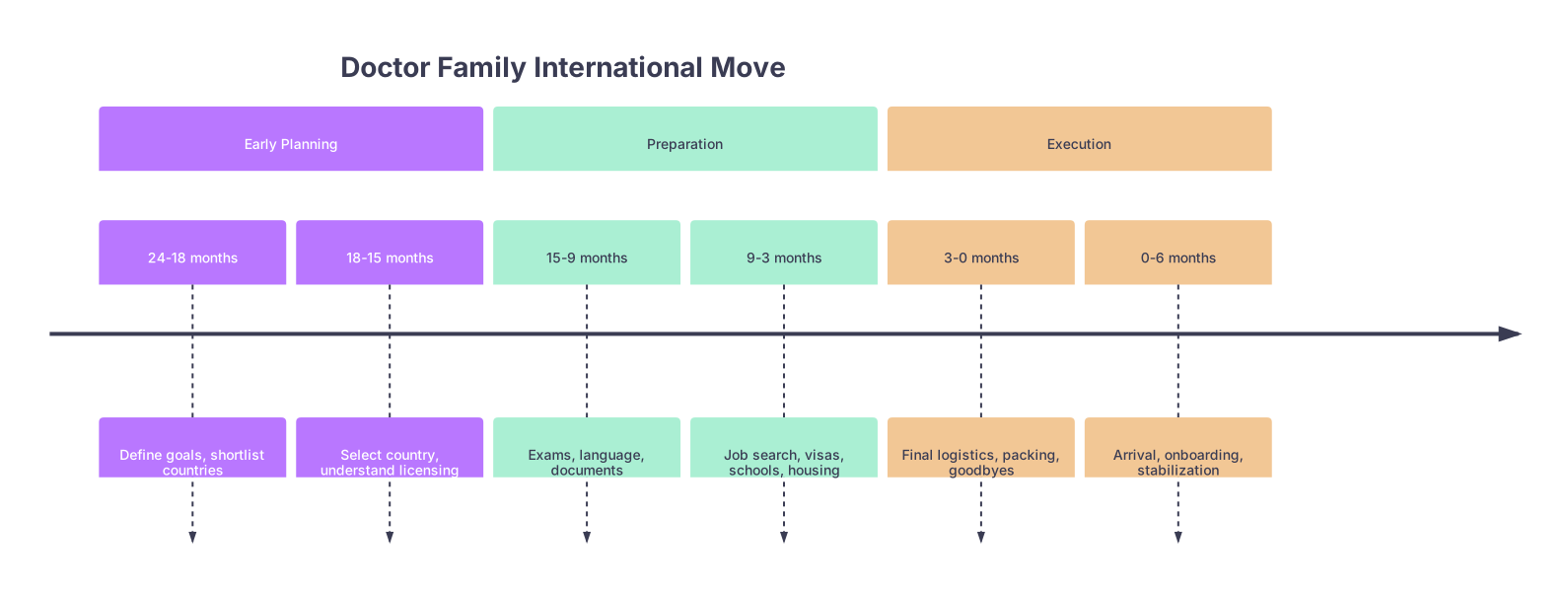
| Period | Event |
|---|---|
| Early Planning - 24-18 months | Define goals, shortlist countries |
| Early Planning - 18-15 months | Select country, understand licensing |
| Preparation - 15-9 months | Exams, language, documents |
| Preparation - 9-3 months | Job search, visas, schools, housing |
| Execution - 3-0 months | Final logistics, packing, goodbyes |
| Execution - 0-6 months | Arrival, onboarding, stabilization |
At this point you should:
Lock in licensing route
- GMC (UK), AHPRA (Australia), CPSO/College equivalents (Canada), DHA/HAAD (UAE), etc.
- Identify whether you’re:
- A “recognized specialist”
- A “non‑recognized specialist” needing bridging
- Or essentially starting again as a trainee
Map required exams
- UK: PLAB or sponsorship routes; maybe MRCP/MRCS etc.
- Canada: MCCQE1, NAC, plus often specialty college exams.
- US (if that’s your target): USMLE Steps and residency/fellowship matching (a whole separate beast).
- Germany/Scandinavia: Often language certification + knowledge exam.
Commit to language level
- For non‑English destinations, at this point you should start formal language training if required (B2 or C1 for Germany, often C1 medical).
Create a licensing Gantt chart on your wall. Not as decoration—so you stop underestimating how long this takes.
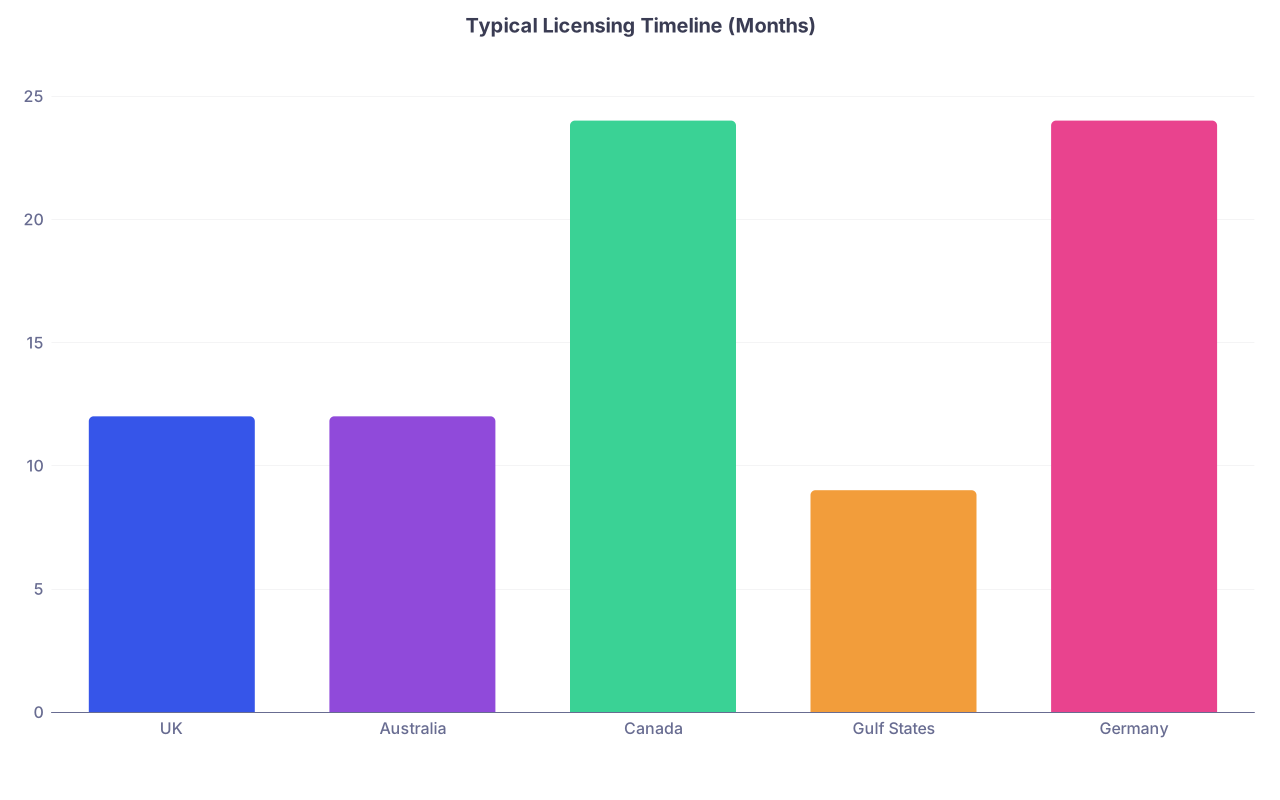
| Category | Value |
|---|---|
| UK | 12 |
| Australia | 12 |
| Canada | 24 |
| Gulf States | 9 |
| Germany | 24 |
12–15 Months Before: Exams, Documents, and Family Reality
At this point you should be in execution mode, not vague planning.
1. Start exam prep with a backward calendar
Take the exam window and work backwards:
- Block weekly study hours (realistically 6–10 per week if you're full-time clinical).
- Register early—many exams fill 4–6 months in advance.
- Do at least one full mock under exam conditions by the halfway point.
If you’ve got call, kids, and a partner with a job, you don’t “find time.” You buy it—with paid help, reduced shifts, or using saved vacation.
2. Start the paper chase
You want to get ahead of the most annoying delays: other people’s paperwork.
At this point you should request:
- Medical school transcripts and degree verification
- Internship/house officer certificates
- Specialist training completion letters
- Good standing certificates from all medical councils you’ve ever been registered with
- Work references on official letterhead (with precise dates and positions)
Many of these take 4–12 weeks, especially if your original school is slow or abroad.
Scan and store everything in a well‑named cloud folder. You will not remember which “certificate_final.pdf” is which a year from now.
3. Family alignment discussions
I’ve seen this part blown off more times than I can count, then explode 3 months before the move.
At this point you should:
- Sit with your partner and map:
- Their career options in the destination country
- Whether they can work at all on your visa
- Childcare realities (cost, availability, opening hours)
- Talk to older kids honestly:
- What are you asking them to leave?
- How long are you committing to stay (minimum)?
Do not promise “we can always come back in a year” unless you’ve actually budgeted for the financial hit of a failed relocation.
9–12 Months Before: Job Hunt & Shortlist Cities
By now, exams should be booked and documents mostly in process. This phase is about jobs and geography.
1. Decide: job first or license first?
Different countries flip this:
- Gulf states: Job offer often precedes full licensing.
- UK: You can often get a job contingent on GMC registration.
- Canada/Australia: Licensing and college recognition heavily influence job chances, but employers may support pathways.
At this point you should:
- Start contacting recruiters, but treat them as one source, not your only one.
- Apply directly to hospital groups and larger systems.
- Join local specialty Facebook/WhatsApp/Telegram groups where foreign doctors actually talk unfiltered.
2. Shortlist specific cities/regions
You’re not moving to “Australia.” You’re choosing between Perth, Melbourne, or a regional hospital in Queensland with a very different lifestyle.
For each city, you should check:
- Typical rent for a 2–3 bedroom in areas with decent schools
- Commute times from those areas to your likely workplaces
- Crime rates and expat communities
- Public vs. private schools, fees, and waitlists
Create a simple comparison table for your top 3 locations.
| Factor | City A | City B | City C |
|---|---|---|---|
| Rent (3BR) | High | Medium | Low |
| School Quality | High | Medium | High |
| Commute | 20 min | 45 min | 30 min |
| Expat Network | Strong | Moderate | Weak |
3. Start financial modeling
At this point you should do a sober, line‑by‑line monthly budget for the new country:
- Net salary after tax (don’t guess—use local calculators).
- Rent, utilities, groceries, transport, school fees, health insurance (if needed), childcare, pension contributions.
Most doctors overestimate how “rich” they’ll feel abroad, especially in high‑cost cities. Good on paper. Tight in reality.
6–9 Months Before: Offers, Visas, and Schooling
This is when the move turns from theoretical to inevitable.
1. Secure a job offer (or at least a written conditional offer)
At this point you should:
- Have had interviews (video or in‑person) with at least 2–3 institutions.
- Negotiate:
- Starting salary and grade
- Relocation support (flights, first months’ accommodation, shipping allowance)
- Continuing education budget
- On‑call commitments and weekend load
- Get everything in writing. Verbal reassurances about “flexible scheduling” are worthless.
If you have children, guard your evenings/weekends more aggressively. Some systems will happily eat every unsocial hour you own.
2. Start visa and residency application
As soon as that offer is signed, the clock starts.
At this point you should:
- List all visa steps with expected durations: police clearances, medicals, biometrics, translations, apostilles.
- Book appointments early for any biometrics/embassy visits; those slots vanish quickly.
- Keep a single master file with:
- Passport scans for all family members
- Marriage and birth certificates (with certified translations if required)
- Proof of funds if needed
Expect every document to be rejected at least once for some formatting issue. Build that into your stress budget.
3. School and childcare applications
If you’re moving with school‑age kids, this is non‑negotiable.
At this point you should:
- Identify catchment areas for public schools or apply to international/private schools.
- Ask HR or local colleagues where people actually send their kids (not just the glossy brochure option).
- Confirm:
- Term start dates
- Required vaccination records
- Placement tests or language support options
This step often determines where you’ll live more than your hospital does.
3–6 Months Before: Housing, Logistics, and Exit Strategy
You’re close enough now that every month needs a checklist.
1. Housing plan
At this point you should decide:
- First 1–3 months in:
- Temporary housing (airbnb/serviced apartments/hospital‑provided flat)
- Long term:
- Renting vs. buying (answer: renting, at least for the first year, unless you’re absurdly sure)
You should:
- Confirm with HR if they offer temporary accommodation or relocation agents.
- Research neighborhoods linked to your chosen schools.
- Understand rental requirements: deposits, proof of income, guarantors, references.
2. What goes, what stays, what dies
You will not ship your entire life. Or you’ll pay dearly for the privilege.
At this point you should:
- Make a 3‑column list:
- Ship (sentimental, expensive to replace, or hard to find abroad)
- Sell (furniture, bulky appliances, extra car)
- Store/donate/trash
- Get quotes from at least 2–3 international movers.
- Decide on:
- Air freight essentials vs. slower sea freight
- How long you can survive with suitcases only
Most doctors who “ship everything” regret it by month two, standing in a tiny apartment filled with furniture that doesn’t fit.
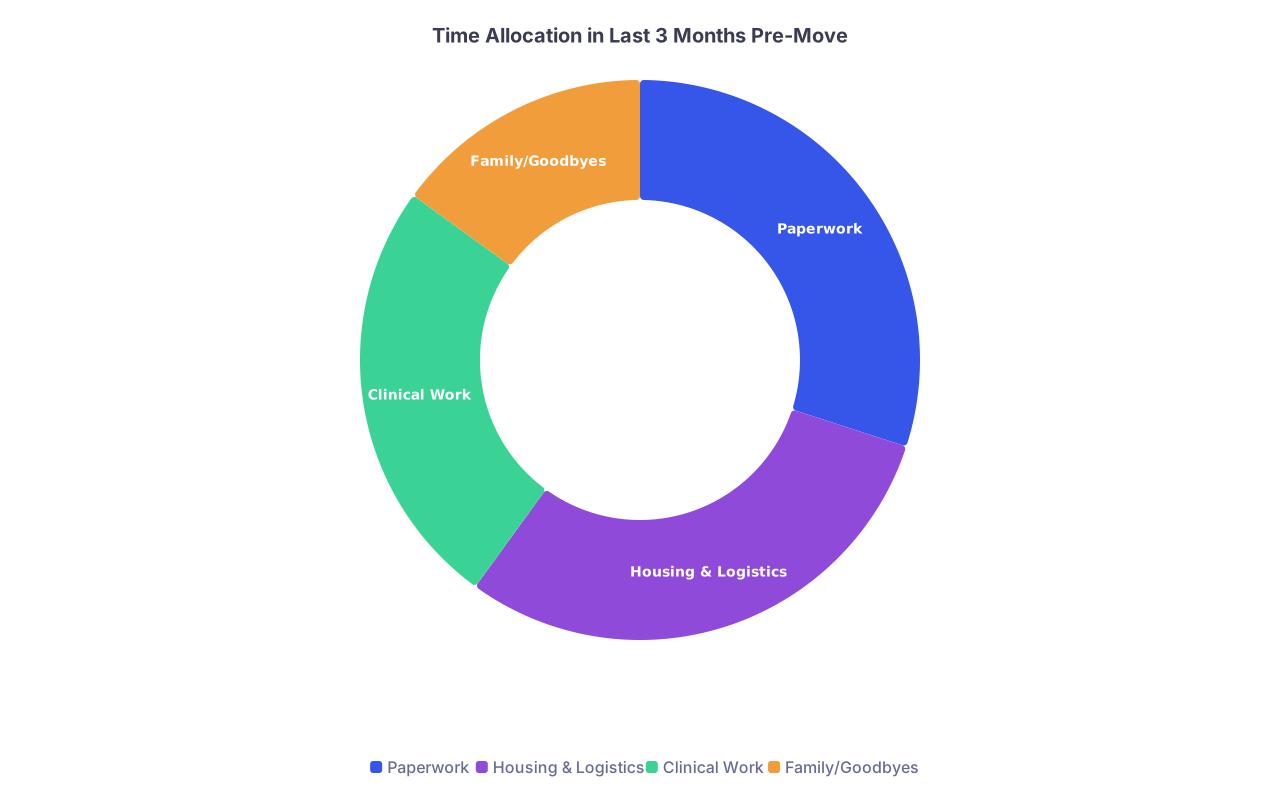
| Category | Value |
|---|---|
| Paperwork | 30 |
| Housing & Logistics | 30 |
| Clinical Work | 25 |
| Family/Goodbyes | 15 |
3. Tidy up home‑country loose ends
At this point you should:
- Decide what to do with:
- House/apartment (rent it out, sell it, or keep empty)
- Car(s)
- Update wills and guardianship plans, especially if crossing very different legal systems.
- Restructure banking:
- Keep at least one active account in home country.
- Start exploring international bank options or destination‑country banks with remote opening.
And yes, tell your indemnity provider, professional college, and tax authorities you are leaving and how you’ll be working.
1–3 Months Before: Countdown and Exit from Current Role
Now you’re living almost in two countries at once. Chaos is normal—but controllable.
1. Give formal notice properly
At this point you should:
- Resign in writing with required notice, often 3 months for senior roles.
- Offer a handover plan:
- Who takes your clinics?
- What happens to long‑term patients?
- Stop volunteering for new, long projects “because you feel bad.” You’re leaving. Let someone else own the 12‑month QI pilot.
2. Final medical and legal admin
You should:
- Download and secure your CPD/CME records.
- Get official proof of employment and roles with signatures and stamps.
- Close out any local medico‑legal or complaint processes (you do not want unresolved cases haunting a new licensing application later).
3. Emotional and kid‑level logistics
At this point you should:
- Let teachers know about the move and ask for transition reports and recommendations.
- Arrange farewell events that actually let kids say goodbye, not just a rushed last day.
- Create a simple story for younger children about why and for how long you’re going.
Denial is not a strategy. Kids cope better when they’re prepared, not when they’re “protected” until the last minute.
Final 2–4 Weeks: Packing, Shutdown, and Departure
This is the intense but short sprint. Treat it like prepping for boards with a very firm exam date.
At this point you should:
- Confirm:
- Flight dates and baggage allowance
- Temporary housing booking
- Airport pickup (ideally from hospital or relocation service)
- Separate:
- Suitcase essentials for 4–6 weeks (documents, work clothes, kid essentials, key electronics)
- Shipped items that may not appear for 2–3 months
Practical checklist:
- Back up all digital files and photos.
- Cancel utilities and internet with final meter readings noted and photographed.
- Redirect mail or set up someone to monitor your old address.
And yes, keep all crucial documents in your carry‑on: passports, original diplomas, certificates, contracts. Never in checked baggage. Ever.
Arrival: First 1–3 Months On the Ground
The move isn’t “over” when the plane lands. It’s halftime.

Week 1–2: Administrative blitz
At this point you should:
- Get local SIM cards and basic banking sorted.
- Register your address where required (many European countries).
- Attend any hospital onboarding and mandatory training ASAP—don’t let bureaucracy delay your pay start.
Week 3–8: Settling into work and school
You should:
- Keep expectations low for your own performance at work initially. You’re learning a new system, EMR, and culture.
- Debrief with your partner weekly:
- What’s working?
- What’s unexpectedly hard?
- Support kids through the first shaky weeks of new schools. Behavioral wobble is normal.
International moves break even emotionally around the 6–12 month mark. Before that, everything feels harder than it “should.”
Month 3–6: Adjust, don’t drift
At this point you should:
- Revisit your original reasons for moving. Are they actually improving?
- Adjust:
- Housing if the commute is killing you.
- School if it’s a poor fit.
- Work schedule if possible.
Do not lock in a 10‑year mortgage or permanent residency decision in the first 90 days. Give your brain time to recalibrate.
Quick Visual: Year‑Before Move at a Glance
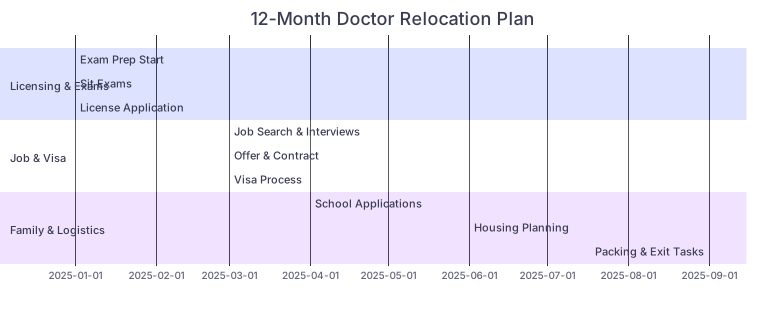
| Task | Details |
|---|---|
| Licensing & Exams: Exam Prep Start | a1, 2025-01, 5m |
| Licensing & Exams: Sit Exams | a2, after a1, 1m |
| Licensing & Exams: License Application | a3, after a2, 4m |
| Job & Visa: Job Search & Interviews | b1, 2025-03, 4m |
| Job & Visa: Offer & Contract | b2, after b1, 1m |
| Job & Visa: Visa Process | b3, after b2, 4m |
| Family & Logistics: School Applications | c1, 2025-04, 3m |
| Family & Logistics: Housing Planning | c2, 2025-06, 3m |
| Family & Logistics: Packing & Exit Tasks | c3, 2025-09, 3m |


The Three Things That Actually Decide If This Works
Let me strip it down.
- Start the licensing and exam process 18–24 months out. Everything else depends on it, and it always takes longer than the brochure says.
- Plan the family move as seriously as the job move. Schools, partner’s career, and housing will affect your daily life more than the name on your hospital badge.
- Treat the first 6–12 months abroad as an adjustment phase, not a verdict. Build in financial and emotional buffer so you can adapt instead of panicking.
Follow the timeline with discipline and you turn a chaotic leap into a controlled, staged transition. That’s how doctors move their families internationally without blowing up their careers—or their lives.


