
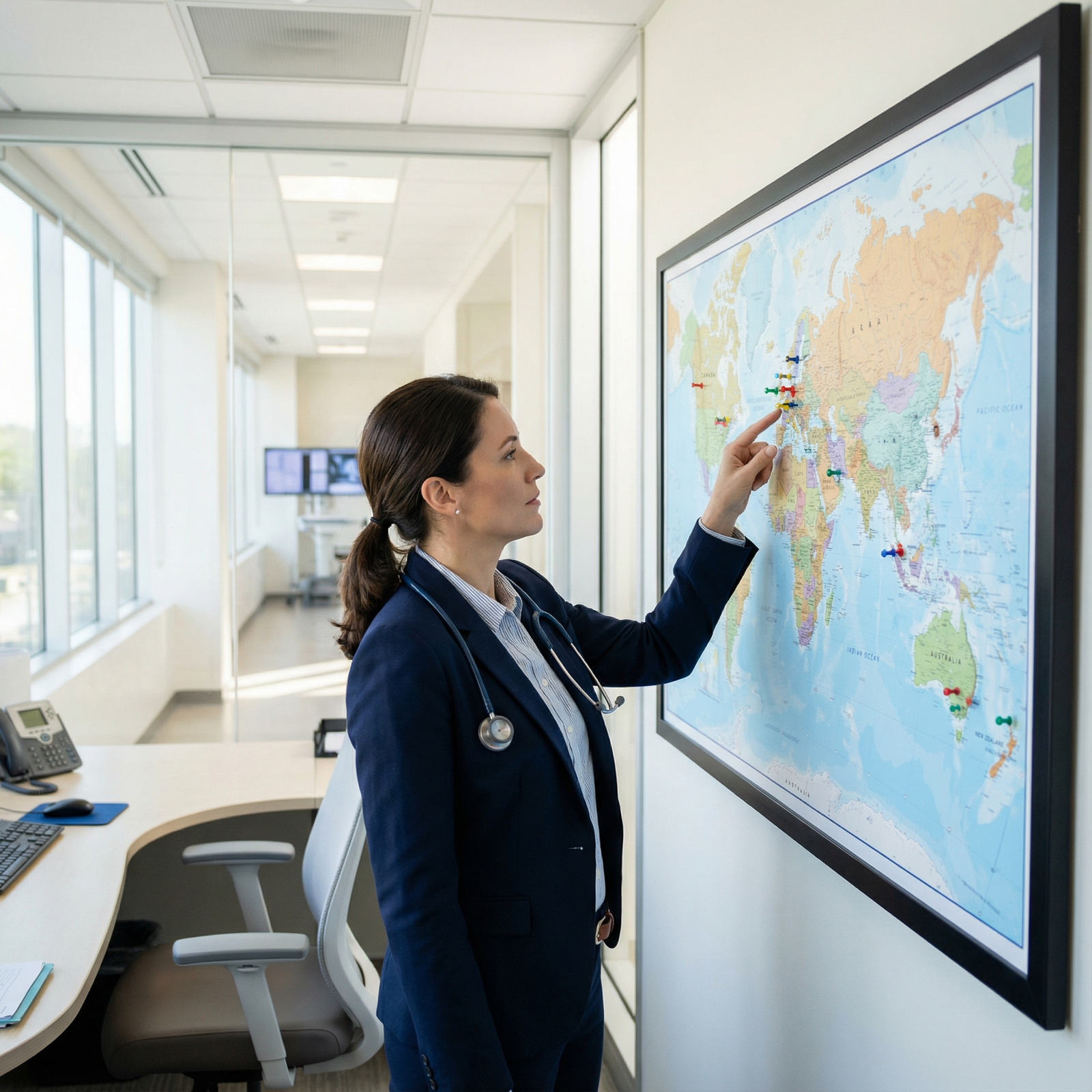
The usual “top places for doctors” lists are useless for physician‑scientists.
They talk about salaries, beaches, and nightlife. You care about something very different: where you can run serious science and still see patients without your life falling apart. That list is much shorter, and the trade‑offs are brutal.
Let me walk you through where the real global hubs are if you want to live at the bench and at the bedside—and not be mediocre at both.
What Actually Makes a Good Hub for Physician‑Scientists?
Before we name cities and institutions, we need to get the criteria right. This is where people make naive choices. They follow reputation or lifestyle and then discover there is no protected research time, no infrastructure, and no one who cares that their Western blot worked.
A proper physician‑scientist hub needs four pillars:
Bi‑directional integration of clinic and lab
Physical and functional. You want your clinic one building away from your lab, not 40 minutes across town. Shared cores. Clinician‑scientist leadership. Clinical problems feeding research questions and back again.Serious infrastructure and funding density
Grants at scale (NIH, EU Horizon, Wellcome, CIHR, etc.), high‑end cores (genomics, imaging, single‑cell, proteomics, data science), and robust internal bridge funding so one bad cycle does not kill your lab.Protected time that is real, not fictional
If “80% research / 20% clinical” still means full clinic templates plus call, you are being scammed. The strongest hubs have established MD/PhD tracks, K‑to‑R pipelines, and service structures that insulate serious investigators.Critical mass of people like you
A single heroic clinician‑scientist in a department is a red flag. You want clusters: MD/PhDs, translational MDs, PhD collaborators, plus mentoring trees where people have actually gotten K/R/HHMI/ERC‑type funding while on faculty.
I also look at:
- Visa and immigration sanity for international recruits
- English‑language functionality for day‑to‑day work
- Availability of strong PhD/postdoc talent pools
- Data access: EMR, biobanks, registries, and consent infrastructure
- Culture: Is translational work respected or treated as “soft science”?
With that frame, let us go continent by continent.
United States: Still the Deepest Bench for Physician‑Scientists
The U.S. has plenty of broken parts—billing insanity, RVU pressure, opaque promotion criteria—but if you want maximal resources for running a serious program while seeing patients, it is still the densest ecosystem.
Top U.S. Hubs Where Bench–Bedside Is Actually Supported
| Hub / City | Flagship Institutions | Notable Strengths |
|---|---|---|
| Boston | MGH, Brigham, Dana-Farber, HMS | Oncology, immunology, genetics |
| San Francisco Bay | UCSF, Stanford | Neuroscience, genomics, AI/health |
| New York City | MSK, Weill Cornell, Columbia | Oncology, cardiology, imaging |
| Houston | MD Anderson, Baylor, TMC | Cancer, cardiothoracic, space med |
| Philadelphia | Penn, CHOP | Cell therapy, gene therapy, CV |
Boston: The Prototype Global Hub
If you want the highest concentration of physician‑scientists per square block, it is Boston–Cambridge.
Key ecosystem elements:
- Harvard Medical School + hospitals: MGH, Brigham, Beth Israel, Boston Children’s, Dana‑Farber. Hundreds of MD/PhDs on faculty. Established tracks for physician‑scientists, usually explicit 70–80% protected time early on.
- MIT + Broad Institute + Whitehead: The translational pipeline is absurdly short. You can run a clinic in inflammatory bowel disease at MGH and collaborate with Broad on single‑cell atlases of gut immune cells without leaving the subway line.
- Funding and cores: Every technique you can think of—CRISPR screens, high‑parameter flow, advanced imaging, functional genomics—has a well‑run core. You do not spend your life fighting to buy a second‑hand confocal.
Where Boston shines for the bench‑bedside balance:
- Clinician‑scientist roles are normalized. You are not the odd one out.
- Some departments protect young investigators from heavy service, with explicit reduced call pools and templated clinic schedules.
- Massive patient volume. It is trivial to build a rare‑disease cohort or accrue to trials.
The downside: competition is brutal, cost of living is insane, and if you are not self‑directed and thick‑skinned, you will get flattened.
San Francisco Bay Area: Wet Lab Meets Tech
The Bay Area is a good answer if your science is computational, data‑rich, or heavily interface‑focused.
- UCSF: Pure health sciences campus with no undergrads, which changes the culture. Physician‑scientist pipelines (e.g., Bakar ImmunoX, Sandler Neurosciences) have thought carefully about protected time, K‑R transitions, and shared cores.
- Stanford: Strong med‑engineering links, especially for imaging, devices, and AI/ML applied to clinical data.
And around them: Genentech, Gilead, dozens of biotechs, and tech companies playing in health data. If you want to move fluidly between academia and biotech or co‑found a startup based on your lab’s discoveries, this is probably the top place on earth.
Clinical realities:
- The clinical load at UCSF and Stanford can be high in some divisions. If you want 75–80% protected time, you negotiate it before you sign, and you get it in writing.
- Payer mix and RVU pressure exist but are often buffered more than in community systems.
New York City: Density, Diversity, and Monster Oncology
NYC is less tightly interconnected institutionally than Boston, but the sheer mass is remarkable.
- Memorial Sloan Kettering (MSK): If you are an oncologist who wants an R01 and industry trials, this is one of the top 2–3 places in the world. The physician‑scientist track is formal, with reduced clinical time early and robust core support.
- Weill Cornell + Rockefeller + Hospital for Special Surgery: Tri‑institutional. Cross‑appointments are common. Good for immunology, musculoskeletal biology, structural biology, neurology, and beyond.
- Columbia / NYU / Mount Sinai: Each has serious translational credentials, especially in cardiology, neurology, and genomics (Sinai has been aggressive on big‑data EMR work).
Caveat: You must aggressively protect your research time here. NYC hospitals are under huge volume and financial pressure. I have seen junior faculty slowly accumulate more clinic sessions until “80% research” slipped to “maybe 50% if we are honest.”
Houston and Philadelphia: Quiet Powerhouses
Houston – Texas Medical Center
Largest medical complex in the world. MD Anderson alone is a behemoth for cancer trials, cell therapies, and immune‑oncology.
- Advantages: Massive patient numbers, especially in oncology and cardiothoracic. Serious NIH funding. Space is less constrained, labs can be physically bigger, and cost of living is better than coasts.
- Physician‑scientist tracks at MD Anderson, Baylor, and others are real, not aspirational.
Philadelphia – Penn/CHOP
If you are interested in cell therapy, gene therapy, or cardiovascular translational science, Penn is about as good as it gets.
- Penn and CHOP run pipelines from vector design to first‑in‑human trials.
- You can see your pediatric immunology clinic in the same building complex where your CAR‑T construct is being developed.
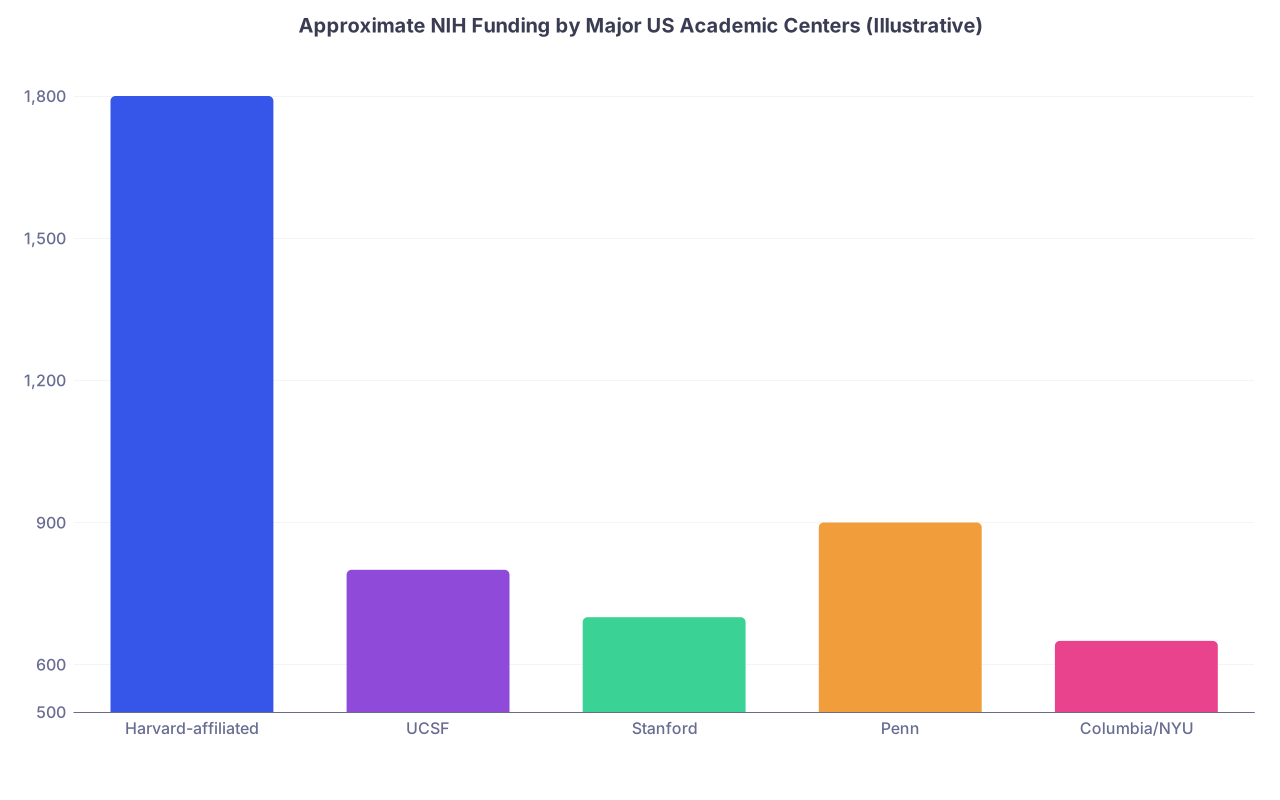
| Category | Value |
|---|---|
| Harvard-affiliated | 1800 |
| UCSF | 800 |
| Stanford | 700 |
| Penn | 900 |
| Columbia/NYU | 650 |
Europe: Slower, Saner, and Increasingly Competitive for Translational Work
Europe’s culture is different. Less RVU insanity, more stable salaries, heavier bureaucracy, and more rigid training structures. The upside: the physician‑scientist pathway is often integrated from the start, particularly in some countries.
United Kingdom: London and Cambridge–Oxford Corridors
The NHS is both your biggest asset and your biggest bottleneck.
London
- Major hubs: UCL, Imperial, King’s, and their associated hospitals (UCLH, Royal Free, Hammersmith, Guy’s/St Thomas’, etc.).
- Strengths: Neuroscience, imaging, infectious diseases, global health, cardiovascular medicine, and increasingly genomics (Genomics England, 100k Genomes Project).
Pros for bench–bedside:
- National datasets and registries that U.S. researchers would kill for. Longitudinal EMR, more uniform coding, and national cohorts.
- Consultant posts often include built‑in academic sessions. Some are explicitly 50/50 clinical–academic.
Cons:
- Grant culture is different. Fewer huge individual R01‑equivalent pots, more consortia, and more EU/Horizon‑style collaborative work (post‑Brexit, this is messier).
- Pay is lower than U.S. academic positions and London is not cheap.
Cambridge / Oxford
These are smaller ecosystems but excellent if you want highly focused, deep scientific work with clinical translation.
- Cambridge: Addenbrooke’s + MRC + Wellcome Sanger Institute nearby. Great for genetics, stem cell biology, immunology.
- Oxford: Strong in cardiovascular, metabolism, infectious disease, and population health (e.g., UK Biobank was designed here).
Culture is more “scientist who also sees patients” than “clinician who also runs a lab”. You must be comfortable leaning hard into the science.
Continental Europe: Nordic Model, German Powerhouses, French and Dutch Sweet Spots
Nordic Countries (Sweden, Denmark, Finland, Norway)
They punch above their weight scientifically, particularly in epidemiology, registry‑based research, and certain clinical subspecialties.
- Sweden (Karolinska Institutet): Strong for immunology, inflammation, epidemiology, and neurosciences. Physician‑scientist pathways exist but can be prolonged and bureaucratic.
- Denmark (Copenhagen, Aarhus): Excellent for metabolism, cardiovascular disease, and psych epidemiology, with gorgeous national registries.
The registry culture is a dream if your work is data‑driven. You can link birth records, prescriptions, hospital stays, and mortality—with appropriate approvals—in a way U.S. systems can barely imagine.
Downside: smaller English‑speaking networks, slower promotion, and sometimes a clearer division between “research” and “clinical” job lines.
Germany
- Hubs: Heidelberg, Charité Berlin, Munich (LMU/TUM), Hamburg, Cologne.
- Strengths: Oncology, immunology, neurology, imaging, and surgery.
Physician‑scientist training programs (Clinician Scientist Programs / Integrated Clinician Scientist Tracks) have been expanded with DFG funding. That said, clinical workloads can still overwhelm research time if your department leadership is old‑school service‑oriented.
Netherlands
- Amsterdam UMC, Erasmus MC (Rotterdam), UMC Utrecht are all serious translational centers.
- Pros: Very strong trial infrastructure, pragmatic RCTs, public health, and cardiovascular medicine. English is effectively the working language in many labs.
- The Dutch are typically better than average at giving you structured research time carved into contracts.
Canada and Australia: High‑Quality, Slightly Leaner Ecosystems
Canada and Australia are often underrated in these conversations. They do not have the raw funding mass of the NIH or the density of Boston, but they provide solid infrastructure, less insane hours, and good integration of academic roles.
Canada: Toronto, Montreal, Vancouver
Toronto
- Institutions: University of Toronto, UHN (Toronto General, Princess Margaret), SickKids, Sunnybrook.
- Strengths: Transplant, cardiology, oncology, pediatrics, regenerative medicine, and health services research.
The model:
- Academic clinician‑scientist roles with defined “protected time” (often 50–75%).
- CIHR and provincial grants are competitive but not as cut‑throat as NIH; internal hospital foundations can be surprisingly generous.
Montreal / Vancouver
- Montreal: McGill and Université de Montréal have respectable translational programs, especially in neurology, infectious disease, and global health.
- Vancouver: UBC has grown quickly, with strong oncology, respiratory, and population health institutes.
Downsides: funding is more limited, making very capital‑intensive labs harder to sustain without international collaborations. But for a balanced career where you are not crushed by RVUs, this is a reasonable trade.
Australia: Melbourne and Sydney
Melbourne
- Hubs: Peter MacCallum Cancer Centre, Walter and Eliza Hall Institute (WEHI), Royal Melbourne, St Vincent’s, Monash.
- Very strong in oncology, immunology, and infectious disease.
Sydney
- Hubs: Garvan Institute, Westmead, Royal Prince Alfred, UNSW/USyd networks.
Clinical–academic posts in Australia often have clearly demarcated clinical FTE and academic FTE. The catch: those posts are limited and highly competitive, and some fields are still skewed toward service.
Asia-Pacific: Massive Growth, Select Hubs Ready for Serious Translational Work
Asia is heterogeneous. Some places are still building research depth, others are already global hubs. The main constraint for many Western‑trained MD/PhDs is language and local licensure, but if you clear those, the opportunities are substantial.
Singapore: Small Country, Big Translational Ambition
Singapore is a classic “boutique hub” for physician‑scientists.
- Institutions: Duke‑NUS, National University of Singapore (NUS), A*STAR, National University Hospital (NUH), Singapore General Hospital (SGH).
- Focus areas: Cancer, infectious disease, regenerative medicine, bioengineering, data science.
What works well:
- Integrated campus design: lab and clinic literally across courtyards.
- Generous startup packages and competitive intramural funding for strategic recruits.
- Clear government support for translational and industry collaboration.
Downsides: It is small—collaborative networks are tight, but fewer institutions mean fewer alternative landing spots if a particular department does not fit.
Japan and South Korea: Strong in Basic Science, Uneven in Protected Time
Japan (Tokyo, Osaka, Kyoto)
- Tremendous strengths in stem cells (Kyoto), oncology, and imaging.
- The physician‑scientist pathway can be rigid. Seniority matters. Language is a major barrier if you expect to run clinics.
South Korea (Seoul)
- Seoul National University, Asan, Samsung Medical Center: all have serious translational efforts.
- Very high clinical volume, very high expectations; getting real protected time is still a fight in many departments.
These can be outstanding if you are locally trained with language fluency and have internal mentors who already carved out space. Harder as an outsider.
Emerging Hubs and “Future‑Forward” Ecosystems
Now the fun part: where things are not fully built yet, but you can see the contours of real future hubs for physician‑scientists.
Middle East: Gulf Academic Cities
Places like Doha (Qatar) and Abu Dhabi/Dubai (UAE) are investing aggressively in academic medicine.
- Qatar: Weill Cornell Medicine–Qatar, Sidra Medicine, Hamad Medical Corporation. Heavy investment in genomics and precision medicine in Middle Eastern populations.
- UAE: Cleveland Clinic Abu Dhabi, NYU Abu Dhabi partnerships.
Pros:
- Brand‑new infrastructure, generous packages, and lots of enthusiasm for translational projects particularly tailored to local disease patterns (diabetes, cardiometabolic disease, consanguinity‑related genetics).
- Often lower clinical volume relative to Western teaching hospitals, leaving conceptual space for research.
Cons:
- Systems are young. Academic promotion structures may be immature, and the density of senior physician‑scientist mentors is low.
- Visa and political dynamics can change quickly.
China and India: Scale and Speed
These are not “one city” markets anymore; the ecosystem is broad.
China
- Beijing (Peking Union), Shanghai (Fudan, Shanghai Jiao Tong), Shenzhen (Southern University of Science and Technology).
- Enormous patient volumes, major government funding for biotech and precision medicine.
The sticking points:
- IP frameworks, academic freedom, and data sharing expectations may clash with Western norms.
- Clinical workloads can be extreme; protected time is highly variable by institution and by who your chair is.
India
- AIIMS (Delhi), CMC Vellore, Tata Memorial (Mumbai), NCBS and inStem (Bangalore) for research partnerships.
- Phenomenal clinical exposure, particularly in infectious disease, oncology, and cardiology.
But: research infrastructure is still concentrated in a few pockets, and physician‑scientist roles as the U.S. understands them (80% lab / 20% clinic) are rare. More realistic is 20–30% research time with intensive collaboration with full‑time scientists.

| Step | Description |
|---|---|
| Step 1 | Define main research focus |
| Step 2 | Need strong cores and grants |
| Step 3 | Data and trial focused |
| Step 4 | Boston, SF, Philly |
| Step 5 | London, Cambridge, Heidelberg |
| Step 6 | Nordics, Netherlands, UK |
| Step 7 | US coastal hubs, Singapore |
| Step 8 | Wet lab heavy? |
| Step 9 | Prefer US or Europe |
| Step 10 | Registry or EMR heavy |
How to Match Yourself to the Right Hub
You now know the names. Here is the more uncomfortable question: where do you actually belong?
Think in three axes:
Your science type
- If you run a highly technical wet‑lab program: you want Boston, SF, Philadelphia, London, Cambridge, Heidelberg, Singapore, Toronto, Melbourne.
- If you are trial/registry/EMR driven: UK, Nordics, Netherlands, Canada, and U.S. systems with strong informatics (UCSF, Penn, Sinai, etc.).
Your tolerance for competition and chaos
- If you thrive in high‑intensity, high‑pressure, high‑comp circles: Boston, NYC, SF.
- If you want slightly more humane settings with still‑serious science: Toronto, Melbourne, Copenhagen, Amsterdam, Sydney.
Your language and licensing flexibility
- If you are only licensed in North America and do not want extra exams: stay U.S. or Canada.
- If you are willing to jump through GMC, EU, or local boards, you unlock the best of Europe and parts of Asia‑Pacific.
One very practical move: look up who is already doing exactly what you want to do. Where are they based? Where did their trainees go? Where do their postdocs land faculty jobs? That is your true hub map.
What to Look for When You Visit or Interview
Do not rely on institutional websites or glossy recruitment decks. When you are on the ground, you ask:
- “How many MD/PhD or clinician‑scientist faculty in this division have active R‑level (or local equivalent) grants right now?”
- “How many clinic sessions per week will I have in year 1–3? How many nights/weekends of call?”
- “Show me an example of a successful junior physician‑scientist hire in the last 5–7 years and their current time allocation.”
- “How does the department handle when a grant cycle fails—does my clinic time expand permanently?”
If people dodge those questions or give vague non‑answers, that is your signal.
Quick Comparative Snapshot
| Hub | Funding Density | Protected Time Culture | Data/Registry Strength | Industry Interface |
|---|---|---|---|---|
| Boston | Very high | Strong but competitive | Moderate | Very strong |
| SF Bay | Very high | Variable by dept | Strong EMR | Exceptional |
| London | High | Structured NHS posts | Strong national | Growing |
| Toronto | Moderate-High | Generally good | Good | Moderate |
| Singapore | High per capita | Structured | Growing | Strong regional |
Is this oversimplified? Of course. But it forces you to see the trade‑offs.
FAQ: Physician‑Scientists and Global Hubs
Where is the single best place on earth to be a physician‑scientist right now?
For sheer density and opportunity, Boston still wins. You can argue about quality of life, but if your goal is maximum scientific leverage while seeing patients in a high‑acuity setting, the Boston–Cambridge area offers the deepest ecosystem. The gap is narrower than 20 years ago, though; SF Bay, London–Cambridge, and parts of Germany and Canada are not far behind in many fields.If I care most about clinical data and registries, not wet lab, which hubs are ideal?
Go where the registries are national and clean: the Nordics (Sweden, Denmark, Finland), the Netherlands, and the UK. Canada also does well with certain provincial datasets. For EMR‑heavy, machine‑learning‑driven work, U.S. systems like Kaiser, Veterans Health Administration (for collaborators), and major academic centers with large integrated health systems (UCSF, Penn, Sinai, etc.) are strong.Is it realistic to move from a U.S. residency to a European or Asian physician‑scientist job?
It is possible but not trivial. You will wrestle with: licensing exams (GMC in UK, local boards in EU/Asia), academic rank translation, and visa rules. The most realistic pathways are via postdoc/fellowship or via bilateral programs (e.g., joint appointments or sabbaticals) that then convert to local posts once you are integrated into their system.How much protected time do I actually need to be viable as a physician‑scientist?
If you are running a PI‑level wet lab, you need at least 60–70% research time in the early years, with some people needing 80%. Anything less, and you are surviving, not thriving. For trialists or data‑heavy translational people, you can often make 50% work if your clinical side directly feeds your research, but below that the odds of sustainable, independent funding drop sharply.Should I prioritize institution or city when choosing a hub?
Institution first, always. A mediocre department in a great city will quietly bleed your time, support, and career prospects. A strong, structured, physician‑scientist‑friendly department in a less “sexy” city can launch you into international prominence. Once you have a shortlist of genuinely supportive institutions for your exact niche, then you use lifestyle and city factors as tiebreakers.
With this landscape in your head, you are no longer just picking a job; you are selecting an ecosystem. Choose the hub that matches your science, your tolerance for intensity, and your long game. The next step is more personal: building a five‑to‑ten‑year plan for grants, clinical focus, and collaborations inside whichever ecosystem you commit to. But that is a strategy session for another day.


