
Nordic countries are not a universal paradise for doctors. They’re great for some physicians, in some stages of life, with some priorities. For others, they’re a dead-end professionally, financially underwhelming, and personally isolating.
Let’s stop treating “move to Scandinavia” as a magic escape hatch from burnout and bad health systems.
The Myth: “Just Go Nordic, Everything Is Better”
I keep hearing the same refrain from frustrated doctors in the UK, US, and parts of Asia:
“Thinking of moving to Sweden. People say work–life balance is amazing.”
“Norway is the best place to work as a doctor, right?”
“Finland has the happiest people, so it must be great for physicians too.”
This narrative is everywhere in expat forums, junior doctor subreddits, and even in casual hospital corridor chatter. Nordic = higher salaries than UK, better hours than US, stronger unions than almost everywhere, universal respect, and social democracy to fix everything.
Here’s the problem: when you actually look at data, policy, and what doctors already living there say, the picture is much more nuanced. Good in certain ways. Overhyped in others. Terrible fit for some personalities and careers.
If you’re even thinking about relocating, you need a more honest breakdown than “they have free healthcare and nice maternity leave.”
What The Numbers Actually Show
Let’s ground this in reality first instead of vibes.
| Country | Typical Annual Gross Range | Notes |
|---|---|---|
| United States | $220k–$400k+ | Huge variation by specialty, region, private vs employed |
| Norway | $120k–$200k | Public + overtime; GPs often in this range |
| Sweden | $90k–$160k | Senior specialists toward the upper end |
| Denmark | $110k–$190k | High tax but strong benefits |
| Finland | $90k–$160k | Regional differences; overtime matters |
Now remember: these are gross numbers and Nordic tax rates are high. Effective marginal tax for doctors in Scandinavia often hovers 40–55% once you’re into higher brackets.
You earn less take-home than a similarly trained US physician, often somewhat more than a UK consultant, and sometimes similar to places like Germany or the Netherlands, depending on hours and overtime.
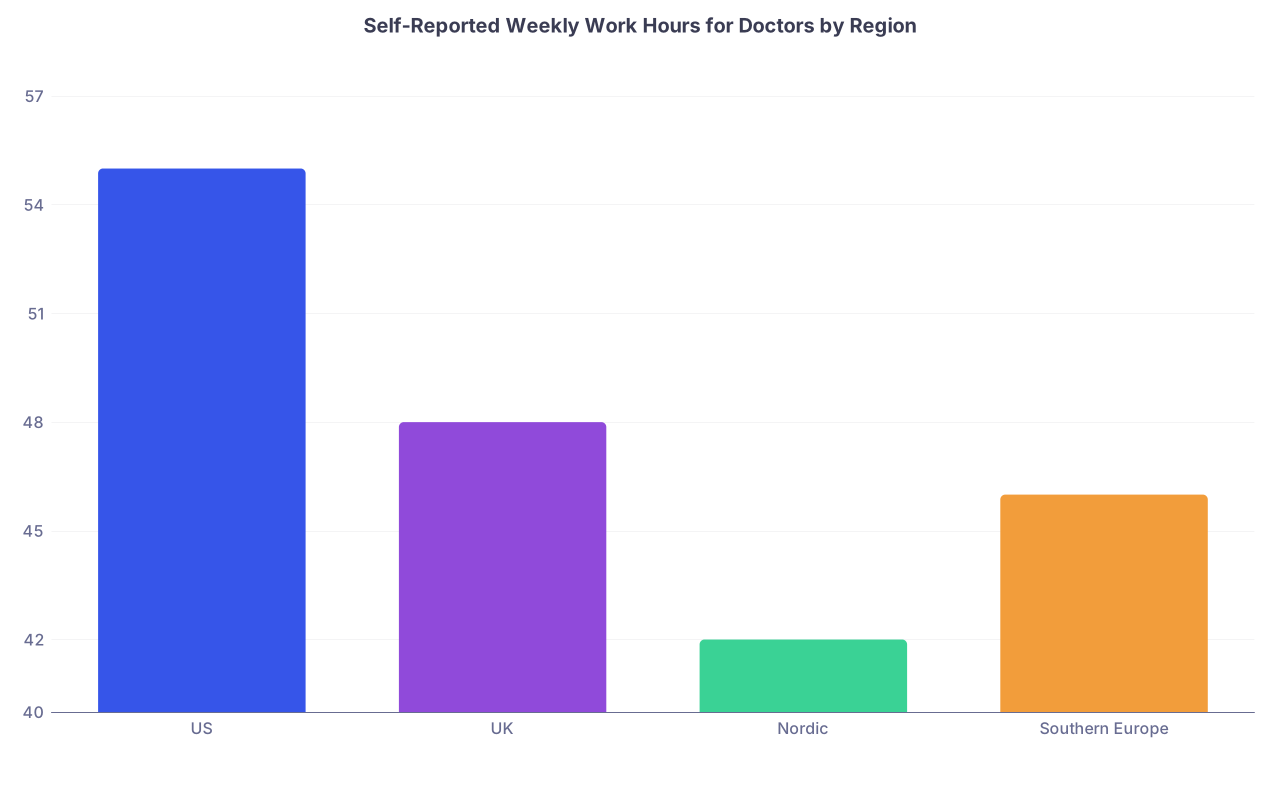
Now contrast salary with working hours and burnout.
| Category | Value |
|---|---|
| US | 55 |
| UK | 48 |
| Nordic | 42 |
| Southern Europe | 46 |
This fits most survey data and anecdote: Nordic doctors generally work fewer hours than US attendings and often fewer (or at least more contained) hours than UK or Southern European colleagues. On average.
Burnout? Multiple European surveys show Nordic physicians reporting high workload stress and frustration with bureaucracy, but not the absolute meltdown levels we see in parts of the US. Still, anyone telling you “Sweden solved doctor burnout” is either selling you something or hasn’t talked to an actual Swedish doctor in the last decade.
Who Actually Thrives in Nordic Systems (and Who Doesn’t)
Let me be blunt: if you don’t speak the language, are extremely career-ambitious, and care a lot about top 1% income, you are probably going to hate working in the Nordic healthcare systems.
The Language Trap
The biggest myth: “Everyone speaks English there so I can just move and work.”
No. Clinical practice in Sweden, Norway, Denmark, and Finland is in the local language. Charts, patient communication, multidisciplinary meetings, legal documents, complaints, death certificates – everything.
Yes, people speak English socially. That’s not the same thing.
Most countries require at least B2–C1 level in the local language before independent clinical practice. For example:
- Norway: You need documented Norwegian (or another Scandinavian language) proficiency.
- Sweden: Swedish language certification + authorization from Socialstyrelsen.
- Denmark: Danish language exams before getting authorization.
- Finland: Finnish or Swedish, both non-trivial for most foreigners.
I’ve watched foreign-trained doctors waste 2–3 years trying to get language + licensing aligned, all while working non-medical jobs or limited roles. Some succeed and end up happy. Many quietly leave.
If you’re already late 30s or 40s, deeply sub-specialized, and not a language-learning person? That delay is brutal.
The Ambition Ceiling
Nordic culture is allergic to showy individualism in the workplace. There’s even a cultural concept in some of these countries – variations of the “Law of Jante” – which basically says: don’t think you’re better than anyone else.
That bleeds into medicine.
If your dream is:
- Fast-track to department head
- High-volume private practice full of procedures
- National or international fame in your subspecialty
- Massive financial upside from entrepreneurship adjacent to clinical work
The US, Switzerland, parts of Germany, or even the Gulf states will serve you far better.
Nordic systems are public-heavy, egalitarian, and rules-based. You will have decent pay and security, yes. But you won’t be a superstar out-earning everyone by 3x, and if you try to behave like that’s your goal, the culture will push back hard.
I’ve heard this directly from Nordic-trained surgeons and radiologists: “If you’re ultra-driven by money and status, you get frustrated. The system isn’t built for stars. It’s built for collective functioning.”
Who Actually Wins
Nordic countries tend to work very well for:
- GPs and broad specialists who value predictability, stability, and sane hours.
- Doctors with families who care more about parental leave, childcare, safe cities, and social benefits than maxing income.
- Those willing to deeply integrate: learn language, accept local hierarchy, follow standardized guidelines and pathways.
- People burned out by toxic training cultures elsewhere who want “good enough pay + respect + time off”.
They work poorly for:
- People unwilling to grind through language and licensing.
- Highly entrepreneurial or prestige-driven sub-specialists.
- Those who hate bureaucracy (there’s plenty) and centralization.
- Doctors coming from lower-income countries expecting a rapid jump to “rich doctor” lifestyle; high costs and taxes blunt that pretty quickly.
Work–Life Balance: Better, Yes. But Not “Perfect”.
Let’s puncture another myth: that Nordic physicians are sipping coffee at 3 p.m. looking at fjords while the EMR completes itself.
Real talk: these systems are under pressure. Aging populations, staffing shortages, rising expectations – same story as everywhere, just with better safety nets.
| Category | Value |
|---|---|
| Satisfied - Nordic | 52 |
| Neutral - Nordic | 28 |
| Dissatisfied - Nordic | 20 |
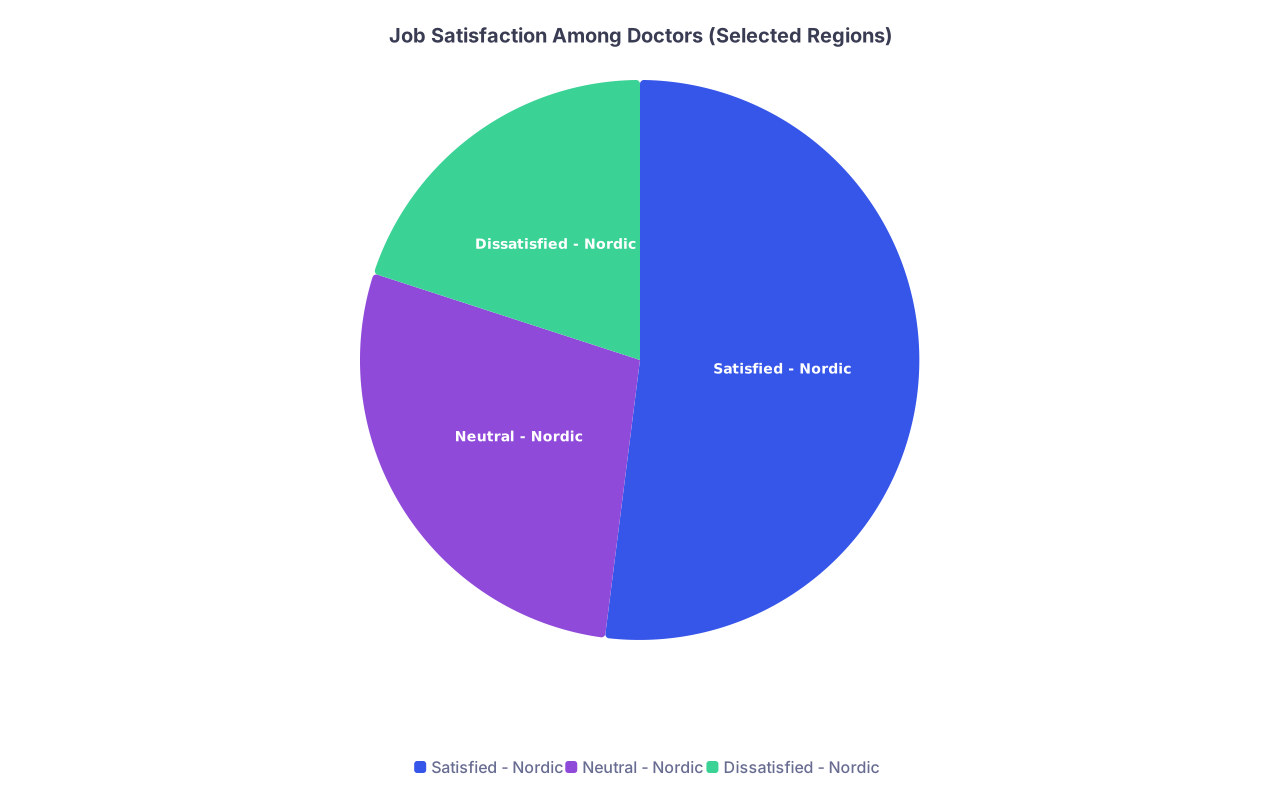
Interpretation: Nordic doctors are more likely to be satisfied than many peers elsewhere, but 1 in 5 still reports being dissatisfied. That’s not utopia.
Patterns I’ve seen and heard repeatedly:
- On paper, 37–40 hour weeks. In practice, call, overtime, and hidden workload creep up, especially in understaffed regions.
- Electronic systems and quality registries that are sophisticated – and can drown you in clicks and form-filling.
- Patient expectations high, especially with strongly consumer-aware populations and easy complaint pathways.
- Rural areas desperate for doctors, urban areas more competitive and often more bureaucratic.
Does a Swedish internal medicine consultant have a less grueling life than a US hospitalist doing 7-on/7-off with insane RVU targets? Often yes.
But is it effortlessly chill? No. That’s fantasy.
Training, Career Progression, and Recognition of Foreign Doctors
This is where many international doctors get blindsided.
You can’t just drop your CV on a Nordic hospital and slot neatly into an equivalent attending job next month. It depends heavily on your origin country, specialty, and where in your career you are.

| Step | Description |
|---|---|
| Step 1 | Med Degree Abroad |
| Step 2 | Check Country Requirements |
| Step 3 | Apply for License Recognition |
| Step 4 | Language + Exams |
| Step 5 | Supervised Practice |
| Step 6 | Full License |
| Step 7 | Job Search |
| Step 8 | Specialist Position or Training Spot |
| Step 9 | EU or Non EU |
You can easily lose years in:
- Language courses
- National medical exams or adaptation periods
- Waiting for internship/assistant doctor slots
- Having prior experience discounted or partially recognized
For example, I’ve seen non-EU specialists end up redoing significant chunks of training, working as under-classified doctors, or stuck in small towns because larger academic centers can pick from local graduates.
If your main goal is rapid financial stability and fully recognized status, some other destinations (Australia, New Zealand, Gulf states, Canada for certain specialties) may be less painful, depending on your background.
Cost of Living and Tax: The “Silent” Tradeoff
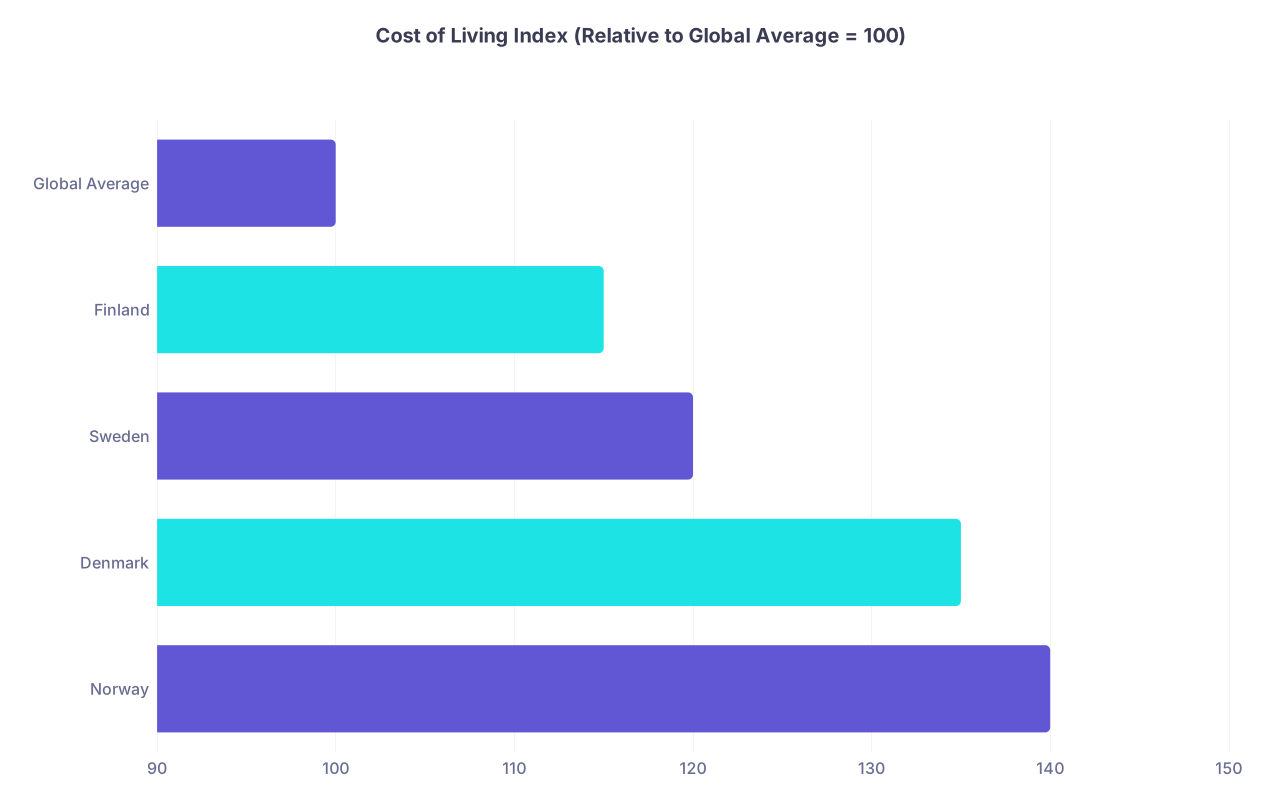
People look at headline salaries and forget the other half of the equation.
| Category | Value |
|---|---|
| Norway | 140 |
| Denmark | 135 |
| Sweden | 120 |
| Finland | 115 |
| Global Average | 100 |
Housing in Oslo, Copenhagen, Stockholm? Not cheap. Groceries? Higher than much of Europe. Cars? Taxed. Eating out? You will not be doing US-style frequent restaurant dinners without feeling it.
Now layer taxes on top. Yes, you get something for it: healthcare, education, social safety nets, infrastructure, parental leave, subsidized childcare.
But financially, the deal is this:
- You will not be poor as a doctor in the Nordics. You’ll live comfortably.
- You will not be rich by US private specialist standards. Not even close.
- You exchange potential upside for stability and national-level benefits everyone gets, not special doctor perks.
Some people love that trade. Others, especially those facing big family responsibilities in their origin countries, find the net savings disappointing.
Culture, Isolation, and Integration: The Part People Gloss Over
This is the stuff nobody puts on recruitment brochures.
The Nordic social model is cohesive, but the social culture can feel closed to outsiders, especially in adulthood. I’ve lost count of doctors saying variations of:
“It’s fine at work, but hard to make real friends.”
“People are polite but private.”
“Took years until we were truly accepted into a social circle.”
If you move as a family with kids, integration is often easier – schools are a bridge. If you move alone in your 30s or 40s, expecting your colleagues to become your social life, you might be disappointed.
On top of that, you’re functioning in a system with strong norms about:
- Punctuality and planning
- Consensus decision-making
- Modesty and not self-promoting
- Strict boundaries around work vs personal life
If you’re used to highly expressive cultures where colleagues become quasi-family, the Nordic distance can feel cold.
So, Are Nordic Countries “Best” For Doctors?
No. They’re not “best.” They are different, with strengths that line up perfectly for some doctors and poorly for others.
Here’s the honest pattern I’ve seen:
- For a UK or Irish GP sick of endless unpaid admin, poor IT, and constant political nonsense, a move to Norway or Denmark can feel like stepping into a parallel universe where primary care is actually funded and respected.
- For a US hospitalist exhausted by RVUs, weekend calls, and opaque insurance battles, a Swedish consultant job with fewer hours and long vacations can be life-changing, even with the pay cut.
- For a highly driven interventional cardiologist, neurosurgeon, or plastics specialist dreaming of cutting-edge private practice and big income, Scandinavia often feels like professional handcuffs.
- For non-EU doctors still trying to stabilize their lives financially or support large extended families, the time lost to re-training, language, and the high cost/tax structure can be a rude awakening.
The smart question is not: “Are the Nordics best?”
It’s: “For my specialty, career stage, financial goals, and tolerance for language and culture change – do the tradeoffs make sense?”
And that answer is brutally individual.
Years from now, you won’t remember the shiny myth of “doctors are happiest in Scandinavia.” You’ll remember whether you made a clear-eyed decision that matched your actual life, not someone else’s fantasy of snow, saunas, and perfect work–life balance.