

The world’s most lucrative procedural jobs are not where most young doctors think they are.
You are told to chase academic posts, big-name US systems, or cushy private practice in your home country. Meanwhile, proceduralists are quietly making very good money—and carving out oddly comfortable lives—in a handful of medical tourism capitals where patients fly in, pay cash, leave in a week, and tell all their friends.
Let me break this down specifically: where these hubs are, why they work, who actually prospers, and what the tradeoffs look like once you drop the brochure gloss and look at contracts, caseload, and lifestyle.
1. What “Medical Tourism Capital” Really Means (From the Doctor’s Side)
Ignore the glossy “top 10 medical tourism destinations” lists written for patients. From a physician’s perspective, a true medical tourism capital has three core features:
- A steady stream of international, cash-paying patients.
- A dense cluster of high-end private hospitals or specialty centers.
- A local regulatory and economic environment that lets proceduralists convert volume into personal income.
If all you see is “lots of foreigners” and “JCI accredited” on the hospital website, that is marketing, not a functional ecosystem.
The real indicators I look at:
- Percentage of hospital revenue from international patients.
- Proportion of work that is elective and procedural versus inpatient chronic care.
- Existence of “international patient departments” with translators, concierge, bundled packages.
- Presence of true referral chains: foreign facilitators, insurance contracts, or government MOUs sending patients.
That is where proceduralists quietly prosper. Because cash + elective + predictable = leverage.
2. The Big Four Medical Tourism Hubs Where Proceduralists Thrive
There are many “players,” but four ecosystems are consistently strong for doctors who do procedures: Bangkok, Istanbul, Dubai/Abu Dhabi, and certain Indian metros (Delhi–NCR, Mumbai, sometimes Chennai).
Bangkok, Thailand: The Original Flagship
If you want to understand medical tourism as a business, you study Bangkok first.
Hospitals like Bumrungrad International, Bangkok Hospital, Samitivej, and BNH built an entire industry around affluent international patients: Gulf states, Europe, US self-pay, expats in ASEAN, and a massive intra-Asian flow.
What this means for proceduralists:
- High-volume elective surgery: orthopedics (joint replacement, sports), plastic and cosmetic, bariatric, fertility, spine, ophthalmology (LASIK, cataract, refractive), interventional cardiology.
- Patients with clear intent: they booked a flight, paid a deposit, and came for a specific procedure. Minimal ambiguity and far less no-show noise.
- Cash or bundled packages: bypassing a lot of insurance nonsense that strangles US/European practice.
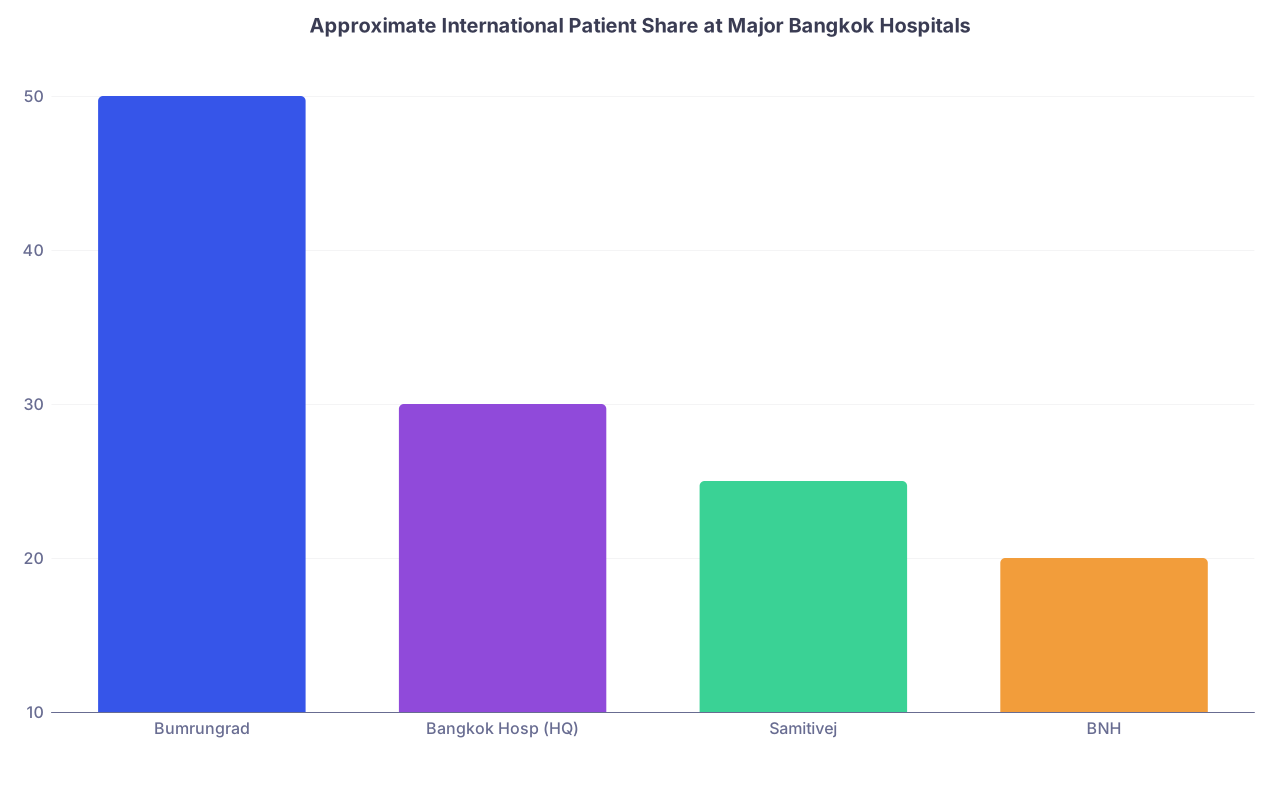
| Category | Value |
|---|---|
| Bumrungrad | 50 |
| Bangkok Hosp (HQ) | 30 |
| Samitivej | 25 |
| BNH | 20 |
Numbers are ballpark, but the pattern is right: Bamrungrad is built on foreign patients; others mix domestic affluent with regional travelers.
For proceduralists, why it works:
- Case mix skewed to profitable procedures: knee scopes, joint replacements, cardiac caths, stents, bariatric, IVF cycles, cosmetic packages.
- Operational efficiency: OR turnover is fast, pre-op pathways standardized, and international coordinators smooth out logistics.
- Lifestyle: Bangkok is livable—international schools, good condos, flights anywhere in Asia within 4–5 hours.
Where the catch lies:
- Foreigners cannot just open a solo clinic and print money. You are tied to institutional contracts.
- Compensation can be opaque. Some hospitals offer fixed salary; others mix base pay + per-case incentives. The “headline” earning potential (e.g., “cardiologists earn up to X”) often assumes aggressive volume.
- Licensing barriers: foreign doctors usually need a Thai medical license, which is not trivial. Many end up in “consultant” or “visiting specialist” roles with constrained practice rights.
Who actually prospers here:
- Thai specialists with Western fellowships (US/UK/Australia) who speak good English.
- Long-term expat proceduralists who’ve done the licensing grind and built referral networks.
- Subspecialists in high-demand, high-margin fields: bariatric surgeons, IVF specialists, interventional cardiologists, cosmetic surgeons.
Istanbul, Turkey: High-Tech, Aggressive Pricing, Massive Volume
If Bangkok built the brand, Istanbul built the funnel.
Turkey leaned into hair transplantation, cosmetic surgery, dental implants, and increasingly orthopedics and bariatric surgery. Package deals include hotel, airport transfer, “translator,” and surgery, all for less than a US deductible.
The ecosystem:
- Hundreds of clinics and hospitals chasing foreign patients, especially from Europe, MENA, and the UK.
- Medium-to-high tech: robotic surgery, advanced imaging, strong plastic/dental infrastructure.
- Aggressive digital marketing: social media influencers, before/after photos, clinic reps speaking multiple languages.
For proceduralists in Istanbul:
- Insane case volume in some niches. Hair transplant surgeons doing multiple cases per day, bariatric surgeons booked back-to-back, cosmetic and rhinoplasty on a conveyor belt.
- Pay structure varies wildly: you can be salaried at a corporate hospital, take a share in a private clinic, or build your own brand and pay facility fees.
- Specialties that do especially well:
- Plastic and cosmetic surgery (including facial and body contouring)
- Hair transplantation
- Bariatric surgery
- Dental implants and full-mouth rehabilitation
- IVF and reproductive medicine (growing)

The upsides:
- For a productive proceduralist with marketing savvy, Istanbul can be financially exceptional. The combination of lower operating costs and high international demand means margins are real.
- Proximity to Europe and the Gulf keeps travel-time tolerable; many patients see Turkey as “close enough” but much cheaper than Western Europe.
- The regulatory environment is business-friendly, sometimes too friendly.
The downsides and risks:
- Quality variability. There are world-class centers and there are “rhinoplasty factories” cutting corners. Your professional reputation is tied to where you land.
- Competitive, often cutthroat environment. Underbidding, opaque referral fees, and questionable marketing practices are common. If you are too idealistic, this will bother you.
- Medico-legal gray zones. Malpractice frameworks and enforcement for international patients are not aligned with US/UK norms. That can be a blessing (less litigation) and a curse (less systemic protection, chaotic conflict resolution when something goes wrong).
Who truly prospers:
- Surgeons who position themselves above the bargain-basement crowd and build a recognizable brand (often via social media and strategic partnerships).
- Dental and hair transplant practitioners working in reputable, high-throughput centers with a long-term reputation at stake.
- Local Turkish doctors more than foreign hires. Foreigners who succeed tend to bring a differentiating niche and strong digital marketing.
Dubai & Abu Dhabi, UAE: High-End, Heavily Branded, Insurance-Integrated
Dubai sells itself harder than any other city on Earth. Medical tourism is part of that sales package.
Unlike Bangkok or Istanbul, the UAE model blends:
- High-end private hospitals (Cleveland Clinic Abu Dhabi, Mediclinic, American Hospital Dubai, Saudi German, NMC, etc.).
- Large expat population with employer-based insurance.
- A growing, targeted push for “medical tourism” especially in orthopedics, cosmetic, fertility, and wellness.
For proceduralists, this landscape feels different:
- Many patients are local expats and citizens, not only fly-in tourists.
- Insurance plays a bigger role, so you are not in a pure cash-pay ecosystem, but elective cash segments do exist (cosmetic, some fertility, some orthopedics).
Where proceduralists do well:
- Orthopedic surgery (sports medicine, joint replacement)
- Plastic and aesthetic surgery
- IVF and fertility clinics
- Interventional cardiology and electrophysiology
- Bariatric surgery
- High-end dentistry and implantology
The job reality:
- Most foreign doctors are employees or equity partners in group practices, not true solo operators.
- Salaries are often high by global standards, with bonuses tied to billings or relative value units (RVUs).
- Work hours can be intense in busy centers, but support staff, equipment, and facilities are usually excellent.
| Specialty | Demand from Medical Tourism | Typical Model |
|---|---|---|
| Plastic Surgery | High | Private clinic groups |
| Orthopedic Surgery | Moderate–High | Hospital-employed |
| Cardiology/Intervention | Moderate | Hospital-employed |
| IVF/Fertility | High | Private centers |
| Dental/Implants | High | Private clinics |
Why some doctors love it:
- Tax advantages. In Dubai/Abu Dhabi, income is generally tax-free for individuals, which makes a “good” salary far more powerful than the same number in Europe.
- Infrastructure and lifestyle. International schools, safe environment, efficient airports, English everywhere.
- Professional cachet. Working at a flagship center like Cleveland Clinic Abu Dhabi or a JCI-accredited Dubai hospital looks good on a CV.
Why others burn out:
- Corporate medicine mentality, heavy KPIs. RVU targets, patient satisfaction scores, “utilization” metrics.
- Hiring and firing is business-driven and can be abrupt.
- Visa-dependent existence. Your right to stay is tied to your employer.
Who prospers:
- Subspecialist proceduralists willing to accept corporate structure in exchange for high, stable, largely tax-free income.
- Those who enter as senior consultants or with a good negotiating position, not as desperate job seekers.
- People who understand that “medical tourism” is only one revenue stream in a broader private-care economy.
India (Delhi, Mumbai, Chennai): Volume, Complexity, and Serious Pathology
India is where medical tourism stops being mostly cosmetic and becomes very serious medicine. Bypass surgeries, complex oncology, liver transplants, neurosurgery, spine, advanced interventional cardiology—this is real tertiary and quaternary care sought by international patients.
Key hubs: Delhi–NCR (Gurugram, Noida), Mumbai, Chennai, and to some extent Bangalore. Hospitals like Apollo, Fortis, Max, Medanta, Kokilaben Dhirubhai Ambani, and others run large international patient divisions.
For proceduralists:
- Extremely high case volume, including advanced and complex cases that you might rarely see elsewhere.
- International patients from Africa, the Middle East, Central Asia, and neighboring South Asian countries.
- Mix of self-pay, embassy-sponsored, or country-sponsored patients.
The payoff structure:
- For Indian-trained consultants within these systems, income can be excellent relative to local cost of living, especially when tied to revenue share.
- For foreign doctors, the path is narrower. Licensing, regulatory oversight, and employment restrictions limit opportunities unless you have specific collaborations or temporary visiting roles.
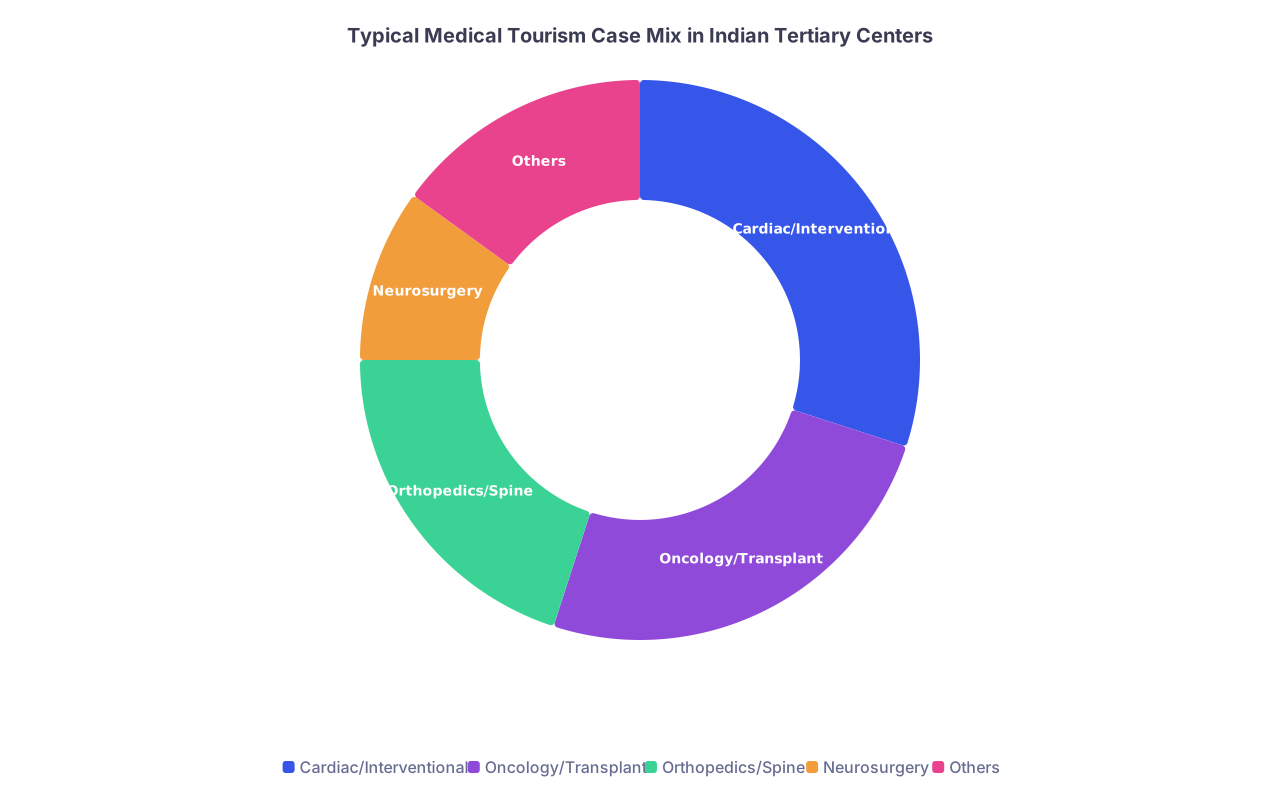
| Category | Value |
|---|---|
| Cardiac/Interventional | 30 |
| Oncology/Transplant | 25 |
| Orthopedics/Spine | 20 |
| Neurosurgery | 10 |
| Others | 15 |
Why proceduralists value these centers even beyond money:
- Exposure to high complexity. If you want to refine your skills on advanced liver transplant, complex congenital cardiac surgery, major oncologic resections, few places match the density of cases.
- Robust support services: perfusion, advanced imaging, ICU capacity, in-house interventional radiology.
- Ability to build disease-specific reputations that attract patients internationally.
The flip side:
- System pressure. ORs run long, wards are busy, and schedules can be punishing.
- Infrastructure is excellent in the private sector but not always as smooth as the marketing suggests. Delays, resource constraints, and administrative friction still exist.
- Pay for foreign hires is often not as lucrative as they expect once cost adjustments and contract realities land.
Who prospers most:
- Indian proceduralists anchored in major private hospital chains, with well-established teams.
- Niche subspecialists who become “the” name in a profitable high-complexity area (e.g., pediatric cardiac surgery, transplant hepatology).
- Some diaspora surgeons who return with Western training and plug into the system at senior consultant level.
3. Secondary but Important Hubs: Don’t Ignore These
Beyond the big four, there are “tier-two” medical tourism destinations where certain proceduralists can quietly do very well.
A few stand out:
Costa Rica & Mexico
Big in dental, cosmetic, bariatric, and some ortho. Proximity to the US and Canada is the key advantage. Many American and Canadian patients combine vacation with procedures.
Who prospers: plastic surgeons, bariatric surgeons, dentists with large implant and full-arch practices. Some US-trained or US-licensed doctors cross the border or set up binational lives.Malaysia (Kuala Lumpur, Penang)
Strong in cardiology, fertility, orthopedics, and general surgery. Less hyped than Thailand but similar model: English-speaking, relatively low costs, good infrastructure.
Who prospers: local specialists, some expat consultants in large, well-funded private hospitals.Singapore
High-quality, high-cost, more regional referral center than volume tourist factory. Attracts complex cases from Indonesia, Malaysia, and wider Asia.
Who prospers: top-tier subspecialists, particularly in oncology, transplant, and advanced cardiac. But entry is extremely competitive; this is not a “quiet” opportunity, more like an elite one.South Korea (Seoul)
Cosmetic surgery and dermatology powerhouse. Also strong in oncology, transplant, and cardiac.
Who prospers: local Korean surgeons and derms. Foreigners rarely break into the cosmetic scene there unless heavily integrated into the system.
4. How Proceduralists Actually Make Money in These Ecosystems
This is where many doctors get fooled by glossy narratives. The city does not pay you. The model does.
The real money pathways for proceduralists in medical tourism capitals usually come in a few predictable structures:
Hospital-employed with production bonus
- Base salary + percentage of billings or RVU-based incentives.
- Common in UAE, Thailand, and some Indian tertiary hospitals.
- Upside depends on your volume and your ability to negotiate a fair threshold.
-
- You either buy into an existing practice or help build one, taking a share of net profits.
- Common in cosmetic, dental, hair transplant, and bariatric settings in Istanbul, Mexico, parts of Southeast Asia.
- Higher risk, higher upside. Your income is tied to business performance and marketing.
Fee-for-service with facility fee
- You bring the patient; the hospital provides OR and support; you split the fee.
- Requires a personal brand or referral stream strong enough that facilities want you.
- Most realistic for established surgeons with reputations, not new grads.
Hybrid academic–private models
- In some hubs (Singapore, certain Indian metros), senior academic proceduralists also operate privately, generating significant additional income.
- Hard to break into; usually reserved for those who climb the local ladder.
From a cold, financial standpoint, proceduralists in these hubs prosper most when:
- They are in high-margin specialties (cosmetic, bariatric, IVF, hair transplant, dental implants, some orthopedics).
- They have at least partial control over patient flow (brand, referrers, or contracts).
- They are not capped by rigid government salary scales or union structures.
If you are thinking of jumping in, you need to ask very specific questions:
- Is my pay purely salary, or is there a meaningful share of procedure revenue?
- What is the expected monthly procedural volume, realistically?
- Who controls the pipeline of international patients—me or the institution?
- What are my non-compete clauses and restrictions if I leave?
5. Lifestyle, Risk, and Reality: The Parts the Brochures Skip
The lifestyle in these cities can be attractive. But you are not moving for a postcard.
Things that matter more than people admit:
Schooling and family life
If you have children, good international schools are non-negotiable. Bangkok, Dubai, Abu Dhabi, Singapore, and to a lesser extent Istanbul and Kuala Lumpur, handle this well. Some Indian metros too, depending on your budget.Malpractice and legal exposure
- Less litigation does not always mean less risk. It can mean more “informal” conflict resolution: threats, pressure, social media campaigns.
- Understand how complaints are handled. Is there mandatory mediation? How are foreign doctors treated in disputes?
Professional isolation
If you are an expat proceduralist, you may be the “foreign face” used for marketing but excluded from deeper decision-making. I have seen senior surgeons reduced to glorified volume generators while governance stays tightly local.Exit options
- How portable is your experience if you move back home? A decade in a boutique hair transplant clinic may not help if you later want an academic vascular surgery post.
- Licensing back home: maintaining board certification and meeting CME and recertification requirements while abroad is its own project.
Ethical discomfort
Medical tourism sometimes drifts into ethically gray zones: questionable indications, upselling procedures, rushed pre-op evaluation for fly-in patients, weak continuity of care. Good institutions manage this well. Bad ones do not. You will feel the difference.
6. How to Decide If You Are the Right Kind of Proceduralist for These Hubs
Not every doctor fits. Frankly, many should stay away.
Proceduralists who tend to thrive in medical tourism capitals share some traits:
Comfortable with a business lens
You understand that case volume, conversion rates, and patient satisfaction are not dirty words; they are survival metrics. You can think both as a clinician and as a service provider without losing your ethical anchor.Happy with repetition and systemization
High-volume medical tourism is not about intellectual novelty. It is about executing standard procedures with consistent quality, day after day. If you need constant academic variation, you will get bored.Able to manage expectations across cultures
Patients from the UK, Gulf, US, or West Africa walk in with different beliefs, anxieties, and expectations. You must handle that quickly, calmly, and safely—often through translators and in compressed timeframes.Strategic about your brand
In these hubs, your name matters not just to other doctors, but to facilitators, tour operators, and online reviewers. You do not have to dance on TikTok, but you must control your professional narrative.
On the other hand, if you:
- Crave tenure, academic prestige, and deep research work.
- Hate discussing costs or “packages” with patients.
- Are extremely sensitive to any commercialization of medicine.
Then these cities are probably not where you will quietly prosper. You might survive, but you will resent the culture.
7. The Future: Where the Next Medical Tourism Capitals Are Emerging
Medical tourism will not stay frozen. New pockets are already forming—and proceduralists looking 5–10 years ahead should pay attention.
Trends I see:
Regional micro-hubs
Countries like Georgia, Serbia, and some North African states are trying to build regional centers for dental and cosmetic work. Early stage, high risk, but someone will get it right.Subspecialty-focused cities
Single-niche destinations—places known almost exclusively for one thing (e.g., oncology, spine, or fertility)—will emerge as data transparency increases. Patients will search for “best prostate cancer radiotherapy outcomes worldwide,” not just “cheap surgery abroad.”Tele-consult + Fly-in hybrid models
More pre-op and post-op work will be handled remotely, with only the procedural phase occurring in the tourism hub. This favors organized centers that can coordinate multidisciplinary, cross-border care.Government-sponsored outbound flows
Some countries will continue or expand programs that pay for their citizens to receive complex care abroad. Centers that secure these contracts—especially in oncology, transplants, cardiac—will have a predictable international volume.
If you are a proceduralist early in your career, you do not need to gamble on unproven locations. But keep your eyes on:
- Secondary Turkish cities expanding cosmetic and bariatric centers.
- Eastern European hubs building dental and ortho clusters.
- African regional centers (Nairobi, Kigali, Johannesburg) starting to retain patients who would previously fly to India or Europe.
Key Takeaways
The best-paying procedural jobs are often clustered in true medical tourism capitals—Bangkok, Istanbul, Dubai/Abu Dhabi, and major Indian metros—where international, mostly elective procedures generate serious cash flow.
Proceduralists who prosper there usually work in high-margin, high-volume niches (cosmetic, bariatric, IVF, dental, select ortho and cardiac) and secure contracts that tie their income directly to procedural volume and revenue, not just fixed salary.
These hubs trade academic prestige for business-driven medicine. If you are comfortable with that tradeoff, willing to think like both surgeon and strategist, and clear-eyed about legal, lifestyle, and ethical complexities, they can be some of the most lucrative and professionally intense places on earth to work as a doctor.


