

What if staying single for residency and early attending life is actually your biggest career advantage—and you’re wasting it by just going where the match sends you?
You have something married co-residents with kids would kill for: mobility. No school districts. No spouse’s job search. No custody schedules. You can pick a city for you and for your career. But most single docs drift. They finish training, grab the first “decent” offer, and wake up three years later stuck in a place they never really chose.
Let’s not do that.
This is the playbook for: “I’m single, I can move, and I want to be smart and ruthless about where I build my life as a physician.”
Step 1: Get brutally clear on your priorities (not vibes)
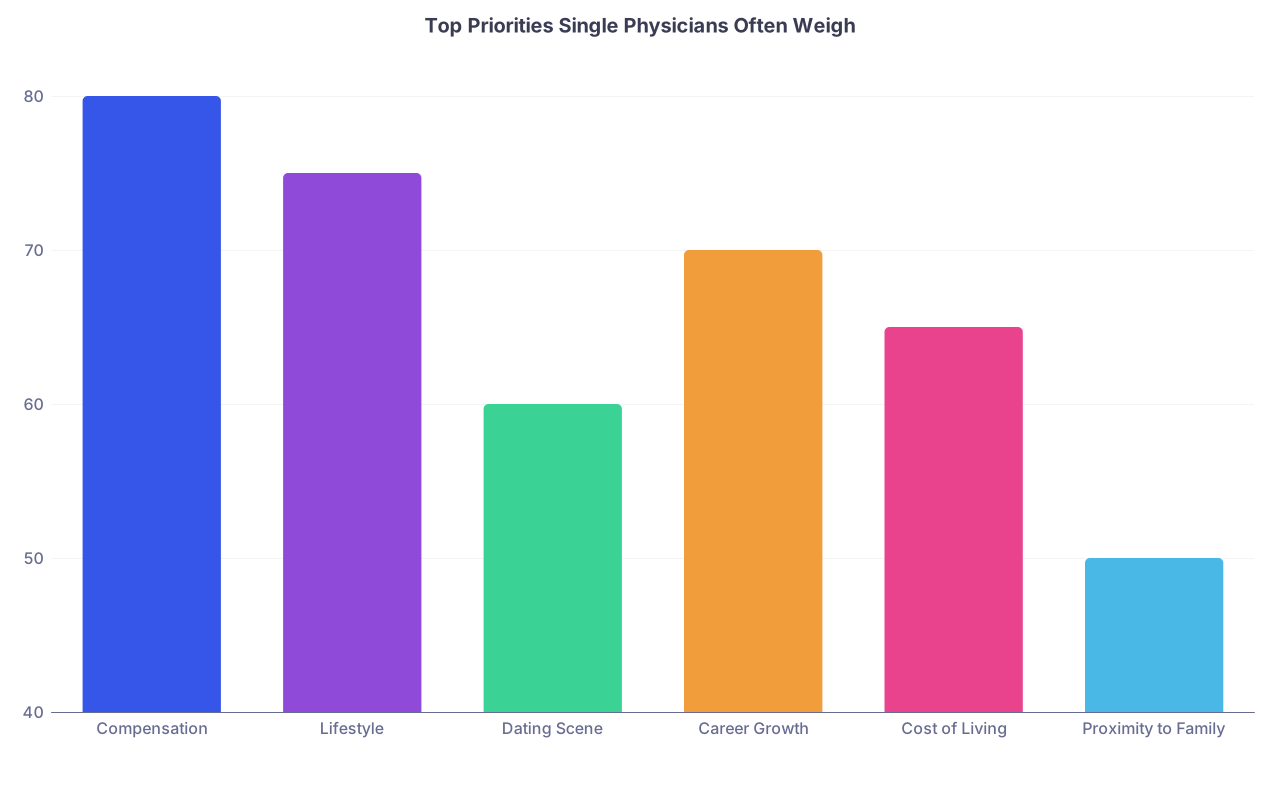
| Category | Value |
|---|---|
| Compensation | 80 |
| Lifestyle | 75 |
| Dating Scene | 60 |
| Career Growth | 70 |
| Cost of Living | 65 |
| Proximity to Family | 50 |
Most people start with “I want a cool city” or “I heard Austin is great.” That’s how you end up in a $3,000/month shoebox with a 45-minute commute and no time to enjoy any of it.
You need hard filters.
Sit down and rank these categories for you, in order, 1 (must-have) to 6 (nice if it happens):
- Compensation and loan payoff speed
- Work schedule and call burden
- Dating and young professional scene
- Career growth: academics, subspecialty, leadership
- Cost of living and ability to save/invest
- Proximity to family/support
You’re allowed to be honest.
If your top two are “pay off debt fast” and “date people my own age,” your answer is not “tiny affluent suburb with great schools.” That’s for your 40s.
Example profiles I see all the time:
- “The Burner”: Wants outdoors, flexible schedule, progressive politics, and can tolerate moderate pay. Think: Denver, Salt Lake, Asheville, Portland (but be careful with comp).
- “The Accelerator”: Wants to nuke debt in 3–5 years, doesn’t care if the city is sexy. Think: mid-size Southern or Midwestern cities with big hospital systems and low COL: Tulsa, Oklahoma City, San Antonio, Raleigh, Indianapolis.
- “The Academic Networker”: Wants name-brand institution, research, and fellows around. Think: Boston, Philly, Chicago, Houston, San Diego.
You don’t pick like a tourist. You pick like an investor in your own life.
Write your top 3 in a note on your phone. You’ll refer back to them constantly.
Step 2: Understand how being single changes the math
Being single shouldn’t just be a footnote. It changes everything about how you evaluate “best place to work as a doctor.”
Here’s what it buys you:
- You can work “too hard” for 3–5 years to crush loans, because no one is waiting for you at home. That might mean 1.2–1.4 FTE, more weekends, rural shifts, or hospitalist + telemed side gigs.
- You can live walking distance to the hospital in a studio. No school zoning, no worrying about backyard size.
- You can move again if the first city is wrong. No custody battles, no spouse’s hate for the new town.
- You can choose a city because the dating pool is strong. That’s not shallow; that’s long-term planning.
The flip side: the stuff that matters to your coupled colleagues (school quality, “great for kids,” large houses) can be heavily discounted. Not ignored. Just moved way down the list.
So a city that’s “meh for families but fantastic for 28–38-year-old professionals with high income and flexible jobs?” That’s your playground.
Step 3: Build a short list of “single-doctor-optimized” cities
Here’s where people mess up: they chase only the headline names—NYC, SF, LA—without checking the doctor-specific and single-specific realities.
Let’s lay out a structured comparison first, then we’ll talk strategy.
| City | Comp vs Natl Avg | Cost of Living | Dating Pool Size | Work-Life Balance |
|---|---|---|---|---|
| Houston | High | Low-Med | Large | Good |
| Denver | Medium | High | Medium-Large | Good |
| Austin | Medium | High | Large | Variable |
| Minneapolis | Medium-High | Medium | Medium | Good |
| Raleigh | High | Medium | Medium | Good |
Those are examples, not a definitive list. The process matters more than which five cities I put in a table.
Ask yourself four questions for each potential city:
Is there a strong young professional ecosystem?
Lots of grad programs? Big employers (tech, healthcare, finance, energy)? Nightlife that isn’t just bars for undergrads or breweries for couples with strollers.How does physician comp compare to cost of living?
A $350K job in Houston is 100% different from a $350K job in Seattle. Run numbers, not vibes.What’s the dating market like for you specifically?
Age distribution, ratio of college-educated professionals, diversity if that matters to you, political culture. Tinder and Bumble are crude, but they’re data.Are there multiple hospital systems/groups, or just one?
As a mobile, single doc, you want optionality. If your first job sucks, you want to change jobs without changing cities.
Step 4: Use data, not just Instagram
Now we get a bit nerdy. You don’t have to approach this like a PhD, but don’t be lazy.
Key data sources you should actually use:
- Salary + compensation:
- MGMA data (if you can access it through your program or friends)
- Doximity reports
- Specialty-specific Facebook groups where people openly share offers
- Cost of living:
- Numbeo
- NerdWallet COL calculator
- Zillow or local apartment sites for real rent prices near hospitals
- Dating and demographics:
- Census data for age distribution and education levels in the city core
- Reddit city subs and “moving to [city] single” search strings
- Quality of life/work data:
- Glassdoor/Indeed reviews of hospital systems
- Doximity “Top Hospitals,” but read the comments, not just rankings
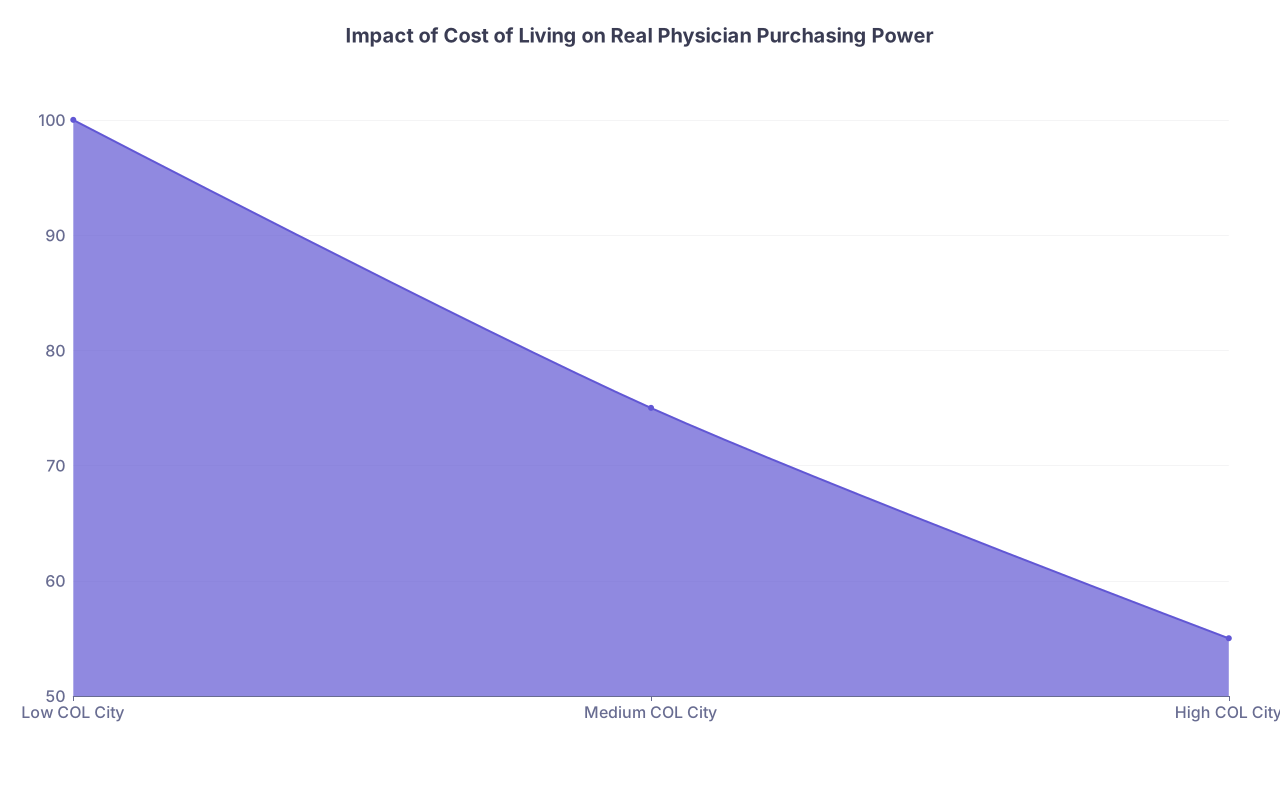
| Category | Value |
|---|---|
| Low COL City | 100 |
| Medium COL City | 75 |
| High COL City | 55 |
Rough numbers: if we set your purchasing power as 100 in a low cost-of-living city, that same nominal salary will feel like 55–60 in a high cost-of-living one. That’s not abstract. That’s the difference between:
- Paying off loans in 4 years vs 10
- Owning a place vs renting forever
- Having a serious investment portfolio by 40 vs starting at 40
As a single doc, you can choose to live in a lifestyle city with bad physician purchasing power. But you should know what you’re trading away.
I’ve watched plenty of single attendings take a “cool city” job at $260K, get crushed by rent and taxes, and then three years later quietly apply to jobs in Ohio or Texas so they can finally breathe.
Step 5: Decide your sequence: Earn first, then lifestyle—or reverse?
This is the decision that shapes your next decade. There are really two main plays:
Play A: “Crush debt, then upgrade city”
Year 0–5 after residency:
- Choose a high-comp, moderate-to-low COL city.
- Work more than 1.0 FTE while you still have the stamina and no kids.
- Live close to work in a small but convenient apartment.
- Attack loans, invest aggressively.
Year 5+:
- Once loans are gone and you’ve built some savings, you can downshift to a more expensive “dream city” or a more chill schedule and still be financially fine.
I’ve seen EM docs in Texas, hospitalists in the Midwest, and anesthesiologists in Oklahoma wipe out $300–500K of debt in 3–5 years using this pattern. Yes, even while having a life.
Play B: “Optimize life now, accept slower wealth”
You pick a city that feeds your soul right away. You accept:
- Higher rent
- Slower loan payoff
- Slightly less savings early on
In exchange, you get social life, hobbies, and dating that are actually good now rather than someday.
Neither is morally superior. The mistake is drifting into Play B while pretending you’re doing Play A. Or vice versa.
Be explicit.
Say it out loud: “I’m choosing to live in San Diego, and I’m fine taking longer to pay off loans because surfing and weather matter to me more than an extra $1M twenty years from now.” That kind of clarity keeps you from quiet resentment later.
Step 6: Evaluate cities like a local, not a tourist

| Step | Description |
|---|---|
| Step 1 | Create Priority List |
| Step 2 | Build Shortlist of Cities |
| Step 3 | Research Data Online |
| Step 4 | Visit Top 3 Cities |
| Step 5 | Test Commute and Neighborhoods |
| Step 6 | Talk to Local Doctors |
| Step 7 | Compare Offers and Lifestyles |
| Step 8 | Choose City and Job |
If you’re serious, you don’t just fly in once, hit the trendy neighborhoods, and call it a day.
Here’s how to do it like a professional:
Stay near where you’d actually live
Not the conference hotel downtown. Book an Airbnb walking distance or a short drive from the hospital you’d most likely work at. See who’s around at 7 pm on a Tuesday.Test the commute during real hours
Don’t trust “20 minutes without traffic” on Google Maps. Drive it at 7:30 am and 5 pm. Or bike it. Or take the train, if that’s the plan.Visit a gym, a grocery store, and a coffee shop
Look around. Do these feel like “your people”? Are there other single professionals? Or is it all families and retirees?Go on a date while visiting (yes, really)
Set your location on the dating app a week before you visit. Chat, meet someone in a public place, have a drink. Get a feel for the vibe and diversity of the dating pool. You’ll learn in 90 minutes what no blog can tell you.Talk to local docs without administration present
This is crucial. Grab coffee with a resident, a recent attending, and if you can, a mid-career doc. Ask them:- “If you were single and finishing residency today, would you stay here?”
- “What’s the worst part of practicing here?”
- “If you left, where would you go?”
Take notes immediately after each trip. You’ll forget faster than you think.
Step 7: Know the under-the-radar power cities
The usual suspects (NYC, LA, SF, Boston, Seattle) get enough attention. Let me give you some cities that tend to hit a strong balance for single, mobile physicians—high income, decent dating, real culture, manageable cost.
This isn’t gospel; it’s a starting list to investigate:
- Houston – Ugly weather, phenomenal opportunity. Massive medical center, tons of jobs, high comp, no state income tax, surprisingly good food and social scene. Great for the “Accelerator” and “Academic Networker” types.
- Denver – Outdoors, active singles, decent comp, COL rising but still workable as an attending. Good for lifestyle-first folks who still want okay money.
- Austin – Tech/professional scene, solid dating, music/food. Physician comp is not as strong as people assume; COL is high. Good if you’re okay with tradeoffs.
- Minneapolis–St. Paul – Quietly one of the best physician markets. High-quality systems (Mayo nearby, big health networks), good comp, decent art/food scene, educated population. Winter is real.
- Raleigh–Durham – Research triangle, tons of grad students and young professionals, growing city, decent COL. Strong for academics and biotech-curious docs.
- Nashville – Healthcare industry hub, great music/food, lots of transplants, decent comp. Getting pricier but still workable.
- San Antonio – Cheaper than Austin, lots of military/healthcare, very good comp in some specialties, strong Hispanic culture, more family vibe but still fine for singles.
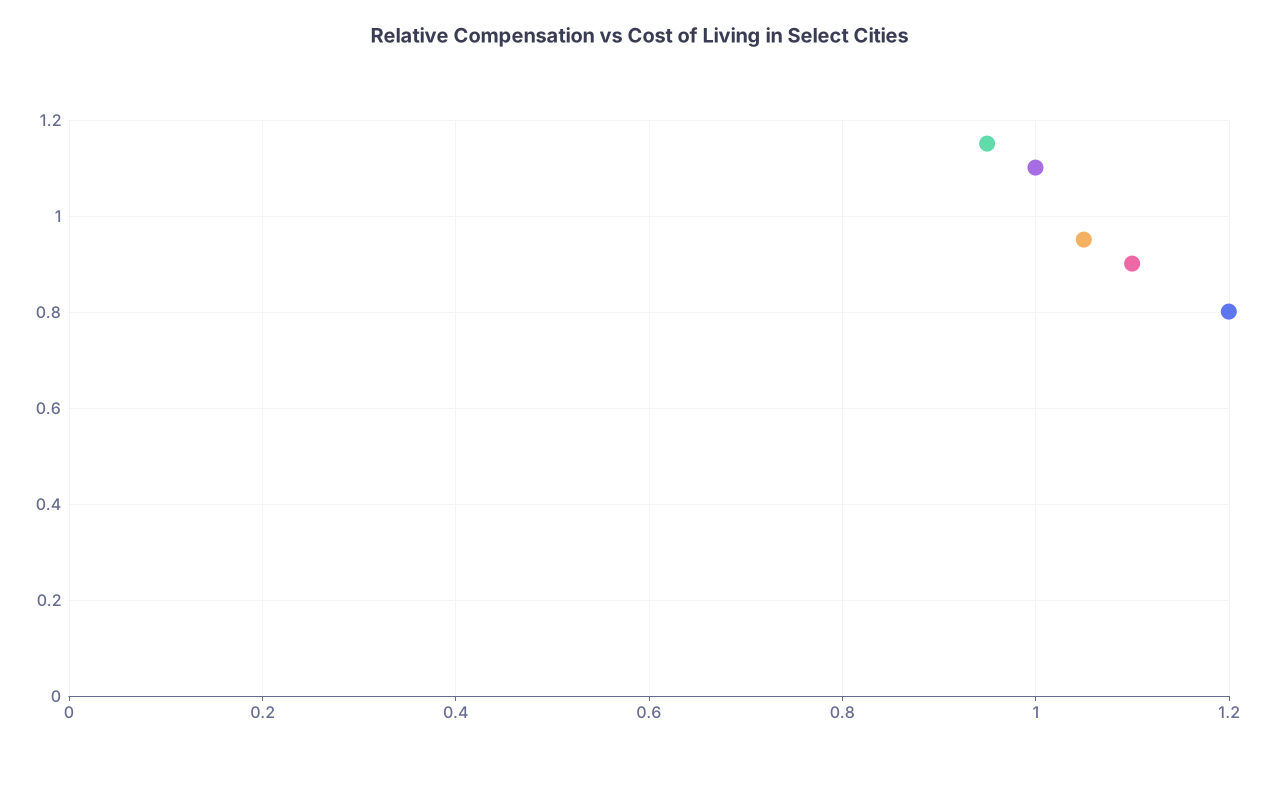
| Category | Value |
|---|---|
| Houston | 1.2,0.8 |
| Denver | 1,1.1 |
| Austin | 0.95,1.15 |
| Minneapolis | 1.05,0.95 |
| Raleigh | 1.1,0.9 |
Rough interpretation of that scatter:
- Numbers >1.0 on the x-axis = higher-than-average comp
- Numbers <1.0 on the y-axis = cheaper-than-average COL
So Houston and Raleigh are in the “get ahead fast” quadrant. Austin and Denver live in the “you pay to be here” quadrant.
Again: tradeoffs. Know them.
Step 8: Protect your future self with optionality
Big mistake I see: single docs lock themselves into one-hospital towns or hyper-niche jobs in random locations. Then they hit 35, want different things, and moving means completely starting over.
If you’re mobile now, keep your future mobility too.
Some rules:
- Prefer metro areas with multiple hospital systems or large groups.
- Get skills that translate: bread-and-butter generalist or widely needed subspecialties.
- Avoid jobs where your only option after burnout is leaving medicine or moving across the country again.
If you pick, say, Houston or Denver or Raleigh and work for System A, you still have System B and C and private groups as backup. That freedom is worth a lot.
Step 9: Use your single status in negotiations
This part no one tells you.
Being single is leverage.
You can truthfully say:
- “I’m flexible on start date.”
- “I can cover more evenings/weekends than someone with childcare issues; what premium do you offer for that?”
- “I’m open to taking more nights for the first 2–3 years if there’s a clear path to reducing them later with compensation adjusted accordingly.”
You don’t present it like, “I’ll be your martyr.” You present it like, “I can solve scheduling problems most candidates can’t. That should be reflected in comp or PTO or signing bonus.”
Hospitals love someone who can plug holes without drama. Just make sure you’re compensated, not exploited.
Negotiate:
- Higher base or RVU rate
- Extra PTO blocks you can cluster into travel time (you’re mobile—use it)
- Clear path to schedule changes after X years
Document everything. Handshakes are lies waiting to happen.
Step 10: Plan for the pivot—if/when you’re no longer single
Here’s the piece you’ll thank me for in 10 years.
You might stay single. You might partner up. You might have kids. All are possible. When that happens, your perfect single-doctor city may stop being perfect.
So while you’re choosing your city now, ask:
- If I had a partner who could work remotely or flexibly, would this still be a good place?
- If I eventually wanted good schools and space, is there a suburb within 30–40 minutes that doesn’t destroy my soul?
- If I had to move later for a partner’s career, does this city give me brand-name experience that travels well?
That last one matters. Coming from a known system in Houston, Boston, or a big academic center in any city is a different story than coming from a one-off small hospital in the middle of nowhere. Fair or not, prestige opens doors.
So even in your single, mobile chapter, keep one eye on what your resume will look like to future you.




FAQ (Exactly 3 Questions)
1. Should I pick my first attending job mainly based on money if I’m single with huge loans?
If your loans are massive (say $300K+ at high interest), there’s a strong argument for yes—for the first job or two. But that doesn’t mean you choose misery. You pick a high-comp, reasonable workload market where you can tolerate 3–5 intense years. Then you reassess. The trap is telling yourself “it’s just for a little while” in a place you actively hate. You will burn out. Aim for “not my forever city, but good enough for a focused hustle chapter.”
2. Is it dumb to move to an expensive city like NYC or SF as a single doctor?
Not automatically. It’s dumb if you think your income automatically makes everything easy there. It does not. If your top priorities are cultural scene, certain niche academic opportunities, or being in a specific social/dating environment, and you accept that you’re trading away faster wealth-building, that’s a rational choice. Just run the math on rent, taxes, loan payments, and your lifestyle costs before you sign anything. Conscious tradeoff = fine. Delusion = not fine.
3. How long should I “test” a city before committing to a long-term job there?
Bare minimum: two trips at different times of year, a few days each, plus at least one set of in-person interviews. Ideal: 4–6 weeks via a locums stint or moonlighting arrangement if you’re already licensed. You learn more in one month of real shifts, commutes, and grocery runs than in 20 hours of online research. If a system is reluctant to let you do a trial locums before long-term commitment and you’re unsure, that’s a small red flag. Not a dealbreaker, but pay attention.
Two things to remember:
Use your single, mobile years deliberately, not passively. And make every city choice a conscious trade between money, time, and life—no drifting, no “I guess I’ll just stay.”


