
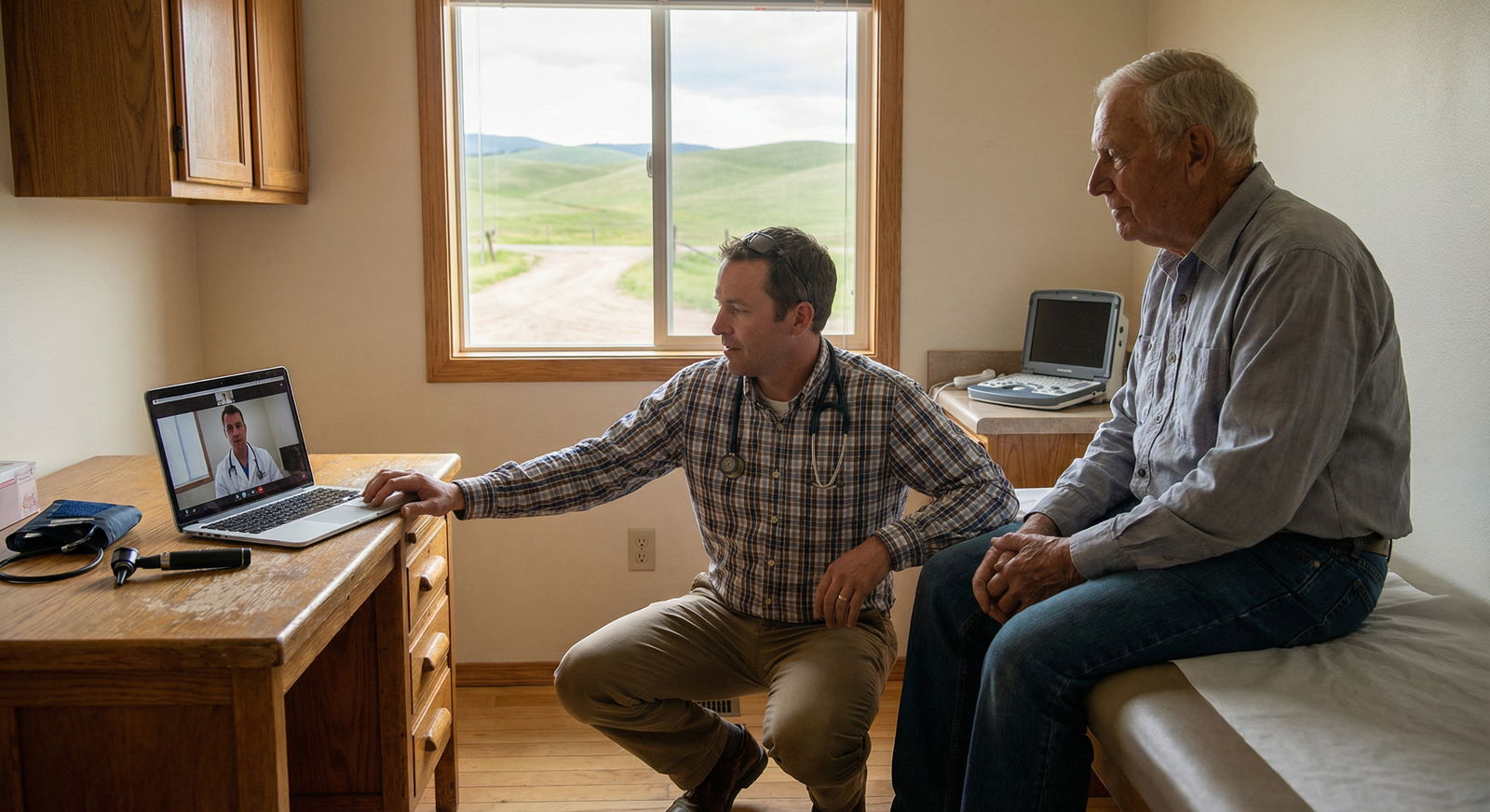
The biggest mistake telemedicine physicians make is assuming “if my company lets me work there, it must be legal.” That is wrong. Your employer’s flexibility does not protect your license, your DEA registration, or your freedom to practice.
If you want to live in a top lifestyle state and work 100% remote, you need a clear legal strategy. Not vibes. Not “my friend does it.” A system.
This is that system.
The Core Rule: Where You Sit Matters Less Than Where Your Patient Is
Telemedicine feels borderless. Legally, it is not.
Here is the fundamental rule in almost every state:
For licensing purposes, the practice of medicine occurs where the patient is located at the time of the encounter.
So:
- You in Colorado, patient in Texas → you are practicing in Texas.
- You in Florida, patient in California → you are practicing in California.
- You in Hawaii, patient in your old home state → you are practicing in that old home state.
That drives everything:
- You must be licensed in the patient’s state.
- You must comply with the patient’s state’s practice rules.
- Your physical state still matters for:
- State income tax
- Corporate practice of medicine (if you own an entity)
- Controlled substance rules relative to your DEA registration
- Malpractice risk and venue
If you ignore this, you risk:
- Board complaints from states you barely remember applying to.
- DEA issues if you prescribe controlled meds across state lines improperly.
- Problems with payors (Medicare, Medicaid, commercial) over “place of service” and enrollment.
So the goal is not, “How do I hide where I live?” The goal is, “How do I align my licenses, DEA, job, and tax home so I can live somewhere great and practice legally and cleanly?”
Step 1: Pick Your Lifestyle State Like a Professional, Not a Tourist
You are not picking a vacation spot. You are choosing a legal, financial, and logistical base.
Let me walk through a few “lifestyle states” that keep coming up with telemedicine docs and how they actually play out.
| State | Income Tax | IMLC Member | Malpractice Climate | Notes |
|---|---|---|---|---|
| Florida | 0% | Yes | Moderate-High | Strong for retirees + no tax |
| Texas | 0% | Yes | Moderate | Big telehealth market |
| Colorado | 4.4% | Yes | Moderate | Outdoor lifestyle hub |
| Arizona | 2.5% flat | Yes | Moderate | Popular for snowbirds |
| Washington | 0% income* | No | Plaintiff-friendly | Has payroll/other taxes |
Now, how to choose with your eyes open.
1. Taxes
You care about:
- State income tax rate
- Whether you will be treated as a resident for tax purposes
- Whether your employer will withhold correctly for the state where you actually live
For a telemedicine physician making $250k–$400k+:
- 0% income tax states (Florida, Texas, Nevada, Wyoming, Tennessee) are massive lifetime multipliers.
- Low flat tax states (Arizona’s 2.5%, Colorado’s flat tax) are decent if they beat your current rate + give you the lifestyle you want.
If you move from California or New York and keep working remotely for a hospital or telehealth company in those states, you must be very clear:
- Does your physical location change your tax liability?
- Will your old state still treat you as resident if you keep a house, spouse, or other strong ties there?
This is where I tell people: spend $500–$1,500 on a real multi-state tax CPA before you move. Not TurboTax. Not a friend of a friend.
2. IMLC (Interstate Medical Licensure Compact) Status
If you want to live in one great place and see patients in many states, the IMLC is your best friend.
- It gives you a fast pathway to multiple state licenses (not one universal license).
- You must qualify through a “State of Principal License” (SPL), and that SPL must be an IMLC member.
Most of the high-lifestyle states we listed are in the compact. That is not an accident. They know they are attractive to physicians.
If you are not yet in an IMLC state, before you move, check:
- Can your new lifestyle state become your SPL?
- Do you meet the IMLC criteria (medical school, board certification, no major disciplinary actions, etc.)?
If you do, you can eventually spool up 5–10 remote licenses tied to your new base.
3. Practice Climate and Malpractice Environment
Some states are lawsuits waiting to happen. Others are more physician-friendly.
Things I look for:
- Damage caps or other tort reform
- Board reputation (reasonable vs. “discipline first, ask questions later”)
- How telemedicine is treated by payors and state law
Reality: You might live in one state and rarely see patients there because the malpractice environment is ugly or telehealth reimbursement is poor. That is fine. Your physical state is not required to match your high-volume patient states, as long as your licensing + DEA structure is built correctly.
Step 2: Understand the Actual Legal Pillars of Remote Work
There are four pillars you cannot get wrong.
- State medical licenses
- Telehealth practice rules
- DEA and controlled substances
- Tax and employment status
Let’s build each one.
A. Licensing: You Need a Map, Not a Guess
Most telemedicine physicians I talk to have this setup:
- 3–8 state licenses collected over years
- No current list of expiration dates or CME requirements
- No map of:
- Which payors are tied to which states
- Which services are allowed where
- Which states are high-risk vs low-risk legally
You cannot scale or sleep well with that.
Do this instead:
Build a simple license grid.
A spreadsheet with:- State
- License number
- Expiration date
- IMLC or standard
- Notes (e.g., “no audio-only for new patients,” “no tele-psych controlled meds,” etc.)
Decide your core states.
Ask:- Where does my employer / group have most of its volume?
- Where are reimbursement and malpractice acceptable?
- Where am I actually comfortable with the board climate?
Narrow to 5–10 core states you want for the next 3–5 years.
Align with your lifestyle base.
If you are moving to, say, Florida:- Make Florida your SPL (if eligible) for IMLC.
- Use IMLC to add or consolidate licenses in target states that support your niche (e.g., tele-psych, urgent care, weight loss, sleep).
Stop collecting random licenses just because a recruiter asked. That is how you end up maintaining 18 licenses you hate for work you do not care about anymore.
B. Telehealth Practice Rules: You Can Actually Get Specific
States differ on:
- Whether a telemedicine-only relationship is enough to prescribe
- Whether you need a prior in-person exam
- Whether audio-only is allowed
- Rules for remote prescribing of controlled substances
- Whether you can treat new patients via telehealth, or only established patients
The fix:
For each core state, pull the state medical board telemedicine policy and, if applicable, pharmacy board policy.
Extract the 5 essentials:
- Is a telemedicine-only relationship sufficient to establish a physician-patient relationship?
- Are there restrictions on new patient telehealth visits?
- Are there in-person requirements for controlled substances?
- Any restrictions on tele-psych, tele-pain, or high-risk areas?
- Can you supervise midlevels remotely there?
Build a one-page “telehealth rules digest” for each state you actively use. You do not need to memorize them. You need them organized.
Yes, this is grunt work. But I have seen careers saved because a physician could show a board they had a structured compliance approach rather than “I just did what the platform told me.”
C. DEA and Controlled Substances: The Trap That Burns Good Docs
This is where people get in trouble.
Key points:
- Your DEA registration historically has been tied to a physical practice location in a specific state.
- During the COVID public health emergency, many restrictions on tele-prescribing of controlled substances were relaxed.
- Federal rules are changing; some flexibilities are extended, but permanent rules are more restrictive than the COVID free-for-all.
You cannot assume:
- That a DEA registration in one state lets you prescribe controlled substances via telemedicine into every state where you are licensed.
- That your employer’s EHR settings are legally correct for your situation.
You must verify:
Where is your DEA registered?
- State
- Address
- Type of location (clinic, home office, etc.)
For each patient state:
- Does that state permit telemedicine prescribing of controlled substances for:
- New patients?
- Existing patients?
- Specific schedules (II vs III–V)?
- Are there in-person visit requirements?
- Does that state permit telemedicine prescribing of controlled substances for:
Federal layer:
- Pay attention to updated DEA telemedicine prescribing rules (they evolve; set a calendar reminder yearly to review).
If you want clean sleep:
- Consider minimizing controlled substances in your telemedicine practice unless you are very intentional (e.g., tele-psych with well-defined policies, in-person backup, and solid documentation).
- If you do tele-psych or pain, I would strongly recommend:
- Formal written policies
- Clear in-person exam criteria
- A supervising brick-and-mortar partner in key states
You can absolutely practice telemedicine without controlled substances and still build a robust practice (weight management, women’s health, men’s health without schedule II’s, sleep, chronic disease management, dermatology, lifestyle medicine, etc.).
Step 3: Decide Your Work Structure – W2 vs 1099 vs Your Own Practice
Where and how you live will interact with your employment structure. If you ignore that, you create a mess for yourself and your accountant.
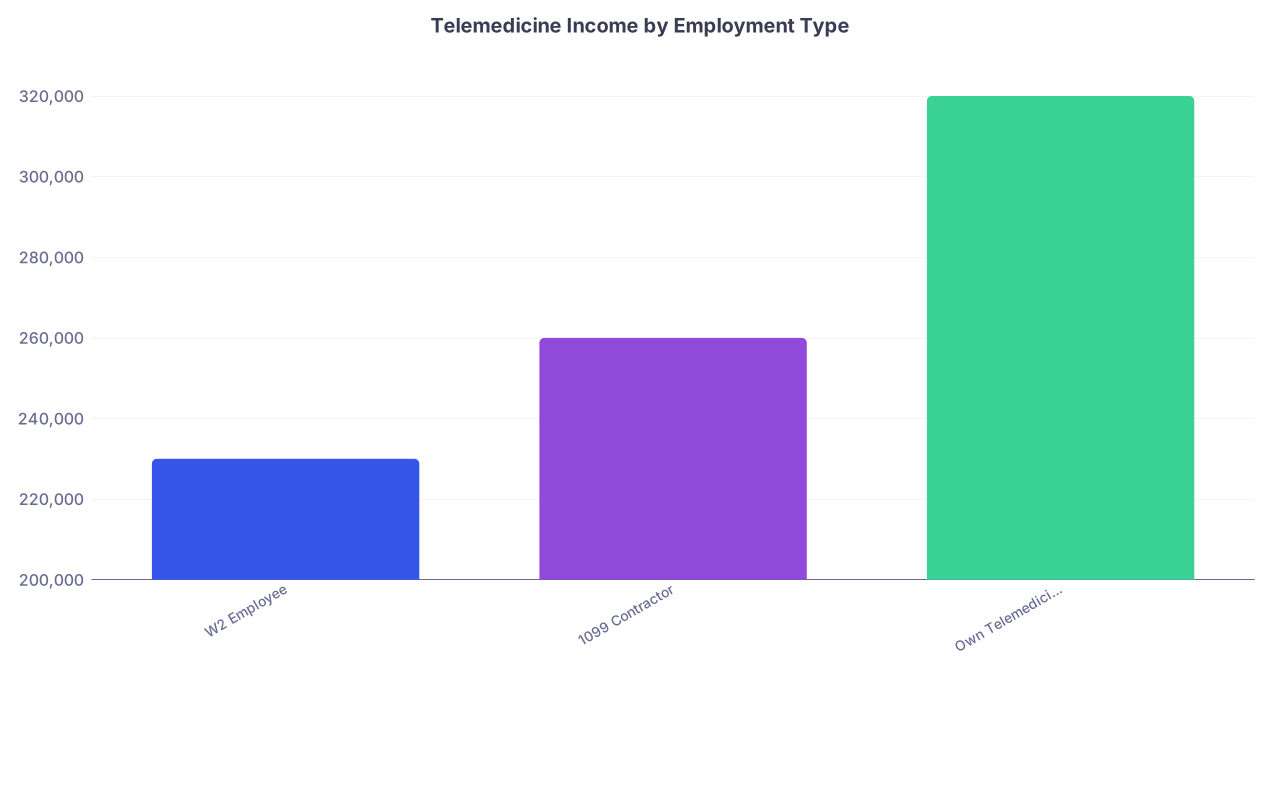
| Category | Value |
|---|---|
| W2 Employee | 230000 |
| 1099 Contractor | 260000 |
| Own Telemedicine Practice | 320000 |
The numbers are illustrative, but the pattern holds: the more responsibility and risk you take on (1099 and then owning your practice), the more upside and complexity.
Option 1: W2 Telemedicine Physician Living in a Lifestyle State
Scenario: You move to Florida, work remotely for a large national telehealth company as a full-time W2.
Pros:
- They handle coding, billing, malpractice, compliance.
- Benefits: health insurance, 401(k), PTO.
- Relatively clean from a licensing perspective if they are organized.
Risks / Pitfalls:
- Employer misalignment: they may assume you live where their HQ is and withhold taxes incorrectly.
- Some employers quietly “do not care” exactly where you are, as long as your Internet works. That is dangerous for you, not them.
- You may be required to add or maintain licenses in states you do not care about.
Fix:
Tell them where you actually live.
In writing. Get an updated W4 / state tax withholding set correctly.Ask compliance direct questions:
- “Which states are you billing under my NPI?”
- “Can I get a list of states where I am expected to be licensed for my telemedicine panel?”
- “Are there any state-specific telehealth policies you rely on for our practice?”
Negotiate license strategy.
If they want you to hold 10+ licenses, they should:- Pay all costs.
- Assist with renewals.
- Not force you into high-risk states unless compensated accordingly.
Option 2: 1099 Independent Contractor Living in a Lifestyle State
Classic tele-urgent-care or tele-psych gig setup.
Pros:
- Higher hourly / per-visit pay.
- Flexibility to work for multiple platforms.
- Usually can choose which states you will see patients in (if you have matching licenses).
Cons:
- All the compliance burden ultimately sits on your shoulders.
- You pay self-employment taxes.
- You must handle your own entity, accounting, and malpractice.
As a 1099 in a lifestyle state, your playbook should include:
Forming a proper entity in your state of residence: PLLC / PC if required; otherwise, LLC taxed as S-corp often makes sense (confirm with CPA).
Separating “where you live” from “where you see patients.”
Your entity is based in your lifestyle state. You hold licenses and see patients in a set of “patient states.” That is fine as long as:- You are licensed in each patient state.
- You comply with telehealth and prescribing laws in each.
- You do not trigger unwanted “nexus” issues (e.g., employees or offices in those states).
Malpractice coverage that explicitly covers:
- Multi-state telemedicine
- Your chosen specialties
- The states you are actually practicing in
Do not assume the platform’s malpractice covers you completely. Read the policy. If you cannot get a copy, that is a red flag.
Option 3: Running Your Own Multi-State Telemedicine Practice from a Lifestyle State
This is where the real freedom lives, with real complexity attached.
Scenario: You move to Colorado, form a PLLC, obtain IMLC licenses for 8 states, and build a direct-pay or insurance-based telemedicine clinic.
This demands:
- A corporate practice of medicine analysis
- Some states prohibit non-physician ownership of medical entities.
- If you add investors or non-physician partners, structure matters.
- State business registrations in each state where you:
- Have a physical location
- Possibly have significant patient volume and are considered “doing business”
You solve this by:
Working with a healthcare attorney to design:
- Entity structure (professional corporation + management services organization if needed)
- Where to register as a foreign entity vs where not to
Using:
- A robust telehealth EHR
- State-aware e-prescribing
- Good compliance documentation
Is it doable? Yes. I have watched several physicians build 7-figure practices this way. But they invested early in legal and accounting help instead of winging it.
Step 4: Build a Clean, Legal, Lifestyle-Friendly Setup – Concrete Blueprint
Let’s put this together as an actionable example.
Example: You Want to Be a Telemedicine Physician Living in Colorado
Your goals:
- Live in Colorado for outdoor lifestyle.
- Work 100% remote.
- See patients in multiple states.
- Avoid insane malpractice and IRS problems.
Here is how I would structure it.
Move and establish Colorado as your genuine tax and residence home.
- Lease or buy a place.
- Change driver’s license, voter registration.
- Move banking and primary mailing.
- If leaving a high-tax state, follow their “exit residency” playbook meticulously.
Make sure you have a Colorado medical license.
- If not, apply.
- Check if you qualify Colorado as your IMLC State of Principal License:
- Primary residence in CO
- At least 25% of practice in CO or employer in CO or use CO as state of residence defined by IMLC rules.
Use IMLC to get 5–7 strategic telehealth licenses:
- Florida, Texas, Arizona, maybe a Midwest state and a Southeast state, depending on your niche.
- Do not chase all 25+ IMLC states on day one. Start with 3–7.
Entity + structure.
- Form a Colorado PLLC or PC, then consider S-corp taxation.
- Open a business bank account in Colorado.
- Get malpractice that covers:
- Your entity
- Telemedicine across named states
- Register for Colorado state taxes as needed (if your income is via your entity).
DEA registration.
- Register your DEA in Colorado at your home office or “principal practice location,” consistent with DEA rules.
- Decide intentionally about controlled substances:
- Either:
- Scope your practice to non-controlled-med domains, or
- Build a safe, documented protocol for tele-prescribing controlled meds that aligns with:
- Federal telehealth rules
- Every patient state’s rules
- Either:
Documentation and compliance.
- Spreadsheet with:
- State licenses, expiration, and key telehealth restrictions.
- A short policy manual on:
- Patient identity verification
- Consent for telehealth
- Emergency / escalation protocols by state
- Documentation and follow-up standards
- Spreadsheet with:
Income sources.
- Start with W2 or 1099 telemedicine work while you:
- Stabilize your personal move
- Learn telehealth flow and patient expectations
- Then gradually:
- Build your own telemedicine panel or niche practice if you want more autonomy.
- Start with W2 or 1099 telemedicine work while you:
Step 5: Avoid the Top 7 Ways Telemedicine Physicians Get Burned
Here are the patterns I keep seeing.
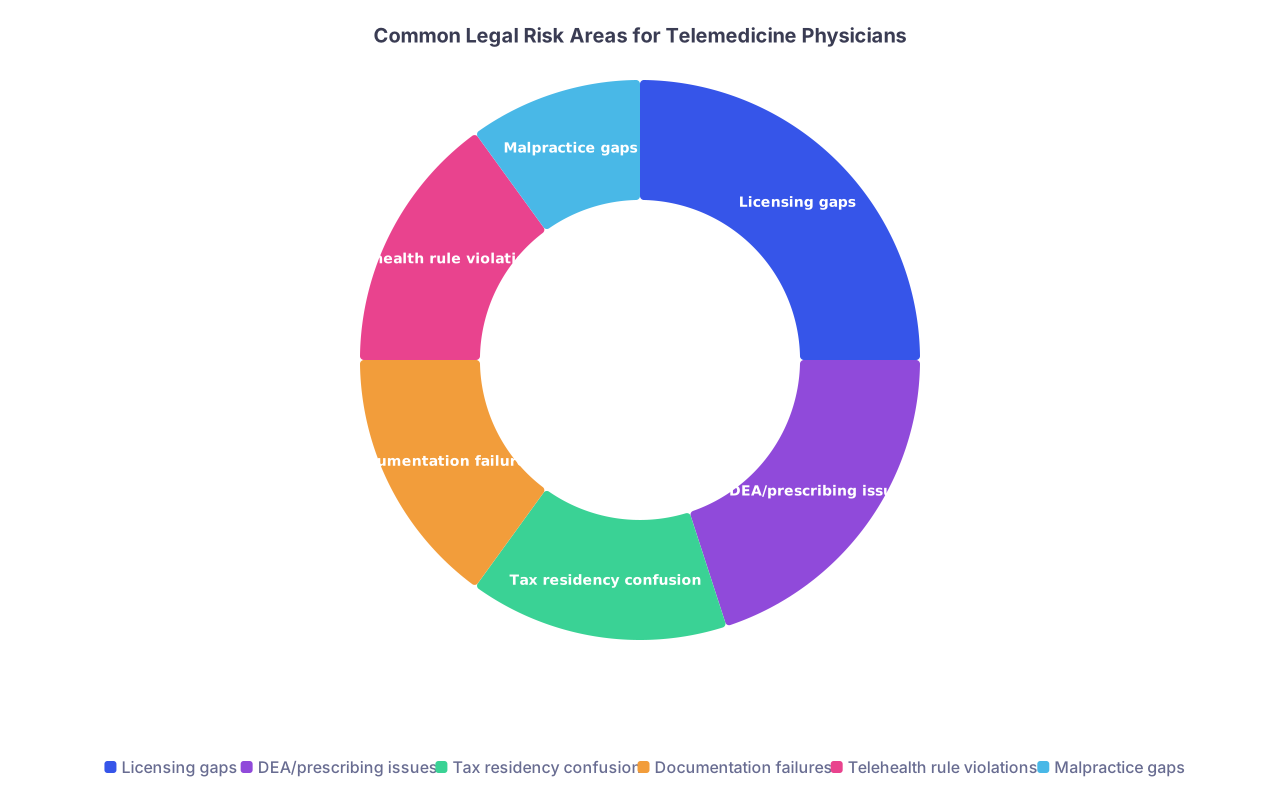
| Category | Value |
|---|---|
| Licensing gaps | 25 |
| DEA/prescribing issues | 20 |
| Tax residency confusion | 15 |
| Documentation failures | 15 |
| Telehealth rule violations | 15 |
| Malpractice gaps | 10 |
Seeing patients in a state where their license silently expired.
Fix: Set quarterly reminders to review all licenses. Use a spreadsheet, calendar alerts, or a credentialing service.Assuming platform malpractice = total protection.
Fix: Get a copy of the actual policy. Confirm:- Occurrence vs claims-made
- State coverage
- Whether it follows you if you change platforms
Prescribing controlled substances by telemedicine across state lines with a fuzzy understanding of the rules.
Fix: If you cannot clearly state “These are the rules for Schedule II in each of my patient states,” then do not prescribe Schedule II via telehealth until you can.Playing games with residency for taxes.
Example: Living in California most of the year but claiming Florida residency because you rented a mailbox in Miami.
Fix: Either move completely and clearly or accept the tax hit. Half-measures get audited.Not updating employer about your new physical location.
Fix: When you move:- Update HR, payroll, and compliance.
- Confirm which state taxes will be withheld.
- Confirm your new address is used for employment and licensing records.
Bad documentation in telemedicine visits.
Problem: “Telemed, patient anxious, Rx Xanax, f/u PRN.” That note will not help you with a board or plaintiff.
Fix: Treat telemedicine notes like in-person notes, with explicit:- History
- Decision-making
- Why telehealth was appropriate
- Safety net instructions
Ignoring state-specific telehealth informed consent.
Some states require explicit telehealth consent and specific language.
Fix: Either:- Use an EHR that automates state-specific consent, or
- Build a scripted consent section into your workflow.
Step 6: Use Compact Licensure Strategically, Not Emotionally
You do not need 20+ licenses to have freedom. You need the right 3–10.

| Step | Description |
|---|---|
| Step 1 | Choose Lifestyle State |
| Step 2 | Get License in Lifestyle State |
| Step 3 | Make SPL and Apply via IMLC |
| Step 4 | Maintain Current SPL Elsewhere |
| Step 5 | Select 3 to 10 Core States |
| Step 6 | Review Telehealth Rules by State |
| Step 7 | Start Telemedicine Practice |
| Step 8 | Lifestyle State in IMLC? |
Use the compact to:
- Enter states with:
- Strong telehealth reimbursement
- Reasonable boards
- Good patient demand for your niche
- Exit states that:
- Are high-risk legally
- Pay poorly
- Have irrational rules for your field
Re-evaluate your state mix every 12–18 months. You are not stuck with your initial configuration.
Step 7: Design Your Actual Day-to-Day Lifestyle – Not Just the Legal Skeleton
You are doing this for lifestyle. So design one.
- Where in your home will you work?
- Private space with door and professional background.
- High-quality webcam, mic, and lighting. Patients notice.
- How will you separate work hours from your actual life in that beautiful state?
- Some tele-urgent platforms want night and weekend coverage. That can pair very well with daytime skiing, hiking, or kids’ schedules.
- Will your employer or patients expect you to match certain time zones?
- Pacific-time clinics while you live in Florida can mean late nights.
- Use that deliberately.
A lot of telemedicine burnout is not from “too many video visits.” It is from sloppy boundaries, all-day laptop life, and no ritual to close the clinic for the day.
You can fix that. But you must design it, not drift into it.
Your Next Concrete Step (Do This Today)
Open a blank document or spreadsheet and build three lists:
- Lifestyle states you would genuinely live in (3–5 max).
- States where you already hold a license.
- Your current or desired telemedicine niche (e.g., urgent care, psych, derm, weight loss, sleep).
Now connect the dots:
- Circle the lifestyle state that is most realistic in the next 12–24 months.
- Check if it is an IMLC state.
- For that state, write down:
- Tax rate
- Board telehealth policy link
- Malpractice environment, as best you know
Once that is done, your next move is simple: pick one lifestyle state to research to completion and commit to either:
- Moving there and aligning your telemedicine strategy around it, or
- Crossing it off and moving to the next candidate.
Do not keep this in your head. Start the map, today.


