

The worst career mistake mid‑career physicians make is waiting until they’re burned out to plan their exit. A smart move to a better lifestyle region takes two full years of deliberate, boring, paperwork-heavy steps. If you compress it into six months, you pay for it—with money, stress, and bad options.
Here’s your two-year exit plan. Month-by-month. So by the time you resign from academia, your new life is already built.
Big Picture: Your Two-Year Clock
At this point you should assume: from first serious thought to first day in your new city is 18–24 months. If you’re faster, fine. But don’t plan on it.
Let’s anchor the phases:
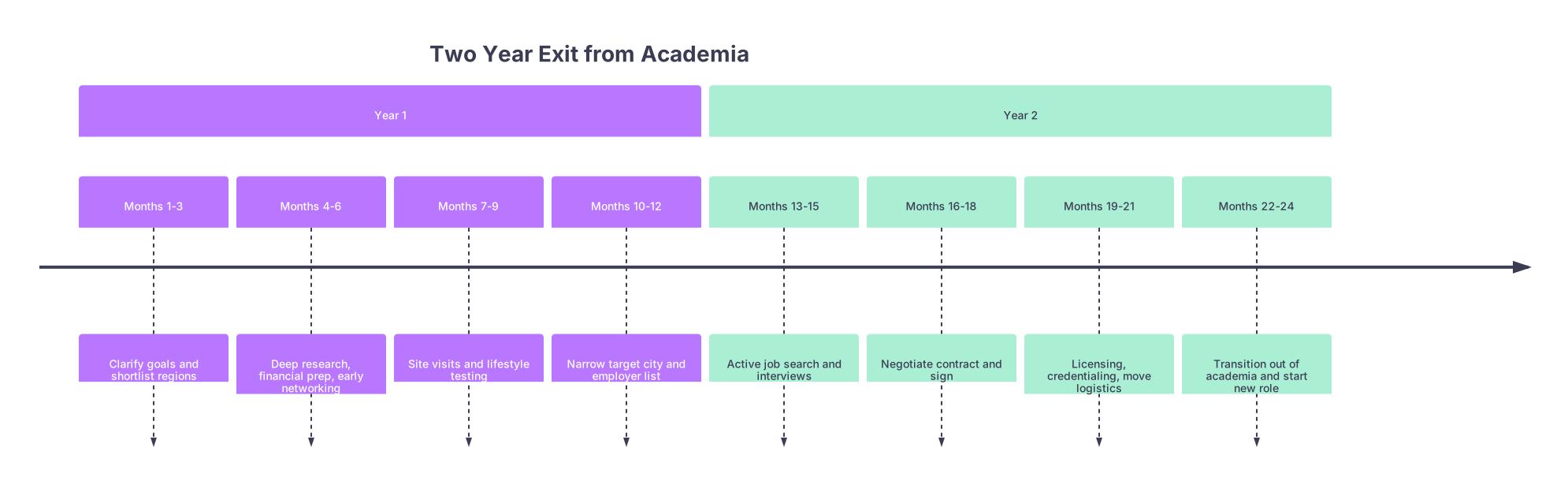
| Period | Event |
|---|---|
| Year 1 - Months 1-3 | Clarify goals and shortlist regions |
| Year 1 - Months 4-6 | Deep research, financial prep, early networking |
| Year 1 - Months 7-9 | Site visits and lifestyle testing |
| Year 1 - Months 10-12 | Narrow target city and employer list |
| Year 2 - Months 13-15 | Active job search and interviews |
| Year 2 - Months 16-18 | Negotiate contract and sign |
| Year 2 - Months 19-21 | Licensing, credentialing, move logistics |
| Year 2 - Months 22-24 | Transition out of academia and start new role |
You’re going to move through four big arcs:
- Define what “better lifestyle” actually means for you
- Pick a region and practice model that matches it
- Lock in a contract that finances that lifestyle
- Execute the move without blowing up your career or family
Let’s walk month by month.
Months 1–3: Get Honest and Set the Target
At this point you should stop saying “I want a better lifestyle” and define it in writing.
Month 1: Reality check and dealbreakers
Block one evening and write three lists:
Why you’re leaving academia
Be blunt. Examples I see constantly:- Grant treadmill, no time to think
- RVU creep without added support
- Toxic leadership, opaque promotion
- City too expensive / no outdoor access / bad schools
Non‑negotiables for the new region
- Climate: “No more winters below 20°F” or “I need four seasons”
- Geography: coast, mountains, desert, proximity to major airport
- Family: max flight time to aging parents, school quality requirement
- Politics/culture: you know where you’re comfortable and where you’re not
Non‑negotiables for the job
- Maximum number of nights/weekends
- Protected time (if any) you actually require
- Minimum base salary and total comp
- Call burden you will not exceed
You’re drawing the box you’ll live in for the next decade. Do not skip this.
Month 2: Choose your practice “lane”
Leaving academia isn’t just “hospital vs private practice.” You’ve got lanes:
- Large employed hospital system
- Large multispecialty group (e.g., Kaiser, Mayo regional, Optum)
- Independent private practice (partnership track vs pure employed)
- Direct care / concierge model
- Locums-heavy lifestyle anchored in one region
At this point you should choose two lanes max to pursue seriously. Trying everything is a good way to get nothing.
Ask yourself:
- Do I actually want a productivity-based model?
- How much do I care about teaching or research sticking around in my life?
- Am I okay being a small cog in a huge system if my hours are better?
Talk to 2–3 physicians in each lane (LinkedIn, alumni networks, friends-of-friends) and ask the questions no one prints in brochures:
- “What time did you leave work yesterday?”
- “When did you last eat lunch sitting down?”
- “If you quit tomorrow, why?”
Take notes. Change lanes now, not after you move.
Month 3: Build your region shortlist
Now you match your life requirements to actual places.
Spend 2–3 hours per week on this:
Data scouting
- Cost of living vs your current city
- State income tax, property tax
- Median home prices in neighborhoods you’d actually live in
- School ratings if relevant (greatschools.org, local district data)
- Crime maps, commute times, traffic patterns
Lifestyle scouting
- Outdoors: trails, water, skiing, climbing, whatever you actually do
- Weather extremes (humidity, wildfire smoke, hurricanes, etc.)
- Cultural fit: political map, community vibe, diversity
Physician job market
- Volume of job postings in your specialty
- Dominant systems (e.g., Atrium in Charlotte, Providence in NW)
- Any clear oversaturation red flags
By the end of Month 3 you should have 3–5 target metro areas you’d seriously consider.
Months 4–6: Financial Prep and Under-the-Radar Moves
At this point you should treat this like a planned launch, not a daydream.
Month 4: Clean up your finances and credit
You’re about to apply for state licenses, maybe a mortgage, and you might experience some income flux during the transition.
Do this now:
- Pull your credit reports and scores
- Pay down high-interest consumer debt
- Refinance anything predatory
- Build a 6–12 month liquid emergency fund if you don’t have one
- List all recurring obligations (mortgage, student loans, private school, etc.)
Then run the basic math: what post‑move net income you need to maintain or improve your life, taking into account taxes and cost of living.
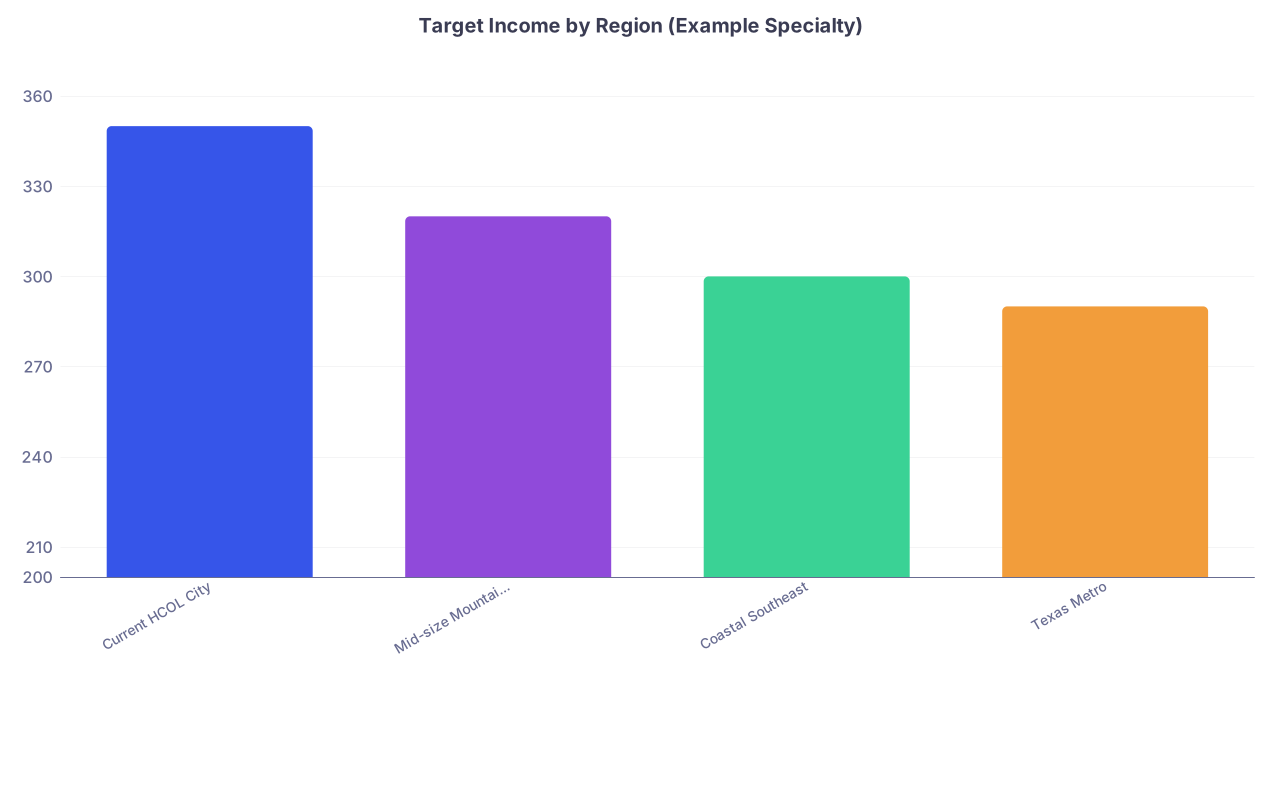
| Category | Value |
|---|---|
| Current HCOL City | 350 |
| Mid-size Mountain City | 320 |
| Coastal Southeast | 300 |
| Texas Metro | 290 |
(Values = approximate target base salary in thousands for a mid-career hospitalist, adjusted for local cost of living.)
Your number may be higher or lower. Know it.
Month 5: Quietly refresh your professional brand
You are still employed. You don’t announce your exit. You quietly become recruitable.
- Update your CV: emphasize clinical productivity, leadership roles, any quality/improvement work
- Update LinkedIn with a neutral, clean profile (no “Seeking new opportunities” banner yet)
- Clean up your online footprint: remove old, angry Twitter threads about your institution or program director
Then set up:
- Job alerts on specialty-specific job boards and major hospital systems in your target regions
- A simple spreadsheet tracking:
- Institution
- Location
- Practice model
- Contact person
- Status/notes
At this point you’re watching the market, not applying yet.
Month 6: Deep networking and scouting
Now you move from passive watching to active, quiet outreach.
Actions this month:
- Reach out to:
- Med school and residency alumni in your target cities
- Former colleagues who left academia
- Researchers who went “half-clinical, half-industry” somewhere interesting
Specific script that actually works:
“I’m in academic [specialty] at [institution] and starting to explore a move to [region] in the next 1–2 years for family/lifestyle reasons. You’re someone who’s already made a change. Would you have 15 minutes for a very informal call to tell me what you wish you’d known?”
Most people say yes. Physicians love debriefing their own decisions.
You’re listening for:
- Names of good and bad groups
- Hidden lifestyle killers (e.g., “traffic is soul-crushing,” “call is way heavier than posted”)
- Unadvertised roles
By the end of Month 6, you should have a short list of 5–10 specific employers in your 3–5 target cities.
Months 7–9: Site Visits and Reality Checks
At this point you should stop relying on brochures and actually stand in the places you’re considering.
Month 7–8: Lifestyle test drives
Pick 1–2 target regions and go there. Not for a fancy recruitment visit. For a normal Thursday–Sunday.
While you’re there:
- Drive from likely neighborhoods to likely hospital locations at rush hour
- Walk through grocery stores, parks, downtown, school pick‑up zones
- Eat where locals eat, not just near the hospital
- Notice who lives there. Would your partner, kids, or future you feel at home?
If you’re serious, schedule one or two informal coffees with local physicians (even if not at your top-choice employer). “I’m visiting and just trying to understand what it’s like to practice here.”
Take notes right after each interaction. You’ll forget the specifics otherwise.
Month 9: Narrow to 1–2 regions, 3–5 employers
You can’t run a focused exit plan while chasing 10 cities.
By the end of Month 9, you should have:
- 1–2 primary regions (e.g., “Front Range Colorado” and “Triangle North Carolina”)
- 3–5 serious target employers inside those regions
If you can’t narrow, your problem isn’t data. It’s that you’re not clear on your priorities from Month 1. Go back, tighten them, and cut options.
Months 10–12: Prepare Your Academic Exit and Search Strategy
At this point you should be designing your job search like a clinical trial: clear primary endpoints, clear timelines.
Month 10: Academic obligations audit
You need to know what chains you’re dragging.
Inventory:
- Current grants and your role (PI vs co‑I)
- Trainees you’re supervising (residents, fellows, grad students)
- Leadership roles (program director, committee chairs)
- Multi‑year projects with your name all over them
For each item, assign:
- Expected end date
- Whether you can hand it off
- Politically acceptable exit window
You’re not resigning yet. You’re designing a clean exit that doesn’t torch your reputation.
Month 11: Decide when you want to start the new job
Work backwards from the ideal start date. For example:
- Ideal first day in new job: July 1, 2027
- Contract signed by: January–March 2027
- Licensing/credentialing started: September–November 2026
- Interviews: June–October 2026
- Active applications sent: April–July 2026
That’s why you’re starting this plan two years early.
Month 12: Quietly signal availability to recruiters in your chosen regions
Now you let the market know you exist—strategically.
- Reach out to a small number of reputable physician recruiters who actually work in your target regions/specialty
- Let your trusted contacts in those hospitals know your 12–18 month horizon
- Update your CV one more time and keep it in a clean PDF
At this point you do not blast your CV to every listing. You’re lining things up for a strong, focused application wave at the start of Year 2.
Year 2, Months 13–15: Go Active – Applications and Interviews
Now you move.
Month 13: Launch the application wave
At this point you should send targeted applications to your 3–5 serious employers.
Each one gets:
- Tailored cover email (2–3 paragraphs)
- Clean CV
- Reference list ready but not yet widely distributed (protect your confidentiality)
If there’s a system you love but no posting yet, send a direct inquiry to the medical director or physician recruiter:
“I’m a [title] in [specialty] at [institution], relocating to [region] for family reasons in the next 12–18 months and very interested in long-term practice here. I’d love to talk if you foresee needs in [timeframe].”
Month 14–15: Interviews and on-site visits
You’ll start fielding invitations. At this point you should:
- Batch your travel so you’re not flying every week
- Ask for full itineraries beforehand: who you’ll meet, how many hours, what’s included
- Insist on time with physicians who actually work your schedule, not just leadership
During interviews, probe hard on:
- Daily schedule: arrival, departure, documentation time
- Support staff ratios (MA/RN per doc, APP coverage)
- Call schedule specifics (frequency, in‑house vs home, post‑call obligations)
- Culture: “Who thrives here? Who tends to leave?”
Document everything same day. Make a simple comparison chart for yourself.
| Factor | Employer A | Employer B | Employer C |
|---|---|---|---|
| Base salary (k) | 320 | 290 | 310 |
| Call nights / month | 4 | 8 | 2 |
| Clinic hours / week | 32 | 36 | 28 |
| Admin support quality | High | Med | Low |
| Lifestyle fit score | 9 | 6 | 8 |
You’re not just comparing money. You’re comparing who you are Monday at 4 p.m. in each job.
Months 16–18: Negotiate and Commit
At this point you should have 1–3 serious offers or at least verbal indications.
Month 16: Evaluate offers against your lifestyle requirements
Take your Month 1 lists back out. Does this offer actually deliver what you said you wanted, or are you rationalizing?
Check:
- Compensation (base, bonus, wRVU, stipends)
- Schedule and call in writing
- Non-compete radius and duration
- Sign‑on bonus, relocation, loan repayment
- Partnership timeline and buy-in (if applicable)
This is where many academic physicians blow it—they underestimate how fast a “slightly higher RVU target” becomes a 60‑hour week.
Month 17: Negotiate like you’re going to live there 10 years
You don’t need to be combative. Just clear.
Things you can often move:
- Base salary, within their range
- Sign-on bonus
- Call frequency, at least after year one
- FTE (0.8 vs 1.0)
- Number of clinic sessions per week
Watch for red flags:
- Reluctance to put anything in writing
- “We can talk about that after you start”
- Toxic comments about physicians who value lifestyle (“we’re not a 9–5 shop here” said with a smirk)
Once you’re ~80–90% happy, accept that no job is perfect. Pick the one that best matches your defined priorities.
Month 18: Sign and set the official timeline
Once you sign:
- Get a written, dated copy of the contract
- Clarify:
- Target start date
- Contingencies (license, credentialing, background checks)
- Who pays for licensing/DEA/moving costs
Now the clock is real. You can start pulling the levers in your academic life and personal life.
Months 19–21: Licensing, Credentialing, and Logistics
At this point you should treat paperwork like a part-time job. Because it is.
Month 19: Start state licensing and hospital credentialing
Submit the state medical license application immediately after signing, if you haven’t already.
Prepare:
- Copies of all licenses, board certs, diplomas, training certificates
- Malpractice claims history
- Updated CV with no unexplained gaps
- References accessible and warned
If you’re moving to a compact license state and you’re eligible, take advantage. It can shave months off.
Month 20: Plan the physical move
This is where physicians underestimate the chaos.
Tasks:
- Decide: rent first vs buy immediately
- Engage a real estate agent or rental locator in the new city
- Research schools and enroll kids, if applicable
- Book movers and set a target move week (ideally a few weeks before your start date)
- Start decluttering aggressively—don’t haul junk across the country
Month 21: Announce your exit in academia
You’ve delayed this for a reason. Now the contract is signed, license is in process, and dates are clearer.
Sequence:
- Tell your department chair in a direct, factual meeting
- Outline your transition plan:
- End dates for clinical duties
- Handoffs for leadership roles
- Plans for trainees and projects
- After chair is informed, tell:
- Close colleagues
- Trainees
- Admin and staff you work with regularly
Be kind but firm. You’re not negotiating whether you’re leaving; you’re negotiating how smoothly it goes.
Months 22–24: Exit, Move, and Land Well
At this point you should be executing, not deciding.
Month 22: Handoffs and wind-down
You’re wrapping academic life cleanly:
- Transition grants and projects to appropriate successors
- Document processes you own (clinics, conferences, teaching schedules)
- Write recommendation letters you owe before you vanish physically
- Attend a few goodbye coffees and lunches, but don’t drag out the nostalgia tour
Month 23: Move and reset
This month will be messy. Plan for that.
- Move to the new city with at least 1–2 weeks buffer before your start date
- Do the boring admin:
- New driver’s license
- Bank updates
- Local registrations (car, taxes, voter, etc.)
- Spend intentional time doing the things you moved for:
- New trails, the beach, the quiet neighborhood, the shorter commute
If you just move from one work treadmill to another without touching the things that motivated the move, you’ll feel let down fast.
Month 24: Start your new job with boundaries from day one
First month in:
- Protect the schedule you negotiated. Do not “temporarily” take on extra call “just to help out” unless you want that to become permanent
- Learn the EMR, workflows, unspoken rules
- Find 1–2 local physician allies who share your values (there are always a few)
At this point you should be asking yourself weekly:
“Is my average Tuesday now better than my average Tuesday a year ago?”
If the answer is yes more often than no, your two-year plan worked.
Today’s step is simple: set a 30‑minute timer, grab a blank page, and write down your Month 1 lists—why you’re leaving, your non‑negotiables for region and job, and your minimum numbers. That’s the moment your two-year exit plan stops being a fantasy and becomes an actual timeline.


