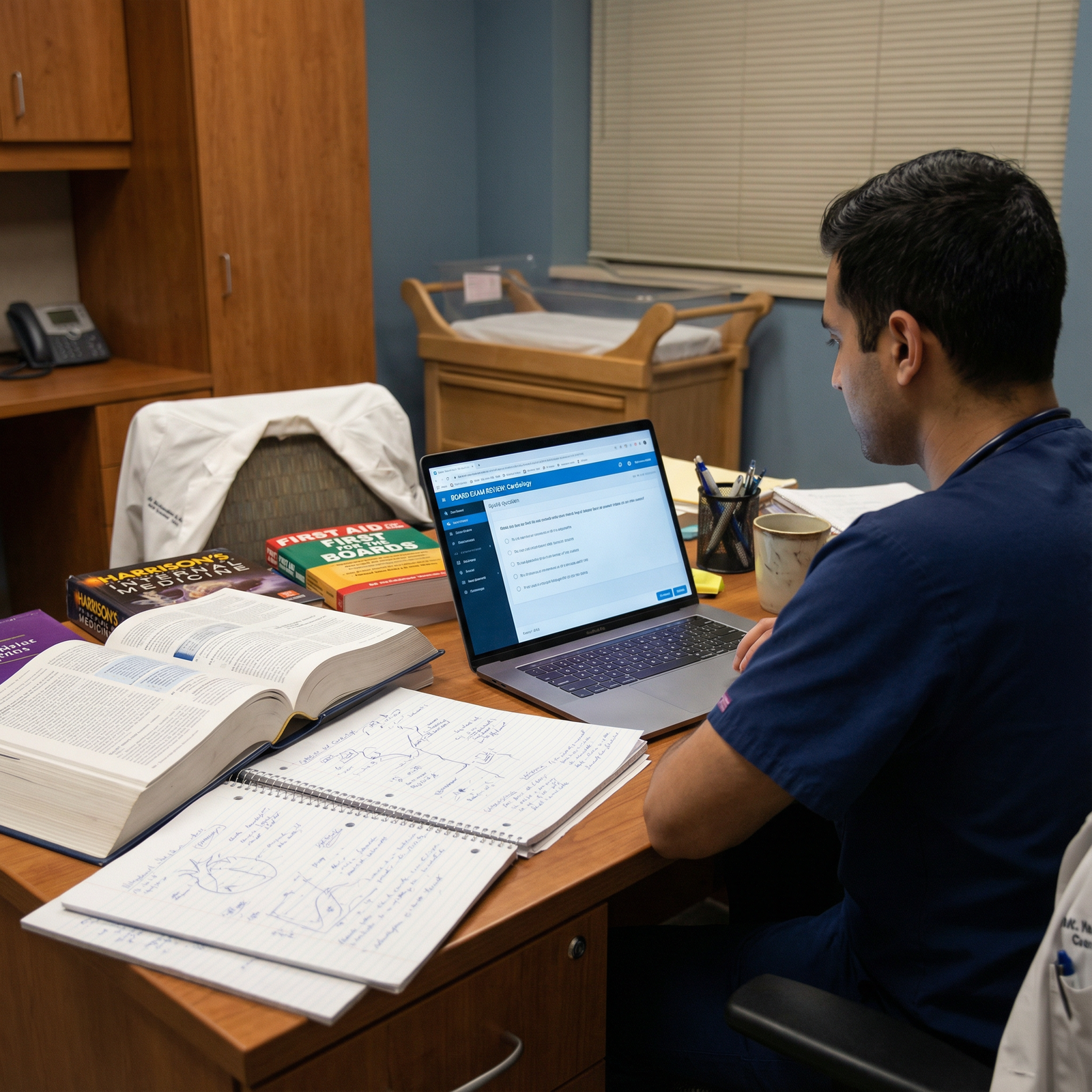
You wake up and you already know it’s a bad day. Joints feel like they belong to someone twice your age, your heart rate jumps when you stand, your brain is wrapped in wool. You check your schedule: long call tomorrow, clinic all week, and your board exam is in eight weeks.
You’ve been trying to “push through” Long COVID or a chronic condition that never really resolved—POTS, MCAS, autoimmune stuff, ME/CFS, migraines, whatever unfortunate combo you drew. You read that other residents are grinding through 200 UWorld questions a day and your limit some days is 20. On a good day.
And in the back of your mind is this gnawing thought:
“I do not have the same body as the people these exams are built around. Am I allowed to ask for help? Am I going to screw my career if I do?”
This is where you are: sick, training, and staring down board exams built for healthy people with stable energy and stable brains. Let’s walk through exactly what to do.
Step 1: Admit This Is a Disability Problem, Not a Motivation Problem
You do not fix Long COVID or chronic illness by “trying harder.” What you’re running into is a mismatch between:
- What your body can realistically do on a given day
- What high-stakes exams expect: sustained sitting, intense concentration, no breaks beyond the rigid schedule, sometimes masks on the whole time, fluorescent hell lighting, cold rooms, etc.
If your function is meaningfully limited—cognitive fatigue, post-exertional malaise, dysautonomia, severe migraines, GI urgency, pain that tanks concentration—this is disability territory. Even if you “look fine.”
The boards (USMLE, ABIM, ABS, ABP, ABOG, AOBIM, etc.) hate saying the word disability out loud, but that is literally the legal framework that forces them to offer accommodations. They don’t give you extra break time because they’re nice. They give it because the ADA requires equal access.
So the mental shift:
Not: “Can I survive this like everyone else?”
But: “Given my condition, what specific barriers does the standard exam format create, and what modifications would level the playing field?”
Write that down somewhere. It’ll help when you feel guilty for not just sucking it up.
Step 2: Get Very Specific About Your Functional Limits
You cannot ask for “help with Long COVID.” The boards do not care about your diagnosis label; they care about functional impairment.
You need a clean, concrete description of what goes wrong when you try to work or study like a healthy resident.
Examples:
- “After 60–90 minutes of cognitive work, I develop brain fog and cannot retain information; if I push through, I crash for 24–48 hours.”
- “Sitting upright longer than 45–60 minutes causes tachycardia, presyncope, and nausea due to POTS; I need to lie down briefly.”
- “Bright overhead lights and screens trigger migraines that completely impair vision and attention if I do not have light filters and breaks.”
- “I have unpredictable episodes of severe diarrhea requiring immediate bathroom access multiple times per day.”
Take a day and track this. Set timers:
- How long until your concentration drops off a cliff?
- What happens if you do a 4-hour test block?
- How do you feel the next day?
You’re not journaling for vibes. You’re building evidence.
These functional limits map directly to accommodations.
Step 3: Match Symptoms to Realistic Accommodations
Here’s what exists in the real world. You won’t get all of it, but you need to know what’s technically possible so you can ask precisely.
| Need / Symptom | Possible Accommodation |
|---|---|
| Cognitive fatigue / brain fog | Extra time (25–100%), extra breaks |
| POTS / orthostatic issues | Extra breaks, ability to lie down |
| Post-exertional malaise (PEM) | Reduced testing hours per day, multi-day |
| Severe GI issues | Unlimited restroom access, extra break |
| Migraine / light sensitivity | Screen filters, room with dimmable lights |
| Pain / joint issues | Ergonomic chair/desk, standing options |
Concrete asks that are actually used:
- Extra time: 25% or 50% additional testing time per block
- Extra break time: 50–100% additional break minutes
- Separate room: smaller or private testing room, often quieter and with more flexibility
- Multi-day administration: splitting a long exam (e.g., 8-hour day) into two shorter days
- Permission to bring medical items: meds, salt tablets, snacks, glucometer, water bottle, cooling devices
- Ability to lie down during breaks: access to a cot or permission to lie on the floor/bench in a private room
- Mask or no-mask considerations: if your condition is worsened by mask-wearing or you are high risk and need others masked, this gets tricky but can be argued
Think in combinations, not just one thing. A classic Long COVID / ME/CFS ask:
50% extra time + 50–100% extra breaks + two half-days instead of one marathon day.
Step 4: Understand the Timeline Game (It’s Rigged; Work Backwards)
Most boards move at glacial speed for accommodations. They love deadlines like “submit 90 days before exam” or “6 months before certification exam window.”
Assume:
- You will need 2–3 months to gather documentation and letters.
- They will need 1–3 months to make a decision.
- If they deny, appeal adds another 1–2 months.
So if your exam is in, say, October, you should be treating May–June as your real decision point.
Here’s the move: build a mini-timeline and actually map it.
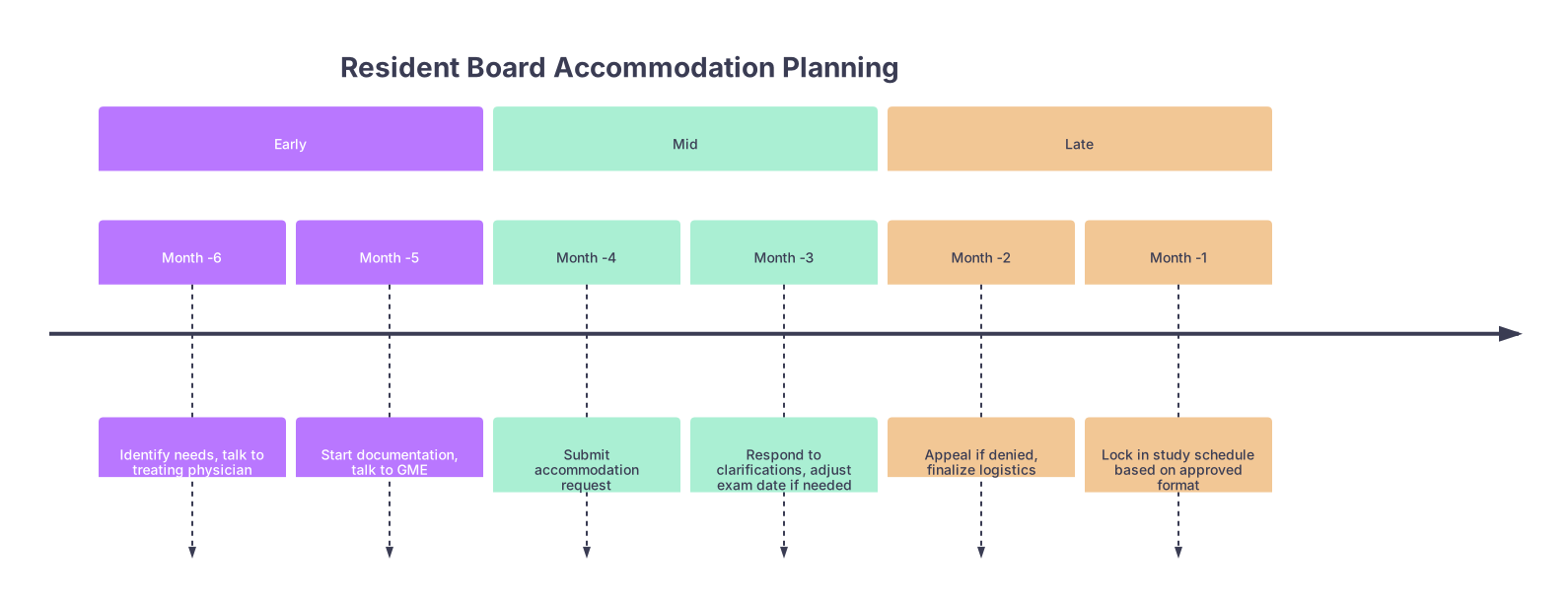
| Period | Event |
|---|---|
| Early - Month -6 | Identify needs, talk to treating physician |
| Early - Month -5 | Start documentation, talk to GME |
| Mid - Month -4 | Submit accommodation request |
| Mid - Month -3 | Respond to clarifications, adjust exam date if needed |
| Late - Month -2 | Appeal if denied, finalize logistics |
| Late - Month -1 | Lock in study schedule based on approved format |
If you’re reading this inside that 6-month window, fine. Start today. Worst case, you move your exam date so you can test under conditions that don’t wreck you.
Step 5: Get Your Documentation in Fighting Shape
This is where most people screw it up. They send in a clinic note that says “POTS, Long COVID” and expect the testing body to extrapolate. They won’t.
You need three pieces, usually:
- A detailed letter from a treating clinician (ideally a specialist).
- Objective evidence (testing, labs, standardized scales).
- A personal statement describing functional impact during testing.
What the clinician letter actually needs to say
Your clinician should:
- Confirm the diagnosis: “X has a diagnosis of Long COVID with associated ME/CFS and POTS.”
- Describe symptoms in functional terms: “X experiences post-exertional malaise, cognitive slowing, orthostatic intolerance.”
- Explicitly tie symptoms to test conditions: extended sitting, screen time, sustained concentration, limited breaks.
- Recommend specific accommodations and explain why each is necessary.
Bad line: “Patient would benefit from extra time.”
Good line: “Due to severe post-exertional malaise and cognitive fatigue, X requires 50% extended time on all test sections, 100% additional break time, and the option to split the exam over two days to avoid prolonged exertion that triggers multi-day functional crashes.”
If your clinician is busy (they are), you write a draft and they edit/sign. Do not be shy about that.
Objective evidence that actually helps
Examples:
- Autonomic testing for POTS (tilt table, heart rate and BP data)
- Neuropsychological testing showing slowed processing speed, impaired working memory, etc.
- 6-minute walk test or exercise intolerance documentation
- Standardized scales: PROMIS fatigue, cognitive function, COMPASS-31, SF-36, etc.
- Emergency visits or hospitalizations related to your condition
If you don’t have anything recent, schedule something now. Even a detailed PCP or specialist note with vitals and functional description is better than nothing.
Your personal statement
You’re not writing literature. You’re writing a legal-adjacent document. 1–2 pages, clear, structured:
- Brief history: when symptoms started (e.g., post-COVID infection in 2021), key diagnoses.
- How your condition shows up during sustained mental work.
- Past experiences with exams: did you crash after Step 2? Barely finish shelf exams? Need recovery days?
- Specific barriers in the exam environment for you.
- Specific accommodations you’re requesting, each tied to a symptom.
You want the reader to be able to underline: “symptom → barrier → requested fix.”
Step 6: Coordinate with GME and Disability Services (Yes, Even as a Resident)
You’re not just asking the board for accommodations. You may also need:
- Schedule adjustments for studying and the exam week
- Time off for neuropsych testing or specialist visits
- A lighter rotation when you take the exam
You have three separate but related entities:
- The exam body (NBME / specialty board / COMLEX folks)
- The testing center (Prometric or similar)
- Your program / GME office
Your program cannot grant board accommodations, but they can:
- Write a supportive letter: “Dr. X has disclosed a chronic condition; we have granted similar workplace accommodations (call schedule, clinic adjustments) that have been effective.”
- Protect your exam week from random calls or jeopardy coverage
- Align rotation schedules so you’re not on ICU the week of boards
Is every program supportive? No. Some are hostile or passive-aggressive. But you at least ask. If your PD is questionable, go to GME or the institutional disability office first.
Step 7: Decide When to Actually Take the Exam
This part gets ignored, but it matters: the structure of the exam you’re approved for deeply affects when you should sit.
If you:
- Require multi-day testing
- Need a separate room at a specific center
- Have complex medical equipment approvals
…that can limit which windows and dates are available.
So once you submit accommodations:
- Pause any paid exam scheduling until you at least know what’s likely
- Block off 2–3 target weeks where your rotation is relatively sane
- Be ready to shift your exam by a few months if that allows better conditions
And no, moving your exam back three months to get proper accommodations is not “falling behind.” Failing because you tested under impossible conditions is a bigger problem.
Step 8: Build a Study Plan That Matches Your Energy Reality
You cannot copy your co-resident’s study schedule if your body is playing on hard mode.
Here’s the basic principle:
You’re optimizing consistency within your limits, not total hours.
A realistic pattern for many Long COVID / chronic illness residents:
- 3–5 days per week of focused studying
- 60–90 minute blocks with real breaks (not doomscrolling) in between
- Planned rest days after heavy call or long stretches
- 1–2 practice blocks per week at first; ramp up as tolerated
Now match that to the exam format you’re requesting:
If you’re asking for:
- 50% extra time and more breaks → practice at that speed. Do not wait until test day to “use” accommodations you never trained with.
- Multi-day exam → mimic that in your practice: two half-length test days back to back and track post-exertional fallout.
Use a simple tracking system:
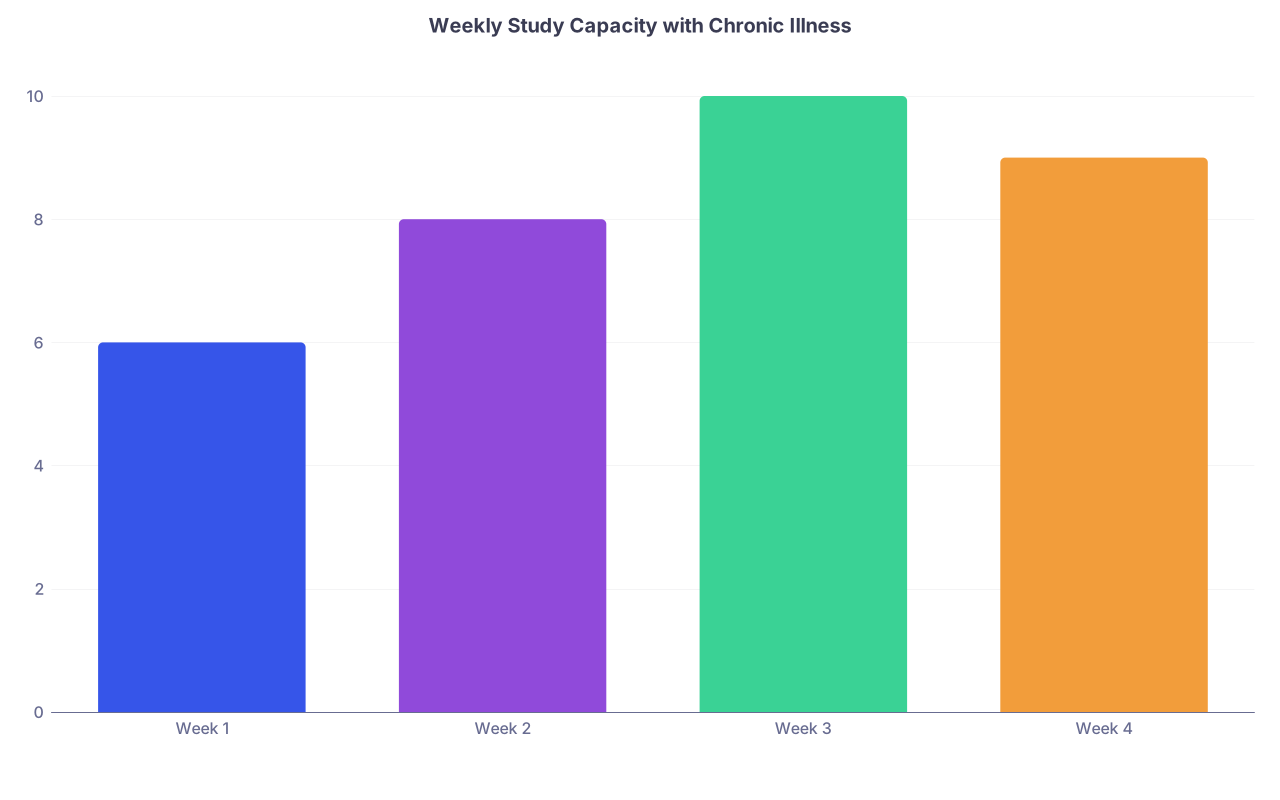
| Category | Value |
|---|---|
| Week 1 | 6 |
| Week 2 | 8 |
| Week 3 | 10 |
| Week 4 | 9 |
If your weekly “solid study hours” plateau at, say, 8–10 hours, that’s your real number. Work with it, not against it.
And accept this: you will have random lost days. Plan for 20–30% of your days to be “zero” days where nothing happens. That’s not failure. That’s built into the model.
Step 9: Manage Flare Risk Around the Exam Itself
Your goal is not just to show up on exam day. Your goal is to show up without triggering a 2-week crash that wrecks both your score and your residency duties.
The week before the exam:
- Pull back on hours. This is not the time for a 14-hour cram day.
- Protect sleep religiously.
- Simplify diet, hydration, meds to your most stable pattern.
- If you get PEM, treat practice questions like exercise—you taper.
The 72 hours around the exam:
- Arrange transport that minimizes effort (ride vs. transit if possible).
- Pack meds, snacks, hydration as if you’re going on a hike, not a quick errand.
- Plan a “soft landing” for the 48 hours after: no post-call, no critical presentations if you can help it.
A lot of Long COVID / ME/CFS folks crash after mental exertion just as hard as physical. So assume the exam is a massive exertional event. Respect it.
Step 10: Emotionally Detach Your Worth From the Accommodations Process
You’re going to run into nonsense:
- Board letters that imply you’re exaggerating because you got through med school.
- Requests for “more objective data” when your entire condition is under-researched.
- Colleagues who say, “If they give extra time, that’s not fair.”
You need a working stance: this is not a moral referendum on you. It’s a bureaucracy doing what bureaucracies do—protecting themselves first.
Document everything. Be polite but firm. When they ask for more data, you respond with what you have and restate the core points. If an appeal is needed, you write it with the same structure: symptom → barrier → requested accommodation → consequence if denied.
And if you feel like you’re begging for scraps, that’s because the system is built that way. You are not broken for needing what you need.
Special Cases: Program Boards, In-Training Exams, and Step 3
A few quick hits:
- In-Training Exams (ITEs): Some specialties allow accommodations on ITEs; others are more casual. Ask early. If you can get accommodations on ITEs, it creates valuable precedent for your board application.
- Step 3 during residency: Same ADA framework as Steps 1/2. If your function has changed since prior steps, you can still apply now. Do not assume that because you tested unaccommodated before you lose all future claim.
- Maintenance of Certification exams: Same logic. If your condition is long-term or progressive, keep documentation updated. Each new exam may require fresh paperwork.
If You’re Already Late or Already Denied
If you’re reading this and your exam is in 4 weeks, or you already got a denial letter, here’s the emergency plan:
- Decide if taking the exam unaccommodated is actually safe—physically and in terms of career. A failed exam can haunt you.
- Talk to GME and see if moving the exam is logistically viable.
- If you must sit for it:
- Treat it as a “data-gathering” attempt, not your identity test.
- Use every allowed break.
- Pre-plan emergency meds and post-exam recovery time.
- Start the appeal paper trail before the score even comes back. Tighten documentation, get a stronger letter, consider neuropsych testing if cognitive issues are front and center.
You may need to take a hit on timing to set up a sustainable path forward. That’s not weakness. That’s long-game thinking.
Today’s Next Step
Do one concrete thing today, not ten.
Open a blank document and write three headings:
- “My symptoms”
- “How they affect exams”
- “What I probably need”
Under each, write bullet points—messy is fine. That rough draft becomes:
- The basis for your conversation with your clinician
- The skeleton of your personal statement for accommodations
- The starting point for talking to your PD or GME
Then send one email—to your main treating clinician or to your institutional disability office—asking for a short appointment specifically to discuss board exam accommodations. That’s the first real move out of “just suffering through it” and into actually designing a way to keep both your career and your health.