
The loudest people do not make the best family docs or psychiatrists. Period.
You and I both know the fear behind your question isn’t cute or hypothetical. It’s that sick feeling that you’re quietly wrong for medicine unless you somehow transform into this upbeat, chatty, constantly “on” extrovert who can small-talk a brick wall. You’re looking at FM and psych and thinking: these are talking specialties. Am I doomed if I’m the quiet one?
Let me answer the part you’re too embarrassed to say out loud:
“Will patients think something is wrong with me if I’m not bubbly?”
“Will attendings say I have ‘no presence’ and tank my evals?”
“Will I just be exhausted and burned out because being social all day drains me?”
You’re not the only one spiraling on this. I’ve seen this exact anxiety in MS3s on their FM and psych rotations who looked like they were about to apologize for existing every time they knocked on a door.
Let’s walk straight into the worst-case scenarios and pick them apart.
The Lie: “You Have to Be Outgoing to Be Good at FM or Psych”
Here’s the harsh truth: med culture subtly worships the loud ones.
The student who dominates case presentations.
The resident who cracks jokes all day.
The attending who “owns the room” at morning huddle.
So your brain does the obvious math:
Lots of talking = good doctor
Quiet = weird, awkward, probably bad with patients
That “equation” is nonsense. In family medicine and psychiatry especially, listening is more valuable than constant talking. Patients don’t remember how charming you were. They remember whether they felt heard, safe, and not rushed.
In FM clinic, I’ve watched extremely extroverted residents derail visits with too much chatter. Eight minutes on “How’s the football season?” and now there’s no time to get into the chest pain the patient almost didn’t mention.
Meanwhile, I’ve seen very quiet interns in psych sit through long silences, not flinch, and then the patient suddenly drops something massive: “I didn’t tell anyone this before but…” That doesn’t happen because you’re talkative. It happens because you’re present.
The real requirements for thriving in FM or psych are things introverts often do better than average:
- Being comfortable with silence
- Actually listening instead of preparing your next joke
- Not over-filling the visit with yourself
- Picking up subtle shifts—tone, facial muscles, tiny hesitations
Are there problems if you’re too quiet? Yes. I’ll get to that. But the fear that “quiet = wrong specialty” is just wrong.
The Real Fear: “What If My Quiet Looks Like Awkward, Cold, or Incompetent?”
Here’s where it gets tricky. Because you’re not really afraid of being quiet.
You’re afraid your quiet will be misinterpreted.
As uninterested.
As detached.
As low confidence.
As “no bedside manner.”
And honestly? That can happen. I’ve seen attendings complain about students with:
- No greeting, just “So uh… why are you here?”
- No eye contact, head buried in Epic
- Soft voice + no structure = the patient drives the whole visit
In psych it’s even scarier, because everything is interpersonal. I’ve heard an attending say, “If I can’t feel them in the room, how will patients?” Brutal. But it wasn’t about volume. It was about engagement.
This is the part most quiet applicants mix up:
You can be:
- Quiet but engaged → this works
- Quiet and withdrawn → this tanks evals
Your job is not to become loud. Your job is to make your quiet read as calm, attentive, and intentional, not as disappearing.
That’s a skill, not a personality transplant.
Where Introverts Quietly Crush FM and Psych
Let’s talk strengths, because your brain is probably allergic to acknowledging you have any.
In both FM and psych, patients show up with messy, nonlinear stories. “My back hurts, and my sleep is weird, and also my mom died last year, and my meds are off, and I think I’m depressed, but also can I get a refill?” That chaos rewards certain traits.
Here’s where introverts tend to shine:
Depth over noise
You’re not trying to entertain. You’re trying to understand. Patients feel the difference. I’ve seen quiet residents develop deep trust with “difficult” patients because they weren’t performative; they just sat there and actually listened.Comfort with long, slow visits
In psych, especially: it’s a marathon. 45–60 minutes of sitting in emotions. Extroverts who need constant stimulation sometimes struggle more with this than introverts who are used to being in their own heads.Not dominating the patient’s narrative
Family med: the hypertensive patient who finally tells someone about the domestic violence. Psych: the teenager who only opens up when they realize you’re not going to interrupt or “fix” them immediately. That’s not charm. That’s self-restraint and presence.Pattern recognition + observation
Introverts have this creepy (useful) ability to sit quietly and notice everything. Tiny inconsistencies. Body language. Affect shifts. That’s psych gold. That’s FM gold when someone says everything is “fine” but their affect screams otherwise.
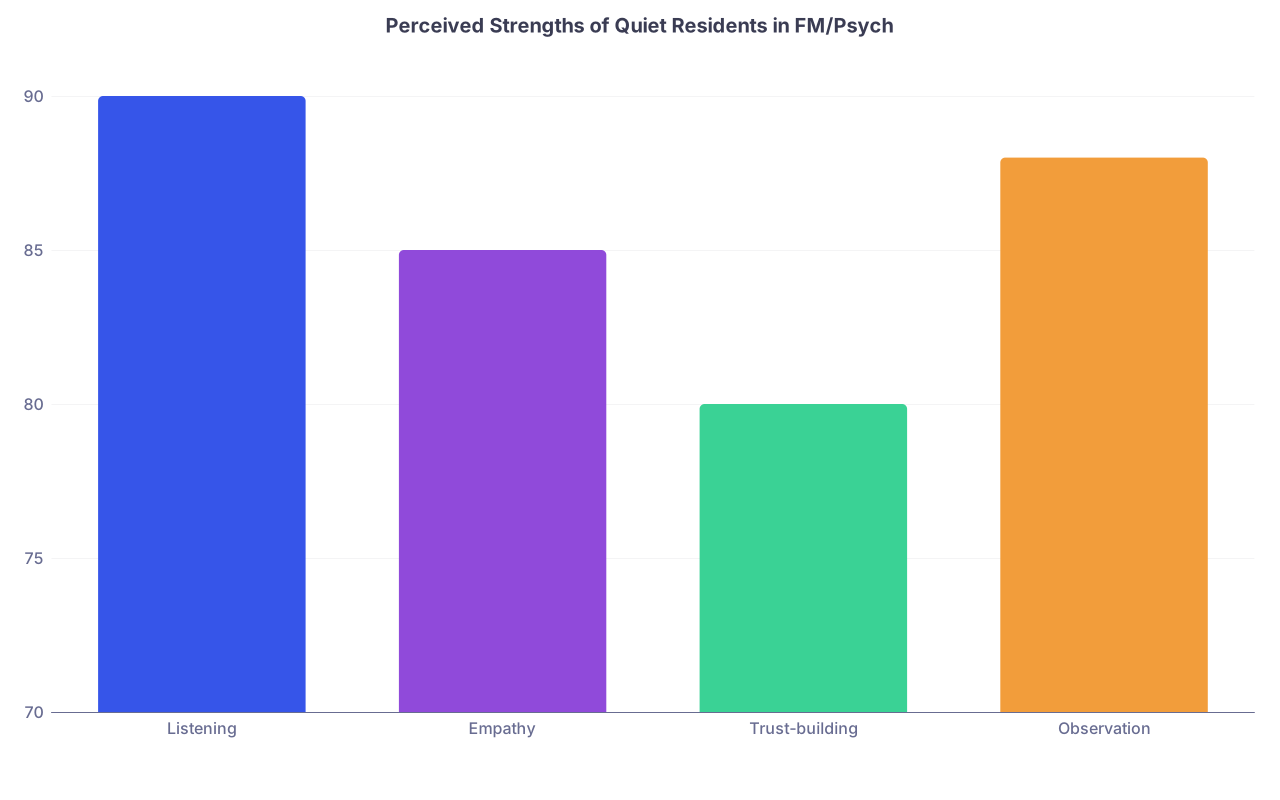
| Category | Value |
|---|---|
| Listening | 90 |
| Empathy | 85 |
| Trust-building | 80 |
| Observation | 88 |
Is there a “charisma premium” in medicine? Yes. Do you need it to be a good FM or psych doc? No. You need reliability, warmth, and the ability to make patients feel like they’re not being rushed off a conveyor belt.
You can absolutely do all that while being the quietest person on your team.
Where Quiet Can Backfire (and What You Can Actually Do About It)
Here’s the part your anxiety is waiting for: the problems you’re right to worry about.
Because “I’m introverted” can turn into this vague excuse that hides real skill gaps you do need to fix.
Areas that can hurt you:
Too soft / mumbled speech
If people are constantly asking “Sorry, what?”—that’s not “introvert,” that’s a communication issue. In psych interviews especially, clarity is non‑negotiable.No structure to the visit
FM: you let patients hop all over the place and you’re afraid to redirect, so everything feels chaotic and incomplete. Psych: you avoid asking tough, direct questions about SI, HI, substance use because it feels intrusive. That’s not shyness. That’s avoidance.Vanishing during rounds
If you never volunteer plans, never speak up even when you’ve thought everything through—attendings will assume you didn’t think. They can’t evaluate what you don’t show.Coming off as “cold” even when you care
Minimal facial expression + minimal verbal reassurance can make patients feel dismissed, especially in primary care where cultural expectations of “friendly doctor” are higher.
These are all fixable with specific, behavioral changes. Not a full personality rewrite.
Concrete things that help (and that I’ve seen quiet folks use successfully):
Script the first 20 seconds of the encounter. Literally.
“Hi, I’m Dr. X, I use she/her pronouns, I’ll be your family medicine doctor today. What would you like to make sure we talk about?” Say it so many times it becomes muscle memory. It removes the first-wave awkwardness.Overcommunicate your listening.
Small verbal cues: “I hear you,” “That sounds really tough,” “Let me make sure I got this right…” These phrases take almost no energy but prevent you from reading as indifferent.Use structure as your superpower.
“We’ll start with what’s bothering you most today, then I’ll ask a few background questions, and at the end we’ll come up with a plan together.” Patients relax when they feel a container. You don’t have to be loud; you just have to be clear.Practice one assertive redirect line.
“That’s really important, and I want to come back to it—can I ask you a few questions about your breathing first so we don’t miss anything urgent?”
You can be gentle and still lead.
None of this requires you to become hyper-social. It requires skillful, intentional communication—which is completely learnable, especially if you’re already self-aware enough to be worrying about this.
FM vs Psych: Is One Better for Introverts?
Short answer: both can work. But the flavor of interaction is different, and your brain might prefer one type of social exhaustion over the other.
Let me paint it more concretely.
Family Medicine:
- Shorter visits (15–20 minutes, sometimes less)
- More variety: diabetes, URI, prenatal care, depression, all in one morning
- More small talk pressure in some clinics (community vibe, “How’s the family?”)
- BUT also a lot of “let’s fix this specific problem today”
Psychiatry:
- Longer visits (30–60 minutes, sometimes more)
- Purely cognitive/emotional work; you’re “on” mentally the whole time
- Silences are normal, which can be a blessing for introverts
- Less physical exam, more sustained one-on-one emotional presence
If your social battery gets drained by constant topic switching, phone calls, and social surface-level chit-chat, you might find psych more natural. If being in heavy emotional content for an hour at a time sounds suffocating, FM might be easier to tolerate—you can reset between rooms.
Here’s a simplified comparison:
| Aspect | Family Medicine | Psychiatry |
|---|---|---|
| Visit length | Shorter, more frequent | Longer, fewer per day |
| Emotional intensity | Variable | Often high, sustained |
| Small talk expectation | Higher in some clinics | Lower |
| Silence in visits | Less common | Very common, accepted |
| Type of exhaustion | Social + logistic | Emotional + cognitive |
Neither is “the introvert specialty.” Both are possible. It’s more about which kind of tired you’d rather be at 5 pm.
The Worst-Case Scenario You’re Probably Imagining
Let’s say you match FM or psych. PGY-1. You’re the quiet one on the team.
Here’s the horror movie you’re running in your head:
- Attendings say you’re “not assertive enough” on every eval
- Nurses bypass you and go to the louder resident
- Patients leave thinking, “That doctor was weird”
- You feel fake all the time when you try to be more outgoing
- You start dreading clinic and think you chose the wrong specialty
Can parts of this happen? Yes. I’ve watched versions of it. But it almost never happens because someone is introverted. It happens because:
- They never got feedback early enough
- They assumed “this is just my personality” and didn’t adjust
- They didn’t separate social comfort from professional skill
I’ve also watched quiet residents completely rewrite their narrative over 6–12 months:
- First eval: “Needs to be more confident, too quiet”
- Mid-year: “Much more comfortable leading visits, thoughtful, strong rapport”
- End-year: “Patients really trust her. Calm, steady presence in clinic.”
They did not suddenly become extroverts. They just:
- Practiced a stronger speaking voice
- Forced themselves to present a plan on rounds, even when anxious
- Used simple empathic phrases so they didn’t seem flat
- Took feedback seriously and treated communication as a procedure to master
That’s the part that’s weirdly reassuring: this is a skill. Not an identity.

| Step | Description |
|---|---|
| Step 1 | Quiet MS3 |
| Step 2 | Early FM/Psych Rotations |
| Step 3 | Stays stuck - misread as disengaged |
| Step 4 | Targets specific skills |
| Step 5 | Practices scripts and structure |
| Step 6 | Builds confidence in clinic |
| Step 7 | Quiet but strong PGY1 |
| Step 8 | Gets feedback? |
How to Test This Before You Commit
If you’re still pre-residency and spiraling, here’s what I’d do if I were you and introverted and terrified:
On your FM or psych rotation, ask for brutally specific feedback.
Not “How am I doing?” but “Do I ever come off as uninterested or too quiet with patients? I’m naturally quiet and I don’t want it to hurt care.”
Yes, it’s vulnerable. Also, it’s the fastest way to find blind spots.Watch one quiet attending you respect.
Every department has one. Calm voice, not flashy, patients love them. Study them like a procedure. How do they open visits? How much do they talk vs listen? What exact phrases do they use?Notice your type of exhaustion.
After an FM day vs a psych day, what kind of tired are you? Do you feel “socially scraped raw”? Or “emotionally wrung out”? Which one feels more sustainable for you long term?Ask patients what worked.
Even one or two times: “Was there anything I did today that made this visit more helpful or less helpful?” You’ll be surprised how many say, “You actually listened.” Quiet is not their enemy.
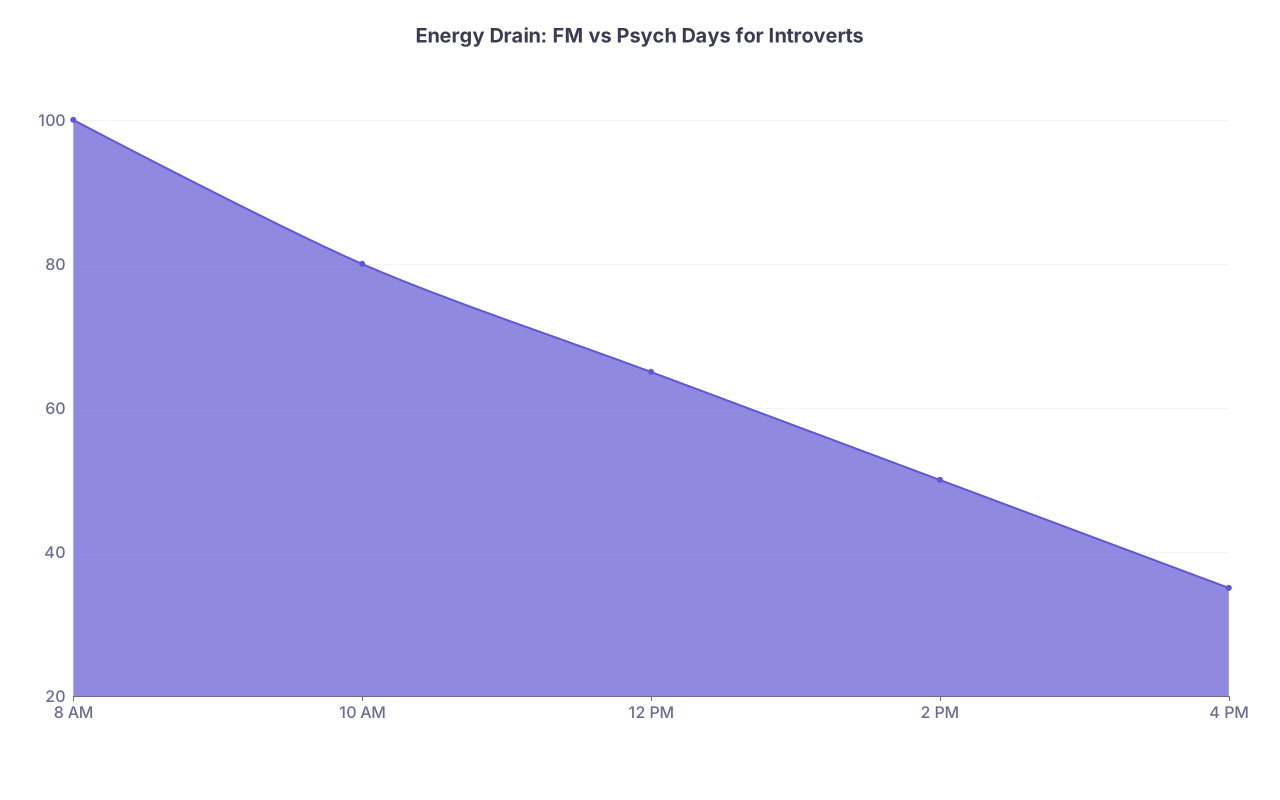
| Category | Value |
|---|---|
| 8 AM | 100 |
| 10 AM | 80 |
| 12 PM | 65 |
| 2 PM | 50 |
| 4 PM | 35 |
FAQ (Exactly 4 Questions)
1. Will programs reject me from FM or psych interviews if I seem quiet on paper or on Zoom?
Not automatically. Programs care much more about: do you seem professional, kind, and easy to work with? On Zoom, you don’t need to be the life of the party. You need to show up prepared, answer questions clearly, look at the camera sometimes, and ask one or two thoughtful questions. Quiet but composed reads fine. What worries them is monotone, unengaged, or giving one-word answers. Practice full-sentence, clear responses. That’s it.
2. What if my evals literally say “too quiet” or “needs more confidence”? Is that a red flag for these specialties?
It’s a yellow flag, not a stop sign. Many residents had those comments early. What PDs want to see is trajectory: did you respond to that feedback and improve? If your later evals say “has grown in confidence” or “more comfortable leading visits,” you’re fine. If the same note appears 10 times with no change, that’s where it hurts.
3. Can I actually enjoy a career where I’m talking to people all day if I’m introverted?
You might be surprised. A lot of introverts don’t hate people; they hate chaotic, shallow interaction. FM and psych—at their best—are about meaningful conversation, not constant mingling. You’ll be tired, yes. But it can be the satisfying kind of tired, like finishing a long run you chose, not being trapped at a networking event.
4. Bottom line: Can a quiet person truly thrive, not just survive, in FM or psych?
Yes. If you’re willing to treat communication like a core clinical skill instead of a fixed personality trait. That means asking for feedback before it’s comfortable, scripting parts of your encounters, intentionally signaling warmth, and pushing yourself to be visible on your team even when you’d rather melt into the wall. Stay quiet. Don’t stay invisible.
Key points, without sugarcoating:
Your quiet personality does not disqualify you from FM or psych. What will hurt you is letting “introvert” become an excuse for avoidant, under-developed communication. If you’re willing to build clear, intentional ways of showing up with patients and your team, you can absolutely thrive—and your quiet might actually be your biggest asset.