
The biggest mistake IM and primary care applicants make six months before ERAS is thinking they “just need more time” instead of using the time they already have with precision.
You do not need more time. You need a sharper plan.
Below is a concrete, specialty‑specific, time‑anchored guide for the six months leading up to ERAS submission, focused on Internal Medicine and Primary Care (IM, categorical IM, medicine‑prelim, family medicine, med‑peds, and combined IM primary care tracks).
Month -6: Lock Your Direction And Build The Core File
At six months out from ERAS opening, you are out of “figuring it out someday” territory. At this point you should:
1. Decide: IM vs Primary Care vs “Both”
By six months before ERAS (roughly January if you are submitting in September):
- You should have:
- Completed at least your core IM rotation.
- Seen enough outpatient clinic to know if you like longitudinal relationships or prefer inpatient churn.
- You must decide one of three paths:
- IM‑heavy applicant (categorical IM ± prelim, maybe med‑peds later).
- Primary‑care‑heavy applicant (family medicine, IM primary care tracks).
- Deliberate hybrid (applying to both IM categorical and FM / IM‑PC in a balanced way).
If you are still “seeing what happens,” you are behind. Fix it now.
Practical rule of thumb:
- You love call nights, wards, and complicated differentials → skew to IM.
- You light up in continuity clinic, team‑based chronic disease management, and community work → skew to primary care.
- You can tolerate both and want flexibility or are uncertain → plan a true mixed application, but you will need two subtly different narratives.
2. Build a Preliminary Program List (IM vs PC Emphasis)
At this point you should open a spreadsheet and create three tabs:
- Tab 1: “IM – categorical/prelim”
- Tab 2: “Primary Care – FM / IM‑PC / Med‑Peds”
- Tab 3: “Stretch / Safety logic”
Start listing:
- Your home IM program(s) and affiliated community IM programs.
- Regional FM programs with strong outpatient training.
- Combined IM primary care tracks (e.g., Montefiore IM Primary Care, UCSF Primary Care, UW WWAMI, etc.).
- Any med‑peds programs if you are even remotely considering it.
You are not committing yet, but you are choosing your playing field.
| Focus Type | Target Number of Programs |
|---|---|
| Categorical IM | 15–25 |
| Medicine Prelim | 3–5 |
| FM / IM-Primary | 10–20 |
| Med-Peds (optional) | 3–8 |
3. Audit Your Clinical Experiences – With Specialty Lenses
By the end of Month -6 you should:
- List all IM‑relevant experiences:
- Sub‑I in medicine.
- ICU / CCU.
- Hospitalist elective.
- Research in cardiology, oncology, etc.
- List all primary‑care‑relevant experiences:
- Outpatient IM clinic.
- Family medicine core/elective.
- Community health centers, FQHCs.
- Longitudinal clinics, student‑run free clinics.
Then ask, bluntly:
- Do I look like an IM person on paper?
- Do I look like a primary care person?
- Or do I look like “generic undecided”?
Where you are lacking determines your next rotations.
4. Lock Key Rotations for Months -5 to -2
At six months out you still have some scheduling power. Use it.
You should push to schedule:
- For IM‑leaning applicants:
- 1 IM Sub‑I (if not already completed).
- 1 ICU/CCU month or a strong inpatient elective.
- For primary‑care‑leaning applicants:
- 1 FM or IM‑PC heavy outpatient month.
- 1 community / underserved outpatient elective.
- For hybrids:
- One inpatient‑heavy month (Sub‑I or ICU).
- One dedicated outpatient primary care month.
These months should fall between Month -5 and Month -2 so that letters and narrative are fresh.
Month -5: Engineer Your Letters And Your Story
At five months before ERAS, you stop being passive about “hoping for strong letters.” You start engineering them.
1. Decide Your Letter Mix: IM vs Primary Care
You should sketch your ideal letter portfolio:
- IM‑dominant applicant:
- 2–3 IM faculty letters (at least one from inpatient, one from Sub‑I or ICU).
- 1 additional letter (research mentor, outpatient IM, or dean’s letter where required).
- Primary‑care‑dominant applicant:
- 1–2 FM or IM‑PC letters with clear outpatient / continuity emphasis.
- 1 IM letter (shows you can handle inpatient too).
- 1 “plus” letter (community work, public health, med‑peds if relevant).
- Hybrid applicant:
- 2 strong IM letters.
- 1 strong primary care / FM / community letter.
- Optional 4th that can flex depending on which program type you apply to.
At this point you should identify specific names, not generic roles.
2. Set Up “Letter‑Building” Meetings
By the end of Month -5, you should:
- Meet (or email) potential letter writers and say explicitly:
- “I am planning to apply primarily to Internal Medicine with a strong interest in [hospitalist/academic IM/fellowship X].”
- Or: “I am planning to apply to Primary Care / Family Medicine with a focus on [underserved care, rural medicine, etc.].”
- Ask them:
- “Do you feel you can write a strong letter specific to Internal Medicine?”
- Or: “…specific to Primary Care / Family Medicine?”
If they hesitate, move on. Weak letters are lethal.
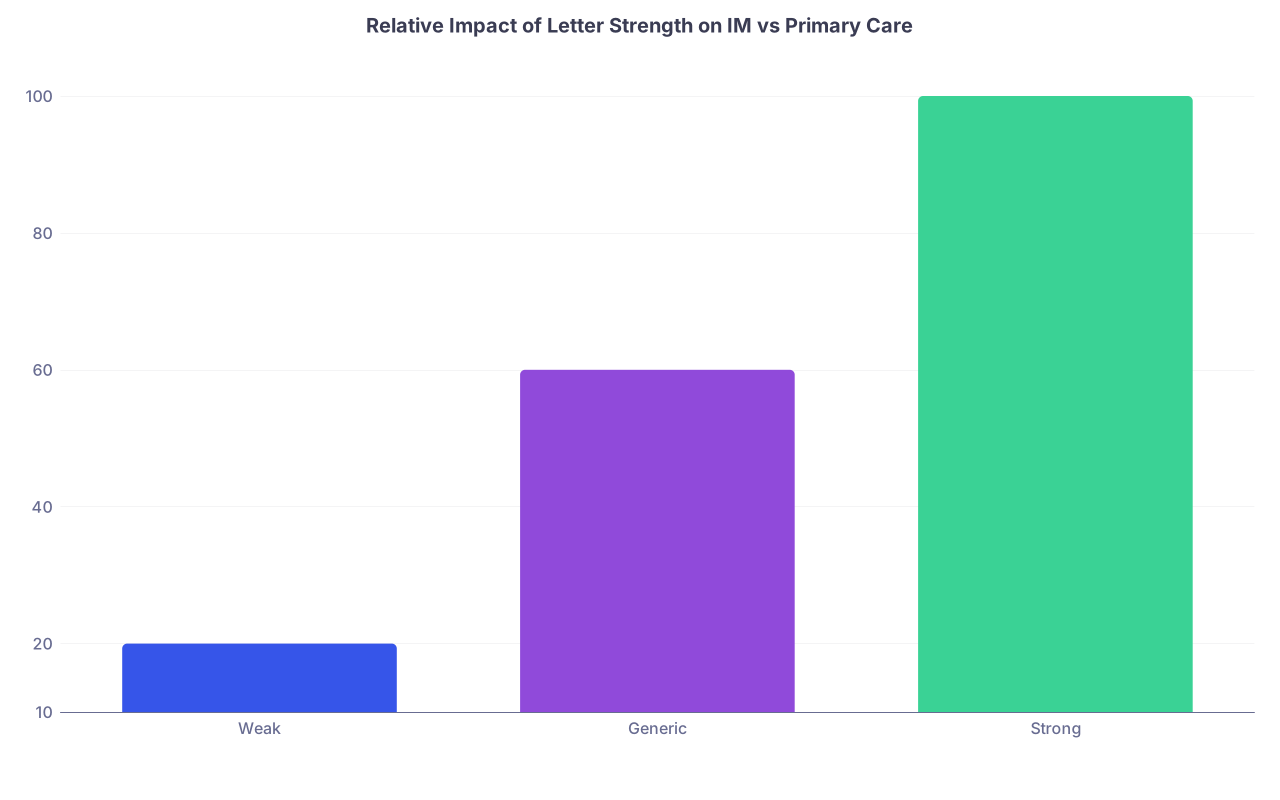
| Category | Value |
|---|---|
| Weak | 20 |
| Generic | 60 |
| Strong | 100 |
(Interpretation: Strong vs generic letters matter far more than squeezing in an extra program or two.)
3. Start Specialty‑Specific CV Structuring
At this point you should reshape your CV into two filtered versions:
- IM‑focused CV first sections:
- Clinical IM experiences (Sub‑I, ICU, hospitalist electives).
- IM‑related research / QI.
- Teaching and leadership relevant to inpatient teams.
- Primary‑care CV first sections:
- Outpatient clinics, community health.
- Behavioral health integration, chronic disease management.
- Community service, health education, public health work.
Same underlying facts, different order and emphasis. This matters when PDs skim for 60 seconds.
Month -4: Nail Sub‑I Performance And Clarify Career Arc
Four months before ERAS you are moving from setup into execution. This month is about performance and narrative clarity.
1. Crush Your IM Sub‑I or Key Outpatient Month
If your IM Sub‑I or major primary care month falls here (it should):
- For IM:
- Pre‑round early, know your patients cold.
- Present like a junior resident: assessment organized by problems, with plans that show you understand pathophysiology, not just “continue current management.”
- Volunteer for admissions. PDs notice.
- For primary care:
- Own follow‑ups. Know your patients’ stories, not just their labs.
- Demonstrate comfort with multi‑problem visits (HTN, DM, depression in 20 minutes).
- Show you understand resource limitations and social determinants.
At the end of the month you should explicitly ask the attending you impressed most about a letter if you have not already.
2. Clarify Long‑Term Direction – With Fellowship Reality
Internal Medicine and Primary Care have different downstream realities. At this point you should:
- Decide if you are:
- IM with fellowship ambitions (cards, GI, heme/onc, pulm/crit, ID, etc.).
- IM hospitalist / academic generalist.
- Primary care clinician‑educator.
- Rural / community primary care / FM.
This changes how you talk about yourself in your personal statement and interviews.
- IM PDs like:
- Clear interest in complex medical patients.
- Curious, analytic mindset.
- Willingness to do QI and sometimes research.
- Primary‑care PDs like:
- Commitment to underserved communities.
- Interest in continuity, preventive care, behavioral health.
- Comfort with broad scope, not hyper‑specialization.
Do not fake primary care passion just because you are anxious about competitiveness. They can tell.
3. Start Drafting TWO Outlines For Personal Statements
At Month -4 you do not need polished essays yet. But you do need structure.
Create two 1‑page outlines:
IM statement outline:
- Patient story or moment that hooked you on complex internal medicine.
- How your IM rotations reinforced interest (Sub‑I, ICU, consult services).
- Evidence of academic / analytic habits (research, teaching, QI).
- Career direction: hospitalist vs fellowship track.
Primary‑care statement outline:
- Patient/community story that highlights continuity and impact.
- Experiences in FM / IM‑PC / community clinics.
- Work with underserved, language skills, advocacy.
- Career direction: community primary care, academic PC, rural track, etc.
You are not writing two entirely separate lives. You are emphasizing different truths.
Month -3: Finalize Rotations, Lock Letters, Start Real Writing
At three months before ERAS, time gets tight. No more vague “later.” This month is about closing open loops.
1. Confirm All Letters Are In Motion
By now:
- Every letter writer should:
- Have your updated CV.
- Have a short paragraph (even bullet points) on:
- Why IM or why primary care.
- Key patients or moments they saw that represent you.
- Know your rough program targets (academic vs community, region).
Set hard follow‑up dates. I recommend:
- Ask for letters to be completed by Month -1.
- Send one reminder halfway (Month -2).
2. Finish Any Remaining Specialty‑Relevant Rotations
At this point you should not be scheduling random electives unrelated to your chosen field.
- Good IM‑side choices for this window:
- Cardiology, nephrology, ID, pulm/crit consults.
- Hospitalist medicine.
- Good primary‑care‑side choices:
- FM with OB if you are FM‑bound.
- Rural or community health rotations.
- Addiction medicine, geriatrics, behavioral health.
What you do now is still letter‑ and narrative‑relevant, but you are running out of calendar, so be intentional.
3. Draft Personal Statements – Specialty‑Tuned
By the end of Month -3 you should have:
- A full IM personal statement draft.
- A full primary care / FM draft if you are applying there too.
Differences need to be real, not just “replace ‘Internal Medicine’ with ‘Family Medicine.’”
Bad example (I have seen this too often):
“My love for inpatient medicine and ICU made me realize Family Medicine was my calling.”
No. That is incoherent.
Instead:
- IM statement: emphasize sick inpatients, complexity, longitudinal interest focused through hospital or subspecialty.
- PC statement: emphasize ambulatory continuity, prevention, family context, population‑level thinking.
Month -2: Polish, Strategize Program Tiers, And Prepare Specialty‑Specific Talking Points
Two months before ERAS, the broad architecture should be set. Now you refine.
1. Build a Tiered Program List – Separately For IM and Primary Care
You should now convert your initial spreadsheet into actual tiers.
For IM:
- Tier 1: “Reach” academic IM programs.
- Tier 2: Solid academic / strong community IM.
- Tier 3: Safety community IM, prelim medicine spots.
For Primary Care:
- Tier 1: Competitive academic PC/FM (e.g., UCSF, UW, Boston Medical Center).
- Tier 2: Regional academic / large community FM and IM‑PC tracks.
- Tier 3: Community FM programs, rural tracks suited to your background.
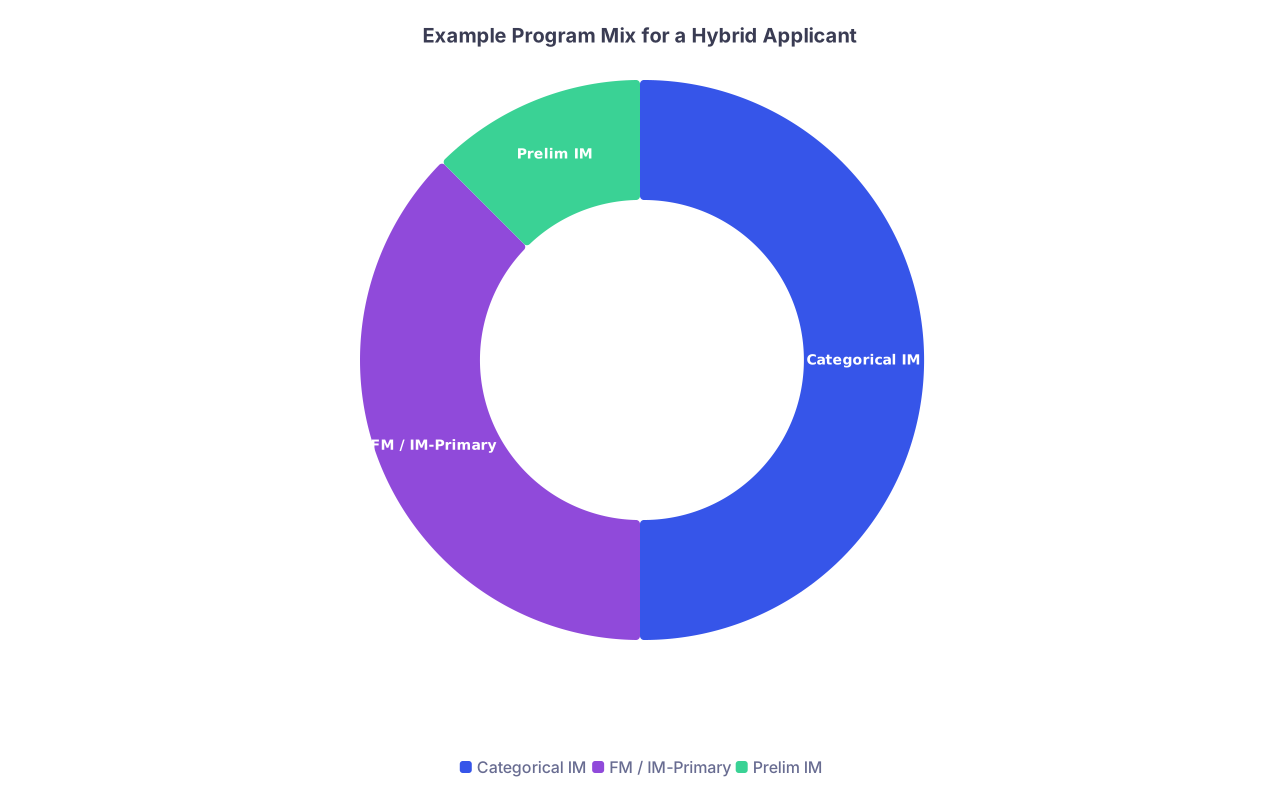
| Category | Value |
|---|---|
| Categorical IM | 20 |
| FM / IM-Primary | 15 |
| Prelim IM | 5 |
Use your Step scores, grades, AOA status, and school reputation to adjust realism. Dream a little, but do not be delusional.
2. Decide Which Version Programs Will See
At this point you should map:
- Which programs will get:
- IM‑flavored personal statement and IM‑heavy letter set.
- PC/FM‑flavored statement and PC‑heavy letter set.
Create a column in your spreadsheet for “application flavor” so that when you upload in ERAS you do not guess.
3. Refine Specialty‑Specific Talking Points
By the end of Month -2 you should be able to answer, without rambling:
For IM:
- “Why Internal Medicine instead of Family Medicine?”
- “Where do you see yourself in ten years – hospitalist, fellow in X, academic vs community?”
- “Tell me about a complex inpatient case you managed and what you learned.”
For Primary Care:
- “Why primary care in the middle of a sub‑specialized system?”
- “What kind of community or population do you want to serve?”
- “How will you handle the frustrations of short visits, bureaucracy, and burnout?”
Write brief bullet‑point answers now. You will refine them again pre‑interview, but the core has to be consistent with your application.
Month -1: Final Checks, Specialty Signals, And Contingency Planning
One month before ERAS submissions, IM and primary care applicants should be in tightening mode.
1. Confirm All IM / PC Letters Are Uploaded Or Imminent
At this point you should:
- Log into ERAS (or your letter portal) and verify:
- All letter writers are listed.
- At least 3–4 are marked “uploaded” or have a very near due date you have confirmed personally.
If a primary care or FM letter is missing and the writer is non‑responsive, you need a backup immediately (clinic preceptor, FM attending from prior rotation, community health mentor).
2. Re‑Read Your Application Through Each Specialty’s Eyes
Do a full, brutal read‑through:
Version 1: As an IM program director.
- Do you see enough inpatient experience, IM thoughtfulness, and potential for academic growth?
- Are research/QI and teaching experiences clear?
Version 2: As a primary‑care/FM program director.
- Do you see continuity, community work, prevention, holistic care?
- Does the applicant look like they understand the reality of primary care, not an idealized TV version?
If you read your own application and cannot tell which specialty you are aiming for, that is a problem. Adjust activities descriptions and ordering.
3. Prepare a Rough Interview Season Plan Differentiated by Specialty
At this point you should have:
- A sense of:
- Rough number of IM invites you expect to accept.
- Rough number of FM / PC invites you will accept.
- A loose plan for ranking strategy:
- Will IM outrank FM no matter what?
- Are there FM programs that would outrank weaker IM programs for you?
Do not wait until January to figure this out. It will affect how you talk during interviews.

Final Two Weeks Before ERAS Submission: Micro‑Edits And Specialty Proofing
The last two weeks are not for rebuilding. They are for fine‑tuning.
Week -2: Specialty‑Specific Micro‑Edits
You should:
- Shorten any bloated descriptions in your Work/Activities section.
- Add one line to certain entries to clearly signal specialty interest:
- For IM:
- “This experience solidified my interest in complex inpatient medicine and future training in Internal Medicine.”
- For Primary Care:
- “Working with this underserved clinic reinforced my commitment to longitudinal primary care.”
- For IM:
Do not overdo it. One or two well‑placed sentences can carry the message.
Week -1: Final Consistency Check
At this point you should:
- Cross‑check:
- Personal statement(s).
- CV.
- LOR composition.
- Program list and “application flavor” assignments.
Look for contradictions:
- IM statement claiming “I am certain I want to subspecialize,” paired with a PC‑heavy letter talking about your “lifelong commitment to broad outpatient practice.”
- Or FM apps with an activities section that hardly mentions outpatient or community.
Fix those.

Specialty‑Specific Daily and Weekly Habits Throughout the 6 Months
All the big moves above fail if your daily habits are sloppy. Here is what should quietly run in the background.
Weekly (IM‑Focused)
- 1–2 hours reading:
- NEJM clinical problem‑solving, JAMA IM, hospitalist blogs.
- Maintain a running list of interesting inpatient cases and what you learned. Use real numbers, labs, and decisions. These are gold in interviews.
- 30–60 minutes on a small QI or research project progress, if applicable.
Weekly (Primary‑Care‑Focused)
- 1–2 hours on:
- Primary care podcasts, FM journals, or evidence‑based guidelines (USPSTF, ADA, ACC/AHA).
- Document meaningful outpatient encounters:
- “New DM diagnosis in a 45‑year‑old, barriers to medication adherence, how we addressed them.”
- 30–60 minutes updating a brief log of community work, health education, or patient advocacy.
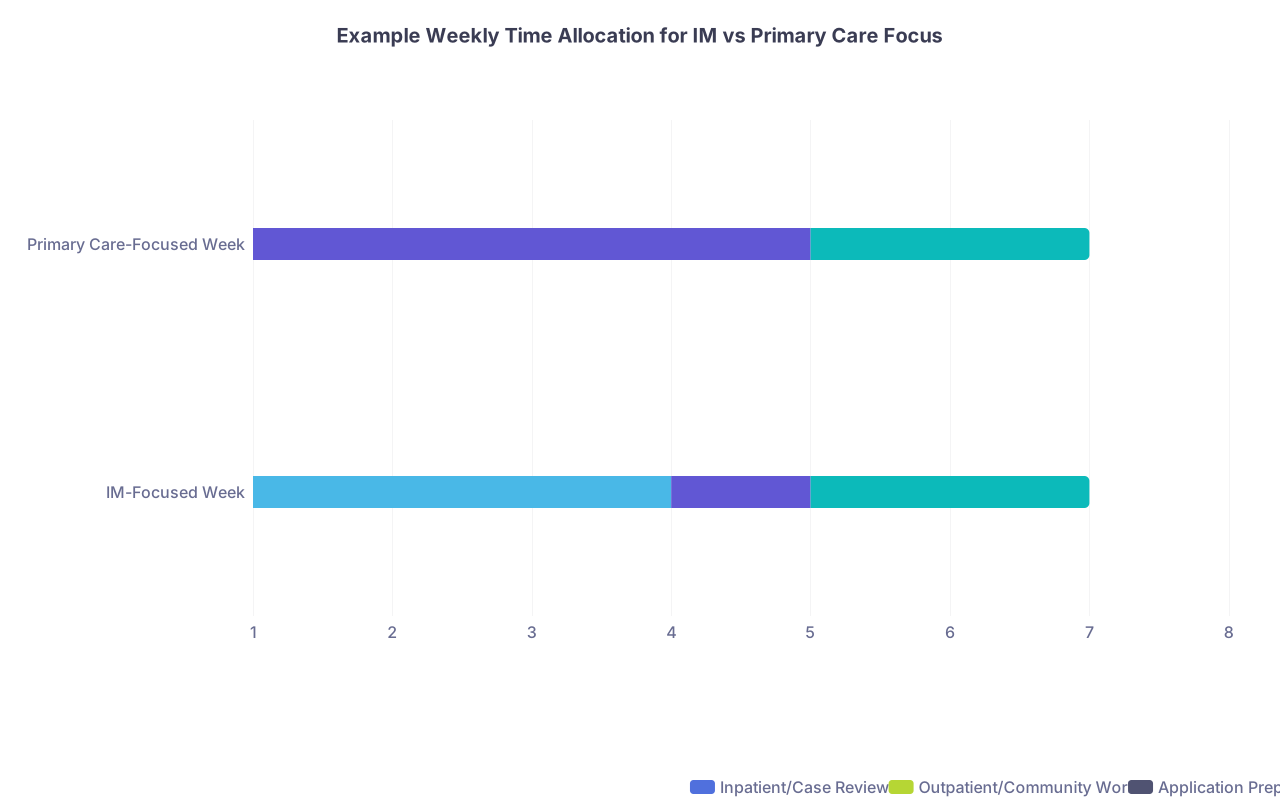
| Category | Inpatient/Case Review | Outpatient/Community Work | Application Prep |
|---|---|---|---|
| IM-Focused Week | 4 | 1 | 2 |
| Primary Care-Focused Week | 1 | 4 | 2 |
Daily (Both)
- 10–15 minutes:
- Quick application log update (interesting cases, feedback from attendings, small achievements).
- 5 minutes:
- Glance at your long‑term plan to make sure you are not drifting into “random elective” territory.

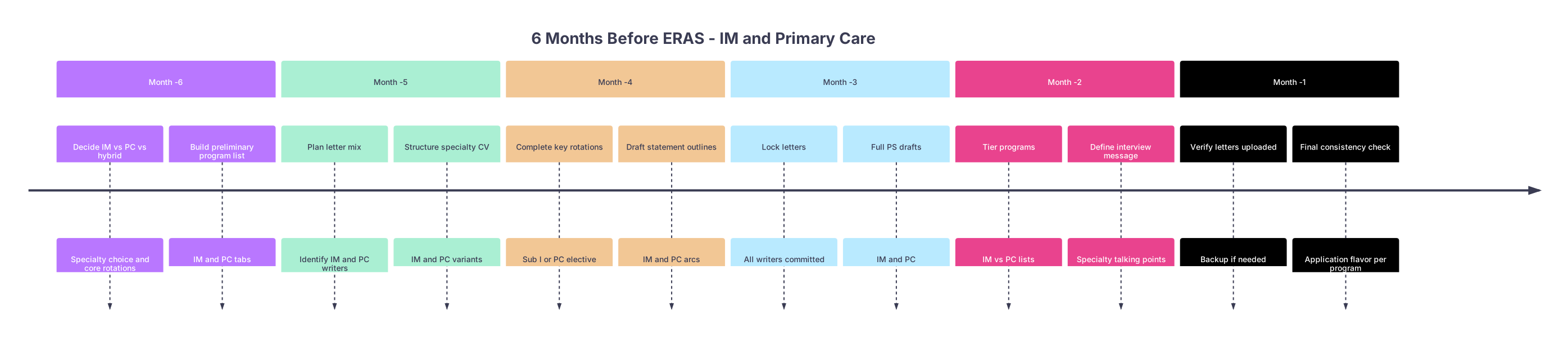
Visual Overview: Six‑Month IM / Primary Care Application Timeline
| Period | Event |
|---|---|
| Month -6 - Decide IM vs PC vs hybrid | Specialty choice and core rotations |
| Month -6 - Build preliminary program list | IM and PC tabs |
| Month -5 - Plan letter mix | Identify IM and PC writers |
| Month -5 - Structure specialty CV | IM and PC variants |
| Month -4 - Complete key rotations | Sub I or PC elective |
| Month -4 - Draft statement outlines | IM and PC arcs |
| Month -3 - Lock letters | All writers committed |
| Month -3 - Full PS drafts | IM and PC |
| Month -2 - Tier programs | IM vs PC lists |
| Month -2 - Define interview message | Specialty talking points |
| Month -1 - Verify letters uploaded | Backup if needed |
| Month -1 - Final consistency check | Application flavor per program |
The Core Takeaways
- Six months before ERAS, you should not still be “seeing what sticks.” You should be deliberately shaping an IM‑leaning, primary‑care‑leaning, or intentionally hybrid profile.
- Internal Medicine and Primary Care use the same raw experiences but reward different emphases. Your letters, statements, activities, and program list must all signal the same story to each program type.
- The applicants who match well in IM and primary care are not the ones who work the most hours. They are the ones who, month by month, align their rotations, letters, and narrative with the exact roles they want to fill.