
It’s a Tuesday morning at 9:01 AM. Your phone buzzes. NBME email: “Your Step 2 CK score is available.”
You click. Heart rate 140. There it is.
Now you’ve got one question: what exactly do you do between today and ERAS submission, week by week, for your specialty?
This is that guide. From score release to ERAS opening/submission, broken down in order and tuned to how competitive your specialty actually is.
Step 0 (Score Day): Right Now – Interpret, Decide, and Categorize
At this point you should not rush into rewriting your whole life plan in 10 minutes. You should:
Record your numbers and context
- Step 1: Pass/Fail only (but your school may report quartile).
- Step 2 CK: actual score.
- Clerkship grades: HP/H/A distribution, especially in your target specialty.
- Research count: abstracts, posters, pubs (note which are in your specialty).
- Leadership, volunteering, unique experiences.
Place yourself into a competitiveness tier for your specialty
Use this rough categorization. Yes, it’s simplified. It’s also practical.
| Specialty Type | Higher Tier (Comfortable) | Middle Tier (On Track) | Lower Tier (Stretch) |
|---|---|---|---|
| Ultra-competitive (Derm, Ortho, Plastics, ENT, Neurosurg) | ≥255 | 245–254 | <245 |
| Competitive (EM, Anesthesia, Gen Surg, Rads, Urology, Ophtho*) | ≥250 | 240–249 | <240 |
| Moderately competitive (IM academic, OB/GYN, Neuro, PM&R) | ≥245 | 235–244 | <235 |
| Less competitive (FM, Peds, Psych, Community IM) | ≥240 | 230–239 | <230 |
*Ophtho and Urology have separate match systems/timelines, but the score logic is similar.
At this point you should:
- If your score comfortably supports your dream specialty → Stay the course; adjust strategy, not the goal.
- If your score is borderline for that specialty → Keep Plan A but build a real Plan B specialty now (not in December).
- If your score clearly undercuts an ultra-competitive dream and you have no offsetting strengths (home program + heavy research + strong mentors) → You seriously consider pivoting or applying with a dual strategy.
- Email or message 1–3 trusted mentors
Same day, short note:
- Attach unofficial PDF score report.
- Ask for a 20–30 minute meeting this week: “Score just came out, want honest input on viability and strategy for [specialty].”
Week 1: Score Release Week – Reality Check and Game Plan
At this point you should focus on clarity, not volume of tasks.
Days 1–3: Specialty Feasibility Check
You should:
- Meet / Zoom with:
- Specialty advisor (department).
- School dean or career advising office.
- One resident or fellow in your dream specialty.
Go into each meeting with:
- Your Step 2 score.
- Transcript / basic CV.
- List of programs you think you want (e.g., academic IM vs community IM, Midwest vs coasts).
Ask directly:
- “With this Step 2 and my current CV, is [specialty] realistic?”
- “Would you recommend single- or dual-application strategy?”
- “What’s the realistic program tier range for me?”
You’re looking for consistency:
- If all three say “Yes, go for [specialty] as primary” → you stay in.
- If they all grimace and say “You can apply, but I’d strongly recommend a backup field” → believe them.
Days 4–7: Commit to a Strategy and Program Tiers
Now you lock in:
- Application plan by specialty
Examples:
- Derm with dual application to Internal Medicine prelim.
- EM only, but broad geographic spread and including community-heavy programs.
- Psychiatry only, focused on academic programs with strong psychotherapy.
- “I’m pivoting from Ortho to PM&R” (this happens; it’s survivable).
- Program tier spread
At this point you should sketch a rough target mix:
| Tier | Ultra-Competitive Specialty (Ortho) | Mid-Competitive (OB/GYN) | Less Competitive (Psych) |
|---|---|---|---|
| Reach | 15–20% | 20–25% | 20–30% |
| Target | 50–60% | 50–60% | 40–50% |
| Safety | 25–35% | 20–30% | 20–30% |
- Gap list – by specialty
Write an honest list of deficits that matter to your field:
- Surgery: lacking sub-I, weak letters from surgeons, minimal OR comments.
- IM academic: limited research, no clear subspecialty interest, generic letter writers.
- Psych: sparse longitudinal psych exposure, nothing showing interest in serious mental illness.
- Peds: no NICU/PICU experience, few child-related activities.
This “gap list” will drive the next 4–8 weeks.
Week 2: Rebuild Your CV Around Your Specialty
You’ve decided where you’re aiming. Now your job is alignment.
At this point you should make your application look like you’ve been heading toward this field for a while, even if the score pushed you there last week.
Tasks for All Specialties
Reorganize your experiences
- Move specialty-relevant experiences to the top of each category on your CV.
- Rename descriptions to highlight specialty skills.
- Example (Psych): “Volunteered at shelter” → “Longitudinal mental health support at women’s shelter; co-led coping-skills groups.”
- Example (EM): “Night shift scribe” → “High-volume ED scribe, 2k+ encounters, focused on trauma and chest pain pathways.”
Map experiences to specialty priorities
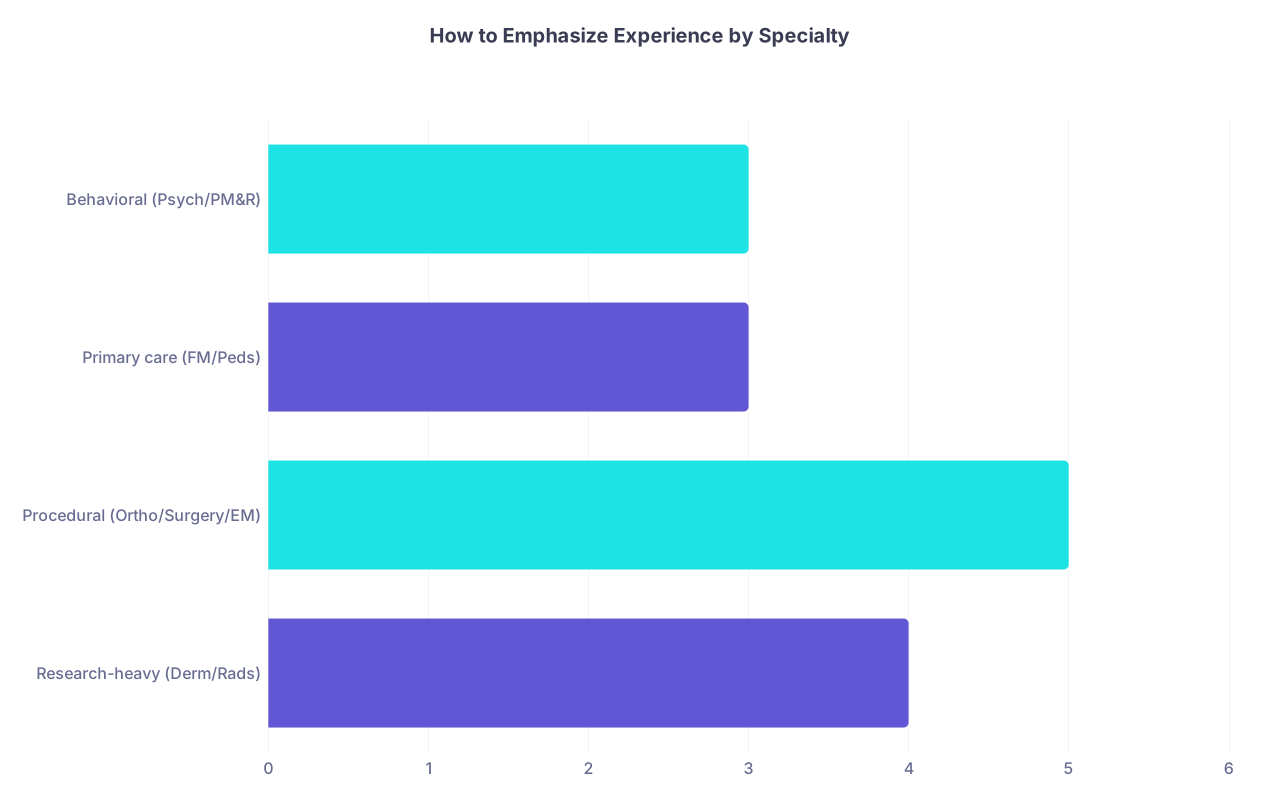
| Category | Value |
|---|---|
| Research-heavy (Derm/Rads) | 4 |
| Procedural (Ortho/Surgery/EM) | 5 |
| Primary care (FM/Peds) | 3 |
| Behavioral (Psych/PM&R) | 3 |
Think like a PD:
- Derm/Rads: research, academic productivity, high scores.
- EM/Surgery: work ethic, team function, procedural comfort, resilience.
- FM/Peds: continuity, communication, underserved work.
- Psych/PM&R: empathy, long-term engagement, nuanced patient interactions.
This week, you should:
- List 4–5 potential letter writers per specialty.
- Prioritize:
- 1–2 in your target specialty.
- 1 who supervised you closely (sub-I, acting internship).
- 1 who can speak to character/work ethic if your specialty letters are weak.
Email template:
- “I’m applying to [specialty] this cycle and would be honored if you could write a strong letter of recommendation reflecting my performance on [rotation/activity].”
If you’re switching specialties:
- Own it: “I was initially considering [X] but after [step score / clinical experiences / mentorship] I’m now committed to [Y]. I’d value your support with a letter that reflects my fit for [Y].”
Week 3: Specialty-Tailored Personal Statement Draft
Now we move to words. Your personal statement should not be generic. PDs can smell that from across the country.
At this point you should:
Days 1–3: Draft Core Specialty PS
Focus on specialty fit, not trauma storytelling.
By specialty:
- Internal Medicine (academic)
- Emphasize curiosity, thinking through complexity, enjoyment of ambiguity.
- Add any research or QI projects; talk about long-term relationship with patients.
- General Surgery / Ortho / ENT / Neurosurg
- Show you like anatomy, procedures, delayed gratification, team-based OR culture.
- Explicitly show you understand the lifestyle and still want it.
- Family Med / Peds
- Continuity. Preventive care. Families. Underserved work (if true).
- Psychiatry
- Long-term therapeutic relationships, interest in narratives and behavior, comfort with uncertainty.
- EM
- Acute care, rapid decision-making, shift work realities, team interplay with nurses and techs.
- Anesthesia / Rads / Path
- Liking physiology, pharmacology, diagnostics, pattern recognition, attention to detail.
1 core PS per primary specialty. Do not build 8 versions yet. That comes later.
Days 4–7: Dual-Track or Backup Specialty Statement
If you have a backup specialty:
- Draft a separate, honest statement.
- Don’t trash your original dream field. Just don’t cling to it either.
- Emphasize what you genuinely like about the backup field.
Example: Pivot from Ortho to PM&R
- Talk about function, recovery, patient goals, teamwork across disciplines.
- Integrate any rehab, sports, or neuro experiences.
Week 4: Program List – Deep Dive by Specialty Type
By now you’re 3–4 weeks from ERAS opening. At this point you should move from “vibes” to an actual program list.
Build a Data-Driven Program Spreadsheet
Columns to include:
- Program name
- Location
- Type (academic, community, hybrid)
- Your specialty-specific priorities:
- IM: fellowship match strength, research time, ICU exposure.
- Surgery: case volume, trauma level, subspecialty fellowships.
- EM: 3 vs 4 years, peds EM exposure, ultrasound.
- Psych: psychotherapy training, addiction/CL options.
- FM: OB volume, rural vs urban, community involvement.
- Historical Step 2 ranges (if available or from advisors).
- “Tier fit”: Reach / Target / Safety.
You should also track:
- Where you have connections:
- Home med school.
- Home rotation site.
- Away rotation site.
- City/state ties.
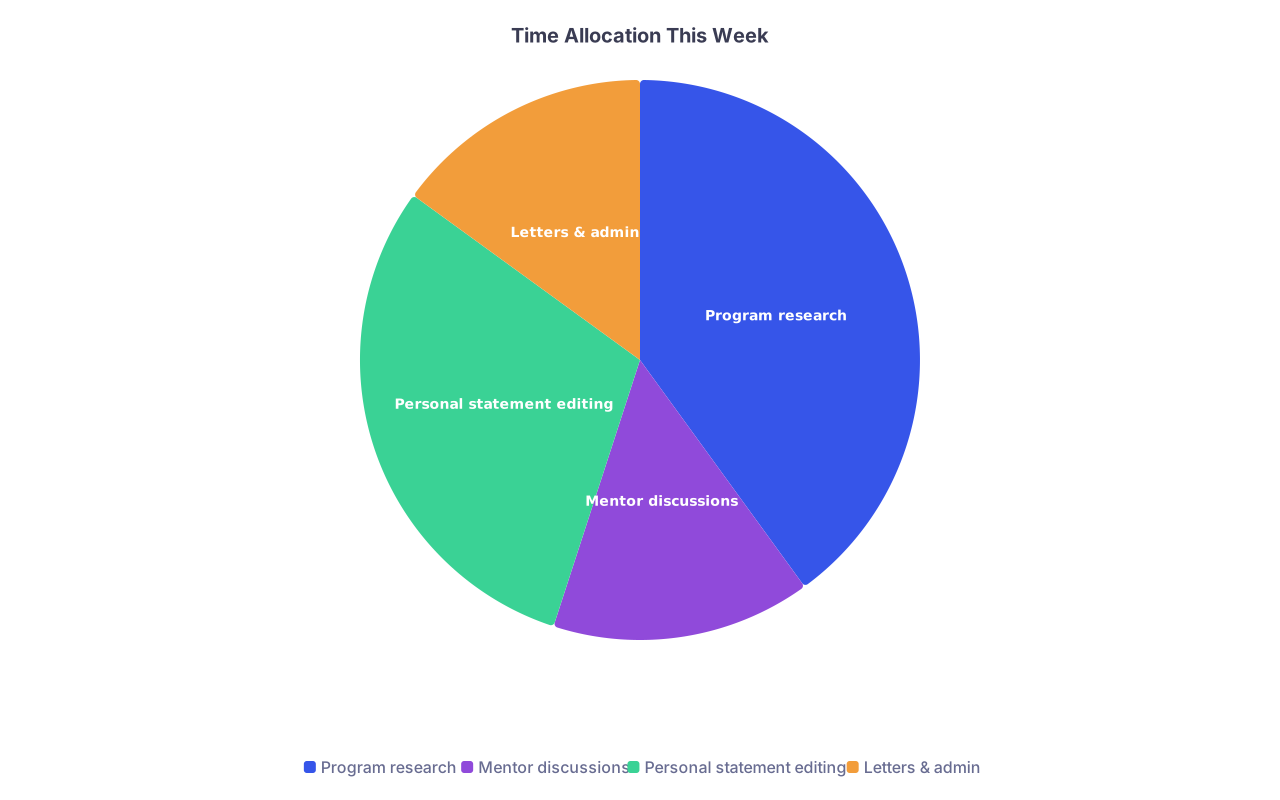
| Category | Value |
|---|---|
| Program research | 40 |
| Mentor discussions | 15 |
| Personal statement editing | 30 |
| Letters & admin | 15 |
Specialty-Specific Filters
Highly competitive fields (Derm, Ortho, Plastics, ENT, Neurosurg)
- Heavily weight:
- Home program presence.
- Research productivity.
- Mentors who know PDs.
- Expect to apply very broadly geographically.
- Your mentors should help rank realistic targets.
- Heavily weight:
Competitive but broader (EM, Anesthesia, Gen Surg, Rads, OB/GYN)
- Mix of academic powerhouses and strong community programs.
- Pay attention to:
- 3 vs 4-year EM structure.
- Independent vs integrated surgical subspecialties.
- Call schedule culture (ask residents).
Less competitive (FM, Psych, Peds, Community IM)
- You can prioritize geography and fit more.
- Still include some reach academic places if your Step 2 is strong.
This week, aim for:
- 80–90% of your final list drafted.
- Quick review with specialty advisor.
Week 5: ERAS Application Skeleton + Specialty Flavor
ERAS is opening very soon (or just opened). This week is about structure.
At this point you should:
Build the ERAS skeleton
- Demographics, education, exams, experiences—just filled in.
- No 102% polished wording yet, but accurate and complete.
Write specialty-specific experience descriptions
By field:
- Internal Medicine
- Highlight diagnostic reasoning, complexity, handoffs, continuity clinics.
- Surgery / Ortho / ENT / Neurosurg
- Prioritize:
- Teamwork under pressure.
- Ownership of patients.
- Operative interest & exposure.
- Prioritize:
- EM
- Fast-paced, multitasking, comfort with undifferentiated complaints.
- Procedures, resuscitations, codes.
- Psych
- Communication, rapport building, patience with slow change.
- Any mental health advocacy.
- Request any remaining letters
If you’re still waiting to ask someone, this is basically your last reasonable window before you start cutting it close.
Week 6: Targeted Supplements – Signals, PS Tailoring, and Niche Angles
At this point you should start fine-tuning for specific program types and niches.
Signaling (for specialties that use it)
If your specialty has formal signaling (e.g., EM, IM prelim programs in some cycles, etc.):
- Use signals on:
- Programs where you have a deep, rational interest.
- Not just prestige. Actual fit.
- Ask mentors where not to waste a signal.
Subspecialty/Niche Emphasis
Examples:
- IM with Cardiology dreams
- Highlight cardiology research.
- Mention interest in advanced heart failure/EP but avoid sounding entitled to a specific fellowship.
- Psych with Child focus
- Lean into any pediatric psych or school-based work.
- Surgery eyeing Trauma or Surg Onc
- Talk case types, research, or shadowing in that domain.
If you have time, create:
- 1–2 alternate personal statements with slightly different emphases (e.g., general psych vs psych + addiction focus) for select programs. Not mandatory. Helpful if tailored well.
Week 7: Final Application Polish and Mentor Review
You’re within 1–2 weeks of submission. This is “no new projects” time. No heroics.
At this point you should:
Lock final specialty strategy
- Single specialty or dual.
- Exact program list.
- Which PS goes to which program (if you have more than one per specialty).
Send ERAS draft to 1–2 mentors per specialty
Ask them to focus on:
- Coherence: Does your story match your chosen specialty?
- Realism: Does the list match your score and background?
- Red flags: Anything in experiences/PS that might raise doubts.
- Specialty-specific sanity checks
- Surgery/Ortho/ENT/Neurosurg
- Do you have at least 2 strong specialty letters?
- Is your sub-I performance clearly visible somewhere?
- EM
- SLOEs requested? Timing reasonable?
- Enough programs, broad enough geographically?
- IM / Peds / FM
- Does your application reflect a human being patients could like long-term?
- Psych
- Do you look like someone who actually understands what psych work feels like, beyond an undergrad interest in “the mind”?
Week 8: Submission Week – Final Pass and Click
It’s the week. No more big swings.
At this point you should:
Do a line-by-line ERAS review
- Spelling of program names.
- Dates, roles, locations.
- Broken or repetitive phrasing in experiences.
Check for specialty alignment one last time
- Your target specialty should feel obvious from:
- Top experiences.
- Letters selected.
- Personal statement.
- If you’re dual-applying:
- Make sure each program only sees content that fits that specialty. No psych PS going to IM.
- Your target specialty should feel obvious from:
Submit on your planned date
Early in the submission window is fine. Frantic 11:59 PM the last allowed day is not. There’s zero prize for waiting.
Visual: Overall 8-Week Flow
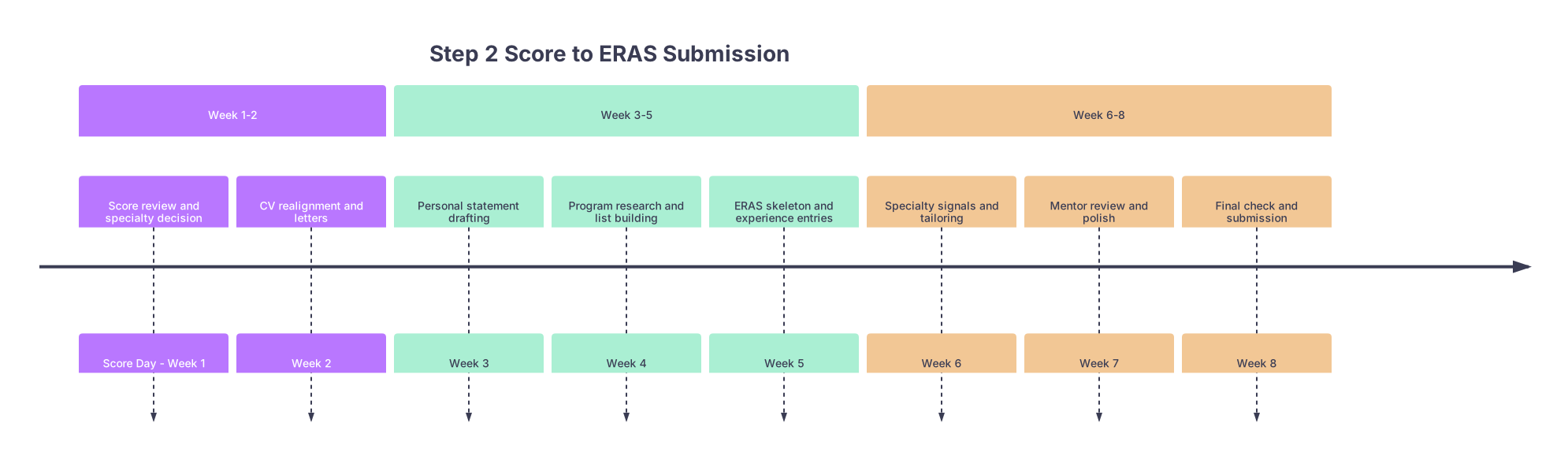
| Period | Event |
|---|---|
| Week 1-2 - Score review and specialty decision | Score Day - Week 1 |
| Week 1-2 - CV realignment and letters | Week 2 |
| Week 3-5 - Personal statement drafting | Week 3 |
| Week 3-5 - Program research and list building | Week 4 |
| Week 3-5 - ERAS skeleton and experience entries | Week 5 |
| Week 6-8 - Specialty signals and tailoring | Week 6 |
| Week 6-8 - Mentor review and polish | Week 7 |
| Week 6-8 - Final check and submission | Week 8 |
Quick Specialty Snapshots – What Matters Most in This Window
Just as a reference while you’re spiraling.
| Specialty Group | Top Priority Now | Secondary Focus |
|---|---|---|
| Derm / Plastics / ENT / Neurosurg | Mentor advocacy & research framing | Hyper-strategic program list |
| Ortho / Gen Surg | Strong specialty letters & sub-I story | Broad, realistic program spread |
| EM | SLOEs + well-chosen signals | Honest geographic flexibility |
| IM (academic) | Research narrative & complex-care interest | Fellowship-minded but humble tone |
| FM / Peds | Continuity & community focus | Clear geographic and population interests |
| Psych / PM&R | Longitudinal patient interactions | Thoughtful, grounded PS |
FAQ (Exactly 3)
1. My Step 2 is lower than median for my dream specialty. Should I still apply?
If you’re just below median with good clinical comments and a strong home department, yes—apply, but broaden your list and accept that outcomes may be mixed. If you’re far below what your advisors see matching in that field, dual-apply or pivot; “hail Mary only” strategies rarely end well, and I’ve watched too many people reapply a year later wishing they’d listened.
2. How many personal statements should I realistically write?
One solid core statement per primary specialty is usually enough. A second, slightly tailored version (e.g., academic vs community focus, subspecialty-leaning) for a small subset of programs can help, but not at the cost of quality. Four or five different PS versions is overkill and a common way to make mistakes.
3. What if my letters are weak in my chosen specialty?
Then your priority in these weeks is to secure at least one strong specialty letter, even if it means asking someone from a shorter rotation who actually knows your work. I’d rather see one detailed letter from a 2-week rotation where you shined than a vague, name-brand letter from someone who barely remembers you. Pair that with non-specialty letters that speak to work ethic and reliability.
Key points:
- Use your Step 2 score to choose a realistic specialty strategy in Week 1, not in October.
- Every week between score release and ERAS should push your application to more clearly scream your chosen specialty.
- Mentor input and specialty-specific tailoring beat blind “apply everywhere and hope” every single year.