
It’s January 25th. Your last interview just finished three hours ago. Your email is a war zone of “Thank you for interviewing with us,” your phone has three missed calls from an unknown hospital number, and your group chat is blowing up about “signals,” “love letters,” and “Do I pick up if they call again?!”
This is the chaos window. The weird stretch between final interview and rank list certification where:
- Programs start calling or emailing.
- Residents “casually” reach out.
- Your friends swear Program X “promised” them a spot.
- You’re trying to compare offers that are not technically offers.
Let me walk you through what to do, and exactly when to do it, so you don’t lose your mind—or your integrity—before rank list freeze.
Big Picture Timeline: From Last Interview to Rank List Freeze
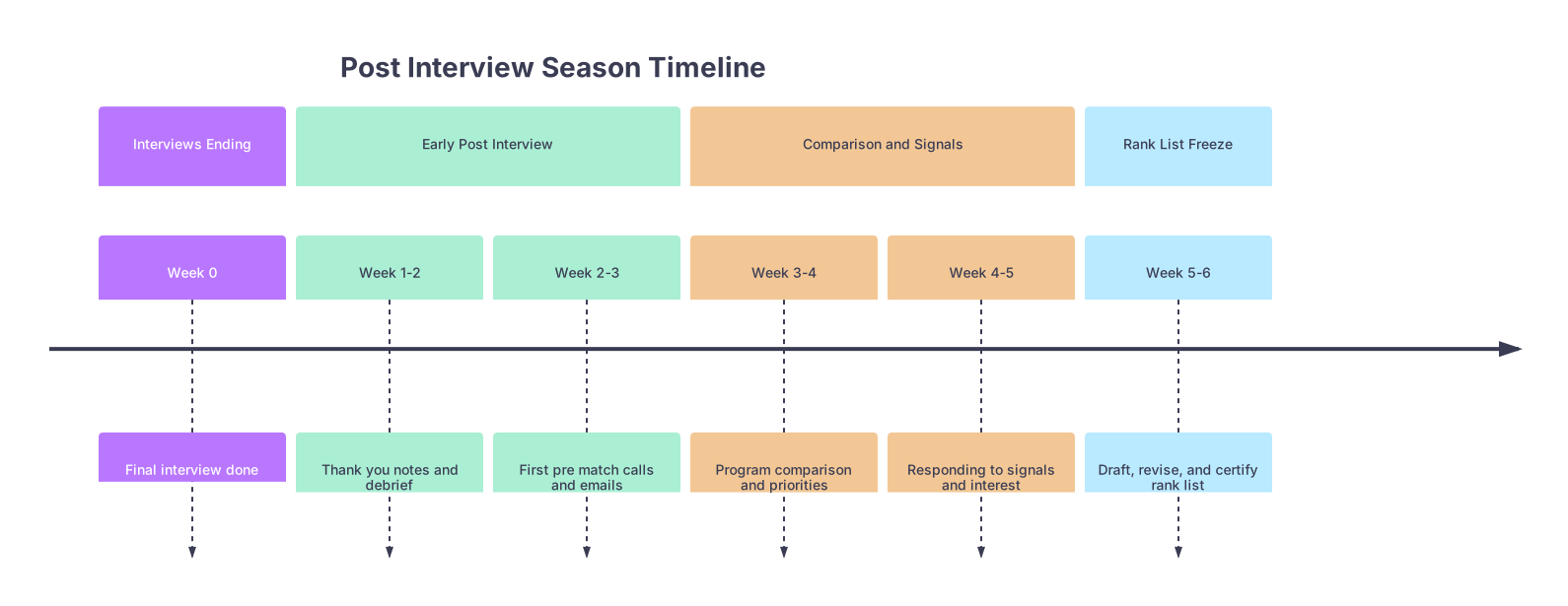
| Period | Event |
|---|---|
| Interviews Ending - Week 0 | Final interview done |
| Early Post Interview - Week 1-2 | Thank you notes and debrief |
| Early Post Interview - Week 2-3 | First pre match calls and emails |
| Comparison and Signals - Week 3-4 | Program comparison and priorities |
| Comparison and Signals - Week 4-5 | Responding to signals and interest |
| Rank List Freeze - Week 5-6 | Draft, revise, and certify rank list |
At this point you should know the rough national structure:
- Interviews wrap: mid‑January for most NRMP specialties (later for some like some fellowships or SOAP-related chaos).
- Post‑interview communication & “signals” peak: late January to mid‑February.
- Rank lists due: usually late February / early March.
- Match results: mid‑March.
The exact dates change every year, but the sequence doesn’t.
Here’s the rule: every week from your last interview to rank list freeze has a job. If you skip the job, you pay with anxiety later.
Week 0–1: Last Interview to First Calls
At this point you should shut down the interview brain and switch to data capture mode.
Days 0–3: Capture Everything While It’s Fresh
Right after your last interview(s):
Debrief each program within 24 hours.
- Write raw impressions, not polished thoughts.
- “PD seemed defensive,” “Residents looked exhausted,” “Call system sounded humane,” “Felt like I could belong here.”
Fill a comparison sheet. Not mentally. In writing. Today.
Use something simple like this:
| Program | Gut Feeling (1-10) | Work-Life (1-10) | Location (1-10) | Career Fit (1-10) |
|---|---|---|---|---|
| Program A | 8 | 7 | 9 | 9 |
| Program B | 6 | 9 | 5 | 7 |
| Program C | 9 | 6 | 8 | 8 |
| Program D | 5 | 8 | 6 | 6 |
Send any thank-you notes you care enough to send.
- If you’re going to do it, do it within 72 hours.
- Keep them short. No soap opera. No ranking promises.
Make a very rough rank draft.
- Not final. Just your honest, unedited order right now.
- This is your baseline before noise (calls, emails, rumors) starts distorting things.
At this point you should not be:
- Rewriting your rank list daily.
- Crowdsourcing your entire decision to Reddit.
- Emailing 10 programs that you’re “ranking them first.” That’s how you lose credibility.
Week 1–2: Pre‑Match Calls and “Interest” Emails Start
This is where people get played.
Programs will start to:
- Call you (“We really enjoyed meeting you…”)
- Email you (“You’re a strong candidate for us…”)
- Have chiefs or residents message you (“Let us know if you have any questions!”)
Some call this “post‑interview communication.” Let’s be honest. It’s soft recruiting.
Day‑by‑Day Plan Once Calls Start
Day 1: Decide Your Rules Before the First Call
At this point you should set your own boundaries:
- Will you answer unknown numbers?
- Will you respond to “interest” emails?
- What will you say and what will you not say?
My take:
- Answer calls if you can. It’s information.
- Respond briefly to genuine emails.
- Never promise a rank position (e.g., “I will rank you first”) if you are not 100% certain—and even then, be careful with wording.
Have a script ready. For example:
Phone:
“Thank you so much for reaching out. I really enjoyed my interview day and I’m seriously considering [Program] on my list.”Email:
“Thank you for the email. I appreciated learning more about [X aspect] during my interview and [Program] is under strong consideration on my rank list.”
You’ve acknowledged interest without lying or locking yourself in.
Days 2–3: Log Every Contact
Yes, literally track it:
| Program | Date Contacted | Type (Call/Email) | Who Reached Out | Strength of Language (1-3) |
|---|---|---|---|---|
| Program A | Jan 26 | Call | PD | 3 |
| Program B | Jan 27 | APD | 2 | |
| Program C | Jan 29 | Resident | 1 | |
| Program D | - | - | - | 0 |
Scale for “Strength of Language” might look like:
- 1 – Generic: “We enjoyed meeting you.”
- 2 – Warm: “We hope to see you here next year.”
- 3 – Aggressive: “You’ll match here if you rank us highly.”
Now the harsh truth: That 3/3 call still doesn’t guarantee anything. I’ve seen people get “We’ll see you in July” and end up unmatched at that program.
You use this as one data point, not a binding contract.
Days 4–7: Re‑Check Your Early Draft Rank List
At this point you should compare your feelings before and after contact:
Ask yourself:
- “If this program had never called, where would I rank them?”
- “Did the call change my understanding of the program, or just my ego?”
- “Am I bumping them up because I want to feel wanted?”
If the only thing that changed is that they flattered you, be honest: they do that every year. To dozens of people.
Week 2–4: Signals, Letters, and ‘Reciprocal Interest’ Madness
For some specialties (derm, ENT, ortho, ophtho, plastics, etc.), there are now formal signaling systems (program signals, geographic signals) plus a whole informal layer of “letters of intent,” “letters of interest,” and whispered promises.
At this point you should separate three concepts:
- Formal signals – Built into the application system (ERAS, SF Match, etc.).
- Informal signals – Emails where you express strong interest.
- Reciprocal signaling – You email them, they email back, and your brain screams “WE’RE ENGAGED.”
Let’s organize this time block.
Step 1: Clarify What You Already Sent (Formal Signals)
Pull up your applications and write:
- Which programs you officially signaled pre‑interview.
- Which ones you actually interviewed at among those.
- Which non‑signaled places surprised you (in a good way).
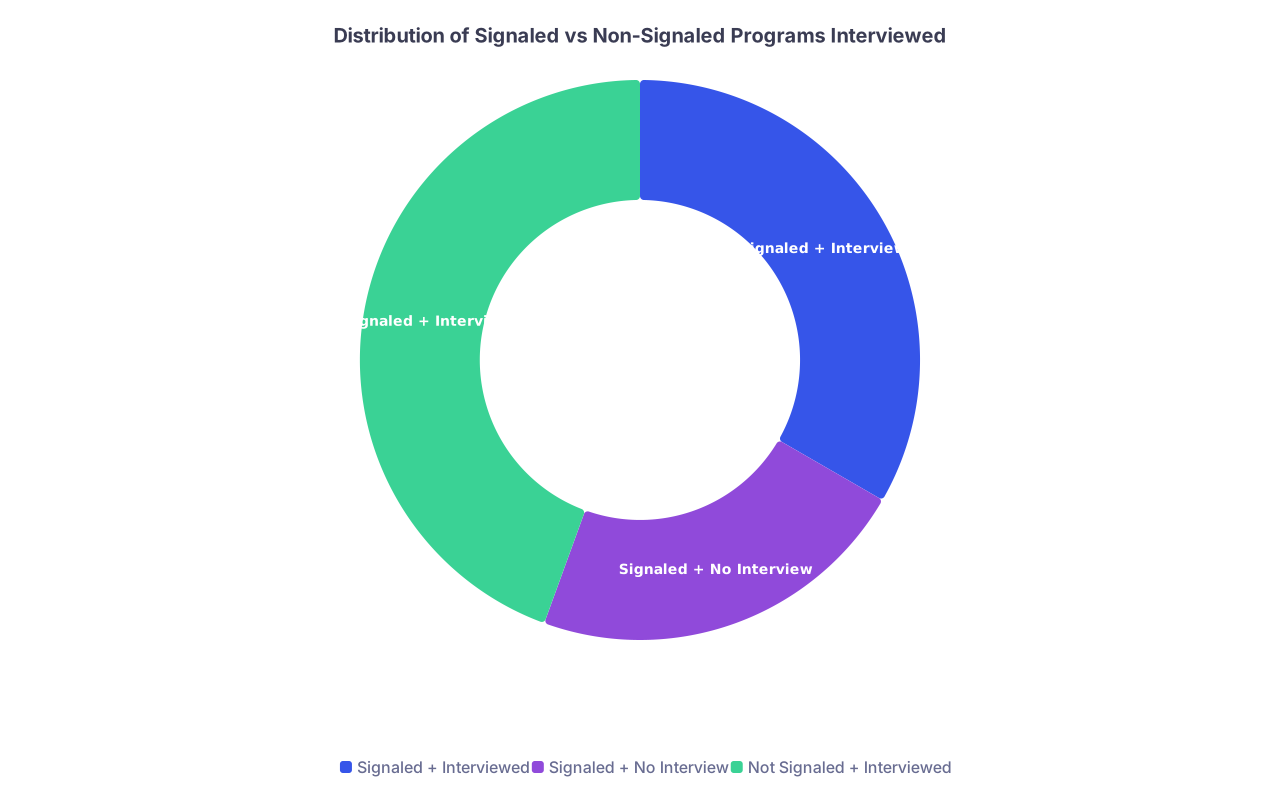
| Category | Value |
|---|---|
| Signaled + Interviewed | 6 |
| Signaled + No Interview | 4 |
| Not Signaled + Interviewed | 8 |
At this point you should ask:
- Do I still feel my top choice among the signaled programs is actually my top choice?
- Did a non‑signaled dark horse move into my top tier?
If yes, you can consider one carefully worded outreach to that dark horse.
Step 2: Decide Whether to Send Any Post‑Interview “Interest” Letters
Here’s my blunt opinion:
- One honest, specific letter to your true #1 is reasonable.
- Sending “you’re my top choice” to multiple programs is unethical and dumb.
- Long love letters rarely change anything; at best, they confirm interest that was already there.
If you send something, timeline it like this:
- 2–3 weeks before rank list certification – Ideal window.
- Too early: lost in the noise of interview season.
- Too late: rank meetings already done, no one cares.
What to include:
- 1–2 sentences clearly stating your level of interest.
- 2–3 specific reasons tied to your goals (not flattery).
- Zero guarantees that break NRMP rules or your own integrity.
Example:
“After completing my interviews, [Program] is my top choice, and I plan to rank it first. I feel the program’s strong [feature A] and [feature B], as well as my positive interactions with the residents, align closely with my career goals in [field].”
Only send that if it’s true. And be prepared to stand by it on Match Day, even if another program later flatters you more.
Step 3: How to Respond When Programs “Signal” You
You’ll see variants of:
- “You will be ranked highly.”
- “We hope to train you next year.”
- “You’re a great fit for our program.”
At this point you should:
- Thank them.
- Avoid rank promises unless absolutely decided.
- Not let this override your own earlier priorities.
I’ve literally watched people move a program from #6 to #1 solely because of a single chipper email. Two months later: regret.
Ask: Did my understanding of fit change, or just my fear of not matching?
2 Weeks Before Rank List Freeze: Structured Comparison Time
Now we move from emotional chaos to structured decision making.
At this point you should already have:
- A working draft of your rank list.
- Documentation of calls/emails and signals.
- Some sense of what you value (location, training style, prestige, lifestyle, etc.).
Time to force yourself into clarity.
Step 1: Build a Weighted Comparison (Not Just “Vibes”)
You don’t need a PhD in statistics. You need a consistent way to compare.
Pick 4–6 domains that actually matter to you:
- Location / support system
- Clinical training & case volume
- Fellowship or career outcomes
- Culture / resident happiness
- Schedule / call burden
- Cost of living
Assign rough weights to each (out of 100):
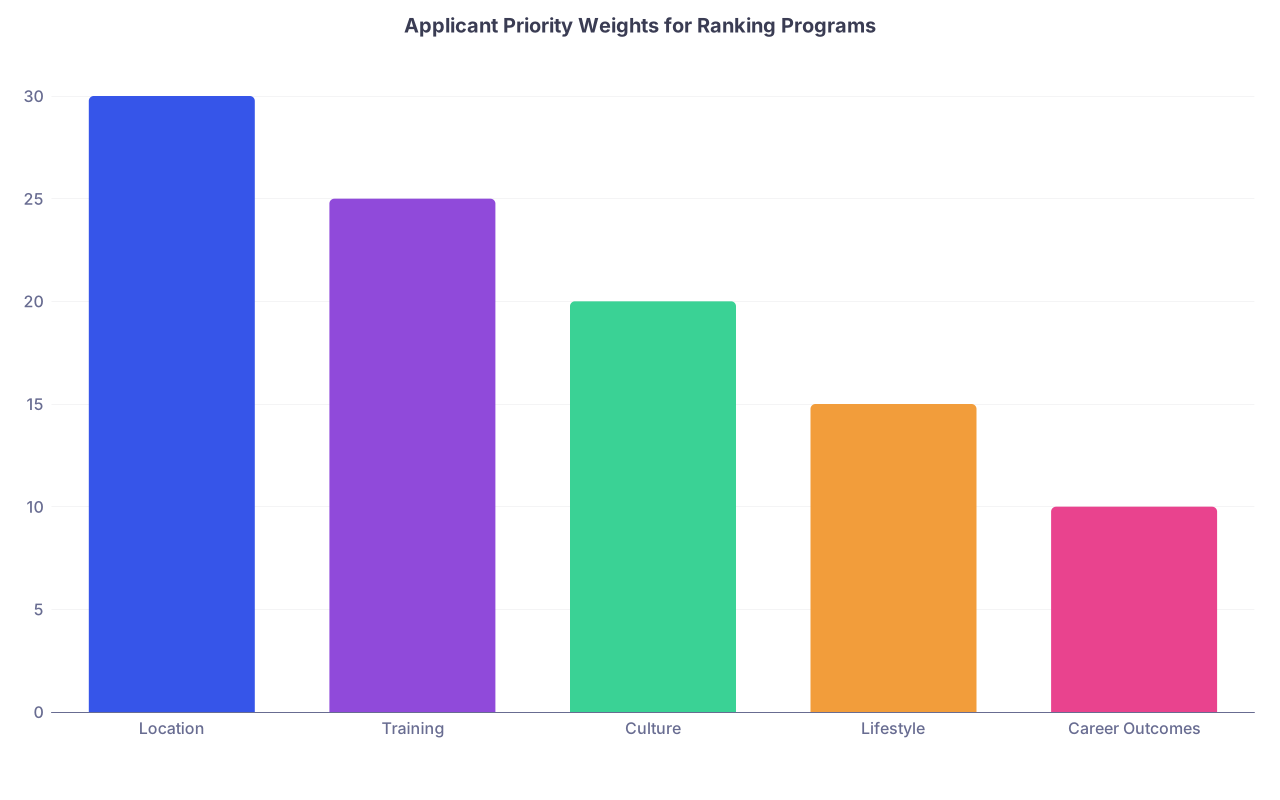
| Category | Value |
|---|---|
| Location | 30 |
| Training | 25 |
| Culture | 20 |
| Lifestyle | 15 |
| Career Outcomes | 10 |
Then, for your top 5–8 programs, score each domain 1–10. Add the weighted totals.
This will not give you a magic answer. But it will expose when your #1 is actually a poor fit on paper and is riding entirely on ego or fear.
Step 2: Reality-Check the Top 3
For each of your top 3, ask:
- “Can I live here for 3–7 years and not be miserable?”
- “Would I be proud to train here if it’s the only name on my white coat?”
- “Is my partner/family situation actually workable at this site?”
If a program fails these, it has no business at #1 no matter how prestigious it is. I’ve watched too many residents burn out at brand-name places that were objectively terrible fits.
1 Week Before Rank List Freeze: Lock Your Internal List
At this point you should pretend the system froze today.
Day‑by‑Day in the Final Week
Day –7 to –5: Make Your Final Private Rank List
- Put your full rank list in your own document or spreadsheet.
- Put everything in honest descending order of where you’d be happiest training, assuming you match there.
- Ignore perceived chances. That’s NRMP’s job, not yours.
Remember: The Match algorithm favors the applicant, as long as you rank programs by true preference.
Day –4: Do a Single Sanity Check With One Trusted Person
One. Not four attendings, your parents, and three co‑students.
Someone who:
- Knows you reasonably well.
- Understands the field.
- Is not trying to live vicariously through your match.
Ask them to challenge you on:
- “Why is Program B above Program C?”
- “Have you thought through [location/call/fellowship] here?”
You are not asking them to reorder your list. You’re pressure-testing your reasoning.
Day –3: Enter (But Do Not Certify) in the System
Log into NRMP (or SF Match, or relevant system) and:
- Enter every program in order.
- Double‑check program codes and tracks (categorical vs prelim vs advanced).
- Save it but do not certify yet.

This avoids the dumbest error: running out of time or mis-entering codes at 11:58 PM.
Day –2: Emotional Audit
At this point you should ask:
- “If I match at my #1, am I excited or just relieved?”
- “If I match at my #3, can I still see myself thriving?”
If your #1 doesn’t produce any excitement when you imagine opening that envelope, that’s a flag. Re‑examine.
Day –1: Finalize & Certify
- Re‑check ordering.
- Re‑check program codes.
- Certify the list.
And then stop touching it.
How to Handle Late‑Breaking Calls and Emails
You will get this question in your head:
“What if someone calls after I mentally finalized my list?”
Here’s the policy I’ve seen keep people sane:
- If the call adds genuinely new information (major change in schedule, new fellowship, deal‑breaker red flag), then yes, reevaluate.
- If the call is just stronger flattery (“We really, really like you”), do not re‑engineer your list unless:
- You already had them close to the top, and
- They reinforce what you already believed (that you’d actually be happy there).
At this point you should not:
- Rebuild your rank list because someone finally called you on February 18th.
- Punish programs that never contacted you by dropping them. They may be the most ethical ones in the bunch.
Day of Rank List Freeze: Last Pass, Then Hands Off
On freeze day:
- Log in one more time.
- Confirm the green “certified” checkmark (or equivalent).
- Take a screenshot or print the confirmation page and save it.
Then walk away.
Anything you hear after that—rumors of who is “ranking you to match,” texts from residents, last‑second gossip—becomes noise. The system is locked. You’re done.
Quick Specialty‑Specific Notes (Because You’re Probably Wondering)
Not every field behaves the same way. A broad snapshot:
| Specialty | Post-Interview Contact Common? | Formal Signals? | Love Letters Matter Much? |
|---|---|---|---|
| Internal Med | Moderate | Rare | Low–Moderate |
| General Surgery | Moderate–High | Some | Moderate |
| Dermatology | Very High | Yes | Moderate–High |
| ENT / Ortho / Plastics | Very High | Yes | High in perception, moderate in reality |
| Psych / FM / Peds | Moderate | Some | Low–Moderate |
Takeaway: the more competitive / small‑field your specialty, the more noisy the post‑interview nonsense. You need a stronger filter, not more reactivity.
The One Thing That Actually Matters
All the pre‑match calls, signals, and “We love you” emails feel like offers. They’re not.
Your only real lever is your true preference order. That’s it.
Programs can:
- Rank you or not rank you.
- Lie or be honest about “ranking you to match.”
- Call or ignore you.
You can:
- Decide where you’d actually be willing to train.
- Order those places honestly.
- Refuse to let flattery, fear, or peer pressure rearrange your list at the last second.
The Match algorithm then does its cold, ruthless, mathematically fair thing.
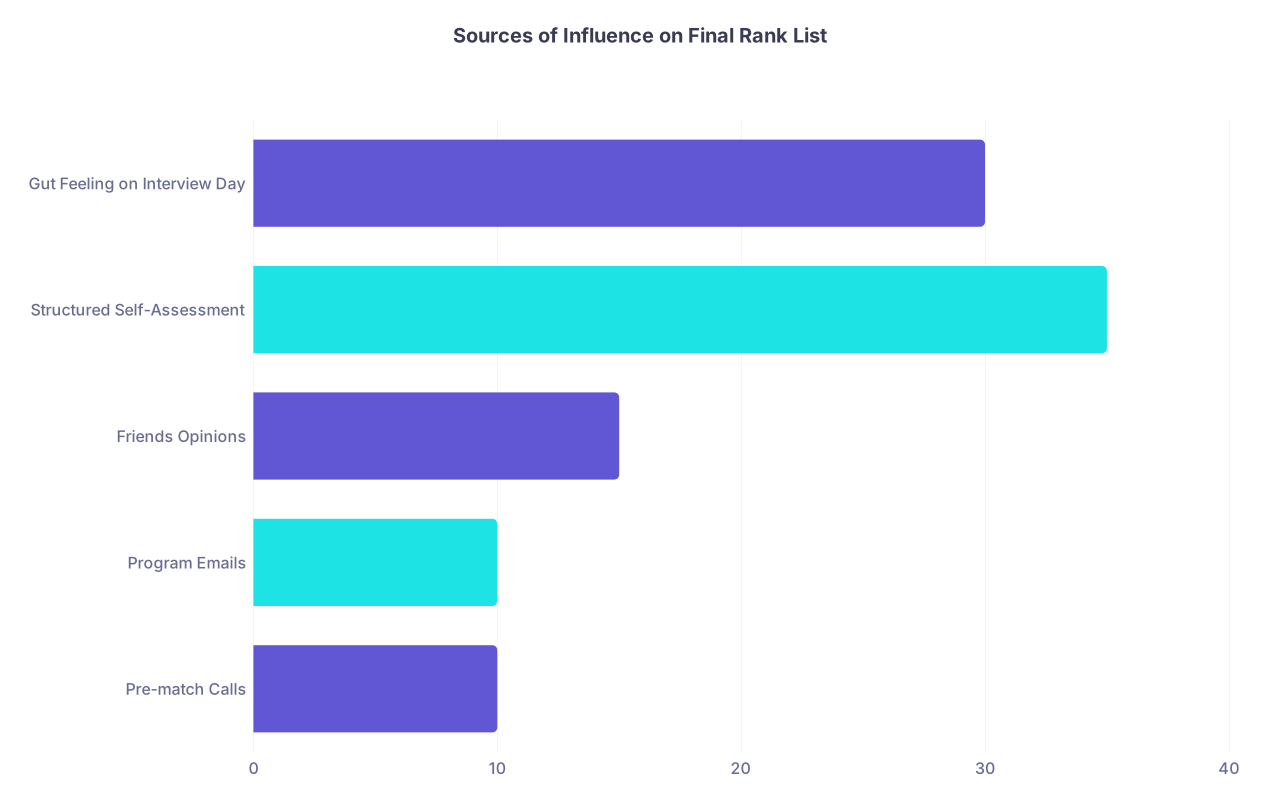
| Category | Value |
|---|---|
| Pre-match Calls | 10 |
| Program Emails | 10 |
| Friends Opinions | 15 |
| Structured Self-Assessment | 35 |
| Gut Feeling on Interview Day | 30 |
If you let “self‑assessment + real gut feeling on interview day” be the majority influence, you usually land somewhere you can live with.
What You Should Do Today
Right now—before another email hits your inbox—do this:
- Open a blank document.
- Write your unfiltered rank order as if the Match locked tonight.
- Then highlight the top 5 and ask, for each one:
“If I matched here, could I look my future self in the eye and say I chose this honestly?”
If the answer is no for any of them, that’s your next fix.