
The worst rank lists are written from memory and vibes. The best are built from a ruthless, structured re-evaluation—especially in the last 30 days.
You are in the danger zone now. Fatigue from interview season, pressure from classmates, and glossy program brochures are all louder than your own judgment. This is exactly when people make rank list mistakes that follow them for five years.
So we will walk day by day, week by week, through this last month. At each point: concrete tasks, what to compare, what to ignore, and when to stop tweaking.
Big Picture: Your 30-Day Framework
At this point you should stop passively “thinking about” your rank list and start running an actual process.
Here is the structure for the final month:
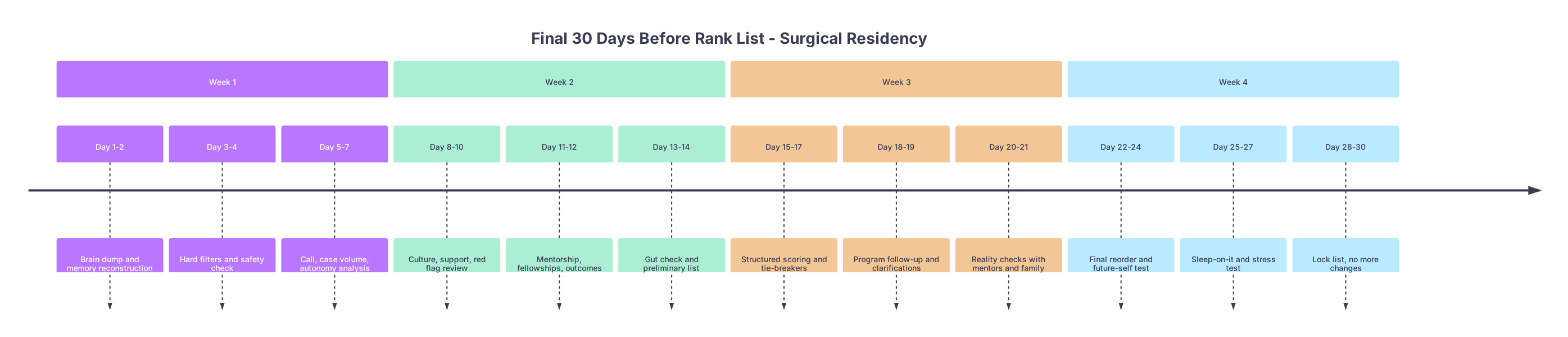
| Period | Event |
|---|---|
| Week 1 - Day 1-2 | Brain dump and memory reconstruction |
| Week 1 - Day 3-4 | Hard filters and safety check |
| Week 1 - Day 5-7 | Call, case volume, autonomy analysis |
| Week 2 - Day 8-10 | Culture, support, red flag review |
| Week 2 - Day 11-12 | Mentorship, fellowships, outcomes |
| Week 2 - Day 13-14 | Gut check and preliminary list |
| Week 3 - Day 15-17 | Structured scoring and tie-breakers |
| Week 3 - Day 18-19 | Program follow-up and clarifications |
| Week 3 - Day 20-21 | Reality checks with mentors and family |
| Week 4 - Day 22-24 | Final reorder and future-self test |
| Week 4 - Day 25-27 | Sleep-on-it and stress test |
| Week 4 - Day 28-30 | Lock list, no more changes |
We will walk this timeline in order. Assume Rank List Certification Day is Day 30. Adjust dates, keep the sequence.
Week 1 (Days 1–7): Rebuild Reality From Your Notes
You think you remember the programs. You do not. Interviews blur together fast—especially every mid-sized academic center with EPIC, a sim lab, and “supportive culture.”
Days 1–2: Full Brain Dump and Memory Reconstruction
At this point you should get everything out of your head and onto paper.
Day 1: Raw recall (no spreadsheets yet).
Open a blank document and, program by program, jot:
- 5 things you liked
- 3 things you disliked or worried you
- 1 moment that stuck with you (good or bad)
- Any exact phrases faculty or residents said that you still remember
Examples I have seen students write:
- “Program A – PD said: ‘We will not tolerate malignant behavior. Period.’ Residents all nodded.”
- “Program B – chief resident whispered, ‘We do not log all our cases… you just do them.’ Mixed feelings.”
- “Program C – 3 residents with newborns; everyone talked about parental leave like it was normal.”
Do not check websites. Do not look at your old notes yet. Force your brain to surface what actually mattered to you.
Day 2: Cross-check with your interview materials.
Now pull out:
- Interview day schedules
- Resident contact emails
- Printed materials or PDFs
- Notes from your phone or OneNote
For each program:
- Add anything important you forgot in your raw recall.
- Note specific data points:
- Case volume comments (“You will get >1000 major cases easily”)
- Call structure (“q4 home call after PGY-2”)
- Research time specifics (“18 months protected, not negotiable”)
By the end of Day 2, you should have one messy multi-page document that actually reflects what you experienced—not what the website said.
Days 3–4: Hard Filters and Safety Check
Now you start cutting. Not ranking. Cutting.
Day 3: Apply non-negotiables.
Make a short list (3–6 items max) of absolute deal-breakers. These are personal but must be explicit. Examples:
- Must be in driving distance to partner or dependents
- Cannot tolerate >1 year of dedicated research
- Must have strong track record of matching into a specific fellowship (e.g. surg onc, vascular)
- Cannot accept unopposed trauma without proper support (if that truly scares you)
Then, for each program, mark:
- Pass – Meets all non-negotiables
- Borderline – Might technically meet them but you are not sure / have concerns
- Fail – Clearly violates a non-negotiable
If a program is clearly a Fail, remove it from consideration. Do not drag it along “just in case.” You will not suddenly love it when you are on a 28-hour call in January.
Day 4: Make sure you have enough true safety.
You need programs that:
- You would genuinely attend without resentment
- Are realistically likely to rank you high enough to match
- Have training quality solid enough for you to be a competent surgeon
Make a quick shorthand of competitiveness relative to you (Step scores, letters, research):
- “Reach”
- “Target”
- “Safety / Solid”
You should see several “Target” and at least 1–2 “Safety / Solid” programs that you could live with. If your list is all “Reach,” your problem is not rank order. It is expectations.
Days 5–7: Call, Case Volume, and Autonomy Deep Dive
This is where surgical programs truly diverge. Ignore slick videos. Look at how you will actually train.

Day 5: Call structure reality check.
For each program, list:
- PGY-1: call type (home vs in-house), frequency, average hours
- PGY-2–3: trauma/ICU call burden, night float vs 24-hr calls
- Any mention of violation patterns or ACGME warning history (if you heard whispers)
Then mark each as:
- Sustainable – Tough but you can see yourself surviving without hating life
- Borderline – Big concern; might be worth it only for strong benefits
- Unsustainable – Multiple residents described burnout, constant violations, or hidden expectations
The unsustainable ones should drop in your mental order unless they have absolutely extraordinary strengths you cannot get elsewhere.
Day 6: Case volume and operative experience.
You are training to be a surgeon, not a paper generator.
Build a small comparison:
| Program | Case Volume (overall feel) | Early Autonomy | Trauma Exposure |
|---|---|---|---|
| A | Very high | Strong PGY-2 | Level 1, busy |
| B | Moderate | Mostly PGY-4+ | Level 2 |
| C | High | Gradual | Level 1 |
| D | Low-mod | Minimal | Limited |
You will not have exact numbers for everything. Use what residents told you:
- “We routinely go over minimum case logs by PGY-4.”
- “You fight the fellows for big cases.”
- “We are mostly doing bread-and-butter general; few complex HPB cases.”
Programs with weak operative exposure but rich research environments are research fellowships disguised as residencies. That is fine if you want that. It is a problem if you want to be an independent community surgeon.
Day 7: Autonomy and supervision culture.
Read your notes for phrases like:
- “Attendings scrub but let you run the case.”
- “Fellows take all the cool stuff.”
- “We double scrub a lot, but chiefs usually get primary operator.”
At this point you should put a simple autonomy rating next to each program:
- 3 – Strong autonomy by PGY-3 with safe supervision
- 2 – Reasonable; more traditional graduated responsibility
- 1 – Minimal autonomy; heavy fellow overshadowing or hyper-control
This autonomy score will become a major tie-breaker later.
Week 2 (Days 8–14): Culture, Support, and Trajectory
Now that you have the skeleton (call + cases + autonomy), you layer in the softer but critical pieces: culture, support, outcomes.
Days 8–10: Culture, Red Flags, and Resident Life
This is where people lie to themselves. Do not.
Day 8: Explicit red flag review.
For each program, ask: “Did I see or feel anything that would have made me tell an M3 to be cautious here?”
Examples I have written in margins:
- “PD made sexist joke in morning intro. Residents looked uncomfortable.”
- “One resident cried talking about Q3 trauma calls and no support from leadership.”
- “All residents called each other ‘colleagues’ but nobody smiled. Weirdly corporate.”
Make a Red Flag list:
- 0 – None
- 1 – Mild concern (keep in mind)
- 2 – Major concern (requires strong counterbalancing positives)
- 3 – Do not rank
Programs with a 3? Move them off your active list. You will not fix toxic leadership from the inside as a PGY-1.
Day 9: Resident happiness and support.
Look for concrete indicators:
- Did residents show up to the pre-interview social in decent numbers?
- Did they complain in front of you? That is actually more honest than forced cheer.
- Did anyone mention:
- Coverage for sickness
- Real maternity/paternity leave
- Support during crises (death in family, mental health)?
I pay close attention to whether residents described specific help (“My PD personally arranged a lighter month after my dad died”) versus vague fluff (“We are a family”).
Give each program a Resident Support Score from 1–3.
Day 10: City, partner, and life logistics.
No, you cannot “just ignore” location for five to seven years.
List:
- Cost of living
- Partner’s job prospects
- Proximity to family or key support
- Deal-breaker climate or geography issues (if you truly know they affect you)
This does not outrank training quality, but it shifts close calls.
Days 11–12: Mentorship, Fellowship Outcomes, and Academic Environment
If you have subspecialty ambitions, these days matter.
Day 11: Mentorship and faculty access.
For each program:
- Do you remember specific faculty who seemed invested in residents’ careers?
- Did residents point to “go-to” mentors in your area of interest?
- Was there structured career development (annual meetings to discuss fellowship plans, etc.)?
Flag:
- Strong mentorship
- Average / unclear
- Weak / concerning
Day 12: Fellowship and job placement.
You are not just training. You are building a launchpad.
If you did not already, jot what you heard:
- “Our grads go to MD Anderson, Memorial, Cleveland Clinic pretty regularly.”
- “Most of our grads go into community practice in the region.”
- “Fellowships are mostly MIS and critical care.”
Make a compact visual for yourself:
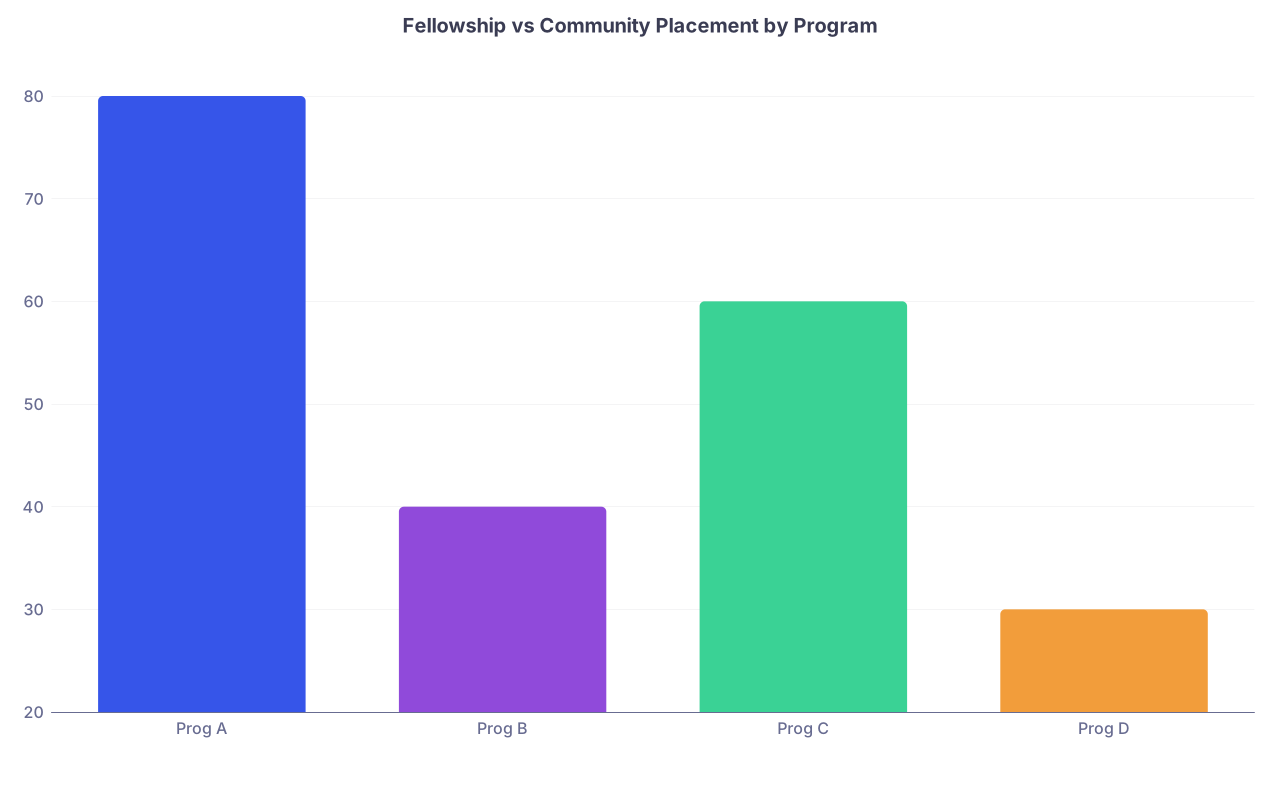
| Category | Value |
|---|---|
| Prog A | 80 |
| Prog B | 40 |
| Prog C | 60 |
| Prog D | 30 |
Imagine those values as “% of grads in fellowships” (your rough estimate). You will know which programs are oriented toward academic vs community careers.
Match this against your goals. Misalignment here is how people end up scrambling for a fellowship their program is not built to help them obtain.
Days 13–14: First Draft Rank List and Gut Check
By now, you should stop collecting and start ordering.
Day 13: Build your first serious draft.
At this point you should open a spreadsheet and list all active programs (non-cut) with columns for:
- Call sustainability (1–3)
- Case volume (1–3)
- Autonomy (1–3)
- Culture / support (1–3)
- Fellowship / career alignment (1–3)
- Red flag (0–2; 3s already removed)
Then assign a preliminary rank order based primarily on:
- Training quality (call + cases + autonomy)
- Culture and support
- Career alignment
Do not over-fit to numbers. Let them inform, not dictate. Move programs manually if your gut strongly disagrees with the total score—but write a note to yourself explaining why.
Day 14: 24-hour gut check.
Leave the list alone for a day. Then, re-open it and ask yourself for each program:
“If I matched here, and my ERAS portal popped up with this program, what is my first physical reaction?”
- Relief / excitement → good sign
- Neutral → acceptable, keep
- Dread / stomach drop → move it lower or off
This is not fluffy “listen to your heart.” It is your subconscious integrating thousands of small cues you have already collected.
Week 3 (Days 15–21): Precision Adjustments and Outside Input
You now have an honest first draft. The next six to seven days are about resolving conflicts and getting targeted input without letting other people hijack your priorities.

Days 15–17: Structured Scoring and Tie-Breakers
Day 15: Weight your priorities explicitly.
If you have not yet, decide your personal weights, summing to 100:
- Training (cases + autonomy + trauma/ICU): e.g. 40
- Culture / resident support: e.g. 25
- Career alignment (fellowships, research, geography for jobs): e.g. 20
- Lifestyle factors (location, cost, partner): e.g. 15
Then, for each program, assign a 1–10 in each category and compute a weighted score.
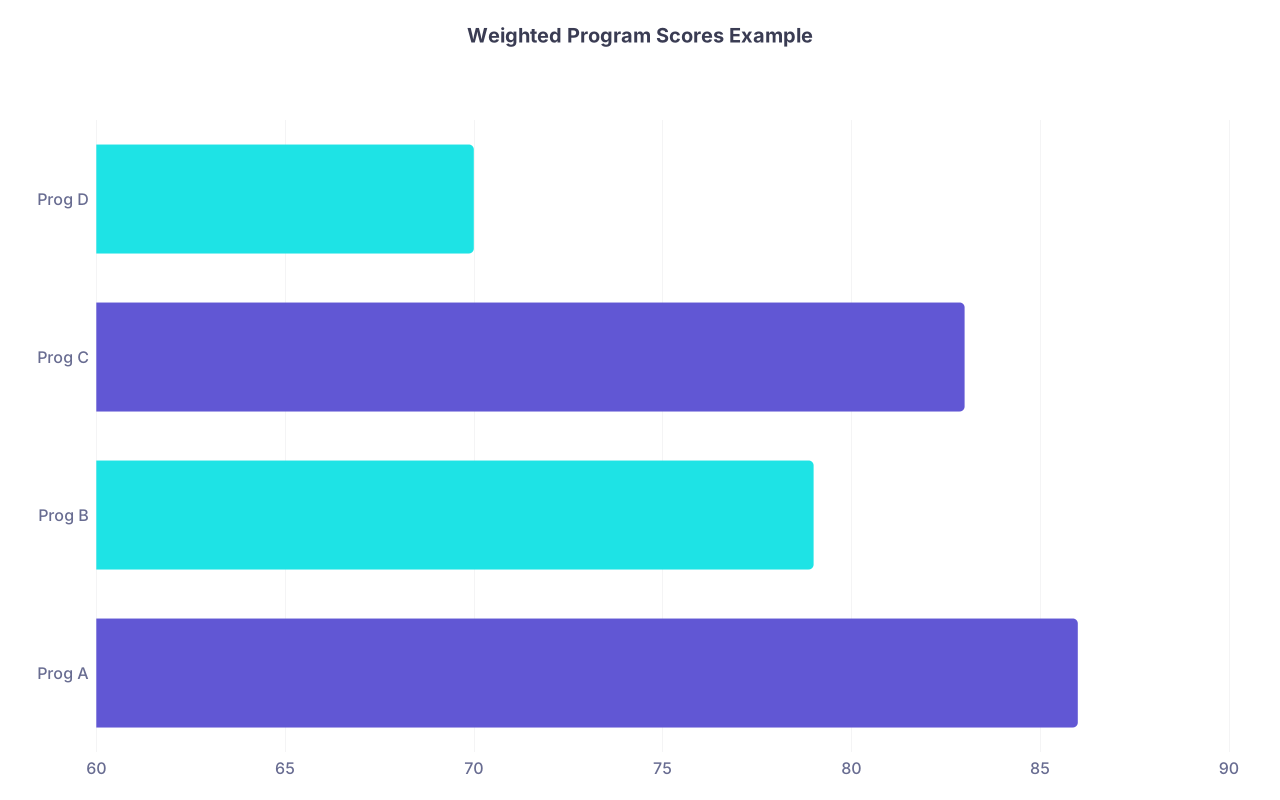
| Category | Value |
|---|---|
| Prog A | 86 |
| Prog B | 79 |
| Prog C | 83 |
| Prog D | 70 |
Do not get obsessed with precision. The goal is to see when your feelings match your priorities and when they do not.
Day 16: Resolve clear ties.
Look at programs that are very close in both numbers and your gut.
For each pair, ask:
- Where would I be less angry doing a bad call month?
- Where would I feel more supported after a complication?
- Where would I be prouder to say, “I trained there,” for the right reasons (training, not prestige alone)?
Move ties above or below accordingly. Write one-sentence justifications next to each adjustment.
Day 17: Identify remaining uncertainty.
Highlight programs where you wrote “??” multiple times. For those, write down your top 2 unanswered questions. Examples:
- “How many true chief-level cases does each graduate log?”
- “How protected is the research year in reality?”
- “Are there actual policies for maternity leave, or is it vibes-based?”
These will drive your follow-ups.
Days 18–19: Targeted Program Follow-Up
You are not begging for attention. You are clarifying training.
Day 18: Send 3–5 focused emails.
Pick only the programs where answers might realistically move them up or down your list.
Email examples:
- A chief resident you connected with
- The program coordinator (to redirect to appropriate person)
- A faculty member who offered to answer further questions
Keep it short:
- Re-introduce yourself (1 line)
- Ask 2–3 very specific questions that show you are thinking about training, not score gaming
- Thank them genuinely
Do not:
- Ask where you stand on their list
- Hint about ranking them first to fish for flattery
- Send mass-blast “you are my top choice” messages to everyone
Day 19: Log responses honestly.
When you get replies, note:
- What they said
- How quickly they responded
- Whether the tone matched what you saw on interview day
Sometimes the content is fine but the underlying message is, “We are too busy to care.” That matters.
Days 20–21: Reality Checks with Mentors and Family
At this point you should invite selected people into the process. Not the entire group chat.
Day 20: Meet with 1–2 surgical mentors only.
Show them your tentative ranked list and, briefly, your reasoning. Ask for:
- Any major training concerns you might have missed
- Realistic assessment of fellowship/job prospects from each program, given your goals
- Any horror stories or patterns they have seen over years (not one-off gossip)
Take their concerns seriously, especially if multiple mentors flag the same program. But remember: this is your body and your five years.
Day 21: Talk with partner / key family (if applicable).
Keep it structured:
- Show them top 5–7 programs only, not the entire 15–20 list
- Review location, cost of living, proximity, and their career implications
- Ask where they see themselves reasonably able to thrive
Do not give them veto power over training quality, but do not ignore their reality either. A program that will blow up your support system deserves scrutiny.
Week 4 (Days 22–30): Final Order, Future-Self Test, and Lock-In
This final week is where you stop tweaking endlessly and commit.

Days 22–24: Final Reorder and Future-Self Test
Day 22: Construct your near-final list.
Apply all adjustments from mentor and family input. Now sort your programs 1 through N.
Key principle: Always rank in your true order of preference, not where you think you are most likely to match. The algorithm is built that way. Do not game it.
Day 23: Future-self test.
For each program, run this mental script:
“It is July 1, and I am walking into orientation at Program X. Over the next five years, the average day will look like: – this commute
– this hospital environment
– these faculty personalities
– this call schedule
– this operating room culture.”
Does this feel:
- Energizing and challenging?
- Hard but meaningful?
- Draining and misaligned?
Then push programs up or down 1–2 spots as needed.
Day 24: Reverse-regret test.
Now imagine:
- You match at Program #3 instead of #2. Are you devastated, or just mildly bummed?
- You match at #7 instead of #5. Does that fundamentally change your training or career path?
If you would be truly devastated matching at #3 instead of #2, you might have the order wrong.
Days 25–27: Sleep-On-It and Stress Test
This is where people either make smart micro-adjustments or blow up a good list with panic.
Day 25: Step away completely.
Do not touch the list for 24 hours. No spreadsheet. No NRMP. No group chats dissecting programs.
Your brain needs this reset to show you what really lingers as concern.
Day 26: One last read and stress test.
Re-open your list. Now ask two ruthless questions:
- “Is there any program on here that, if I matched, I would feel trapped rather than challenged?”
- If yes and it is low on the list, consider simply removing it.
- “Am I ranking any place higher primarily out of prestige, even though I know the training or culture is worse for me?”
- If yes, decide whether you are willing to pay that price daily for five years.
Reorder only if your answers are clear and consistent.
Day 27: Technical check.
Log into NRMP and make sure:
- Every program is correctly listed, including track name (categorical vs prelim vs accelerated, etc.)
- There are no unintended gaps or missing programs
- The numbers match your offline list exactly
This is the day to catch “Oops, I put the wrong track code” mistakes.
Days 28–30: Lock the List and Walk Away
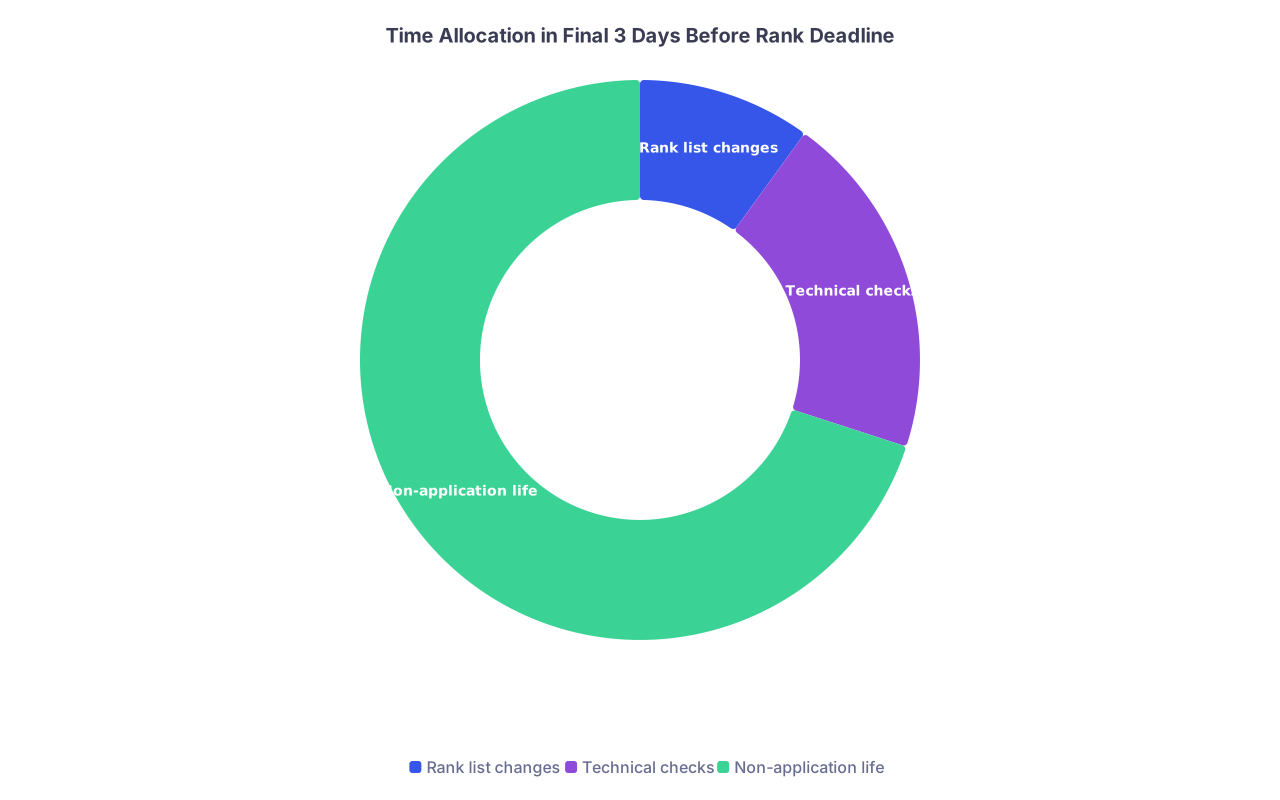
| Category | Value |
|---|---|
| Rank list changes | 10 |
| Technical checks | 20 |
| Non-application life | 70 |
You should not be doing massive overhauls at this point.
Day 28: Final micro-adjustment only if truly needed.
If there is still one unresolved tie or nagging concern, handle it today:
- A quick final email to a trusted resident
- A 10-minute call with a mentor
- A fast recheck of program details
Make any last, small order change that flows naturally from that information. No sweeping reshuffles.
Day 29: Certify your list.
Sit down, ideally when you are not exhausted. Read your rank list out loud, top to bottom. Then hit “Certify.”
Do not un-certify later to change it repeatedly. That is how people talk themselves out of good decisions and into anxiety.
Day 30: No-touch rule.
On the literal last day before the deadline, do not change your list unless:
- You discover an outright error (wrong program code, wrong track, missing program you meant to include)
Nerves are not new information. They are just your brain realizing it is about to commit.
Your Action Step Today
Open a blank document and write the name of every surgical program you interviewed at. For the first three, without looking anything up, type:
- 5 things you liked
- 3 things you disliked
- 1 moment that stuck with you
Do it now, before your memory degrades further. That single exercise will anchor the next 30 days of rank list decisions in your actual experience, not in marketing or fear.