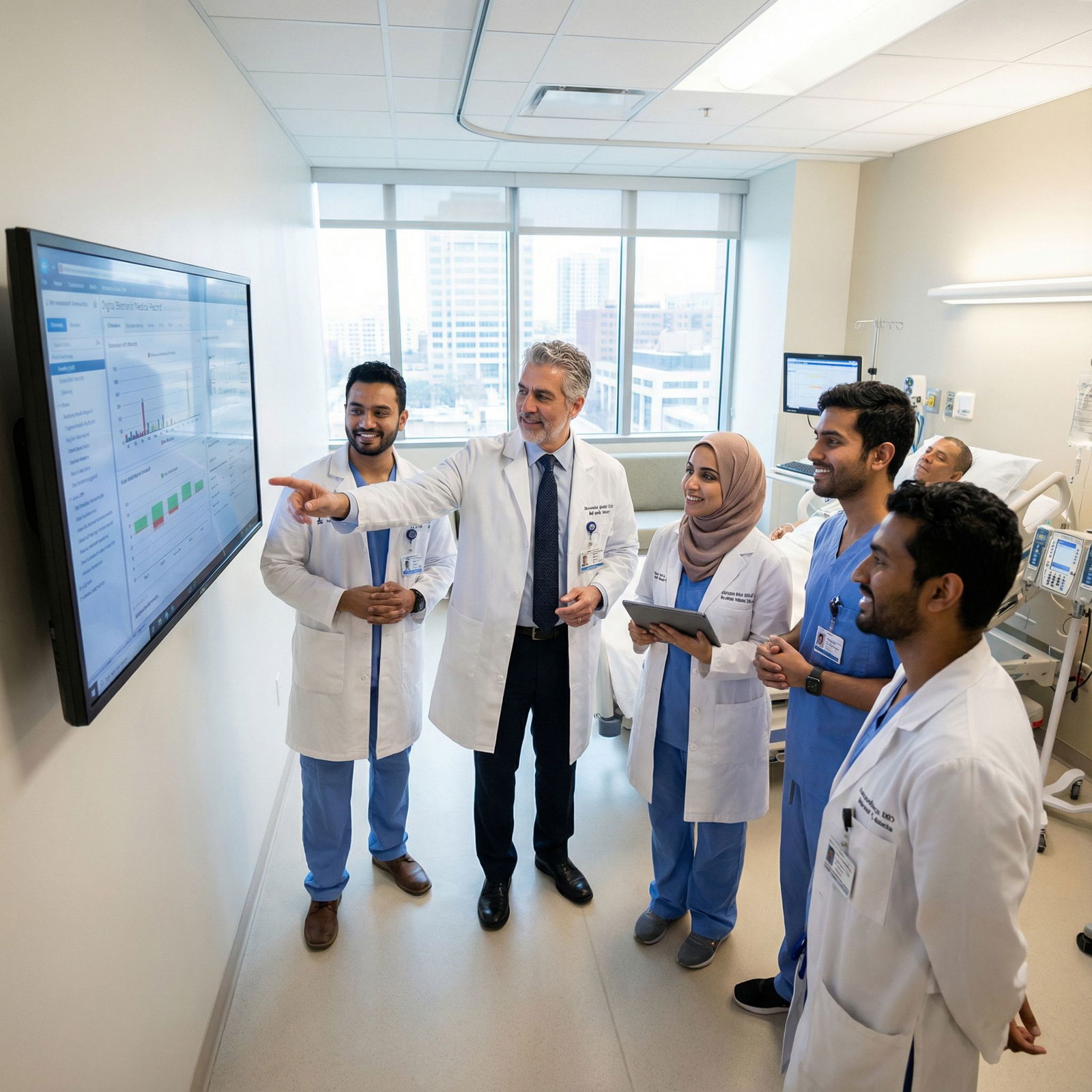
Bridging the Gap: Why Clinical Experience Is Critical for International Medical Graduates
Entering the U.S. medical system as an International Medical Graduate (IMG) is both exciting and daunting. Strong exam scores and a solid medical school record are essential, but they are not enough on their own. What often separates successful applicants from the rest in the U.S. residency match is high‑quality, recent clinical experience—especially within the U.S. healthcare system.
For IMGs, clinical experience is far more than a checklist item on a CV. It’s the bridge between textbook knowledge and real-world patient care, between training abroad and practicing medicine in the United States. It demonstrates that you can function safely and effectively in U.S. settings, communicate with patients and teams, and contribute from day one of residency.
This article explains why clinical experience is so important for IMGs, how it directly impacts residency applications, what kinds of experiences are available, and practical strategies to find and maximize those opportunities.
The Strategic Role of Clinical Experience for IMGs
Clinical experience refers to structured exposure to patient care and the healthcare environment—ranging from direct hands-on involvement to supervised observation. For IMGs pursuing U.S. residency, the type, quality, and recency of clinical experience can significantly shape how program directors view their application.
Why U.S. Clinical Experience Is So Highly Valued
Residency program directors consistently highlight U.S. clinical experience (USCE) as a major factor when ranking IMG applicants. Several core reasons explain this:
Evidence that you can function in the U.S. system
USCE shows that you understand workflows, documentation standards, and expectations of trainees in American hospitals and clinics.Stronger, U.S.-based letters of recommendation (LORs)
Clinical experiences—especially those involving direct patient care—are often the main source of the specialty-specific, U.S. LORs that programs heavily rely on.Risk reduction for programs
Selecting an IMG resident who has never worked in the U.S. presents uncertainty. USCE reduces that risk by proving you’ve already adapted to the culture, pace, and expectations.Demonstration of commitment and initiative
Securing U.S. experience often requires planning, persistence, and financial investment. This signals dedication and motivation—traits that programs value.
Six Core Benefits of Clinical Experience for International Medical Graduates
1. Adapting to the U.S. Healthcare System
The U.S. healthcare system is distinct in its structure, regulations, and culture:
- Complex insurance and billing systems (private insurance, Medicare, Medicaid)
- Strong emphasis on documentation, compliance, and quality metrics
- Multidisciplinary team-based care involving nurses, pharmacists, case managers, social workers, and others
- Strict patient privacy and legal frameworks (HIPAA, EMR security, informed consent)
For an IMG, even with strong clinical knowledge, these elements may feel unfamiliar. Clinical experience allows you to:
- Learn the flow of inpatient and outpatient care (admissions, discharges, referrals)
- Understand how orders, consults, and documentation work in electronic medical records (EMR)
- Recognize medicolegal responsibilities, including accurate charting and communication
- Observe practice patterns driven by local guidelines and hospital policies
Example: An IMG from a system where family members are routinely told diagnoses before the patient may be surprised by the U.S. emphasis on direct patient autonomy and confidentiality. Clinical experience prepares you to navigate these differences professionally and ethically.
2. Enhancing and Updating Clinical Skills
Residency programs want trainees who can transition quickly into their roles. Clinical experience helps you:
- Refresh core clinical skills if there has been a gap since graduation
- Observe and practice evidence-based approaches aligned with U.S. standards
- Become familiar with specialty-specific workflows (e.g., medicine, surgery, pediatrics, psychiatry)
Depending on the type of experience, you may:
- Take focused histories and perform physical exams
- Participate in rounds and case discussions
- Observe or assist with procedures (e.g., sutures, central lines, lumbar punctures, depending on role and supervision)
- Formulate differential diagnoses and basic management plans (and discuss these with attendings)
Your goal is to show that you are clinically ready to start residency—competent, safe, and up-to-date.
3. Mastering Communication in a New Cultural and Linguistic Context
Strong communication is central to safe patient care and effective teamwork. For IMGs, clinical experience is critical in:
- Adjusting to American medical English, slang, and abbreviations
- Learning how to explain complex concepts in plain language at an appropriate health literacy level
- Practicing shared decision-making and informed consent
- Handling sensitive topics (end-of-life discussions, mental health, reproductive health) with cultural awareness
You’ll also refine team communication:
- Presenting cases succinctly during rounds (SOAP or other structured formats)
- Communicating with nurses, pharmacists, and consultants
- Giving and receiving feedback
These skills are not only essential clinically; they are often directly evaluated during rotations and discussed in your letters of recommendation.
4. Internalizing Patient-Centered and Culturally Competent Care
The U.S. healthcare model strongly emphasizes patient-centered care:
- Respect for patient autonomy and preferences
- Informed consent and shared decision-making
- Sensitivity to social determinants of health (housing, income, education, access to care)
As an IMG, you often bring rich experience in cross-cultural care—but you must adapt that to local expectations. Clinical experience helps you:
- Practice empathy and active listening in a U.S. setting
- Understand how cultural, religious, and socioeconomic factors influence treatment decisions
- Work effectively with interpreters and culturally diverse patient populations
Programs look for applicants who can deliver culturally competent care—a strength many IMGs possess, which you can highlight more effectively with concrete U.S.-based experiences.
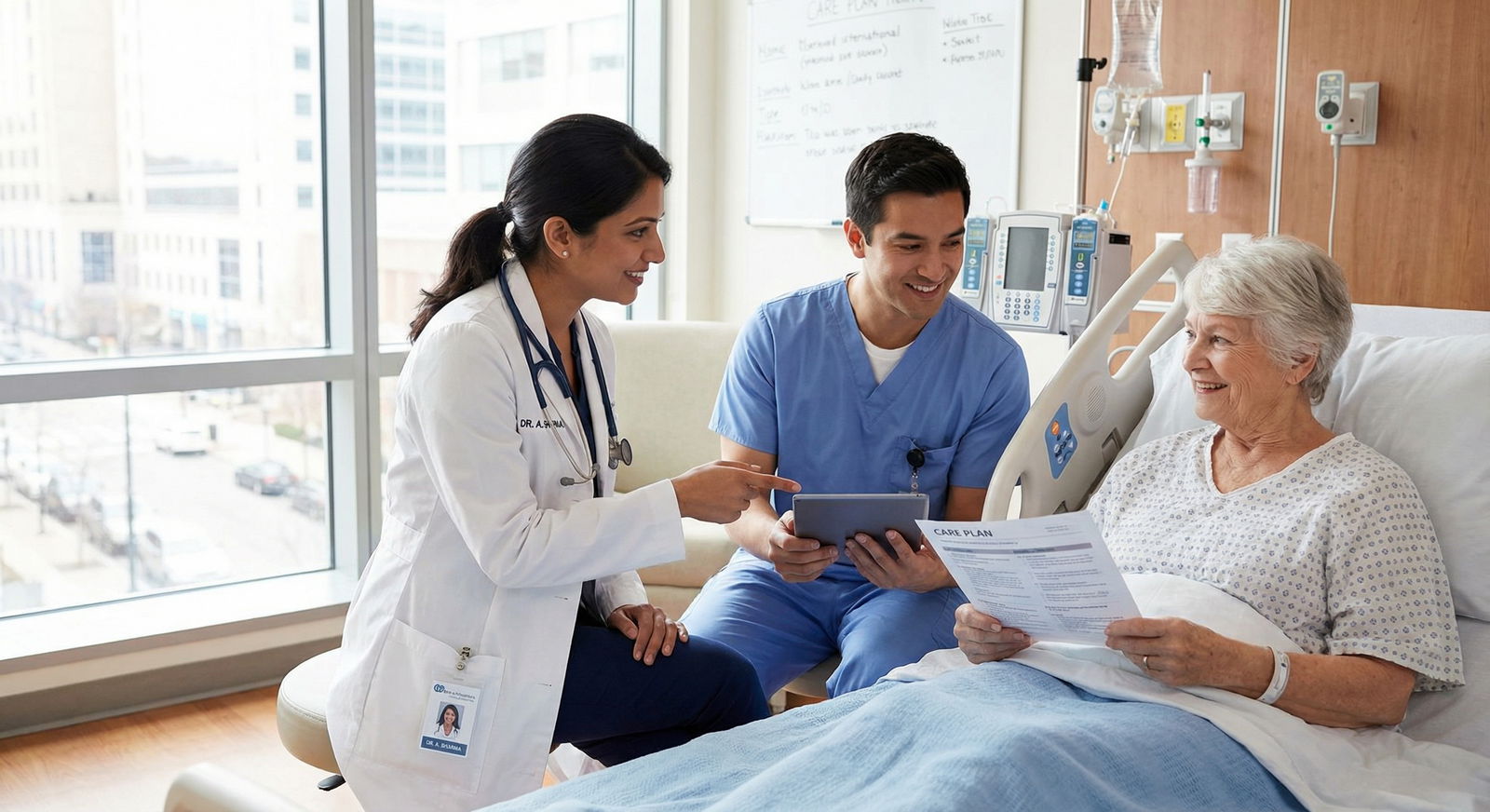
5. Building a Strong Professional Network in the U.S.
Professional networking is often underappreciated but vital for IMGs. Clinical experience places you directly in contact with:
- Attending physicians who may write strong, detailed LORs
- Residents and fellows who can share real-time advice about programs and interviews
- Program leadership, coordinators, and academic staff who influence selection decisions
Effective networking through clinical experiences can:
- Lead to research or quality improvement projects
- Provide opportunities for mock interviews and application feedback
- Help you understand the “fit” and culture of different residency programs
Many IMGs eventually match into institutions where they previously rotated, volunteered, or conducted research. Even if you don’t match there, mentors from those experiences can advocate for you elsewhere.
6. Directly Strengthening Your Residency Applications
Finally, high-quality clinical experience for IMGs has a measurable impact on residency applications:
- Makes your ERAS application more competitive, especially with U.S.-based experiences within 1–3 years of application
- Provides material for a strong personal statement (specific patient encounters, lessons learned)
- Generates specialty-specific, U.S. letters of recommendation, often a key selection criterion
- Shows recency of clinical activity (important if there is a gap after graduation)
For many IMGs, the difference between a limited number of interview invitations and a robust, diverse interview season comes down to the strength of their U.S. clinical experience profile.
Types of Clinical Experience for IMGs: Options and Trade-offs
Not all clinical experiences are viewed equally by U.S. residency programs. Understanding the main categories and their strengths will help you build a strategic plan.
1. Clinical Rotations (Electives, Clerkships, Sub-Internships)
What they are:
Structured educational experiences where you’re embedded in a clinical team. For students and very recent graduates, these may be called “electives,” “clerkships,” or “sub-internships.”
Common features:
- Direct or semi-direct patient care under supervision
- Case presentations, progress notes, and participation in daily rounds
- Evaluation forms and potential for strong LORs
- Usually offered by teaching hospitals and academic centers
Advantages for IMGs:
- Considered one of the most valuable forms of USCE
- Provide deep insight into specific specialties and hospital culture
- Allow faculty to see you functioning in a “near-resident” capacity (especially in sub-internships)
Challenges:
- Often limited to students or recent graduates (e.g., within 1–3 years of graduation)
- Competitive and sometimes expensive
- May require Step scores, immunizations, and extensive paperwork
If eligible, prioritize clinical rotations and sub-internships in your target specialties and in institutions where you may want to match.
2. Observerships
What they are:
Structured shadowing experiences where you observe but generally do not touch patients or enter independent orders.
Typical activities:
- Observing patient encounters, rounds, and procedures
- Attending conferences and didactic sessions
- Discussing cases with attendings and residents without direct care responsibilities
Advantages:
- More accessible to graduates and those several years out of medical school
- Good introduction to the U.S. healthcare system and hospital culture
- Still useful for networking and obtaining LORs if you’re engaged, punctual, and proactive (within appropriate boundaries)
Limitations:
- Less weight than hands-on USCE in many program directors’ eyes
- You may not be allowed to document in the medical record, write orders, or perform procedures
- Some programs explicitly distinguish observerships from clinical experience
Observerships can still be valuable, especially when combined with other experiences and used strategically to demonstrate specialty interest and U.S. exposure.
3. Externships
What they are:
Experiences (often for IMGs) that simulate the role of a junior resident or intern, with some level of direct patient care under supervision.
Possible responsibilities:
- Taking histories and doing physical exams
- Presenting patients
- Writing notes (usually co-signed)
- Participating in diagnostic and treatment planning
Advantages:
- Closer to “true” USCE and often viewed favorably
- Strong potential for detailed LORs that describe your clinical skills and work ethic
- Excellent bridge if you are a graduate and no longer eligible for student electives
Considerations:
- Quality and level of responsibility can vary widely by program
- Some externships are fee-based; research carefully for reputable options
- May still be limited in access to EMR or certain procedures
When evaluating externships, prioritize programs associated with established hospitals or universities and seek feedback from prior participants when possible.
4. Volunteering and Community Clinical Involvement
What it is:
Unpaid service in healthcare-related settings—free clinics, community health fairs, hospital volunteer services, health education programs.
Activities may include:
- Assisting with patient intake or translation (without independently providing medical care)
- Supporting vaccination drives, blood pressure screenings, health education initiatives
- Helping with non-clinical but health-related tasks (scheduling, outreach, community health work)
Benefits:
- Demonstrates commitment to service, professionalism, and interest in U.S. communities
- Provides exposure to underserved populations and social determinants of health
- Offers networking opportunities and potential LORs highlighting your character and work ethic
Limitations:
- Usually not counted as formal “clinical experience” in the same way as rotations or externships
- Less direct connection to specialty-specific residency selection
Use volunteering to supplement rather than replace formal USCE, and emphasize what you learned about patient populations, systems of care, and U.S. culture.
5. Research, Quality Improvement, and Academic Positions
What they are:
Roles in clinical or translational research, quality improvement (QI) projects, or academic departments.
Examples:
- Clinical research coordinator
- Research fellow or assistant in a lab or clinical department
- QI analyst working on patient safety, readmission reduction, or guideline adherence
Advantages:
- Strengthens your academic profile, particularly for university-based programs
- Provides additional Professional Networking connections with faculty
- Sometimes includes indirect clinical exposure (e.g., recruiting patients, collecting clinical data, attending case conferences)
Limitations:
- Not a substitute for direct clinical experience
- May be viewed primarily as research experience unless explicitly clinical in nature
Combining research with even limited USCE (observerships, externships, or rotations) can be a powerful mix for many specialties.
How IMGs Can Strategically Gain Clinical Experience in the U.S.
Finding and securing quality clinical experience requires planning, persistence, and a clear strategy. Below are practical steps to guide you.
1. Start Early and Plan Backward From Your Desired Match Year
If you are still in medical school:
- Explore final-year electives or visiting student programs at U.S. medical schools
- Aim to complete at least one or two U.S. rotations in your target specialty before ERAS opens
If you are a graduate:
- Allow 6–12 months to plan for visas (if needed), finances, and applications to observerships/externships
- Look for recent experiences—residency programs prefer USCE within 1–3 years of application
Create a timeline that aligns Step exams, clinical experiences, and application cycles, and adjust based on visa and personal constraints.
2. Use Diverse Channels to Find Opportunities
To identify clinical experiences, combine traditional and modern approaches:
- Hospital and university websites: Many have dedicated pages for IMG observership or externship programs
- Professional networking platforms: LinkedIn can connect you with physicians, alumni, and prior IMGs who can guide you
- IMG-focused organizations and forums: National IMG associations, specialty societies, and social media groups often share openings
- Cold outreach: Email department coordinators or faculty with a concise CV and clear interest in observership or shadowing, especially if you have a shared connection (same medical school, country, or research interest)
When sending emails, be professional, specific about your goals, and respectful of time. Follow up politely if you do not receive a response.
3. Seek and Cultivate Mentors
Mentorship is a powerful multiplier for IMGs. Potential mentors include:
- Attendings from your clinical experiences
- Research supervisors
- Senior residents or fellows who were previously IMGs
Mentors can:
- Advise you on specialty selection and application strategy
- Help you identify stronger rotations, externships, or research roles
- Write more personal, detailed LORs
Make mentorship a two-way relationship: be reliable, prepared, and appreciative of their time.
4. Maximize Every Clinical Experience You Obtain
Once you secure an experience, treat it like a prolonged interview.
To stand out:
- Be punctual, well-prepared, and professionally dressed
- Read about your patients and the relevant guidelines ahead of time
- Offer to help with tasks appropriate to your role
- Show humility and eagerness to learn, while respecting boundaries and policies
- Ask for feedback and implement it visibly
Document important cases, skills learned, and feedback received. These will be invaluable for:
- Your ERAS experience descriptions
- Your personal statement
- Interview answers (e.g., “Tell me about a challenging clinical experience”)
5. Prepare to Discuss Your Clinical Experience in Interviews
Residency programs will often probe your experiences in detail. Be ready to:
- Describe specific rotations or observerships: setting, patient population, your role
- Share cases that shaped your approach to patient care or specialty choice
- Reflect on what you learned about the U.S. healthcare system
- Explain how the experience prepared you for residency in that specialty
Practice concise, structured answers that highlight growth, adaptability, and professionalism.

Frequently Asked Questions About Clinical Experience for IMGs
1. How much U.S. clinical experience do I need as an IMG?
There is no universal minimum, but many successful IMG applicants have:
- At least 2–3 months of U.S. clinical experience, preferably in their chosen specialty
- Experiences that are recent (within the last 1–3 years)
- At least 2–3 strong U.S.-based letters of recommendation tied to those experiences
More important than sheer duration is the quality of the experience and the strength of your evaluations and LORs.
2. Is an observership enough for a strong residency application?
Observerships alone are usually not ideal, but they are still valuable, especially if:
- You are several years out from graduation
- You combine them with research, volunteering, or limited hands-on roles
- You demonstrate exceptional engagement, reliability, and professionalism
Residency programs generally prefer hands-on experiences (rotations, externships), but high-quality observerships with strong LORs are still beneficial—especially in combination with other forms of experience.
3. Can international (non-U.S.) clinical experience substitute for U.S. experience?
Your international clinical experience is important and should absolutely be listed. However:
- Most U.S. programs do not view international experience as a full substitute for U.S. clinical experience
- U.S. exposure is critical to demonstrate familiarity with local standards, documentation, and culture
If you cannot obtain extensive USCE, aim for at least a few structured U.S.-based experiences and highlight how you’ve successfully translated your prior practice to the U.S. context.
4. Do volunteer roles and research count as clinical experience?
Volunteer roles and research:
- Support and enhance your profile but are usually not counted as core USCE unless they are clearly clinical in nature (e.g., hands-on care or clinical research involving patient interactions under supervision)
- Are excellent for showing commitment to underserved populations, academic potential, and professionalism
In your application, separate these under “Volunteer” and “Research” sections, and use the “Experience” descriptions to emphasize what is most clinically relevant.
5. How can I convert clinical experiences into strong letters of recommendation?
To obtain impactful LORs from your clinical experiences:
- Inform your supervising physician early that you hope to earn a letter if you perform well
- Demonstrate reliability, initiative, and growth throughout the rotation
- Provide your updated CV and personal statement draft when they agree to write the letter
- Politely ask if they can write a “strong and supportive” letter on your behalf
The best letters describe your clinical abilities, communication, professionalism, and suitability for residency in specific, observable terms—something only possible if you have made a sustained, positive impression.
Clinical experience is one of the most powerful tools IMGs have to bridge the gap between their medical education abroad and a successful career in the United States. By strategically seeking, maximizing, and reflecting on these experiences, you not only enhance your residency applications, but also lay a stronger foundation for a lifetime of effective, compassionate patient care in the U.S. healthcare system.