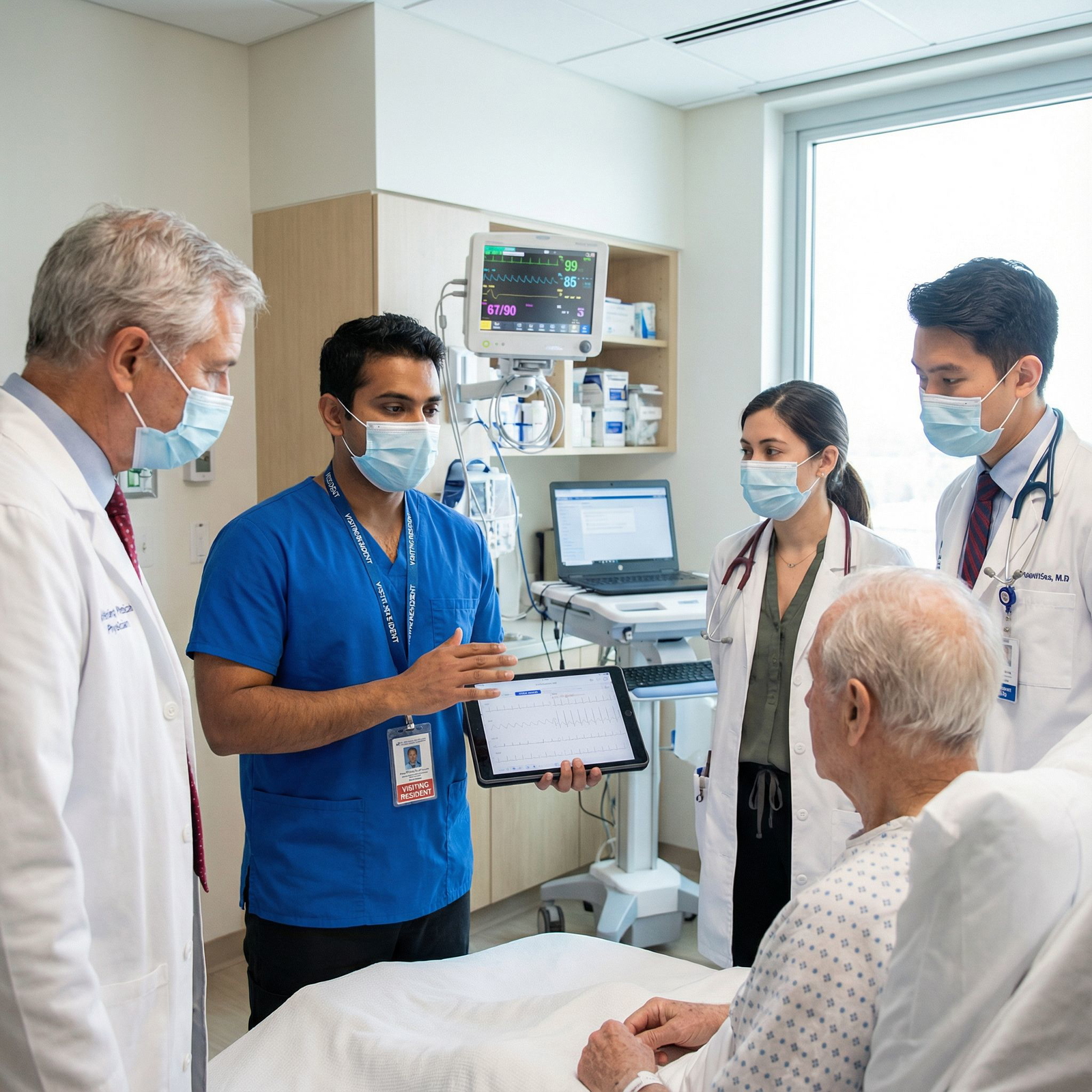
From Classroom to Clinic: Why IMGs Must Get Real Experience in U.S. Healthcare
For International Medical Graduates (IMGs), passing exams is only half the journey. The other half—and often the deciding factor in residency applications—is demonstrating meaningful, recent, and relevant clinical experience in the U.S. medical system.
Textbooks, lectures, and exam prep build a strong foundation of medical knowledge. But the realities of patient care, interprofessional teamwork, electronic health records, and U.S.-specific regulations are learned in clinics, hospitals, and community settings. That transition—from classroom to clinic—is where IMGs either become highly competitive residency candidates or struggle to gain traction.
This guide explains why clinical experience is so critical for IMGs, the types of experience that count, and how to strategically build a portfolio that strengthens residency applications and prepares you to practice safely and confidently in the U.S.
Understanding the Unique Challenges IMGs Face in U.S. Medicine
Navigating a New and Complex Healthcare System
For IMGs, entering the U.S. healthcare environment means adapting not only to a new clinical system, but often to a new culture, language nuances, and expectations of professionalism. Common challenges include:
Cultural and Communication Differences
- Interpreting indirect communication, shared decision-making, and patient autonomy
- Adjusting to expectations around empathy, eye contact, and body language
- Adapting to how bad news is delivered and how patient preferences are incorporated
System-Level Complexity
- Understanding the structure of U.S. healthcare (private vs. public payers, insurance restrictions, prior authorizations)
- Learning how care transitions work: inpatient-to-outpatient handoffs, discharge planning, and follow-up
Documentation and Legal Requirements
- Becoming proficient with electronic health records (EHRs)
- Aligning care with billing and coding requirements
- Complying with HIPAA and institutional policies
Clinical experience is the most effective way to develop comfort with these realities before residency, when the stakes and pace are higher.
Credentialing, ECFMG, and the Path to Residency
Beyond medical knowledge, IMGs must navigate:
Credential Verification
- ECFMG certification requirements (transcripts, primary source verification, USMLE steps)
- Recognizing that some programs require or strongly prefer “U.S. clinical experience (USCE)” within a recent time frame (often within 1–3 years)
Competitive Residency Landscape
- IMGs frequently compete with U.S. graduates who have built-in access to clerkships and letters of recommendation
- Residency program directors often use clinical experience in the U.S. as a key screening tool to gauge readiness, professionalism, and familiarity with local standards
In this environment, strong, well-structured clinical experience can be the deciding factor between an application that gets filtered out and one that leads to interviews and a successful match.
Why Clinical Experience Is Essential for IMGs
1. Building Real-World Competence and Confidence
Passing Step exams demonstrates knowledge. Clinical experience shows you can apply that knowledge safely and effectively.
Key skills developed through hands-on exposure include:
Clinical Reasoning in Real Time
- Distinguishing urgent from non-urgent presentations
- Developing differential diagnoses under time pressure
- Making practical management decisions given real-world barriers (insurance, access, patient preferences)
Procedural and Practical Skills
- Performing basic procedures (where allowed): IV placement, wound care, pap smears, joint injections, or assisting with central lines and intubations
- Practicing accurate vital sign interpretation, focused physical exams, and bedside assessments
Crisis Management and Prioritization
- Responding to acute changes—chest pain, hypotension, respiratory distress
- Learning how codes are run in U.S. hospitals and the role of each team member
Repeated exposure builds not only technical skills, but also confidence—the ability to communicate clearly, advocate for patients, and function under pressure, qualities residency programs actively look for.
2. Understanding U.S. Medical Practices, Standards, and Culture
Each country’s healthcare system has its own norms. U.S. medicine has specific expectations that are difficult to fully understand from abroad:
Patient-Centered and Shared Decision-Making
- Involving patients in treatment choices
- Discussing risks, benefits, and alternatives
- Respecting patient autonomy, even when they decline recommended care
Legal and Ethical Frameworks
- HIPAA and strict privacy standards
- Mandatory reporting (e.g., abuse, certain infections)
- End-of-life decision-making, DNR orders, and advance directives
Quality and Safety Culture
- Root-cause analysis, morbidity and mortality conferences
- Safety checklists, handoff protocols, medication reconciliation
- Emphasis on error reporting and systems-based improvement rather than individual blame
Experiencing these expectations firsthand helps IMGs adapt efficiently during residency, reducing the learning curve and risk of missteps.
3. Building Professional Networks and Mentorship
Clinical experience places IMGs in direct contact with:
Attending Physicians who can:
- Provide mentorship on career paths and specialties
- Offer candid feedback on communication and clinical skills
- Write strong, personalized U.S. letters of recommendation (LoRs)
Residents and Fellows who can:
- Share insider perspectives on programs and specialties
- Offer interview tips and guidance on ERAS and Match strategies
- Share opportunities for research, QI projects, or further clinical exposure
Interprofessional Team Members (nurses, pharmacists, case managers, social workers)
- Help IMGs understand team-based care and the non-physician roles that shape clinical decisions
- Provide insight on how to collaborate effectively in a multidisciplinary environment
Residency programs value candidates who show they can integrate into a team. Clinical experience demonstrates this better than any personal statement.
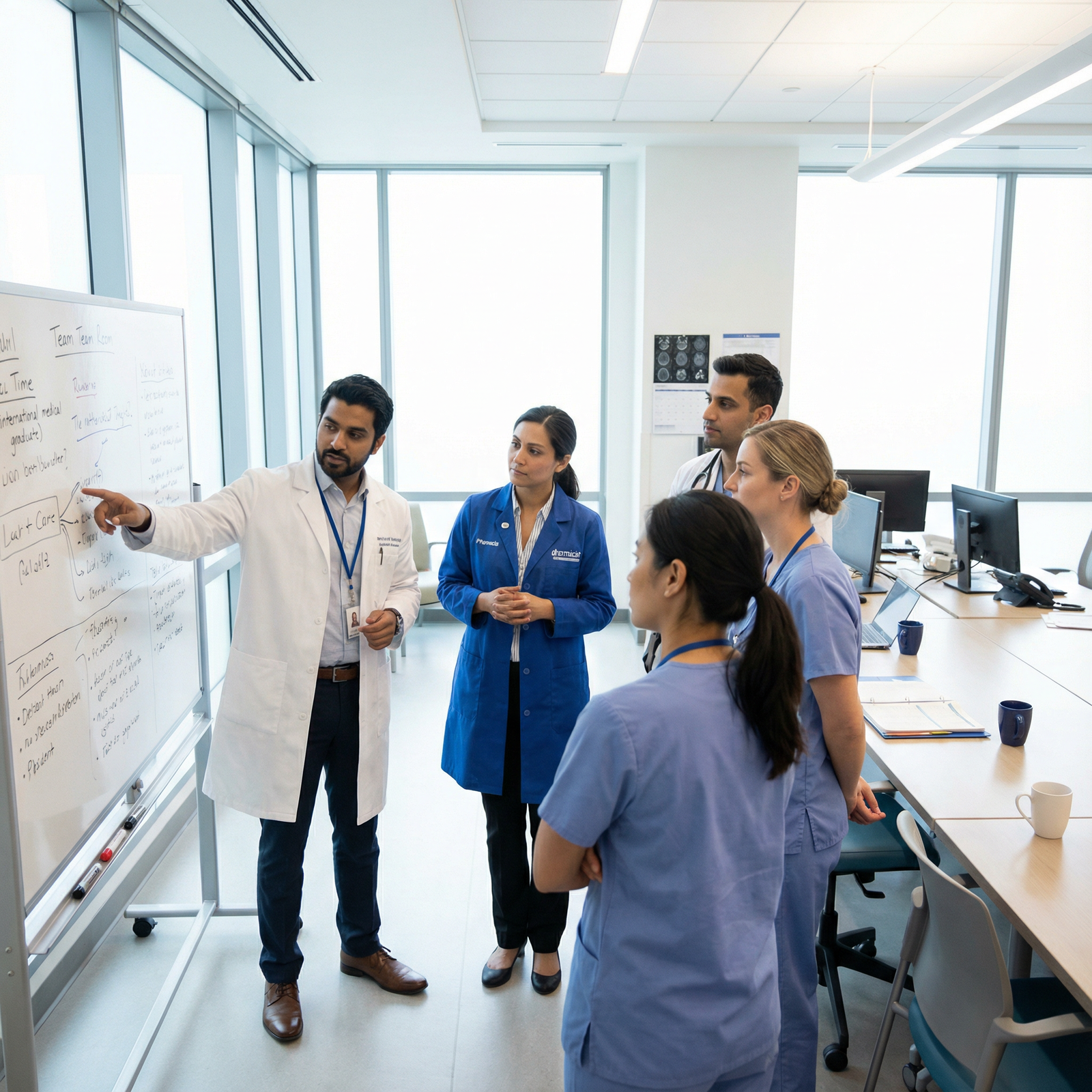
4. Strengthening Residency Applications and Match Outcomes
From a residency program director’s perspective, clinical experience in the U.S. serves multiple purposes:
Evidence of Adaptability
Shows that you have already navigated the transition into U.S. healthcare and can adapt to its culture and expectations.Proof of Professionalism and Reliability
Clinical supervisors can directly comment on your punctuality, work ethic, communication, and teamwork in their evaluations and LoRs.Recency of Clinical Practice
Many programs are wary of applicants who have been away from active clinical work for several years. Recent clinical experience reassures them that your skills are current.Specialty Alignment
Specialty-focused experiences (e.g., Internal Medicine inpatient, Family Medicine clinic, Psychiatry outpatient, Pediatrics urgent care) demonstrate commitment and help you speak concretely about your interest during interviews.
In competitive specialties or locations, robust clinical experience often differentiates otherwise similar candidates.
Types of Clinical Experience for IMGs (and How to Use Them Strategically)
Not all “clinical experience” is equal in the eyes of residency programs. Understanding the landscape helps you choose opportunities that fit your goals, timeline, and visa or licensing limitations.
1. Clinical Volunteering: Entry Point and Essential Exposure
What it is:
Unpaid participation in healthcare-related roles, usually without independent decision-making or invasive procedures. Examples include:
- Volunteering at free clinics or student-run clinics
- Helping with triage, vitals, health screening, or patient education
- Participating in community health fairs, vaccination drives, or outreach programs
Advantages for IMGs:
- Often easier to access than formal externships
- Helps build communication skills and cultural competence
- Demonstrates commitment to service and underserved populations—highly valued in Primary Care, Family Medicine, Internal Medicine, and Pediatrics
- Can lead to connections with physicians who supervise clinics and may later sponsor observerships, externships, or LoRs
How to maximize impact:
- Choose roles where you interact directly with patients and healthcare professionals
- Stay long enough (several months if possible) to show continuity and dedication
- Keep a log of responsibilities, skills gained, and notable encounters for future use in personal statements and interviews
2. Observerships: Understanding U.S. Clinical Workflow
What it is:
Structured or informal program where IMGs shadow U.S. physicians. Typically, no direct patient care is allowed due to licensing restrictions.
Common features:
- Observing history-taking, physical exams, and bedside counseling
- Attending rounds, conferences, and teaching sessions
- Learning documentation standards and EHR navigation (viewing, not entering orders)
- Understanding workflow, team roles, and clinical decision-making
Why observerships matter:
- Provide U.S. clinical experience that many programs recognize as valuable
- Offer settings to secure U.S. letters of recommendation if you demonstrate engagement, insight, and reliability
- Allow you to explore specialties and specific institutions to refine your career goals
How IMGs can stand out in observerships:
- Be consistently punctual, professional, and appropriately dressed
- Prepare by reviewing common cases in that specialty so you can ask informed questions
- Offer help with non-clinical tasks when appropriate (literature searches, patient education materials, simple data collection)
- Ask for structured feedback from your supervising physician near the end of the observership and express interest in a letter if appropriate
3. Externships: Closest to U.S. Medical Student Experience
What it is:
Hands-on clinical experience where IMGs may take part in patient care under supervision, similar to a medical student clerkship. Not all states or institutions allow IMGs to perform direct patient care without a license, so externships are more limited and often fee-based.
Potential responsibilities:
- Taking histories and performing physical exams
- Writing notes (co-signed by supervisors)
- Presenting patients on rounds
- Participating in management plans and following up on labs/imaging
- Limited procedures depending on site rules and supervision
Advantages:
- Considered one of the strongest forms of U.S. clinical experience short of residency
- Excellent platform for strong, detailed letters of recommendation
- Allows you to demonstrate daily reliability, clinical reasoning, and bedside manner
Tips to maximize externships:
- Treat the experience like a real clerkship or sub-internship—be proactive, read about your patients, and anticipate next steps
- Ask to present at a case conference or journal club if possible
- Seek feedback regularly and act on it; program directors appreciate evidence of growth mindset
- Clarify at the beginning whether the attending is comfortable providing a LoR based on performance
4. Clerkships and Electives During Medical School
For current medical students abroad, doing final-year electives or clerkships in the U.S. is one of the most efficient ways to obtain high-quality clinical experience.
Benefits:
- Often recognized by residency programs as equivalent to U.S. medical student rotations
- Easier to secure hands-on roles while still officially a medical student
- May open doors for “audition rotations” at programs where you hope to match
Students should plan early, as elective spots can fill 6–12 months in advance and may require Step scores, immunization records, and institutional agreements.
5. Clinical Research and Clinical Trials: Bridging Research and Practice
What it is:
Participation in clinical or translational research in hospital or academic settings, often involving patient-facing roles.
Typical roles for IMGs:
- Screening and enrolling patients into clinical trials
- Collecting data, obtaining consent (where allowed), administering questionnaires
- Following patients longitudinally, calling for follow-up information
- Assisting with chart reviews, data entry, and basic statistical analysis
Why this matters:
- Offers exposure to real patients and disease patterns
- Strengthens your CV with research productivity (abstracts, posters, publications)
- Demonstrates familiarity with ethical research conduct and regulatory oversight (IRB, Good Clinical Practice)
- Can lead to strong mentorship relationships with physician-scientists
Best practices:
- Aim for projects where your name can appear on posters or papers
- Be reliable with data collection and follow-up to build trust
- Use experiences from research to discuss evidence-based medicine during interviews
Strategies to Make the Most of Every Clinical Opportunity
Seek Diverse and Relevant Clinical Settings
To build a compelling story in your residency application, aim for:
Diversity of Settings
- Inpatient and outpatient
- Academic medical centers and community hospitals or clinics
- Urban and underserved or rural populations
Specialty-Relevant Experience
- Internal Medicine applicants: hospitalist services, continuity clinics
- Family Medicine applicants: outpatient clinics, community health centers
- Pediatrics applicants: pediatric clinic or hospital rotations
- Psychiatry applicants: inpatient psychiatry, outpatient clinics, addiction services
Programs appreciate applicants whose experiences clearly align with their chosen specialty.
Leverage Local Networks and Online Resources
To find clinical experience:
Contact Departments Directly
- Email department coordinators or program administrators with a concise CV and a specific, polite request
- Express clear goals (e.g., “observership in Internal Medicine to gain exposure to inpatient ward structure and documentation practices”)
Use Professional and Alumni Networks
- Reach out to alumni from your medical school currently training or practicing in the U.S.
- Join IMG-focused professional groups, specialty societies, and local medical associations
Explore Organized Programs
- Some hospitals and universities offer structured observership or externship programs
- Be cautious with commercial agencies—do thorough research, seek reviews, and confirm that experiences are recognized and reputable
Document, Reflect, and Translate Experience into Your Application
During every clinical experience:
Keep a clinical log including:
- Dates, site, supervising physicians
- Types of patients and conditions seen
- Specific skills practiced (history-taking, case presentations, procedures observed or assisted)
Reflect regularly:
- What did you learn about patient care, the healthcare system, or yourself?
- How did your communication, empathy, or clinical reasoning improve?
Use this material to:
- Write specific, vivid stories in your personal statement
- Prepare high-yield examples for interview questions (“Tell me about a difficult patient encounter…”)
- Guide your requests for letters of recommendation with reminders of key cases or projects

Real-World Applications: IMGs Turning Experience into Match Success
Case Study 1: Maria – Turning Volunteer Work Into a Residency Match
Maria, an IMG from Mexico, initially applied for Internal Medicine residency with strong Step scores but minimal U.S. clinical exposure. She received few interview invitations, and feedback suggested her lack of U.S. Clinical Experience was a major concern.
In preparation for the next cycle, she:
- Volunteered consistently at a community health center serving Spanish-speaking and underserved patients
- Assisted with health education, diabetes management classes, and screening events
- Developed strong relationships with two supervising physicians who later wrote detailed letters highlighting her bilingual communication skills and dedication to vulnerable populations
In interviews the following year, Maria spoke convincingly about:
- Barriers to care in underserved communities
- How she adapted her communication style to different literacy levels
- Her motivation to pursue Internal Medicine with a focus on primary care for marginalized groups
She successfully matched into a Family Medicine residency, where her community experience was seen as a clear asset.
Case Study 2: Jamal – Observerships as a Bridge to Subspecialty Opportunities
Jamal, an IMG from India, was aiming for Internal Medicine with a long-term interest in Hematology-Oncology. He secured an observership at a major academic center in an oncology unit.
During the observership, he:
- Arrived early to review patients’ charts and read about their diagnoses
- Asked focused, evidence-based questions on rounds
- Assisted with literature searches and helped a resident prepare a case presentation
His attending was impressed with his initiative and wrote a strong letter emphasizing his clinical curiosity, professionalism, and potential as a future oncologist. That letter helped Jamal secure multiple Internal Medicine residency interviews and ultimately a position at a program with a strong oncology fellowship.
Conclusion: Real Experience Is Non-Negotiable for IMGs
For International Medical Graduates, clinical experience is not just a line on a CV—it is the bridge between medical education and effective practice in the U.S. healthcare system.
By investing in meaningful clinical experiences, IMGs can:
- Build practical competence and confidence
- Understand and internalize U.S. standards of care, ethics, and patient communication
- Develop trusted professional relationships and secure strong U.S. letters of recommendation
- Present a compelling, credible residency application that stands out in a competitive landscape
Whether through volunteering, observerships, externships, clerkships, or clinical research, each experience brings you closer to practicing as a capable, confident physician in the U.S. The time and effort you dedicate to gaining real experience will pay off not only in your residency match, but throughout your medical career.
FAQ: Clinical Experience and Residency Applications for IMGs
1. Why is U.S. clinical experience so important for International Medical Graduates?
U.S. clinical experience shows residency programs that you can function within the U.S. healthcare environment, communicate effectively with patients and teams, and understand local standards, documentation, and regulations. It provides concrete evidence—through evaluations and letters of recommendation—that you’re ready to transition from medical education abroad to residency training in the U.S.
2. What types of clinical experience are most valuable for residency applications?
The most valuable experiences typically include:
- Hands-on externships or U.S. electives/clerkships during or after medical school
- Structured observerships with strong teaching and feedback
- Consistent clinical volunteering in clinics or community health settings
- Clinical research roles that involve patient contact or working closely with clinical teams
Programs value depth and quality over sheer quantity. A few strong, well-supervised experiences with clear responsibilities and strong letters are better than many short, superficial ones.
3. How can IMGs find clinical experience opportunities in the U.S.?
Common strategies include:
- Checking websites of academic medical centers for formal observership or elective programs
- Directly emailing department coordinators, attaching a concise CV and explaining your goals
- Networking with alumni from your medical school who are already in the U.S.
- Joining IMG advocacy groups, specialty societies, and local medical associations
- Exploring community clinics and non-profit health organizations for volunteer roles
Plan early, as many positions have limited capacity and require documented immunizations, background checks, and proof of liability coverage.
4. How recent should clinical experience be for residency applications?
Recency matters. Many residency programs prefer clinical experience obtained within 1–3 years of application, especially if you have been out of medical school for some time. If there is a significant gap in your clinical activity, recent volunteer work, observerships, or externships can help demonstrate that your skills and knowledge remain current.
5. Can IMGs match into residency without any U.S. clinical experience?
It is possible but significantly more difficult, especially in competitive specialties or locations. Lack of U.S. clinical experience makes it harder for programs to assess your adaptability to the U.S. system and obtain reliable U.S.-based letters of recommendation. Even a few months of structured clinical experience can substantially strengthen your profile, improve your interview chances, and help you perform better once you enter residency.
By understanding the importance of clinical experience and approaching it strategically, IMGs can transform classroom learning into real-world readiness—and greatly enhance their chances of a successful residency match.