Introduction: Why U.S. Clinical Experience Is a Game-Changer for IMGs
International Medical Graduates (IMGs) face a distinct set of challenges when pursuing residency and long-term careers in the United States. Even after passing USMLE exams, many IMGs discover that understanding the U.S. healthcare system, demonstrating readiness for residency, and securing strong letters of recommendation are just as important as test scores.
This is where U.S. clinical experience becomes essential.
Clinical experience in the United States—whether through observerships, hands-on rotations, externships, research, or volunteer work—can dramatically strengthen an IMG’s residency application, clarify career goals, and ease the transition into U.S. medical practice.
This guide explores:
- Why clinical experience is so valuable for International Medical Graduates
- How it impacts your residency application and long‑term career
- The main types of experiences available
- Practical strategies to secure meaningful opportunities
- How to leverage those experiences for maximum benefit
Throughout, the focus is on actionable advice you can use as you plan your path toward the Match.
The Importance of Clinical Experience for IMGs in the U.S. Healthcare System
Clinical experience is far more than a checkbox on a residency application. For IMGs, it is one of the clearest signals to program directors that you can function effectively in the U.S. healthcare environment.
1. Strengthening Your Residency Application and CV
For residency programs, U.S.-based clinical experience answers a crucial question: Can this applicant function safely and effectively in our clinical setting?
Demonstrates Adaptability to the U.S. Healthcare System
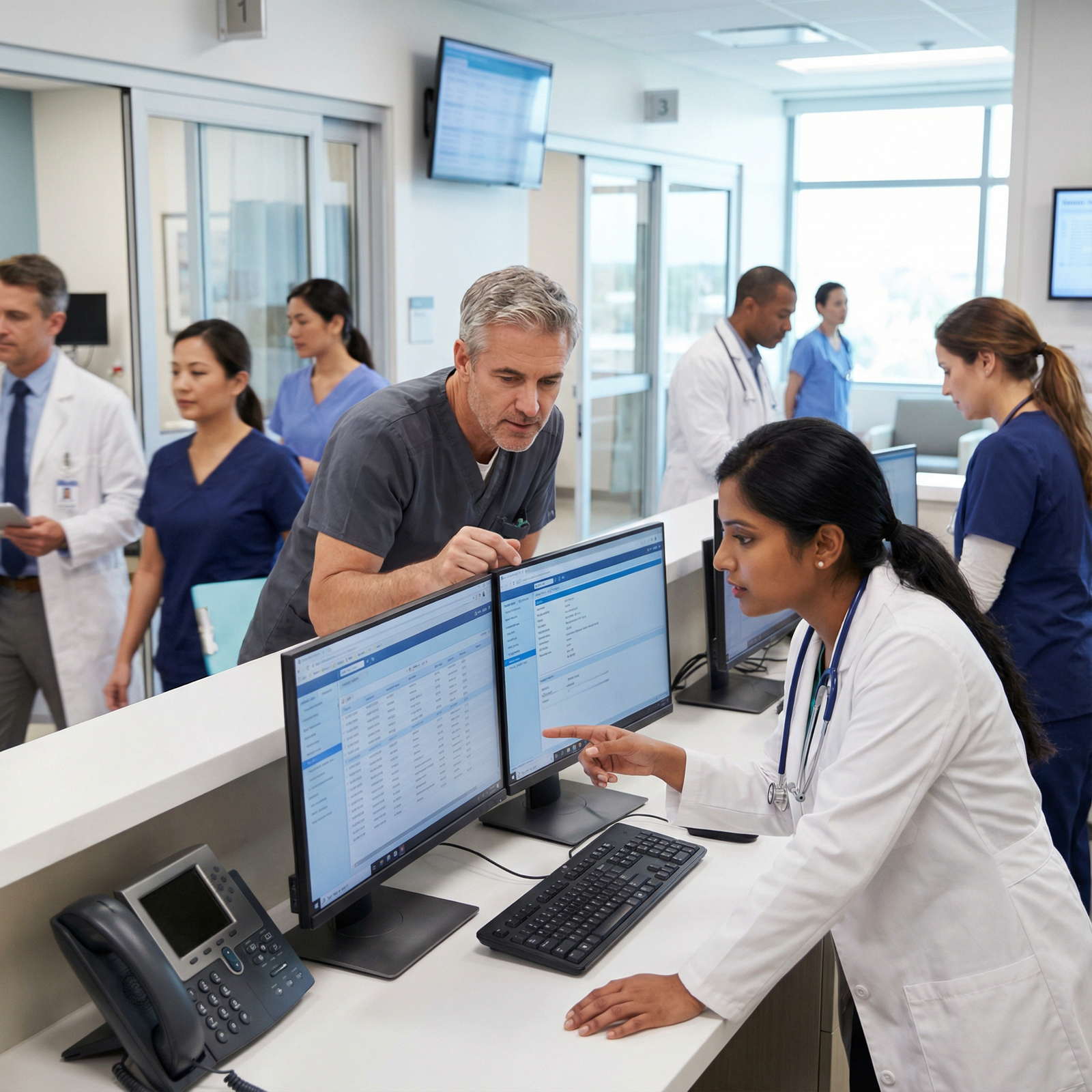
The U.S. healthcare system has unique features—electronic health records, complex insurance structures, multidisciplinary teams, and strong emphasis on documentation, patient autonomy, and safety protocols. U.S. clinical experience shows that you:
- Understand common workflows (sign-outs, pre-rounds, interdisciplinary rounds, discharge planning)
- Are familiar with U.S. clinical documentation standards (H&P, progress notes, orders, discharge summaries)
- Can apply American guidelines and evidence-based protocols in real patient care
Programs know that IMGs who have never set foot in a U.S. hospital will require more time to adapt. Documented experience reduces that concern dramatically.
Showcases Practical Clinical Skills
Even in observerships (which are often non–hands-on), you can still demonstrate:
- Clinical reasoning (through case discussions, presentations, and progress note drafts)
- Professionalism (punctuality, reliability, ethical behavior)
- Basic clinical workflows (triaging problems, following up labs, formulating assessment and plan)
In hands-on roles (externships, student rotations, or certain volunteer positions), you may additionally show:
- History taking and physical exam skills in a U.S. context
- Procedural skills where allowed (e.g., venipuncture, EKG placement, simple procedures, depending on the site)
- Ability to manage common inpatient and outpatient conditions under supervision
These experiences translate directly into more specific and powerful letters of recommendation (LORs), which are critical for IMGs.
Meets Explicit Residency Requirements
Many residency programs list “U.S. clinical experience” as a requirement or strong preference. Examples:
- “At least 3 months of recent U.S. clinical experience required.”
- “Observerships or hands-on U.S. clinical experience preferred.”
Without this, IMGs may be filtered out automatically, regardless of exam scores. Clinical experience therefore isn’t just helpful—it is often necessary for getting your application reviewed seriously.
2. Enhancing Communication Skills and Cultural Competence
Residency is fundamentally about patient care and teamwork. Communication and cultural fluency matter as much as medical knowledge.
Improving Medical English and Clinical Communication
Even IMGs with strong general English may struggle initially with:
- Rapid-fire clinical discussions on rounds or in sign-outs
- U.S. shorthand, acronyms, and abbreviations
- Nuanced language in difficult conversations (e.g., goals of care, breaking bad news)
Clinical experience gives you daily practice in:
- Presenting cases concisely using U.S. formats (SOAP, one-liner, problem-based)
- Calling consults and giving focused, structured information
- Speaking with nurses, pharmacists, social workers, and case managers
- Communicating clearly with patients and families from diverse backgrounds
Over time, this directly improves your confidence and performance during residency interviews and in future residency roles.
Building Cultural Competence in the U.S. Healthcare System
Understanding cultural expectations in U.S. medicine is crucial:
- Shared decision-making and respect for patient autonomy
- Sensitivity to diverse cultural, religious, and socioeconomic backgrounds
- Expectations regarding informed consent and documentation
- Approaches to end-of-life care, mental health, and pain management
Learning these nuances through direct patient contact prepares you to deliver patient-centered care and prevents misunderstandings that can negatively impact outcomes—or your evaluation.
3. Building Professional Networks and Mentorship in U.S. Medicine
Networking in medicine is not superficial—it’s a critical part of how jobs, research roles, and recommendation letters materialize.
Access to Mentors and Advocates
During U.S. clinical experience, you will work with:
- Attending physicians who can write strong, U.S.-style LORs
- Fellows and residents who can provide practical advice on the Match
- Program directors or faculty who may advocate for you if they see your potential
Mentorship gained through clinical experience can help with:
- Choosing specialties aligned with your profile (scores, interests, visa needs)
- Planning timelines (Step exams, OET, ERAS submission, interview prep)
- Identifying realistic programs to target based on your background
A mentor who has directly observed your work in the U.S. is far more likely to support your application than someone who only knows you remotely.
Networking in Medicine for Opportunities and Visibility
Clinical experience offers a natural environment for Networking in Medicine:
- Introductions to other attendings, coordinators, or researchers
- Invitations to attend conferences, grand rounds, and journal clubs
- Opportunities to join QI (quality improvement) or research projects
- Referrals to other departments or institutions for observerships or externships
Residency program directors often feel more comfortable ranking candidates who come recommended by people they trust within their own or affiliated institutions.
4. Gaining Real Insight into Resident Life and the U.S. Healthcare System
Textbooks and online videos cannot fully prepare you for the lived reality of residency in the United States. Clinical experience brings that reality into focus.
Understanding Day-to-Day Resident Workflow
By participating in or observing clinical care, you learn:
- What a typical resident schedule looks like (pre-rounds, rounds, clinics, calls)
- How teams function on medicine, surgery, pediatrics, etc.
- Common expectations: punctuality, documentation deadlines, follow-up responsibilities
- How handoffs, sign-outs, and cross-cover are conducted
This knowledge helps you:
- Answer interview questions more convincingly (“What do you expect from residency?”)
- Assess whether a given specialty or program culture suits you
- Transition more smoothly when residency begins
Familiarity with Core U.S. Policies and Systems
Practical exposure helps you understand:
- Electronic Health Records (Epic, Cerner, etc.)
- Insurance types (Medicare, Medicaid, private insurance, uninsured/charity care)
- HIPAA and confidentiality rules
- Protocols for patient safety and quality metrics
Such familiarity reassures residency programs that you will require less orientation and supervision when you start as an intern.
5. Boosting Competitiveness in the Residency Application and Match
In a highly competitive Match environment—especially for IMGs—U.S. clinical experience can be a decisive factor.
Standing Out Among Other International Medical Graduates
Programs often receive hundreds of applications from IMGs with similar exam scores. What differentiates you?
- Strong, detailed LORs from U.S. physicians
- Documented clinical exposure in the specialty you’re applying to
- Concrete examples of contribution: QI projects, presentations, research, community outreach
An applicant who can say, “During my U.S. internal medicine rotation, I…” and then describe specific responsibilities is often more memorable than someone who only has exam scores and home-country experience.
Balancing or Compensating for Academic Weaknesses
While nothing can completely replace strong exam performance, robust clinical experience may help:
- Provide a current, U.S.-based demonstration of your clinical ability if you have older graduation dates or exam attempts
- Show growth and maturity after a previous unsuccessful Match
- Illustrate your commitment to medicine and to the U.S. system, even if some metrics are not ideal
Program directors frequently comment that they prefer applicants who have shown perseverance, improvement, and professionalism in real clinical settings.
Major Types of Clinical Experience Available to IMGs
Understanding the different formats of U.S. clinical experience helps you choose opportunities that match your stage, visa situation, and career goals.
1. Clinical Observerships
What they are:
Short-term (often 2–12 weeks) experiences where you shadow physicians in inpatient or outpatient settings without directly touching patients or writing in charts.
Value for IMGs:
- Great for newcomers to the U.S.
- Good exposure to the U.S. healthcare system and daily clinical workflow
- Can yield strong LORs if you show initiative and clinical reasoning in discussions
- Often easier to obtain than fully hands-on roles
Limitations:
- Non–hands-on by design—no orders, procedures, or direct documentation
- Some programs prefer hands-on experience if available
How to maximize benefit:
- Prepare for each day by reviewing common conditions in that specialty
- Ask thoughtful, case-based questions that show your clinical thinking
- Offer to create mini-presentations, literature reviews, or case summaries
- Be consistently punctual, professional, and engaged
2. Hands-On Clinical Rotations and Externships
What they are:
Experiences where you have supervised, direct patient contact—often in the role of a medical student, sub-intern, or extern. Duties may include histories and physicals, presentations, and limited procedures depending on site policy.
Value for IMGs:
- Considered the “gold standard” of U.S. clinical experience
- Provide the most authentic preparation for residency responsibilities
- Enable faculty to observe your skills directly and write detailed LORs
Common formats:
- Final-year medical student electives for those still enrolled in medical school
- “Externships” or “hands-on rotations” offered by some hospitals, clinics, or third-party organizations
- Transitional roles (such as preliminary training programs, where available and appropriate)
Considerations:
- Often more expensive than observerships if arranged through private agencies
- May require additional paperwork (immunization records, malpractice coverage, clearance checks)
- Spots are limited and competitive
3. Clinical Volunteer Work
What it is:
Unpaid roles in clinics, hospitals, or community health centers where you may assist with:
- Patient intake and triage support
- Health education and counseling
- Administrative tasks related to care
- Interpreting or scribing, where permitted
Value for IMGs:
- Demonstrates commitment to patient care and community health
- Can provide longitudinal relationships (months to years) and long-term LORs
- Useful for understanding primary care and public health aspects of the U.S. system
Where to look:
- Free clinics or community health centers serving underinsured or immigrant populations
- Hospital volunteer departments
- Nonprofit organizations focused on specific communities or conditions
4. Clinical and Translational Research with Patient Exposure
What it is:
Research roles—clinical trials, outcomes research, quality improvement projects—often based in hospitals or academic centers. Some positions include patient interaction (recruitment, consent, data collection).
Value for IMGs:
- Builds a track record of academic productivity (posters, publications, QI projects)
- Strengthens Networking in Medicine by connecting you with faculty researchers
- Can lead to research-oriented LORs plus potential future positions (e.g., research fellowships)
- Shows engagement with evidence-based medicine and critical thinking
Optimization tips:
- Choose projects closely related to your target specialty when possible
- Aim to contribute enough to merit authorship or presentations
- Learn to present your research clearly during interviews
How to Secure U.S. Clinical Experience as an IMG
Finding and securing meaningful clinical experience requires strategy, persistence, and professionalism.
1. Strategic Networking in Medicine
Effective networking is relationship-building with a purpose: to exchange value, information, and opportunities—not simply to “ask for a favor.”
Practical steps:
- Use alumni networks: Reach out to alumni from your medical school who matched or practice in the U.S. Ask for advice first, then explore observership or research possibilities.
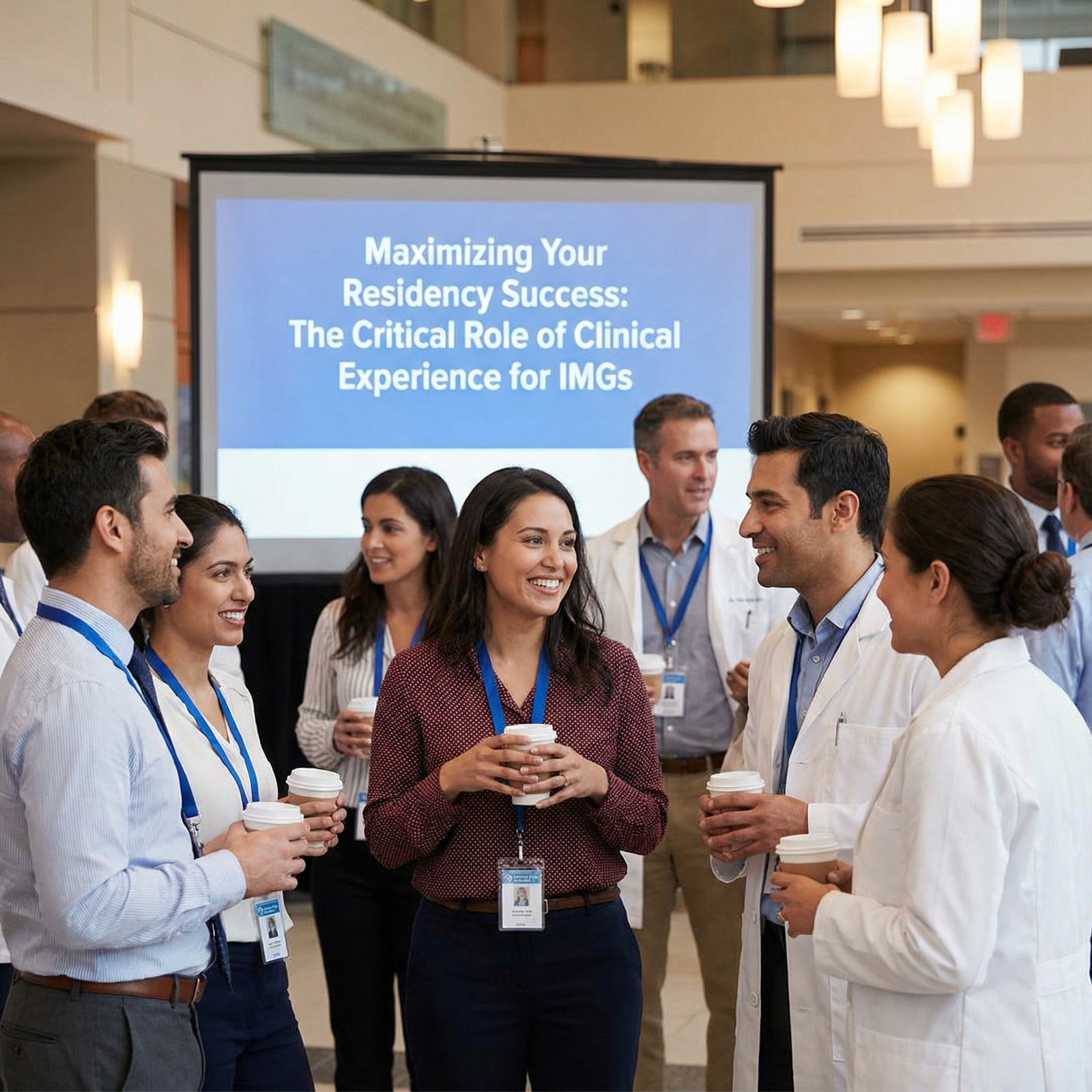
- Attend conferences and virtual events: Specialty conferences, IMG-focused webinars, and local grand rounds can help you meet faculty and residents. Follow up with short, polite emails referencing your interaction.
- Leverage LinkedIn and professional platforms: Create a complete, professional profile. Join IMG and specialty groups. When reaching out, be specific (“I’m an IMG interested in internal medicine—could you share how you obtained your first U.S. rotation?”).
- Maintain professionalism: Be courteous, respect people’s time, and follow through on commitments. Good impressions can lead to invitations you did not anticipate.
2. Utilizing Formal Observership and Rotation Programs
Many universities, teaching hospitals, and some private institutions have structured programs specifically for IMGs.
How to approach:
- Search institution websites for “IMG observership,” “international visiting physician,” or “visiting clerkship” programs
- Note application requirements: CV, personal statement, USMLE scores, immunizations, fees, and deadlines
- Apply early—spots may fill 6–12 months in advance, especially in popular specialties and major cities
- Consider smaller or less well-known institutions; they may have less competition and more flexible policies
Third-party organizations also arrange clinical experiences for a fee. Evaluate them carefully:
- Check affiliations (Are rotations in accredited hospitals or with board-certified physicians?)
- Ask about hands-on vs observership level
- Read independent reviews or ask prior participants, when possible
3. Volunteering in Local Clinics and Community Settings
Volunteering can be an accessible entry point, especially if you are already living in the U.S.
Steps to get started:
- Search for “free clinic + [your city/state],” “community health center,” or “FQHC (Federally Qualified Health Center).”
- Review their volunteer pages and reach out to coordinators with a tailored email and CV.
- Emphasize your medical training and openness to starting in non-clinical roles.
- Show reliability; long-term volunteers often gain increasing responsibility and better letters of reference.
Many residency programs value applicants who have demonstrated service to underserved communities and an understanding of social determinants of health.
4. Contacting Residency Programs and Departments Directly
Some residency programs or departments offer:
- Observerships
- Externships
- Research assistant positions
- Transitional jobs (e.g., preliminary training or clinical assistant roles, in limited contexts)
Best practices:
- Look up “International Medical Graduate” or “visiting physician” information on program websites.
- Email program coordinators or department administrators with a concise, professional message including:
- Who you are (medical school, graduation year, USMLE status)
- Your interest in their specialty or institution
- The type and dates of clinical experience you are seeking
- Attach a polished CV
- Accept that many will say no or not respond; persistence matters. A small percentage of positive replies can still translate into valuable opportunities.

Making the Most of Your U.S. Clinical Experience
Securing a position is only half the battle; how you perform determines the long-term value.
Show Professionalism Consistently
- Be punctual every day; arrive early and stay engaged until the team’s work is done.
- Dress professionally and follow all institutional policies.
- Maintain patient confidentiality and follow HIPAA guidelines strictly.
- Display a positive, teachable attitude; accept feedback graciously.
Actively Demonstrate Clinical Reasoning
Even if your role is observational:
- Read about your patients and prepare short, structured presentations.
- Ask focused questions: “In this patient with sepsis and chronic kidney disease, how do you choose the antibiotic regimen?”
- Offer to summarize recent evidence or guidelines relevant to an interesting case.
Seek Feedback and Letters of Recommendation
Toward the end of your experience:
- Ask for honest feedback: “Are there areas I could improve before starting residency?”
- If you’ve worked closely with an attending for at least 3–4 weeks, ask politely if they feel comfortable writing you a strong LOR for residency.
- Provide them with your updated CV, personal statement, and ERAS details to make their job easier.
FAQs: Clinical Experience and Residency Applications for IMGs
1. Why is U.S. clinical experience particularly important for International Medical Graduates?
U.S. clinical experience shows residency programs that you can function in the U.S. healthcare system, communicate effectively with patients and teams, and adapt to American standards of care and professionalism. It also helps you:
- Obtain strong, U.S.-based letters of recommendation
- Understand real expectations of residents
- Demonstrate commitment to practicing medicine in the United States
For IMGs, this experience often becomes a key differentiator in a competitive residency application process.
2. What types of clinical experiences are most valuable for IMGs?
The most valuable experiences are those that provide:
- Direct exposure to the U.S. healthcare system
- Opportunities for close supervision and feedback
- Strong potential for detailed letters of recommendation
These typically include:
- Hands-on clinical rotations or externships
- Well-structured observerships in your target specialty
- Longitudinal volunteer roles in clinics or community health centers
- Clinical or translational research with patient interaction and faculty mentorship
Ideally, IMGs aim for a mix of experiences that highlight clinical skills, professionalism, and academic engagement.
3. How can IMGs practically secure U.S. clinical experience if they have no prior contacts?
Even without existing connections, you can:
- Apply to formal observership or externship programs at universities and teaching hospitals
- Reach out to free clinics, community health centers, and hospital volunteer departments
- Use online platforms (LinkedIn, alumni networks, IMG forums) to connect with physicians and residents
- Email program coordinators and department administrators with a concise CV and request for opportunities
Persistence is essential: many requests may be declined, but a minority of positive responses can open meaningful doors.
4. Does clinical experience in my home country count toward residency applications?
Clinical experience in your home country is valuable for your overall development and may be mentioned on your CV and in your personal statement. However, most U.S. residency programs place higher value on recent, U.S.-based clinical experience because:
- It directly reflects your ability to work in the U.S. healthcare environment
- It allows U.S. physicians to assess and recommend you
- It aligns more closely with U.S. standards, guidelines, and documentation practices
Home-country experience is helpful, but it usually does not replace the need for U.S. clinical exposure.
5. What are the long-term benefits of having U.S. clinical experience beyond matching into residency?
The benefits extend well beyond the Match:
- Smoother transition to intern year: Less time spent adjusting to basic workflows; more focus on deeper learning.
- Stronger professional network: Early mentors and colleagues may continue to support your fellowship, job searches, and academic pursuits.
- Career clarity: Firsthand exposure to different specialties and practice settings can refine your long-term goals.
- Enhanced confidence: Familiarity with the U.S. system, language, and culture allows you to focus on advancing clinically and academically, rather than just surviving the transition.
Ultimately, U.S. clinical experience lays the foundation for a sustainable, fulfilling career in American medicine.
By strategically pursuing and maximizing clinical experience in the U.S. healthcare system, International Medical Graduates can significantly strengthen their residency applications, deepen their clinical skills, and open doors to long-term success in medicine.