
5 Residency Application Blunders You Can’t Afford to Make (and Exactly How to Avoid Them)
Embarking on the residency application process is one of the most high‑stakes transitions in medical education. After years of preclinical work, clerkships, exams, and extracurriculars, your residency application is the vehicle that communicates your entire journey to selection committees in a few pages and a handful of interviews.
In such a competitive environment, small missteps can have outsized consequences. Many otherwise strong candidates hurt their chances not because they lack qualifications, but because of avoidable application mistakes.
This guide walks through five common and costly residency application blunders—and provides specific, actionable strategies to avoid them. Whether you’re early in medical school or finalizing ERAS, understanding these pitfalls will help you present the strongest version of your candidacy.
1. Submitting Generic, One‑Size‑Fits‑All Personal Statements
Personal statements remain one of the most powerful—and misused—components of residency applications. One of the biggest mistakes is treating them as a formality rather than a strategic tool.
Why Generic Personal Statements Hurt You
Residency programs read hundreds or even thousands of Personal Statements each cycle. Many of them sound nearly identical:
- “I have always wanted to help people.”
- “During my third‑year rotation, I fell in love with [specialty].”
- “I am hard‑working, compassionate, and a team player.”
These broad, interchangeable statements don’t tell a program director who you are, why you chose their specialty, or why you’d be a uniquely good fit for their training environment.
A generic essay suggests:
- Lack of true interest in the specific specialty or program
- Minimal reflection on your path and goals
- Weak communication skills or limited attention to detail
In a pool of applicants with similar scores and grades, a generic Personal Statement can be the quiet reason your application doesn’t rise to the top.
How to Craft Targeted, High‑Impact Personal Statements
You don’t necessarily need a completely different Personal Statement for every single program, but you do need to avoid a single generic essay for every specialty and institution.
1. Start With Deep Reflection, Not Templates
Before you write:
- List 3–5 defining clinical experiences that shaped your interest in the specialty.
- Reflect on your values (e.g., continuity of care, procedural work, underserved populations).
- Clarify your long‑term goals (academic medicine, community practice, global health, health policy, research).
Ask yourself:
“What unique combination of experiences and values brought me to this specialty—and how do they shape the physician I want to become?”
This reflection becomes the backbone of a statement that only you could write.
2. Research Programs and Align Your Message
Programs want to see that you understand who they are and how you fit. For each program:
- Review their mission statement, curriculum, and clinical sites.
- Note special features: rural focus, strong research, community health, global health, or subspecialty emphasis.
- Talk to current or former residents when possible to understand culture and strengths.
You can then lightly tailor your Personal Statement by:
- Emphasizing research for academic programs
- Highlighting community outreach for safety‑net institutions
- Stressing procedural enthusiasm for procedure‑heavy specialties or tracks
You do not need to name each program in the statement, but your described goals and interests should resonate with the type of program you’re applying to.
3. Use Specific, Honest Stories
Replace vague claims with concrete examples:
Instead of: “I am a strong team player.”
Try: “During my sub‑internship in internal medicine, I took the initiative to coordinate family meetings for a complex patient, ensuring that nursing, social work, and the primary team were aligned on goals of care.”Instead of: “I am committed to underserved populations.”
Try: “Volunteering at the student‑run free clinic for three years, I routinely navigated language barriers and complex social determinants of health, which solidified my commitment to practicing in resource‑limited settings.”
Specificity makes your Personal Statement memorable, credible, and compelling.
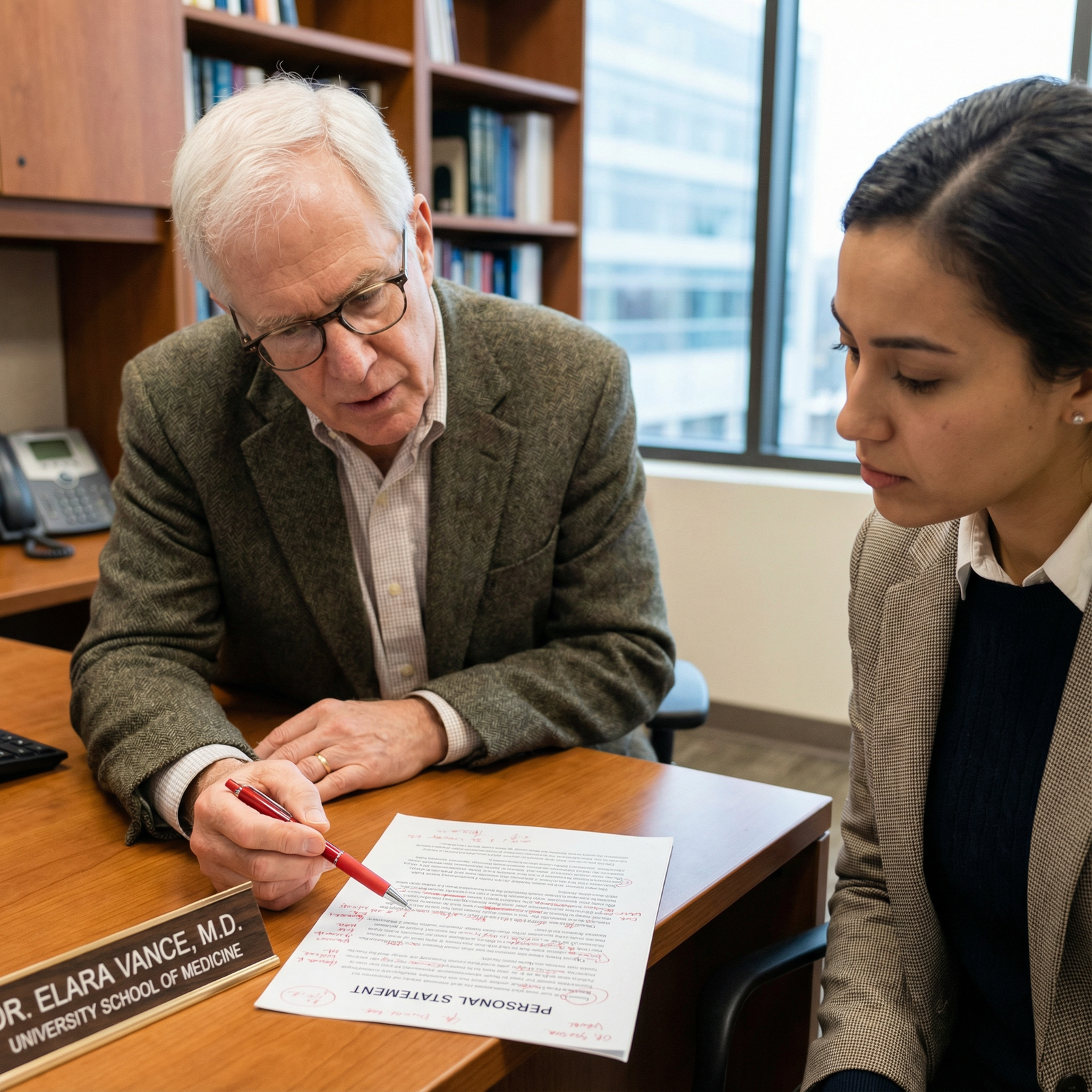
4. Get Multiple Rounds of Feedback
Ask for feedback from:
- A faculty mentor in your specialty
- A trusted resident
- A peer with strong writing skills
- An advisor who understands residency selection
Ask them to comment on:
- Clarity and flow
- Authenticity of your voice
- Whether your interest in the specialty feels well‑motivated
- Whether your goals and strengths are clear and aligned with your target programs
Incorporate feedback without letting others completely rewrite your voice. Programs can sense when a statement is overly polished but impersonal.
2. Treating Letters of Recommendation as an Afterthought
Letters of Recommendation (LoRs) are one of the most trusted components of residency applications because they offer external validation of your clinical performance, professionalism, and growth potential. Many applicants, however, underestimate how strategic this part of the process must be.
Why Letters of Recommendation Matter So Much
Program directors consistently rank strong LoRs among the most important factors in residency selection decisions. Well‑written letters can:
- Confirm that your performance matches your transcript and CV
- Provide context for any academic or personal setbacks
- Highlight intangible qualities: resilience, teamwork, bedside manner
- Elevate your application above others with similar metrics
On the other hand, generic or lukewarm letters can unintentionally harm you, even if they are politely worded.
Avoiding Common Mistakes With Letters of Recommendation
1. Choosing Recommenders Based Solely on Prestige
A brief encounter with a famous department chair is often less helpful than a detailed letter from an attending who actually worked closely with you.
Prioritize:
- Clinical supervisors who directly observed you over time
- Attending physicians in your chosen specialty (especially on sub‑internships or acting internships)
- Research mentors who can speak to your persistence, curiosity, and academic potential
Ideal letters:
- Reference specific clinical encounters or projects
- Comment on your growth over the course of the rotation
- Compare you to your peers using clear benchmarks (“top 10% of students I’ve worked with”)
2. Failing to Support Your Letter Writers
Most faculty are busy and may be writing dozens of letters. Help them help you by providing:
- Your CV or ERAS application draft
- A brief “brag sheet” or bullet list of:
- Specific cases or projects you worked on with them
- Personal qualities you hope they can authentically highlight
- Your specialty choice and future goals
- Your Personal Statement draft, if available
- Clear logistics: due dates, how to upload via ERAS, and any specialty‑specific requirements
Politely ask if they feel they can write you a strong, positive letter. This gives them an honest opportunity to decline if they feel they can’t support you robustly.
3. Waiting Too Long to Ask for Letters
Delayed LoRs can delay the review of your entire application. To avoid this:
- Identify potential recommenders months before the application opens (often during or right after your core clinical rotations).
- Ask for letters at the end of a rotation, when your performance is fresh in their memory.
- Send reminders 3–4 weeks before your target completion date.
Aim to have all LoRs uploaded by or soon after ERAS opening so programs can review a complete file early in the season.
3. Missing or Mismanaging Application Deadlines and Requirements
In residency applications, even minor organizational lapses can have major consequences. Failing to meet a deadline or missing a required component may result in your application being ignored entirely, regardless of your qualifications.
Why Attention to Logistics Is Critical
Residency programs operate on tight schedules and handle thousands of applications. When an application is incomplete or submitted very late:
- It may never be reviewed.
- You may miss out on early interview offers.
- It can signal poor time‑management or professionalism.
Every year, qualified applicants lose interview opportunities simply because their materials weren’t ready when programs began reviewing files.
Building a Bulletproof Application Timeline
1. Work Backward From Key Dates
Start by identifying:
- ERAS opening and submission dates
- NRMP registration deadlines
- Specialty‑specific recommended application timelines (some competitive specialties advise applying as early as possible)
- Program‑specific deadlines (found on program websites or FREIDA)
Then, work backward to set internal deadlines for:
- Finalizing your Personal Statement(s)
- Perfecting your CV and experiences section
- Securing LoRs
- Taking or retaking USMLE/COMLEX exams (if needed)
- Requesting your Medical School Performance Evaluation (MSPE) and transcripts
Use a shared digital calendar (e.g., Google Calendar) with reminders and color‑coding for:
- Exam‑related deadlines
- Document completion dates
- Application submission targets
- Interview season (including blackout days for exams or personal commitments)
2. Meticulously Track Each Program’s Requirements
Programs may vary in:
- Minimum score thresholds or attempts allowed
- Required number and type of LoRs (e.g., at least 1–2 from the specialty)
- Supplemental application requirements (e.g., specialty signaling or program signaling, supplemental essays)
- Visa sponsorship policies for international medical graduates (IMGs)
- Required documents for couples match or specific tracks
Create a spreadsheet with columns for:
- Program name and ACGME code
- Application deadline
- Number/type of required LoRs
- Special notes (e.g., “rural track,” “research track,” “categorical vs. preliminary”)
- Whether the application is submitted and complete
This becomes your central command center for tracking your Residency Applications.
3. Use Checklists to Prevent Oversights
For each program, verify:
- ERAS application submitted
- Personal Statement properly assigned
- Correct LoRs tagged (e.g., specialty‑specific)
- USMLE/COMLEX transcripts released
- MSPE and medical school transcripts uploaded
- Any supplemental application completed
This methodical approach reduces the risk of last‑minute panic and overlooked requirements.
4. Underpreparing for Residency Interview Season
Many applicants obsess over Step scores, research, and Personal Statements but assume interviews will “just flow.” Underestimating Interview Preparation is a major blunder that can undermine months or years of hard work.
Why Interview Preparation Is So Important
Residency interviews are not just about evaluating your knowledge; they assess:
- Communication skills and professionalism
- Fit with the program’s culture and mission
- Maturity, insight, and resilience
- Ability to reflect on your experiences and growth
- Teamwork and interpersonal skills
In a competitive Residency Match, a strong interview can compensate for some weaker areas in your application. A poor interview, on the other hand, may drop you significantly on a program’s rank list—even if your application looked excellent on paper.
Mastering the Residency Interview Process
1. Anticipate Common Questions—and Prepare Thoughtful Responses
Common themes include:
- “Why this specialty?” / “Why our program?”
- “Tell me about yourself.”
- “Discuss a challenging clinical encounter and how you handled it.”
- “Tell me about a time you received critical feedback.”
- “Describe a time you worked with a difficult team member.”
- “What are your long‑term career goals?”
- Questions about anything on your CV or Personal Statement
You don’t need scripted answers, but you should rehearse:
- Key stories that illustrate your values, resilience, and teamwork
- Clear, concise explanations of your specialty choice
- Honest, growth‑oriented reflections on setbacks or gaps
Practice out loud with:
- Mentors or residents
- Career advisors
- Peers using mock interview sessions
- Online video platforms to review your body language and speech
2. Know Each Program Before You Log On or Walk In
Research each program using:
- Official program websites
- FREIDA and specialty society resources
- Current resident bios and interests
- Program‑specific social media and virtual open houses
Prepare 3–5 specific reasons you are interested in each program, such as:
- Unique patient population or clinical sites
- Strong mentorship or subspecialty training
- Research opportunities aligned with your interests
- Program culture, wellness initiatives, or diversity efforts
You should also have informed, genuine questions ready for:
- Program directors
- Faculty interviewers
- Residents
Avoid questions that are easily answered by the website; instead, ask about day‑to‑day training, mentorship, and resident support.
3. Master the Logistics: Virtual and In‑Person
Many programs continue to use virtual formats. To avoid technical and professionalism pitfalls:
- Test your internet, camera, and microphone ahead of time.
- Choose a quiet, well‑lit, neutral background.
- Dress professionally, as you would for an in‑person interview.
- Close distracting applications and silence phone notifications.
For in‑person interviews:
- Confirm travel details early and arrive with extra time.
- Bring extra copies of your CV and a small notebook.
- Take note of resident morale, interactions, and body language during tours and conferences.
Lastly, follow up with concise, sincere thank‑you emails to interviewers, especially if you had meaningful conversations. While not always required, this is a professional courtesy and can reinforce your interest.

5. Focusing Only on Grades and Scores While Neglecting Extracurricular Depth
Academic metrics are important—but they are not the whole story. Another common residency application mistake is assuming that high scores alone guarantee success, while downplaying extracurriculars, leadership, and non‑clinical experiences.
Why Programs Care About More Than Academics
Residency programs are training future colleagues, not just test‑takers. They need residents who can:
- Lead multidisciplinary teams
- Communicate empathetically with patients and families
- Handle stress and ambiguity
- Engage in quality improvement, teaching, or research
- Contribute to the program’s culture and community
Extracurriculars, research, and volunteer experiences help programs assess:
- Your initiative and follow‑through
- Your leadership style and collaboration skills
- Your commitment to service, equity, and professionalism
- Your potential for future academic or community impact
Presenting Your Non‑Academic Experiences Strategically
1. Choose Meaningful Activities Over Long Lists
You do not need dozens of activities. Instead, highlight:
- Long‑term commitments (e.g., multi‑year involvement in a clinic or organization)
- Leadership roles where you took responsibility (e.g., student group officer, committee chair)
- Projects with tangible outcomes (e.g., new curriculum, QI initiative, community screening program)
When documenting activities in ERAS:
- Clearly describe your role, not just the organization.
- Quantify impact where possible (“trained 15 peers,” “led a team of 8 volunteers,” “increased clinic capacity by 20%”).
- Connect each activity to skills relevant to residency: time management, teaching, advocacy, cultural humility, etc.
2. Reflect on Growth, Not Just Participation
In your Personal Statements and interviews, be ready to explain:
- Why you chose certain activities
- What you learned about yourself, patients, or healthcare systems
- How those insights will influence you as a resident
Examples:
- How working in a free clinic changed your understanding of social determinants of health.
- How leading a research project taught you resilience in the face of setbacks.
- How serving as a peer tutor deepened your interest in medical education.
3. Maintain Balance and Wellness
Overcommitting to extracurriculars at the expense of academic performance or personal health is also problematic. Programs value sustainable engagement and will look for signs that you can manage multiple responsibilities without burning out.
Aim for a balanced portfolio of:
- Clinical excellence
- At least one or two meaningful ongoing commitments
- Activities that align with your specialty and long‑term goals
Bringing It All Together: A Strategic, Error‑Free Residency Application
Avoiding these five major blunders—generic Personal Statements, weak Letters of Recommendation, poor deadline management, underprepared interviews, and neglect of extracurricular depth—can transform your residency application from average to compelling.
To summarize:
- Be intentional and reflective with Personal Statements.
- Be strategic and proactive about Letters of Recommendation.
- Be organized and meticulous with timelines and program requirements.
- Be prepared and professional for every interview.
- Be holistic and balanced in how you present your academic and non‑academic achievements.
Residency selection committees are looking for evidence that you will be a reliable, coachable, engaged colleague who will thrive in their environment. Every part of your application—and how you manage the process—communicates whether you are that person.

Frequently Asked Questions About Common Residency Application Mistakes
1. What should I prioritize in my Personal Statement for residency?
Focus on three core elements:
Your motivation for the specialty
- Use specific clinical experiences that sparked or solidified your interest.
- Show how your values align with the nature of the specialty (e.g., continuity in family medicine, acuity in emergency medicine, procedural focus in surgery).
Your relevant experiences and strengths
- Highlight 2–3 key experiences (clinical, research, leadership) that demonstrate qualities important for that specialty.
- Use concrete examples rather than vague descriptions.
Your future goals and program fit
- Explain how you see yourself practicing in 5–10 years.
- Subtly align your interests (research, underserved care, academics, community practice) with the types of programs you’re applying to.
Keep it authentic, specific, and concise—usually 650–850 words. Avoid clichés, generic statements, and extensive repetition of your CV.
2. How can I identify the best Letter of Recommendation writers for my application?
Aim for 3–4 strong, detailed letters, and prioritize:
- Attendings who directly supervised you on core or sub‑internship rotations in your chosen specialty.
- Faculty who can compare you to peers (“top 10–20%”) and provide specific examples of your clinical performance.
- Research mentors or other supervisors if they know you well and can comment on your work ethic, initiative, and potential.
Before asking, consider:
- Did this person see me manage patients, work in a team, or take initiative?
- Have I demonstrated growth and professionalism under their supervision?
- Can they genuinely advocate for me as a future resident?
When you ask, say: “Do you feel you can write a strong, positive letter for my residency application?” and provide them with your CV and goals.
3. What are the most effective ways to prepare for residency interviews?
Strong Interview Preparation includes:
Content practice:
- Develop 6–8 key stories illustrating resilience, teamwork, leadership, and learning from mistakes.
- Prepare clear answers to “Why this specialty?” and “Why our program?”
Mock interviews:
- Practice with mentors, advisors, residents, or peers.
- Simulate virtual interviews with camera and microphone on.
Program research:
- Know specific features of each program and geography.
- Prepare thoughtful questions about curriculum, resident life, mentorship, and support.
Professional presence:
- Dress appropriately and be punctual.
- Be courteous to everyone you encounter, including coordinators and residents.
- Follow up with short, genuine thank‑you notes when appropriate.
4. How important are extracurricular activities in the residency selection process?
Extracurricular activities are very important, particularly when many applicants have similar grades and exam scores. They help programs see:
- How you function in teams and leadership roles
- Your commitment to service, advocacy, or education
- Your initiative and ability to carry projects to completion
- Your alignment with the program’s mission (e.g., community work, research focus, diversity efforts)
You don’t need an enormous list, but you do need depth, consistency, and reflection. Long‑term projects, meaningful volunteer work, leadership positions, and scholarly activity (posters, publications, QI) can all significantly strengthen your application.
5. What tools can I use to stay organized and avoid missing residency application deadlines?
Consider combining several tools:
Digital calendar (Google Calendar, Outlook)
- Input ERAS, NRMP, and program‑specific deadlines.
- Set reminders 2–4 weeks before each deadline.
Spreadsheets (Excel, Google Sheets, Notion)
- Track each program’s requirements, LoRs assigned, supplemental applications, and interview invitations.
- Use filters to sort by specialty, geographic region, or completeness.
Task managers or checklist apps (Todoist, Trello, Asana)
- Break the process into smaller tasks (draft PS, finalize CV, confirm LoRs).
- Mark progress as you go to stay on top of multiple moving parts.
Review these tools weekly during application season to ensure you’re on schedule and nothing falls through the cracks.
By recognizing and actively avoiding these common residency application mistakes, you significantly increase your chances of matching into a program where you will thrive both professionally and personally.