
Most ERAS disasters don’t happen on submission day. They happen because people think the last 72 hours are for “just clicking submit.” They’re wrong.
If you treat the final 3 days like a formality, you’re volunteering to join the annual group of smart applicants who blow their chances with preventable mistakes: wrong program lists, broken personal statements, unexplained gaps, botched photo uploads, or a CASPer of a personal statement that still says “I’m excited to apply to internal medicine at [PROGRAM NAME].”
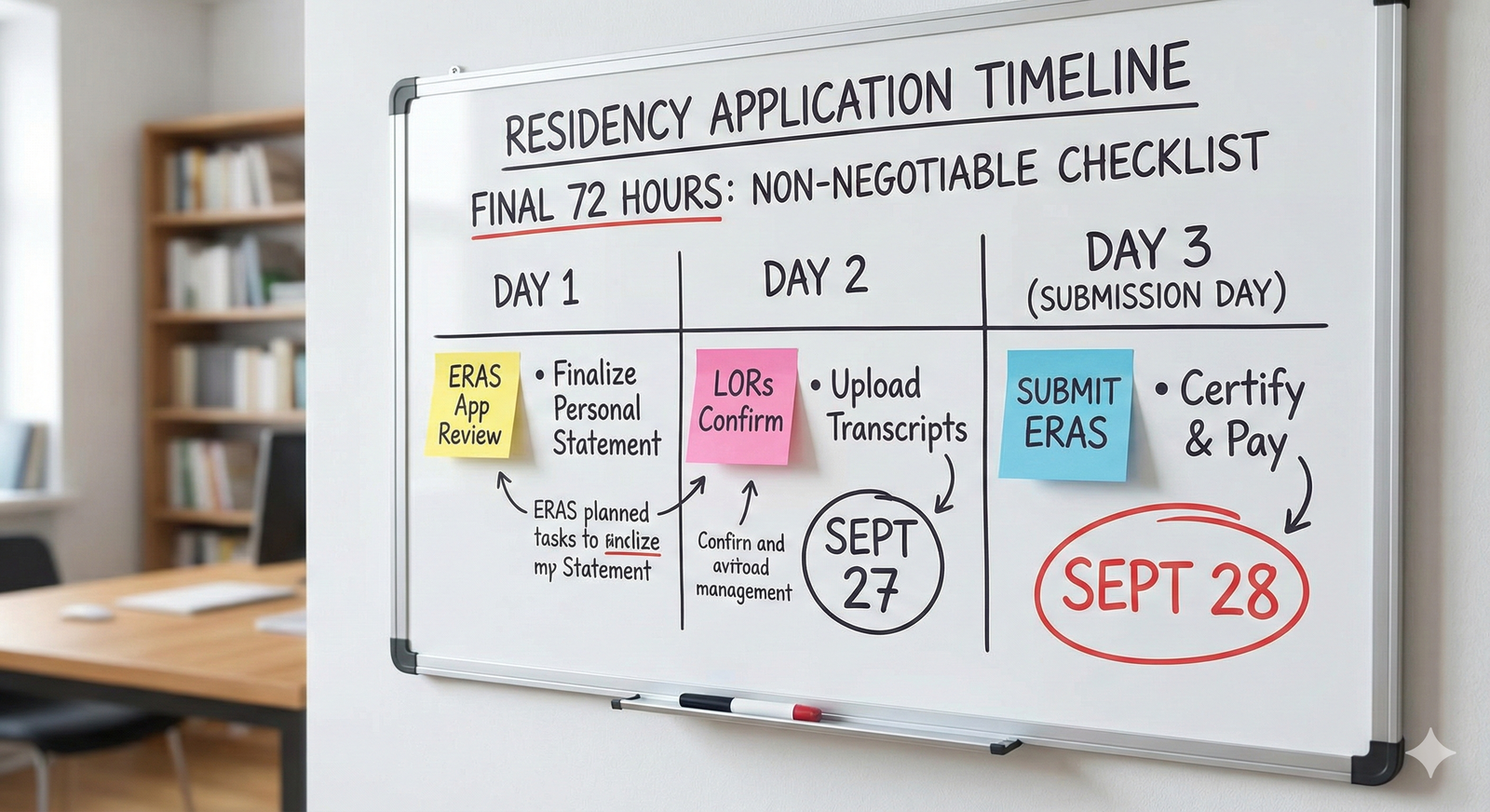
You’ve got 72 hours. Here’s exactly what you should do, in order, to not sabotage yourself.
72–48 Hours Before Submission: Big Rocks Only
At this point you should stop “editing” and start auditing. No new projects. No new letters. Just making what you already have bulletproof.
Step 1 (T‑72h): Lock Your Strategy Before You Touch ERAS
Before you open ERAS again, answer these on a piece of paper (yes, physical or a single doc):
- Final specialty list (including prelim / transitional if needed)
- Target number of programs per specialty
- Which programs are true no‑go’s (geography, visa, step cutoffs)
If you can’t articulate this in 5 minutes, you’re not ready to submit in 3 days.
| Specialty | Profile Type | Target Program Count |
|---|---|---|
| Internal Medicine | Average US MD | 25–35 |
| General Surgery | Average US MD | 35–45 |
| Emergency Med | Average US MD | 25–30 |
| Psych | Strong US MD | 15–25 |
| Anesthesiology | Average US MD/DO | 25–35 |
If your list is way below common recommendations and you’re not a superstar (AOA, high Step 2, strong research), adjust now, not 5 minutes before the deadline.
Step 2 (T‑70h): Run a Full “Broken Window” Check on ERAS
At this point you should do a top‑to‑bottom scroll through every ERAS section without editing anything. You’re just hunting for “this looks wrong.”
Pages to check:
- Personal Information
- Education
- Experiences
- Publications/Presentations
- Licensure/Exams
- MSPE / Transcript / USMLE/COMLEX score reports
- Personal Statements section
- Program List
You’re looking for:
- Obvious blank fields that shouldn’t be blank
- Dates that don’t line up
- Typos that punch you in the face
- “Lorem ipsum” style placeholder text you meant to replace
If you find >10 obvious issues, do not kid yourself: you’re not 90% done. You’re 60% done.
Step 3 (T‑68h): Fix the Catastrophes First
At this point you should fix only what can seriously hurt you:
Catastrophic errors include:
- Wrong graduation year or med school name
- Missing or incorrect USMLE/COMLEX numbers
- Employment or education dates that overlap impossibly
- Missing scores you already have (especially Step 2 for competitive specialties)
- Personal statement clearly for another specialty
- Publications that are completely fabricated by mistake (yes, I’ve seen someone paste the wrong PubMed ID)
Don’t get lost adjusting whether something should be “assisted in care” vs “co‑managed patient care.” Nobody cares. Fix the stuff that makes you look sloppy, dishonest, or confusing.
Step 4 (T‑64h): Personal Statement Final Pass – With a Scalpel
This is where people tank their whole app with last‑second “improvements.”
At this point you should:
Pick your final statement(s):
- 1 statement per specialty is ideal
- Rare exceptions: a distinct one for prelim year if your story is very different
Run this checklist for each statement:
- No program names anywhere
- No other specialty names (e.g., “I’m excited to apply to pediatrics” in your psych PS)
- Your name and AAMC ID are NOT in the body text
- 650–850 words is usually fine; over 1000 is bloated
- First paragraph makes it clear what specialty you’re applying to and why
- Last paragraph sounds like a grown adult, not a college essay (“I can’t wait to begin this journey” can go)
Do a line edit for landmines, not for style:
- Kill clichés: “ever since I was a child,” “my passion for medicine”
- Remove apologizing over and over: one concise explanation is enough
- Confirm every “their/there/they’re,” “its/it’s,” etc.
Print it or convert to PDF to read. Your brain catches more garbage on a different medium.
Step 5 (T‑60h): Letters of Recommendation Reality Check
At this point you should stop hoping for new letters. You’re executing with what you have.
Open ERAS → Letters section:
- Confirm each LOR:
- Status = “Received” (not just “Requested”)
- Assigned to the correct specialty’s programs
- Named correctly (e.g., “IM Chair Letter,” not “New letter 3”)
Decisions:
- If a letter is still missing and the author has been silent, proceed without it.
You can add it later for programs that haven’t downloaded yet, but you can’t hold your whole app hostage for a flaky attending. - Don’t overthink order. Programs don’t care which is first in most specialties.
Now’s also the moment to:
- Remove weak or generic letters only if you know they’re bad (you were told directly or you saw the wording elsewhere).
- Keep at least:
- 3 letters for most specialties
- 4 for very competitive ones or if strongly advised
Do not email attendings at midnight asking for a brand-new letter. It screams unprofessional.
48–24 Hours Before Submission: Tighten Every Bolt
Now you’re moving from catastrophic to high‑impact errors and polish.
Step 6 (T‑48h): Experiences – Content, Not Poetry
The most common ERAS mistake: bloated, vague Experience entries that say a lot and mean nothing.
At this point you should open each Experience and ask:
- Do the dates make sense and show continuity?
- Is the time commitment realistic? (Not 80 hrs/week for 7 activities.)
- Does each description:
- Start with action verbs
- Include some concrete specifics
- Avoid full paragraphs
For your 3 most meaningful:
- Make sure:
- You clearly show impact (what changed because you were there)
- You demonstrate growth (what you learned that matters for residency)
- You avoid repeating the exact same story from your personal statement
Example shift:
- Bad: “I volunteered in the clinic where I learned empathy and communication skills.”
- Better: “Interviewed ~15 Spanish-speaking patients weekly, clarified diagnoses with the attending, and created a handout that cut missed follow-ups by ~20% over 3 months.”
Do this for the top 8–10 experiences. The rest just need to not be embarrassing.
Step 7 (T‑44h): Dates, Gaps, and Red Flags
Programs hate unexplained gaps. They’ll assume the worst if you don’t guide them.
At this point you should:
- Pull out a sheet with a simple timeline:
- College grad date
- Med school start/end
- Any leaves of absence
- Research years / work years
- Exam failures / repeats
Look for:
3 month gaps with nothing listed
- Overlaps that don’t make sense (full-time jobs during 80+ hr clerkships)
- Missing explanations for:
- LOA
- Course or rotation repeats
- Step/COMLEX failures
Where to address them:
- Short, factual note in the Experience description or
- Brief mention in personal statement if it meaningfully shaped your path
Do not write a dramatic saga about your Step 1 fail. Two to three clear sentences: what happened, what you did, how you improved.
Step 8 (T‑40h): Program List – The Money Check
This is where you can cause permanent damage with one tired scroll.
At this point you should:
- Export or screenshot your ENTIRE program list per specialty.
- Go line by line and check for:
- Correct specialty (no IM programs in your psych list)
- Geography you’d never actually go to
- Known red flags (program shut down, lost accreditation)
- Compare to your budget and limits:
- Number of programs per specialty matches your earlier targets
- You’re not throwing money at obvious hyper-reach places in bulk (10% reach is fine; 80% is delusional)
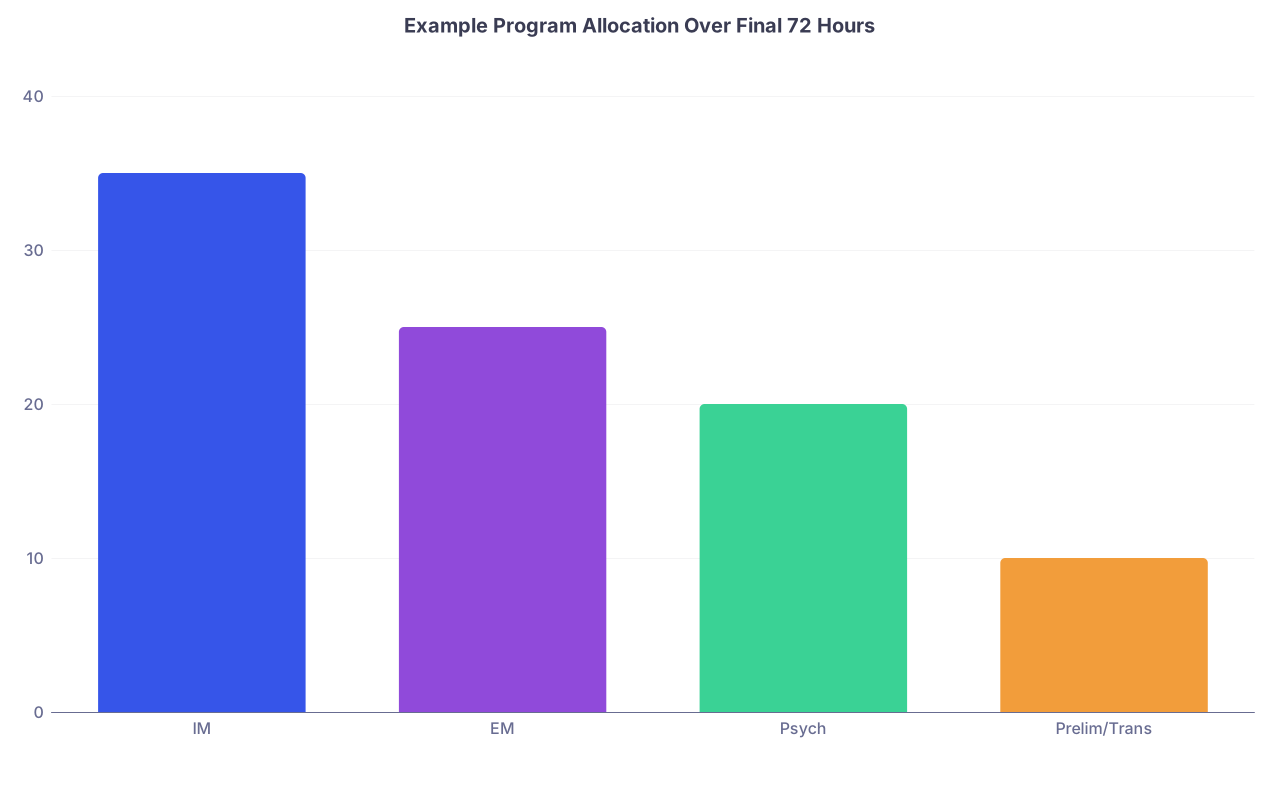
| Category | Value |
|---|---|
| IM | 35 |
| EM | 25 |
| Psych | 20 |
| Prelim/Trans | 10 |
If you’re way off (like 70 EM programs and 5 IM when you’d be happy with either), fix it now.
Avoid:
- Adding a program you know nothing about “just because”
- Deleting all safety programs because your last rotation eval was good
Step 9 (T‑36h): Photo, Documents, and Technical Garbage
You do not want a corrupted upload or a horror-show photo.
At this point you should verify:
- Professional headshot, plain background, no white coat needed but fine if you have it
- No:
- Graduation cap
- Stethoscope cosplay
- Selfies or cropped group photos
- File meets ERAS size and format requirements
Uploaded Documents:
- Transcript: visible, correct school, no obvious errors in your name or degree
- MSPE: attached (if your school uses ERAS this should be automatic when released)
- USMLE/COMLEX scores: present, legible, accurate
Open each file inside ERAS to confirm it renders correctly.
Step 10 (T‑32h): Outside Eyes – Controlled Feedback Only
At this point, you do not send your whole application to 4 different people for “general feedback.” That’s chaos.
You can, however, do targeted checks:
Ask 1–2 trusted people (resident, advisor, recent applicant) to look at:
- Your program list (sanity check for number and mix)
- One personal statement
- 3–5 Experience entries, especially the “most meaningful”
Tell them explicitly:
“I’m submitting within 48 hours. I’m only looking for red flags or confusing areas, not major rewrites.”
If they start suggesting structural overhauls, thank them and ignore it. You’re past that stage.
Final 24 Hours: The Non‑Negotiable Checklist
Now we move hour by hour. This is where people panic and break things. Don’t be that person.
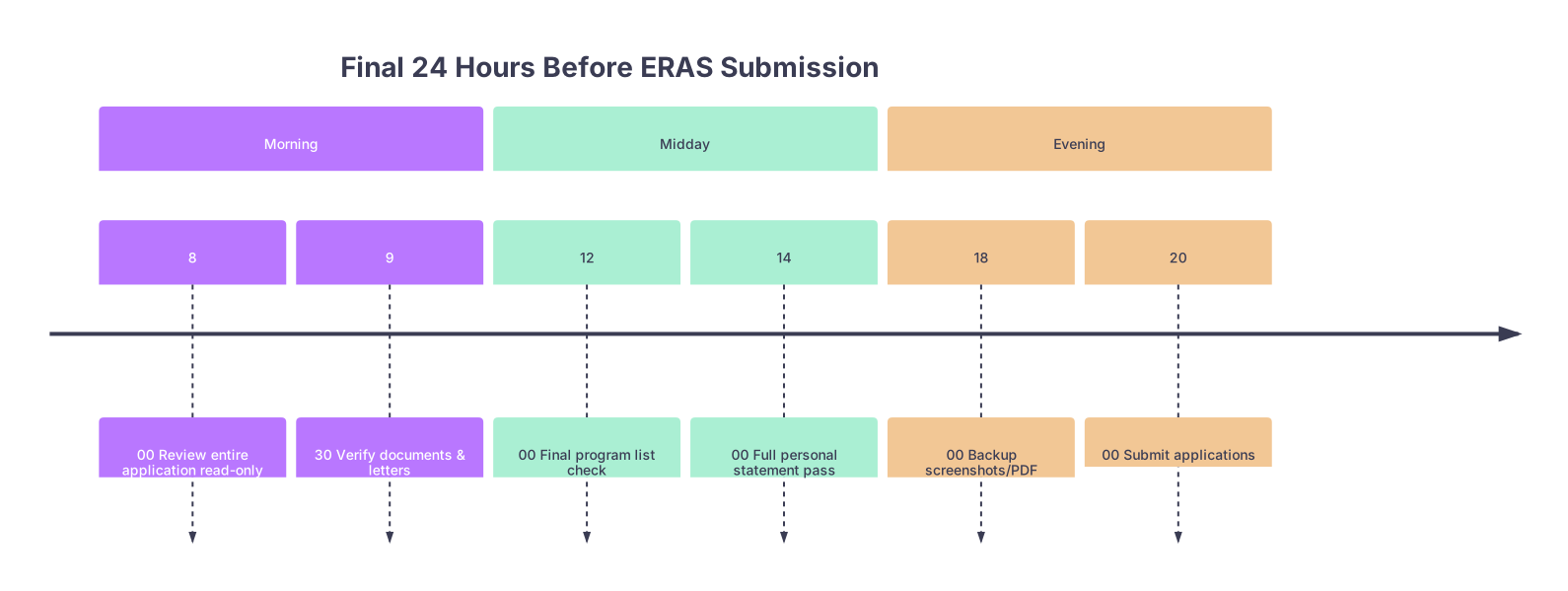
| Period | Event |
|---|---|
| Morning - 8 | 00 Review entire application read-only |
| Morning - 9 | 30 Verify documents & letters |
| Midday - 12 | 00 Final program list check |
| Midday - 14 | 00 Full personal statement pass |
| Evening - 18 | 00 Backup screenshots/PDF |
| Evening - 20 | 00 Submit applications |
Step 11 (T‑24h): Freeze Content – No More New Ideas
At this point you should make a rule: no new content.
No new statements, no new activities, no new letters.
Your only goals:
- Confirm, not create.
- Polish, not reengineer.
If you have an “inspiration” for a new paragraph, jot it in a separate doc for later interviews. Not for ERAS.
Step 12 (T‑20h): Full Application Read-Through in Order
Treat your application like a program director seeing it for the first time.
Process:
- Log into ERAS.
- Open each section in the same sequence PDs will see:
- Demographics
- Education
- Exams
- Experiences
- Publications
- Personal Statement (via the preview)
- Read without editing first, start to finish.
- Then go back and fix only:
- Typos
- Missing words
- Obvious formatting weirdness
Read out loud if you can. You’ll catch grammar and rhythm issues faster.
Step 13 (T‑16h): Program-Specific Assignments
At this point you should verify every program has the correct:
- Specialty-specific personal statement
- Appropriate letters assigned (e.g., don’t assign your EM SLOEs to psych)
Use ERAS’s assignment view:
- Sort by program
- For each:
- Correct PS attached?
- At least the intended number of letters?
- Any prelim programs missing a PS? Assign a generic but safe one.
This is where people send their pediatrics personal statement to every internal medicine program. I see this every year. Do not be that case study.
Step 14 (T‑12h): Save Evidence – Screenshots and PDF
No, it’s not paranoid.
At this point you should:
- Take screenshots or print-to-PDF of:
- Your MyERAS dashboard
- Program list with fees
- Letters assignment screen
- Final version of your personal statement(s)
- Summary views of Experiences and Publications

Why? Rare but real:
- Glitches
- Mis-clicks
- Memory lapses six months from now when you’re prepping for interviews and can’t remember what you wrote
Back up in at least two places (local + cloud).
Step 15 (T‑8h): Final Program List and Budget Confirmation
Now you do the money pass.
At this point you should:
- Review the total cost ERAS is estimating
- Confirm:
- This matches your mental/emotional/financial budget
- No surprise programs snuck in
- You’re not missing key safety programs
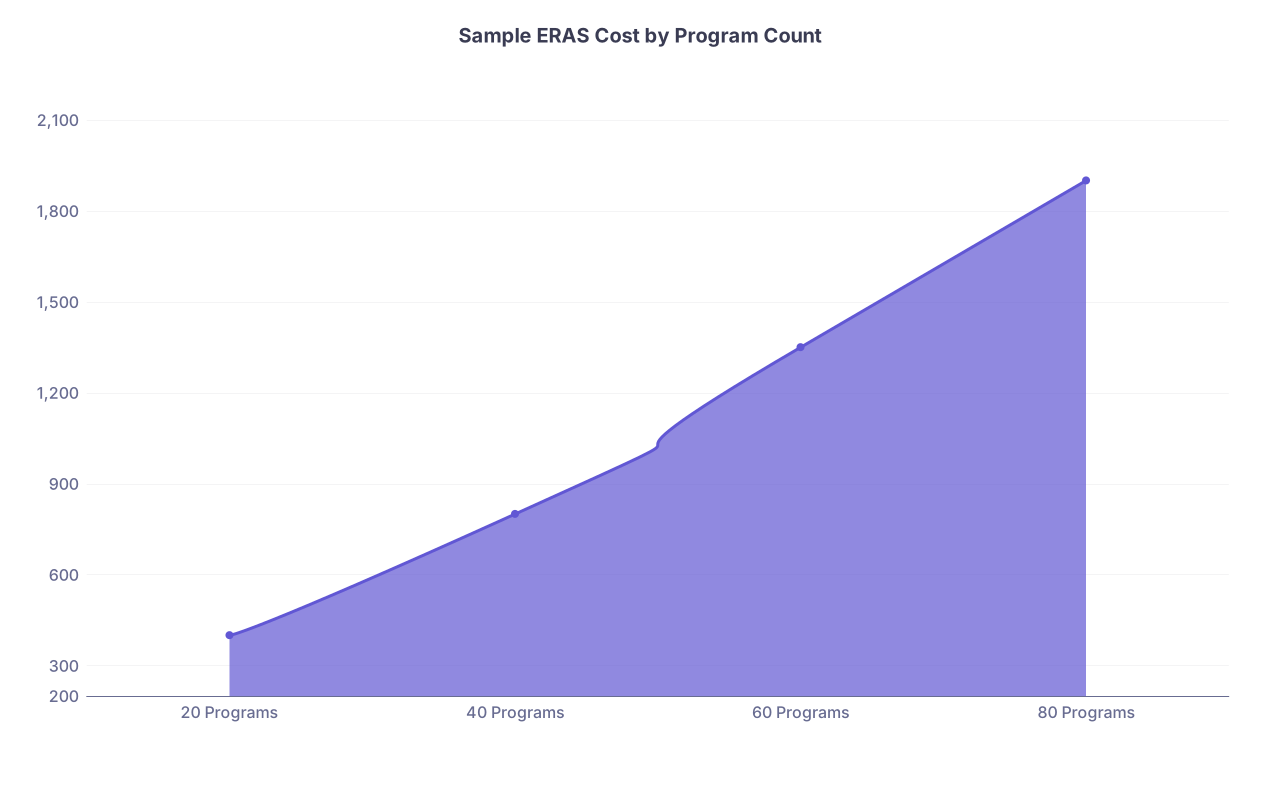
| Category | Value |
|---|---|
| 20 Programs | 400 |
| 40 Programs | 800 |
| 60 Programs | 1350 |
| 80 Programs | 1900 |
If the cost is wildly beyond what you planned:
- Trim from the bottom:
- Obvious long-shot dream programs (keep a few, not 20)
- Duplicative geographic clusters where you already have plenty of options
Avoid trimming all your true reaches. Some risk is healthy.
Step 16 (T‑4h): Walk Away on Purpose
At this point, close ERAS.
Yes, really.
Do something else for at least 60–90 minutes:
- Eat
- Shower
- Walk
- Call a friend
The goal is not “self-care.” The goal is to reset your decision-making system. Tired brains click dumb buttons.
Step 17 (T‑2h): Last 2-Hour Micro-Checklist
Come back with a clear head and run this short list:
- Can I clearly state:
- My specialties and why?
- My backup specialty, if any?
- My story in 2–3 sentences?
- Does anything in my application still make me wince?
If yes, fix that one thing only. - Have I:
- Checked personal statements
- Checked letters assignments
- Checked program list
- Backed everything up
If all “yes,” you’re ready.
If you’re finding new structural problems now, you rushed the first 48 hours. Still, don’t blow up everything. Fix the worst issue and move on.
Step 18 (T‑0h to T‑1h After): Submission – With a Cool Head
At this point you should:
- Log in when you’re not rushed (not 11:58 pm at a deadline).
- On the final review screen, read everything again:
- Total fees
- Number of programs
- Specialty list
- Click submit.
After submitting:
- Confirm payment went through
- Confirm the dashboard shows applications as submitted, not just “saved”
Take one last screenshot of the submission confirmation.
Then close the laptop. No doom-scrolling Reddit for “Did I apply to enough programs?” You’re done.

Common Last‑72‑Hour Mistakes You Should Explicitly Avoid
Quick list you can literally check off:
- Rewriting your entire personal statement 24 hours before submission
- Adding or deleting >10 programs on the last night based on anonymous forum posts
- Holding submission because one more LOR might appear
- Ignoring an obvious Step failure or gap with zero explanation
- Using the same PS for totally different specialties without modification
- Forgetting to assign letters to a batch of programs
- Submitting from a terrible Wi‑Fi connection without backup
- Working on ERAS while exhausted post‑call
If any of these sound like you right now, stop and correct course.
FAQ (Exactly 3 Questions)
1. Should I delay submitting ERAS if my application doesn’t feel “perfect” yet?
If by “not perfect” you mean a couple of awkward sentences or minor wording issues, no—submit. Programs care more about being in the early pile than about flawless prose. You should only delay if there’s a major structural problem: missing Step scores you already have, huge unexplained gaps, or the wrong specialty listed. Perfectionism is a common way applicants quietly sabotage themselves.
2. Is it okay to submit without all my letters of recommendation uploaded?
Yes. You should submit on time with the letters you have rather than waiting indefinitely. You can assign additional letters to programs later if they have not yet downloaded your file. A solid, on-time application with 3 good letters beats a late one waiting for that one attending who never responds.
3. How many programs is “enough,” and is it too late to change my numbers in the last 72 hours?
“Enough” depends on specialty and your profile, but most average applicants fall in the 25–40 programs range for a single core specialty, more for highly competitive fields. In the last 72 hours, it’s fine to tune your numbers (±5–10 programs per specialty) based on realistic reflection. What you shouldn’t do is double or triple your list impulsively at the last second because you’re anxious. That kind of panic-spend rarely changes Match outcomes in a meaningful way.
Open your ERAS account right now and do a read-only scroll of every section, start to finish, without touching a single word. If you can’t get through it without cringing more than twice, that’s your signal to start working this checklist—step by step—tonight.