
It is the Sunday before Rank Order List certification. 11:47 p.m.
Your NRMP portal is open on one tab. Reddit is open on another. A friend just texted, “I ranked all the big-name places first. Prestige matters most.” Your cursor hovers over the “Certify List” button, and your stomach drops.
This is the moment people ruin the next 3–7 years of their lives. Not with malice. Just with bad judgment, rushed decisions, and listening to the wrong advice.
I have watched smart, capable applicants make rank list choices they regret every single Match Day. Same patterns. Same preventable errors. Same sentences afterward:
- “I knew that program felt wrong on interview day.”
- “I ranked it higher just because of name.”
- “I did not realize how much location would matter.”
- “I let someone else talk me into this list.”
Let’s walk through the big mistakes so you do not become another Match Day horror story.
Mistake #1: Ranking for Prestige, Not for Your Actual Life
You will hear this line a lot: “You can do anything from a top program.” True. But you can also be miserable at a top program. That part people conveniently skip.
Classic version of this mistake:
You interview at:
- Big-name academic powerhouse with malignant vibes, no resident support, in a city you hate.
- Solid mid-tier university program with great teaching, strong fellowship matches, residents who actually smile.
- Community program with incredible hands-on experience, warm culture, in a city that fits your life.
And then you rank:
- Prestige name
- Mid-tier that fit you well
- Community
Because “it will open doors.” Then March arrives and you find yourself moving to a place you cannot stand, in a program where you are a disposable cog.
Here is what applicants underestimate:
- The daily grind matters more than the name on your badge.
- Sleep, commute, support, and culture beat a slightly fancier fellowship list.
- “Top program” does not magically fix a toxic environment.
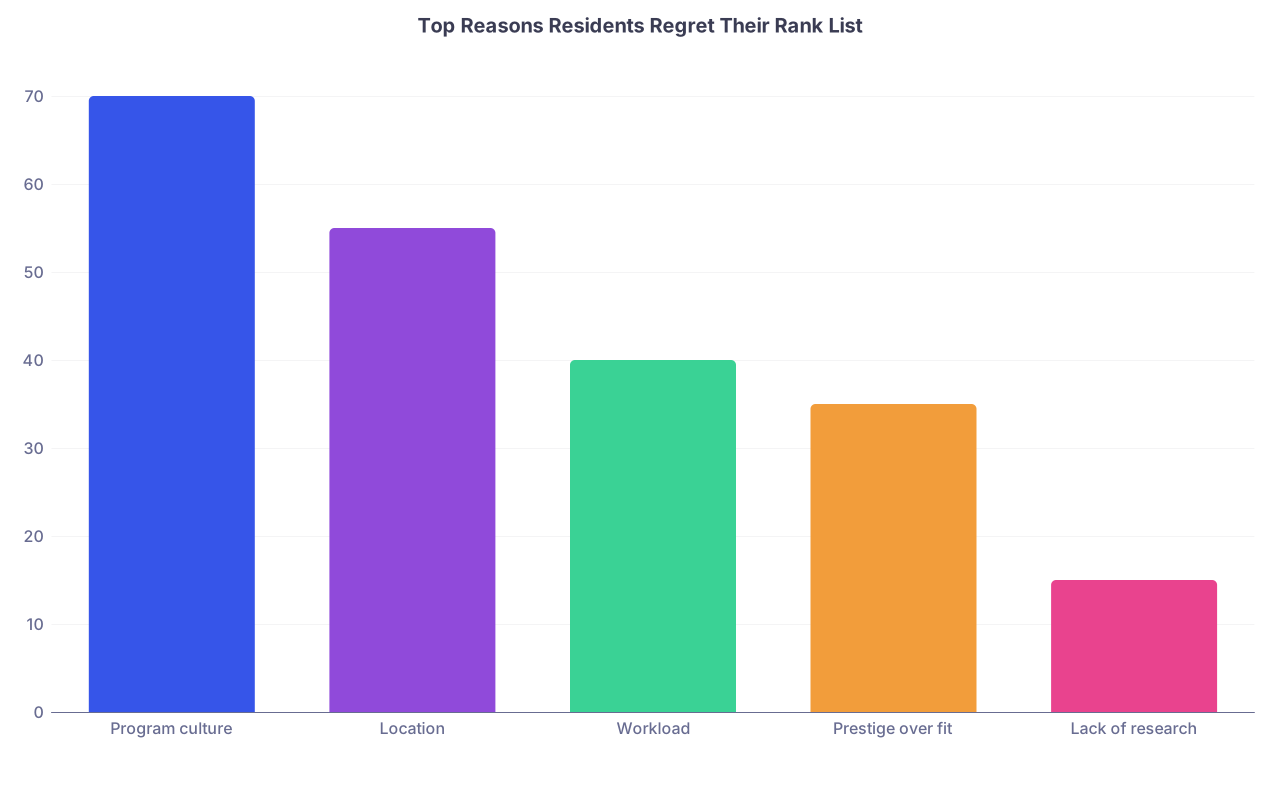
| Category | Value |
|---|---|
| Program culture | 70 |
| Location | 55 |
| Workload | 40 |
| Prestige over fit | 35 |
| Lack of research | 15 |
Red flags you are prestige-blind:
- You say “it is the best program I interviewed at” and mean reputation, not anything you actually saw or felt.
- You ignore your own journal notes from interview day because they conflict with the name-brand shine.
- You catch yourself saying, “I can put up with anything for three years.” That is how people burn out.
Better rule:
Rank the most prestigious program that genuinely fits your values, priorities, and life. If the “#3 on Doximity” felt horrible during interviews, it should probably not be #1 on your list.
Mistake #2: Ignoring Location Because “It’s Only a Few Years”
Residency is not a tourist trip. It is:
- Minimal control over your schedule.
- Night shifts.
- Call.
- Sick or dying patients.
- On your feet most of the day.
Now add:
- No nearby support system.
- A city you dislike.
- Climate you hate.
- Cost of living that destroys your finances.
I have seen residents in tears in January because they convinced themselves “location does not matter, I am only in the hospital anyway.” Then winter hit in the Midwest, or housing prices hit in California, or isolation hit in a random town where they know no one.

Location matters for:
- Support network – family, friends, partner, childcare. These are not “nice-to-haves.” They are survival tools.
- Cost of living – that high COL city with “great restaurants” is less fun when you cannot afford rent near the hospital.
- Climate and safety – seasonal depression is real. Unsafe neighborhoods around the hospital are real. Your mood affects your patient care.
- Partner’s career / kids’ needs – if you pretend these do not matter now, you will pay for it later.
Common self-deception phrases:
- “I will be in the hospital all the time anyway, so the city doesn’t matter.” False. Post-call days, rare free weekends, and your day-to-day mental state say otherwise.
- “I can fly home a lot.” With what money. And when.
- “My partner says they are fine moving anywhere.” They usually are fine. Until they are not.
Mistake #3: Believing the “Don’t Overthink It, Just Rank Where You’d Go” Myth
This sounds reasonable: “Just rank programs in the order you’d go to them.” The problem is applicants use this as an excuse to not think clearly and deeply.
What they really mean is: “I am too tired to think, so I’ll go with vibes + brand + whatever my group chat says.”
You should absolutely rank in order of preference. But that preference must be:
- Conscious
- Informed
- Ruthlessly honest
Too many people:
- Rush the list the night before certification.
- Copy their interview schedule order or Doximity ranking.
- Let one single flashy thing (like a fancy ICU or a big new building) overpower basic quality-of-life factors.

| Step | Description |
|---|---|
| Step 1 | Finish Interviews |
| Step 2 | Write Immediate Reflections |
| Step 3 | Define Non-Negotiables |
| Step 4 | Compare Programs Against Values |
| Step 5 | Draft Preliminary Rank List |
| Step 6 | Stress-Test Scenarios |
| Step 7 | Revise and Finalize |
| Step 8 | Certify Before Deadline |
You should be asking:
- “Would I actually be happy living here, with this schedule, these people?”
- “If I end up at #7 on my list, can I live with that?”
- “Am I ranking this way for me, or for how it will sound to others?”
“Do not overthink it” is lazy advice. You should think this through more than any other choice in medical school.
Mistake #4: Letting Other People Build Your List
This one is brutal because it often comes from people you respect:
- Advisor who says, “You should rank only university programs if you care about academics.”
- Attending who sneers at community programs.
- Co-student bragging about how many “top-10” interviews they got.
- Parent who pushes you toward certain cities because it is convenient for them.
Also common: couples, where one partner quietly swallows all their misgivings “to be supportive,” and then stews in resentment for years.

How you know the list is not really yours:
- You feel embarrassed putting certain programs near the top, because “they are not impressive enough.”
- You hear your advisor’s voice in your head more loudly than your own.
- You are terrified of how your classmates will react if you do not end up at a name-brand place.
Advisors can help. Mentors can help. But they do not live your life.
A mentor saying, “This program places people into strong fellowships” is useful. A mentor rolling their eyes at your top choice because “it is not academic enough” is noise.
If you match into a place that never felt like your choice, that bitterness shows up fast. Especially at 3 a.m. on your fourth night shift in a row.
Mistake #5: Misunderstanding How the Match Algorithm Works
Every year, someone tries to “game” an algorithm that does not need gaming.
Core fact: The NRMP algorithm is applicant-proposing.
That means:
- You should rank programs in your true order of preference.
- You do not gain anything by ranking a “safer” program higher just because you think you have a better shot there.
- Programs cannot see your rank list.
Yet applicants still make these mistakes:
- Dropping their dream program lower “because I probably won’t match there anyway.”
- Ranking programs by perceived “likelihood” instead of real preference.
- Omitting “reach” programs because “it is a waste to rank them.”
| Scenario | Wrong Approach | Correct Approach |
|---|---|---|
| Dream program seems like a reach | Rank it lower or omit | Rank it highest if you like it most |
| Strong safety program | Rank it first to be safe | Rank where it actually falls in your preferences |
| Uncertain about interview performance | Lower all those programs | Ignore speculation; rank by true preference |
Two dangerous myths:
“If I rank a reach program first, I might miss out on safer ones.”
Wrong. The algorithm goes down your list until it finds the highest spot where a program can accept you.“I should move mid-tier programs up so I for sure match.”
Wrong. Moving a less-desired program higher just increases the chance you land somewhere you like less.
You do not “burn” a rank slot. You do not “waste” a high position. If you want it most, rank it first. Period.
Mistake #6: Underestimating Program Culture and Resident Happiness
You can survive long hours. You can survive complex patients.
You cannot easily survive a malignant culture.
The worst regret stories I have heard are not about step scores or fellowship placements. They are about:
- Chiefs who publicly humiliate interns.
- Attendings who yell, threaten, or belittle.
- Zero backup when someone calls in sick.
- PDs who say things like, “We are weeding out the weak.”
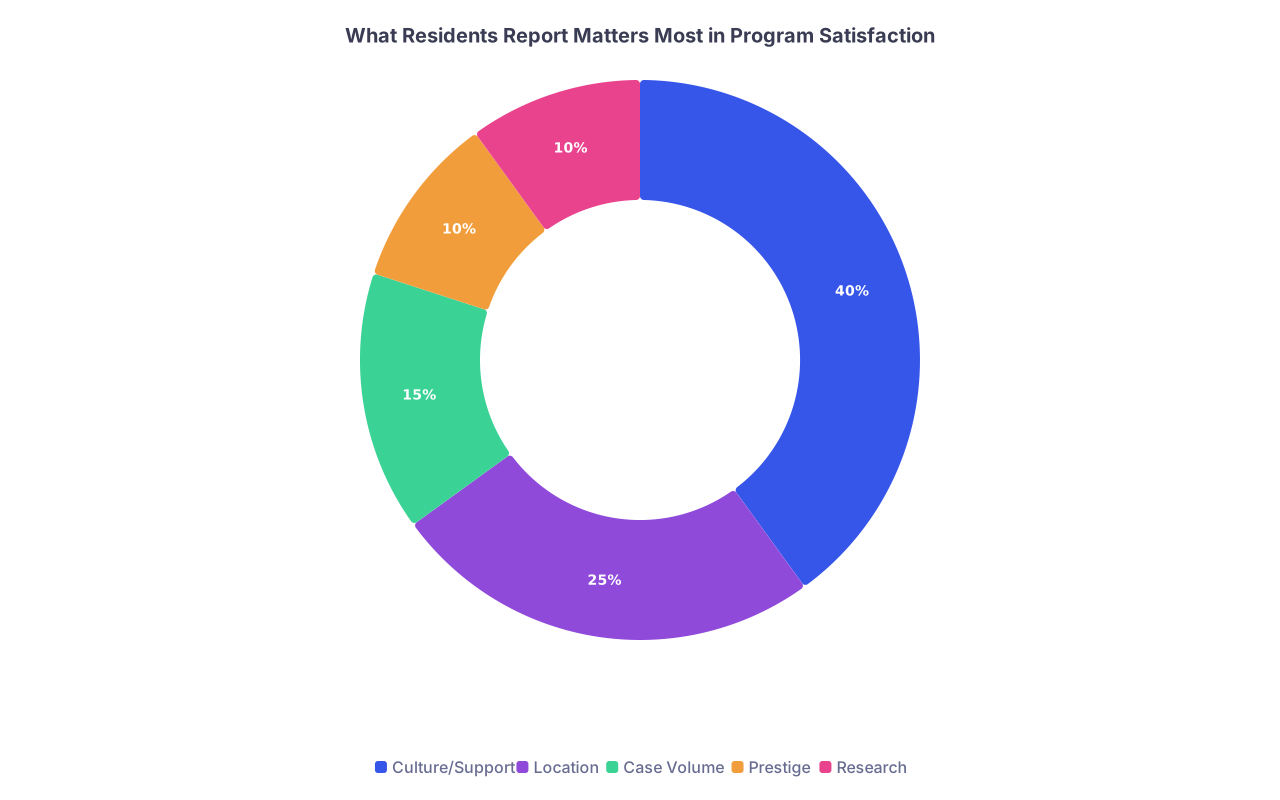
| Category | Value |
|---|---|
| Culture/Support | 40 |
| Location | 25 |
| Case Volume | 15 |
| Prestige | 10 |
| Research | 10 |
During interview season, applicants ignore:
- Residents who warn you indirectly: “We work hard here” with a strained smile.
- The one resident who pulled you aside and said, “We do not keep people who can’t handle 80+ hours.”
- The fact that no one talked honestly about wellness or backup systems.
Watch for culture red flags you probably brushed off:
- Residents disagree about how many hours they actually work.
- No one mentions mentorship by name. They only say “lots of opportunities.”
- When you asked, “What happens when someone struggles?” the response was vague or punitive.
If the residents looked exhausted and no one seemed genuinely happy, that belongs very high in your ranking calculus. Do not romanticize “grit” and “toughness” at the expense of your future mental health.
Mistake #7: Failing to Consider Long-Term Career Goals (But Over-weighting Fellowships)
There are two opposite errors here:
- Not thinking about your likely future at all.
- Obsessing over fellowship placement lists in a shallow way.
I have seen people choose programs solely because “they place into GI at MGH” even though they themselves are not 100% sure they want GI, or even academic medicine.
Reality:
- Yes, if you are strongly drawn to competitive fellowships (cards, GI, heme/onc, some surgical subspecialties), your program’s track record matters.
- But day-to-day mentorship, protected research time, and the presence of faculty in your interest area usually matter more than a one-page fellowship list.

Questions you probably did not ask but should have:
- “How many residents in the last 5 years applied to [my field of interest], and how many matched?”
- “Is there structured mentorship or just ‘you can find people if you look’?”
- “Is there real protected research time, or is it theoretical?”
What not to do:
- Rank a prestigious program higher solely because “they match into big-name fellowships,” even though you had no connection with the faculty and disliked the city.
- Ignore a program where you genuinely felt supported and saw role models in your specific area of interest, because the fellowship list looked less flashy on paper.
Residency is where you build your foundation. Choose the place that will actually help you grow, not just the place with the prettiest outcomes slide on interview day.
Mistake #8: Overreacting to One Interview Day Detail
Another pattern I see: over-weighting a single minor thing from interview day.
Examples:
- One awkward conversation with a resident → program drops ten spots.
- Slightly disorganized interview schedule → “this place is a mess.”
- One attending seemed aloof → “they don’t care about residents here.”
- You were tired and felt “off” during that day → you punish the program for your own state.
Interview days are highly artificial. Programs are putting on a show. You are putting on a show. One weird interaction can ruin your mood, but it does not always reflect reality.
At the same time, patterns matter. If several residents independently hinted at the same problem, listen. But do not let one random minor glitch sink a program that otherwise checked your key boxes.
Mistake #9: Not Stress-Testing Your List With “Would I Be Okay Here?” Scenarios
Too many people look only at the top 3–4 spots and treat the rest as an afterthought. Then they end up matching at #8 and are blindsided by how much they actually hate that idea.
You need to mentally simulate:
- “If I match at #1, how do I feel?”
- “If I match at #4, how do I feel?”
- “If I match at #9, can I live with that?”
If there is a program where you think, “I would be devastated to end up there,” it does not belong on your list.
Yes, that is harsh. But it is far better to go unmatched and scramble into something tolerable than to spend years in a place you knew you did not want.
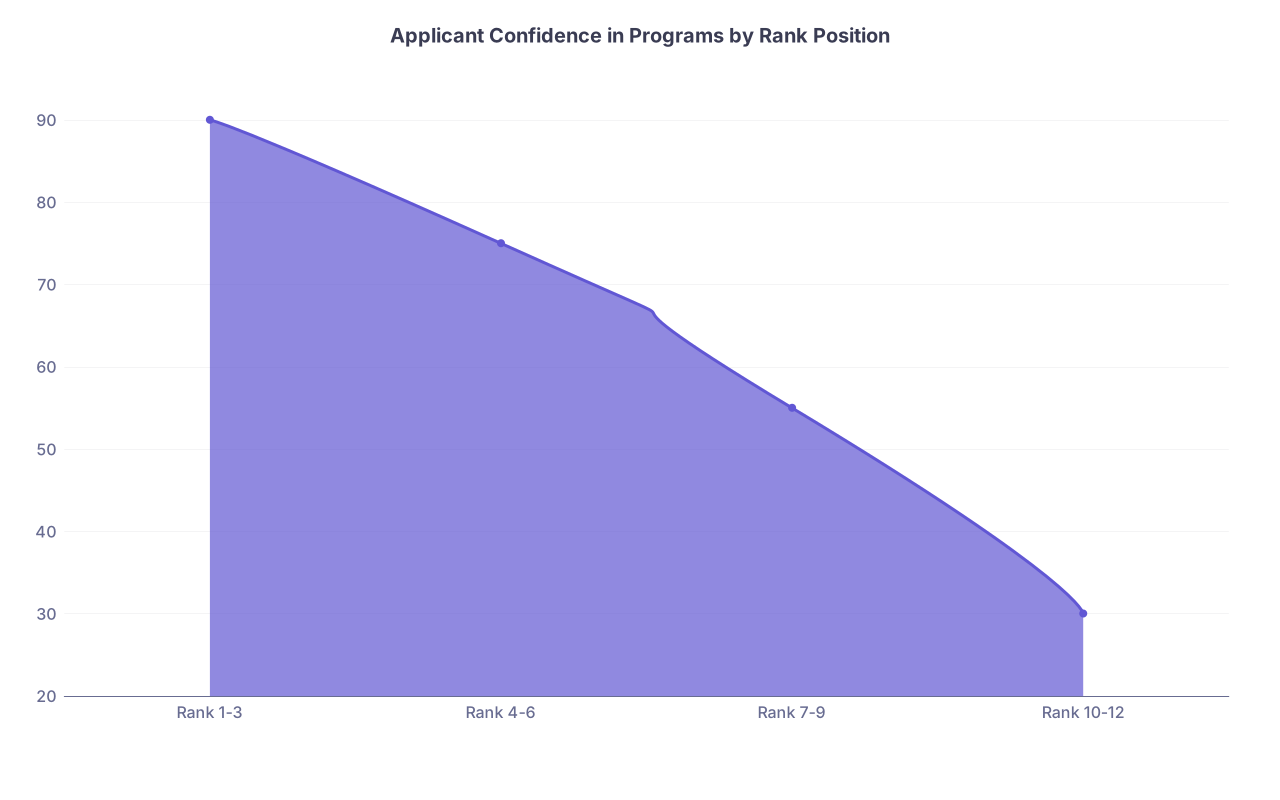
| Category | Value |
|---|---|
| Rank 1-3 | 90 |
| Rank 4-6 | 75 |
| Rank 7-9 | 55 |
| Rank 10-12 | 30 |
Most applicants do not actually feel okay about their entire list. They just stop thinking about the lower half because it is uncomfortable. That is denial, not strategy.
Mistake #10: Last-Minute Panic Changes
There is a very specific danger window: the 48 hours before the certification deadline.
This is when you will see:
- Group chats spiral: “Everyone is moving X up, should I?”
- Last-minute calls with classmates: “Wait, that PD has a bad reputation?”
- Random Reddit threads about “hidden gem” programs or “stay away from” programs.
- Tired brains that just want the anxiety to end.
And then people:
- Swap their top 2–3 on a whim.
- Drop a program significantly based on one anonymous comment.
- Add a program back in that they had already decided against “just in case.”
Sometimes reflection changes your list for the better. More often, last-minute moves are driven by fear, not clarity.

If you want to alter the list near the end, fine. But you better have:
- A clear, written reason for the change.
- At least a night of sleep between deciding and certifying.
- Someone sane (not your most anxious friend) reality-checking your logic.
Do not let panic be the architect of your future.
Mistake #11: Ignoring Gut Red Flags Because “Everywhere Has Problems”
Yes, everywhere has issues. No program is perfect.
That does not mean all problems are equal.
There is a difference between:
“The call rooms are cramped”
vs“Two residents left mid-year and no one will say why.”
“Some rotations are heavier than others”
vs“We routinely exceed hour limits but people are afraid to report.”
Your brain will try to rationalize red flags because walking away from a “good on paper” program is uncomfortable.
You will hear yourself say things like:
- “I’m sure it’s not that bad.”
- “I can handle tough training.”
- “They probably just had a bad year.”
Maybe. Or maybe you are talking yourself out of your own instinct.
When three separate things feel wrong — the vibe on interview day, the way residents talk about leadership, the evasive answers about work hours — believe that pattern. Those are exactly the programs people regret ranking high.
Your Next Step Today
Do not close this tab and tell yourself you will “think about it later.” That is how people end up staring at a certified list they do not fully believe in.
Do this today:
- Open your interview notes or memory and write down your top 5 non-negotiables for residency (for example: supportive culture, partner’s job location, strong fellowship path in X, reasonable cost of living, close to family).
- Pull up your current draft rank list.
- For each program in your top 10, score it 1–5 on each of those non-negotiables.
- If your #1–3 programs are not also your highest scorers on the things you claim matter most, something is off.
Start there. Align your stated values with your actual rank order.
Do not let Match Day become the moment you realize you built a list for everyone else’s priorities except your own.
(See also: Post‑Interview Thank‑You Note Mistakes That Annoy Program Leadership for more on effective post-interview follow‑up.)