
The obsession with Step scores is statistically understandable—and strategically dangerous when it blinds you to application quality.
Programs care about both numbers and narrative. The data is not ambiguous on this point. Step scores get you through the first gate; the overall application determines whether you match, where you match, and in what specialty. Treating Step as the entire game is one of the most common, and most costly, mistakes I see in residency applicants.
Let’s quantify that.
What the Data Actually Says About Step Scores
Strip away the folklore and look at the NRMP Program Director Survey and Main Residency Match data. A few patterns repeat year after year.
First, programs screen. Hard.
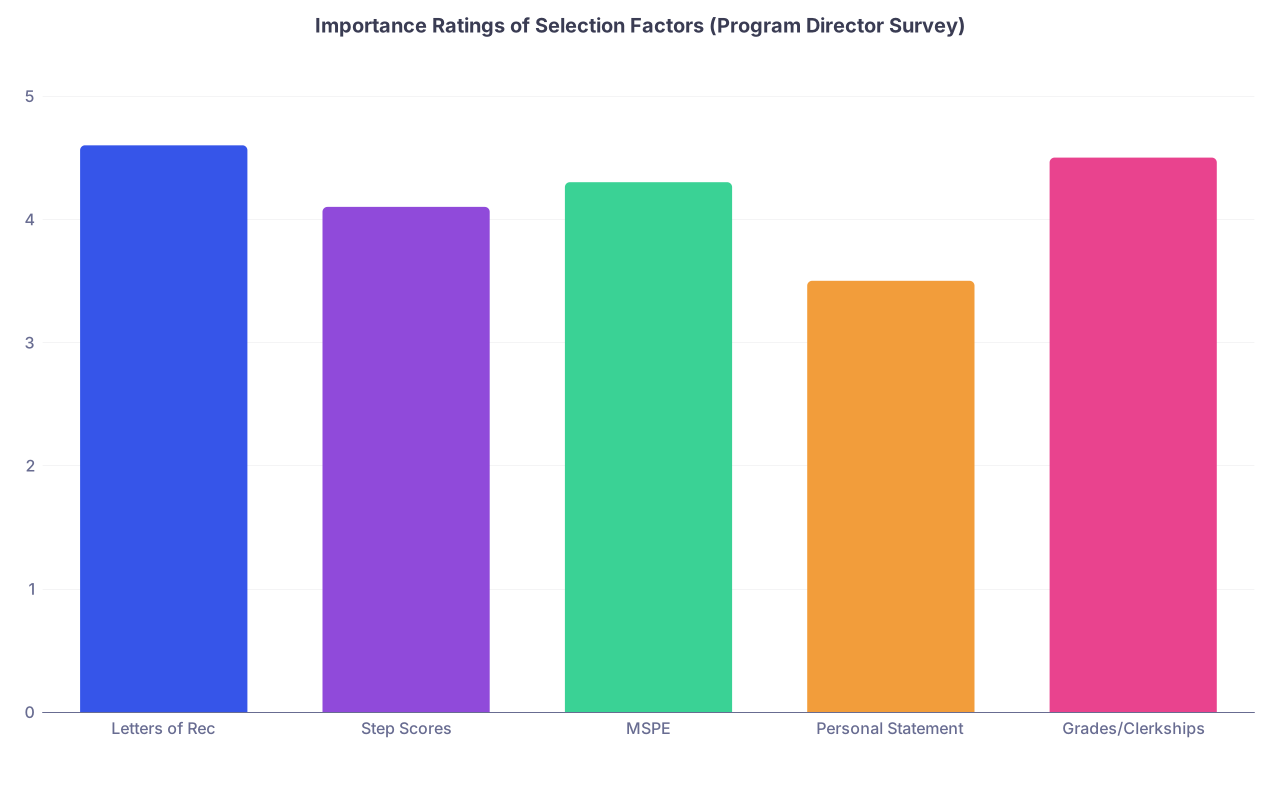
| Category | Value |
|---|---|
| Letters of Rec | 4.6 |
| Step Scores | 4.1 |
| MSPE | 4.3 |
| Personal Statement | 3.5 |
| Grades/Clerkships | 4.5 |
On a 1–5 scale of importance, multiple factors cluster at the top. Letters, clerkship performance, and MSPE routinely edge out or at least equal Step scores. That is not how most applicants behave. Most applicants overspend time and emotional energy on Step and underinvest in everything else that programs rank as “very important”.
Now look at match probabilities.
Across specialties:
- Higher Step scores correlate with higher match rates and more competitive specialties.
- But the correlation is not absolute. You see unmatched applicants with Step 1 > 240 and matched applicants in the 220s, especially in less competitive fields or in community programs.
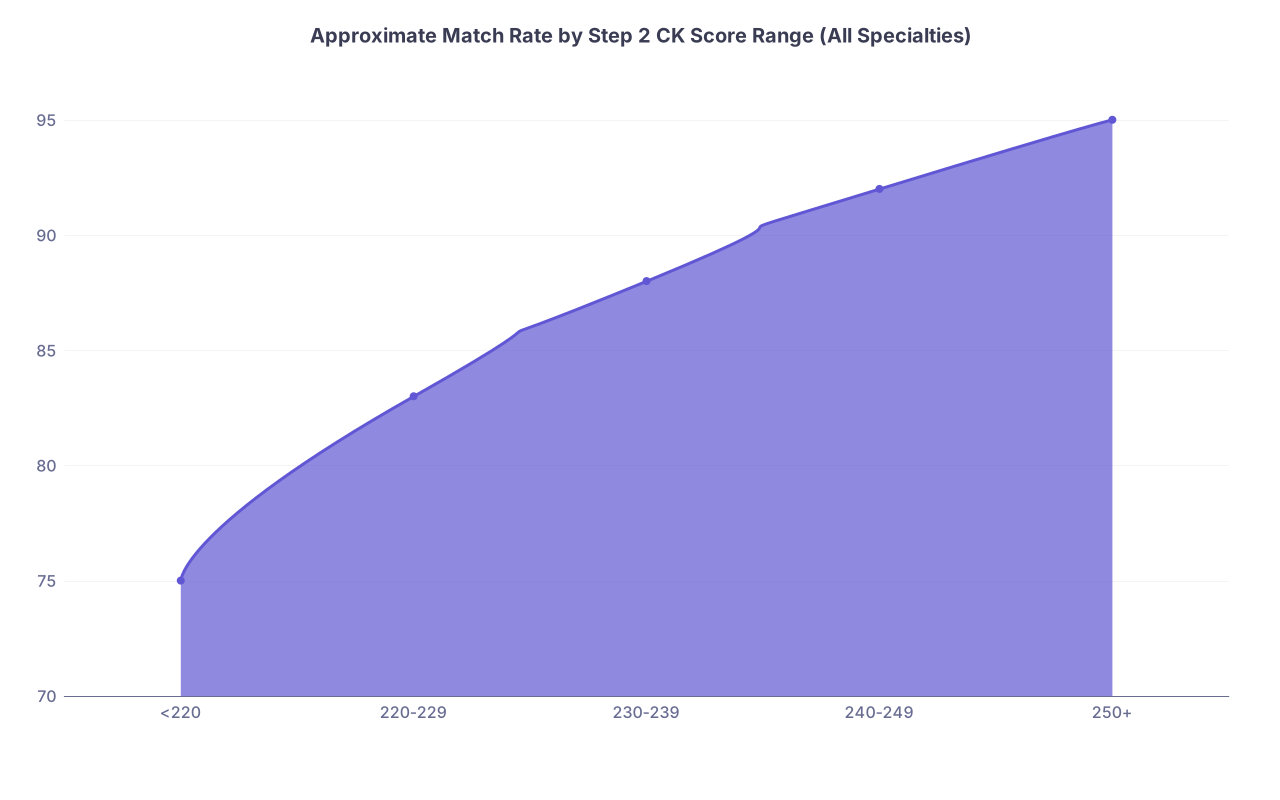
| Category | Value |
|---|---|
| <220 | 75 |
| 220-229 | 83 |
| 230-239 | 88 |
| 240-249 | 92 |
| 250+ | 95 |
The curve is steep early and then flattens. Going from 215 to 230 materially changes your odds. Going from 245 to 260, not as much, unless you are chasing plastics, derm, or ortho. Past a threshold, marginal gains in scores deliver diminishing returns compared with marginal gains in application quality.
Here is the pattern repeated across specialties:
| Specialty Tier | Typical Matched Step 2 CK | Unmatched Still Common? | Application Quality Critical? |
|---|---|---|---|
| Ultra-competitive (Derm, Plastics, Ortho) | 250+ | Yes (even at 260+) | Extremely |
| Competitive (EM, Anes, Gen Surg) | 240–250 | Yes (sub-230 risky) | Very |
| Mid (IM, Peds, OB/GYN) | 230–240 | Yes (esp. IMGs) | Very |
| Less competitive (Psych, FM, Neuro) | 225–235 | Yes (for red flags) | High |
The take‑home: scores are a filter, not a guarantee. Once you are above a program’s unofficial cutoff, the rest of the application drives the decision. This is where applicants misallocate effort.
How Program Directors Actually Use Step Scores
Program directors behave much more mechanically than applicants think.
I have sat next to a PD scrolling down ERAS with a spreadsheet open. Here is the real sequence:
- Export applications.
- Filter by:
- Citizenship / visa status.
- Whether exams were passed on first attempt.
- Step 2 CK cutoff (or equivalent threshold).
- Only then start reading.
This does not mean Step is “everything.” It means scores are used as a blunt triage mechanism.

| Step | Description |
|---|---|
| Step 1 | All Applications |
| Step 2 | Auto Reject |
| Step 3 | Review Letters/MSPE |
| Step 4 | Assess Fit & Experience |
| Step 5 | Interview Offer |
| Step 6 | Meets Exam Cutoffs? |
| Step 7 | Any Red Flags? |
Your Step score is primarily answering a single question for the program: “Can this person likely pass our boards?” Once that answer is “yes,” the marginal value of “even more yes” is limited.
The more sophisticated programs go further and use scores probabilistically:
- They know their board pass rate target (often > 90%).
- They know historical correlation between resident Step 2 and board performance.
- They balance risk: one low‑Step resident might be fine; several in the same class is dangerous.
So a 225 in a program where the median matched applicant is 245 is not just “a little lower.” Statistically, you represent materially higher risk. But if you bring strong evidence elsewhere—honors in key rotations, excellent home letters, aligned research—the risk becomes acceptable.
Scores set the risk baseline. Application quality adjusts it up or down.
Application Quality: The Undervalued Predictor
Step is easy to quantify. Application quality is not. But the data around what program directors say they value is very consistent.
The NRMP Program Director Survey repeatedly lists these as top factors for interview offers:
- Letters of recommendation in the specialty
- MSPE (Dean’s Letter)
- Grades in required clerkships
- Personal statement
- Evidence of professionalism, teamwork, and “fit”
All of these are proxies for the same outcome: “Will this person function on our team without causing problems or failing out?”
To make this less abstract, translate it into probabilities. Consider two applicants for the same internal medicine program:
- Program’s typical matched Step 2 CK: 240–245.
Applicant A:
- Step 2 CK: 252
- Mixed evaluations in medicine and surgery (“sometimes defensive with feedback,” “below expectations in teamwork”)
- Generic personal statement
- Weak specialty-specific letters
Applicant B:
- Step 2 CK: 236
- Honors in medicine, strong narrative comments about work ethic and ownership
- Personal statement that clearly aligns with the program’s academic focus
- Letters from known faculty at that institution
Who gets the interview?
In practice, Applicant B often does. Because once both applicants are above the cutoff (e.g., 230), the incremental perceived risk from a slightly lower score is outweighed by the very real, documented evidence of clinical performance and fit.
I have seen it play out repeatedly: applicants with 250+ scores and mediocre clinical reputations quietly drop down rank lists. Applicants with modest scores but stellar reputations and internal advocates climb.
Programs trust their faculty’s written words more than your numerical score.
Where Applicants Make the Biggest Data‑Blind Mistakes
Let me be blunt: the biggest mistake is treating the Step exam as a single‑variable optimization problem.
The data shows a multidimensional problem. Yet many students behave like this:
- Obsess over going from 248 to 255 on Step 2 CK.
- Sacrifice building meaningful relationships on rotations.
- Treat the personal statement and experiences section as afterthoughts.
- Apply to far too few or misaligned programs because “my score is strong.”
Then they are surprised when the match outcome does not reflect their percentile rank.
Here are four specific, repeated failure patterns.
1. Chasing Score Perfection Instead of Thresholds
Most applicants massively overvalue an extra 5–10 points once they are above ~240 (for most specialties) or above the program’s historical mean.
Think in risk bands, not point differences:
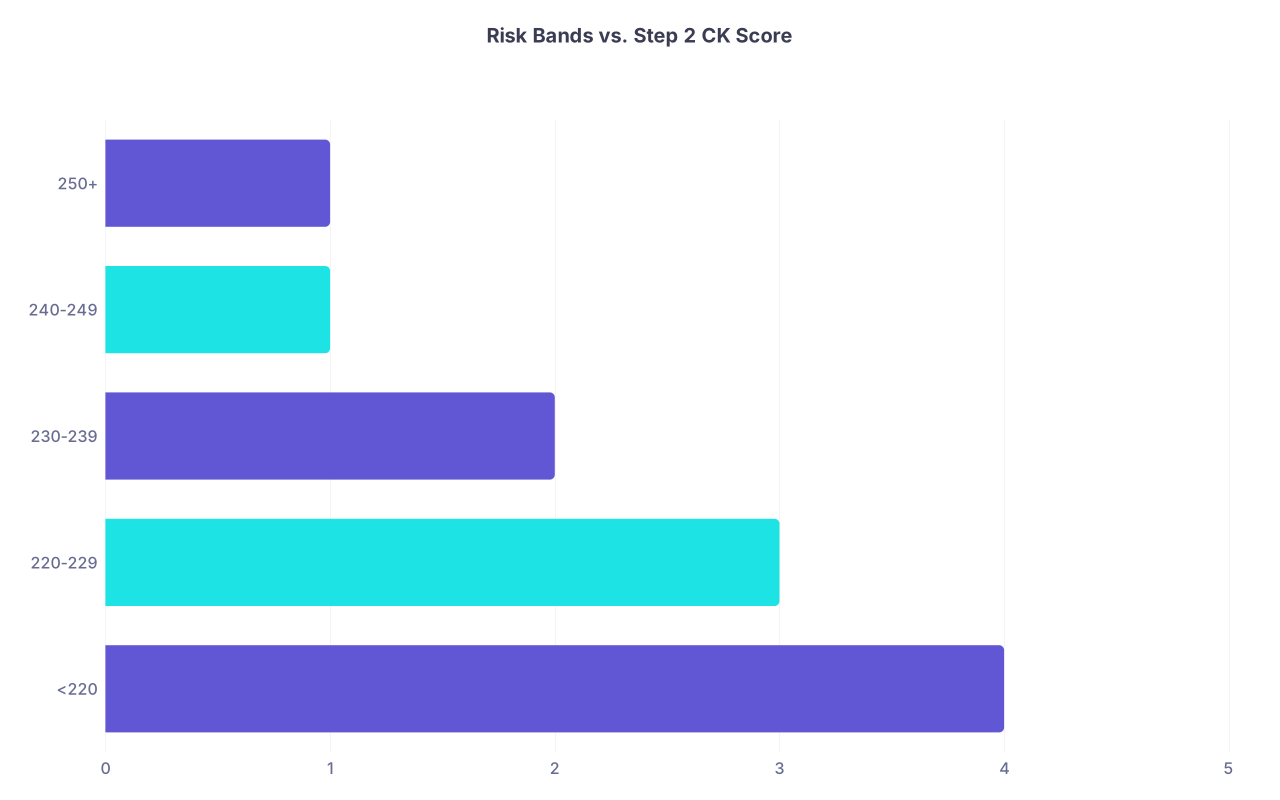
| Category | Value |
|---|---|
| <220 | 4 |
| 220-229 | 3 |
| 230-239 | 2 |
| 240-249 | 1 |
| 250+ | 1 |
Interpretation:
- 4 = high risk to programs (board failure, clinical struggle).
- 1 = low incremental difference in perceived risk.
If you are sitting at a 241 practice range, spending another 200 hours to maybe reach 249 while neglecting letters, mentorship, or scholarly work is a bad expected‑value decision for most people. The gain from better letters and a stronger narrative is often larger than the gain from a few extra score points within the same risk band.
2. Weak or Generic Letters of Recommendation
From a program’s perspective, letters are high-signal, high‑variance data. A single strong, specific letter from a known faculty member can function as a powerful prior that dominates everything else.
Contrast:
- “Student X did well on our rotation, was punctual and hardworking.”
vs. - “X was one of the top 5 students I have worked with in the last 5 years; they consistently took ownership of complex patients and were a go‑to person for the team.”
The second letter changes probabilities dramatically. High Step with low‑energy letters signals a possible mismatch between test‑taking ability and real‑world functioning.
I have seen several 250+ applicants end up in less competitive programs than their scores suggested, almost entirely because their letters were lukewarm or generic.
3. Misaligned and Sloppy Program Targeting
Program choice is another statistically heavy lever that applicants underuse. Over-relying on your Step score leads to overreach.
Common pattern:
- Applicant with a 240 Step 2 and average clinical record applies to:
- 18 dermatology programs.
- 8 plastic surgery programs.
- 4 internal medicine “safeties.”
They end up unmatched or scrambling.
Compare with an applicant with a 232 Step 2 but excellent clinical grades and strong home letters who:
- Applies to 40 well‑chosen internal medicine programs.
- Has clear geographic logic and specialty focus.
- Customizes experiences and personal statement to reflect that.
The second applicant often matches comfortably at a solid program; the first often does not. The difference is not the score. It is strategy and realism.
| Error Type | Driven By Score Obsession? | Impact on Match Odds |
|---|---|---|
| Over-applying to hyper-competitive specialties | Yes | Severely negative |
| Under-applying to realistic programs | Yes | Negative |
| Generic personal statements per specialty | Often | Moderate negative |
| No internal or regional advocates | Indirectly | Moderate to severe |
4. Underestimating Red Flags and Context
Programs do not look at scores in isolation. They look at trajectories:
- Step failure followed by strong Step 2 and clear remediation story.
- Low preclinical grades but strong clinical performance.
- Gaps in training explained vs. not explained.
A 245 with a failed first attempt is not the same as a clean 245. A 230 with a compelling redemption arc and strong clinical comments can beat it.
This is where application quality—how well you explain your story, how candid and coherent your narrative is—modulates the impact of past data points.
What “Application Quality” Really Breaks Down Into
Applicants hear “make a strong application” and interpret it as “write a nice essay.” That is not what programs mean.
From a data analyst lens, application quality is a composite index that roughly looks like this:
- 30–35%: Letters of recommendation quality and source.
- 25–30%: Clerkship evaluations and MSPE narrative.
- 15–20%: Demonstrated alignment with the specialty and program type.
- 10–15%: Research, scholarly output, and CV depth.
- 10%: Personal statement and ERAS experiences coherence.
No one will publish that exact weighting, but behaviorally, this is what I see when rank lists are built.
You have control over most of these:
- You can choose to engage deeply on rotations so attendings actually remember you.
- You can target experiences to reflect a believable arc toward your specialty.
- You can choose to write a personal statement that ties the pieces together rather than sounding like a template.
The applicants who win the match game understand that once they are safely over the Step threshold, each incremental improvement in these components has more marginal impact on their final outcome than another few points of hypothetical score.
So Which Matters More: Step or Application Quality?
If you want a single sentence: below the threshold, Step scores matter more; above the threshold, application quality matters more.
More precisely:
- For screening in: Step 2 CK (and Step 1 history, even pass/fail) dominates. A failed Step, a very low score, or multiple attempts can be fatal in certain specialties and visas contexts.
- For interview offers: a mix of Step and application quality. But among those above the same score band, letters, clerkship performance, and perceived fit clearly drive decisions.
- For rank list position: application quality, interview performance, and perceived fit dominate. Step is a minor modifier unless extremely low or associated with other risk.
Which factor is more “important” is a badly formed question. The better framing is:
- Step scores are necessary but not sufficient for most competitive outcomes.
- Application quality is sufficiently powerful to overcome modest Step deficits in many fields, but not catastrophic ones.
You cannot rescue a 205 Step 2 into plastic surgery with an amazing personal statement. But you can absolutely turn a 232 into a strong internal medicine match with well‑executed rotations, letters, and targeting.
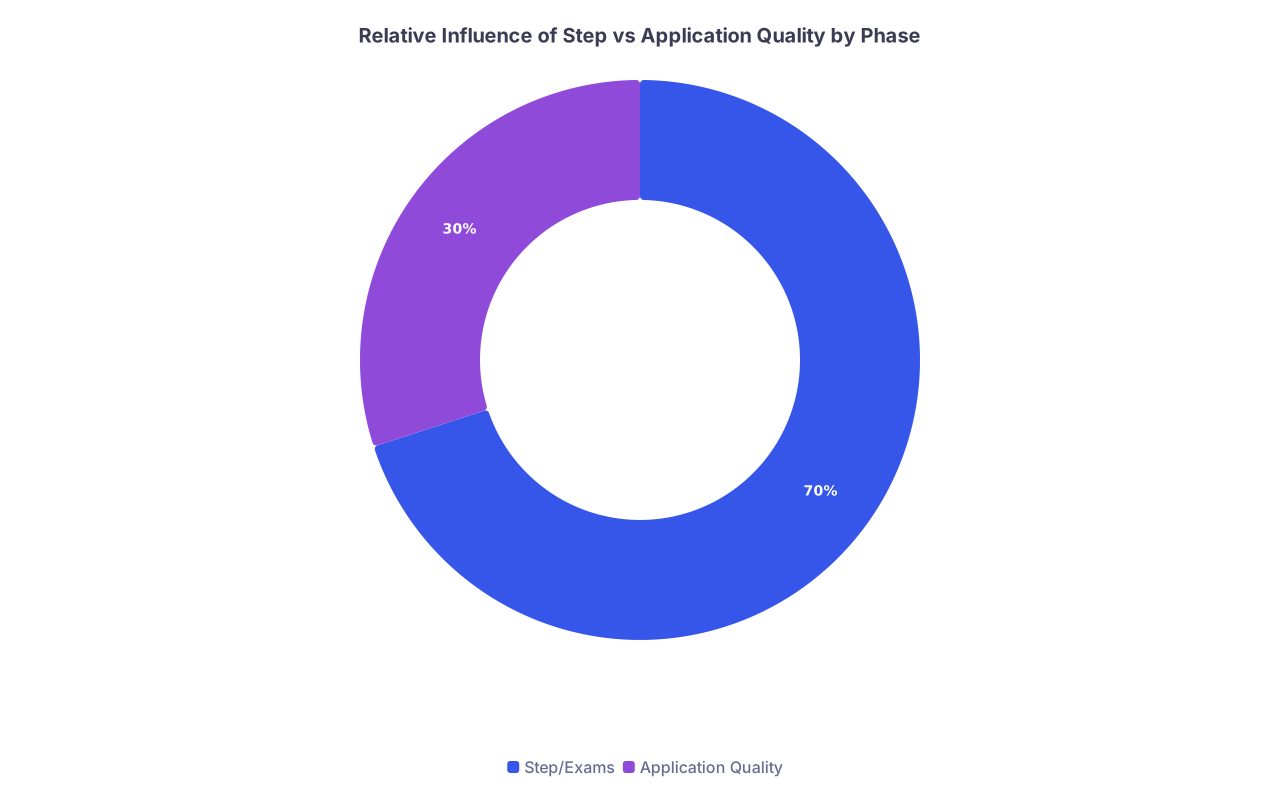
| Category | Value |
|---|---|
| Step/Exams | 70 |
| Application Quality | 30 |
(For screening.)
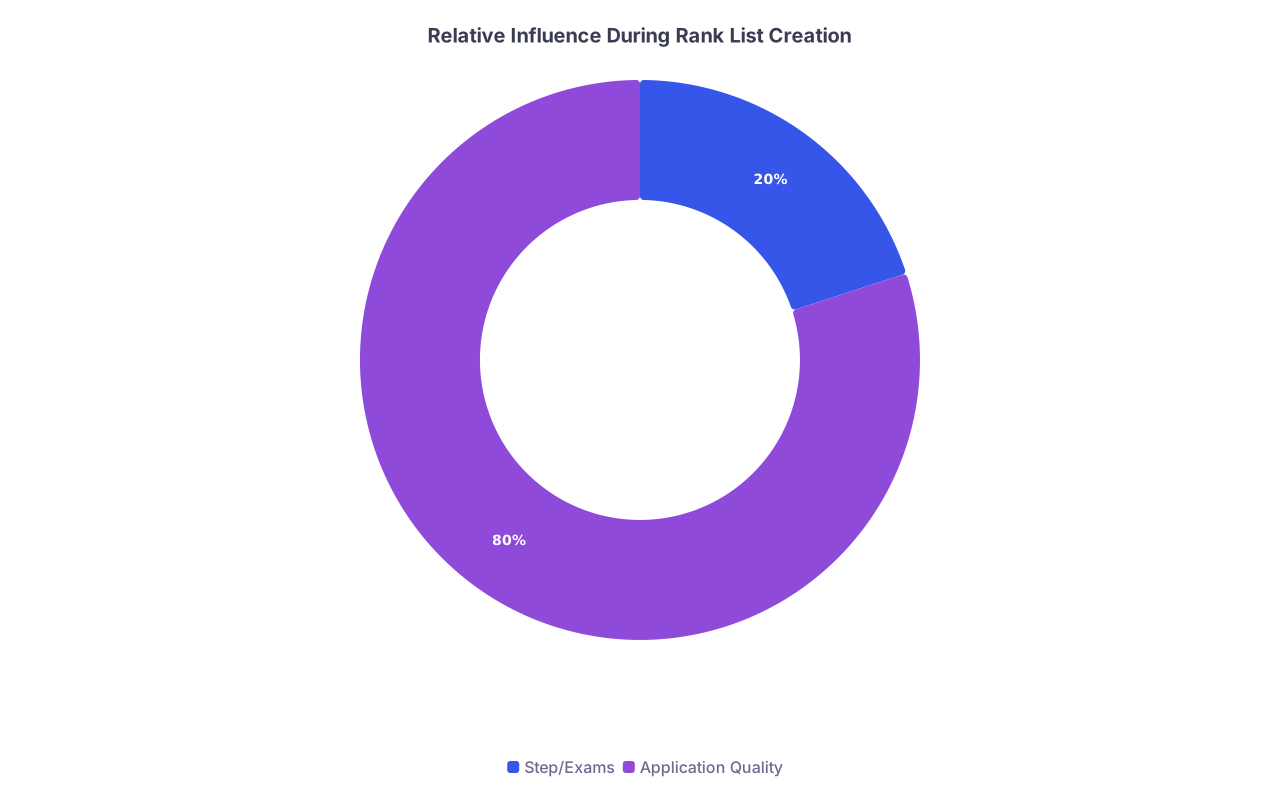
| Category | Value |
|---|---|
| Step/Exams | 20 |
| Application Quality | 80 |
(For ranking.)
That shift in weighting is where smart applicants adjust their effort.
How to Rebalance Your Strategy
I will not give you a 20‑point generic checklist. You know the basics. Instead, here are three high‑yield reallocations of time and attention that align with the data.
Set a realistic Step target band, not a fantasy score.
If your practice scores cluster around 235–240 and you are aiming for internal medicine, your priority should be “solidly above cutoff,” not “heroic 260.” Once you are in the safer band, divert energy into rotations and mentorship.Treat key rotations like high‑stakes exams.
Your internal medicine, surgery, and specialty rotations produce data that programs consider as or more predictive than Step. Show up early. Volunteer for work. Ask for feedback halfway through, not at the end. You are essentially sitting for a long‑form, observed exam.Engineer at least two letters that say more than “good student.”
That means identifying letter writers months in advance, working closely with them, asking them directly if they can write a “strong” letter, and giving them a detailed CV and bullet points. Strong letters are not accidents. They are outputs of deliberate relationship‑building.
The data is clear: applicants who approach the match like a portfolio of measurable signals—not a single number—perform better relative to their raw scores.
Key Points
- Step scores are powerful gatekeepers, but their marginal value drops sharply once you clear realistic specialty and program thresholds.
- Application quality—letters, clinical performance, narrative, and targeting—dominates decisions among applicants within the same score band.
- Applicants who over‑optimize Step at the expense of these other factors consistently underperform their numerical potential in the Match.