The fastest way to torpedo Match Week is not with your rank list. It’s with a stupid email you send at 6:07 a.m. on Monday.
You think I’m exaggerating. I’ve watched programs print out emails and read them aloud in the workroom. People remember the train‑wrecks by name years later: the reply‑all rank list, the drunk text disguised as an “update,” the Monday‑morning “Can I still change my ranks?” message.
You’re not doing that.
Here’s your timeline‑driven guide to Match Week communication: what to send, what not to send, and when to stop touching your keyboard entirely.
(See also: MS3 Spring: Fixing Early CV and Professionalism Habits Before ERAS Opens for practical tips on preventing small professionalism errors.)
Two Weeks Before Match Week: Lock Down Your Communication Rules
At this point you should be preventing disasters, not reacting to them.
14–10 Days Before Match Week: Set Up Your Systems
These days are about creating guardrails so Match Week emotions don’t run your email.
Do this:
Separate your inboxes
- Use one primary email for ERAS (school or professional Gmail).
- Forward everything to that account if you’ve scattered addresses.
- Turn off forwarding to sketchy or shared accounts (old college email, family account).
Audit what programs have
- Search your sent mail for “Thank you for interviewing with” and “Interview Confirmation.”
- Make a list of:
- Program name
- Contact email used
- Coordinator name
- Fix inconsistencies in your own records, not theirs. Do not email programs to “confirm my email address” at this stage.
Define your “No Send” rules Write these down and stick them to your monitor:
- No emailing any program after rank list certification unless:
- You matched there and they contact you first
- There is a genuine emergency (illness, disability accommodation, visa crisis) and your dean’s office advises you to contact them
- No texting residents or faculty about where you ranked them.
- No social media posts tagging programs until after Match is final.
- No emailing any program after rank list certification unless:
Pre‑write your safe templates You won’t trust your brain on Match Monday. Pre‑draft:
- A short “Thank you / excited to join the team” email for if you match at a program.
- A brief, professional “I did not match” note to your dean or advisor asking for next steps. Save as drafts. Do not address them yet.
Turn off “Undo Send = 0 seconds”
- In Gmail/Outlook, set “Undo Send” delay to 10–30 seconds.
- This is the cheapest malpractice insurance you’ll ever buy.
One Week Before Match Week: Practice Restraint
At this point you should be stopping new outreach, not squeezing in “one last” email.
7–5 Days Before: Freeze All Program Contact
This is where people make “late update” mistakes.
Bad ideas I’ve actually seen:
- “Dear PD, I know ranks are certified but wanted to tell you you’re my #1.”
- “I just received a new publication and hope this may affect your rank list decision.”
- “Your residents said X about call — is that true? It’s affecting how I feel about the program.”
Too late. All bad.
Your rules this week:
- No new “update letters”
- No new “love letters”
- No “clarification” questions that look like you’re second‑guessing the program
If you genuinely have new major information (significant professionalism concern resolved, serious health issue, visa disaster), talk to:
- Your dean’s office
- Your home program director (if applicable)
Let them decide if anyone should contact programs, and who should send that email.
4–3 Days Before: Tighten Your Personal Boundaries
At this point you should be limiting who contacts you about the Match.
Do this:
- Set expectations with family:
- “You’ll hear from me after 10 a.m. Monday with an update.”
- “Please don’t text constantly that morning.”
- Muted group chats:
- Especially the “Where did you rank X?” or “I heard Y program is malignant” threads.
- Turn off email notifications on your lock screen:
- You’ll check email manually Monday. That’s enough.
(Related: Final 72 Hours Before ERAS Submission: The Non‑Negotiable Checklist)
Match Week: Day‑by‑Day Communication Playbook
Now the real minefield. Email and communication expectations shift every day.
Let’s walk it day by day.
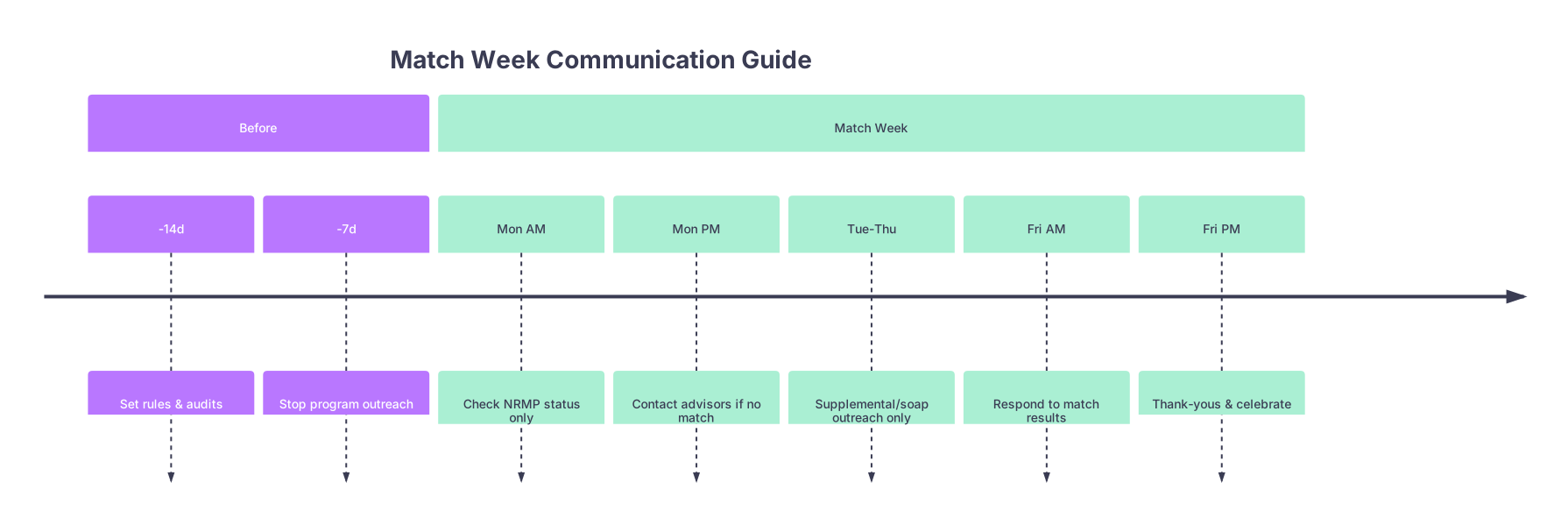
| Period | Event |
|---|---|
| Before - -14d | Set rules & audits |
| Before - -7d | Stop program outreach |
| Match Week - Mon AM | Check NRMP status only |
| Match Week - Mon PM | Contact advisors if no match |
| Match Week - Tue-Thu | Supplemental/soap outreach only |
| Match Week - Fri AM | Respond to match results |
| Match Week - Fri PM | Thank-yous & celebrate |
Match Monday Morning: 6:30 a.m.–12:00 p.m.
At this point you should only be communicating with:
- NRMP
- Your medical school
- Your close support circle (carefully)
6:30–8:55 a.m.: Preparing, Not Emailing
Task list:
- Log in to NRMP and ERAS before 9 a.m. to make sure you remember passwords.
- Close:
- Your email compose window
- Twitter/X, Instagram, Reddit, SDN
- Any “rank list gossip” group chats
What you do not do:
- You do not email any program.
- You do not DM any resident asking “When do you find out?”
- You do not post “Wish me luck” tagging programs.
9:00 a.m.–9:15 a.m.: You Find Out If You Matched (But Not Where)
Two possible paths. The communication rules are completely different.
Path A: You Matched
If the 9:00 a.m. email says you matched:
You send no emails to programs on Monday. Zero.
What you can do:
- Text immediate family / partner: “I matched. Details Friday.”
- Respond to your dean or advising office if they explicitly ask for a quick status.
What you avoid:
- “Did I match at your program?” texts to residents
- “I’m so excited to maybe join you?” emails to multiple places — that reads as insincere at best, unprofessional at worst.
You are in a holding pattern until Friday noon. Sit on your hands.
Path B: You Did Not Match
This is where communication matters a lot. And where bad email can make a hard week brutal.
9:01–9:30 a.m.: Immediate Steps
At this point you should only contact your school.
Use your pre‑written draft
- Subject: “SOAP – I did not match, requesting guidance”
- Body (keep it tight):
- Confirm you did not match
- Ask for immediate instructions on meeting time, document prep, and list review
Do not:
- Email any program directly yet
- Ask, “Why did I not match?” in the first 15 minutes
- Post about it on social media
Your email tone right now:
- Factual
- Brief
- Available and coachable
Late Monday Morning–Afternoon: SOAP Strategy, Not Panic
Once you meet with advisors and get a SOAP plan:
You’ll start thinking about contacting programs, but not on Monday unless your dean’s office explicitly orchestrates it.
Common blunders Monday afternoon:
- Mass‑emailing PDs: “I’m in SOAP and very interested in your program.”
- Emailing programs where you interviewed: “Can you tell me why I did not match?”
Both look desperate and unprofessional. Programs are slammed on Monday too.
Tuesday–Thursday (SOAP Days): Controlled Outreach Only
If you’re in SOAP, communication rules change — but only within SOAP structure.
Morning of SOAP Day 1: Communication Chain of Command
At this point you should be following your school’s SOAP protocol, not inventing your own.
Typical pattern:
- You submit applications to unfilled programs in ERAS.
- Programs see your documents first.
- Some schools allow faculty‑to‑faculty advocacy emails or calls.
Your rules:
- You do not cold email PDs unless:
- Your dean/advisor tells you exactly who, what, and when to write.
- If asked to email:
- Keep it under 150 words.
- No apologies.
- No over‑sharing about why you think you did not match.
Sample structure:
- 1 line: Who you are (school, specialty target, US/IMG status).
- 2–3 lines: Fit + one concrete strength.
- 1 line: Gratitude and invitation to review ERAS file.
Common SOAP Email Mistakes (Day 1–3)
Here’s where people derail themselves:
Oversharing
- Talking in detail about Step failures, personal crises, relationship issues.
- Programs don’t need your diary. They need to know if you can show up and work.
Blame
- “My home program did not support my application.”
- “I think my letters were weak.”
- “I was told I would match easily.”
Begging language
- “I am desperate for any position.”
- “I will do absolutely anything for this spot.”
- “Please, I’m begging you to consider me.”
Mass‑copied obviously generic emails
- Programs can spot “Dear [Program Name]” templates from a mile away.
- If you’re sending similar emails, at least:
- Check program name spelling
- Reference something specific that actually applies
If you’re not in SOAP (you fully matched), you send nothing to programs Tuesday–Thursday. Still hands off.
Match Friday: The Big Reveal and Your First Emails
Friday has two separate phases: the noon reveal and the next 24–48 hours of post‑match communication.
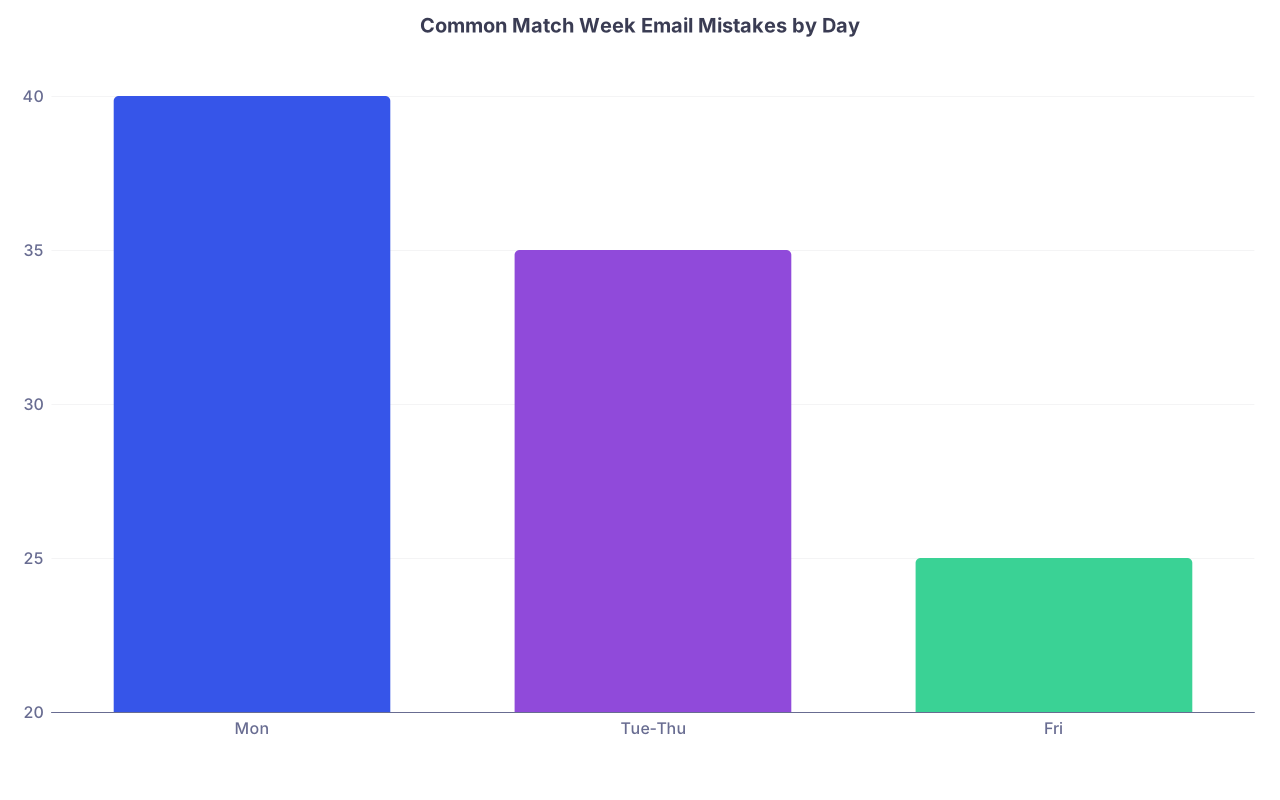
| Category | Value |
|---|---|
| Mon | 40 |
| Tue-Thu | 35 |
| Fri | 25 |
Friday 11:45 a.m.–12:15 p.m.: Reading Your Match
At this point you should:
- Open your NRMP email or portal.
- See your matched program.
- Breathe. For at least 5 minutes.
Then, communication priorities:
- Immediate family / partner
- Close friends
- Your dean’s office / advisors (if they asked for your outcome)
Do not write to the program yet while your heart rate is 140.
Friday Afternoon: Emailing Your Matched Program (The Right Way)
By 3–5 p.m. Friday, a short, clean email to your matched program is appropriate and usually appreciated.
Who to email:
- Program director
- CC: program coordinator
Subject line examples:
- “Grateful to be joining [Program Name] as a PGY‑1”
- “Looking forward to training at [Hospital Name]”
Email skeleton:
- Line 1–2: Thank them, state you’re excited to join.
- Line 3: Brief callback to something real: a resident, a rotation, or why you’re genuinely happy about this program.
- Line 4: Express that you look forward to meeting the team and will respond promptly to onboarding emails.
What you do not include:
- Questions about vacation, schedule, moonlighting.
- Negotiation attempts (“Can I switch to a research track?”).
- Clarifications about rumors you heard.
- Requests to change prelim/advanced arrangements on Day 1.
The Cringe Emails To Avoid Friday
I’ve seen variations of all of these:
- “I honestly ranked you much lower but I’m trying to be positive.”
- “I was hoping to match somewhere else but will make this work.”
- “I didn’t know much about your city but at least the cost of living is low haha.”
You don’t need to lie. But you absolutely shouldn’t say any of that.
Keep it gracious and simple. You can process disappointment with your therapist, not your PD.
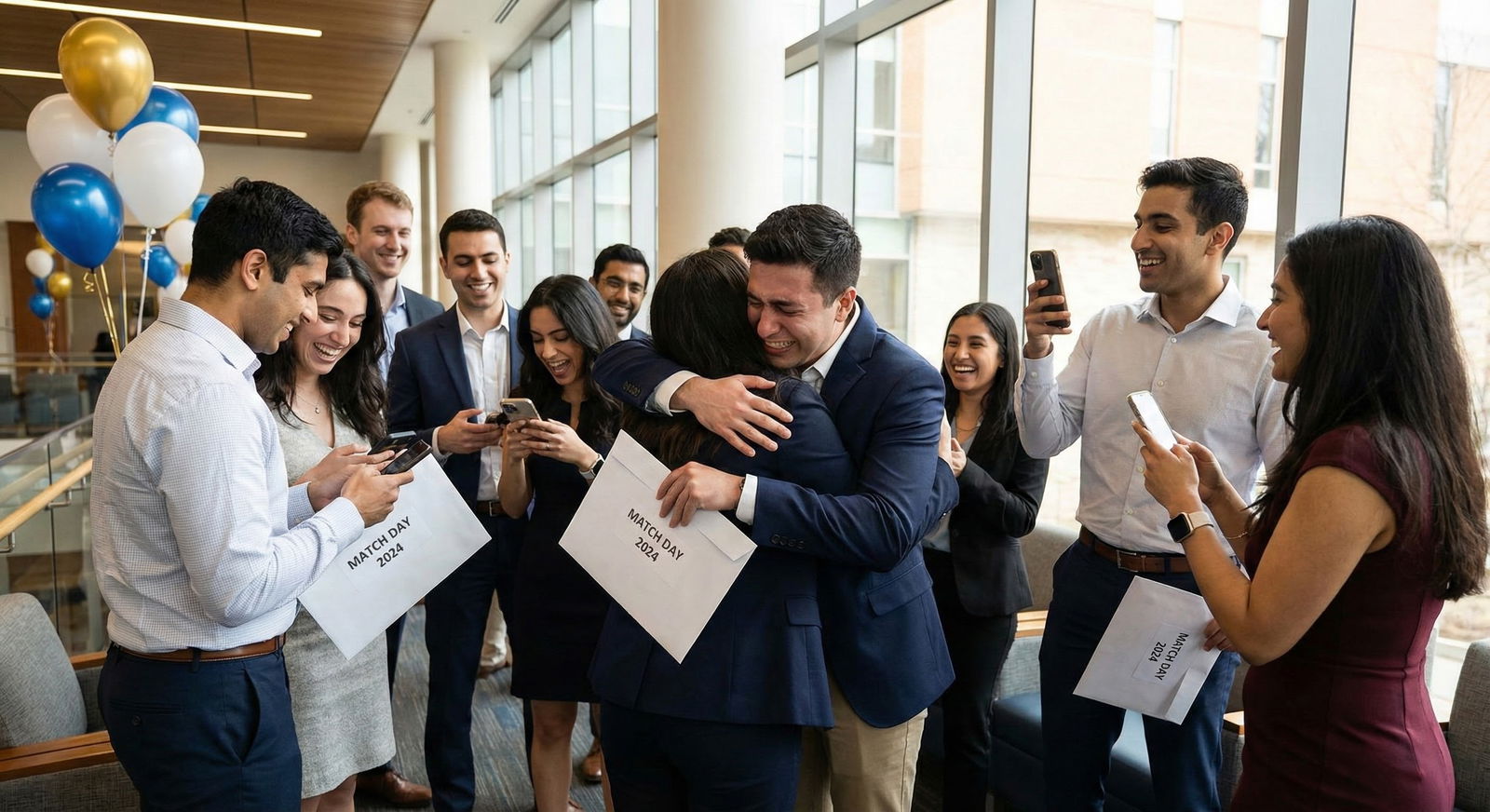
Weekend After Match: Thank‑Yous and Loose Ends
At this point you should be closing the loop, not reopening the rank conversation.
Saturday–Sunday: Optional, Targeted Thank‑Yous
Who it’s reasonable to email:
- Mentors who wrote strong letters.
- Program directors where you did away rotations and had a real relationship.
- Research PIs who supported your application.
Email content:
- Thank them for their support.
- Tell them where you matched.
- One sentence on why you’re excited about that program or specialty.
Don’t:
- Tell programs where they were on your rank list.
- Apologize for not matching at their program (“Sorry I didn’t rank you higher”).
- Ask them “why do you think I didn’t match with you?”
Social Media That Weekend
Ground rules:
- Post about where you matched? Fine.
- Tag the program once? Usually fine.
- Tag residents or PD? Risky; keep it minimal and professional.
- Avoid:
- Complaining about where you ended up.
- Jokes at the expense of unmatched colleagues or less competitive specialties.
- Details about “almost matches,” rank lists, or program gossip.
Screenshots live forever. Same with drunk tweets.
Email and Communication Hygiene: A Quick Reference Table
| Timeframe | Do | Don't |
|---|---|---|
| 2 weeks before | Set rules, drafts, undo-send | New love letters to programs |
| Match Monday (matched) | Tell family, respond to school | Email any program |
| Match Monday (unmatched) | Contact dean, follow SOAP instructions | Ask programs why you didn’t match |
| Tue–Thu (SOAP) | Targeted, advisor-guided outreach | Cold mass emails, oversharing |
| Match Friday | Short thanks to matched program | Negotiate, complain, mention rank order |
Quick Communication Filters You Should Use All Week
When in doubt, run any message through these tests before hitting send.
Would I be okay with this being read aloud in a conference room?
If not, rewrite it.Does this help someone make a decision right now?
If no decision is pending, you probably don’t need to send it.Am I asking a question I already know the answer to?
Programs hate fake‑naïve questions that are really rank anxiety in disguise.Would I write this the same way if I’d just matched at my #1?
If not, your current emotional state is hijacking your keyboard.

The One‑Sentence Rule That Saves Most People
If I had to give you one rule for Match Week communication, it’s this:
If you’re not explicitly asked to email a program, and it’s not SOAP‑related or a simple thank‑you after you know where you matched, don’t send it.
Key Takeaways
- Match Week is not the time to “fix” your application with frantic emails; by Monday 9 a.m., your words can only hurt you, not help you.
- Separate your communication phases: Monday = school only, Tue–Thu = structured SOAP only, Friday+weekend = brief, gracious thank‑yous and updates.
- When in doubt, don’t send the email; future‑you will almost never regret the message you didn’t fire off at 2:14 a.m. during Match Week.