Program directors absolutely look at your social media—stop pretending they don’t.
I’ve sat in rooms where a borderline applicant’s Instagram, Twitter, or TikTok was the final nail in the coffin. Not because they were terrible people. Because they were careless. And careless online reads as careless in medicine.
You worked years for decent scores, strong clerkship evals, and solid letters. Do not let a 30‑second post, a snarky tweet, or a drunk story blow that up.
Let’s walk through the specific social media mistakes that tank residency applications, and how you avoid being the cautionary tale people whisper about on selection committees.
1. Believing “They Don’t Check” or “I’m Too Small to Notice”
This is the first and biggest mistake: assuming no one in residency selection has the time or interest to look you up.
They do. Maybe not every program, every time. But enough of them, often enough, that you cannot gamble.
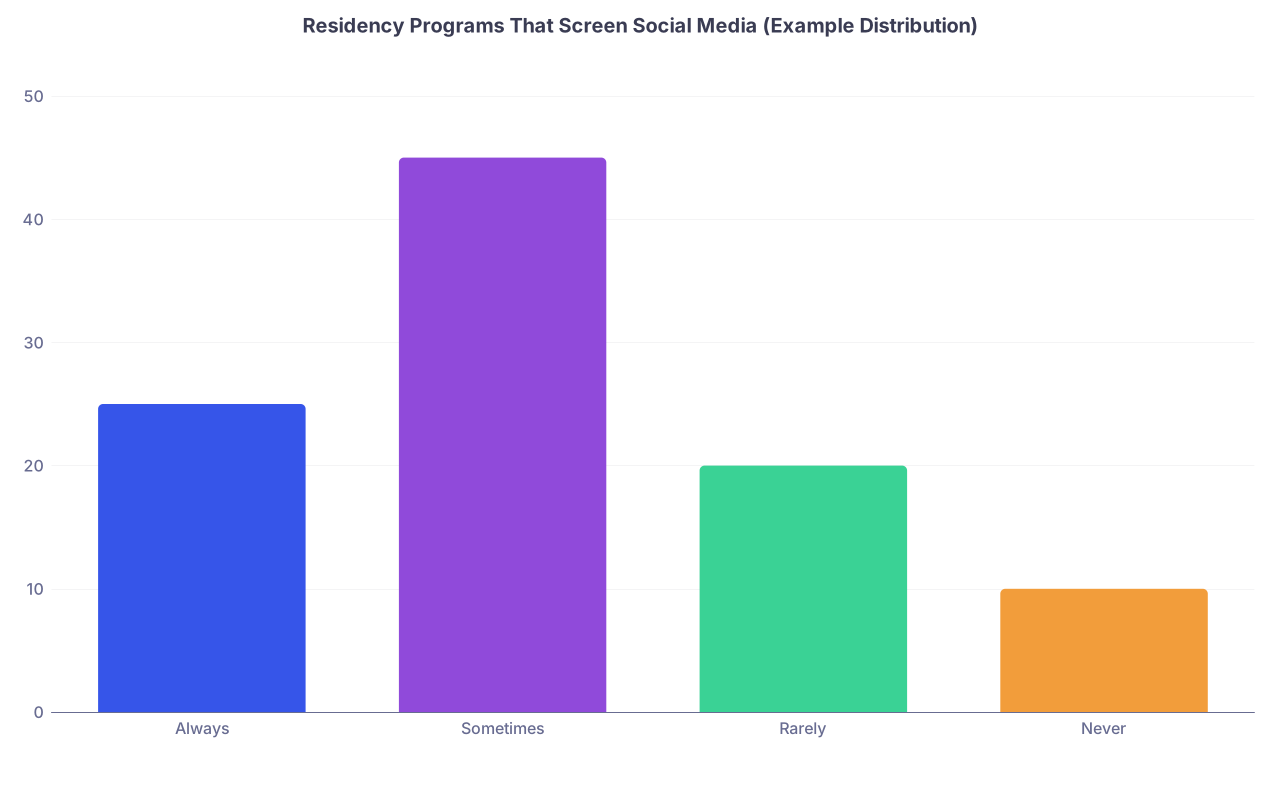
| Category | Value |
|---|---|
| Always | 25 |
| Sometimes | 45 |
| Rarely | 20 |
| Never | 10 |
Even if only a quarter “always” look, it only takes one. And it’s almost never in your favor.
Here’s how it really happens:
- An interviewer is mildly curious after talking to you. They Google your name between interviews.
- A resident championing you says, “Let me see what this person is like” and checks Instagram or X.
- A red flag in your file ( professionalism concern, comment about “maturity” ) nudges someone to see if there’s a pattern online.
They’re not running a CSI operation. They start simple:
- Your full name + “MD” or “medical student”
- Your email/username from ERAS
- Cross‑checking profile pics that look like you
If you’re using the same handle across platforms, you’ve made it easier.
Do not cling to the fantasy “My account is small, no one cares.” It doesn’t matter if you have 80 followers. The stakes are not about influence. They’re about judgment.
Avoid this mistake by assuming that:
- Anything under your name, face, or obvious username might be seen.
- Anything your classmates can screenshot might as well be public.
- Anything that would make an attending raise an eyebrow is not “safe enough.”
If your defense is “They probably won’t see it,” you’ve already lost.
2. Posting Patient‑Related Content You Think Is “De‑Identified”
Nothing kills an application faster than casual HIPAA violations.
And yes—your “funny patient story” with age + gender + city + hospital type + timing is a HIPAA problem. Even if you didn’t write a name. Even if you think, “No one could know who this is.”
I’ve seen these sink applicants:
- A TikTok imitating a confused elderly patient’s accent with “today’s clinic was WILD”
- An Instagram story picture of a hospital hallway where a patient’s name is barely visible in the background
- A Twitter thread with detailed patient scenarios clearly from last week’s night float
You are not anonymous just because you didn’t say you’re at “County General.” People connect dots. Other staff see it. Residents know who was on call. Patients recognize themselves.
The worst version? A program director recognizes their institution in your story. That application goes cold immediately.
Here’s the harsh reality:
If there’s any chance a patient, a colleague, or your hospital could identify who you’re talking about, you’re in dangerous territory.
What gets you in trouble:
- Time proximity: “Last night on call…” or “My 3 pm today…”
- Specific details: rare conditions, OR cases, tragic outcomes
- Photos in clinical areas: even “aesthetic” call room pics’ve burned people
- Emotional tone: mocking, annoyed, disgusted, or dismissive
This is not just “unprofessional.” It signals you’re a liability. Programs are asking:
“Do I want to trust this person with my patients and my institution’s name?”
If you absolutely must share clinical reflections online (honestly, during match season, I’d avoid it entirely), they should be:
- Old cases with changed non‑essential details
- Focused on your growth, not the patient’s drama
- Respectful, sober, and clearly de‑identified
If you’re wondering, “Is this de‑identified enough?” the answer is no. Delete it. Do not rationalize yourself into a HIPAA violation and a ruined application.
3. Public Complaints About Patients, Nurses, Residents, or Attendings
There’s a very specific flavor of social media post that destroys trust instantly: the bitter, contemptuous rant.
- “I swear if one more nurse pages me for something stupid…”
- “Patients who Google their symptoms and then argue with me are the worst.”
- “Attending today was such a clown, made me stay 2 extra hours for no reason.”
You might think you’re “venting” or being “relatable.” On the other side of the screen, a program director is thinking:
- This person does not respect the team.
- This person blames others instead of looking inward.
- This person will be drama when the stress hits.
I’ve heard residents on selection committees say, “If they complain like this as a med student, imagine them as a PGY‑1 under real pressure.” That’s it. Done.
The red flags here:
- Mocking tone – especially toward nurses or other staff
- “Us vs them” mentality – doctors vs nurses, doctors vs patients
- Self‑pitying narratives – you are always the hero and victim, everyone else is unreasonable
- Repeated negativity – your last 20 posts are all about how awful medicine is
No one expects you to be cheerful all the time. Medicine is hard. People get frustrated. But they also expect you to have enough judgment not to broadcast your worst moments to the world.
If you need to vent, use:
- A private, small group chat with people you trust
- A therapist
- A journal
Not Twitter. Not Threads. Not a 2 a.m. Instagram story captioned “I hate this job.”
During residency selection, they’re not just buying your clinical skills. They’re buying your attitude under pressure. Do not showcase your worst angles for free.
4. Partying, Substance Use, and the “It’s Just My Personal Life” Myth
You’re allowed to have a life. You’re allowed to go out, drink, travel, dance, whatever.
But here’s where applicants blow it: posting images or videos that scream loss of control, poor judgment, or outright danger.
What programs worry about isn’t your glass of wine at dinner. It’s:
- You visibly blackout drunk in multiple photos
- Drug use, obvious or wink‑wink “not weed” references
- Bar fights, damage, chaos, or law‑adjacent bragging
- Captions like “Don’t remember last night lol”
- Drinking or using substances in medical settings or while in scrubs
They’re asking one question:
“Is this person going to be safe as a resident, in a hospital, responsible for lives after 24‑hour calls?”
This isn’t moralizing. It’s risk assessment.

Here’s the mistake I see constantly:
Med students treating social media like they’re still undergrad juniors rushing fraternities.
You’re not. You’re about to become a physician. You can’t have public content that looks like an alcohol problem, a drug habit, or basic impulsivity.
If your thought is, “But this is my private life,” understand this: residency programs do not separate “on‑duty you” from “off‑duty you” when that behavior signals real risk.
They don’t know you well enough yet to say, “Oh, that’s just them being funny.” All they see is:
“Candidate + patient lives + minimal sleep + possible substance issue = bad combination.”
Does that mean scrub your life entirely? No. It means:
- Anything involving intoxication or substances should be locked down or gone
- Nothing illegal or borderline legal should be visible anywhere
- Nothing that could be interpreted as chronic overuse or addiction vibes
If someone else tagged you in it—yes, you’re still responsible for it if it’s easily traceable back to you.
5. Political, Ideological, and Rage‑Fueled Posting
Let’s be clear: you’re allowed political opinions. You’re allowed to care deeply about policy, inequity, ethics, whatever.
The mistake isn’t “having a stance.” The mistake is how you express it.
What gets applicants quietly dropped:
- Aggressive, hostile, or dehumanizing language toward entire groups
- Racist, sexist, homophobic, transphobic, or otherwise discriminatory remarks
- Violent imagery, fantasies, or “joking” about harm
- Conspiracy‑theory spirals that suggest poor critical thinking
Programs don’t need you to agree with them politically. They do need to trust that you can:
- Care for patients you personally disagree with
- Work on a diverse team without attacking colleagues
- Keep your temper and ego under control
When your feed is full of “Anyone who believes X is trash and shouldn’t be allowed near healthcare,” you’re telling a residency program exactly who you can’t care for.
And yes, they care. Because the population you’ll serve is not a curated list of people who think like you.
If your political content is:
- Thoughtful
- Focused on policy and systems
- Respectful even in disagreement
you’re probably safe.
If it’s:
- Name‑calling
- Degrading
- Rage‑posting in all caps at 2 a.m.
you’re not.
The stupidest mistake I see: people quote‑tweeting something outrageous and adding, “If you support this, unfollow me and never come to my clinic.” Then they apply to programs serving precisely those populations.
That’s not “brave.” That’s professionally suicidal.
You don’t have to pretend you don’t care about anything. But if your feed reads like a manifesto of who’s unworthy of your respect, don’t be surprised when a committee decides you’re unworthy of theirs.
6. Relentless Negativity About Medicine, Institutions, or Your Own School
There’s a quiet back‑channel that torpedoes many applications: screenshots.
You rant that your med school is “toxic,” that your department is “garbage,” that your clerkship director is “abusive trash,” and you assume it stays in your little circle.
It doesn’t. Med ed is smaller than you think. Residents move, faculty switch institutions, PDs talk.
| Risky Post Type | Safer Alternative |
|---|---|
| “My school is trash and toxic” | “Medical training can be tough; here’s what helped me cope” |
| “All attendings are abusive” | “Power dynamics in training are complex—here’s how I’ve sought mentorship” |
| “I hate medicine, I regret this” | Private journaling or therapy |
Programs don’t require blind loyalty. But they absolutely look for professional restraint and realism.
The patterns that raise red flags:
- Publicly calling out specific people in your institution by role or initials
- Describing your program or clerkships in dramatic, absolute language
- Saying you “hate medicine,” “regret going into this,” or “want to quit constantly”
No one wants to invest in a resident who looks one bad rotation away from walking out or blowing up the department on social media.
If you’ve had legitimately toxic or harmful experiences, talk about them:
- In closed, appropriate channels
- With trusted mentors or advisors
- In carefully framed ERAS essays or interviews, if truly relevant
Do not process raw trauma and anger on Twitter. Program directors see that and think, “Will our program be the next thread?”
7. “MD Influencer” Behavior Without Professional Boundaries
The rise of med student / resident influencers has created a new category of self‑sabotage: chasing clout without respecting the profession.
I’m not against public profiles. Done well, they can help your application. But done badly, they scream insecurity, vanity, and poor boundaries.
Red‑flag influencer behavior:
- Posting from patient‑adjacent spaces in scrubs for “aesthetic” content
- Using patient suffering or hospital scenes as a backdrop for dances or trends
- Exaggerating your role (“saving lives in the ER tonight” as an MS3 shadowing)
- Giving medical “advice” way outside your training
- Turning every experience into content instead of actually learning
Selection committees aren’t impressed by your follower count if:
- Your tone is self‑centered
- Your understanding of medicine looks shallow
- Your humility is clearly missing
They also worry: are you going to prioritize filming over patient care? Over rest? Over learning?
Again, having a public presence is not the problem. The problem is when your presence says:
- “I care more about views than professionalism.”
- “I exaggerate my responsibilities.”
- “I’m loose with boundaries—of course I’d film in call rooms and OR hallways.”
You want your content, if any, to show:
- Insight
- Respect for patients and colleagues
- Appropriate humility about what you do and don’t know
- A focus on helping students, not flexing your lifestyle
If that’s not your current vibe, fix it before ERAS goes out.
8. Thinking “Private” and “Anonymous” Mean “Safe”
This one’s brutal because it feels unfair, but it’s reality: privacy settings are not a guarantee. Anonymity is rarely truly anonymous.
Here’s how applicants get exposed:
- A “private” story gets screen‑recorded and shared
- A group chat screenshot leaks to someone outside the circle
- An “anonymous” account uses the same profile photo, writing style, or niche details
- Friends accidentally tag you or mention your real name

| Step | Description |
|---|---|
| Step 1 | Post to Private Story |
| Step 2 | Friend Screenshots |
| Step 3 | Shared in Group Chat |
| Step 4 | Forwarded to Classmate |
| Step 5 | Shown to Resident or Faculty |
| Step 6 | Reaches Program Director |
I’ve watched it unfold: a “finsta” where a student mocked patients and attendings by nickname got shared to a single class group chat, then to a resident, then to a chief, then to the dean’s office. That student’s match options shrank overnight.
If your defense is “Only close friends see this,” ask yourself:
- Do you absolutely trust every single person who has access, forever?
- Do none of them have partners, roommates, or friends who might glance over their shoulder?
- Do you want your future PD to see that post and know it’s you?
If the answer to that last one is no, don’t post it. At all.
Assume:
- Anything digital can be captured.
- Anything captured can be shared.
- Anything shared can reach the wrong person.
Behave accordingly.
9. Neglecting the “Quiet” Risk: Being Unsearchable or Unprofessional in the Other Direction
There’s another, subtler mistake: not having any professional presence, or having only half‑baked, sloppy profiles.
If a program director Googles you and finds:
- Nothing
- A half‑finished LinkedIn with typos and no photo
- A weird, old blog where you rant about random stuff from undergrad
it won’t necessarily kill your application, but it won’t help you either. And occasionally, it looks like you’re hiding something.
You don’t need a huge online brand. But you should avoid looking like a ghost or an accidental mess.
Minimal, safe baseline:
- A clean LinkedIn with: name, med school, graduation year, broad interests
- A basic, professional photo
- No wildly inconsistent information (e.g., claiming a different school than ERAS)
This isn’t about “optimizing your brand.” It’s about not sending weird signals.
10. How to Scrub and Safeguard Before (and During) Application Season
You can’t control what you posted at 16. You can control what’s visible and what survives now.
Here’s a simple, aggressive pre‑ERAS scrub strategy:
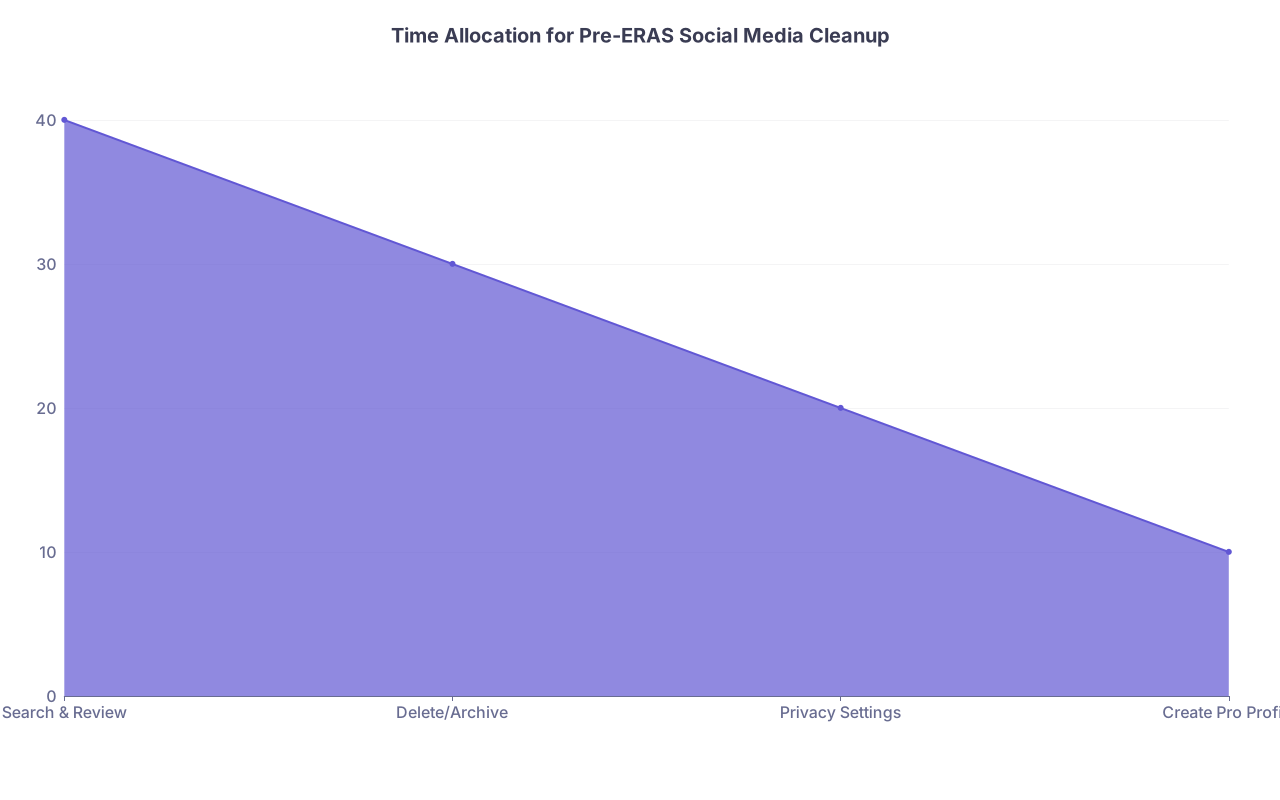
| Category | Value |
|---|---|
| Search & Review | 40 |
| Delete/Archive | 30 |
| Privacy Settings | 20 |
| Create Pro Profile | 10 |
Search yourself like a suspicious PD.
- Google your name + “MD,” “medical student,” your city.
- Try your common usernames.
- Look at images, not just links.
Audit every account.
- Instagram, TikTok, Twitter/X, Facebook, Reddit, old blogs, gaming accounts.
- Scroll far back. Freshman year. High school. Yes, that far.
Delete, don’t just hide, anything that triggers even mild discomfort.
- Patient stories, even “de‑identified.”
- Drunk, high, reckless images.
- Mocking or hostile posts about colleagues, patients, or groups.
- Overly dramatic “I hate medicine” rants.
Lock down what you don’t want to sanitize.
- Set to private.
- Remove your full name and med affiliation from bios.
- Change profile pics that make you instantly recognizable.
Create one clean, professional anchor.
- Likely LinkedIn or a simple personal website with your CV.
- If you keep Twitter/X public, ensure recent posts are neutral or professionally aligned.
Set a rule for yourself during interview season.
- No rage‑posting after bad interviews.
- No subtweeting programs or faculty.
- No live‑posting from away rotations ranting about the culture or people.
If you’re tempted to defend an iffy post with “But context…”, just stop. Selection committees won’t email you for context. They’ll move on to the next equally qualified applicant who doesn’t require extra explanation.
Key Takeaways
Assume every post, story, and “private” rant can be seen by a program director and judged without context. If you would hate that, do not post it.
The biggest career killers: anything patient‑related, contempt for staff or patients, reckless substance content, and hostile or discriminatory language.
Clean up now, set strict boundaries for what you share, and remember: the match is stressful enough without handing programs extra reasons to say no.