You are here
Your ERAS application is finally in. You triple-checked your experiences, polished your personal statement, begged for that last LOR. Then you log back in and see what the program sees: a tiny square image in the corner.
Your photo.
The one you rushed to take at 11:30 p.m. against your apartment wall, because “it’s just a headshot and they only care about stats anyway.”
On the other side of the screen, a PD is skimming 200 applications in an hour. They click. A blurry, dim, off-center image appears. Or worse—your friend’s wedding photo with a cropped-out bridesmaid hand still on your shoulder.
If you think that does not matter, you’re wrong.
Your photo will not match you into residency. But a bad one can quietly shove you into the “no” pile before anyone reads your beautifully crafted application.
Let’s walk through the mistakes that make you look less professional than you actually are—and how to avoid sabotaging yourself with a 2x2 inch image.
Mistake #1: Treating the Photo Like a Throwaway Detail
The first big mistake is philosophical: assuming “programs don’t care about the photo.”
I’ve heard this line from applicants:
“They’re not supposed to judge us on looks anyway.”
“They only care about scores and experiences.”
“The photo is just for recognizing us at interviews.”
That’s not how human beings work.
On review day, committees are tired. They’re moving fast. The headshot becomes a visual anchor: “Oh yeah, that’s the research-heavy guy who worked in cardiology,” “that’s the applicant who rotated here.” When that visual anchor screams “sloppy,” it bleeds into how they unconsciously feel about your entire application.
Here’s what happens when you treat your photo as an afterthought:
- You procrastinate and end up using a random existing photo.
- You skip basic preparation (hair, attire, lighting, background).
- You accept the first semi-okay shot instead of checking for details.
Do not do this.
Plan your headshot with the same seriousness you’d give your personal statement. No, it doesn’t need three months of work. It does need intentionality and 30–60 focused minutes of effort.
Mistake #2: Using Casual, Social, or Cropped Photos
If you remember nothing else, remember this:
If the original photo was taken for social media, it probably should not be used for ERAS.
The usual offenders:
- A wedding photo with your friend’s arm still half-cropped around your waist
- Beach or vacation photos (“but I’m wearing a collared shirt!”)
- A picture from a party with the background blurred—but you can spot the bar lights
- A car selfie where the seatbelt is clearly visible
- Group photo cropped so an extra ear, hair, or hand is peeking into the frame
I’ve seen all of these. Program staff laugh about them in the workroom. Not maliciously—just with that “oh no, another one” tone.
Here’s the problem: a casual or obviously repurposed photo doesn’t just say “I’m relaxed.” It says:
- I didn’t respect this process enough to do it properly.
- I don’t understand basic professional norms.
- I may bring that same lack of boundaries into patient care and team settings.
You’re applying to professional training, not submitting a dating profile.
Do this instead:
- Take a dedicated headshot session—even if it’s just with a friend and a phone.
- Wear professional attire.
- Use a neutral, uncluttered background.
- Frame the image so it clearly reads as a professional portrait, not a crop job.
If you can still tell where you originally were (“Oh, that’s the hotel ballroom at my cousin’s wedding”), it’s the wrong photo.
Mistake #3: Poor Lighting and Blurry Images
Lighting is where most DIY headshots go to die.
Common disasters:
- Heavy overhead lighting casting deep eye shadows
- Dim apartment light making your skin look dull and gray
- Harsh window light blowing out one side of your face
- Yellow indoor lighting that makes the whole photo look dirty
- Blurry or slightly out-of-focus shots that scream “I didn’t bother to retake it”
And yes, they notice. Even in a tiny ERAS thumbnail.
Programs won’t say, “We rejected them because their photo is dim and uneven.” But they will feel something: this looks sloppy, low-effort, not polished. That feeling doesn’t help you when your application is borderline.
If you’re not hiring a photographer, at least solve the lighting problem. Use daylight and a steady hand.
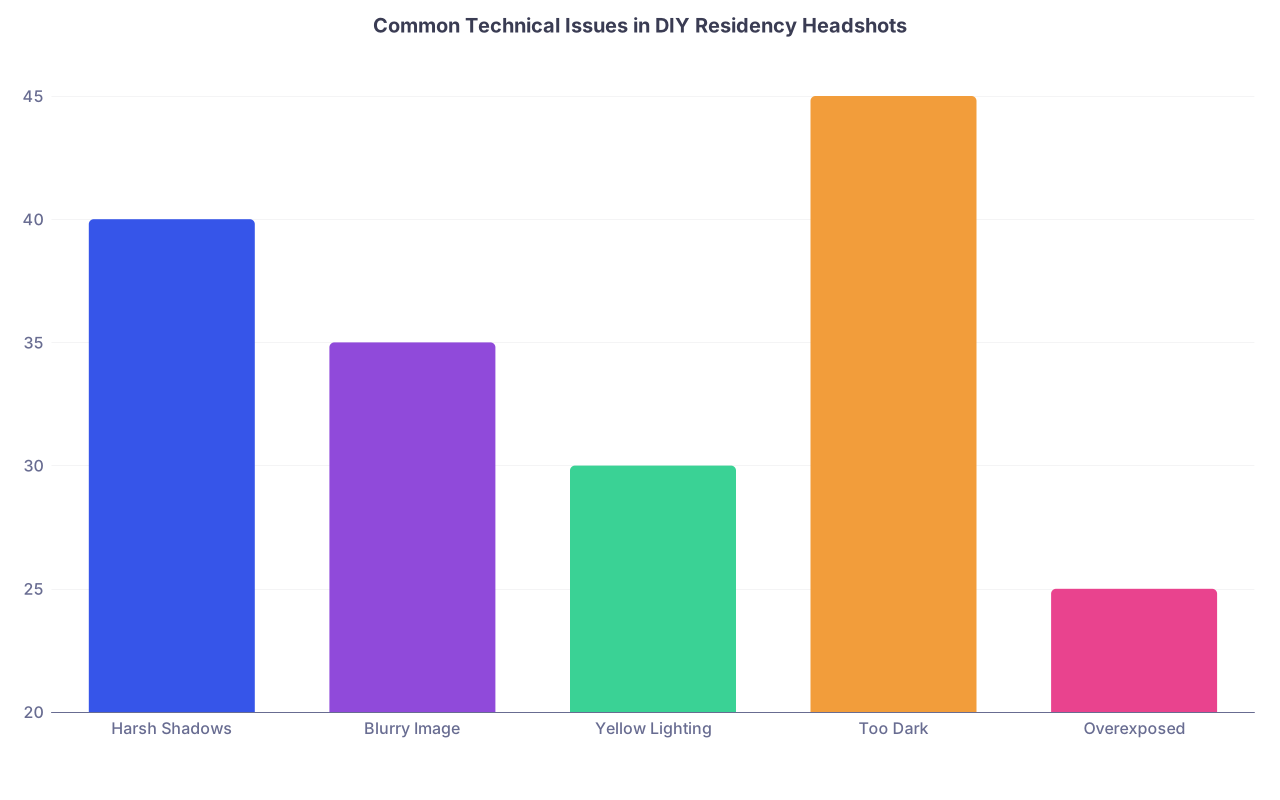
| Category | Value |
|---|---|
| Harsh Shadows | 40 |
| Blurry Image | 35 |
| Yellow Lighting | 30 |
| Too Dark | 45 |
| Overexposed | 25 |
How to avoid this mistake:
- Shoot during daytime with indirect natural light.
Stand facing a window, a few feet back, not with the window behind you. - Avoid overhead fluorescent only. It carves dark hollows under your eyes.
- Have the photographer (even if it’s your roommate) brace their arms or use a tripod/stack of books to avoid motion blur.
- Take multiple shots and zoom in on your face on a larger screen. If it’s soft or fuzzy at 100%, retake it.
This isn’t about being glamorous. It’s about looking clear, alert, and competent.
Mistake #4: Distracting or Inappropriate Backgrounds
I’ve seen ERAS photos with:
- A kitchen fridge in the background
- Piles of books and laundry
- A random dorm room poster half-visible
- Clinical settings with other people blurred in the back (HIPAA, anyone?)
- Conference posters, anatomy labs, hospital hallways—trying too hard to look “medical”
You think you’re signaling “I’m hardworking and academic.” The viewer sees clutter. And risk. And poor judgment.
The background should be boring. Almost invisible. If anyone on a selection committee ever comments on your background, you failed the assignment.
Don’t make these mistakes:
- Using a busy room just because it’s where you happen to be studying
- Standing in front of blinds or a window with visible street detail
- Having mixed colors / furniture lines cutting through your head or shoulders
What works:
- Plain wall (light gray, beige, off-white works better than stark white)
- Slightly textured wall if it’s neutral and not patterned
- A simple, unobtrusive backdrop (even a bedsheet ironed or pulled tight, if you’re desperate—but do it neatly)
If you insist on a “medical” look, keep it clean: solid background, maybe the edge of a neutral hallway blurred beyond recognition. But honestly, neutral wall wins 99% of the time.
Mistake #5: Unprofessional Attire and Grooming
I should not have to say “don’t wear a hoodie in your ERAS photo,” but here we are. People do it.
Or they wear:
- A wrinkled shirt that was clearly pulled from a laundry pile
- An ill-fitting blazer two sizes off
- A loud, busy tie or bright neon top that dominates the frame
- Scrubs, thinking “I’m applying to residency, this shows I belong”
Here’s the harsh truth: your photo is not where you showcase your personal fashion sense. It’s the place where you demonstrate you understand baseline professionalism in a conservative field.
Common attire mistakes:
- Wrinkled clothing
- Low-cut tops or anything that could be read as “going out” wear
- Overly bright or neon colors
- Distracting jewelry (large hoops, chunky necklaces, or noisy accessories)
- Excessive makeup or heavy contouring that reads more “night out” than “clinic”
Make it easy for them to see you as a colleague on day one of orientation. That’s the bar.
For most people:
- Dark blazer or suit jacket (navy, charcoal, black)
- Solid or subtly patterned shirt/blouse
- Minimal jewelry
- Clean, neat hair; facial hair groomed and intentional
And no, you do not need a white coat in the photo. It can actually look try-hard or staged, especially if the coat is wrinkled or covered in badges.
Mistake #6: Over-editing, Filters, and “Perfecting” the Image
You are not editing an Instagram selfie. You are presenting yourself as a physician in training.
Red flags that scream “I edited this too much”:
- Skin so smooth it looks plastic
- Teeth so white they glow
- Over-brightened eyes that look unnatural
- Obvious background blurring that halos around your head
- Filters that shift the whole color tone (cool blue or orange overlay)
Programs don’t want glamour. They want reality, clean and professional.
Over-editing creates a different kind of problem: trust. If you’ll heavily alter a simple headshot, what else are you willing to “polish” beyond accuracy? It’s subtle, but people do make that jump.
Basic corrections are fine:
- Slight brightness/contrast adjustment
- Cropping to better frame the head and shoulders
- Very minor color correction if the image is extremely yellow or blue-tinted
But if someone could look at the photo and say, “What filter did they use?”—you’ve gone too far.
Mistake #7: Bad Cropping and Awkward Framing
You’d think cropping would be easy. It isn’t, apparently.
Typical framing errors:
- Head cut off at the top
- Photo zoomed out so far your torso and half your arms are visible, tiny face
- Taken from too low (up-the-nose angle)
- Taken from too high (you look small, like a child)
- Tilted horizon or weird diagonal that looks like you’re leaning
Program directors don’t care about the artistic aesthetic of the shot. They want a clear, straightforward, face-forward headshot. That’s it.
Aim for:
- Head and upper shoulders visible
- Your eyes roughly in the top third of the frame
- Camera at eye level, not above or below
- You facing the camera, maybe a very slight angle if natural, but not a full three-quarters turn
If you could imagine this same framing as a hospital ID badge picture and it would look normal, you’re in the right range.
Mistake #8: Inconsistent or “Off-Brand” Expression
Yes, you can sabotage yourself with your facial expression alone.
Two common extremes:
- The mugshot
- No smile, tense jaw, furrowed brow
- You look annoyed, exhausted, or outright hostile
- The “weekend at brunch” grin
- Huge exaggerated smile, squinty eyes, head tilted like you’re with friends
You’re aiming for “approachable, competent colleague,” not “I hate being here” or “I’m trying way too hard.”
The mistake people make is not checking how their habitual “photo face” reads in a professional context. They reuse their default social media smile or their “I’m serious” stare and never ask, “Would I want this person walking into my patient’s room?”
Do this:
- Practice a neutral, slight smile in a mirror. Not a tooth-baring grin if that feels forced. Just a soft, genuine expression.
- Take 10–20 shots with slight expression changes and review them later with someone you trust to be blunt.
- Avoid exaggerated eyebrow raises or head tilts. That can read as flippant or childish.
You don’t need to look thrilled. You do need to look awake, present, and not miserable.
Mistake #9: Ignoring Cultural and Contextual Norms
This is where international medical graduates often get tripped up, and sometimes U.S. grads too.
What’s considered “professional” in one country or culture isn’t always read the same way by U.S.-based residency programs. Doesn’t mean you have to erase yourself. But you do need to be aware of how your image will be interpreted by people who don’t know you.
Pitfalls I’ve seen:
- Extremely formal, passport-style photos with no hint of a smile, looking like a visa application
- Traditional or cultural clothing that’s beautiful but clashes with conservative U.S. expectations if styled more like a celebration than workplace attire
- Heavy jewelry or accessories that are normal socially but read as “party” in a U.S. medical context
You don’t have to conform to a single rigid template. But you should run your planned outfit and photo style past at least one person who understands U.S. residency norms—ideally a faculty member, resident, or advisor.
If they hesitate, listen. Adjust.
Mistake #10: Skipping Professional Help When You Obviously Need It
No, you don’t have to spend $500 on a branding photographer. But some of you are trying to DIY with:
- An ancient phone camera
- No access to good natural light
- Zero photography sense
- And no one around who will give honest feedback
That combination is dangerous.
I’ve seen applicants with immaculate CVs and phenomenal scores use a photo that looks like a grainy webcam capture from 2008. It punches a hole in the image of excellence they built everywhere else.
Look at your honest constraints:
- If your phone camera is decent and you have a friend with a bit of an eye, fine, DIY.
- If every picture you take of yourself looks awkward and off, consider paying for a straightforward professional headshot session. Not glamour shots. Just competent lighting and composition.
A simple, $100–150 session with a local photographer who’s done corporate or LinkedIn photos will usually blow any rushed DIY job out of the water. The cost per residency program you’re applying to? Pennies.
| Option | Pros | Cons |
|---|---|---|
| DIY with phone | Free, flexible, quick | High risk of lighting/cropping errors |
| Friend with camera | Low cost, more control | Quality depends on their skill |
| Campus photo service | Familiar with student needs | Sometimes generic, rushed |
| Professional headshot studio | Best lighting/composition | Higher cost, need scheduling |
If your gut says, “My photos always come out weird,” stop fighting it. Get help.
Mistake #11: Not Matching Photo to Your Overall Application Story
Here’s a subtle one.
Your personal statement: thoughtful, reflective, mature.
Your experiences: long-term commitments, serious responsibilities.
Your LORs: “calm under pressure, reliable, professional.”
Then your photo shows up: tilted selfie vibes, flashy outfit, too-casual energy.
There’s dissonance.
The selection committee might not articulate it, but they feel it: something doesn’t line up. Either the writing is over-polished compared to reality, or the photo is undercutting your whole narrative.
Your photo doesn’t have to tell a story. It does need to not contradict the story you’re already telling.
Quick check:
- Would this photo look out of place on a hospital’s website under “Our Residents”?
- If your PD introduced you on day one using this photo on a slide, would you feel proud or slightly embarrassed?
If the answer isn’t obvious pride, fix the photo.
Mistake #12: Waiting Until the Last Minute
Last one, but it feeds all the others.
The “late-night ERAS upload panic shot” is a distinct species. You can spot it instantly: uneven lighting, rushed clothing choice, slapped-together background, mediocre focus.
Why it happens:
- You convince yourself you’ll get “real photos” later and forget.
- You underestimate how long it takes to set up, shoot, select, and maybe lightly edit.
- You don’t leave time to get outside feedback and reshoot.
Then the deadline looms, and you grab whatever you can.
Fixing this is straightforward:
- Put “Headshot” on your residency prep checklist three months before application submission.
- Aim to have a final photo locked in at least 2–3 weeks before ERAS opens.
- Leave time for at least one reshoot if the first batch looks off.
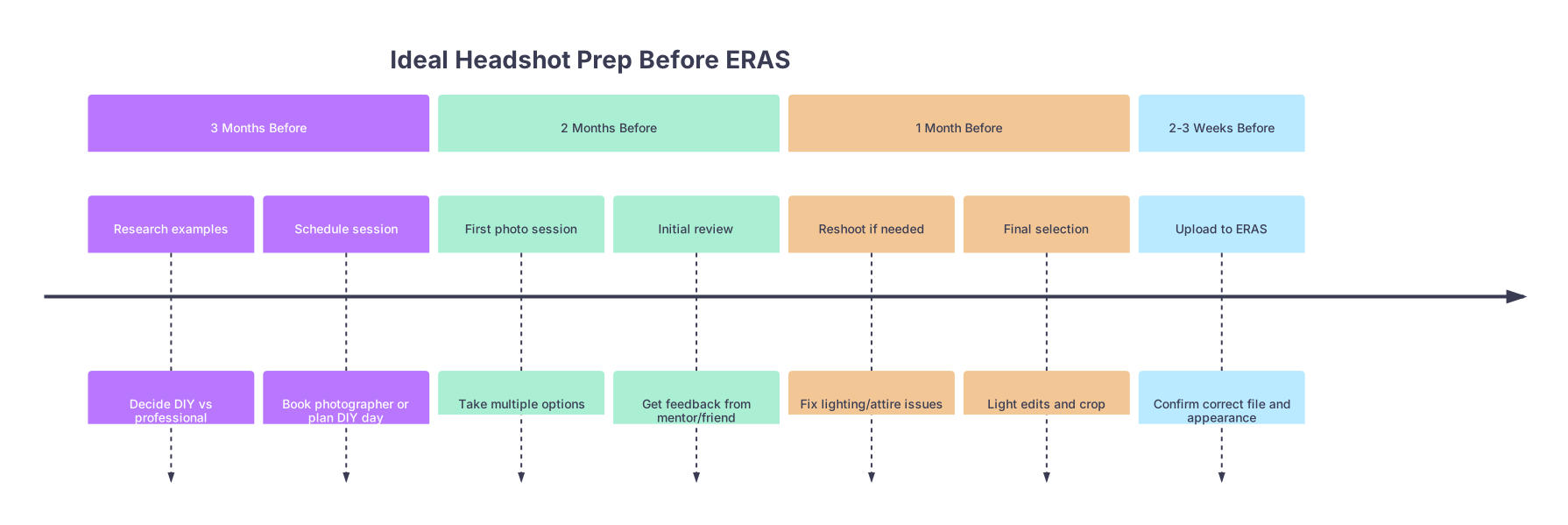
| Period | Event |
|---|---|
| 3 Months Before - Research examples | Decide DIY vs professional |
| 3 Months Before - Schedule session | Book photographer or plan DIY day |
| 2 Months Before - First photo session | Take multiple options |
| 2 Months Before - Initial review | Get feedback from mentor/friend |
| 1 Month Before - Reshoot if needed | Fix lighting/attire issues |
| 1 Month Before - Final selection | Light edits and crop |
| 2-3 Weeks Before - Upload to ERAS | Confirm correct file and appearance |
If you’re reading this and it’s already the week before ERAS opens, don’t panic. Just prioritize this now. One focused afternoon is better than a frantic 5-minute hallway photo on deadline night.
Bottom line: Do not let a 2x2 inch mistake cost you
Your residency photo won’t get you ranked #1. But it can quietly push you into the “no” pile when you didn’t need to be there.
Three points to walk away with:
- Treat your headshot as part of your professional brand, not an afterthought. No social crops, no casual selfies, no cluttered backgrounds.
- Aim for simple, clean, and competent: good lighting, neutral background, professional attire, clear expression. Boring is good here.
- Give yourself time. Plan, shoot, get feedback, and be willing to redo it. The cost—in time or money—is tiny compared to the damage a bad photo can do to an otherwise strong application.
Do not let a lazy, rushed photo be the weakest part of your file. You’ve worked too hard to have your first impression be “they didn’t care enough to look professional.”