
The worst red flags in ERAS aren’t always the ones you think. And the ones you’re terrified of? Some of them we barely care about—if you handle them right.
I’ve sat in those rooms when we pull up an application and someone says, “Alright, what’s the story here?” That’s code for: we’ve seen a red flag. Now we’re deciding if you’re a risk… or just human.
Let me walk you through what actually happens in that room when program directors see red flags, and how your file lives or dies in those next 60–90 seconds.
How PDs Really “See” Red Flags (Not How You Think)
Most applicants imagine a careful, philosophical review of every red flag.
Reality: it’s rapid pattern recognition. Triage. Risk management.
We are not hunting for red flags. We’re asking one brutal question: “Can I trust this person with my patients at 3 a.m.?”
Here’s the unspoken hierarchy:
| Category | Typical Reaction |
|---|---|
| Professionalism | Hard stop / usually fatal |
| Dishonesty | Fatal |
| Pattern of failure | High concern |
| Single failure | Wary but open |
| Mental health gap | Depends on explanation |
| Personal hardship | Often forgiving |
We scan in a fixed order, almost reflexively:
- Education history (gaps, transfers, LOA).
- Exams (Step/COMLEX attempts, fails, big jumps).
- Clerkship grades/failed rotations.
- MSPE “code words” and professionalism notes.
- Personal statement and experiences (do they own their story or hide it?).
Red flags don’t automatically kill you. What kills you is a red flag plus either no explanation, a weak explanation, or clear lack of growth.
USMLE / COMLEX Fails: What We Actually Say in the Room
You think a failed Step is the end. It’s not. But it is the beginning of a very specific conversation.
I’ve heard variations of all of these:
- “Step 1 fail, Step 2 247. Okay, what happened?”
- “Two attempts on 2 — we’re not touching this with a ten-foot pole.”
- “COMLEX fail with no comment anywhere. Hard pass. They’re hiding.”
One Fail vs Multiple Fails
One exam failure is a red flag. More than one is a liability.
Here’s the internal calculus:
Single fail + strong comeback:
“They got punched in the mouth and came back swinging. Probably safe if everything else is stable.”Single fail + mediocre retake:
“They barely scraped over the line. Are they going to struggle with boards in residency?”Multiple fails:
“We already know they have trouble passing standardized tests. I do not want to be doing remediation every six months.”
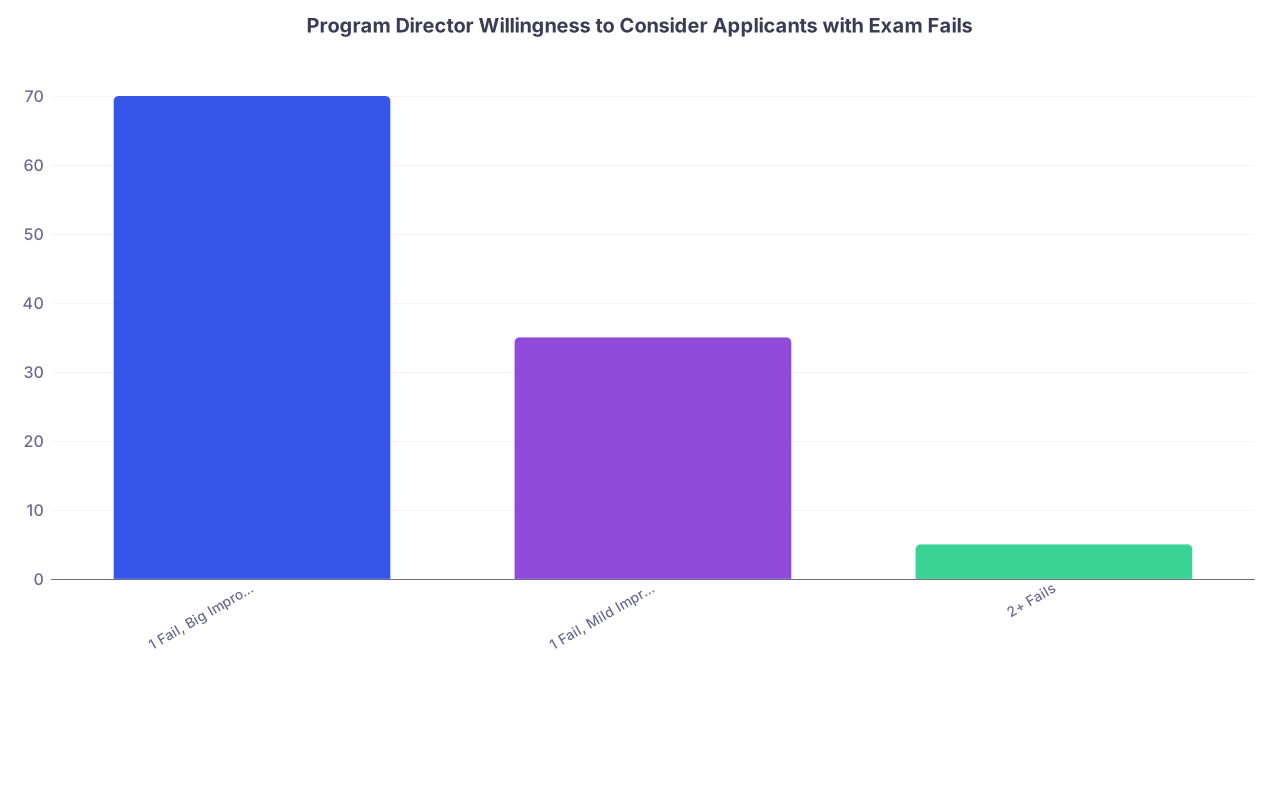
| Category | Value |
|---|---|
| 1 Fail, Big Improvement | 70 |
| 1 Fail, Mild Improvement | 35 |
| 2+ Fails | 5 |
Those percentages are roughly how many PDs will consider you, not rank you high. It’s brutal, but that’s the real attitude in most mid-to-top tier programs.
How Your Explanation Changes Everything
What PDs hate more than a fail? A fail wrapped in excuses.
On ERAS, your options:
- You address it clearly in the PS or an addendum.
- Your dean’s letter/MSPE addresses it.
- You pretend it didn’t happen and hope we don’t notice. (We always notice.)
The internal reaction:
Strong explanation:
“Failed Step 1 by 2 points. Mother diagnosed with cancer during dedicated, commuting for treatments. Took 6 months, reorganized life, came back with a 244 on retake.”
Response: “Okay. Life hit them hard, and they proved they can recover.”Vague nonsense:
“There were personal challenges during this time.”
Response: “So they either can’t own it or they don’t understand it. Pass.”No explanation at all:
“Why is everyone pretending this didn’t happen?”
Response: “If they can’t communicate about this now, how will they communicate complications and errors as a resident?”
If your school offers a short addendum section or your dean’s office will include a contextual note, use it. We like seeing a coherent narrative better than silence.
Failing a Rotation or Clerkship: The Red Flag That Haunts You
When we see “Fail – Internal Medicine” or “Remediation – Surgery,” the room usually goes quiet for a second. Because now we’re not just talking about exams. We’re talking about behavior. Performance. Team fit.
The immediate question is always: “Why?”
The Three Types of Failed Rotations
From what I’ve seen, they fall into three buckets:
Knowledge / performance issue
Example: Shelf scores in the gutter, daily notes poor, slow on the uptake.
Reaction: “Can we teach this person up, or will they sink?”Professionalism issue
Chronic lateness, bad attitude, boundary problems, disrespectful with nurses.
Reaction: “Absolutely not. I don’t want to be deposing in court over something this person did.”Personality clash / toxic site
Preceptor from hell. Known malignant rotation. Everyone knows it.
Reaction: “Okay, I want to see if this is a one-off or part of a pattern.”
We cross-reference the MSPE for language like “required extra supervision,” “required close guidance,” or “needed more direction than peers.” These are code phrases. They’re there for liability reasons. PDs read them exactly that way.
What Saves You (Sometimes)
If you failed a rotation, the following things can rescue you:
- You remediated and honestly described what changed.
- You have a strong letter in that same specialty later saying you improved.
- The MSPE explicitly explains the context and your growth.
- There are zero other professionalism questions anywhere in the file.
What absolutely buries you:
- Failed a rotation + vague PS + no mention anywhere.
- Failed a rotation + poor Step 2 + no specialty-specific letter.
- Multiple “borderline” comments from different rotations.
One PD I know in IM skimmed a file, saw “failed medicine clerkship,” read the paragraph, and said: “If they can’t pass med as a med student, they’re going to drown here. Next.” That’s the vibe in busy programs.
Leaves of Absence and Gaps: How PDs Read the Silence
You’re much more scared of a leave of absence than you need to be. What spooks PDs is mystery, not a documented break.
I’ve seen LOAs for:
- Severe depression with hospitalization.
- Family illness where the student became primary caregiver.
- Pregnancy and complicated postpartum course.
- Step 1 meltdown and needing more time.
- Completely non-medical personal chaos (divorce, legal stuff, financial disaster).
The LOA itself is not the main problem. The combination of LOA + no real explanation is.
When we see:
“Leave of Absence: 8/2021–2/2022” with no narrative?
The room: “Health? Legal? Substance? Discipline? What are we not being told?”“Leave of Absence for personal medical reasons; returned in good standing and completed remaining coursework on schedule.”
The room: “Okay. They got sick. It happens.”
Most PDs are more understanding about LOAs for physical or mental health than you’d expect, especially post-COVID. What they need is reassurance that:
- The issue is treated or managed.
- You’ve been stable since.
- There’s no ongoing pattern of instability.
If your MSPE or a short personal statement paragraph gives that arc—problem → action → stability—many programs will move on without dwelling.
Professionalism Strikes: The Nuclear Red Flag
This is the one category where there really is almost no forgiveness.
If I see:
- “Unprofessional behavior”
- “Boundary concerns”
- “Concerns raised about honesty/documentation”
- “Required professionalism remediation”
My brain goes straight to: “Can I trust you with my patients and my staff?”
You can recover from:
- A bad test day.
- A rough year.
- Family chaos.
- A mental health crisis.
You almost never recover from:
- Documented dishonesty.
- Harassment or boundary violations.
- Patterns of disrespect or aggression.
There’s a reason: residency multiplies stress. It doesn’t fix character.
If there’s a professionalism issue in your file and your school still graduated you, some PDs will consider you—but they will want to see:
- A crystal clear description of what happened.
- Concrete steps you took to change.
- Explicit statements from faculty that you improved and are now reliable.
Even then, you’re swimming upstream. Be realistic. This is where applying more broadly and including less competitive programs and community sites is not optional.
The MSPE and “Code Words” You Don’t Realize We Notice
You think the MSPE is just a recitation of your CV. It’s not. It’s where deans and clerkship directors bury the stuff they don’t want to say outright.
Experienced PDs look for specific phrases:
- “Required more guidance than peers” → struggled significantly.
- “Became more reliable over time” → was not reliable for a while.
- “Needed close supervision” → was unsafe or close to it.
- “Occasionally had difficulty with time management” → chronic lateness/missed tasks.
- “Responded well to feedback” → got a lot of negative feedback.
I sat in a meeting where a faculty member read, “Student’s performance improved with feedback over the course of the rotation,” and said, “Translation: they were a mess the first two weeks.”
We also look at comparative phrases:
- “Among the top students I have worked with in the last year.”
- “One of the strongest students I’ve worked with in the last five years.”
If everyone else has “top” language and you have “solid,” “reliable,” “hardworking,” that’s… fine. But it’s not great if your application also has a red flag.
The MSPE can either soften your red flag (“matured significantly after early struggles”) or make it worse (“ongoing concerns”). You don’t control this document, but you should at least know how it’s being read.
How Red Flags Play Out on the Rank List
Here’s the part nobody tells you: a red flag doesn’t always block an interview. But it absolutely affects where you end up on the rank list.
Think of it as three layers:
Screening to offer an interview.
Quick decision. Is this worth a spot?Post-interview discussion.
“I liked them, but how do we feel about that Step fail / LOA / remediation?”Final rank meeting.
This is where you either float or sink.
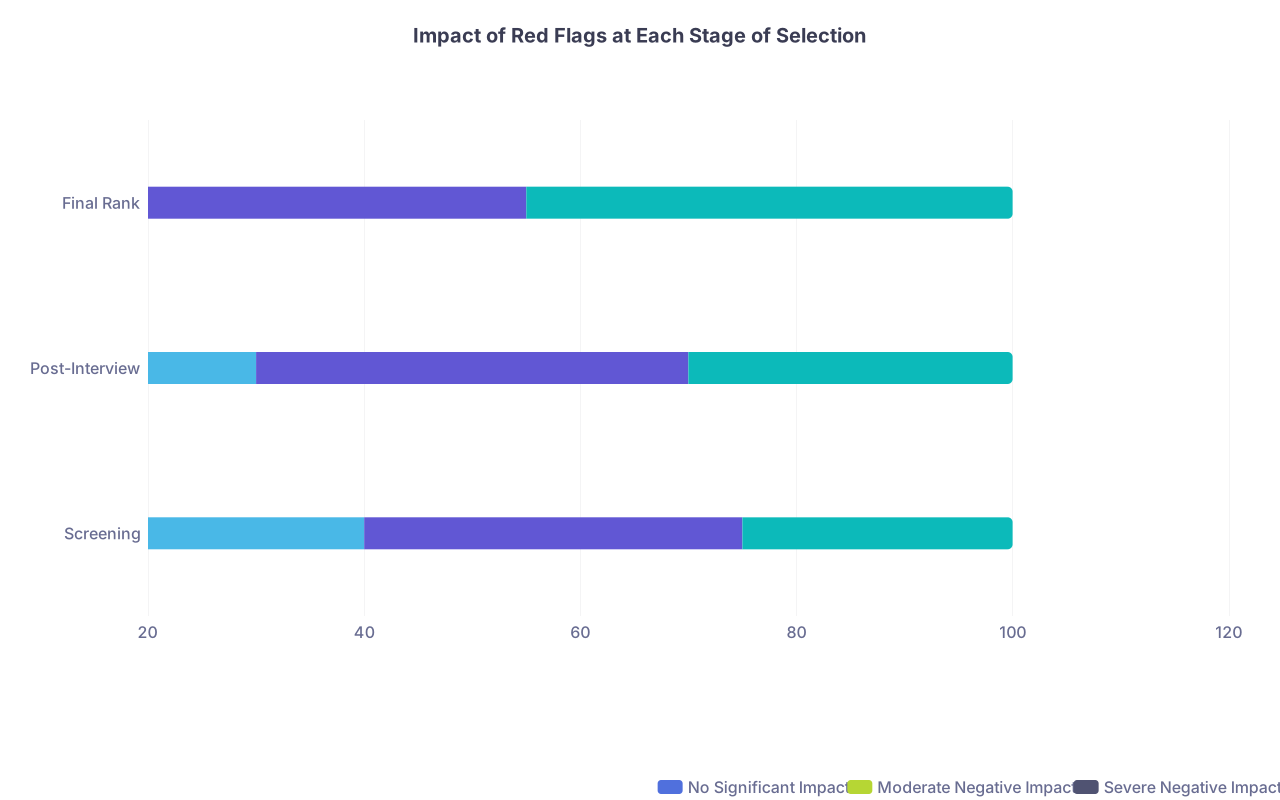
| Category | No Significant Impact | Moderate Negative Impact | Severe Negative Impact |
|---|---|---|---|
| Screening | 40 | 35 | 25 |
| Post-Interview | 30 | 40 | 30 |
| Final Rank | 20 | 35 | 45 |
Inside the actual rank meeting, the dialogue sounds like this:
- “I really liked her. She interviewed well. But that Step 1 fail and barely passing 2… are we setting ourselves up for a board failure?”
- “He seems great, but remember he failed surgery and then wants general surgery. That’s a problem.”
- “She had a LOA for depression but everything since is rock solid. I’m fine with that.”
- “Great personality, but three narratives about unprofessional comments to staff? No way.”
Most programs operate on a risk-averse principle: if they have a stack of good, clean files, they don’t need to take a risk on you unless there’s something exceptional in your favor—killer letters, huge research portfolio, amazing interview, or you fill a specific need.
How to Handle Red Flags So PDs Don’t Automatically Toss You
You cannot erase a red flag. But you can control how it lands.
Here’s what actually helps from a PD standpoint:
1. Own it. Directly.
Dodging is fatal. A concise, direct explanation signals maturity.
Bad: “I faced personal challenges during this time and learned resilience.”
Better: “During my second year, I struggled with untreated anxiety, which contributed to failing Step 1. I sought professional help, changed my study structure, and improved from a failing score to 242 on my retake. Since then I’ve passed all subsequent exams on the first attempt.”
We don’t need trauma porn. We need cause → action → result.
2. Show a clean trajectory afterward
The thing PDs trust most is pattern.
Failed Step 1 → solid Step 2 → strong clerkship grades → strong letters.
Story: They figured it out.LOA in M2 → all on-time completions, good comments, no more gaps.
Story: Stabilized.Intro professionalism issue → documented remediation → later comments praising reliability.
Story: Possibly safe, depending on severity.
If your red flag is followed by more chaos, your chances plummet. Period.
3. Get letters that quietly address the concern
The most persuasive thing in your file isn’t your explanation. It’s a respected faculty member vouching for you.
What PDs love reading:
- “After returning from LOA, she was among the most prepared and consistent students I’ve worked with.”
- “He failed the surgery clerkship early in third year but remediated and has since functioned at or above the expected level for an incoming intern.”
- “There were early concerns about time management, which he addressed; on this sub-I he was always prepared, on time, and reliable.”
If your letter writers know your story, they can frame your growth without turning the entire letter into damage control.
Some Red Flags Matter Less Than You Think
You’re worried about things most PDs don’t lose sleep over.
Things that usually are not dealbreakers by themselves:
- A single shelf exam that was low but passing.
- One pass/fail preclinical course remediated early.
- Switching specialties, as long as your story is coherent.
- An LOA with a clear, non-dramatic explanation and stable performance after.
- Being “average” in research for non-research-heavy programs.
I’ve seen applicants obsess over a six-month LOA for a physical health issue while completely ignoring the fact that their personal statement dodges a Step 2 fail. They’re chasing the wrong fire.
If you’re going to spend emotional energy anywhere, focus on:
- Exam failures.
- Failed or remediated clerkships.
- Documented professionalism issues.
- Unexplained multi-month gaps.
Those are the things that trigger real conversations in selection meetings.
When You Actually Should Rethink Your Strategy
Sometimes the issue isn’t “how do I explain this red flag?” but “am I applying to the right tier and specialty at all?”
Blunt truth: some red flag combinations will keep you out of the most competitive programs, no matter how you spin them.
Red-flag-heavy profiles that need a strategy reset:
- Multiple Step/COMLEX failures + weak retake scores.
- Failed core clerkship + mediocre letters in that same specialty.
- Documented professionalism issue + no clear evidence of reform.
- International grad with long gaps + exam failures.
For these, the smarter moves are:
- Apply more broadly and heavily to community and lower-tier academic programs.
- Consider adjacent specialties with more open spots (e.g., FM, IM, psych) instead of ultra-competitive ones (derm, ortho, plastics, ENT, etc.).
- Use prelim or transitional year strategically—if you understand the risks and have a plan.
I’ve seen applicants waste cycles chasing a specialty that was closed to them once their record was finalized. No one has the guts to tell them directly. So I will: sometimes your file has to change your strategy.
Visualizing How PDs Weigh Different Red Flags
Here’s roughly how different red flags stack up in a PD’s mental risk meter:
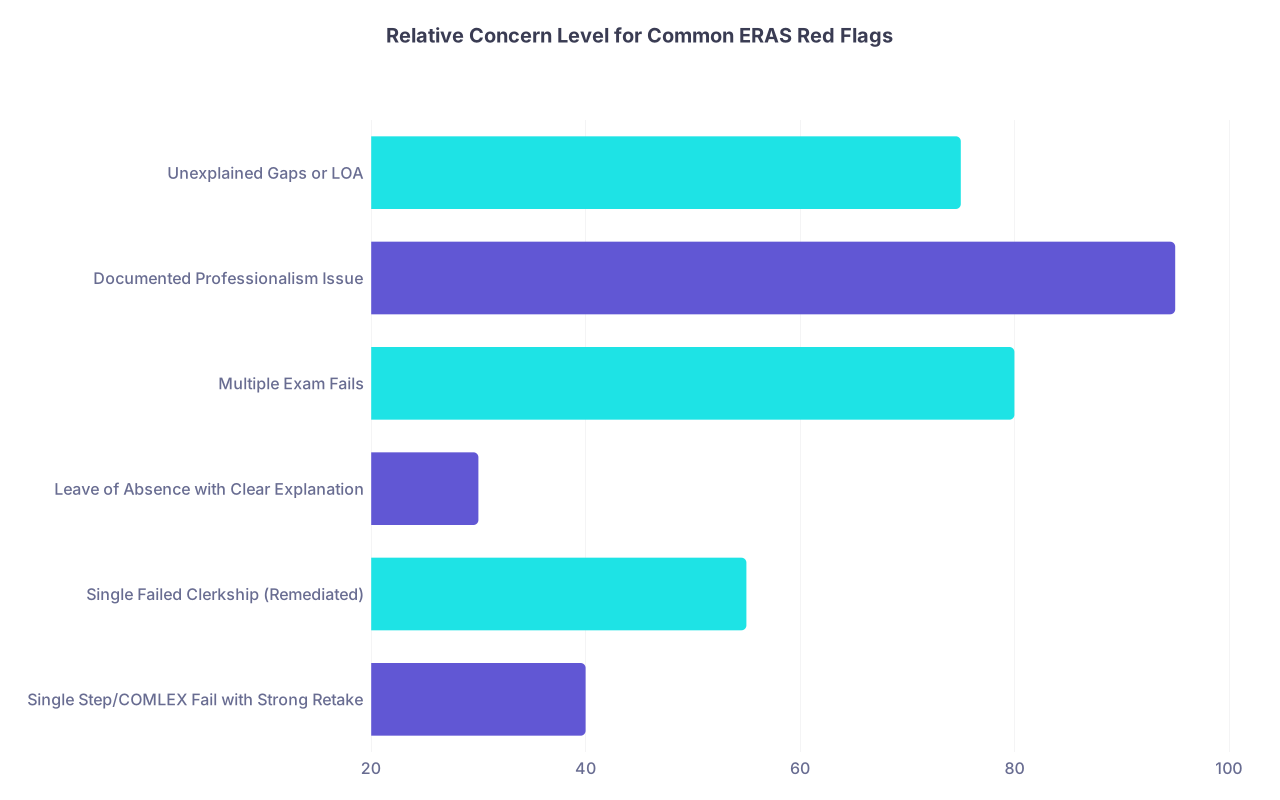
| Category | Value |
|---|---|
| Single Step/COMLEX Fail with Strong Retake | 40 |
| Single Failed Clerkship (Remediated) | 55 |
| Leave of Absence with Clear Explanation | 30 |
| Multiple Exam Fails | 80 |
| Documented Professionalism Issue | 95 |
| Unexplained Gaps or LOA | 75 |
Values here are a rough “concern score” out of 100. Nobody publishes these numbers. But they’re close to how people talk behind closed doors.
FAQ: Red Flags and ERAS
1. Should I mention my red flag in my personal statement, or will that just highlight it?
If the red flag is major—exam fail, LOA, failed rotation—and there’s no clear explanation elsewhere, you should address it briefly and maturely. Two to four sentences, max. Ignoring a big red flag doesn’t make it disappear; it just makes you look evasive. If your MSPE or dean’s letter already explains it well, you can keep your PS focused on who you are now and only allude to the past if it helps your growth narrative.
2. I failed Step 1 but passed Step 2 with an average score. Am I done for competitive specialties?
For most highly competitive specialties (derm, ortho, neurosurgery, plastics), yes, a Step 1 fail + just-average Step 2 effectively shuts most doors, especially without extraordinary research or connections. For moderately competitive ones (EM, anesthesia, radiology), you’re not automatically done, but you need realistic expectations and a very strong overall application. You’re absolutely still in the game for IM, FM, psych, peds, and many community programs if the rest of your file is solid.
3. How much detail should I give about a mental health–related LOA?
You do not have to disclose diagnoses. PDs aren’t fishing for that. What they want is reassurance about stability and insight. Something like: “I took a medical leave during my second year to address a mental health condition. With treatment and support, I returned to full-time study and have completed all subsequent coursework and rotations on schedule.” That’s enough. Over-disclosing can make readers focus more on the drama than the resolution.
4. Can a stellar interview overcome a red flag?
A great interview can move you from “no” to “maybe” or from “low on the list” to “middle of the list.” It almost never turns a high-risk candidate into a top-ranked one if the red flag is serious (multiple fails, professionalism, failed core clerkship in that specialty). The interview mainly confirms whether your written explanation matches the person we see in front of us. It’s a tiebreaker, not a magic eraser.
5. Is it ever better to let my school handle the explanation instead of me?
If your school has a standardized way of documenting LOAs, exam failures, or professionalism issues in the MSPE, and you trust your dean’s office, letting them provide the primary explanation can be helpful. It can sound more objective coming from them. Your job then is to align with that narrative: show in your PS and interviews that you understand what happened, took responsibility, and grew. What you should not do is contradict the school’s version; that sets off alarm bells about your judgment and honesty.
Key takeaways:
Red flags don’t automatically end your chances, but how you handle them absolutely decides whether a PD sees you as a risk or a rebound story. Own the problem, show a clean trajectory afterward, and get credible people to vouch for your growth. And be honest with yourself: sometimes the right move isn’t hiding your red flag—it’s adjusting your target so someone is actually willing to bet on you.