You just finished a full interview day. Your cheeks still hurt from smiling on Zoom. You’re exhausted, your suit is back on the hanger, and you’re staring at a blank email draft with the subject line: “Thank you.”
You’ve heard conflicting things:
One resident told you, “No one cares about thank‑you notes.”
Another swore, “My PD literally mentioned my email when I matched.”
So you decide to play it safe and send them.
This is where people screw it up.
Program leadership does read some of these. Often quickly, sometimes distracted, sometimes forwarded among faculty with a short: “This is… not great.” You do not want to be the subject of that email.
Let me walk you through the post‑interview thank‑you note mistakes that quietly annoy program directors, coordinators, and faculty—and how to avoid making yourself memorable for the wrong reasons.
Mistake #1: Treating Thank‑You Notes Like a Second Personal Statement
The biggest mistake? Turning a simple courtesy into a desperate, overlong sales pitch.
I’ve seen thank‑you notes that were 500–700 words. Paragraphs of “ever since I was a child…” and “I believe my unique background in leadership, scholarship, and service…”
Faculty do not have the patience for this. They’re reading on their phone between cases.
Red flags in overlong emails:
- Re‑explaining your entire CV
- Re‑stating every rotation, leadership role, and award
- “As I mentioned during the interview…” followed by three long paragraphs
- Multiple attachments (don’t send your abstract, don’t send your portfolio)
What that signals to program leadership:
- Poor judgment about audience and length
- Neediness
- Possible trouble with concise communication (which matters for notes, consults, and messaging)
What to do instead:
Keep it tight and specific:
- 3–6 sentences total
- One specific callback from the conversation
- One sentence of genuine appreciation
- One brief line of enthusiasm
Think:
Dear Dr. Smith,
Thank you for taking the time to speak with me yesterday about the culture of resident autonomy at XYZ. I especially appreciated hearing how your seniors lead codes by PGY‑2 with strong attending backup. Our conversation reinforced my interest in XYZ as a place where I could grow into a confident, independent internist.
Best,
Name
That’s it. Anything more and you’re drifting into “this person doesn’t know when to stop” territory.
Mistake #2: Sending Obviously Generic or Copy‑Pasted Emails
Nothing irritates faculty faster than obvious copy‑paste jobs. They see patterns all day; they catch this instantly.
Here’s what annoys them:
- “Dear Program Director,” when their name is everywhere on the website
- “I really enjoyed learning more about your program” with zero specifics
- Forgetting to change the program name
- Generic phrases that could apply to literally any program
Worse: sending the same generic note to 10 interviewers at the same program. People compare. They forward. They laugh.
Common “I copied this to everyone” tells:
- “I especially appreciated our conversation about resident education” (vague)
- “I am very interested in your program and believe I would be a great fit” (zero content)
- Same sentence order for every faculty member
Program leaders don’t expect you to write poetry. But they do expect basic effort.
How to avoid this:
Use one concrete detail from your actual conversation.
- A patient story they shared
- A specific curriculum feature you discussed
- Something unique about the city/practice setting
Change at least 3 things in each email:
- That specific callback
- A phrase tied to their role (PD, APD, chair, chief, resident interviewer)
- The angle of your interest (education, research, community, etc.)
Make a quick note after each interview:
- “Dr. Jones – talked about QI projects and night float – from Cleveland – loves mentoring IMGs”
Then use it in the thank‑you note.
- “Dr. Jones – talked about QI projects and night float – from Cleveland – loves mentoring IMGs”
If your email could be sent word‑for‑word to another program or person without changing anything, it’s too generic.
Mistake #3: Overstating or Misusing “Rank Intent” Language
This is the one that really gets under PDs’ skin.
Programs know applicants send “You’re my #1” to multiple places. They talk to each other at national meetings. They compare stories. And they remember the names.
Things that annoy or alarm PDs:
- “You are my top choice and I will rank you first”
- “I can confidently say I will be joining your program if given the chance”
- “I will 100% come to your program if I match there” (which… is how the Match works)
- Making any commitment language during thank‑you notes in December when you clearly have 8 more interviews scheduled
This looks:
- Dishonest
- Naive about the Match
- Or both
And some programs take NRMP communication rules very seriously. A PD reading your over‑committing email is thinking: “If they’re willing to bend rules now, what will they do with documentation, duty hours, or patient care?”
Safer alternatives that don’t irritate people:
- “Our conversation strengthened my interest in your program.”
- “I can see myself thriving as a resident at [Program].”
- “Your program remains one of the places I’m most excited about.”
If you truly want to tell a single program they’re #1, do it once, clearly, close to rank list time, to the program director only, and mean it. Lying about this is one of those reputation‑staining moves that follows you.
Mistake #4: Sounding Entitled or Transactional
Plenty of applicants accidentally shift the tone from gratitude to expectation. It’s a turn‑off.
Entitled phrases that make leadership cringe:
- “I look forward to working with you next year.” (Assumes a match)
- “I hope to hear about my ranking soon.” (Misunderstands the Match and sounds pushy)
- “I trust that I made a strong impression and will be considered highly.”
- “Given my qualifications, I believe I’d be an asset to your top‑tier program.”
You’re trying to project confidence. What they hear is: arrogance and lack of insight.
Direct “how did I do?” style questions are even worse:
- “Do you think I will be ranked to match?”
- “Where do I stand compared to your other applicants?”
- “Is there anything I can do to secure a spot?”
That puts them in an uncomfortable spot and frankly annoys them. They’re bound by NRMP rules; you’re asking them to break the rules or at least dance close to the line.
The safer posture:
- Humble, appreciative, non‑needy
- No “assessment fishing”
- No attempts to negotiate ranking
If your email reads like a negotiation instead of a thank‑you, you’ve crossed the line.
Mistake #5: Weird Timing and Excessive Follow‑Ups
Sending a thank‑you note is fine. Turning it into a multi‑email saga is not.
Patterns that irritate program leadership:
- Same‑day, same‑hour emails right after the interview ends, clearly pre‑written
- Multiple follow‑ups: “Just bumping this to the top of your inbox” (they hate this)
- “I wanted to check if you saw my previous message” one week later
- Mass thank‑you to all interviewers CC’d together (yes, people still do this)
And the late‑night ramble: sending a 1 a.m. message that reads like a stream‑of‑consciousness diary entry. It gives “poor impulse control.”
Better timing:
- Within 24–72 hours after the interview
- Single email to each person you actually spoke with (or just PD + main faculty if there were many)
- No follow‑ups unless you have a legitimate, substantive update (new publication, major award, couples match clarification, etc.)
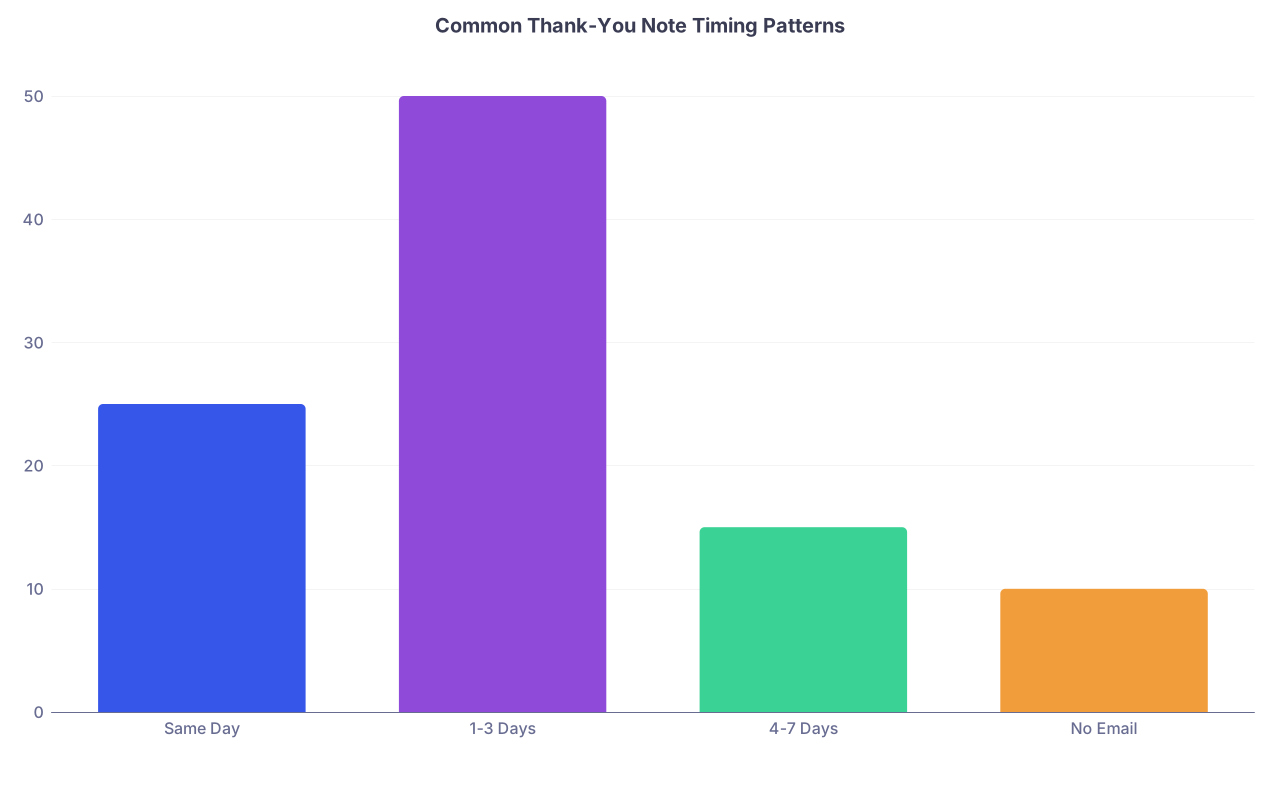
| Category | Value |
|---|---|
| Same Day | 25 |
| 1-3 Days | 50 |
| 4-7 Days | 15 |
| No Email | 10 |
Most PDs mildly prefer the 1–3 day window because it feels thoughtful, not rushed.
Mistake #6: Typos, Wrong Names, and Sloppy Details
You’d be amazed how many emails start with:
- “Dear Dr. Johnson,” sent to Dr. Jackson
- “Thank you for the opportunity to interview at ABC Medical Center” (when the program is “ABC Hospital”)
- Or worse: “I really enjoyed learning about [PROGRAM NAME]” because they copied a template and forgot to edit the bracket.
This will not tank your rank by itself. But it absolutely creates a mental note: “Sloppy.” When everything else is equal, that can hurt.
I’ve seen PDs forward these to coordinators with one line: “Ouch.” Not anger. Just disappointment.
Details to triple‑check:
- Spelling of the faculty’s name (including double letters, hyphens, etc.)
- Program name exactly as they use it (not what you think it is)
- City name (yes, people get this wrong too)
- That you’re not mixing up details from another program
If you interviewed at 14 similar‑sounding “Regional Medical Centers,” this error is especially easy to make. Which is exactly why you must slow down and check.
Mistake #7: Over‑Sharing, Over‑Personal, or Inappropriate Content
Some applicants treat the thank‑you note like a therapy session. That’s a mistake.
Things that cross the line:
- Long disclosures of personal trauma not already discussed in the interview
- Oversharing about other programs: “Your program is so much better than X where I also interviewed”
- Complaints about your medical school, classmates, or previous supervisors
- Jokes that don’t land, especially about patients, call, or controversial topics
Remember: they don’t know you well. Tone doesn’t carry over email. That “funny” comment might read as unprofessional or insensitive.
And never do this:
- Attach photos (of you, your pet, your family) unless it’s directly relevant and was already discussed and invited (e.g., faculty specifically asked you to send the photo of the QI poster you mentioned).
- Include social media links and ask them to follow you. Horrible look.
Quick rule:
If it would make you cringe to see your email screenshot in a PD group chat, don’t put it in writing.
Mistake #8: Treating Coordinators Like Afterthoughts—or Ignoring Them
Program coordinators are the invisible spine of every residency. PDs trust them. They talk to them. A lot.
Ignoring the coordinator completely while emailing every faculty member? Not a good look.
Annoying coordinator‑related behaviors:
- CC’ing the coordinator on every individual thank‑you (spamming their inbox)
- Asking them to confirm receipt of every message
- Asking them your rank or how you “performed compared to other applicants”
- Being short or demanding in scheduling emails, then suddenly very polite in your thank‑yous to faculty (yes, they notice the contrast)
You do not need to send coordinators an essay. But a short, genuine thank‑you for organizing the day and handling logistics is both polite and strategically smart.
Something simple:
Hi [Name],
Thank you for all the work you put into organizing the interview day at [Program]. The schedule ran very smoothly, and I appreciated how clearly you communicated expectations beforehand.
Best,
Name
That’s it. You’d be surprised how many coordinators remember “the nice applicant” vs. “the one who was a headache.”
Mistake #9: Over‑Indexing on Thank‑You Notes in General
Here’s a harsh truth:
For many programs, thank‑you notes don’t move you up. But bad ones can nudge you down.
Applicants sometimes obsess over these emails like they’re a secret ranking lever. They’re not. The lever already moved on interview day.
Where people mess up is thinking:
- “If I write the perfect thank‑you, I can fix that mediocre interview.”
- Or “If I mention how I’ll rank them highly, they’ll rank me higher.”
That mindset leads to:
- Overly long, needy emails
- Repeated follow‑ups
- Weird bargaining language
Program leadership is mostly skimming for:
- Are you normal?
- Are you polite?
- Did you spell my name right?
- Did you avoid saying anything that makes me question your judgment?
That’s it. Over‑investing emotional energy here is a poor use of your limited time and attention during interview season.
Better place that energy:
- Improving your responses for upcoming interviews
- Clarifying your rank priorities
- Resting so you’re not fried and impulsive in your communication
Quick Comparison: Annoying vs. Good Thank‑You Notes
| Aspect | Annoying Thank-You | Strong Thank-You |
|---|---|---|
| Length | 3–5 long paragraphs | 3–6 concise sentences |
| Personalization | Generic, copy-pasted | Specific detail from conversation |
| Tone | Needy, entitled, or over-familiar | Grateful, professional, calm |
| Content | Re-sells your whole CV | Highlights 1–2 genuine takeaways |
| Rank Language | “You are my #1, I will match here” | “Strengthened my interest in your program” |
How to Do It Right (Without Overthinking It)
Here’s a simple structure that will keep you out of trouble for 95% of programs.
Subject Line
- “Thank you – [Your Name]”
- “Thank you for the interview – [Your Name]”
Simple and searchable.
Body
- Greeting with correct title and name.
- One sentence of thanks for their time.
- One sentence with something specific from your conversation.
- One sentence connecting that to your interest in the program.
- Optional final line of appreciation.
Example:
Dear Dr. Patel,
Thank you for taking the time to speak with me during my interview day at City General. I really enjoyed our discussion about how your program pairs interns with senior residents in continuity clinic to build longitudinal mentorship. Hearing about how your graduates feel prepared for both academic and community jobs reinforced my enthusiasm for City General as a place to train.
Best regards,
[Your Name]
Send it. Move on.
No ranking talk. No extra attachments. No drama.
FAQ (Exactly 3 Questions)
1. Do programs actually care if I don’t send any thank‑you notes?
Some do, some don’t—but almost none will punish you explicitly for not sending them. What bothers them more is bad thank‑you notes. If you’re overwhelmed, prioritize a short note to the program director and maybe 1–2 key faculty. Silence is usually safer than sloppy, needy, or error‑filled emails.
2. Can I use AI or templates to write my thank‑you notes?
You can use templates as a starting point, but blindly pasting AI‑generated fluff is exactly how you end up with generic, annoying messages. Program leadership is very good at spotting canned language. Use a simple structure, then rewrite it in your own voice and always add a specific detail from the actual conversation.
3. Should I send updates or “I’m ranking you highly” emails later in the season?
If a program is truly in your top tier, a single, concise “continued interest” email closer to rank list time is fine. But do not spam programs with repeated “just checking in” or “I’m still very interested” messages. And never tell multiple programs they’re your absolute #1. That’s how you get remembered for dishonesty, not professionalism.
Open your email drafts right now and look at your last thank‑you note. Cut any sentence that doesn’t add something specific or sincere. Aim for 3–6 sentences total, fix every name, and then stop before you talk about rankings or your childhood dream.