Are You Making These Residency Application Mistakes? A Practical Guide to Standing Out
Navigating the residency application process is one of the most high‑stakes phases of your medical training. Years of hard work, exams, clinical rotations, and research all converge into a relatively small set of documents and a few conversations that can shape the trajectory of your medical career.
Because the pressure is so high, even strong applicants can make avoidable errors that weaken an otherwise solid Residency Application. Understanding these common pitfalls—and how to avoid them—can dramatically improve your chances of matching into a program that fits your goals and values.
This guide breaks down the most frequent mistakes residency candidates make, explains why they matter, and offers specific, actionable strategies to strengthen every aspect of your application, from your Personal Statement and letters to Networking and Interview Preparation.
Why a Strong Residency Application Matters More Than You Think
Your Application Is Your Professional Narrative
Your residency application is not just a bundle of PDFs. It is your professional story—how you got here, who you are as a clinician, and where you’re heading in your Medical Career.
A well‑crafted application should:
- Present a coherent, believable trajectory (education → experiences → goals)
- Demonstrate clinical competence and professionalism
- Highlight growth, resilience, and insight
- Show alignment between your interests and the program’s strengths
Programs are not only asking, “Can this applicant do the work?” but also, “Will they thrive here? Do they fit our culture, our patient population, and our team?”
You’re Competing With Qualified Peers
Almost everyone applying to residency has:
- Passed USMLE or COMLEX
- Completed core clerkships
- Participated in some form of research or scholarly activity
- Earned letters of recommendation
What differentiates successful candidates is the quality of their application and how effectively they showcase their unique strengths, values, and fit for the specialty and program.
When your residency materials are thoughtfully developed, consistent, and polished, you:
- Make it easier for selection committees to advocate for you
- Reduce red flags and doubts that can derail your application
- Stand out in a crowded field of otherwise similarly qualified applicants
10 Common Residency Application Mistakes and How to Avoid Them
1. Neglecting to Follow Program Instructions
Not following directions is one of the fastest ways to signal carelessness or poor professionalism—two qualities no residency program wants.
Why This Matters
Program directors and coordinators review hundreds or thousands of applications. Missing documents, incorrect formats, or ignoring specific requests (e.g., “Please address any leaves of absence in your application”) can suggest:
- Difficulty with attention to detail
- Possible issues with reliability
- Lack of respect for program processes
How to Avoid This
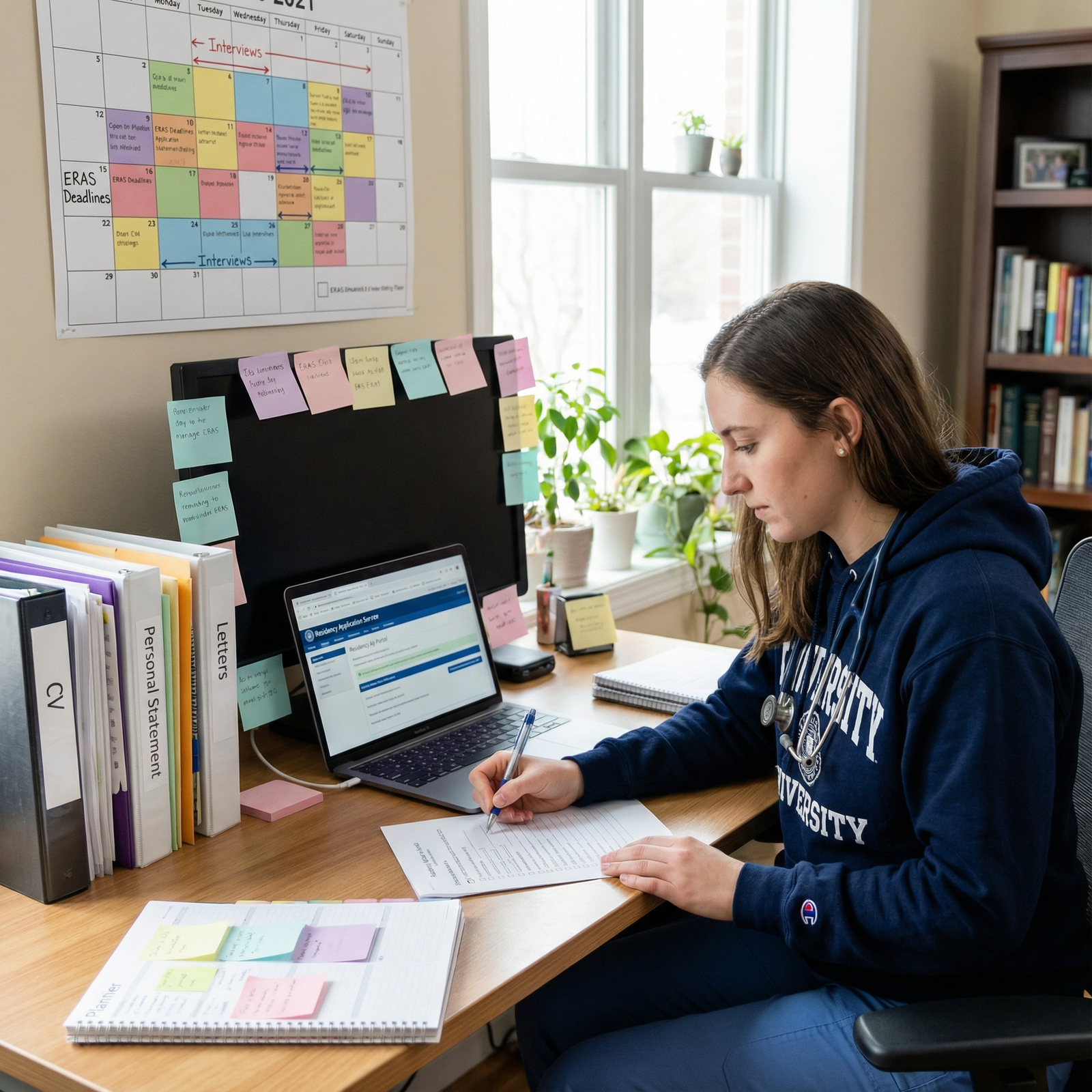
Create a program‑specific checklist.
For each program, track:- Required documents (e.g., supplemental essays, specific LOR types)
- Deadlines (ERAS opening, program application deadlines, supplemental form due dates)
- Any unique instructions from their website or emails
Read instructions twice before uploading.
Review ERAS, program websites, and any communications. Look for:- File or content limits (e.g., word counts, page limits)
- Preferred LOR types (e.g., “At least one letter from an internal medicine faculty member”)
- Policy on updates after submission (e.g., adding new scores, publications)
Cross‑check your final submission.
Before certifying your ERAS, go through your checklist and confirm everything is:- Present
- Correctly labeled
- In the right section
Attention to detail here reduces preventable rejections and shows the professionalism programs expect from residents.
2. Submitting a Generic Personal Statement
A vague, generic Personal Statement is one of the most common—and costly—mistakes in residency applications.
Why This Matters
Your Personal Statement is often the only place where committees hear your voice directly. If your essay could be swapped with another applicant’s without anyone noticing, it’s not working hard enough for you.
Generic statements frequently:
- Repeat your CV instead of adding insight
- Use clichés (“I’ve always wanted to help people”)
- Fail to explain why this specialty and why you are a good match
How to Write a Compelling Personal Statement
Tell a focused, specific story.
Highlight 1–3 meaningful experiences that:- Shaped your interest in the specialty
- Demonstrated growth, resilience, or reflection
- Revealed how you think and work as a future resident
Show, don’t just tell.
Instead of “I care deeply about my patients,” illustrate it:- Describe a patient interaction that changed how you approach care
- Explain what you learned and how you applied it on future rotations
Connect your past to your future.
Answer:- Why this specialty fits your skills and values
- What kind of physician you hope to become
- What you are looking for in a training program (e.g., strong mentorship, diverse patient population, procedural experience, academic vs. community focus)
Strategically tailor for different programs or tracks.
You don’t need a new statement for every program, but consider versions for:- Different specialties (if dual applying)
- Different program types (academic vs. community)
- Research‑heavy vs. clinically focused tracks
Even a few tailored lines (e.g., highlighting alignment with underserved care, research interests, or a program’s mission) can signal genuine interest and improve Interview invitations.
3. Inconsistent CV or Application Data
Minor discrepancies across your CV, ERAS entries, and other documents can raise unnecessary questions.
Why This Matters
Programs notice when:
- Dates don’t align (e.g., research listed as 2021–2023 on CV but 2022–2023 in ERAS)
- Job titles differ across documents
- Gaps are unexplained
Even when these inconsistencies are innocent, they can create doubt about accuracy, organization, or transparency.
How to Maintain Consistency and Credibility
Standardize dates and titles.
Use the same:- Start and end months/years
- Role titles (“Research Assistant” vs. “Clinical Research Assistant”—pick one)
- Institution names and locations
Explain gaps and interruptions.
If you have:- A leave of absence
- A gap between graduation and application
- A failed exam with a retake Briefly address it in:
- The “Additional Information” section of ERAS, or
- A short, factual paragraph in your Personal Statement (if significant)
Keep a master document.
Maintain a single, detailed record of:- All experiences
- Exact dates
- Supervisors’ names and contact information Use this as your reference for all application materials.
Accuracy and clarity in your application data build trust and reduce reasons to question your candidacy.
4. Mismanaging Letters of Recommendation
Letters of Recommendation (LORs) are among the most influential components of your Residency Application—they offer credible, independent insight into how you function in clinical settings.
Common LOR Mistakes
- Choosing recommenders who barely know you
- Waiting too long to request letters
- Failing to provide guidance or context
- Not selecting the right mix of specialty‑specific and general letters
How to Strengthen Your Letters
Choose recommenders wisely.
Prioritize:- Faculty who supervised you closely in your chosen specialty
- Attendings who saw you over time (e.g., sub‑I, longitudinal clinics)
- Mentors who can speak to your work ethic, clinical judgment, and professionalism with specific examples
Ask early and ask clearly.
- Request letters at least 2–3 months before deadlines
- Ask in person or via a thoughtful email if needed
- Use language like:
“Would you feel comfortable writing a strong letter of recommendation for my internal medicine residency application?”
Provide supporting materials.
Share:- Your updated CV
- Draft of your Personal Statement (even if not final)
- A brief summary of what you did with them (cases, projects)
- Your career goals and the types of programs you are applying to
Build a balanced LOR portfolio.
Depending on specialty, aim for:- 2–3 letters from your chosen specialty
- 1 letter from another core specialty or a mentor who knows you well Check specialty‑specific recommendations (e.g., SLOEs in EM, departmental letters in some fields).
5. Underestimating the Power of Professional Networking
Networking in Medical Careers is not about favoritism—it’s about building professional relationships that provide mentorship, advocacy, and insight into programs.
Why Networking Matters
Faculty who know you may:
- Advocate for an interview
- Provide honest feedback about program fit
- Alert you to opportunities (away rotations, research, sub‑Is)
Residents can:
- Share realistic perspectives on workload and culture
- Offer tips for Interview Preparation
- Help you avoid common pitfalls when ranking programs
Practical Networking Strategies for Applicants
Engage during rotations and sub‑internships.
- Arrive early, be prepared, and show initiative
- Ask thoughtful, specific questions about cases and careers
- Express your interest in the specialty and seek honest advice
Attend departmental events and grand rounds.
Even if you’re off‑service:- Introduce yourself briefly to speakers or faculty
- Follow up with a concise email (e.g., “I enjoyed your talk on X…”)
Maintain professional follow‑up.
After forming a connection:- Send a thank‑you email for mentorship or guidance
- Update mentors on milestones (e.g., “I’ve applied to X programs in internal medicine; thank you for your advice”)
- Ask if they’d be comfortable offering feedback on your application strategy
Sincere, respectful networking can increase visibility and deepen support for your candidacy.
6. Treating the Interview as an Afterthought
Once Interview invitations arrive, many applicants assume the hard work is done. In reality, Interview Preparation can be the deciding factor between a strong rank and a missed opportunity.
Common Interview Mistakes
- Not researching the program ahead of time
- Giving generic or rehearsed answers
- Being unable to clearly articulate your goals or “why this program”
- Failing to prepare thoughtful questions
How to Prepare Effectively for Residency Interviews
Know your application inside and out.
Be prepared to discuss in detail:- Anything listed on your CV or ERAS
- Specific patients or experiences mentioned in your Personal Statement
- Research projects, including your precise role and what you learned
Research each program.
Before the interview, review:- Program website (curriculum, tracks, patient population)
- Faculty interests, especially in your areas of interest
- Any recent changes (e.g., program expansion, new leadership)
Practice common and specialty‑specific questions.
Examples:- “Tell me about yourself.”
- “Why this specialty?”
- “Tell me about a challenge or failure and how you handled it.”
- Specialty‑specific scenarios (e.g., handling difficult patients, team conflicts)
Conduct mock interviews with:
- Faculty mentors
- Career advisors
- Peers (recorded video can be helpful to review your body language)
Prepare meaningful questions.
Ask questions that show genuine curiosity and fit, such as:- “How does your program support residents pursuing academic versus community careers?”
- “How do residents receive feedback, and how is it integrated into their development?”
- “What changes has the program made recently in response to resident feedback?”
Thoughtful Interview Preparation signals professionalism, self‑awareness, and serious interest in the program.
7. Failing to Demonstrate Genuine Interest in Programs
Programs want residents who want to be there, not simply anywhere. Apparent indifference can lower you on rank lists, especially at competitive programs.
Signs of Low Interest (From a Program’s Perspective)
- Generic questions (“What are the strengths of your program?” pulled from a script)
- No evidence of having read their website or curriculum
- No mention of how the program aligns with your goals or values
- Lack of follow‑through or engagement during and after the interview
How to Show Authentic Interest and Fit
Know their mission and strengths.
Identify:- Program focus (community‑oriented, academic, research, global health, underserved populations)
- Unique offerings (fellowships, tracks, clinical sites, simulation, QI curriculum)
Connect your goals to their features.
For example:- “I’m particularly interested in your global health track because I hope to work with underserved populations internationally after residency.”
- “Your emphasis on QI aligns with the quality improvement project I completed in med school on reducing readmission rates.”
Follow up appropriately.
After the interview:- Send short, professional thank‑you emails to key interviewers
- Reference specific topics you discussed
- Avoid excessive or pushy communication, but a sincere note can reinforce your interest
Showing that you’ve done your homework distinguishes you from applicants who treat all programs as interchangeable.
8. Delaying or Rushing the Application Process
Procrastination during residency season leads to rushed applications, weaker essays, and last‑minute stress—all of which can hurt your chances.
Why Timing Matters
- Many programs use rolling or early review processes
- Early, complete applications are more likely to be reviewed thoroughly
- Late requests for letters or advice can burden mentors and lead to weaker support
Building a Realistic Application Timeline
6–9 months before submission
- Clarify specialty choice(s)
- Seek mentorship and honest feedback about competitiveness
- Start drafting your Personal Statement
- Identify and meet with potential letter writers
3–4 months before submission
- Finalize CV content and ERAS entries
- Confirm letters of recommendation are requested
- Research and create your program list (reach, realistic, and safety programs)
- Continue revising essays and preparing for possible interviews
1–2 months before submission
- Have mentors review your Personal Statement and CV
- Complete ERAS entries and proofread thoroughly
- Double‑check that letters and scores are scheduled to be available
Starting early gives you time to refine your materials and make strategic decisions—not panicked ones.
9. Being Either Overly Humble or Overly Self‑Inflated
Striking the right tone when presenting your achievements is crucial. Both extremes—downplaying your accomplishments or exaggerating them—can hurt your application.
Risks of Being Too Modest
- Programs may underestimate your capabilities
- Key experiences may never stand out on paper
- You miss opportunities to highlight leadership, initiative, and impact
Risks of Overselling or Embellishing
- Inconsistencies may be exposed during interviews
- Exaggeration can be perceived as dishonesty
- Overly self‑congratulatory tone can be off‑putting
How to Present Yourself Authentically
Be factual and specific.
Instead of:- “I led a groundbreaking research project…” Use:
- “I designed data collection tools, enrolled 50 patients, and presented our preliminary results at [conference name].”
Focus on contributions and learning.
For each major activity, briefly highlight:- What you did
- What you learned
- How it prepared you for residency
Ask mentors to review your tone.
Ask them:- “Does this sound accurate and realistic?”
- “Am I underselling or overselling any aspect of my experiences?”
Authenticity builds trust and makes you more memorable in a positive way.
10. Ignoring Self‑Care and Balance During Application Season
Residency application season is stressful. Ignoring your physical and mental health can lead to burnout, impaired judgment, and lower‑quality work on your application and interviews.
Why Self‑Care Is a Professional Responsibility
As a future physician, managing your well‑being under stress is part of your professional development. Programs are increasingly attentive to resilience, coping strategies, and awareness of wellness.
Practical Self‑Care Strategies During Residency Season
Maintain basic routines.
- Sleep as consistently as possible
- Eat regular, balanced meals
- Exercise moderately—even short walks help
Set boundaries with application work.
- Block 1–2 focused hours for application tasks instead of working anxiously all day
- Take breaks from screens and emails
Seek support early.
- Talk to peers going through the process
- Reach out to mentors for perspective
- If you are struggling significantly, consider professional support (counseling, therapy, wellness resources at your institution)
Protecting your well‑being helps you think clearly, write more effectively, and present your best self to programs.

FAQs: Common Questions About Residency Application Mistakes
1. What should I do if I think my application is not very competitive?
If you’re worried your Residency Application is less competitive (e.g., lower scores, fewer experiences, or a gap in training):
Seek honest feedback early.
Talk to:- Specialty advisors
- Program directors at your home institution
- Trusted mentors
Strategically strengthen your profile.
Depending on timing, consider:- Additional clinical electives or sub‑internships in your desired specialty
- Research or QI projects with realistic timelines
- Strong, specific Letters of Recommendation from supervisors who know your work well
Broaden and balance your program list.
Include:- A mix of academic and community programs
- Programs in multiple geographic regions
- Some “reach” programs, but also many realistic options based on historical match data
If you have more time (e.g., considering a reapplication), a structured gap year with focused clinical, research, or supplemental experiences can meaningfully improve your candidacy.
2. How important is the Personal Statement compared to scores and letters?
While test scores and clinical performance may determine whether your file gets looked at, your Personal Statement can strongly influence:
- Whether you receive interview invitations (especially at mid‑tier or smaller programs)
- How interviewers perceive your motivation, insight, and communication skills
- How well they remember you after interviewing many applicants
Programs frequently report using the Personal Statement to:
- Understand nontraditional paths or gaps
- Assess professionalism and writing ability
- Differentiate between applicants with similar metrics
It won’t “rescue” a very weak application alone, but a thoughtful, well‑crafted statement can significantly enhance a strong or borderline application.
3. Can I withdraw or update an application after submitting?
Yes, but with caveats:
Withdrawing applications:
- You can withdraw from programs through ERAS
- Withdraw only when you are certain; frequent changes can seem disorganized
- If done late in the season or after communication, be respectful and professional in any correspondence
Updating programs:
- Some programs accept updates (e.g., new publications, honors) via email
- Keep updates concise and meaningful
- Not all programs will add updates to your file, so choose updates that truly matter
Always review each program’s stated policies and follow their preferred communication channels.
4. How many programs should I apply to?
There is no one‑size‑fits‑all number. It depends on:
- Specialty competitiveness
- Your academic record and exam scores
- Presence of red flags (e.g., exam failures, gaps)
- Whether you are an international medical graduate (IMG), DO, or MD from a less‑connected school
General guidance:
- More competitive specialties (e.g., derm, ortho, plastics):
Often require a larger number of applications and highly strategic advising. - Moderately competitive specialties:
Many applicants submit 30–60 applications, but individual recommendations vary. - Primary care specialties:
Often fewer are needed, but program choice and geographic flexibility still matter.
Use data (NRMP reports, school match lists) and advisor input to calibrate a sensible range.
5. How can I improve my Interview Preparation if I’m not a strong public speaker?
You don’t need to be a polished orator to succeed in residency interviews; you need to be clear, authentic, and prepared.
Practice aloud repeatedly.
- Answer common questions in front of a mirror or camera
- Review recordings to refine your pacing, clarity, and body language
Focus on structure.
- Use simple frameworks:
- “Past → Present → Future” to answer “Tell me about yourself”
- “Situation → Action → Result → Reflection” for challenge or conflict questions
- Use simple frameworks:
Do mock interviews.
- With advisors, residents, or peers
- Ask for specific feedback on clarity and examples rather than “speaking style”
Prepare key stories.
- Have 4–6 versatile clinical or personal stories ready that highlight:
- Teamwork
- Resilience
- Leadership
- Handling mistakes
- Cultural humility
- Have 4–6 versatile clinical or personal stories ready that highlight:
With repetition and feedback, most applicants meaningfully improve their comfort and performance.
A strong, thoughtful Residency Application is not about perfection; it’s about presenting a clear, honest, and compelling picture of who you are as a future physician. By avoiding these common mistakes—following instructions, crafting a distinctive Personal Statement, ensuring consistent data, cultivating strong letters, investing in Networking, and committing to serious Interview Preparation—you position yourself to match into a program where you can grow, contribute, and thrive in your medical career.