Why Ignoring These Common Errors in Your Residency Application Could Cost You
Applying for residency is one of the highest-stakes transitions in your medical education. You are not just submitting documents—you are competing for your future career in medicine in a system where small details can determine whether you match or go unmatched for a year.
Residency programs review thousands of applications in a short time. When decision-makers are overwhelmed, they look for reasons to screen candidates out. That is why seemingly “minor” errors in Residency Applications can have major consequences.
This guide breaks down the most common mistakes that quietly sink otherwise strong applications—and, more importantly, how to avoid them. Use it as a checklist to strengthen every component of your residency application and improve your chances of securing interviews and, ultimately, a successful match.
Understanding the High Stakes of the Residency Application Process
Residency is the bridge between medical school and independent practice. The quality of your training can influence:
- The depth of your clinical exposure
- Your competitiveness for fellowships
- Your comfort and competence as an attending
- Your geographic location and long-term professional network
Why Details Matter More Than You Think
With applications rising each year, many programs are inundated with qualified candidates who all have:
- Solid USMLE/COMLEX scores
- Strong academic records
- Comparable clinical rotations
In this environment, the “soft” aspects of your application—how polished your CV is, how specific your program choices are, how compelling your personal statement reads—often become key tiebreakers.
Common mistakes don’t just look sloppy; they can signal deeper issues to selection committees:
- Poor time management
- Limited insight or professionalism
- Weak communication skills
- Questionable fit for the specialty or program
Understanding what programs look for—and where applicants commonly fall short—allows you to control more of what happens in this high-stakes process.
Common Errors in Residency Applications (and How to Avoid Them)
Below are the most frequent and damaging mistakes in Residency Applications, along with practical Application Tips and strategies to avoid them.

1. Inadequate Research on Residency Programs
The Error: Applying Blindly or Generically
Many applicants apply to programs based mainly on:
- Name recognition or reputation
- Location alone
- Word-of-mouth from classmates
They often send generic applications that could be submitted to any program in the country.
The Consequence: Poor Fit and Missed Opportunities
Programs want residents who genuinely fit their mission, patient population, and training style. When your application doesn’t reflect any understanding of:
- Program size and structure
- Academic vs. community focus
- Research vs. clinical emphasis
- Patient demographics and service lines
you appear unfocused or uninterested. Generic applications are easier to screen out.
How to Fix It: Targeted, Informed Research
Use a structured approach:
Start with official sources
- Program websites (mission, curriculum, call schedule, didactics)
- FREIDA, NRMP data, and specialty organization resources
Go beyond the website
- Talk to current residents and recent alumni from your school
- Attend virtual open houses and information sessions
- Follow programs and faculty on social media (professional accounts)
Create a simple comparison spreadsheet
Track:- Program size and location
- Fellowship match history
- Procedural volume or subspecialty strengths
- Visa policies (for IMGs)
- Culture indicators (wellness, mentorship, diversity efforts)
Reflect your research in your application
- Reference specific features in your personal statement or program communications
- Tailor preferences on ERAS to align with the programs you truly want
Thorough research not only strengthens your application—it also prevents you from wasting time and money on programs that don’t fit your goals.
2. Neglecting or Rushing the Personal Statement
The Error: Treating the Personal Statement as an Afterthought
Common missteps include:
- Recycling your medical school personal statement
- Writing a generic narrative that could apply to any specialty
- Waiting until the last week to draft and revise
The Consequence: A Missed Opportunity to Stand Out
Selection committees see hundreds of similar applications. Your personal statement is one of the few chances to:
- Explain why this specialty fits you
- Highlight meaningful experiences and turning points
- Clarify concerns (gaps, leaves of absence, exam issues)
- Show your communication skills and professionalism
A vague or cliché statement suggests limited self-reflection and weak motivation for the specialty.
How to Fix It: Write with Purpose and Specificity
Start early (2–3 months before ERAS opens)
- Brainstorm key experiences that shaped your career in medicine and specialty choice
- Identify 2–3 themes (e.g., teaching, underserved care, research interest) to weave through the essay
Focus on narrative, not a resume in paragraph form
- Use specific clinical stories to illustrate your growth
- Show what you learned and how it changed your approach
Connect your story to the specialty
- Articulate what you enjoy about the day-to-day work
- Reflect on specific skills or traits (e.g., procedural aptitude, longitudinal care, critical thinking)
Keep it professional and readable
- One page is standard for most specialties
- Use clear, straightforward language
- Avoid overly dramatic or unprofessional content
Get multiple levels of feedback
- Peer review for clarity
- Faculty or mentor review for content and professionalism
- Final proofread for grammar, spelling, and tone
A compelling, thoughtful personal statement can differentiate you among many applicants with similar metrics.
3. Weak or Generic Letters of Recommendation
The Error: Choosing the Wrong Writers
Common mistakes include:
- Asking famous but unfamiliar faculty for letters
- Requesting letters from doctors who barely know your work
- Accepting vague or template-style letters
The Consequence: Neutral or Damaging Evaluations
Residency programs weigh letters heavily because they provide:
- External validation of your clinical skills
- Insight into your work ethic and professionalism
- Comparison with peers at your institution
Vague praise (“hardworking,” “pleasant,” “good team player”) without specific examples or enthusiasm is often interpreted as lukewarm support—or a polite negative.
How to Fix It: Be Strategic and Proactive
Select letter writers who truly know you
Prioritize:- Attendings you worked closely with on core or sub-internship rotations
- Research mentors who can speak to your initiative and follow-through
- Faculty in the specialty you are applying to
Ask directly and professionally
- Use phrasing like: “Would you feel comfortable writing a strong letter of recommendation for my application to [specialty]?”
- If they hesitate, consider asking someone else.
Support them with materials
Provide:- Updated CV
- Draft personal statement
- Brief summary of key cases or projects you worked on together
- Your career plans (academic vs. community, desired region, etc.)
Know the norms for your specialty
- Many programs expect at least 2–3 specialty-specific letters
- Some fields value chair letters or sub-I letters more heavily
Thoughtful planning around letters can significantly strengthen your overall application narrative.
4. Ignoring Deadlines and Timing Strategy
The Error: Underestimating Timelines
Applicants often:
- Delay assembling documents until just before ERAS opens
- Wait too long to request letters of recommendation
- Submit late in the cycle, missing early review windows
The Consequence: Fewer Interviews and Lost Opportunities
Most programs start reviewing applications as soon as they are released. Late or incomplete applications may:
- Be overlooked after interview slots are mostly filled
- Signal poor time management or disorganization
- Never be fully reviewed if programs are already saturated with candidates
How to Fix It: Treat the Timeline Like a Clinical Deadline
Create a backward-planned calendar
- Set an internal deadline for a complete application by the ERAS opening date
- Build in extra time for unexpected delays (LORs, transcript issues, USMLE reporting)
Request letters early
- Ask letter writers at least 4–6 weeks before you need the letter
- Send polite reminders a couple of weeks before your target date
Prioritize early submission
- Aim to certify and submit your application as early as feasible once ERAS opens
- Double-check all sections before certifying; changes are limited afterward
Submitting early, complete applications is one of the simplest ways to improve your odds of getting more interviews.
5. Failing to Highlight Relevant and Distinctive Experiences
The Error: Underutilizing the Experiences Section
Many applicants:
- List only minimum required experiences
- Provide short, generic descriptions
- Underemphasize leadership, advocacy, or unique non-clinical roles
The Consequence: A One-Dimensional Application
Programs are not just hiring test scores; they are selecting future colleagues. If your application shows only grades and exams, you may appear:
- Less mature or well-rounded
- Less prepared for real-world collaboration and responsibility
How to Fix It: Curate and Describe Thoughtfully
Include a diverse range of experiences
- Clinical work (sub-Is, away rotations, electives)
- Research (even if not published yet—describe your role and outcomes)
- Teaching, tutoring, or mentoring roles
- Leadership (student groups, QI projects, committees)
- Community service and advocacy
Write strong, specific descriptions
- Focus on what you did, not just what the organization does
- Use action verbs and outcomes (e.g., “Developed,” “Implemented,” “Led”)
- Highlight impact, responsibility level, and skills acquired
Align experiences with your specialty and career goals
- For pediatrics: emphasize work with children, advocacy, family communication
- For surgery: highlight procedural interest, stamina, teamwork in acute settings
- For psychiatry: show interest in behavioral health, communication, and longitudinal care
Thoughtful experience descriptions show depth, maturity, and commitment to your chosen career in medicine.
6. Ignoring Program Instructions and Application Requirements
The Error: Overlooking Details and Custom Requirements
Examples include:
- Exceeding word or page limits
- Failing to upload requested supplemental materials
- Not answering specialty-specific or program-specific questions
The Consequence: Automatic or Early Rejection
Programs receive far more applications than they can carefully review. When instructions are not followed, reviewers may assume:
- Lack of attention to detail
- Difficulty following clinical protocols
- Limited respect for program expectations
How to Fix It: Treat Instructions Like Clinical Orders
Read everything twice
- ERAS instructions
- Individual program websites
- Any supplemental application platforms (e.g., Thalamus, institution portals)
Create a checklist for each program with unique requirements
- Supplemental essays
- Additional letters
- Specific document labeling or formats
Have a second person cross-check
- A friend, mentor, or advisor can spot missed requirements
Following instructions precisely is a simple but powerful professionalism signal.
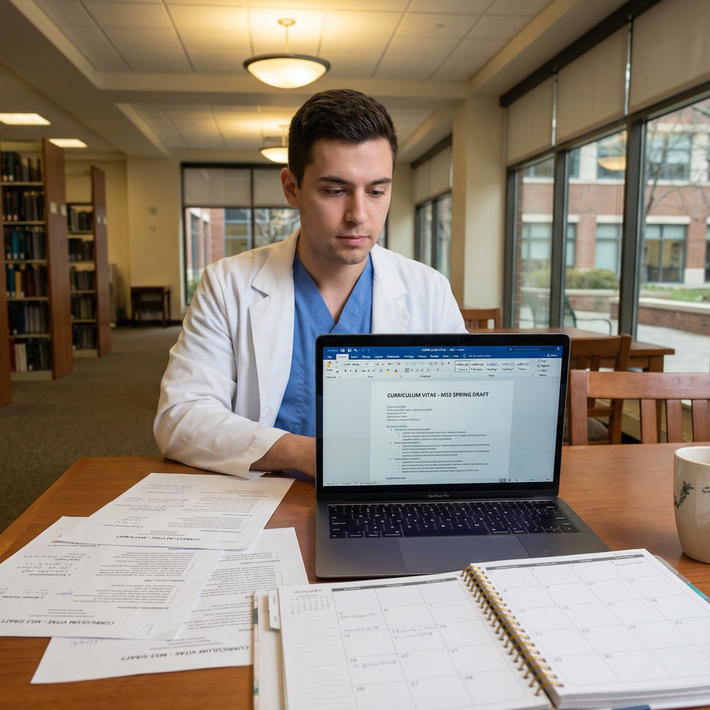
7. Submitting an Unprofessional or Confusing CV
The Error: Poorly Structured or Cluttered Curriculum Vitae
Common problems:
- Inconsistent dates and formatting
- Typos or incorrect titles
- Including high school or non-relevant early activities
- Overly long CVs for this level of training
The Consequence: Frustrated Reviewers and Lower Impressions
Your CV is often the first document reviewers scan. If it is:
- Hard to follow
- Difficult to interpret or verify
- Overloaded with irrelevant details
they may question your organizational skills and professionalism.
How to Fix It: Present a Clear, Concise Professional Snapshot
Use a consistent professional format
Include:- Contact information
- Education (reverse chronological)
- Honors and awards
- Research and publications (with PubMed IDs when available)
- Presentations and posters
- Work and leadership roles
- Volunteer experiences
Be honest and accurate
- No exaggerating roles or outcomes
- Be ready to discuss anything you list
Prioritize clarity over volume
- Highlight what is most relevant to residency and your specialty
- Remove outdated or less meaningful high school achievements
A clean, professional CV reassures programs that you are organized and detail-oriented.
8. Underpreparing for Residency Interviews
The Error: Assuming Your Application Speaks for Itself
Applicants commonly:
- Do minimal research before interviews
- Struggle to answer “Why this program?” or “Why this specialty?”
- Fail to prepare questions, appearing passive or disengaged
The Consequence: Strong Application, Weak Impression
Interview days heavily influence rank lists. Even stellar candidates can be downgraded if they:
- Cannot articulate their interests and goals
- Seem uninterested or poorly informed about the program
- Show poor interpersonal or communication skills
How to Fix It: Treat Interviews Like Oral Exams—with Personality
Research each program the night before
- Review key features, strengths, and any recent changes
- Identify 2–3 specific reasons the program appeals to you
Practice core questions out loud
Prepare for:- “Tell me about yourself.”
- “Why this specialty?”
- “What are your strengths and weaknesses?”
- “Describe a challenging clinical situation and how you handled it.”
Prepare meaningful questions for interviewers
- About mentorship, feedback culture, wellness, typical graduate paths
- Tailor questions to the role of the interviewer (PD vs. resident vs. faculty)
Mind your professionalism on virtual platforms
- Neutral background, good lighting, reliable internet
- Dress professionally from head to toe
- Minimize distractions and background noise
Interview preparation is where you connect your written application to your real-world persona.
9. Skipping Careful Proofreading and Quality Control
The Error: Overlooking Typos, Inconsistencies, and Formatting Issues
Typical issues:
- Spelling errors in program names or faculty names
- Mismatched dates between CV and ERAS entries
- Grammar mistakes in personal statements
The Consequence: Questionable Attention to Detail
In a profession where dosing errors or miscommunications can harm patients, written sloppiness in your residency application raises concerns. Even if your content is strong, repeated errors can:
- Undermine your credibility
- Create an impression of carelessness
How to Fix It: Multiple Rounds of Review
Use digital tools as a first pass
- Spellcheck, grammar tools, and formatting checks
Print and review on paper
- Many applicants catch errors more easily in print than on screen
Ask at least two other people to review
- One peer (for clarity and flow)
- One mentor or advisor (for tone and professionalism)
Check for consistency
- Dates, titles, and locations should match across all documents
This step can be the difference between a polished, professional application and a mediocre one.
10. Lacking Self-Reflection and Authenticity
The Error: Trying to Be Who You Think Programs Want
Many applicants:
- Use clichés and overused phrases
- Present an idealized but unrealistic version of themselves
- Avoid mentioning genuine challenges or growth areas
The Consequence: Forgettable, Generic Applications
Programs are skilled at reading between the lines. When your story feels canned or generic, you risk:
- Being indistinguishable from dozens of similar applicants
- Missing the chance to connect with programs that truly fit your values
How to Fix It: Be Honest, Thoughtful, and Professional
Own your story—including imperfections
- If you have exam failures, leaves of absence, or career shifts, address them briefly and constructively (especially in your MSPE or supplemental communication if appropriate)
Show insight and growth
- Reflect on what you learned from challenges
- Highlight how these lessons shaped your practice and priorities
Align your application with your genuine interests
- If you care deeply about underserved care, global health, research, teaching, or leadership—let that be visible across your experiences, statement, and interview responses
Authenticity helps programs identify applicants who will thrive in their particular environment, not just survive.

Frequently Asked Questions About Common Residency Application Mistakes
1. How early should I start preparing my residency application?
Ideally, start serious preparation 6–9 months before you plan to apply:
- 9 months before: map out rotations, potential letter writers, and research opportunities
- 6 months before: begin personal statement drafts and CV updates
- 3–4 months before: ask for letters of recommendation and refine your program list
- 1–2 months before: finalize documents, proofread everything, and prepare for ERAS submission
Starting early reduces last-minute stress and helps you avoid many of the common mistakes described above.
2. What is the most common mistake that keeps applicants from getting interviews?
There is rarely a single reason, but a cluster of small professionalism errors often hurts applicants the most: late applications, weak or generic personal statements, unpolished CVs, and poorly chosen letters. Many candidates with borderline scores still match because their applications are cohesive, timely, and clearly communicate fit and motivation. Conversely, even strong test-takers can struggle if these elements are neglected.
3. How do I know if I am applying to the right number and mix of programs?
The “right” number depends on specialty competitiveness, your academic profile, and IMG status. In general:
- More competitive specialties (e.g., dermatology, plastic surgery) require broader and more strategic lists
- Less competitive specialties may allow for more targeted applying
Work closely with your school’s advising office or a trusted mentor to build:
- A balanced list including “reach,” “target,” and “safety” programs
- A mix of academic and community programs, if appropriate
- Geographic diversity unless you have strong regional ties
A smart program list is one of the most underrated components of a successful match strategy.
4. What should I do if I have a red flag in my application (e.g., failed exam, leave of absence)?
Do not ignore it and hope programs won’t notice—they will. Instead:
- Address it briefly and honestly, often in your MSPE or, when appropriate, in your personal statement or supplemental information
- Focus on what changed: remediation steps, improved study strategies, health treatment, or support systems
- Demonstrate sustained improvement afterward (e.g., stronger subsequent scores, successful clinical performances)
Many applicants with red flags still match when they show insight, growth, and consistent performance afterward.
5. How can I tell if my personal statement or CV is “good enough”?
Ask yourself:
- Do they clearly communicate why this specialty, who I am, and what I bring?
- Has at least one experienced faculty member or advisor reviewed them?
- Are there any vague, generic sections that could apply to anyone?
- Would I be proud if a program director read this aloud during my interview?
If the answer to any of these questions is “no” or “I’m not sure,” seek additional feedback and revise. Given how competitive Residency Applications are, “good enough” often needs one more round of refinement.
By recognizing and correcting these common mistakes, you transform your residency application from a collection of documents into a coherent, professional story about your readiness for the next phase of your career in medicine. Careful planning, authentic reflection, and attention to detail are your best tools for maximizing your chances of matching into a program where you will thrive.