
The Most Overlooked Errors in Residency Applications: Are You Making Them?
Residency Applications are high-stakes, high-pressure, and—unfortunately—highly prone to preventable mistakes. Even strong applicants with solid scores, meaningful experiences, and good clinical evaluations can hurt their chances by overlooking small but important details.
This guide breaks down the most commonly overlooked errors in residency applications—and how to avoid them. From your Personal Statement and Letters of Recommendation to deadlines, ERAS entries, and interview strategy, you’ll learn practical, step-by-step Application Tips to strengthen every part of your file.
Understanding the Modern Residency Application Landscape
Before identifying mistakes, it helps to understand how programs actually view your application and how each component fits into the bigger picture of Medical Education and the Match.
Key Components of a Residency Application
Most U.S. residency programs use the Electronic Residency Application Service (ERAS) as the primary application platform. Your application is evaluated as a package, typically including:
- ERAS Common Application (demographics, education, experiences, publications, etc.)
- Personal Statement (usually one per specialty)
- Letters of Recommendation (LoRs) (3–4, depending on specialty/program)
- MSPE (Dean’s Letter) and medical school transcript
- USMLE/COMLEX scores
- Curriculum Vitae (CV) if requested separately
- Supplemental ERAS (if applicable) and some specialty-specific add-ons
- Program-specific questions or secondary forms (for certain programs)
Programs don’t just “scan for scores.” They look for:
- Evidence of clinical competence
- Consistency between different parts of your application
- Fit with the specialty and their program
- Professionalism, maturity, and communication skills
- Trajectory: how you’ve grown and what direction you’re heading
This is why even minor, “administrative” errors matter—they can disrupt the overall picture and raise questions about reliability, attention to detail, and professionalism.
Common Errors in Residency Applications (and How to Fix Them)
1. Weak or Generic Personal Statement
Your Personal Statement is one of the few places where you control the narrative. It’s not just a writing sample; it’s your opportunity to explain your path, your specialty choice, and what you bring to a residency program.
Yet, many applicants treat it as an afterthought, use generic templates, or recycle content from classmates.
Common Personal Statement Mistakes
Cliché openings and vague language
Overused phrases—“I’ve always wanted to help people,” “Ever since I was a child”—don’t distinguish you. Programs read hundreds of statements; if they can’t tell it’s your story, it’s not working.No clear specialty motivation
Failing to explain why this specialty makes reviewers doubt your commitment. “I love internal medicine because of the variety” is incomplete; you need specific experiences that shaped this preference.Lack of structure or focus
Rambling essays that jump between topics without a clear arc are hard to follow. Some applicants try to include every life event instead of carefully selected, impactful moments.Ignoring red flags or gaps
If there are major gaps, failures, or career changes, completely avoiding them can raise suspicion. You don’t need to overexplain, but you should frame them briefly and constructively, when appropriate.Typos and poor grammar
In a document meant to represent your professionalism, simple errors suggest rushed work and lack of attention to detail.
How to Strengthen Your Personal Statement
Tell a focused, specific story
- Choose 1–3 key experiences that genuinely shaped your interest in the specialty.
- Show what you learned and how it changed your outlook or goals.
- For example: “During my ICU rotation, caring for a patient with septic shock taught me…” is more powerful than “I like critical care.”
Demonstrate insight and self-awareness
- Programs want reflective learners. Explain not just what you did, but what it meant.
- Link your experiences to qualities important for that specialty (e.g., teamwork, procedural skill, continuity of care, communication with families).
Address fit and career goals
- Briefly outline your short- and long-term goals (e.g., academic vs. community, research interests, underserved care, leadership).
- Align these themes with what many programs value—teaching, scholarship, service—without sounding like you’re copying their brochure.
When appropriate, customize
- You usually have one core statement per specialty, but you can adjust a short paragraph about fit for specific programs if time and ERAS logistics allow.
- Avoid naming a program unless you are truly tailoring that statement and are confident you won’t mis-send it.
Get multiple reviews
- Have at least one mentor in your specialty and one person skilled in writing review your draft.
- Ask them specifically: “Does this sound like me, and does it make sense for this specialty?”
Action Step: Start drafting your Personal Statement at least 3–4 months before ERAS opens. Expect to go through 4–6 revisions.
2. Inconsistent, Confusing, or Bloated CV/Experience Entries
Your CV (or the ERAS “Experiences” section, which functions similarly) is where you document your training, work history, leadership, research, and extracurricular involvement. Programs look closely at this section to understand what you have actually done.

Common CV and Experience Mistakes
Incorrect or inconsistent dates
- Overlapping positions without explanation, mismatched months, or unexplained gaps can raise concerns—even if innocent.
Inflated or misleading titles
- Labeling yourself “Lead Researcher” when you were a volunteer, or “Coordinator” when you occasionally helped, can backfire during interviews.
Excessive length and irrelevant experiences
- Long lists of unrelated activities (e.g., high school awards, casual hobbies) can dilute the impact and make it harder for reviewers to find what matters.
Vague descriptions
- Entries like “Helped with research project” or “Participated in community service” don’t show skills, responsibilities, or outcomes.
How to Optimize Your CV and ERAS Experiences
Be precise and consistent
- Use accurate position titles and clearly defined date ranges (month/year).
- Ensure your CV, ERAS entries, and anything discussed in your Personal Statement match.
Prioritize relevance and impact
- Emphasize clinical experiences, leadership roles, teaching, research, and service that reflect your growth as a physician-in-training.
- Earlier or non-medical roles can be included if they show significant responsibility or a key skill set (e.g., management, teaching, language skills).
Use strong, concise bullet points
- Start with action verbs: “Led,” “Coordinated,” “Developed,” “Analyzed,” “Taught.”
- Include scope and outcomes where possible:
- “Coordinated a team of 6 volunteers to organize monthly free clinics serving ~120 patients per month.”
- “Assisted in data collection for a multi-center study on COPD readmissions; co-authored abstract accepted to [Conference].”
Explain gaps briefly
- If you had a planned leave (research year, family, illness), list it as an Experience with a brief, neutral description:
- “Planned research year focusing on clinical outcomes in cardiology”
- “Extended leave for personal health reasons; returned to full clinical duties in [month/year].”
- If you had a planned leave (research year, family, illness), list it as an Experience with a brief, neutral description:
Action Step: Print your CV/ERAS entries and review them as if you were a PD: Is the timeline clear? Do your roles make sense? Are your contributions obvious?
3. Inadequate or Generic Letters of Recommendation
Letters of Recommendation are one of the most influential—and frequently mishandled—parts of Residency Applications. Strong letters can elevate an otherwise average file; weak or generic letters can sink a solid one.
Common Recommendation Letter Mistakes
Choosing prestige over familiarity
- Getting a letter from a “big name” who barely knows you usually results in a generic letter. Programs prefer specific detail from someone who actually supervised you.
Not giving faculty enough context
- Many students simply say, “Can you write me a letter?” without sharing their CV, Personal Statement, or career goals, leading to vague letters.
Requesting letters too late
- Approaching faculty right before deadlines can result in rushed, less thoughtful letters—or missed deadlines.
Unbalanced letter set
- For some specialties, not including at least one letter from that specialty (or required department) is a major red flag.
Best Practices for Letters of Recommendation
Choose recommenders strategically
- Priority order usually looks like:
- Faculty who supervised you closely in the target specialty
- Faculty who evaluated you clinically (attendings, not just researchers)
- Mentors who can speak to your character, work ethic, and growth
- For procedural or competitive specialties, a strong letter from a well-known faculty member who really knows you well can be particularly impactful.
- Priority order usually looks like:
Ask in a professional, clear way
- Ask: “Would you feel comfortable writing me a strong, detailed letter of recommendation for [specialty]?”
- This wording gives them permission to decline if they can’t support you strongly.
Provide a helpful packet
- Share:
- Your CV and draft Personal Statement
- A short summary of your goals (“I’m applying to [specialty]; I’m especially interested in [X areas].”)
- Reminders of cases or projects you worked on together
- ERAS instructions and deadlines
- Share:
Know your specialty’s norms
- For example, Internal Medicine often expects at least one letter from IM faculty; Surgery may expect letters from surgeons; some specialties value a Department Chair letter.
Action Step: Identify and approach potential letter writers 3–4 months before ERAS submission. Track who has submitted via ERAS and send polite reminders as deadlines approach.
4. Overlooking Deadlines, Requirements, and ERAS Details
Many otherwise strong applications are compromised by preventable logistical errors. In a competitive environment, missing small details can have outsized consequences.
Common Administrative and ERAS Mistakes
Missing program-specific requirements
- Some programs require a supplemental essay, a certain number of specialty letters, or visa information. Missing these can lead to automatic rejection.
Late submission
- Submitting well after ERAS opens, especially in competitive specialties, may mean your application is reviewed later or not at all if interview slots fill quickly.
Incorrect document assignment
- Uploading the wrong Personal Statement to a specialty or assigning letters incorrectly (e.g., pediatric letter to a surgery program) can signal carelessness.
Incomplete application at the time of review
- If USMLE scores, LoRs, or MSPEs are missing when programs first review files, you may be screened out early.
How to Stay on Top of Requirements and Deadlines
Build a master application spreadsheet Include for each program:
- Application deadline
- Minimum/average scores (if available)
- Required number and type of LoRs
- Any program-specific instructions
- Whether they accept IMGs, visa types, etc.
- Date submitted and confirmation
Create a realistic timeline
- Backwards-plan from ERAS opening and rank list deadlines:
- Personal Statement final: ~4–6 weeks before ERAS opens
- Letters requested: 3–4 months before opening
- Board exams completed: as early as possible
- Application submitted: ideally on or very close to opening day (for many specialties)
- Backwards-plan from ERAS opening and rank list deadlines:
Double-check document assignments
- Before certifying your ERAS application, verify:
- The correct Personal Statement is attached to each program/specialty
- Each program has the intended Letters of Recommendation
- All required fields and documents are complete
- Before certifying your ERAS application, verify:
Action Step: Schedule at least two dedicated “administrative review” sessions where you go through every ERAS screen and your program spreadsheet before submission.
5. Underutilizing Mentorship, Networking, and Program Exposure
Residency programs don’t just evaluate your application on paper; they also value evidence that you understand the specialty and their program specifically.
Common Networking and Mentorship Mistakes
Not seeking early mentorship
- Waiting until late in fourth year to talk to advisors or specialty mentors can limit your strategy options (e.g., away rotations, research opportunities).
Skipping informational events
- Many programs host open houses, virtual meet-and-greets, or resident Q&A sessions. Missing these is a lost chance to learn about program culture and demonstrate interest.
Passive communication
- Some students never reach out to faculty, residents, or program coordinators with thoughtful questions that could clarify fit or opportunities.
Building Smart Connections (Without Being Pushy)
Identify key mentors early
- Aim for at least:
- One mentor in your chosen specialty
- One general career advisor (e.g., dean or advisor at your institution)
- Meet regularly to discuss your competitiveness, target programs, and backup plans.
- Aim for at least:
Attend program events intentionally
- Join virtual or in-person open houses with specific questions in mind:
- “How do residents get involved in research or quality improvement?”
- “What support is available for those interested in fellowship?”
- Join virtual or in-person open houses with specific questions in mind:
Follow specialty societies and interest groups
- National organizations often host webinars or mentorship programs specifically for medical students (e.g., ACP, AAFP, AAP, ACS, etc.).
Action Step: Make a list of 5–10 programs you’re especially interested in and try to attend at least one event or session with each, if available. Take brief notes—you can use them later to tailor your communication or interview answers.
6. Treating Interview Preparation as an Afterthought
Getting an interview means your file was strong enough to be seriously considered. Failing to prepare thoroughly for interviews is a major, yet common, missed opportunity.
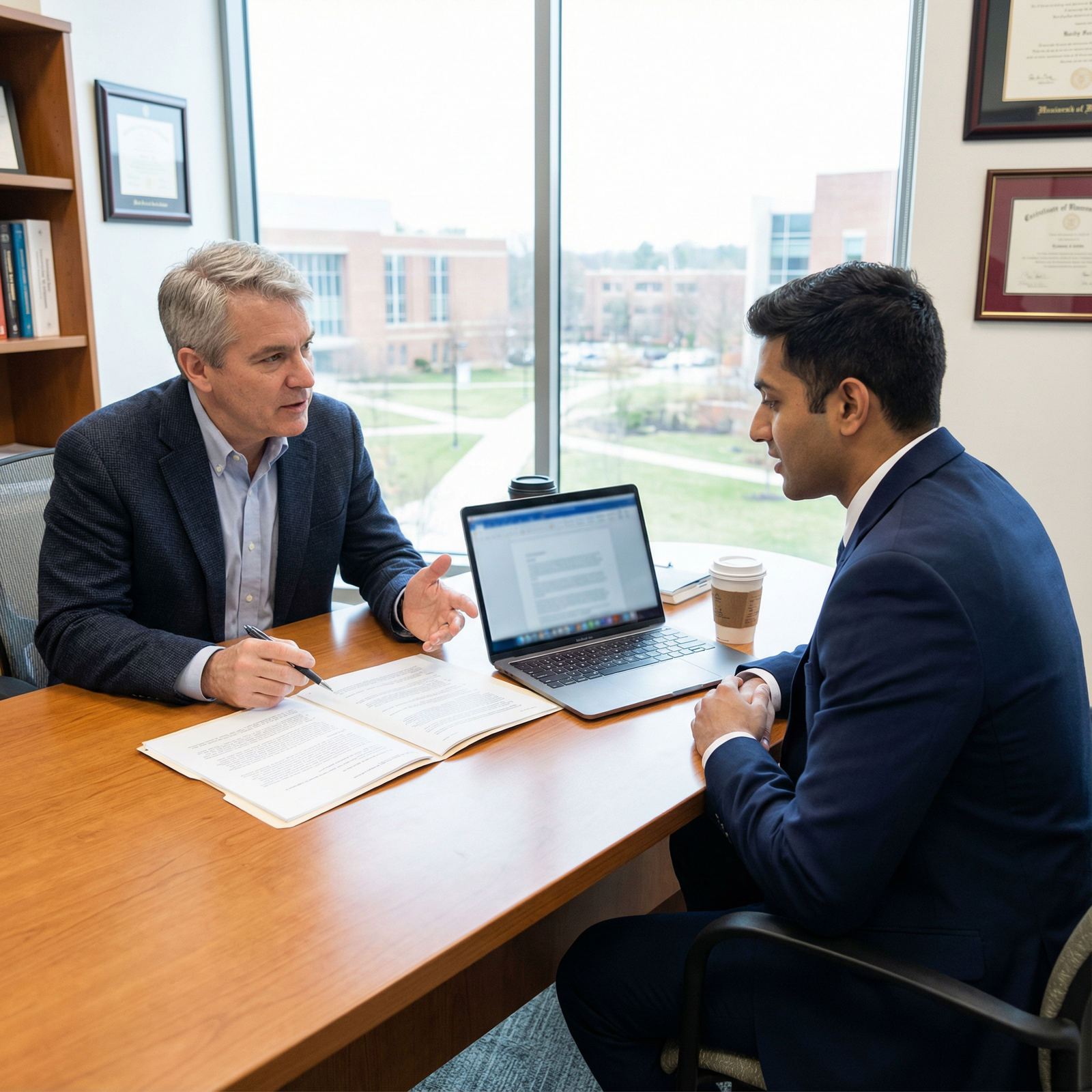
Common Interview Preparation Mistakes
Underestimating behavioral questions
- Many applicants stumble when asked:
- “Tell me about a time you made a mistake.”
- “Describe a conflict with a team member and how you handled it.”
- Poor answers can raise serious concerns about professionalism and insight.
- Many applicants stumble when asked:
Not researching programs
- Generic answers to “Why our program?” are obvious and forgettable.
Failing to prepare questions
- Saying “I don’t have any questions” can suggest disinterest or lack of curiosity.
Unprofessional virtual setup
- For virtual interviews, inadequate lighting, noisy backgrounds, or poor dress undermine your presentation.
How to Excel in Residency Interviews
Practice common question types
- Prepare responses for:
- “Tell me about yourself.”
- “Why this specialty?”
- “Why our program?”
- “Strengths and weaknesses.”
- Behavioral questions using the STAR format (Situation, Task, Action, Result).
- Prepare responses for:
Use specific, honest examples
- For challenging situations, choose examples that show:
- Insight into what went wrong
- Ownership of your part
- What you changed or learned afterward
- For challenging situations, choose examples that show:
Prepare program-specific questions
- Examples:
- “How are residents supported in pursuing fellowships or academic careers?”
- “Can you describe the culture of feedback and teaching on your inpatient teams?”
- “What changes are you hoping to make in the program over the next few years?”
- Examples:
Optimize your virtual setup
- Test your internet connection, camera, and microphone.
- Use a neutral background with good lighting.
- Dress professionally, as you would for an in-person interview.
Action Step: Schedule at least 2–3 mock interviews with mentors, advisors, or peers. Record yourself if possible and review your body language, clarity, and pacing.
7. Overemphasizing Scores While Neglecting Experiences and Narrative
A strong exam record is important, but many applicants over-focus on USMLE/COMLEX scores and under-utilize their clinical stories, leadership, and personal growth.
Common Balance Mistakes
Assuming high scores guarantee interviews
- In competitive fields, scores are necessary but not sufficient. Fit, letters, and professionalism matter greatly.
Minimizing your non-academic strengths
- Students often fail to clearly articulate important qualities like resilience, teamwork, teaching ability, or commitment to underserved communities.
Not addressing relative weaknesses strategically
- If you have a lower score or a failure, ignoring it entirely or over-apologizing without showing growth are both problematic.
Creating a Balanced, Compelling Application Narrative
Highlight the “through-line” of your story
- What consistent themes show up across your experiences? Teaching? Advocacy? Quality improvement? Global health? Patient-centered communication?
- Reinforce those themes in your Personal Statement, CV, and interview answers.
Translate experiences into residency-relevant traits
- For example:
- Leadership in a student-run clinic → initiative, systems thinking, teamwork
- Long-term volunteer work → reliability, compassion, dedication
- For example:
Frame challenges as growth
- If you had academic difficulties, be brief and honest, but emphasize:
- What changed (study strategies, resources you used)
- Evidence of improvement (later scores, clinical performance)
- If you had academic difficulties, be brief and honest, but emphasize:
Action Step: Write down 3–5 core qualities you want programs to remember about you. Ask yourself: Does each major component of my application support at least some of these?
Frequently Asked Questions (FAQ)
1. What is the single most damaging mistake in a residency application?
There isn’t one universal “biggest” mistake, but one of the most consistently harmful is submitting a generic, unfocused Personal Statement that fails to explain:
- Why you chose your specialty
- What experiences shaped that decision
- What you offer as a resident
This is your main chance to tell your story and distinguish yourself beyond scores and grades. If it’s vague or interchangeable with other applicants’ statements, you lose a major opportunity to stand out and to address any questions raised by the rest of your file.
2. How can I make my Letters of Recommendation as strong as possible?
You cannot write your own letters, but you can set your letter writers up for success by:
- Choosing faculty who know you well in a clinical or longitudinal context
- Asking explicitly for a “strong, detailed” letter
- Providing your CV, Personal Statement, and a brief summary of your goals
- Reminding them of specific cases or projects you worked on together
- Requesting letters early and providing clear deadlines and ERAS instructions
The more concrete detail a letter contains about your skills, attitude, and contributions, the more powerful it will be in the eyes of program directors.
3. How important is networking and mentorship in the residency application process?
Mentorship and networking are highly valuable, especially for:
- Understanding specialty expectations and competitiveness
- Identifying appropriate target programs
- Getting honest feedback on your application materials
- Learning about unadvertised opportunities (research, electives, sub-internships)
- Demonstrating interest to specific programs through events or personal connections
While networking alone won’t secure a position, smart, respectful engagement with mentors and programs can meaningfully improve your strategy and visibility.
4. Should I still apply if I have low or borderline USMLE/COMLEX scores?
Yes—many applicants with less-than-ideal scores match successfully every year, particularly when they:
- Apply strategically to a broad but realistic list of programs
- Strengthen the rest of the application (clinical evaluations, Letters of Recommendation, Personal Statement, experiences)
- Are transparent but constructive about any academic difficulties
- Emphasize evidence of improvement and clinical competence
Work closely with advisors who understand your specialty’s competitiveness to create a balanced program list and backup plans if needed.
5. When should I start preparing my residency application?
Ideally, you should begin active preparation at least one year before you apply. A rough timeline:
12–18 months before:
- Identify potential specialties and mentors
- Plan away rotations and key clinical experiences
6–9 months before:
- Start drafting your Personal Statement
- Update your CV and track experiences
3–6 months before:
- Ask for Letters of Recommendation
- Meet with advisors to finalize your program strategy
1–3 months before ERAS opens:
- Complete and refine ERAS entries
- Finalize Personal Statement
- Double-check program-specific requirements
By spreading the work out, you reduce stress, avoid rushed mistakes, and give yourself time to revise and improve.
By proactively avoiding these commonly overlooked errors in Residency Applications—weak Personal Statements, inconsistent CVs, poorly planned Letters of Recommendation, missed deadlines, underused networking, and inadequate interview preparation—you substantially increase your chances of a successful Match. Approach each component as part of a cohesive narrative about who you are as a developing physician, and use every section to reinforce that story with clarity, honesty, and professionalism.