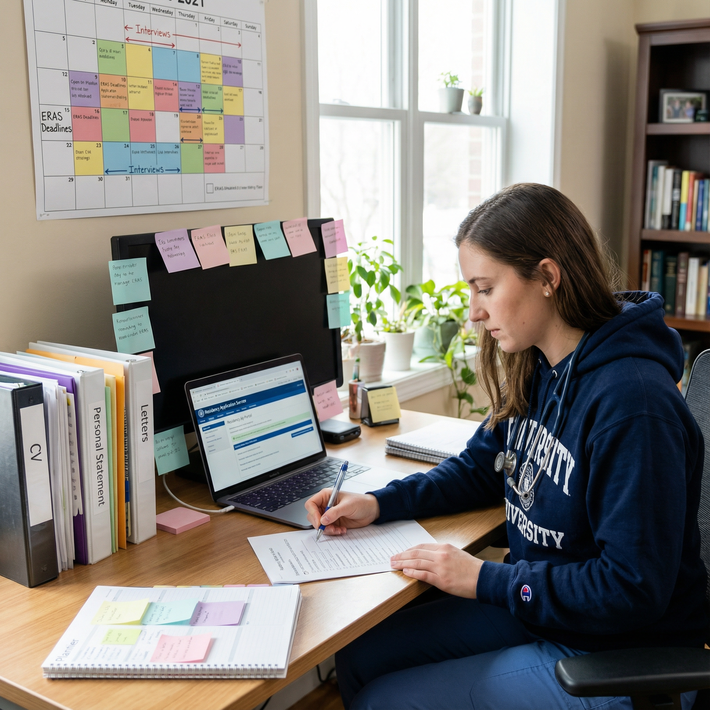
Top 10 Common Residency Application Mistakes That Hurt Your Match Chances (and How to Avoid Them)
Applying for residency is one of the highest‑stakes transitions in medical education. Your residency application is not just paperwork—it is the primary lens through which program directors, faculty, and selection committees will decide whether to invite you for Interviews and ultimately rank you in the Match Process.
Because the competition for Residency Applications is intense, even strong candidates can undermine their own Match chances with avoidable errors. Understanding the most common Application Mistakes—and how to avoid them—can dramatically improve your likelihood of landing interviews and matching into a program where you will thrive.
This guide breaks down the 10 most frequent pitfalls seen by program directors and advisors, with practical strategies, examples, and insider tips tailored for medical students and graduates.
1. Treating the Personal Statement as a Generic Essay
Your personal statement is often the first narrative impression a program gets of you. A generic, vague, or recycled statement signals lack of insight and weak motivation for the specialty.
Why Generic Statements Hurt You
Program directors read hundreds of personal statements every year. Common problems include:
- Overused phrases (“I’ve always wanted to help people”)
- No clear specialty‑specific motivation
- Minimal reflection on clinical experiences
- Same statement sent to every program, regardless of their strengths or focus
A generic statement makes it hard for programs to see why you, specifically, are a good investment for their training environment.
How to Craft a Strong Residency Personal Statement
1. Start with one or two defining experiences.
Choose concrete clinical or personal experiences that truly influenced your specialty choice. Go beyond describing what happened—focus on what you learned and how it shaped you.
2. Show, don’t tell.
Instead of:
“I am passionate about Internal Medicine.”
Try:
“During my internal medicine sub‑internship, I followed a patient with decompensated cirrhosis for several weeks. The complexity of his care—from managing ascites to coordinating social support—solidified my desire to train in a field where long‑term relationships and diagnostic reasoning intersect daily.”
3. Connect your story to your future.
Briefly outline your goals within the specialty (e.g., community practice, academic medicine, global health, research) and how residency training will help you get there.
4. Tailor when appropriate.
While you may use a core statement for all programs, consider modest customization when a program’s mission, patient population, or strengths clearly align with your background or goals.
Actionable tip:
Have at least two trusted reviewers (a faculty member and a peer) read your personal statement for clarity, authenticity, and specialty alignment. Ask specifically: “Does this sound like me and does it explain why this specialty?”
2. Under‑Preparing for Residency Interviews
You can have a stellar application and still lose ground during Interviews if you are under‑prepared, overly rehearsed, or unable to articulate your story.
Why Interview Performance Is Critical
For many programs, once you are invited, the interview day becomes the major factor in how you are ranked. Selection committees want to know:
- Are you someone they’d enjoy teaching and working with?
- Do you communicate clearly and professionally?
- Is your motivation for the specialty genuine?
- Do your values and personality fit the program’s culture?
Common Interview Preparation Mistakes
- “Winging it” because you assume you’ll be fine talking about yourself
- Memorizing scripted responses that sound robotic
- Not researching programs beyond their location and size
- Failing to develop thoughtful questions to ask interviewers
- Ignoring logistics (time zones, virtual platform, backup tech)
How to Prepare Effectively for Residency Interviews
1. Practice core questions out loud.
You should be ready for questions such as:
- “Why this specialty?”
- “Tell me about yourself.”
- “Describe a clinical challenge or conflict and how you handled it.”
- “What are your strengths and weaknesses?”
- “Why are you interested in our program?”
Record yourself or practice with a mentor to identify filler words, rambling, or unclear answers.
2. Know your own application inside out.
Anything on your CV, ERAS experiences, personal statement, or research is fair game. Be ready to discuss your role, what you learned, and outcomes of each activity.
3. Research each program meaningfully.
Look at:
- Program mission and values
- Patient population and catchment area
- Curriculum structure and unique rotations
- Scholarly tracks (global health, QI, med ed, etc.)
- Program size and call structure
Use this information to tailor your “Why this program?” answer.
4. Prepare questions that show insight.
Example:
“Your program emphasizes quality improvement. How are residents supported in starting and completing QI projects, and can you give an example of a recent resident‑led change?”
5. Simulate the real format.
If virtual, do at least one mock interview via Zoom or equivalent. Check lighting, sound, background, and internet stability. If in person, plan your route and timing to avoid being late.

3. Weak or Poorly Chosen Letters of Recommendation
Letters of recommendation (LoRs) can powerfully support your candidacy—or quietly undermine it.
Common Letter‑Related Mistakes
- Choosing writers who barely know you
- Prioritizing big names over faculty who worked closely with you
- Asking people too late, resulting in rushed or generic letters
- Not ensuring at least one letter from your chosen specialty
- Failing to give letter writers enough context about your goals
What Makes a Strong Residency Letter of Recommendation?
Program directors look for letters that:
- Provide specific examples of your clinical skills, reliability, and professionalism
- Comment on your growth, teachability, and teamwork
- Compare you to peers (e.g., “top 10% of students I have worked with”)
- Confirm your fit and commitment to the specialty
Strategies to Optimize Your Letters
1. Choose writers who know you well.
Ideal letter writers include:
- Attendings from your core or sub‑internship rotations, especially in your chosen specialty
- Research mentors who supervised you closely
- Longitudinal preceptors who observed your development over time
2. Ask explicitly for a strong letter.
When requesting, say something like:
“Would you feel comfortable writing a strong, supportive letter of recommendation for my residency application in Pediatrics?”
If they hesitate or seem unsure, graciously thank them and consider someone else.
3. Provide helpful materials.
Share:
- Your CV
- Draft personal statement
- ERAS experience list
- A brief summary of your work with them and what you learned
4. Start early.
Ask for letters at least 6–8 weeks before submission deadlines. Politely remind letter writers 2–3 weeks before the due date if needed.
4. Sloppy, Inconsistent, or Unprofessional Application Materials
Your residency application is a professional document. Typos, formatting issues, or conflicting information can raise red flags about your attention to detail—an essential attribute in clinical practice.
Examples of Sloppy Application Issues
- Spelling or grammar mistakes in your personal statement or experience descriptions
- Inconsistent dates or titles across sections
- Unclear descriptions of roles and responsibilities
- Overly casual or unprofessional language
- Mismatched information between CV and ERAS
How to Present a Polished, Professional Application
1. Standardize your formatting.
Use consistent:
- Date formats (e.g., “07/2023” vs “July 2023”—pick one)
- Titles (e.g., “Research Assistant” vs “Student Researcher”)
- Capitalization for positions and organizations
2. Proofread meticulously.
Do multiple passes focusing on:
- First: content accuracy (dates, locations, names)
- Second: clarity and concision
- Third: grammar, spelling, and punctuation
Ask at least one other person to review everything—they will catch mistakes you no longer see.
3. Use concise, action‑oriented language.
For experiences, use bullet points that start with strong verbs:
- “Led,” “Initiated,” “Coordinated,” “Analyzed,” “Taught,” “Advocated”
Example:
“Coordinated a student‑run hypertension screening initiative, increasing community participation by 40% over 6 months.”
4. Be truthful and consistent.
Never exaggerate roles or fabricate involvement. Inconsistencies can surface during Interviews or reference checks and severely damage your credibility.
5. Overlooking the Value of Extracurricular and Non‑Clinical Experiences
While board scores and grades are important, they are not the only things programs care about. Ignoring your extracurricular activities can make your application seem one‑dimensional.
Why Extracurriculars Matter
Programs are training future colleagues, teachers, leaders, and advocates—not just test takers. Strong extracurriculars can demonstrate:
- Leadership and initiative
- Commitment to service or advocacy
- Long‑term dedication to specific interests
- Communication and teamwork skills
- Resilience and time management
How to Highlight Extracurriculars Effectively
1. Choose experiences that show depth, not just breadth.
It’s more compelling to show multi‑year involvement and increasing responsibility in a few areas than a long list of brief, unrelated activities.
2. Link your activities to your specialty or values.
Examples:
- Aspiring psychiatrists: mental health advocacy, crisis hotline volunteering
- Future surgeons: surgical interest groups, simulation teaching
- Family medicine applicants: community outreach, primary care initiatives
3. Describe impact, not just participation.
Instead of:
“Member, Student‑Run Clinic”
Try:
“Served as clinic coordinator for a student‑run free clinic, supervising scheduling and workflow for 15 volunteers and helping implement a new diabetes education curriculum.”
4. Include non‑medical activities when relevant.
Major engagement in sports, arts, military service, or other fields can underscore discipline, leadership, and unique perspectives—just connect them to how they have shaped you as a physician‑in‑training.
6. Sending the Same Application to Every Program
Not Tailoring your application to individual programs is one of the most common and costly Application Mistakes. Program directors can quickly tell when an applicant has done minimal homework.
What “Not Tailoring” Looks Like
- Generic “Why this program?” answers
- No mention of specific program features, tracks, or strengths
- Statements that clearly don’t fit the program (e.g., emphasizing strong interest in research for a community‑focused, non‑research program—without showing interest in their strengths)
How to Show Genuine Interest and “Fit”
1. Do targeted research before submitting.
Look for:
- Special tracks (global health, rural medicine, medical education, QI)
- Unique patient populations (VA, safety‑net hospital, rural, urban underserved)
- Program size and culture (tight‑knit small program vs large academic center)
- Fellowship match history, if relevant
2. Integrate details into your application and interview.
Example for a community‑focused internal medicine program:
“Your strong continuity clinic at the Federally Qualified Health Center and emphasis on caring for underserved populations align directly with my long‑standing interest in health equity and my work at our student‑run free clinic.”
3. Tailor your questions.
Ask about specifics you’ve read:
“I noticed your residents complete a longitudinal QI curriculum. Can you share examples of projects that have led to lasting changes in the hospital?”
4. Consider a brief program‑specific signal where allowed.
If systems like preference signaling are available in your specialty, use them strategically for programs where you’re a strong fit and highly interested.
7. Waiting Too Long to Start the Application Process
Procrastination is one of the quietest threats to a successful Match Process. Rushed applications tend to be error‑prone, incomplete, and less strategic.
Consequences of Late Preparation
- Incomplete or generic personal statements
- Last‑minute letter requests leading to weaker letters
- Limited time to research programs
- Missed opportunities to strengthen weak areas (e.g., new clinical exposure, research manuscripts, or volunteer commitments)
- Increased stress and burnout during an already demanding time
Building a Realistic Residency Application Timeline
6–12 months before application opens:
- Reflect on specialty choice; seek advising if undecided
- Begin (or deepen) experiences in your specialty (electives, research, shadowing)
- Identify potential letter writers and cultivate relationships
3–6 months before submission:
- Draft your personal statement
- Update and refine your CV and experience list
- Confirm exam dates and ensure all required tests are completed or scheduled
- Research program types (academic vs community, location preferences, etc.)
1–3 months before submission:
- Request letters of recommendation
- Finalize personal statement and have it reviewed
- Narrow your program list based on competitiveness and fit
- Begin preparing for Interviews (practice answers, mock interviews)
Final month before submission:
- Confirm all documents are uploaded and complete
- Double‑check every section for accuracy
- Submit early within the opening window, not at the last minute
8. Failing to Communicate and Follow Up Professionally
Some applicants assume that once they click “submit,” their work is done. In reality, timely and professional communication can positively influence impressions throughout the Match Process.
Where Applicants Commonly Fall Short
- Not checking email regularly or missing messages from programs
- Not acknowledging interview invitations promptly
- Failing to send thank‑you notes (when appropriate in your specialty)
- Not clarifying application issues (missing documents, exam scores, visa questions)
- Ignoring opportunities to express ongoing interest appropriately
How to Follow Up Without Being Pushy
1. Monitor communication channels closely.
- Check email at least once or twice daily, including spam/junk folders
- Make sure your voicemail is set up with a professional greeting and is not full
2. Respond promptly and politely.
- Accept or decline interview invitations as soon as feasible
- If dates are full, inquire about being placed on a waitlist in a courteous email
3. Use thank‑you notes strategically.
- In some specialties/programs, brief, thoughtful thank‑you emails after interviews are still welcomed
- Mention specific aspects of the conversation or program that resonated with you
4. Clarify, don’t harass.
- One concise follow‑up regarding incomplete applications or status is reasonable
- Avoid sending multiple “Did you review my application?” emails; this can be counterproductive

9. Trying to Navigate the Process Alone and Not Asking for Help
The residency Match Process is complex, especially for first‑generation medical students, international medical graduates (IMGs), or those with unique paths. Trying to figure it all out alone can lead to avoidable mistakes.
Why Guidance Matters
Mentors, advisors, and peers can help with:
- Specialty choice and competitiveness assessment
- Program list building (reach, target, and safety programs)
- Feedback on your personal statement and CV
- Mock interviews and communication skills
- Addressing red flags (gaps, exam failures, leave of absence) transparently and strategically
How to Build a Support Team
1. Use institutional advising resources.
- Dean’s office or student affairs
- Specialty interest groups and their faculty advisors
- Office of international students/graduates if applicable
2. Seek mentors intentionally.
- Clinical attendings you connected with
- Residents in your desired specialty (they often have very current, practical advice)
- Research mentors familiar with your goals and strengths
3. Join peer support networks.
- Classmates applying in the same specialty
- Alumni from your school who recently matched
- Specialty‑related online communities (used carefully and critically)
4. Be honest about concerns.
If you have a lower score, failed exam, leave of absence, or non‑traditional path, talk openly with an experienced advisor. They can help you explain it constructively and adjust your application strategy.
10. Ignoring the Importance of Program “Fit”
“Fit” is more than a buzzword—it is central to both your chances of matching and your long‑term satisfaction in training. Applying indiscriminately to every program without considering fit can result in mismatches, burnout, or even difficulty completing training.
Dimensions of Residency Program Fit
Consider:
- Clinical environment: Tertiary academic center vs community hospital vs rural setting
- Program size: Small (close‑knit but fewer peers) vs large (more diversity but less intimacy)
- Patient population: Underserved, rural, urban, VA, subspecialty focus
- Culture: Hierarchical vs collaborative, resident autonomy vs high supervision
- Career support: Research opportunities, fellowship match, teaching tracks
- Location and lifestyle: Cost of living, proximity to family/support, call schedule
How to Evaluate and Prioritize Fit
1. Reflect on your learning style and values.
- Do you thrive with high autonomy or closer supervision?
- Are you energized by research and academics or more by community practice?
- Is strong wellness support or flexible scheduling a priority for you?
2. Use interviews and open houses wisely.
Ask current residents directly:
- “What kind of residents tend to do well and be happy here?”
- “What has surprised you most about the program culture?”
- “How does the program respond when residents are struggling?”
3. Balance reach, target, and safety programs.
A healthy list typically includes:
- A few highly competitive “reach” programs where you are still a plausible candidate
- A core group of programs where your profile closely matches or slightly exceeds their typical resident profiles
- Several “safety” programs where you are a strong candidate and would still be comfortable training
4. Remember: Matching at a program that fits you is more important than prestige alone.
A mid‑tier program where you are well‑supported, engaged, and successful can lead to an outstanding career.
Frequently Asked Questions About Residency Application Mistakes
1. How can I make my residency personal statement stand out to program directors?
Focus on authenticity, specificity, and reflection:
- Anchor your statement around 1–3 specific experiences that shaped your specialty choice.
- Clearly articulate why this specialty fits your skills and values.
- Show insight into your strengths and areas of growth.
- Avoid clichés and vague generalities; use concrete examples instead.
- Keep it clear, organized, and within the recommended length (usually 1 page).
Have multiple reviewers—ideally including someone in your specialty—give targeted feedback.
2. How important are grades and exam scores compared with other parts of the application?
Grades and exam scores are important screening tools, especially in more competitive specialties. However, many programs use a holistic review once you pass initial thresholds. Strong performance in these areas can be offset or enhanced by:
- Excellent letters of recommendation
- Strong clinical evaluations and sub‑internships
- Meaningful research or quality improvement work
- Leadership and service experiences
- Mature, professional interview performance
If your scores are not ideal, focus on maximizing the other components and seek honest advising about program selection.
3. Is it better to apply to as many programs as possible, or focus on a smaller, targeted list?
There is a point of diminishing returns. Applying to an extremely large number of programs can:
- Dilute your ability to tailor applications
- Waste time and financial resources
- Lead to interview offers at programs you may not truly consider
Most advisors recommend building a balanced, strategic list based on your specialty’s competitiveness and your individual profile. Quality and fit of applications matter more than sheer quantity, especially if you are reasonably competitive for your specialty.
4. Should I delay graduation or take a research year to strengthen my application?
It depends on your situation:
- Strongly recommended if: you are aiming for a very competitive specialty with weak scores or limited specialty‑specific experiences.
- Potentially helpful if: you want to build a clear research or academic career path, or need time to address gaps/red flags.
- Less necessary if: you are applying to a less competitive specialty with a solid application and no significant concerns.
If you consider taking extra time, plan a structured year with clear goals (research output, clinical exposure, advanced degree, etc.) and discuss it with advisors and mentors.
5. What is the best way to prepare for residency interviews and avoid common mistakes?
- Start early with mock interviews and feedback.
- Practice answering common questions out loud until you can respond comfortably but not robotically.
- Review your entire application so you’re ready to discuss any item in detail.
- Research each program and prepare 3–4 specific questions tailored to them.
- For virtual interviews, test your technology, audio, and video setup in advance.
- After interviews, reflect on what went well and what you’ll adjust next time.
By understanding and proactively addressing these 10 common Residency Application Mistakes, you put yourself in a far stronger position in the Match Process. Thoughtful preparation, honest self‑assessment, and strategic use of mentorship can turn a stressful season into an opportunity to clearly communicate who you are—and why you will be an excellent resident.