
Navigating Your Career: The Case for Community Residency Programs
Introduction: Rethinking the “Prestige-Only” Mindset
Choosing a residency is one of the most defining steps in your physician career. Beyond specialty choice, one decision shapes your daily life, your training style, and often your first job after graduation: whether to pursue a spot in an academic medical center or in one of the many community residency programs across the country.
The culture of medical training often pushes students toward large, university-affiliated academic programs, equating “big-name” with “better doctor.” Yet this narrative is incomplete. Community programs provide rigorous medical training, excellent hands-on experience, and strong preparation for independent practice—often with better work-life balance and closer mentorship than many academic centers.
This article takes a deep dive into the reality of community residency programs: what they are, how they differ from academic training, and how they can shape your physician career. You’ll find practical guidance, examples from real-world scenarios, and key questions to help you decide whether a community program aligns with your goals, values, and preferred lifestyle.
What Are Community Residency Programs?
Community residency programs are training programs based primarily in community hospitals, regional health systems, federally qualified health centers (FQHCs), and private or nonprofit clinics rather than in a large, university-owned academic medical center.
They exist across a wide range of specialties, including:
- Family medicine
- Internal medicine
- Pediatrics
- General surgery
- OB/GYN
- Psychiatry
- Emergency medicine
- Transitional year and preliminary programs
Many maintain academic affiliations (e.g., “affiliated with University X”), but the clinical work is centered in community settings where most patients receive care in the real world.
Core Characteristics of Community Programs
1. Smaller Scale and Cohort Size
Community programs typically match fewer residents per year than major academic centers. Instead of 30–40 residents per class, a community program might have 4–12. This smaller scale often creates:
- A close-knit, family-like culture
- Easier access to program leadership
- Greater visibility: people know who you are and what you’re capable of
2. Broad, Real-World Patient Populations
Community hospitals and clinics serve the people who actually live in their neighborhoods: working families, elderly patients, immigrants, uninsured and underinsured populations, and those facing significant social determinants of health.
This often means:
- High clinical volume
- A mix of common conditions and complex comorbidities
- Opportunities to care for underrepresented and underserved groups
3. High-Level Hands-On Experience
Because there are usually fewer residents and sometimes fewer fellows, community residents are often primary operators rather than passive observers. Lower resident-to-attending ratios and less competition for procedures can accelerate your skill acquisition and confidence.
In short: community residency programs offer a training environment that often looks more like the practice settings where you will eventually work—especially if you plan to practice in community hospitals, smaller cities, or rural areas.
Key Advantages of Community Residency Programs
1. Intensive Hands-On Clinical Training
If your learning style thrives on doing rather than just watching, community programs can be ideal. They are often designed around high-yield, practical medical training that prepares you for independent practice from day one of attending life.
More Procedural and Clinical Responsibility
In many community programs:
- Residents are first in line for procedures, not waiting behind large numbers of peers or subspecialty fellows.
- You may be performing central lines, lumbar punctures, joint injections, laceration repairs, and other core procedures frequently.
- On inpatient services, you may manage higher patient loads with real ownership of clinical decisions (under attending supervision).
Example Scenario:
On a night shift at a community internal medicine program, the PGY-2 resident may be responsible for stabilizing a septic patient in the ED, coordinating care with ICU, and placing a central line—with a supervising attending available but not standing over their shoulder. By the end of residency, this resident has managed hundreds of similar cases and feels truly ready for independent practice.
Early Autonomy with Safety Nets
Community settings often give you earlier autonomy, but they also tend to have:
- Attending physicians who know you personally and understand your progression
- Low barriers to calling for help (often just a page or direct phone call away)
- Culture that encourages asking questions rather than punishing uncertainty
This combination of independence plus accessible support is a powerful way to grow as a clinician.
2. Diverse Patient Experiences and Real-World Medicine
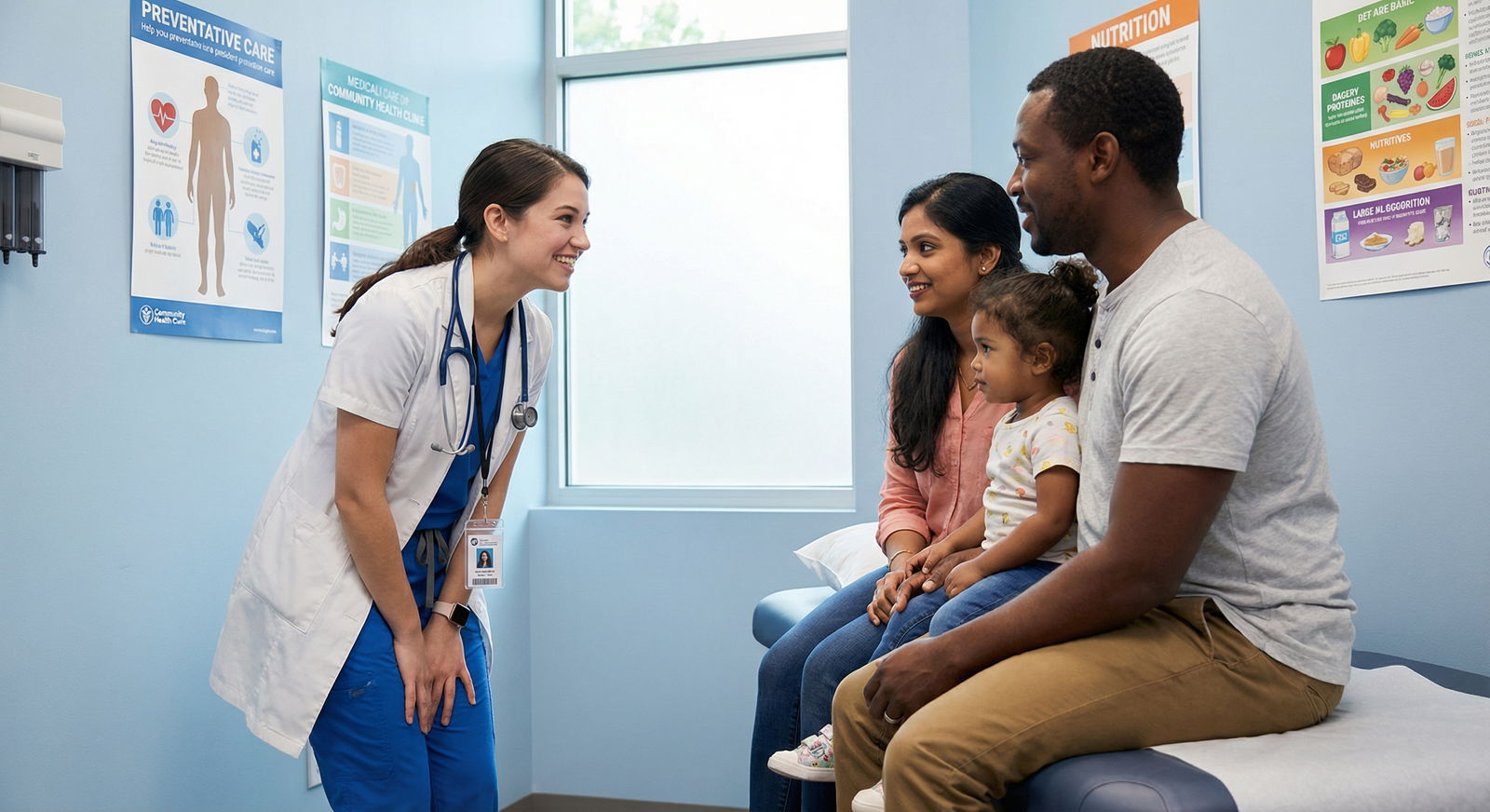
Community residency programs immerse you in the medicine that most patients experience daily. You see the impact of socioeconomic factors, access issues, and cultural beliefs on health—and you learn how to navigate them effectively.
Exposure to a Wide Range of Conditions
In community settings, you treat:
- Bread-and-butter primary care problems (hypertension, diabetes, COPD, depression)
- Complex multimorbidity (e.g., heart failure + CKD + social instability)
- Late presentations of disease due to access barriers
- Pediatric, adult, and geriatric patients (depending on specialty)
For example, a family medicine resident in a community FQHC may see, in a single half-day clinic:
- A child with poorly controlled asthma living in substandard housing
- An adult with diabetes working two jobs without consistent access to healthy food
- A newly arrived immigrant family facing language barriers and vaccine catch-up
These experiences develop your cultural competence, communication skills, and practical problem-solving, preparing you to practice in virtually any environment.
Learning the Social Side of Medicine
Community programs often emphasize:
- Working with social workers, case managers, and community health workers
- Connecting patients with housing, food security, or insurance resources
- Collaborating with local organizations and public health initiatives
This holistic approach can be deeply rewarding and helps you understand the broader system in which medicine operates.
3. Strong Mentorship, Access to Faculty, and Professional Development
Because of their size and culture, many community residency programs provide an environment where residents are known as individuals, not just numbers.
Close Relationships with Attendings
In a community program, it’s common for:
- Attendings to know your strengths, weaknesses, and goals
- Faculty to proactively offer research or QI projects tailored to your interests
- Program directors and associate PDs to have open-door policies
You’re more likely to receive detailed feedback, personalized advice, and targeted support for your next steps—whether that’s fellowship, hospitalist work, private practice, or a non-traditional physician career.
Illustrative Example:
Dr. Sarah Kim, who completed a community family medicine residency, recalls that by PGY-2:
- The program director knew she was interested in women’s health and procedures.
- Faculty helped her arrange additional colposcopy and LARC insertion clinics.
- A mentor connected her with a nearby OB/GYN group that later hired her as a partner.
These relationships often endure well beyond residency, turning into lifelong professional connections.
Opportunities for Teaching and Leadership
Community programs may not have large medical student cohorts, but many still host:
- Rotating medical students
- PA/NP students
- Visiting rotators from academic centers
Residents commonly:
- Teach on rounds and in morning reports
- Lead journal clubs and QI initiatives
- Serve on hospital committees (e.g., safety, diversity, wellness)
If you enjoy teaching or want leadership experience, community settings can offer early, meaningful responsibilities that stand out on your CV.
4. Work-Life Balance and Resident Wellness
Work-life balance in residency is never perfect—but program culture can significantly impact your stress level and burnout risk. Many community programs deliberately structure rotations and call schedules to be intense yet sustainable.
Manageable Schedules and Supportive Culture
Common features that promote work-life balance in community settings include:
- More predictable call schedules compared to large academic quaternary centers
- Rotations designed to limit chronic sleep deprivation
- Fewer research or committee expectations if you prefer a more clinically focused track
- Leadership that takes resident feedback seriously and is agile enough to make changes
Some community programs also:
- Offer part-time options in later years (especially in family medicine or psychiatry)
- Integrate telemedicine clinics into rotations
- Provide dedicated wellness days or structured mental health support
These factors translate into:
- More time for family, hobbies, or side interests
- Lower burnout and higher job satisfaction
- Space to reflect on your long-term career goals
Numerous surveys have found that residents in community programs often report comparable or higher satisfaction with their training and lifestyle than peers in large academic institutions, particularly when they value flexibility and personal well-being.
5. Strong Job Prospects and Ties to Underserved Communities
Where you train often shapes where you practice. Community programs are powerful pipelines for physicians committed to serving real-world communities—both urban and rural.
Local Job Opportunities and Networking
Because you train in a regional hospital system or clinic network, you naturally build:
- Relationships with local clinicians and administrators
- Familiarity with the health system’s policies, EMR, and culture
- A track record that hiring committees can directly observe
According to workforce analyses, a substantial proportion of residents who complete community-based training—often around 30% or more—remain in the same geographic region after graduation. For those who value continuity, community roots, and a stable physician career, this can be immensely appealing.
Serving Underserved and High-Need Areas
Many community residency programs are deliberately located in:
- Medically underserved urban neighborhoods
- Rural or semi-rural counties with physician shortages
- Regions with high health disparities
Training in these areas equips you to:
- Address gaps in access to care
- Understand local community health needs
- Become a trusted professional in your community
If your mission includes health equity, advocacy, or public health impact, a community program can be an ideal launchpad.
Important Considerations When Choosing a Community Program
While community programs offer clear advantages, they are not one-size-fits-all. You should evaluate each program in light of your goals, learning style, and future plans.
1. Clarify Your Career Ambitions
Ask yourself:
- Do I see myself primarily as a clinician, researcher, educator, or some mix?
- Am I strongly aiming for a highly competitive subspecialty fellowship at a top-tier academic center?
- Do I want a physician career centered on community practice, hospitalist work, or primary care?
If your primary goal is a research-heavy academic career or a highly competitive fellowship (e.g., interventional cardiology at a major academic center), some large academic residencies may offer more built-in resources, protected research time, and high-profile mentors. That said, many residents from community programs do successfully match into fellowships, especially when they proactively seek out research, mentors, and away rotations.
2. Evaluate the Program’s Educational Strengths
Not all community residency programs are identical. When comparing them, look for:
- Accreditation status and board pass rates
- Case mix and complexity (Do residents see enough high-acuity cases? Trauma? ICU exposure?)
- Didactics and teaching structure (Morning report, noon conferences, simulation labs)
- Evaluation and feedback processes (Do residents feel well supported and fairly assessed?)
- Opportunities for scholarly activity (QI projects, case reports, retrospective studies)
You can often glean this information from:
- Program websites
- Virtual or in-person interviews
- Conversations with current residents and alumni
- Program review sites and forums (used critically and in context)
3. Understand the Local Context and Lifestyle
Since work-life balance is a major advantage of many community programs, examine both professional and personal lifestyle factors:
- Cost of living in the area
- Commute times and housing options
- Call schedules and night float systems
- Access to childcare, partner job markets, schools, and social outlets
- Proximity to family or support systems
Imagine your actual day-to-day life in that city or town. A slightly less “prestigious” name may be more than offset by a sustainable lifestyle that keeps you healthy and engaged.
4. Consider Patient Population and Mission Fit
Think about:
- Do I want to work primarily with underserved populations, immigrants, or rural communities?
- Am I interested in global health, addiction medicine, or behavioral health integration?
- Does the program’s stated mission align with my values?
Look for programs that:
- Highlight community engagement and outreach
- Partner with public health departments, shelters, or schools
- Offer tracks or electives in underserved medicine, rural health, or community psychiatry
If you feel energized by the program’s mission, you’re more likely to thrive there.
Practical Tips for Applying to Community Residency Programs
To make the most of your residency application strategy:
Apply Broadly and Intentionally
- Include a range of community and academic programs aligned with your goals.
- Avoid underestimating community programs—many are competitive and selective.
Highlight Your Fit for Community Medicine
On your application and during interviews:
- Emphasize prior experiences in community clinics, FQHCs, free clinics, or public health projects.
- Share concrete stories that show your commitment to patient-centered care and underserved populations.
- Describe how you value hands-on experience, mentorship, and work-life balance.
Ask Targeted Questions on Interview Day
Examples:
- “How would you describe the program’s approach to resident autonomy and attending supervision?”
- “What kind of procedural experience do residents typically graduate with?”
- “How does your program support resident wellness and work-life balance?”
- “What percentage of graduates stay in the region, pursue fellowships, or go into academic vs community practice?”
These questions not only show insight but also give you critical data for your decision-making.

FAQ: Community Residency Programs and Your Medical Career
1. What is the main difference between community and academic residency programs?
Community residency programs are primarily based in community hospitals or clinics, focusing on real-world clinical care, hands-on experience, and often smaller, close-knit teams. Academic programs are typically anchored at university-affiliated tertiary or quaternary centers with major research infrastructures and subspecialty services.
Key differences:
- Focus: Community = clinical practice and patient care; Academic = mix of clinical care, research, and teaching
- Scale: Community = smaller cohorts; Academic = larger classes and more fellows
- Environment: Community = more autonomy and direct attending interaction; Academic = more layered teams and frequent subspecialty exposure
Both can provide excellent medical training—“best” depends on your goals and learning style.
2. Are salaries and benefits different between community and academic programs?
Base resident salaries across the U.S. are often similar within a region, regardless of whether programs are community or academic. However, total compensation and lifestyle can differ due to:
- Cost of living (many community programs are in more affordable areas)
- Call differentials, moonlighting opportunities, and housing stipends
- Parking costs, meal allowances, and other local benefits
A $60,000 salary in a mid-sized city with low rent may stretch significantly further than the same (or even higher) salary in a very expensive urban academic center.
3. Do community residency programs limit my chances for fellowship or academic careers?
No, not inherently. Many residents from community programs match into competitive fellowships and even go on to academic faculty positions. Success typically depends on:
- Your clinical performance and letters of recommendation
- Any research or scholarly activity you pursue
- Networking, away rotations, and mentorship
If fellowship is important to you, ask community programs:
- What proportion of graduates pursue and match into fellowships
- How they support research, conference presentations, and specialty exposure
- Whether they have formal relationships with academic centers for electives or rotations
4. Can I switch from a community program to an academic program during residency?
Transfers between programs—whether community to academic or vice versa—are possible but not guaranteed. They depend on:
- Available positions in the target program
- Your performance and evaluations
- Visa status (if applicable)
- Accreditation and credit for prior training years
If you’re considering a potential transfer:
- Be transparent and professional with your current program leadership.
- Maintain strong performance and relationships; you’ll need supportive letters.
- Understand that transfers are the exception, not the norm—so choose your initial program thoughtfully.
5. Are community residency programs less competitive or lower quality than academic programs?
Competitiveness and quality vary widely among both community and academic programs. Some community programs are extremely selective, with strong reputations, high board pass rates, and excellent fellowship placement records.
Instead of assuming a simple hierarchy, evaluate each program based on:
- Educational rigor and case mix
- Resident satisfaction and wellness
- Outcomes (board pass rates, job/fellowship placement)
- Fit with your values, goals, and preferred practice environment
For many future physicians, community residency programs offer the ideal balance of rigorous training, meaningful patient care, and sustainable work-life balance—often providing exactly the preparation needed for a fulfilling, long-term physician career in the communities that need it most.