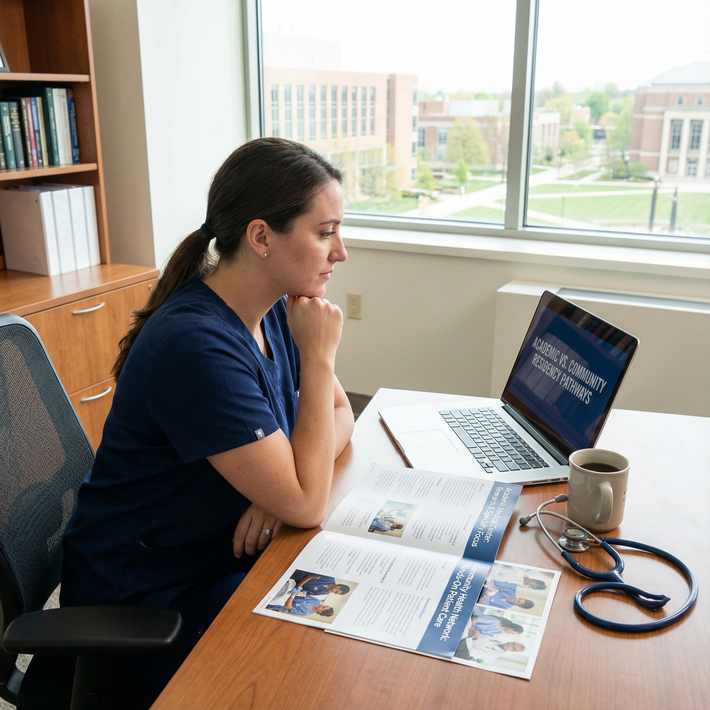
Introduction: Academic vs. Community Paths in Medical Education
In today’s complex landscape of medical education, future physicians must navigate a growing range of options in how and where they train. One of the most important early decisions is whether to pursue residency training in an academic program, a community-based program, or a hybrid of the two. While community programs emphasize high-volume clinical care and service to local populations, academic programs are embedded in university-affiliated teaching hospitals and focus more heavily on research, scholarly activity, and structured teaching.
Understanding how academic programs are organized—and the real-world benefits and limitations of training in them—is critical for making informed choices about your medical training and long-term healthcare career. This guide breaks down the key structural elements of academic programs, explains how they differ from other training environments, and provides practical, residency-focused advice for applicants.
Throughout, the emphasis is on helping you match your own goals, learning style, and circumstances to the right type of program, using the full spectrum of student resources and opportunities available in modern medical education.
What Are Academic Programs in Medicine?
Academic programs in medicine are residency and fellowship training programs closely affiliated with medical schools and university health systems. They typically sit within large academic medical centers, often alongside major research institutes, subspecialty centers, and graduate schools of biomedical science or public health.
Core Characteristics of Academic Programs
Academic programs generally share several defining features that distinguish them from purely community-based programs in the residency match and beyond:
University Affiliation
These programs are linked to a medical school or university health system. Faculty members often hold academic titles (e.g., Assistant Professor, Associate Professor), and the institution is responsible for training medical students, residents, and fellows.Research-Intensive Environment
Academic departments prioritize clinical and basic science research. Residents are typically expected—or strongly encouraged—to participate in scholarly activity, ranging from quality improvement projects to clinical trials and basic science work.Robust Teaching Infrastructure
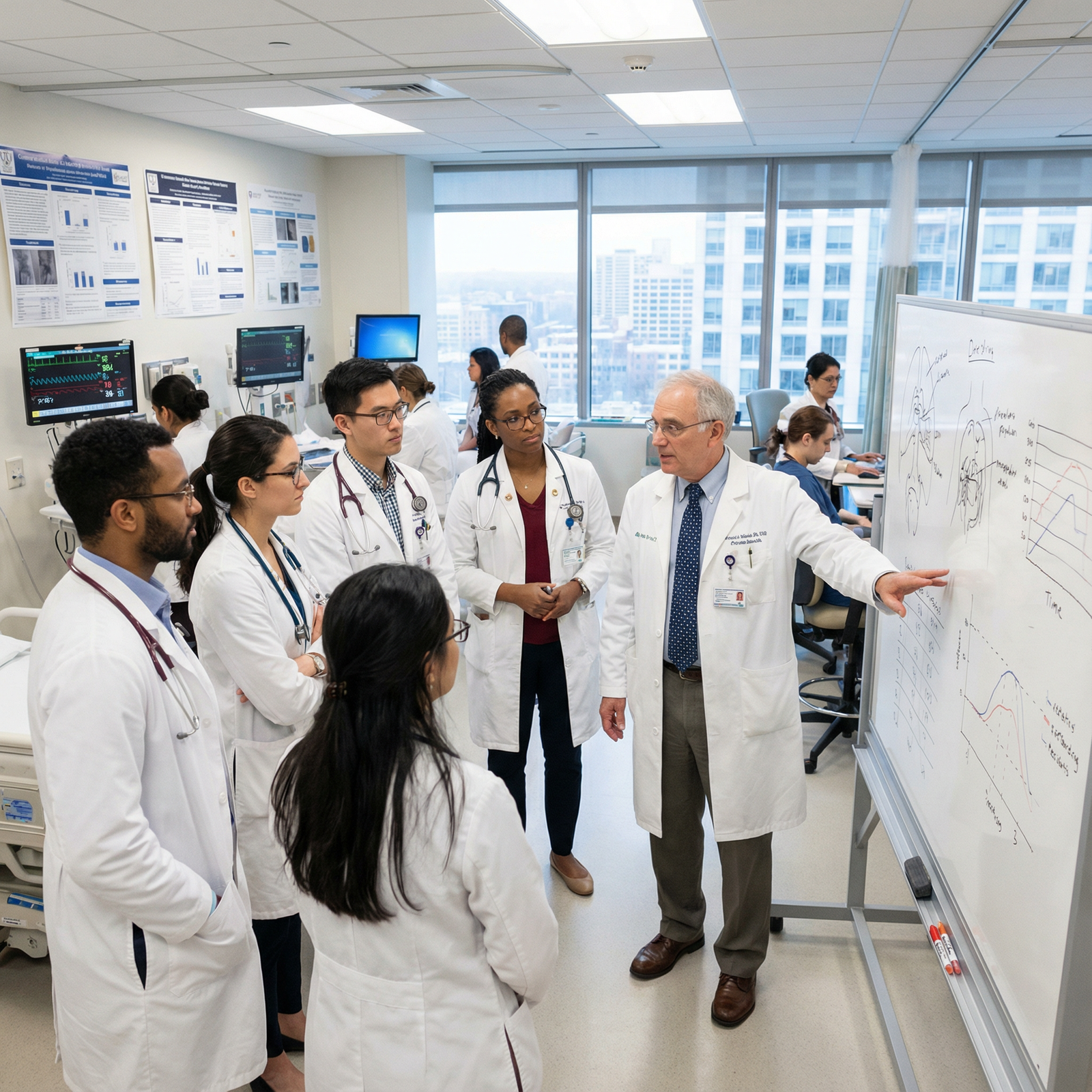
Structured didactics, grand rounds, journal clubs, and subspecialty conferences are integral components of daily life. Teaching is a core mission alongside patient care and research.Tertiary and Quaternary Care
Academic medical centers frequently serve as referral hubs for complex or rare conditions. Residents see high-acuity and unusual cases that may not be as prevalent in strictly community settings.Interdisciplinary Collaboration
Trainees work closely with multiple disciplines—such as pharmacy, nursing, social work, and research teams—promoting team-based care and exposure to different aspects of healthcare systems.
These characteristics shape the culture, expectations, and opportunities within academic residency programs, influencing not only your training experience but also your future career trajectory.
How Academic Medical Programs Are Structured
Understanding the structure of academic programs helps you interpret what you see on a program website, in a residency information session, or during an interview day.
Curriculum Design in Academic Residency Programs
Academic residency curricula typically blend clinical training with structured education and scholarly work. While specific schedules vary by specialty, most programs include:
Core Clinical Rotations
Residents rotate through inpatient, outpatient, consult, and procedural services in multiple settings:- Tertiary-care university hospitals
- Veterans Affairs (VA) hospitals
- County or safety-net hospitals
- Affiliated community sites
This mix exposes residents to a range of patient populations, healthcare systems, and case types.
Formal Didactic Curriculum
- Weekly protected teaching time (e.g., half-day sessions)
- Grand rounds with internal or invited national experts
- Board review sessions and in-training exam preparation
- Journal clubs focused on critical appraisal and evidence-based medicine
- Case conferences, morbidity and mortality (M&M) conferences, tumor boards, etc.
Elective and Selective Opportunities
Academic programs often offer a wide variety of electives:- Subspecialty rotations (e.g., advanced heart failure, interventional radiology)
- Away electives at partner institutions or global health sites
- Research blocks dedicated to scholarly projects
- Education-focused or leadership electives (e.g., “resident-as-teacher” rotations)
Longitudinal Experiences
- Continuity clinics that allow residents to follow their own patient panels over years
- Longitudinal quality improvement or patient-safety projects
- Long-term mentoring relationships with faculty in specific areas of interest
This structure is designed to balance service with learning, building both clinical competence and professional identity.
Assessment and Feedback in Academic Programs
Academic residency programs apply rigorous assessment systems, often aligned with ACGME milestones and competency frameworks:
Clinical Evaluations
Attending physicians, fellows, and sometimes peers evaluate residents on clinical reasoning, professionalism, communication, and procedural skills.Objective Examinations
- In-training exams mirroring board certification tests
- Simulation-based assessments (e.g., code blue scenarios, standardized patients)
- OSCEs or skills-based evaluations in some specialties
Scholarship and Teaching Evaluation
Academic programs often assess:- Quality and impact of research or quality-improvement work
- Teaching performance with medical students and junior residents
- Participation and leadership in conferences and journal clubs
Residents receive structured feedback through semiannual evaluations, Clinical Competency Committees (CCCs), and regular meetings with program leadership. Strong programs pair these with robust remediation and support strategies, recognizing that growth in medical training is iterative and guided.
Residency and Career Preparation
Academic medical centers are uniquely positioned to support diverse healthcare careers, from purely clinical roles to clinician-educator, physician-scientist, and leadership paths.
Key elements of career preparation include:
Advising and Mentorship Committees
Most academic programs assign faculty mentors and provide access to career advisors, subspecialty directors, and sometimes formalized mentorship committees.Dedicated Career Development Resources
- Workshops on CV building, interview skills, and contract negotiation
- Guidance about fellowship applications and subspecialty choices
- Exposure to non-traditional paths: hospital administration, public health, informatics, industry, or global health
Student and Resident Resources
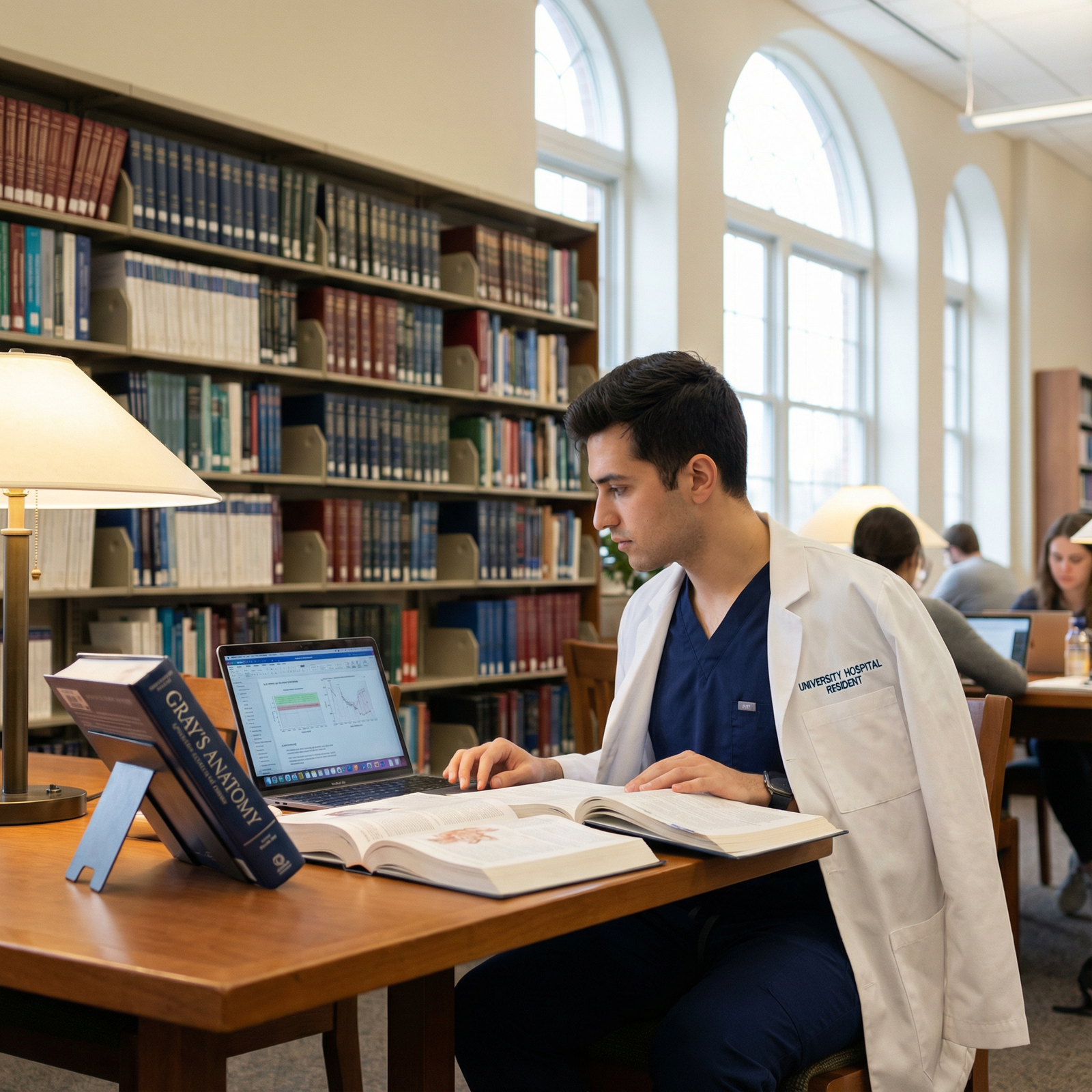
Since academic programs exist within broader academic institutions, residents can often access:- University libraries and extensive electronic databases (PubMed, UpToDate, specialty journals)
- Biostatistics cores and research support offices
- Education on wellness, financial literacy, and time management
These structures make academic programs particularly appealing to those considering advanced subspecialty training, academic faculty positions, or physician-scientist careers.

Key Benefits of Academic Medical Programs
While individual experiences vary, several advantages are consistently associated with training in academic settings.
1. Deep Integration with Research and Scholarly Activity
Academic programs offer unparalleled access to medical research and scholarship, which can be pivotal if you are aiming for competitive fellowships or academic careers.
Research Opportunities
Multiple Types of Research
Residents can engage in:- Basic science or translational research in wet labs
- Clinical research and clinical trials
- Health services, implementation science, or outcomes research
- Medical education research, curriculum design, or assessment projects
Structured Research Tracks
Many academic programs now offer:- Research-focused tracks with protected time
- MD/PhD-friendly pathways
- Physician-scientist development programs with extended training and grant mentorship
Tangible Career Advantages
Publications and Presentations
Residents can co-author manuscripts, present at national conferences, and win poster or oral presentation awards—assets that significantly strengthen fellowship and job applications.Foundation in Evidence-Based Medicine
Hands-on experience with study design, statistical interpretation, and critical appraisal of literature helps residents:- Practice evidence-based care
- Become more discerning consumers and producers of medical research
- Teach and lead journal clubs and quality-improvement efforts
2. High-Intensity Clinical Exposure and Case Complexity
Academic medical centers often function as regional referral hubs, creating a rich environment for learning.
Breadth and Depth of Pathology
Residents routinely see:- Rare diseases that community hospitals may encounter only occasionally
- Complex multi-organ disease in tertiary-care units
- Advanced interventions and cutting-edge therapies (e.g., ECMO, transplant, experimental protocols)
Multidisciplinary Care Models
- Tumor boards that bring together surgeons, oncologists, radiologists, and pathologists
- Multidisciplinary clinics for conditions like cystic fibrosis, inflammatory bowel disease, or congenital heart disease
- Interprofessional team rounding with pharmacists, social workers, and case managers
This intensity can rapidly build diagnostic reasoning, familiarity with advanced therapies, and comfort working in complex healthcare systems.
3. Strong Professional Networking and Visibility
Academic programs are hubs of professional activity in medicine and healthcare.
Faculty Mentorship and Sponsorship
Beyond supervision, faculty at academic institutions can:- Introduce you to national leaders in your field
- Sponsor you for committee roles, leadership positions, and speaking opportunities
- Provide influential letters of recommendation grounded in sustained collaboration
Conferences and Visiting Professorships
Being “on site” in an academic center means:- Regular exposure to visiting professors and national experts
- Easier access to department-sponsored conference travel
- Opportunities to present your work to local and regional audiences
Alumni Networks and Institutional Reputation
High-profile academic centers often have far-reaching alumni networks. This can matter in:- Landing competitive fellowships
- Securing academic or hospital-employed positions
- Connecting with mentors and collaborators across institutions
4. Comprehensive Educational Infrastructure and Teaching Skills
For those interested in education, academic programs are typically the strongest environment for developing as a clinician-educator.
Resident-as-Teacher Opportunities
- Supervision of medical students and junior residents
- Leading small-group sessions, simulation exercises, and bedside teaching
- Formal teaching workshops on feedback, assessment, and curriculum design
Educational Leadership Roles
Residents often serve as:- Chief residents
- Leaders of curriculum committees or residency quality-improvement initiatives
- Coordinators of interest groups or student-run clinics
Developing these skills opens doors to roles in academic medicine, such as clerkship or program director positions, and can enhance teaching effectiveness regardless of ultimate practice setting.
Limitations and Challenges of Academic Medical Programs
Academic programs are not the ideal fit for every learner or every career goal. It is essential to weigh potential downsides alongside the benefits.
1. Competitive Culture and Performance Pressure
The same high-powered environment that drives innovation can also create an atmosphere of intense competition.
Academic and Research Competition
- Residents may compete for limited research mentors, high-impact projects, or prime presentation slots.
- Prestigious fellowships and faculty positions often come with high expectations for publications and leadership.
Impact on Well-Being
- Prolonged high pressure may increase the risk of burnout, imposter syndrome, and mental health challenges.
- Some residents find it difficult to maintain a sense of camaraderie when they feel constantly compared to peers.
Actionable Advice:
When researching programs, ask about:
- Wellness initiatives (e.g., built-in mental health resources, schedule protections)
- Culture of collaboration vs. competition
- Approaches to supporting struggling residents or those needing flexible paths
2. Financial Considerations and Opportunity Costs
Academic training pathways—especially when extended by research years or dual-degree programs—can have financial implications.
Tuition and Early Training Costs
As a medical student, university-affiliated schools often carry higher tuition. While residency itself is salaried, the cumulative educational debt can be substantial.Extended Training Time
- Research years, additional master’s degrees, or extended physician-scientist tracks can delay attending-level income.
- Opportunity costs should be weighed against the long-term benefits of an academic or subspecialized career.
Actionable Advice:
Leverage student resources and institutional support:
- Financial counseling and loan repayment education
- NIH or institutional loan repayment programs for research careers
- Service-based loan forgiveness for those committed to academic or underserved care
3. Potential Imbalance: Research vs. Practical Experience
While many academic programs offer excellent hands-on training, some may tilt heavily toward research and subspecialty care, especially in certain departments.
Risk of Limited Early Patient Contact
Some academic medical school curricula front-load basic science and reduce patient contact early in training. For residents, heavy conference schedules or research blocks can sometimes compete with direct patient care time.Niche vs. Breadth of Training
Strong subspecialty focus may mean:- Deep exposure in certain niches but less experience with common community presentations
- Less autonomy initially, as complex patients are closely managed by multiple layers of supervision
Actionable Advice:
When evaluating programs:
- Ask about the balance of inpatient vs. outpatient time
- Clarify how early and how often residents manage primary patients directly
- Look for rotations at community affiliates or VA hospitals that broaden exposure and autonomy
4. Large-System Complexity and Bureaucracy
Academic medical centers are large institutions, which can introduce challenges:
Administrative Complexity
- Multiple electronic health records across affiliates
- Layers of committees and approvals that can slow changes
Role Diffusion
- With many trainees and subspecialists, task ownership can sometimes feel unclear.
- Residents must learn to navigate institutional systems and advocate effectively for patients.
This environment can develop valuable system-based practice skills but may be frustrating for those preferring leaner, more straightforward structures.
Choosing Between Academic and Community Programs: Practical Guidance
Most applicants do not have to choose one world forever. Many academic residency programs partner with community hospitals, and many community programs incorporate academic teaching. Still, understanding your priorities can help you select the right mix.
When Academic Programs May Be a Strong Fit
Consider prioritizing academic programs if you:
- Aspire to a physician-scientist or clinician-educator career
- Plan to pursue competitive fellowships in procedural or subspecialty fields
- Enjoy research, writing, and presenting
- Want intensive exposure to complex and rare diseases
- Thrive in high-structure, high-expectation environments
- Value being embedded in a university setting with broad student resources
When Community or Hybrid Programs May Align Better
You might lean toward community or hybrid training environments if you:
- Envision a primarily clinical career without heavy research
- Prefer high-volume, bread-and-butter clinical exposure
- Seek closer-knit, smaller residency cohorts
- Prioritize work-life balance over intensive scholarly output
- Plan to practice in community hospitals or outpatient settings long-term
How to Evaluate Academic Programs During the Residency Application Process
Use these targeted strategies as you research, apply, and interview:
Review Program Websites Critically
- Look for clear descriptions of scholarly expectations and support
- Note the distribution of rotations across university and community sites
- Examine their graduate outcomes: fellowships, academic vs. community jobs
Ask Specific Questions on Interview Day
- How is resident time protected for research or scholarly work?
- What proportion of graduates match into fellowships? Which ones?
- How does the program support wellness and work-life balance?
- How are residents involved in teaching and curriculum design?
Talk to Current Residents Off-Script
- Ask what surprised them once they started
- Explore culture: is it collaborative, cutthroat, supportive, or siloed?
- Find out how approachable faculty and program leadership are in practice
By aligning the structure and culture of an academic program with your own priorities and values, you enhance your chances of a fulfilling and sustainable training experience.
FAQ: Academic vs. Community Programs in Medical Education and Training
1. What is the main difference between academic and community residency programs?
Academic programs are based in university-affiliated hospitals and emphasize research, structured teaching, and complex tertiary care. Community programs, by contrast, focus more heavily on practical, high-volume clinical training in settings that mirror where many physicians ultimately practice. Academic programs often prioritize scholarly activity and subspecialty exposure, while community programs prioritize service, autonomy, and everyday patient care.
2. Are academic programs always more competitive than community programs?
Many academic programs, especially those at well-known institutions, are highly competitive due to their research portfolios, reputation, and fellowship match outcomes. However, competitiveness varies by specialty, geography, and individual program. Some community or hybrid programs can be equally selective, particularly in desirable locations or specialties. Applicants should review program-specific data (interview offers, match fill rates, fellowship placements) rather than assuming all academic programs are more competitive.
3. Do academic residency programs cost more or pay differently?
For residency, both academic and community programs pay salaries rather than charge tuition. Stipends are determined by the sponsoring institution and regional norms, not by academic vs. community status alone. However, academic centers in high cost-of-living cities may offer similar stipends to community hospitals in more affordable areas, effectively making the latter more financially advantageous. The major cost distinction is usually at the medical school level, where university-based academic programs may carry higher tuition.
4. How can training in an academic program benefit my long-term healthcare career?
Academic training can open doors to:
- Competitive subspecialty fellowships
- Faculty positions at medical schools and teaching hospitals
- Physician-scientist roles with protected research time
- Leadership positions in education, quality improvement, and administration
Residents from academic programs also typically leave with strong experience in evidence-based medicine, teaching, and scholarly work—skills that are useful in any healthcare career, including those in community practice, industry, or public health.
5. What should I prioritize when deciding between academic and community programs?
Reflect on:
- Career goals: Academic, subspecialty, or primarily clinical practice
- Learning style: Structured, research-oriented vs. hands-on, service-oriented
- Desired patient population and case mix: Rare and complex vs. common and broad
- Lifestyle and well-being priorities: Tolerance for pressure, hours, and expectations
- Financial context: Debt load, cost-of-living considerations, and interest in extended training
Use these to guide your program list, questions on interview day, and final rank decisions. Both academic and community programs can provide excellent medical training; the key is selecting the environment that best matches your goals, values, and vision for your healthcare career.