Introduction: Joining the Elite Circle in Competitive Specialties
Among all medical specialties, a handful consistently stand out for their intensity, impact, and difficulty to enter. Whether you are drawn to neurosurgery, dermatology, orthopedic surgery, radiology, plastic surgery, or interventional cardiology, aiming for these fields means pursuing one of the most demanding paths in a career in medicine.
These competitive residency programs represent more than prestige. They offer:
- High-impact patient care
- Rapidly advancing technologies and procedures
- Significant opportunities for leadership in healthcare
- The chance to shape practice standards and medical education in your field
But breaking into this “elite circle” and eventually becoming a leader in these competitive specialties requires far more than high board scores. It demands years of strategic preparation, disciplined execution, and intentional career development.
This expanded guide walks you through:
- What makes certain medical specialties so competitive
- The core attributes shared by successful leaders in these fields
- Practical, step-by-step strategies to become a standout applicant and future leader
- How to integrate research, leadership, and mentorship into your journey
Use this as a roadmap to not only match into a competitive residency, but to position yourself for leadership roles throughout your medical career.
Understanding Competitive Medical Specialties
What Makes a Specialty “Competitive”?
A competitive specialty is defined largely by the imbalance between high applicant interest and limited residency positions. But several deeper factors drive that competitiveness:
1. Limited Training Positions
Highly specialized or procedure-heavy fields often have fewer accredited residency or fellowship spots relative to the number of qualified applicants. For example:
- Integrated plastic surgery and dermatology programs often have only a small number of positions per institution.
- Ophthalmology and neurosurgery programs are similarly constrained in size.
This scarcity naturally increases competition and raises the bar for entry.
2. High Perceived Prestige and Impact
Specialties perceived as “high stakes” or “high impact” often attract top-performing students:
- Cardiology and cardiothoracic surgery: Direct, dramatic influence on survival and quality of life.
- Neurosurgery: Complex, life-changing operations involving the brain and spine.
- Dermatology and plastic surgery: Visible patient outcomes, lifestyle appeal, and strong academic focus.
Prestige alone should never dictate your choice of specialty, but it is an undeniable driver of competitiveness.
3. Procedural and Technological Complexity
Specialties that involve advanced procedures and cutting-edge technology tend to attract students who enjoy:
- Working with their hands
- Mastering complex technical skills
- Adopting new devices and minimally invasive techniques
Examples include:
- Interventional cardiology and electrophysiology
- Interventional radiology
- Orthopedic and spine surgery
- Advanced endoscopic procedures in GI or pulmonary medicine
These fields typically demand lengthy training and rigorous performance standards.
4. Length and Intensity of Training
Many competitive specialties require:
- Long residencies (5–7+ years)
- Mandatory fellowships for subspecialty practice
- High physical and emotional stamina
This combination can paradoxically both deter some applicants and attract others who are willing to commit deeply to their chosen path.
Examples of Highly Competitive Specialties
While competitiveness can fluctuate over time and by country, the following are consistently among the most competitive residency specialties:
- Dermatology
- Plastic and Reconstructive Surgery (integrated)
- Neurosurgery
- Orthopedic Surgery
- Ophthalmology
- Otolaryngology – Head and Neck Surgery (ENT)
- Interventional Radiology / Diagnostic Radiology
- Cardiothoracic Surgery
- Urology
Many internal medicine residents also enter extremely competitive subspecialties, such as:
- Interventional Cardiology
- Electrophysiology
- Advanced Heart Failure / Transplant Cardiology
- Hematology-Oncology at top-tier programs
Understanding the unique expectations and culture of your target field is the first step in planning an effective strategy.

Core Attributes of Leaders in Competitive Specialties
Matching into a competitive residency is one challenge; becoming a leader in that specialty is another. Program directors and future colleagues look for a predictable constellation of traits in residents destined for leadership in healthcare and medical education.
1. Deep Intellectual Curiosity and Lifelong Learning
In rapidly evolving specialties, yesterday’s gold standard can become tomorrow’s outdated approach. Leaders distinguish themselves by:
- Continuously reading primary literature and guidelines
- Attending national conferences and grand rounds
- Asking critical questions in clinical and research settings
- Embracing new techniques, technologies, and evidence-based practice
Example:
A dermatology resident who systematically reviews new biologics for psoriasis, participates in a journal club, and contributes to guideline updates becomes a natural resource for their team and an emerging expert in their niche.
Action Steps:
- Start a habit of reading one landmark or recent article per week in your target specialty.
- Join specialty-specific societies as a student or resident member to access journals and resources.
- Seek out faculty who are known as “content experts” and ask how they built their knowledge base.
2. Relentless Work Ethic and Resilience
Competitive residency programs demand long hours, complex cases, and high expectations. Leaders:
- Show consistent reliability and follow-through
- Embrace challenging cases and difficult rotations
- Bounce back from complications, setbacks, or exam disappointments
- Demonstrate emotional resilience and professionalism under stress
While regulations such as the 80-hour workweek exist, peak times in surgical or critical care specialties can still feel grueling. Your ability to maintain performance, kindness, and composure under pressure will be carefully observed.
Practical Tips:
- Develop routines for sleep, nutrition, and exercise that are realistic within a resident schedule.
- Learn and practice stress-management techniques (brief mindfulness, debriefing with peers, structured reflection).
- Seek feedback early and often—and act on it.
3. High-Level Teamwork and Communication Skills
Leaders in modern healthcare succeed not as solo heroes but as coordinators of complex, multidisciplinary teams. In competitive specialties, this can include:
- Surgeons, anesthesiologists, intensivists
- Nurses, scrub techs, and advanced practice providers
- Radiologists, pathologists, and consultants
- Social workers, physical therapists, and care coordinators
Real-World Scenario:
An orthopedic chief resident manages a multi-trauma patient by coordinating the OR schedule, prioritizing injuries, communicating with the ICU team, and updating the patient’s family with clarity and empathy.
How to Develop This Skill:
- Practice presenting cases succinctly and clearly.
- Volunteer to lead parts of rounds, case conferences, or sign-out.
- Ask peers and nurses for feedback on your communication style.
- Learn to tailor your language to your audience (patients vs. colleagues vs. consultants).
4. Research Mindset and Analytical Thinking
In many competitive specialties, research productivity is both:
- A gatekeeper for residency interviews
- A launching pad for future leadership roles in academic medicine
Leaders tend to:
- Identify important clinical questions and knowledge gaps
- Design studies or quality improvement projects
- Analyze data critically
- Present and publish their work to advance the field
Dermatology, plastic surgery, radiology, and neurosurgery historically place high value on applicants with strong research experience and peer-reviewed publications.
Actionable Advice:
- Get involved in research early—ideally by the end of your first year of medical school.
- Start with small, feasible projects: case reports, retrospective chart reviews, or QI projects.
- Aim to present posters or talks at regional and national meetings.
- Learn basic statistics and study design; consider a short course or online module.
5. Adaptability, Problem-Solving, and Clinical Judgment
Complex, rapidly changing clinical scenarios are routine in these fields. Leaders must be able to:
- Rapidly reassess situations in the OR, ICU, or clinic
- Balance risks and benefits with limited data
- Change course when a procedure, treatment, or plan is not going as expected
Example:
During a neurosurgical procedure, an unexpected vascular anomaly is encountered. The surgeon and team must quickly reassess, adjust the operative plan, and weigh whether to continue, stage the procedure, or modify the approach—all in real time.
To develop this:
- Ask mentors to “think aloud” during challenging cases so you can hear their decision-making.
- Reflect after complex cases: What went well? What could have been done differently?
- Engage in simulation labs and morbidity and mortality (M&M) conferences.
Strategic Steps to Becoming a Leader in a Competitive Specialty
Breaking into a competitive field and building a leadership trajectory is best approached deliberately and early. The following steps apply whether you are a preclinical student, clinical student, or early resident.
1. Choosing and Exploring Your Specialty Early
You don’t need to lock in your decision in your first semester, but early exploration helps you:
- Secure relevant research opportunities
- Choose targeted electives and sub-internships
- Build longitudinal relationships with mentors
Practical Strategies:
- Attend interest group meetings (e.g., surgery, dermatology, radiology, cardiology).
- Shadow physicians in your suspected interest area during preclinical years or breaks.
- Use summer periods to complete observerships, externships, or research blocks in your field.
If you’re uncertain between two or three specialties, pick one primary target for focused preparation while keeping a reasonable backup specialty in mind.
2. Building a Strong Academic Foundation
In competitive specialties, your academic performance is often used as a first filter for residency applications—especially at highly ranked programs.
Focus on:
- Preclinical Performance: Strong fundamentals in anatomy, physiology, and pathophysiology matter greatly for surgery, radiology, and cardiology.
- Standardized Exams:
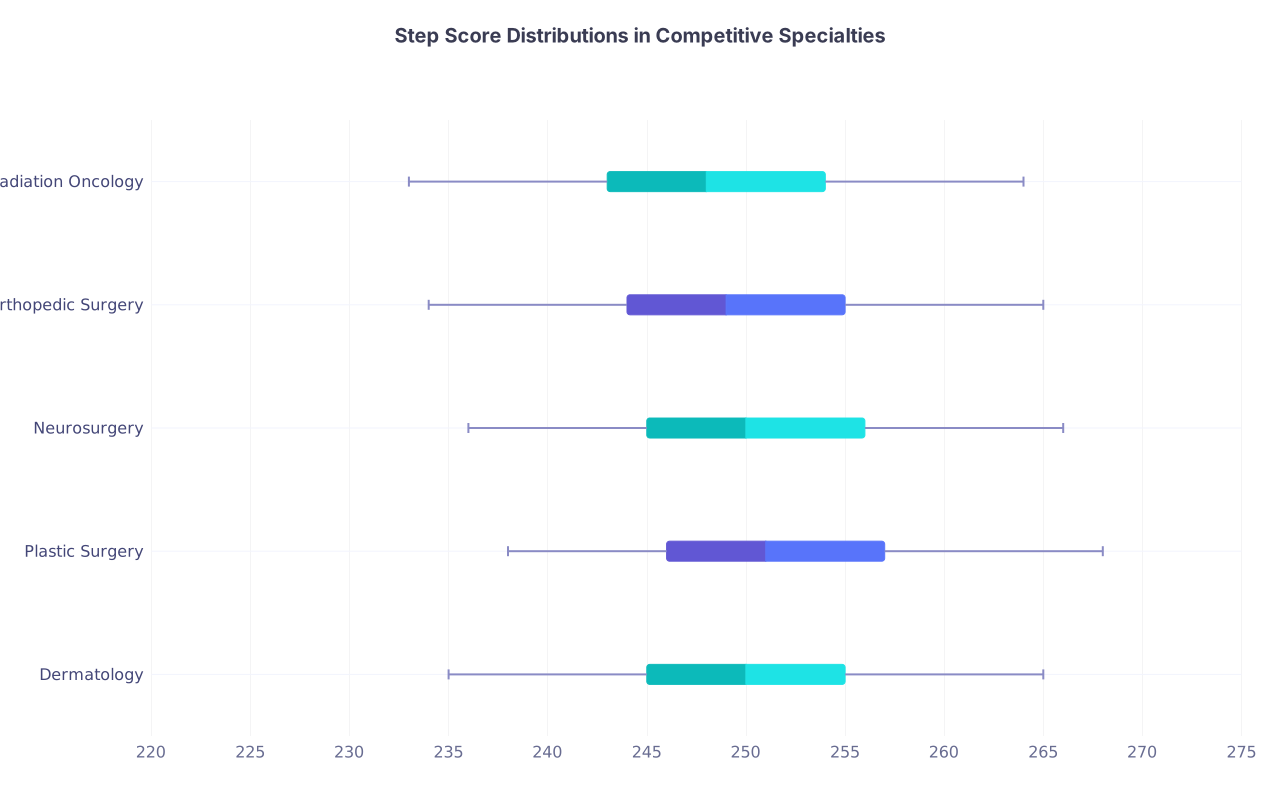
- Even with USMLE Step 1 as pass/fail, Step 2 CK scores, COMLEX scores, and in-training exam performance are increasingly important.
- Competitive specialties tend to have mean scores significantly above national averages.
Actionable Steps:
- Develop a realistic, longitudinal study plan early in medical school.
- Use active learning techniques: spaced repetition, practice questions, teaching peers.
- If you struggle in a course, seek help early from faculty, tutors, or learning specialists.
Strong academics will not guarantee a spot in a competitive residency, but weak performance can close doors unnecessarily.
3. Maximizing Clinical Rotations and Hands-On Experience
Clinical rotations are where you:
- Confirm whether a specialty is truly a good fit
- Demonstrate your work ethic and team skills
- Earn strong letters of recommendation
How to Stand Out on Rotations:
- Show up early, prepared, and eager to help.
- Learn the names and roles of everyone on the team.
- Read about your patients’ conditions and procedures the night before.
- Volunteer for cases, procedures, and presentations.
- Ask for mid-rotation feedback and adjust accordingly.
Consider:
- Specialty-specific electives (e.g., dermatopathology, musculoskeletal radiology, cardiothoracic surgery).
- Away rotations or visiting student rotations at programs where you might want to match—especially important in fields like orthopedics, ENT, and neurosurgery.
4. Networking and Mentorship: Building Your Professional Community
In competitive specialties, who knows you can be as important as what you’ve done. Mentors, sponsors, and advocates open doors to research, letters, and leadership roles.
Finding Mentors
Look for mentors at different stages:
- Senior medical students or residents in your target specialty
- Fellows who are closer to the job market and recent match experience
- Faculty members with strong reputations in clinical care, research, or education
How to Approach Potential Mentors:
- Send a concise email introducing yourself, your interests, and what you are seeking (e.g., “I’m a second-year student interested in ENT and would love to talk about research opportunities and career planning.”).
- Come prepared with specific questions and a brief description of your goals.
- Follow up with updates on your progress to maintain the relationship.
Professional Organizations and Conferences
Join relevant specialty organizations early:
- For example, the American College of Surgeons, American Academy of Dermatology, American College of Radiology, American College of Cardiology, or specialty sections within the AMA.
- Many offer medical student and resident memberships at reduced rates, with access to mentorship programs and travel scholarships.
Attending conferences, even as a student or early resident, is an excellent platform to:
- Present research
- Meet future colleagues and collaborators
- Understand emerging directions in your specialty
5. Developing a Research and Scholarship Portfolio
In many competitive fields, research productivity is a distinguishing feature of successful applicants and future leaders.
Aim to build a cohesive research narrative, if possible, rather than scattered, unrelated projects.
Types of Scholarly Work:
- Case reports and clinical vignettes
- Retrospective chart reviews
- Prospective clinical trials (often as part of a team)
- Quality improvement (QI) projects
- Educational research or curriculum development projects
- Review articles or book chapters
Practical Tips:
- Start small: join an existing project to learn the basics.
- Be reliable—meet deadlines, communicate clearly, and take ownership of tasks.
- Learn to create a professional academic CV, tracking all presentations and publications.
- Aim for at least one or two posters or presentations at specialty meetings as a student, and continue this momentum as a resident.
6. Seeking and Practicing Leadership Roles
Leadership in healthcare starts well before attendinghood. Residency programs value applicants who have already demonstrated leadership potential.
Consider roles such as:
- Officer or president in a specialty interest group or national student organization
- Organizer of teaching sessions for junior students
- Founder of a new initiative (e.g., free clinic specialty service line, simulation workshop, research group)
- Quality improvement project lead
What Programs Look For:
- Not just titles, but impact—What changed because of your leadership?
- Ability to work with diverse teams and resolve conflict
- Vision and follow-through
These early roles are the foundation for future leadership in medical education, hospital administration, or national specialty societies.

FAQs: Navigating Leadership in Competitive Medical Specialties
1. Which medical specialties are considered the most competitive?
While competitiveness can change over time, specialties that are consistently highly competitive include:
- Dermatology
- Plastic and Reconstructive Surgery (integrated)
- Neurosurgery
- Orthopedic Surgery
- Otolaryngology – Head and Neck Surgery (ENT)
- Ophthalmology
- Interventional Radiology / Diagnostic Radiology
- Urology
- Certain internal medicine subspecialties (e.g., interventional cardiology) at top-tier programs
These fields have a high ratio of applicants to residency spots and often expect strong academic metrics, research, and letters of recommendation.
2. How important is research for matching into competitive residencies?
Research is very important in most competitive specialties and often serves as:
- A marker of your commitment to the field
- Evidence of your analytical and problem-solving skills
- A way to get to know faculty who may later write strong letters for you
Programs in dermatology, plastic surgery, radiology, neurosurgery, and ENT, in particular, tend to favor applicants with multiple publications or national presentations. However, quality and relevance often matter more than sheer quantity.
3. Can I still enter a competitive specialty if my grades or board scores are not perfect?
It is more challenging, but not impossible. Many residents in competitive specialties:
- Had one or two weaker courses or exam scores
- Strengthened their overall application with research, outstanding clinical evaluations, strong letters, and leadership roles
- Sometimes completed a preliminary year, transitional year, or additional research year before matching into their desired field
If you have academic setbacks:
- Seek honest feedback from advisors and specialty mentors early.
- Focus on improving performance on Step 2 CK/Level 2 and clerkships.
- Consider additional research or a dedicated research year to enhance your profile.
- Be flexible in your program list and open to a wide geographic range.
4. How do I choose a specialty without being overly influenced by prestige or salary?
Ask yourself:
- Which clinical environments energize you—clinic, OR, ICU, procedures, imaging?
- Which patient populations and conditions do you find most meaningful?
- What type of lifestyle and schedule will be sustainable for you long term?
- Are you drawn more to procedural or cognitive work, acute or chronic care?
Use shadowing, rotations, and honest self-reflection to evaluate fit. Prestige and salary should never be the primary drivers; burnout is more likely if you choose a field that doesn’t align with your strengths and interests.
5. What role does mentorship play in building a career in a competitive specialty?
Mentorship is often a critical success factor. Effective mentors can:
- Offer guidance on course selection, research, and rotations
- Provide realistic feedback on your competitiveness
- Help you refine personal statements and CVs
- Advocate for you with program directors and fellowship directors
- Serve as role models for leadership, professionalism, and work-life integration
Ideally, you will have multiple mentors—some focused on research, others on clinical skill development, and some on broader career strategy and leadership in healthcare.
By understanding what makes certain medical specialties competitive and deliberately developing the attributes and experiences valued by those fields, you can move beyond simply “getting in” and position yourself as a future leader in medicine. Whether your goal is academic promotion, innovation in patient care, or shaping the next generation through medical education, the habits you build now—curiosity, discipline, teamwork, and strategic planning—will form the backbone of a fulfilling and impactful career.