Is Your Specialty Too Competitive? Signs to Reconsider and Smart Alternatives to Explore
Embarking on a medical career means navigating some of the most high‑stakes decisions you’ll ever make. Among them, choosing a medical specialty can feel uniquely stressful. You’re balancing passion, lifestyle, earning potential, and training length—while also worrying whether your dream field is simply too competitive for your current application profile.
For residency applicants, especially in the era of increasing applicant volumes and evolving exam scoring (e.g., USMLE Step 1 pass/fail), understanding specialty competitiveness is no longer optional—it directly affects your residency match outcome and the trajectory of your entire medical career.
This guide will help you:
- Understand what makes a specialty “competitive”
- Recognize warning signs that your target specialty may be unrealistic right now
- Assess whether the cost—in stress, time, and risk—is worth it
- Identify strong alternative specialties that still offer meaningful work, good job prospects, and better work-life balance
- Make a thoughtful, data-informed plan for your residency match
Understanding Specialty Competitiveness in the Residency Match
Specialty competitiveness is not just about prestige or salary. It’s a dynamic blend of numbers, expectations, and applicant behavior that determines how difficult it is to match into a particular field.
What Does “Competitive” Actually Mean?
When advisors or classmates say a specialty is “competitive,” they’re usually referring to some combination of:
- High USMLE/COMLEX score expectations
- Limited residency positions relative to the number of applicants
- Strong emphasis on research and publications
- Preference for AOA/Gold Humanism, high class rank, or honors in core clerkships
- High proportion of unmatched applicants each year
- Heavy preference for home institution or geographic ties
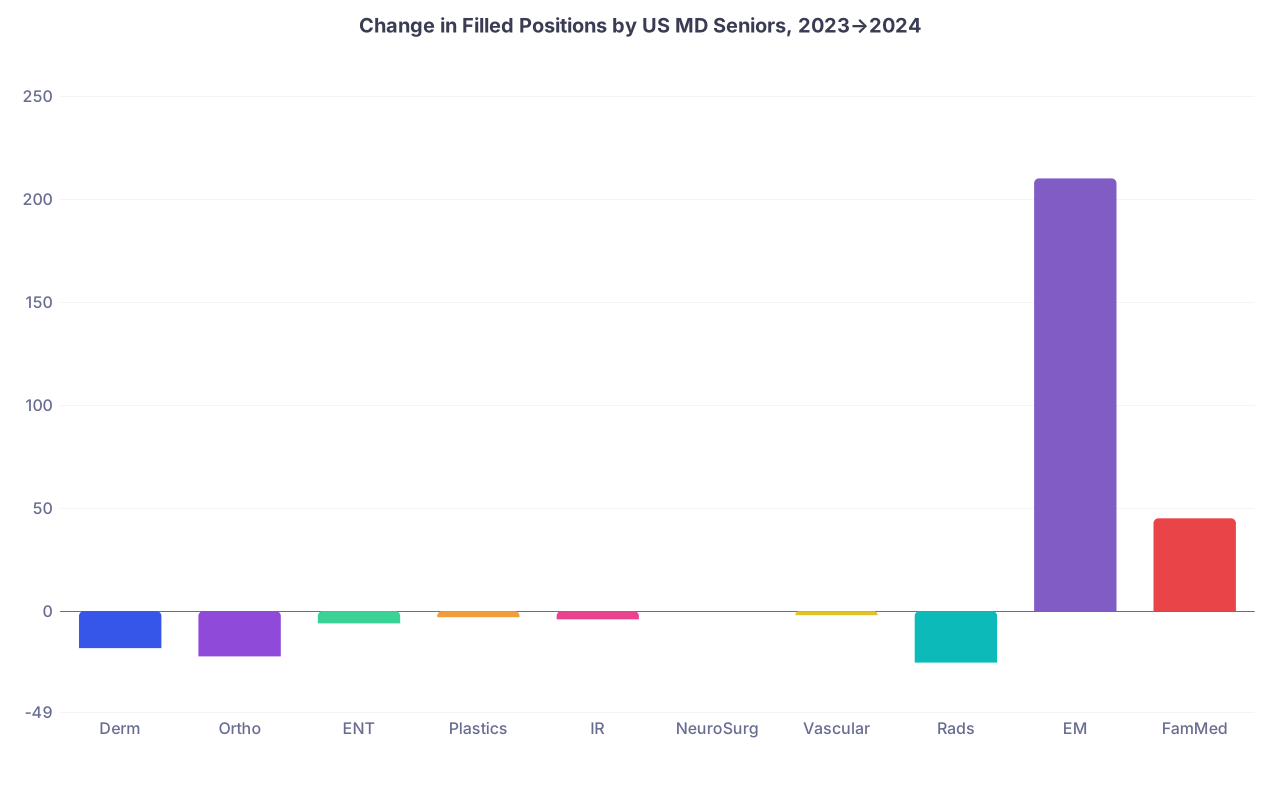
Dermatology, orthopedic surgery, plastic surgery, neurosurgery, otolaryngology (ENT), and interventional radiology are classic examples of high-competitiveness specialties. By contrast, family medicine, internal medicine, psychiatry, and pediatrics have historically offered higher match rates and more flexibility in applicant profiles.
Key Factors Driving Specialty Competitiveness
Several consistent forces shape how competitive a specialty is in any given match cycle:
Number of Residency Positions vs. Number of Applicants
- A specialty with 500 positions and 2,000 applicants will naturally be more competitive than one with 3,000 positions and 2,500 applicants.
- Some fields (e.g., dermatology, plastic surgery) have relatively small training pipelines, driving up the applicant-to-position ratio.
Applicant Interest and Perceived Prestige
- Specialties perceived as high-paying, procedure-heavy, or lifestyle-friendly attract more applicants.
- Trends can shift over time—e.g., rising interest in lifestyle specialties (like dermatology) or fields with flexible practice options (like psychiatry).
Performance Metrics and Selection Criteria
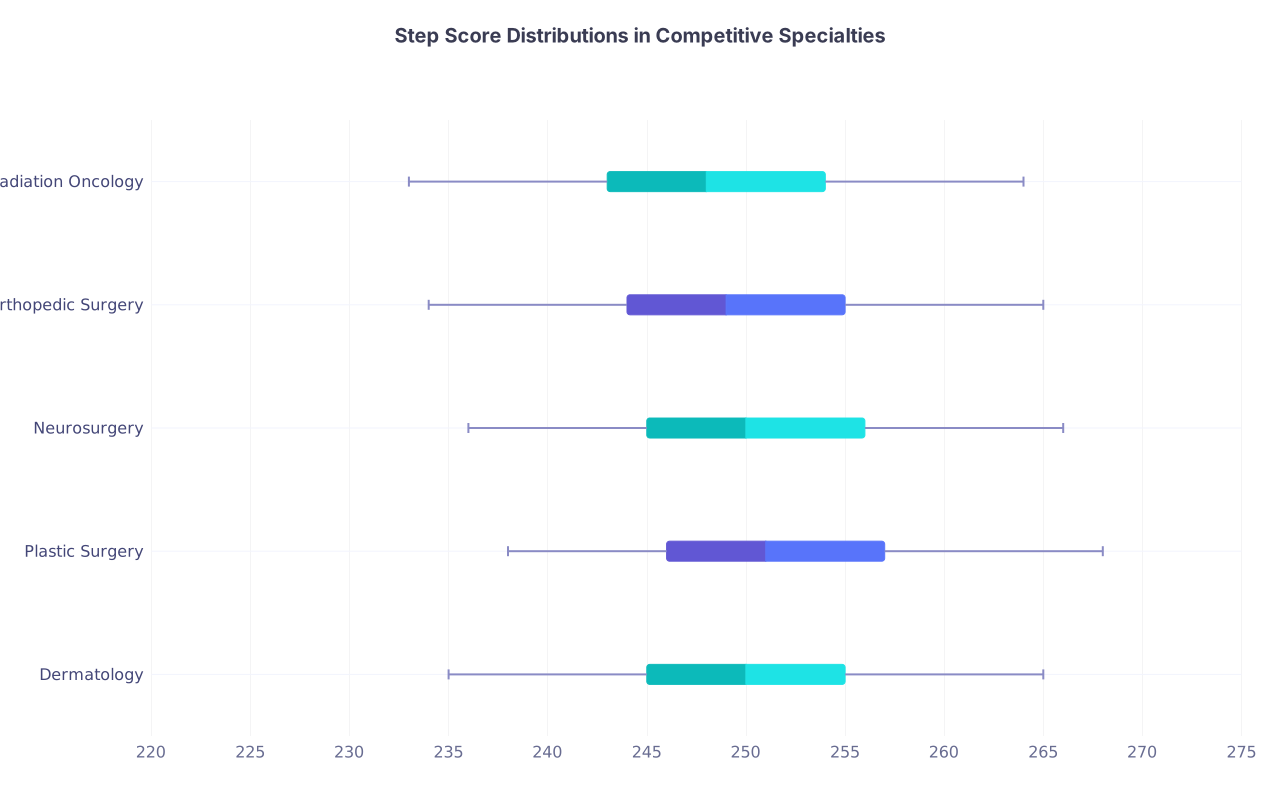
- Historically, high Step 1 and Step 2 CK scores filtered applicants in competitive fields. With Step 1 now pass/fail, Step 2 CK, clinical performance, research, and letters carry even more weight.
- Surgical and procedural fields often expect honors in surgery/medicine clerkships, strong letters from subspecialists, and robust away rotation performance.
Length and Complexity of Training Pathways
- Some specialties require longer training, integrated programs, or competitive fellowships (e.g., cardiology, GI, interventional radiology), which attracts a highly driven applicant pool.
- The more “bottlenecks” in a training pathway, the more selective each stage tends to be.
Geographic and Program-Specific Factors
- Big-name academic centers and high-demand geographic areas (major coastal cities, popular metro regions) are more competitive across all specialties.
- Even less-competitive fields become very selective in particularly desirable locations.
Understanding these factors helps you interpret NRMP data and advice from mentors with more nuance—and assess where you realistically stand.

Signs Your Chosen Specialty May Be Too Competitive for Your Current Profile
Many applicants fall into the trap of pursuing a specialty based on passion alone, without fully aligning their metrics, experiences, and stress tolerance with the realities of the field. You don’t need a perfect application to match into a competitive specialty—but you do need a realistic assessment.
Here are key warning signs that your target specialty may be too competitive for where you are right now.
1. A High Applicant-to-Position Ratio—and You’re in the Middle or Lower Tier
If your chosen field has significantly more applicants than positions and your profile is average or below-average for that specialty, your risk of going unmatched rises sharply.
How to evaluate this:
- Review the latest NRMP “Charting Outcomes in the Match” data for your specialty.
- Look at:
- Average Step 2 CK scores
- Percentage of applicants with research experiences and publications
- Match rate for U.S. MD, DO, and IMGs
- Compare your own metrics honestly to the median and the lower quartile of matched applicants.
Red flags:
- You are significantly below the typical Step 2 CK range for matched applicants.
- You have less specialty-specific research than most matched candidates.
- Your school does not have a strong home program in that specialty, limiting mentorship and audition rotations.
If the applicant-to-position ratio is already brutal and you’re not near the top of the pack, your risk is higher—not impossible, but high enough that you should strongly consider parallel planning with alternative specialties.
2. Your Academic Metrics Don’t Align with Specialty Norms
Competitive specialties are often brutally score-conscious, even with holistic review. If your performance metrics don’t line up, you may be setting yourself up for a disappointing match.
Academic signals to review:
- Step 2 CK / COMLEX Level 2: Are you below average for matched candidates in your desired field?
- Pre-clinical and clinical grades: Did you struggle in core clerkships relevant to your specialty (e.g., medicine/surgery for competitive fields)?
- Class rank/AOA/Gold Humanism: Does your CV look typical or noticeably lean compared to others in that field?
If your scores and grades are significantly lower than the typical matched applicant, a pure “all-in” approach to a hyper-competitive specialty becomes very risky. You may still apply—especially if you have standout research or strong letters—but you should strongly consider applying to alternative specialties as a safety net.
3. You’re Struggling to Secure Meaningful Research or Specialty-Specific Experiences
In many competitive specialties, research is not optional—it’s expected.
Warning signs:
- You can’t find a research mentor in your specialty despite repeated efforts.
- Your research is limited to small projects with no publications, posters, or presentations.
- You lack meaningful specialty-specific exposure (e.g., away rotations, electives, shadowing) due to scheduling or access issues.
- You are late in the application cycle and still trying to “rush” research to fill your CV.
This doesn’t make your dream specialty impossible—but it does make you less competitive relative to peers who have multi-year research experiences, multiple publications, or advanced degrees. If opportunities in your specialty are persistently hard to come by, that signals both high demand and limited slots—an important reality check.
4. The Application Process Is Damaging Your Well-Being
Residency applications will always be stressful. But when the path to a specialty starts to consistently erode your mental health, sleep, or relationships, the cost may outweigh the benefit.
Questions to ask yourself:
- Are you constantly anxious, comparing yourself to peers, and feeling “never enough”?
- Have your physical health or relationships suffered because you’re constantly chasing more research, away rotations, or exam retakes?
- Do you dread each new milestone (away rotations, interview invitations) more than you look forward to them?
- Are you staying in this specialty mainly due to prestige, not genuine joy?
High stress now often predicts ongoing strain later, especially in specialties with demanding training and high burnout. If the pursuit itself feels unsustainable, that’s important data about your long-term fit and desired work-life balance.
5. Limited Job Prospects or Market Saturation After Training
Residency match is only one bottleneck. In some subspecialties, the job market is arguably an even more important consideration.
Risk factors:
- The specialty or subspecialty is known to be saturated in your preferred geographic areas.
- Most recent graduates take years to find stable positions or have to relocate far from family or preferred cities.
- The field is undergoing major reimbursement cuts or practice-model changes that limit opportunities.
- You’re drawn to a highly niche or fellowship-only area where jobs are scarce.
If you’re contemplating years of additional training plus high match risk—only to face a tough job market—that’s a strong signal to reassess. You might find an alternative specialty with robust demand, geographic flexibility, and a more secure long-term career path.
6. High Burnout Rates and a Lifestyle You Don’t Actually Want
Some highly competitive specialties are also among the most demanding in terms of hours, call, stress, and medico-legal exposure. If your long-term priorities include family time, personal hobbies, or part-time work, forcing yourself into a notorious burnout field can be a poor fit.
Ask yourself honestly:
- Do you actually want the lifestyle that comes with this specialty—or mainly its status or salary?
- Have you spoken with mid-career and late-career physicians in the field, not just residents?
- Are there high rates of burnout, depression, or attrition in the specialty?
- How easily can practitioners in that field adjust their schedule, work part-time, or change practice settings?
If your values lean strongly toward work-life balance, flexibility, and long-term sustainability, there may be alternative specialties that align better with your priorities and are less competitive in the residency match.
Exploring Fulfilling Alternative Specialties and Parallel Plans
Realizing that your top-choice specialty may be too competitive can feel like failure—but it isn’t. It’s a strategic pivot that can protect your match outcome and, in many cases, lead you toward a happier, more sustainable medical career.
The Power of a Parallel Plan
A smart approach for many applicants is a parallel plan: applying to your dream specialty and a more attainable alternative that still interests you.
Advantages of a parallel plan:
- Reduces risk of going unmatched
- Gives you more interview options and negotiating power
- Helps preserve your mental health during application season
- Creates space for genuine reflection if your feelings about your “dream” specialty evolve
Below are several alternative specialties that often offer better match rates, strong job markets, and improved work-life balance—without sacrificing meaningful patient care.
1. Family Medicine: Broad Scope and High Flexibility
Family medicine is one of the least competitive specialties by the numbers, but its impact is enormous.
Why consider it:
- Versatility: You can practice in outpatient clinics, hospitalist roles, urgent care, rural medicine, academic settings, sports medicine, and more.
- Work-life balance: Many family physicians design schedules that allow for predictable hours and time with family.
- Demand: Primary care shortages mean strong job security and geographic flexibility.
- Procedural options: Includes procedures like joint injections, skin biopsies, IUD placements, depending on your practice setting.
For students worried about matching and wanting a broad, patient-centered medical career, family medicine is a strong and often underappreciated option.
2. Internal Medicine: A Gateway to Subspecialization
Internal medicine (IM) offers both breadth and depth. It’s less competitive than many subspecialties but can be a stepping stone to many of them.
Benefits of internal medicine:
- Wide range of career paths: Hospitalist work, outpatient primary care, academic medicine, or fellowships (e.g., cardiology, GI, oncology).
- Strong demand: IM physicians are needed in almost every healthcare system.
- Research and teaching opportunities: Especially in academic centers.
- Flexibility of setting: From large academic medical centers to community hospitals or telemedicine.
If you enjoy complex diagnostic reasoning and are unsure which subspecialty you might ultimately pursue, IM keeps many doors open and is generally more attainable than jumping straight into a competitive subspecialty.
3. Pediatrics: Rewarding Work with Children and Families
Pediatrics tends to be less competitive than many adult subspecialties while offering profound emotional rewards.
Reasons to consider pediatrics:
- Meaningful relationships: Longitudinal care of children and their families over years.
- Subspecialty options: Pediatric cardiology, critical care, endocrinology, and more (though some of these fellowships are competitive).
- Team-based care: Frequent collaboration with nurses, social workers, therapists, and child life specialists.
- Job satisfaction: Many pediatricians report high levels of meaning and purpose in their work, despite lower average salaries than some adult specialties.
If you’re drawn to advocacy, preventive care, and working with families, pediatrics can be a deeply fulfilling path.
4. Psychiatry: Growing Demand and Lifestyle Flexibility
Psychiatry has become increasingly popular but still often remains more accessible than many surgical or highly procedural specialties.
Advantages of psychiatry:
- Rising demand: Mental health needs are growing worldwide, with significant shortages of psychiatrists in many regions.
- Flexible practice models: Outpatient, inpatient, consultation-liaison, telepsychiatry, academic, forensic, addiction, and child psychiatry options.
- Work-life balance: Many psychiatrists have regular office hours and minimal overnight call.
- Impact: High potential to transform patients’ lives, especially those with severe mental illness, addiction, or trauma histories.
For students driven by communication, long-term relationships, and the biopsychosocial model, psychiatry is a compelling alternative.
5. Public Health and Population-Based Careers
If your interests extend beyond individual patient encounters to systems and policy, public health offers diverse opportunities.
Public health-focused paths:
- Preventive medicine residencies
- Combined clinical and MPH (Master of Public Health) training
- Roles in government agencies (CDC, local health departments), NGOs, or global health
- Health policy, epidemiology, quality improvement, and health systems leadership
These careers may not follow the traditional high-competition residency track, yet they allow you to influence health outcomes for large populations, often with more predictable schedules and broader impact.
6. Occupational Medicine: Health at the Interface of Work and Life
Occupational medicine remains relatively niche and less competitive, with a growing need as workplaces focus more on employee well-being and safety.
Why it’s worth exploring:
- Focused scope: Evaluating workplace hazards, fitness for duty, injury prevention, and rehabilitation.
- Predictable hours: Many jobs are outpatient, weekday-based, and have limited call requirements.
- Diverse settings: Corporate health, government agencies, academic centers, consulting.
- Integration of public health: Heavy emphasis on prevention and environmental health.
For those interested in both clinical work and systems-level thinking, occupational medicine can offer a unique blend of stability, impact, and work-life balance.

Practical Steps if You’re Questioning Your Specialty Choice
If you recognize yourself in several of the warning signs above, don’t panic. This is a common and important inflection point in many physicians’ careers. Here’s a structured way to move forward.
1. Get Accurate, Specialty-Specific Data
- Review NRMP’s “Charting Outcomes in the Match” and “Program Director Survey” for your specialty.
- Compare your metrics and experiences honestly to those of successful applicants.
- Talk with your school’s advising office to understand past match outcomes for students with profiles similar to yours.
2. Seek Honest Feedback from Mentors
- Meet with advisors, program directors, and attendings in your field of interest.
- Ask for specific feedback: “If you were advising your own child with my scores and experiences, would you recommend applying to this specialty?”
- Value candor over reassurance—this is about risk management, not ego protection.
3. Explore Potential Alternative Specialties Early
- Schedule clinical electives or shadowing in alternative fields that align with your interests and strengths.
- Ask practitioners about lifestyle, call schedules, job prospects, and burnout levels.
- Notice not only what you find interesting, but also what feels sustainable for you emotionally and physically.
4. Decide on a Strategy: All-In vs. Parallel Planning
Based on your self-assessment and mentor input, choose one of these approaches:
- All-in on a competitive specialty (reasonable only if your application is clearly strong for that field)
- Parallel plan: Apply to both your dream specialty and one or two less-competitive alternatives
- Intentional pivot: Fully switch your focus to a more attainable specialty that better matches your priorities and profile
Document your reasoning, pros/cons, and risk tolerance. Your future self will appreciate that you made a thoughtful, not reactive, decision.
5. Prioritize Your Well-Being Along the Way
- Protect sleep, exercise, and relationships during the application process.
- Seek mental health support if anxiety or burnout symptoms worsen.
- Remember: Your specialty is only one aspect of your identity and your medical career. Many physicians build rich, meaningful lives in fields they hadn’t initially considered.
FAQs: Navigating Specialty Competitiveness and Alternative Options
Q1: How can I objectively determine if my specialty is too competitive for me?
Look at recent NRMP data for your specialty and compare your Step 2 CK/COMLEX scores, grades, research, and experiences to those of matched applicants. Then, seek honest feedback from multiple mentors, including at least one person who doesn’t have a stake in your chosen field. If several advisors express concern about your match chances and the data show you’re below typical ranges, it’s wise to consider a parallel plan or alternative specialties.
Q2: Is changing my specialty interest “too late” if I’m already in my final year of medical school?
It’s late, but not necessarily too late. Options depend on your timeline and flexibility:
- You may still pivot to a less-competitive specialty that aligns with your existing experiences.
- You can consider taking an additional research or post-graduate year to strengthen your application if you’re determined to pursue a highly competitive field.
- Some graduates pursue a transitional or prelim medicine/surgery year while reassessing.
Speak with your dean’s office early; they can help you map feasible paths based on deadlines and your current application status.
Q3: How much should work-life balance influence my specialty choice?
Work-life balance should be a central factor, not an afterthought. Training years are demanding no matter what, but some specialties offer far more flexibility in schedule, call, and practice setting over the long term. If you value time with family, predictable hours, or potential for part-time work, prioritize specialties that accommodate that—family medicine, psychiatry, outpatient internal medicine, and some non-procedural subspecialties often provide better balance than high-intensity surgical fields.
Q4: Can I still stand out in a competitive specialty if my scores are average?
Yes, but you’ll need to compensate thoughtfully. Ways to stand out include:
- Strong, personalized letters of recommendation from well-known faculty in the specialty
- Consistent, meaningful research with tangible outputs (posters, papers, QI projects)
- Excellent performance on away rotations, demonstrating work ethic, teachability, and team fit
- A compelling personal statement that clearly articulates your fit and commitment to the field
Even with these strengths, it’s wise to have a backup plan if your metrics are below typical ranges.
Q5: What if I match into a less competitive specialty and later regret not pursuing my dream field?
Career paths are often more flexible than they appear. Many physicians:
- Pivot into related subspecialties or fellowships that better match their interests
- Integrate hobby interests (sports, aesthetics, technology) into their practice
- Move into leadership, public health, administration, or academic roles over time
Some even retrain in a new specialty later, though this has financial and personal trade-offs. The main priority now is to match into a field where you can thrive, grow, and build a stable foundation for your medical career—your story doesn’t end with your first residency match.
Choosing a specialty is not about “winning” the prestige contest—it’s about crafting a fulfilling, sustainable medical career that fits you. If your current specialty target appears too competitive or too misaligned with your values, giving yourself permission to pivot or parallel plan is not giving up; it’s strategic, mature, and often the key to a happier future in medicine.