The Reality of Residency Matching: Why Some Specialties Are More Competitive
Completing medical school is a major milestone, but it does not guarantee your path into the medical specialty you want. The next decisive step is residency matching—a high‑stakes process where demand for certain specialties often far exceeds the available positions.
Some medical specialties are consistently labeled as “most competitive,” while others are described as more “accessible.” Understanding why certain fields are harder to match into is essential if you want to build a realistic strategy, optimize your application, and ultimately match into a specialty that fits both your interests and your career goals.
This article explores the core factors that drive competitiveness across specialties and offers concrete strategies to help you navigate the residency matching process more effectively.
Key Drivers of Specialty Competitiveness in Residency Matching
1. Interest, Lifestyle, and Popularity of Medical Specialties
One of the most powerful forces shaping competitiveness is simple: how many people want a specialty relative to how many positions exist. Certain specialties become “hot” because they align with what many medical students value—whether that’s work‑life balance, procedures, income potential, or prestige.
Perceived Work–Life Balance
Specialties perceived to offer predictable hours and fewer emergencies tend to attract a large number of applicants:
- Dermatology is the classic example: mostly outpatient, limited nights and weekends, and relatively few emergencies.
- Ophthalmology and radiation oncology are also often viewed as having more controllable lifestyles than many inpatient or surgical specialties.
This combination of lifestyle and highly specialized practice creates intense competition. Even students with strong applications may find it difficult to secure interviews in these specialties.
Financial Incentives and Income Potential
Compensation is not the only factor driving specialty choice, but it is influential for many:
- Orthopedic surgery, plastic surgery, radiology, and dermatology often rank among the higher‑paid specialties.
- This can make these fields especially attractive to students dealing with substantial educational debt or seeking financial security and flexibility.
Higher expected income tends to increase the number of applicants, especially when combined with other appealing features such as procedures and prestige.
Procedure‑Heavy and Technically Demanding Fields
Many students are drawn to work that is hands‑on, technical, and procedurally focused. This often includes fields such as:
- Orthopedic surgery
- Neurosurgery
- Plastic and reconstructive surgery
- Interventional radiology
- Urology
- General surgery (especially if followed by competitive fellowships)
These specialties offer intense OR time, immediate tangible outcomes, and high levels of technical skill. As a result, they attract a consistent stream of ambitious, highly driven applicants and become some of the most competitive specialties in the residency match.
Prestige and Visibility Within Medical Education
Certain specialties receive more exposure and prestige during medical school, which can shape students’ perceptions:
- High‑profile specialties like cardiology (via fellowship after internal medicine), neurosurgery, and orthopedic surgery are often associated with complex cases and cutting‑edge technology.
- Students may see leaders in these fields giving grand rounds, publishing extensively, or performing dramatic life‑saving procedures. This visibility can amplify interest and competition.
Over time, these cultural perceptions reinforce themselves: the more “elite” a specialty is perceived to be, the more top‑tier students apply, further raising the bar for entry.
2. Training Length, Intensity, and Pathway Structure
Another major determinant of competitiveness is the nature of the training pathway itself—how long it takes, how intense it is, and what it demands from applicants.
Duration of Residency and Overall Training
Longer and more demanding training commitments can influence how many people are willing to apply:
- Neurosurgery involves a 7‑year residency, often followed by additional fellowships.
- Cardiothoracic surgery and some interventional specialties also require extended training periods.
For some applicants, the prospect of nearly a decade of postgraduate training is a deterrent, which might reduce the total number of applicants. However, the ones who do apply are often highly committed and very well qualified, maintaining competitiveness despite lower overall numbers.
In contrast:
- Family medicine, pediatrics, and internal medicine typically involve 3‑year residencies.
- This shorter timeline can be appealing, particularly for those who want to start practicing sooner or are open to a wide range of practice settings.
These specialties often have more positions and a broader applicant pool, which can lower relative competitiveness, though certain geographic regions or specific programs can still be extremely selective.
Complexity of Board Certification and Fellowships
Some specialties become attractive because they provide gateways to prestigious subspecialties:
- Internal medicine → Cardiology, gastroenterology, rheumatology, oncology
- General surgery → Surgical oncology, vascular surgery, transplant surgery
- Pediatrics → Pediatric cardiology, neonatology, pediatric critical care
Applicants who are drawn to these high‑impact subspecialties may strategically choose more competitive core specialties or specific residency programs known for strong fellowship placement. This can increase competition for those residencies, even if the broader specialty is not uniformly competitive nationwide.
Workload Intensity and Burnout Risk
Perceived and actual workload also play roles:
- General surgery, obstetrics and gynecology, trauma, and certain ICU pathways are known for demanding schedules and high burnout risk.
- Some students shy away from these paths, while others are energized by the intensity and acute care focus.
This self‑selection shapes the applicant pool—those who remain in contention are often highly motivated, resilient, and heavily involved in relevant research and clinical experiences, which increases the competitiveness profile of top programs.

3. Number of Residency Positions and Geographic Distribution
Even if interest is high, competitiveness ultimately depends on how many positions are available and where they are located.
Limited Supply in Certain Competitive Specialties
Some specialties are simply small, with relatively few residency positions nationwide. This structural bottleneck is a key driver of competition:
- Dermatology, plastic surgery, otolaryngology (ENT), neurosurgery, and interventional radiology are classic examples.
- In these specialties, even strong applicants can go unmatched, not because they are unqualified, but because there are far more interested applicants than available training slots.
In contrast, larger core specialties like:
- Internal medicine
- Family medicine
- Pediatrics
- Emergency medicine
usually offer many more residency positions. While there are still highly competitive programs within these fields, the overall match rates for applicants tend to be higher.
Regional and Urban–Rural Differences
Geography can dramatically shape competitiveness:
- Urban academic centers (e.g., in major cities or well‑known university hospitals) often draw more applicants than community-based programs in less populated regions.
- Applicants frequently cluster around certain locations due to family ties, cost of living, perceived prestige, or lifestyle preferences.
For example:
- A dermatology position in a highly desirable coastal city may receive hundreds of applications.
- A family medicine spot in a rural region may have difficulty filling all its positions despite a national primary care shortage.
Understanding these geographic dynamics is crucial when building your rank list and application strategy, especially if you are applying to one of the more competitive specialties.
4. Match Rates, Applicant Quality, and Program Expectations
When applicants talk about “most competitive specialties,” they often refer to match rates and the average strength of the applicant pool.
Interpreting Historical Match Data
Match statistics—such as those from NRMP reports—provide objective insight into competitiveness:
Key metrics include:
- Match rate for U.S. MD, DO, and international graduates
- Average USMLE/COMLEX scores of matched applicants
- Number of applications per applicant and per position
- Percentage of unmatched applicants in each specialty
Patterns that signal high competitiveness:
- High unmatched rates despite strong applicant metrics
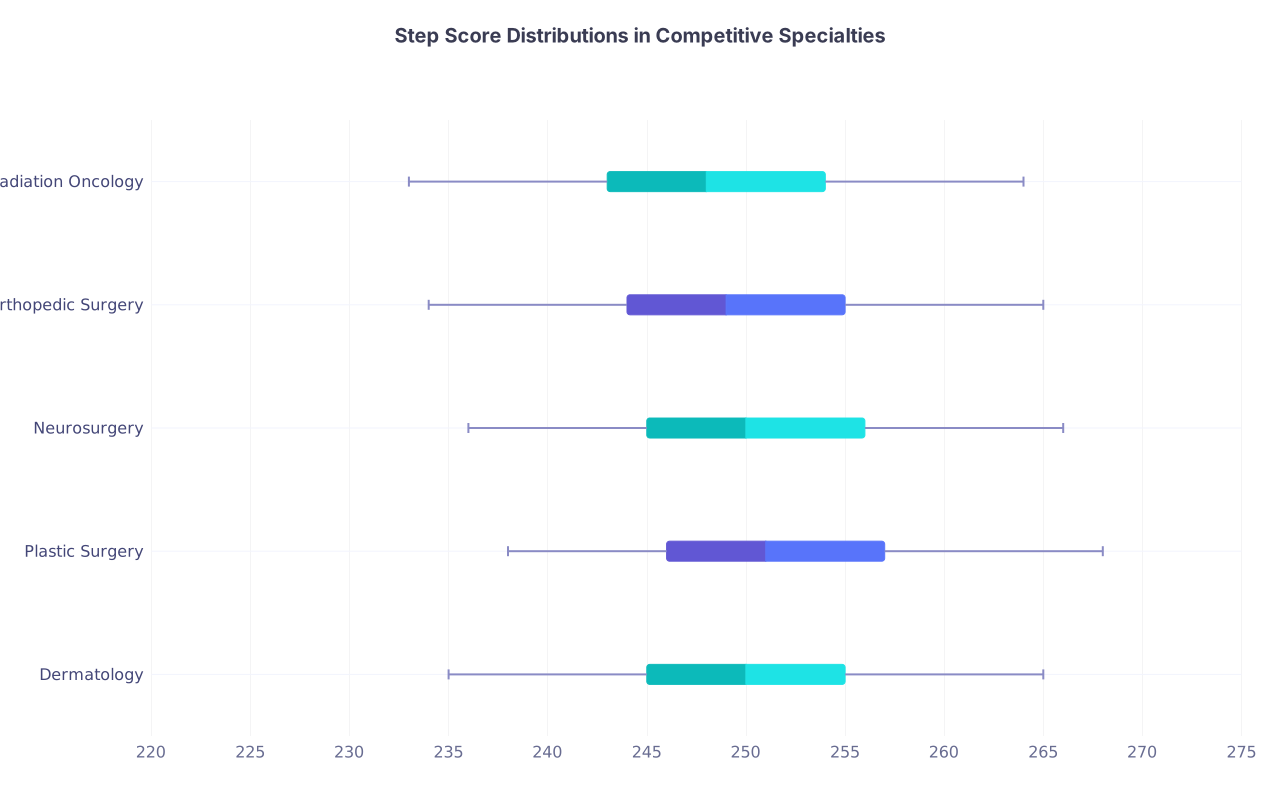
- High average board scores
- Heavy emphasis on research output and AOA membership
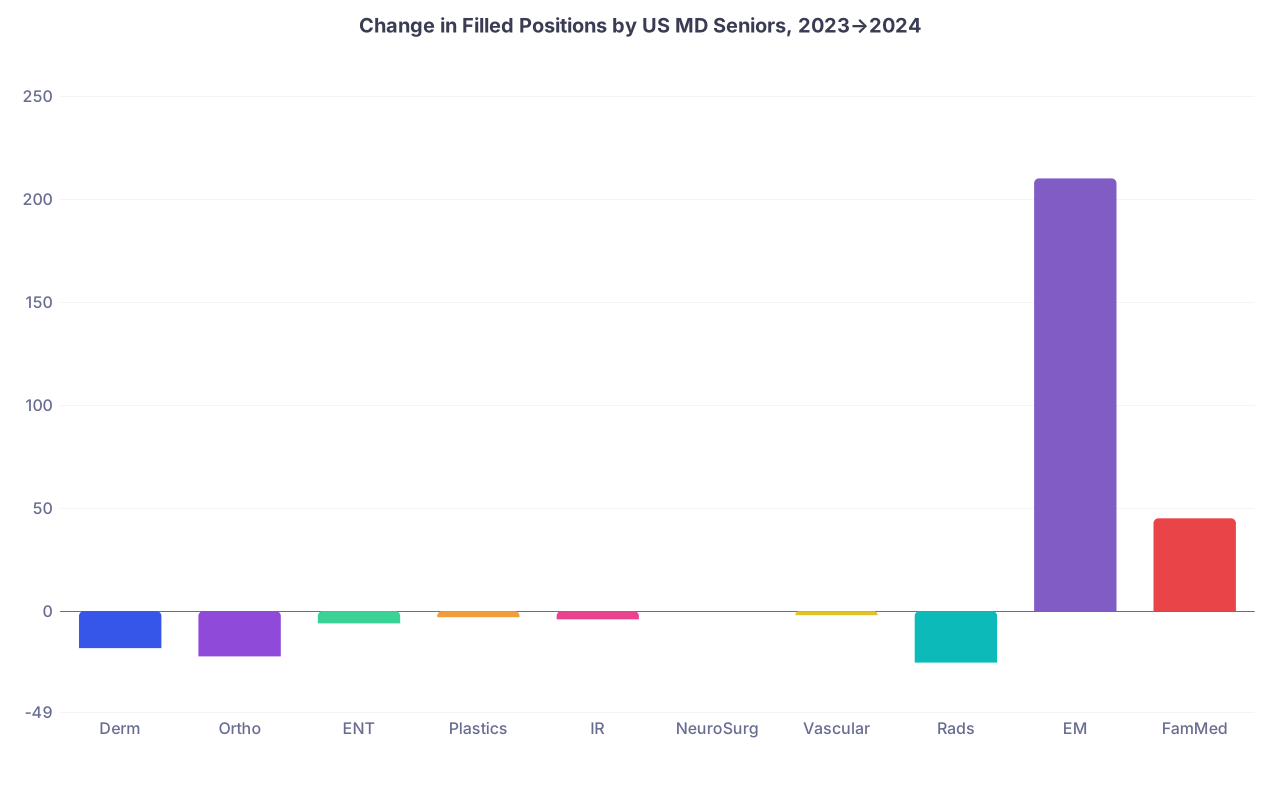
Dermatology, plastic surgery, orthopedic surgery, neurosurgery, ENT, and interventional radiology frequently appear near the top of these lists.
Components of a Strong Applicant Profile
Highly competitive specialties often expect applicants to demonstrate excellence across multiple domains:
- USMLE/COMLEX performance well above national averages (even with Step 1 now pass/fail, Step 2 CK and COMLEX Level 2 scores remain critical).
- Honors in core clinical rotations and strong clerkship evaluations.
- Specialty-specific research, ideally with publications or presentations.
- Sub-internships (away rotations) showing strong performance at programs in that specialty.
- Leadership roles, teaching experiences, and meaningful extracurricular involvement.
For many programs, it’s not just one thing—like a high board score—but the overall narrative of commitment and excellence in that specialty that stands out.
Holistic Review and Evolving Selection Criteria
Residency selection is shifting gradually toward a more holistic review:
- With Step 1 now pass/fail, some programs are placing increased weight on:
- Step 2 CK scores
- Clerkship grades
- Letters of recommendation
- Personal statements and experiences
- Programs are also paying more attention to:
- Professionalism, communication skills, and teamwork
- Diversity and inclusion goals
- Alignment with program values and mission (e.g., community service, rural care, academic research)
For applicants, this means there are multiple ways to stand out, even if one aspect of your application is less competitive—provided the rest of your file is strong and your story is coherent and genuine.
5. Cultural, Societal, and Healthcare System Influences
Competitiveness is not fixed; it evolves with changes in society, healthcare needs, and economic forces.
Shifting Health Priorities and “Trending” Specialties
As public health priorities shift, certain specialties gain visibility and interest:
- Psychiatry has seen increasing interest due to growing awareness of mental health needs, the opioid epidemic, and broader societal recognition of psychiatric care.
- Addiction medicine, palliative care, and global health are gaining traction, often via fellowships or specific training tracks within core specialties.
When a specialty or subspecialty is perceived as “emerging” or central to addressing modern healthcare challenges, more motivated students may gravitate toward it—sometimes causing a rapid rise in competition, especially at top academic centers.
Public Health Crises and Workforce Shortages
Events like the COVID‑19 pandemic have reshaped how students view specialties such as:
- Critical care medicine (via internal medicine, anesthesiology, or surgery)
- Emergency medicine
- Infectious diseases (via internal medicine fellowship)
At the same time, there is a persistent shortage in fields such as:
- Primary care (family medicine, general internal medicine)
- Geriatrics
- Rural medicine
Despite urgent need, these fields may be less competitive overall due to:
- Lower compensation relative to some specialties
- High workload with limited support in some practice settings
- Less perceived prestige during medical training
This tension between societal need and individual preferences creates ongoing mismatch in workforce distribution.
Navigating the Competitive Landscape: Strategy for Applicants
Understanding what drives competitiveness is only helpful if you can turn that insight into actionable steps. Regardless of your chosen specialty—whether it’s one of the highly competitive specialties or a less crowded field—you can significantly improve your chances of matching by being strategic and proactive.
1. Honest Self‑Assessment and Specialty Exploration
Before committing to a specialty, take a structured approach to understanding your interests, strengths, and constraints.
Reflect on Your Personal and Professional Priorities
Consider:
- Do you enjoy procedures or prefer diagnostic reasoning and longitudinal care?
- How important is work‑life balance versus intensity and acuity?
- Are you comfortable with long training pathways and frequent overnight calls?
- Do you thrive in team-based inpatient environments or outpatient continuity clinics?
Use clerkships, electives, and shadowing to test your assumptions.
Explore Broadly, Then Focus
Early in medical school:
- Rotate through a wide range of specialties.
- Attend specialty interest group meetings.
- Seek brief shadowing experiences in fields you know little about.
By your clinical years:
- Start narrowing your focus to 1–2 primary options.
- Consider a backup specialty with a realistic understanding of its competitiveness and overlap with your interests.
2. Building a Targeted Specialty Portfolio
Once you have a likely specialty in mind, shift from exploration to purposeful preparation.
Gain Relevant Clinical Experience
- Seek electives and sub‑internships in your chosen specialty, especially at institutions where you are interested in matching.
- If pursuing a competitive field (e.g., dermatology, ortho, plastics), consider away rotations to:
- Showcase your skills
- Obtain strong letters of recommendation
- Demonstrate genuine interest in specific programs
Engage in Specialty‑Focused Research and Projects
Research is particularly valued in many competitive specialties and academic programs:
- Join ongoing projects through departmental contacts, mentors, or student research programs.
- Aim for tangible outcomes: abstracts, posters, publications, or QI projects.
- If “traditional” bench research is not available, seek out:
- Case reports
- Retrospective chart reviews
- Quality improvement / patient safety initiatives
Even modest research can signal curiosity, persistence, and commitment to the field.
Build Mentorship and a Network in the Field
- Connect with faculty mentors, fellows, and senior residents in your chosen specialty.
- Regularly seek feedback on:
- Your CV and overall competitiveness
- Realistic specialty and program choices
- Research and project opportunities
Mentors can:
- Provide strong letters of recommendation
- Advocate for you with colleagues at other institutions
- Help you interpret match data and create a realistic application strategy
3. Crafting a Strong, Cohesive Residency Application
Regardless of specialty, your application must tell a clear, compelling story about who you are and why you’re a good fit.
Academic Performance and Board Scores
- Aim for solid performance on Step 2 CK (and COMLEX Level 2 if applicable), especially given the pass/fail nature of Step 1.
- Work toward strong evaluations and, when possible, honors in:
- Core rotations (e.g., medicine, surgery, OB‑GYN)
- Specialty‑specific electives and sub‑internships
Programs want to see that you can handle the clinical and cognitive demands of residency.
Letters of Recommendation
High‑quality letters can be decisive, especially for competitive specialties:
- Prioritize letters from faculty in your chosen specialty, ideally those who have seen you work closely in the clinical setting.
- A strong letter typically:
- Provides specific examples of your performance
- Comments on your clinical reasoning, reliability, communication, and teamwork
- Compares you favorably to other students they have supervised
Ask potential letter writers early and provide them with:
- Your updated CV
- Personal statement draft
- A brief summary of your career goals and relevant experiences
Personal Statement and Application Narrative
Your personal statement should:
- Clearly articulate why you chose this specialty
- Show insight into your experiences, both positive and challenging
- Highlight what you bring to the specialty and your long‑term goals
Avoid generic or cliché language; programs read hundreds of statements. Specific, authentic stories and reflections are more memorable than dramatic narratives for their own sake.

Frequently Asked Questions About Specialty Competitiveness and Residency Matching
1. Which medical specialties are currently considered the most competitive?
While rankings can vary slightly year to year, the specialties most consistently considered highly competitive in the residency match include:
- Dermatology
- Plastic surgery
- Orthopedic surgery
- Neurosurgery
- Otolaryngology (ENT)
- Interventional radiology
- Integrated cardiothoracic surgery
These fields typically have:
- Fewer total residency positions
- High applicant interest
- Very strong average applicant profiles, including high board scores, research, and strong letters
2. Do strong USMLE/COMLEX scores guarantee a match in a competitive specialty?
No. Strong scores significantly improve your chances but do not guarantee a match, especially in competitive specialties. Programs look at:
- Clinical performance and clerkship evaluations
- Letters of recommendation
- Research and scholarly activity
- Evidence of commitment to the specialty
- Professionalism, communication skills, and interview performance
You can improve your odds by building a well‑rounded application and applying strategically to a sufficient number of programs.
3. How early should I start preparing for my intended specialty?
Ideally, start exploring broadly in your first and second years of medical school, then focusing your preparation by early in your clinical years:
- Pre‑clinical years: attend specialty interest groups, shadow across fields, and begin building general research or volunteer experiences.
- Third year: pay attention to which rotations resonate with you; seek mentors in potential specialties.
- Late third year/early fourth year: commit to a specialty, plan sub‑internships, and start working with advisors to shape your residency application strategy.
The more competitive the specialty, the more beneficial it is to start early.
4. What should I do if I’m interested in a very competitive specialty but worried about my competitiveness?
If you are aiming for one of the more competitive specialties:
- Seek honest feedback from mentors who know your work.
- Strengthen your application where possible:
- Take on additional research or projects
- Excel in sub‑internships and electives
- Improve your exam preparation and clinical skills
- Consider a parallel plan, such as:
- Applying to a less competitive but related specialty (e.g., internal medicine with cardiology aspirations, or general surgery for surgical careers).
- Exploring programs in a wider geographic range, including less popular locations.
Many successful physicians arrive at fulfilling careers through alternative or backup paths they did not originally envision.
5. How much does location matter in determining competitiveness?
Location can be a major factor:
- Programs in highly desirable cities or regions (major coastal metros, large academic hubs) often receive more applications and can be more selective.
- Programs in rural or underserved areas may receive fewer applications and sometimes struggle to fill all positions, even in less competitive specialties.
If geography is flexible for you, applying broadly—including to less popular regions—can meaningfully increase your chances of matching, especially in competitive specialties.
Understanding why some specialties are more competitive than others helps you move beyond anxiety and myth toward informed, strategic planning. By recognizing the interplay of interest, lifestyle, training demands, available positions, and evolving societal needs, you can make thoughtful decisions about which specialties to pursue and how to position yourself as a strong residency applicant.
Whether you ultimately match into dermatology, internal medicine, family medicine, surgery, psychiatry, or another field entirely, aligning your personal values, strengths, and long‑term goals with the realities of residency matching is the key to building a sustainable and rewarding medical career.