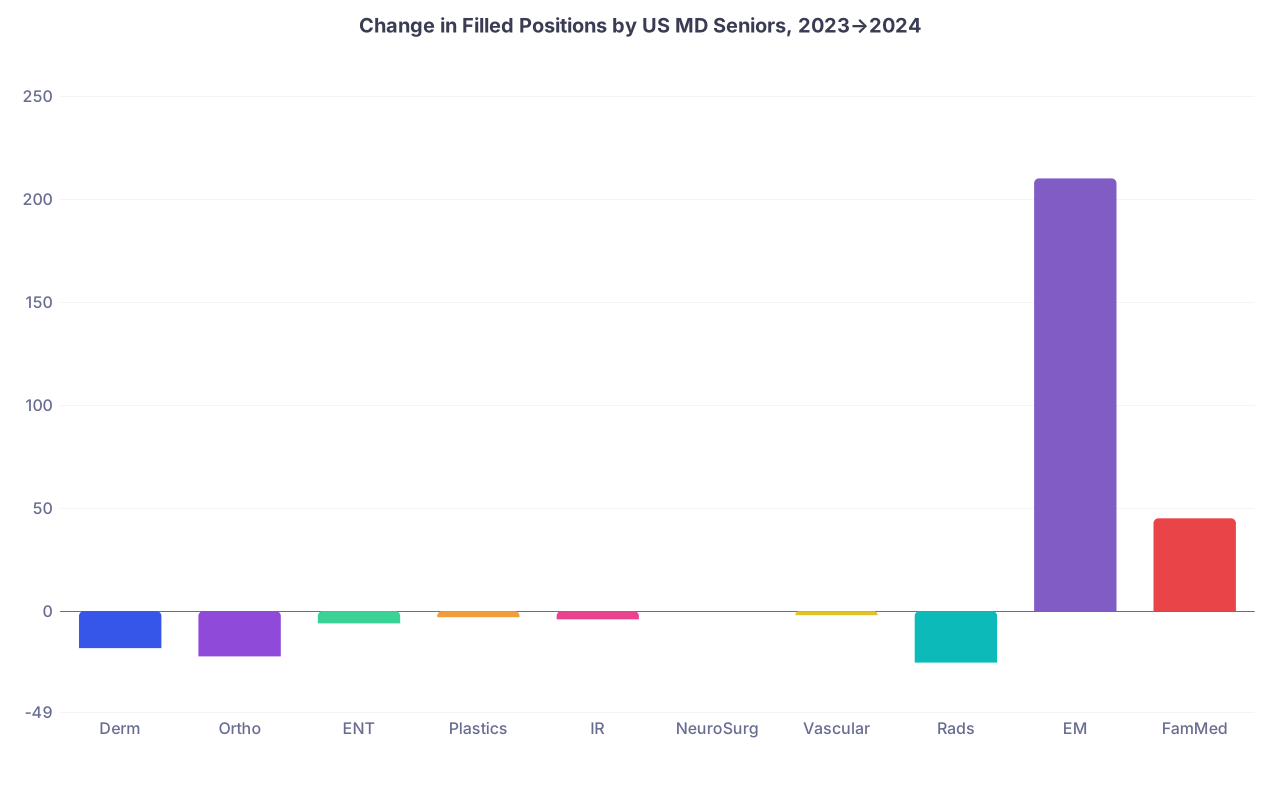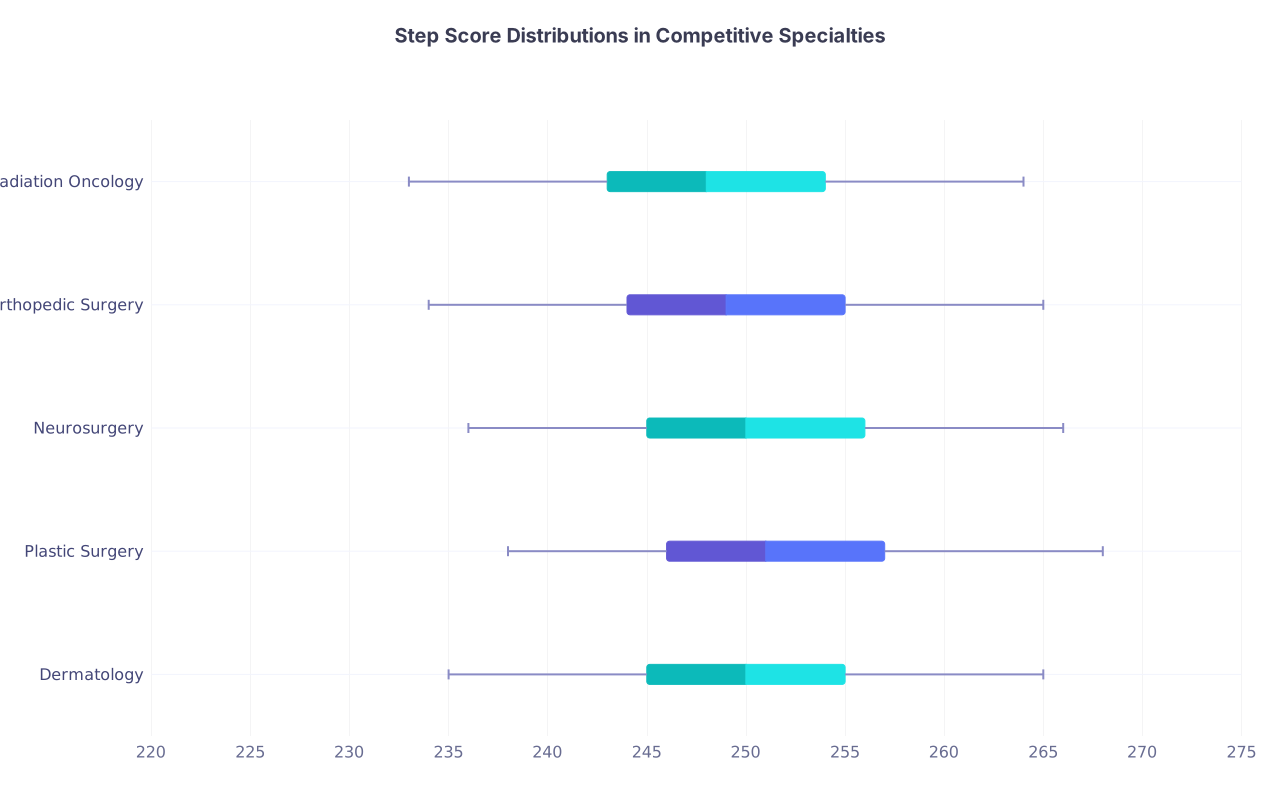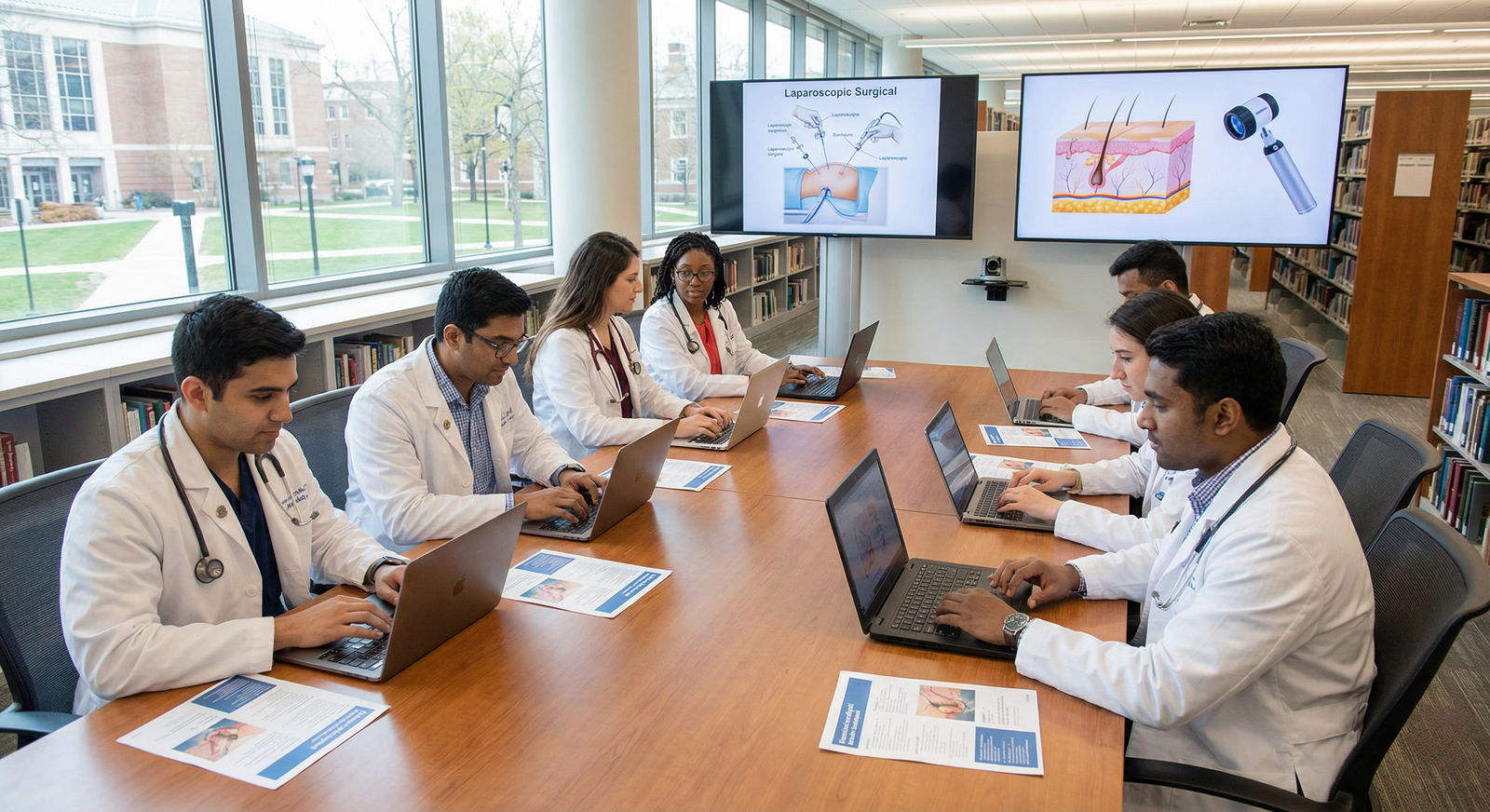
Choosing a medical specialty is one of the most consequential decisions in your training. While passion and fit should drive your choice, the reality is that competitiveness in medicine varies dramatically across fields. Some medical specialties—especially in Surgery and Dermatology—have far more applicants than available spots, creating intense pressure for residency applicants.
This guide breaks down several of the most competitive specialties, why they’re difficult to enter, and practical residency application strategies to realistically strengthen your candidacy.
Understanding Competitiveness in Medical Specialties
Competitiveness isn’t just about prestige; it’s a combination of supply, demand, and perception. Knowing what drives competitiveness helps you plan your path early and strategically.
Key Factors That Drive Specialty Competitiveness
Number of Residency Positions
- Specialties like Neurosurgery, Dermatology, and Plastic Surgery offer relatively few positions per year compared with Internal Medicine or Pediatrics.
- Small program sizes (often 1–4 categorical residents per year) magnify competition.
Applicant Demand and Prestige
- Fields perceived as highly prestigious, technically sophisticated, or associated with strong earning potential attract many top candidates.
- Certain specialties (e.g., Dermatology, Orthopedic Surgery) are consistently popular among high-performing applicants.
Perceived Lifestyle and Work-Life Balance
- Specialties offering more predictable hours, fewer emergencies, and flexible practice options—like Dermatology and some ENT practices—see exceptionally high interest.
- Even within surgery, specialties with more controlled call schedules tend to be highly sought after.
Training Length and Intensity
- Longer training (Neurosurgery, some integrated Plastic Surgery pathways) and high burnout risk can paradoxically:
- Decrease interest from some students, but
- Concentrate the applicant pool to those who are extremely focused and prepared.
- Longer training (Neurosurgery, some integrated Plastic Surgery pathways) and high burnout risk can paradoxically:
Academic Expectations
- Many competitive specialties have strong cultures of research and academic productivity.
- Programs often expect:
- High board scores
- Honors in core clerkships
- Multiple publications, presentations, or advanced degrees (e.g., MPH, PhD).
Understanding how these factors intersect can guide your planning: if you’re drawn to a competitive field, you’ll need to be intentional from the pre-clinical years onward.
1. General Surgery: Foundation of the Surgical Specialties
Among the surgery fields, General Surgery remains a cornerstone specialty and is consistently competitive, especially at academic and high-volume training centers.
Why General Surgery Is Difficult to Match
Limited Spots at Top Programs
- While the total number of general surgery positions nationally is larger than some subspecialties, the most prestigious academic programs have relatively few categorical positions.
- Many institutions prioritize applicants who show clear potential for future subspecialty fellowships (e.g., surgical oncology, transplant, trauma).
Demanding Clinical Culture
- Long hours, early mornings, and frequent overnight calls demand resilience and stamina.
- Programs want residents who can excel under pressure and sustain performance through physically and emotionally taxing situations.
High Academic and Clinical Expectations
- Strong performance on clinical rotations—especially surgery—is critical.
- Programs tend to expect:
- High board scores
- Strong letters from surgeons who can comment on operative potential, work ethic, and teamwork
- Evidence of interest in surgery early in medical school.
Strategies for Aspiring General Surgeons
Excel in Core Rotations and Sub-Internships
- Aim for honors in your surgery clerkship.
- Treat sub-internships (“sub-Is”) like month-long interviews:
- Be proactive: anticipate needs, see consults promptly, help the team move efficiently.
- Ask for feedback and adjust quickly.
- Demonstrate you can handle operative responsibilities and co-manage complex patients.
Engage in Surgical Research
- Join a surgical outcomes, quality improvement, or basic science lab early.
- Aim for:
- At least one submitted publication or abstract
- Presentations at institutional or regional conferences.
- Research in any surgical subspecialty still signals genuine commitment to the surgical field.
Build Strong Mentorship Networks
- Seek out faculty and upper-level residents who can:
- Help you navigate specialty decisions (community vs academic, subspecialty interests).
- Offer honest feedback on your competitiveness.
- Write detailed, advocacy-style letters of recommendation.
- Seek out faculty and upper-level residents who can:
Demonstrate Technical Interest and Skills
- Join surgical interest groups.
- Participate in simulation labs, suturing workshops, or skills competitions.
- These experiences won’t replace board scores, but they reflect genuine enthusiasm and commitment.
2. Dermatology: High Demand, Limited Supply
Dermatology consistently ranks among the most competitive medical specialties, driven by perceptions of strong lifestyle balance, diverse pathology, and excellent earning potential.
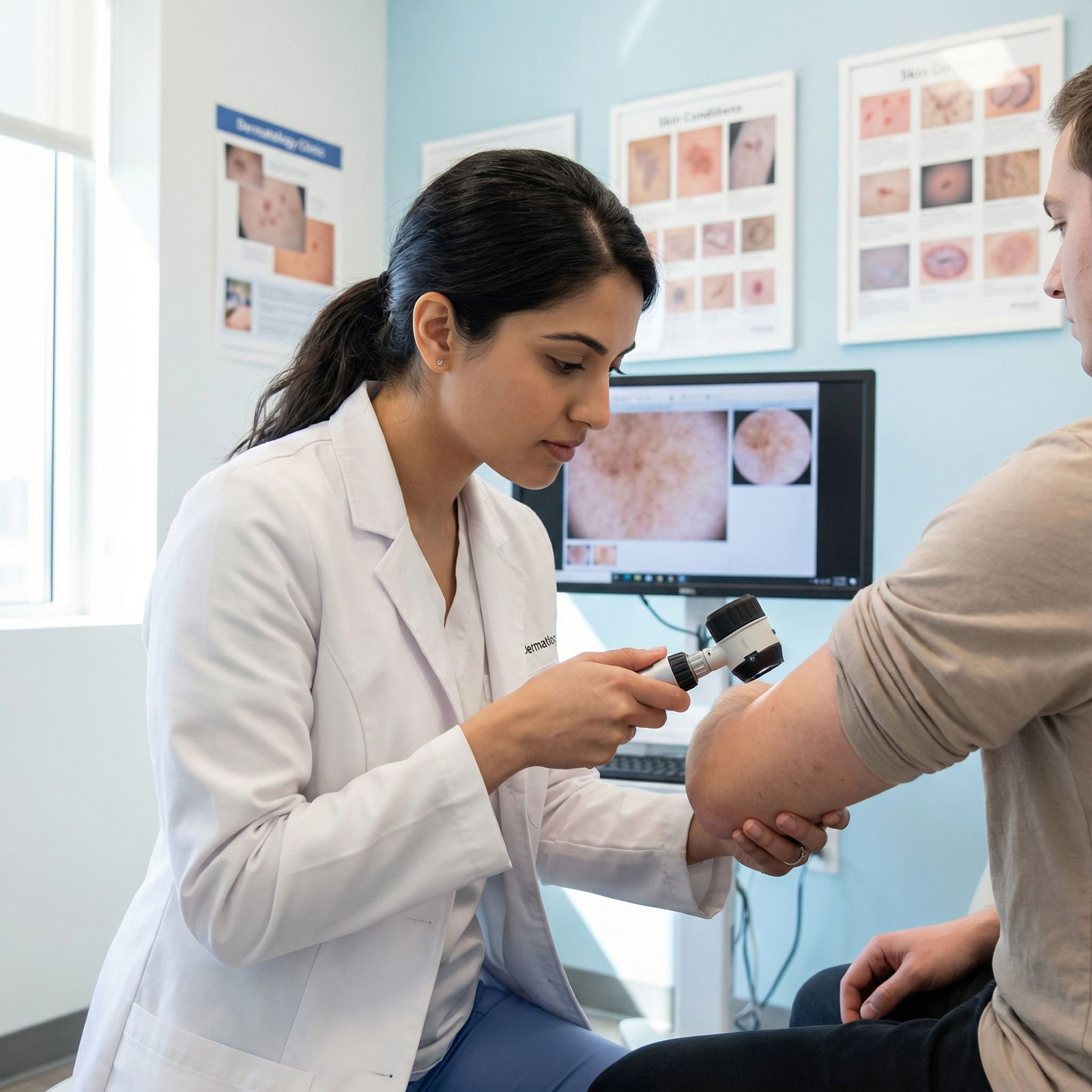
Why Dermatology Is So Competitive
Small Number of Residency Positions
- Dermatology programs are often small (2–4 residents per year), and not all regions have multiple training sites.
- This leads to a very high applicant-to-position ratio.
Lifestyle and Flexibility
- Generally predictable hours, limited inpatient responsibilities, and fewer emergencies.
- Opportunities for outpatient-based practices, cosmetic procedures, telemedicine, and academic careers.
Strong Academic Expectations
- Many matched applicants present:
- High board scores
- Significant dermatology research experience
- Multiple publications or presentations.
- A visible commitment to the field is almost expected.
- Many matched applicants present:
Strategies for Aspiring Dermatologists
Start Early with Dermatology Exposure
- Join a dermatology interest group in pre-clinical years.
- Seek early shadowing or elective experiences to confirm your interest.
- Work on case reports or small projects with dermatology faculty.
Pursue Focused Dermatology Research
- Look for opportunities in:
- Clinical trials for psoriasis, eczema, acne, or skin cancer
- Epidemiology of skin diseases
- Public health initiatives in skin cancer screening.
- If your home institution lacks a strong derm department, consider:
- Remote collaborative projects
- Summer research programs at institutions with dermatology residencies.
- Look for opportunities in:
Strategic Away Rotations (Audition Electives)
- Away electives at programs you’re seriously interested in can:
- Provide letters from known dermatology faculty
- Allow programs to see you in action over several weeks.
- Be prepared to:
- Read extensively before and during the rotation
- Be punctual, thorough, and eager to learn
- Show professionalism with patients and staff.
- Away electives at programs you’re seriously interested in can:
Demonstrate Breadth of Skills
- Dermatology touches internal medicine, pathology, pediatrics, and rheumatology.
- Strong performance in these rotations strengthens your overall application and clinical credibility.
Consider Transitional or Preliminary Year Strategy
- Some applicants match into a preliminary internal medicine or transitional year first, then reapply or pursue a reserved derm position.
- This path is not guaranteed, but it can keep you clinically active while strengthening your portfolio.
3. Orthopedic Surgery: High Stakes and High Expectations
Orthopedic Surgery attracts applicants who enjoy biomechanics, procedural work, and high-impact interventions for musculoskeletal disease and trauma.
Why Orthopedic Surgery Is Tough to Break Into
Competitive Culture and High Applicant Volume
- Orthopedics is well known for its earning potential and procedural focus.
- Many applicants interested in surgery gravitate toward this field.
Demanding Training and Physical Requirements
- Long operations, standing for hours, and handling heavy equipment.
- Programs want residents who demonstrate physical endurance and teamwork.
Strong Emphasis on Academic and Research Productivity
- Many programs have robust research infrastructures in:
- Sports medicine
- Trauma
- Joint replacement
- Spine surgery.
- Applicants with several publications or substantial research experience are at an advantage.
- Many programs have robust research infrastructures in:
Strategies for Aspiring Orthopedic Surgeons
Get Involved with Ortho Research Early
- Reach out to faculty in sports med clinics, trauma services, or joint reconstruction labs.
- Start with manageable projects (retrospective chart reviews, case series) and build up to more involved studies.
Be Visible on Orthopedic Services
- On rotations, learn how to:
- Efficiently pre-round on patients
- Help in the OR (positioning, prepping, basic instrument handling)
- Write concise notes and manage consults.
- Show willingness to help with after-hours cases and emergencies when safe and appropriate.
- On rotations, learn how to:
Develop a Strong Physical and Mental Routine
- Staying physically fit helps with the demanding OR schedule.
- Build resilience: long days and nights in trauma call require emotional durability.
Find Multiple Mentors
- Consider mentors in different subspecialties (sports, joints, trauma, pediatrics).
- They can:
- Provide broad perspectives on the field
- Help you target programs that match your goals.
4. Plastic Surgery: Aesthetic, Reconstructive, and Intensely Competitive
Plastic Surgery offers a unique blend of artistry and technical skill—ranging from complex reconstructions to cosmetic procedures. It is one of the most competitive surgery pathways.
Why Plastic Surgery Has Extreme Competitiveness
Limited Positions and Integrated Pathways
- Integrated Plastic Surgery (direct from medical school) offers very few slots nationwide.
- Many programs take only 1–2 residents per year.
Wide Skill Set: Aesthetic + Reconstructive
- Residents must master:
- Microsurgery
- Hand and craniofacial surgery
- Burn and trauma reconstruction
- Aesthetic procedures.
- Programs seek applicants with exceptional technical potential, creativity, and meticulous attention to detail.
- Residents must master:
High Bar for Academic Achievement
- Successful applicants often have:
- Extensive research portfolios (sometimes multiple years of research)
- Strong letters from well-known plastic surgeons
- Honors in surgery and related rotations.
- Successful applicants often have:
Strategies for Aspiring Plastic Surgeons
Clarify Your Path: Integrated vs. Independent
- Integrated: Match directly into Plastic Surgery from medical school.
- Independent: Complete a full General Surgery (or other qualifying) residency, then apply to a Plastic Surgery fellowship.
- Decide early if you’re aiming for the integrated route; it requires earlier, deeper planning.
Build a Consistent Narrative of Interest
- Join plastic surgery interest groups.
- Assist with research on:
- Wound healing
- Reconstructive techniques
- Outcomes in cosmetic procedures.
- Attend local or national plastic surgery meetings if possible.
Showcase Both Technical and Interpersonal Skills
- Plastic surgeons work closely with patients on appearance and reconstruction, requiring high emotional intelligence and communication.
- Demonstrate:
- Patient-centered care
- Sensitivity around body image issues
- Clear, compassionate explanations.
Leverage Unique Skills or Backgrounds
- Backgrounds in art, design, engineering, or tissue engineering can be an asset.
- These can differentiate you, especially if integrated into research or creative scholarly projects.
5. Neurosurgery: Long Training, Immense Responsibility
Neurosurgery is synonymous with high stakes and long training. It remains one of the most selective medical specialties in terms of residency match.
Why Neurosurgery Is So Challenging to Enter
Very Limited Number of Programs and Positions
- Many neurosurgery programs accept only 1–3 residents per year.
- Each position receives numerous highly qualified applications.
Length and Intensity of Training
- Neurosurgery residencies typically last 7 years, often including dedicated research time.
- High call burden, complex cases, and critical decision-making increase stress and burnout risk.
Expectations for Research and Leadership
- Significant involvement in neuroscience, neuro-oncology, or basic science research is common among matched applicants.
- Programs seek applicants who can become academic leaders or innovators.
Strategies for Aspiring Neurosurgeons
Commit Early and Seek Honest Feedback
- If you’re considering neurosurgery, start exploring in your first or second year of medical school.
- Ask neurosurgery faculty for frank assessments of your fit and competitiveness.
Immerse Yourself in Neuro Research
- Work with neurosurgery, neurology, or neuroscience labs.
- Longitudinal projects (over 2+ years) demonstrate persistence and depth.
- Aim to present at neurosurgery or neuroscience conferences when feasible.
Maximize Your Neurosurgery Rotations and Sub-Is
- Show initiative:
- Arrive early, stay late when appropriate
- Learn neuroanatomy and imaging in depth
- Take ownership of patient care tasks within your role.
- Strong letters from neurosurgeons are especially influential.
- Show initiative:
Prioritize Personal Wellness and Support Systems
- The pathway is long; build healthy habits early.
- Maintain supportive relationships and develop coping strategies for stress and fatigue.
6. Otolaryngology (ENT): A Small, Highly Selective Field
Otolaryngology—Head and Neck Surgery (ENT) offers a mix of medical and surgical care involving the ear, nose, throat, and related structures. It’s a smaller field, which naturally raises the competitiveness.

Why ENT Is Difficult to Match
Few Available Positions
- Program sizes are small, and entire regions may have only a handful of residency spots.
- The applicant pool is packed with students who have strong academic records and research experience.
Diverse Skill Set and Case Mix
- ENT covers:
- Sinus and skull base surgery
- Otology (ear, hearing, vestibular)
- Head and neck oncology
- Laryngology (voice and airway).
- Requires comfort with delicate structures, operating microscopes, endoscopic techniques, and longer reconstructed cases.
- ENT covers:
Strategies for Aspiring Otolaryngologists
Early and Broad Exposure
- Shadow in clinic (audiology, allergy clinics) and in the OR for a full picture of the specialty.
- Ask to scrub in on a variety of cases (tonsillectomies, sinus surgery, thyroid/parathyroid operations, etc.).
ENT-Focused Research
- Join research projects in:
- Hearing loss or cochlear implants
- Sinonasal disease
- Head and neck cancer outcomes
- Sleep apnea and airway management.
- Even a small number of meaningful contributions can strengthen your application.
- Join research projects in:
Active Involvement in ENT Interest Groups
- Participate in journal clubs, case discussions, and service projects (e.g., community hearing screening days).
- Leadership in specialty interest groups shows long-term dedication.
Cultivate Strong Letters of Recommendation
- Work closely with ENT surgeons during sub-internships.
- Ask for letters from faculty who have:
- Worked with you clinically
- Seen your growth over time
- Can speak to your operative potential and collegiality.
Strategic Planning for Competitive Residencies
Regardless of which competitive specialty you pursue—Surgery, Dermatology, Orthopedic Surgery, Plastic Surgery, Neurosurgery, or Otolaryngology—successful applicants typically share certain habits.
Core Residency Application Strategies
Know the Data and Be Realistic
- Review specialty-specific match statistics and program requirements.
- Discuss your profile honestly with advisors and mentors.
- Consider creating a “plan A” and “plan B” specialty early in case circumstances change.
Prioritize Clinical Excellence
- Honors or strong evaluations in core clerkships are crucial.
- Programs look closely at:
- Surgery, medicine, and specialty rotations
- Sub-internships in your chosen field.
Develop a Coherent Story
- Your CV, personal statement, and letters should all reinforce:
- Why this specialty
- How you’ve tested your interest
- What you hope to contribute to the field.
- Consistency matters more than random, unrelated achievements.
- Your CV, personal statement, and letters should all reinforce:
Use Away Rotations Strategically
- Target programs where:
- You are realistically competitive
- You could see yourself training.
- Away rotations are high-yield but high-risk—underperformance can hurt as much as excellence helps.
- Target programs where:
Apply Broadly and Thoughtfully
- Competitive specialties may require applying to a large number of programs.
- Balance reach, mid-range, and safer programs based on your academic profile and advising.
Take Care of Yourself
- Burnout can start in medical school, especially for those aiming for highly competitive paths.
- Sustainable habits and mental health support matter as much as any research line on your CV.

Frequently Asked Questions (FAQ)
1. What makes a medical specialty “most competitive”?
Competitiveness is a function of:
- Applicant-to-position ratio: Many more qualified applicants than available spots.
- Program size: Smaller programs (Neurosurgery, Dermatology, Plastic Surgery, ENT) are inherently more selective.
- Academic expectations: High board scores, strong grades, and robust research are often required.
- Lifestyle and income perceptions: Fields offering better hours and strong compensation draw intense interest.
Specialties like Dermatology, Plastic Surgery, Orthopedic Surgery, Neurosurgery, and Otolaryngology consistently rank among the toughest to match.
2. How important is research for competitive specialties?
For most highly competitive fields, research is very important:
- It signals sustained interest and academic potential.
- Programs often use research productivity to differentiate strong applicants.
- In some specialties (Dermatology, Plastic Surgery, Neurosurgery), multiple publications or significant research involvement are common among matched residents.
However, quality and continuity matter more than sheer quantity. Long-term, meaningful projects with clear mentorship are better than many shallow, unconnected activities.
3. Can I still match into a competitive specialty with average board scores?
Yes, but you’ll need to compensate in other areas:
- Strong clinical evaluations and honors in relevant clerkships.
- Exceptional letters of recommendation from respected faculty.
- Substantial research or unique experiences that set you apart.
- A realistic and broad application strategy, often including a mix of academic and community programs.
Discuss your profile honestly with advisors, and consider a parallel plan if your competitiveness is borderline.
4. How much does networking really matter in residency applications?
Networking can meaningfully influence your chances—especially in smaller fields. It helps by:
- Connecting you with mentors who can write strong, detailed letters.
- Making you a known quantity to programs where you rotate or collaborate.
- Giving you insight into program culture and selection priorities.
Networking doesn’t replace performance; it amplifies it. Genuine, respectful relationships over time are far more valuable than brief transactional interactions.
5. Should I choose a less competitive specialty just to improve my chances of matching?
Not automatically. Consider:
- Your long-term satisfaction: Choosing a specialty you dislike for the sake of ease can lead to burnout and regret.
- Your realistic competitiveness: Some applicants are well-positioned for highly competitive fields; others may face steep odds.
- Alternative paths within related fields: For instance, if Plastic Surgery is your dream but your profile is marginal, consider:
- General Surgery with later fellowship options
- Related reconstructive or wound care work.
Ideally, balance passion with pragmatism. Informed advising, early planning, and honest self-assessment are crucial.
Choosing a specialty like Surgery or Dermatology that is “tough to break into” is not a mistake—but it does require early, deliberate planning and a resilient mindset. By understanding the landscape of competitiveness in medicine and applying targeted residency application strategies, you can maximize your chances of matching into a field that fits both your aspirations and your life.