Understanding the Match Process and the Most Competitive Medical Specialties
Navigating the residency Match is one of the most defining transitions in a physician’s training. After years of exams, clinical rotations, and personal sacrifice, the Match determines not only where you will train, but also sets the trajectory of your future healthcare career.
For many students, a key question arises early: How competitive is my desired specialty, and what will it take to match? Understanding specialty competitiveness, how the Match process works, and what differentiates successful applicants is essential—especially if you’re aiming for one of the most competitive fields in Medical Residency.
This guide breaks down:
- How the Match process operates and why specialty competitiveness varies
- The top 5 most competitive medical specialties (and what makes them so)
- Concrete strategies to strengthen your application
- Common questions answered about the Match and competitive specialties
The Match Process: How Residency Positions Are Filled
The National Resident Matching Program (NRMP) manages the primary Match for most residency programs across the United States. While the mechanics can seem opaque, understanding the core structure helps you plan strategically.
How the NRMP Match Works
Application Submission (via ERAS):
- You submit applications to residency programs, including your CV, personal statement, letters of recommendation, USMLE/COMLEX scores, and transcript.
- Programs review applications and invite selected candidates for interviews.
Interview Season:
- You interview with programs and gather information about culture, training, location, call schedules, and fellowship opportunities.
- Programs evaluate you based on clinical performance, academic metrics, research, letters, and interview fit.
Rank Order Lists (ROLs):
- You create a confidential list ranking programs in order of genuine preference.
- Programs create their own lists ranking applicants based on their selection criteria.
The Match Algorithm:
- The NRMP uses a “candidate-optimal” algorithm—based on the Nobel Prize–winning Gale-Shapley algorithm—to pair applicants with programs.
- The algorithm attempts to match each applicant to the highest-ranked program that also ranks them highly enough and has available positions.
Match Day:
- You receive your Match result, which determines where you will start residency training.
What Makes a Specialty Competitive?
Specialty competitiveness is not just about reputation; it reflects a complex interplay of supply, demand, and perceived career value. Key factors include:
Number of Applicants vs. Positions Offered
- If many strong candidates compete for a small number of positions, the specialty becomes highly selective.
- Specialties with limited residency spots (e.g., dermatology, plastic surgery) often have very high fill rates with top-tier applicants.
Perceived Lifestyle and Work–Life Balance
- Fields with more predictable hours, fewer overnight calls, and greater flexibility (e.g., dermatology) tend to attract more applicants.
- Conversely, specialties with intense call burdens or unpredictable schedules can dissuade some candidates—though they still attract those passionate about the work.
Compensation and Long-Term Career Opportunities
- High-earning specialties, or those with strong private practice or procedural opportunities, often draw significant interest.
- Subspecialty options, procedural volume, and opportunities for private practice vs. academic careers all factor into applicant decisions.
Training Length and Intensity
- Longer or more demanding training pathways (e.g., neurosurgery’s 7+ years) naturally filter applicants to only the most committed.
- Some students view length as an investment in expertise and career options; others prefer shorter residencies and earlier attending-level income.
Prestige, Culture, and Personal Passion
- Certain specialties carry strong prestige or “identity”—which can amplify interest beyond pure lifestyle and salary metrics.
- Personal passion is crucial: the most successful applicants are typically those who combine genuine interest with a realistic understanding of the field.
Understanding these drivers of Specialty Competitiveness helps you interpret Match statistics and align your strategy with your goals.
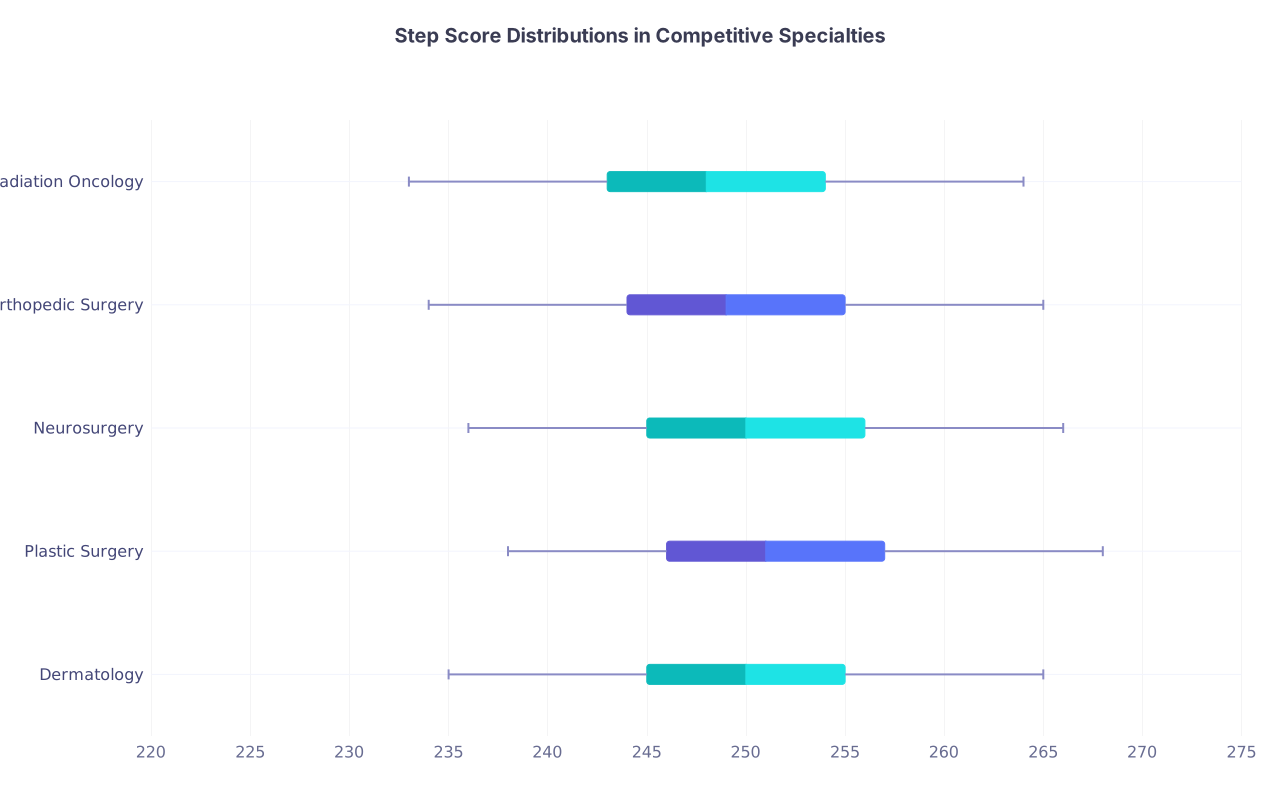
Top 5 Most Competitive Medical Specialties in the Match
While competitiveness can shift somewhat year to year, certain specialties consistently rank among the most competitive in the Match process based on fill rates, applicant quality, and program selectivity. Below are five specialties that routinely sit near the top—and what you need to know about each.

1. Dermatology: High Demand, Limited Spots, Lifestyle Appeal
Dermatology is consistently one of the most competitive specialties in Medical Education and residency training.
Why Dermatology Is So Competitive
Limited Residency Positions:
Dermatology has relatively few residency spots nationwide compared to the number of highly qualified applicants. Programs are small, with just a handful of residents per year in many institutions.Work–Life Balance:
Most dermatologists enjoy regular office hours, minimal overnight call, and predictable schedules. Procedural dermatology and cosmetic practice often occur in outpatient settings.High Compensation and Procedural Focus:
Dermatologists rank near the top in physician compensation surveys. Procedural opportunities—biopsies, excisions, lasers, cosmetics—add to earning potential and professional variety.Appeal to Broad Range of Applicants:
Dermatology blends medical management, minor procedures, oncology, immunology, and aesthetics, attracting students from diverse clinical interests.
How Strong Applicants Stand Out in Dermatology
Exceptional Academic Metrics:
Historically, dermatology has required strong Step scores and class performance. With Step 1 now Pass/Fail, programs increasingly emphasize Step 2 CK, clerkship grades, and strong letters.Early and Sustained Engagement:
Students who match in dermatology often:- Join dermatology interest groups early
- Seek out dermatology clinics and electives
- Pursue research with dermatology faculty
Robust Research Portfolio:
Many matched applicants have multiple publications, abstracts, or presentations in dermatology or related fields (oncology, immunology, rheumatology).Strong Mentorship and Letters:
Personalized letters from well-known dermatologists or program directors who can speak to your clinical skills, work ethic, and fit are highly influential.
2. Plastic Surgery: Complex Procedures and Intense Training
Plastic surgery—particularly integrated plastic surgery programs—is another perennial top-tier competitive specialty.
Drivers of Plastic Surgery Competitiveness
Integrated Pathway and Limited Positions:
Many applicants aim for integrated plastic surgery programs (6-year combined training), which have very few spots nationally. These programs attract some of the most academically accomplished students.Scope of Practice and Prestige:
Plastic surgeons perform intricate reconstructive procedures (e.g., microsurgery, craniofacial surgery, hand surgery) as well as cosmetic operations. This blend of artistry and technical complexity has strong appeal.Public and Patient Demand:
Demand for cosmetic and reconstructive procedures remains high. Patients often self-refer for aesthetic concerns, expanding practice opportunities.Intense, Hands-On Surgical Training:
Training is long and demanding, but offers broad technical exposure and opportunities for subspecialization.
What Successful Plastic Surgery Applicants Typically Demonstrate
Top-Tier Academic Profile:
High exam scores, strong clinical evaluations (especially in surgery clerkships), and honors such as AOA membership are common among matched applicants.Significant Surgical and Plastic Surgery Research:
Applicants frequently present at national conferences, publish in surgical and plastic surgery journals, and participate in dedicated research years or fellowships.Technical Aptitude and Manual Dexterity:
Programs look for evidence of excellent operative performance, fine motor skills, and composure in the OR.Early Career Clarity:
Many plastic surgery applicants decide early, tailoring their electives, mentors, and scholarly work toward plastic surgery from the start of clinical training.
3. Orthopedic Surgery: High Demand and Procedural Intensity
Orthopedic surgery is another highly competitive surgical specialty, combining high volume, high acuity, and high compensation.
Why Orthopedic Surgery Remains Highly Competitive
Growing Patient Demand:
With an aging population and rising rates of sports injuries and degenerative joint disease, demand for musculoskeletal care continues to grow.High Compensation and Procedural Volume:
Orthopedic surgeons frequently rank at or near the top of physician income surveys due to surgical volume and procedural reimbursement.Physically Demanding but Rewarding Work:
Orthopedics appeals to students who enjoy team-based environments, sports medicine, biomechanics, and immediate, tangible interventions (e.g., fracture fixation, joint replacement).Residency Structure and Culture:
Orthopedic training is rigorous, with long hours, frequent call, and a strong emphasis on operative skill and physical endurance.
Hallmarks of a Strong Orthopedic Surgery Applicant
Excellent Clinical Performance in Surgery and Orthopedics:
Honors in surgery clerkships and strong subspecialty letters from orthopedic surgeons are critical.Demonstrated Physical and Emotional Resilience:
Programs value applicants who can thrive under physically demanding conditions and high-stakes patient care.Research and Leadership in Musculoskeletal Fields:
Participation in orthopedic research, involvement in sports medicine or orthopedic interest groups, and leadership roles strengthen applications.Early Networking in the Orthopedic Community:
Away rotations (“audition rotations”) at orthopedic programs are common and can strongly influence interview offers and final rank decisions.
4. Neurosurgery: Longest Training, Highest Stakes
Neurosurgery is widely recognized as one of the most demanding specialties—intellectually, technically, and emotionally.
Factors Driving Neurosurgery’s Extreme Competitiveness
Length and Intensity of Training:
Neurosurgery residencies are typically 7 years, often with dedicated research or enfolded fellowships. Residents work long hours and manage critically ill patients.High-Risk, High-Reward Clinical Practice:
Neurosurgeons manage life-threatening and life-altering conditions: brain tumors, aneurysms, spine trauma, functional neurosurgery, and more. The stakes are high in every case.Limited Positions and High Applicant Quality:
The number of neurosurgery positions is small, and only highly motivated, top-performing students typically apply.Strong Research Culture:
Neurosurgery leans heavily academic, with an emphasis on clinical and translational neuroscience research.
Characteristics of Successful Neurosurgery Applicants
Outstanding Academic and Clinical Performance:
Neurosurgery applicants are often at the top of their class, with strong performance in neurology, surgery, and neurosurgery rotations.Significant Research Experience in Neuroscience/Neurosurgery:
Many programs expect applicants to have multiple publications and presentations, often over several years of research involvement.Clear Evidence of Commitment:
Programs look for longitudinal interest—multiple neurosurgery electives, sub-internships, neurosurgery interest group leadership, and sustained mentorship.Resilience, Grit, and Emotional Maturity:
The demands of neurosurgical training and practice require exceptional resilience, professionalism, and capacity to handle emotionally charged situations.
5. Emergency Medicine: Evolving Competitiveness in a Dynamic Field
Emergency Medicine (EM) has historically been very competitive, with strong interest from students attracted to acute care and broad scope. In recent years, the landscape has evolved with changes in workforce projections and job markets, but EM still requires a thoughtful, strategic application.
Why Emergency Medicine Attracts Many Applicants
Dynamic, Fast-Paced Clinical Environment:
EM physicians see undifferentiated patients with a wide array of conditions—trauma, cardiac, pediatric, psychiatric, and more. The variety is unmatched.Shift-Based Work and Scheduling Flexibility:
EM typically uses shift work, offering predictable off-time and the ability to cluster shifts for longer stretches off.Broad Skill Set and Procedural Breadth:
EM physicians are trained in airway management, resuscitation, trauma care, point-of-care ultrasound, and procedures across multiple organ systems.Critical Role in the Healthcare System:
Emergency physicians are the safety net of the healthcare system, providing care regardless of time, insurance, or access.
Competitiveness and Considerations in Emergency Medicine
Variable Competitiveness by Region and Program:
Top academic and urban programs remain very competitive. Some regions or community programs may be less saturated but still selective.Importance of Fit and SLOEs:
Standardized Letters of Evaluation (SLOEs) from EM rotations are central to the application. Strong performance on EM rotations can be decisive.Understanding the Job Market:
Students should stay informed about regional job markets, workforce reports, and trends, and seek candid mentorship on long-term career prospects.
Strategies for Matching Into Competitive Medical Specialties
No matter which specialty you choose, your chances of success improve dramatically with early planning, strategic decision-making, and realistic self-assessment. For highly competitive fields, these elements are critical.
1. Start Early and Seek Genuine Exposure
First and Second Year:
- Join specialty interest groups (e.g., derm, surgery, EM).
- Attend specialty-specific talks and panels.
- Shadow physicians in your field of interest.
Third and Fourth Year:
- Schedule key electives and sub-internships early.
- Prioritize rotations in your desired specialty and at institutions where you may want to match.
- Use these experiences to confirm your interest and gather strong letters.
Early exposure helps you decide if a specialty truly fits your interests, personality, and lifestyle goals—before you invest heavily in a career path that may not align with your values.
2. Build a Strong, Balanced Academic Record
Clerkship Performance:
Honors or strong grades in core rotations, especially those related to your chosen field, matter greatly.Standardized Exams:
- With Step 1 now Pass/Fail, Step 2 CK carries more weight. Aim to take Step 2 CK at a time that allows you to demonstrate your strengths.
- For DO students, consider how COMLEX and USMLE scores are perceived by programs in your specialty.
Consistency Over Perfection:
Programs look for an overall pattern of strong performance, growth, and professionalism rather than perfection in every area.
3. Engage in Targeted Research and Scholarly Activity
Align Research With Your Specialty Where Possible:
Dermatology, neurosurgery, and plastics, in particular, heavily favor research productivity. Try to work on projects connected to your field of interest.Be Strategic About Depth vs. Breadth:
A few substantial projects (with meaningful contributions) can be more impactful than many superficial involvements.Present and Publish When You Can:
Abstracts, posters, presentations, and publications all demonstrate scholarly engagement and persistence.
4. Cultivate Mentors and Professional Networks
Find Specialty-Specific Mentors:
- Ask for guidance on rotations, research, and application strategy.
- Seek honest feedback about your competitiveness and viable program tiers.
Network at Conferences and Grand Rounds:
- Attend local, regional, or national specialty conferences if possible.
- Introduce yourself to faculty and residents; these connections can later support letters, away rotations, or research.
Use Mentors for Application Strategy:
- Program lists (safety/target/reach)
- Timing of applications and exams
- Personal statement feedback and interview preparation
5. Craft a Tailored, Convincing Application
Personal Statement:
- Tell a genuine, specific story about your path to the specialty.
- Avoid clichés and focus on concrete experiences that shaped your career goals.
CV and Experiences:
- Highlight leadership roles, quality improvement work, teaching, and community service—especially those aligned with your specialty.
Letters of Recommendation:
- Secure letters from faculty in your desired specialty who know you well.
- Prioritize depth and specificity over big names alone.
6. Prepare Strategically for Residency Interviews
Know Your Specialty’s Culture and Hot Topics:
- Be prepared to discuss recent advances, controversies, or health policy issues related to your field.
Practice Common and Specialty-Specific Questions:
- “Why this specialty?”
- “Tell me about a challenging case.”
- Questions assessing resilience, teamwork, and integrity.
Have Thoughtful Questions for Programs:
- Ask about operative experience, mentorship, didactics, wellness support, and fellowship placement, tailored to each program.
Demonstrate Fit and Professionalism:
- Programs want residents they can trust, work with, and mentor for years. Show that you are reliable, collegial, and self-aware.
7. Be Realistic and Have a Parallel Plan
Assess Competitiveness Honestly:
- Use NRMP data, program websites, and mentor feedback to gauge where you stand.
- If you are applying to a very competitive specialty, consider a dual-application strategy (e.g., applying to a related specialty as a backup).
Protect Your Future Self:
- Not matching is emotionally and logistically difficult. A thoughtful backup plan does not reflect a lack of confidence—it reflects maturity.

FAQ: Competitive Specialties and the Residency Match
1. Why are some medical specialties more competitive than others?
Specialties become more competitive when the number of qualified applicants significantly exceeds the number of available residency positions. This imbalance is shaped by:
- Limited program or position numbers (e.g., dermatology, plastic surgery)
- High compensation and strong long-term career opportunities
- Favorable work–life balance or lifestyle predictability
- Prestige, procedural focus, and perceived “desirability”
- Intense student interest driven by role models, media, or specialty culture
Over time, these factors reinforce each other, with strong applicants clustering in the most sought-after fields.
2. How can I realistically improve my chances of matching into a competitive specialty?
You can improve your odds by:
- Starting early with shadowing, electives, and research in your chosen field
- Building a strong academic record with solid clerkship grades and Step 2 CK performance
- Securing mentors and specialty-specific letters of recommendation
- Participating in research and presenting or publishing when possible
- Applying broadly and strategically, considering a range of program types and locations
- Practicing for interviews and clearly articulating your interest and fit
Mentor feedback is invaluable—ask for honest assessments and adjust your strategy accordingly.
3. Should I choose a specialty based mainly on salary or lifestyle?
While compensation and lifestyle are important considerations, they should not be the only drivers. Competitive specialties often demand:
- Long training periods (6–7+ years)
- Intensive hours and high-stress environments
- Lifelong commitment to complex patient care and continuous learning
Choosing a field misaligned with your interests and values can lead to burnout or dissatisfaction. Ideally, your decision should balance:
- Genuine passion for the clinical work
- Realistic understanding of the lifestyle
- Personal strengths (e.g., technical skill, communication, resilience)
- Long-term career goals (academic vs. community, research vs. clinical focus)
4. Does residency length always make a specialty more competitive?
Not always, but it often plays a role. Longer residencies (e.g., neurosurgery) can:
- Deter some applicants who prioritize shorter training
- Attract only highly committed individuals who are certain about the field
However, other factors (lifestyle, prestige, income potential, procedural focus) may offset or exceed the influence of training length. Some shorter residencies (like dermatology) are still extremely competitive due to limited positions and strong lifestyle and earning potential.
5. What if I don’t match into my first-choice competitive specialty?
Not matching can be difficult, but it is not the end of your medical career. Options include:
SOAP (Supplemental Offer and Acceptance Program):
Applying to unfilled positions in the same or different specialties.Reapplying in a Future Cycle:
Spending a year enhancing your application (e.g., research, additional clinical experience, improved exam scores) and seeking targeted mentorship.Pivoting to a Related or Alternative Specialty:
Many physicians find deeply fulfilling careers in fields they did not initially target, such as internal medicine, general surgery, anesthesia, or family medicine, sometimes with subsequent fellowship training.
Being flexible, seeking support, and planning proactively can transform a setback into a new, satisfying path.
Understanding the Match process, recognizing the realities of Specialty Competitiveness, and approaching Medical Residency applications with strategy and self-awareness will put you in the strongest position—whether you pursue dermatology, plastic surgery, orthopedic surgery, neurosurgery, emergency medicine, or any other vital field in healthcare.