

The way most new attendings sign their first contract practically guarantees wasted CME money and license chaos.
You can do better. You can line up your start date, CME benefit year, license renewal, and board MOC cycle so they actually work together instead of against you.
Below is a stepwise, time‑anchored guide from 12 months before fellowship graduation through the end of your first attending year, focused on one thing: aligning your contract dates with CME cycles and regulatory deadlines so you stop bleeding time and dollars.
12–9 Months Before Fellowship Ends: Set Your “Anchor Dates”
At this point you should not be looking at contracts yet. You should be building the calendar that will control how you judge them.
Step 1: Write down your hard external deadlines
You have several “immovable objects”:
- State license renewal date(s)
- DEA expiration
- Board certification / MOC cycle and exam windows
- Hospital credentialing and payer enrollment timelines
- Fellowship graduation date and visa considerations (if applicable)
Pull out:
- Current state license card or online lookup
- Board website (ABIM, ABFM, ABS, whatever applies)
- DEA registration info
- GME office documentation with graduation date
Now build a one‑page list with four lines:
- Fellowship graduation date
- State license renewal month and year (for each state you plan to work in)
- Board certification / recert exam or initial board exam window
- DEA expiration
You are not guessing here. Exact dates.
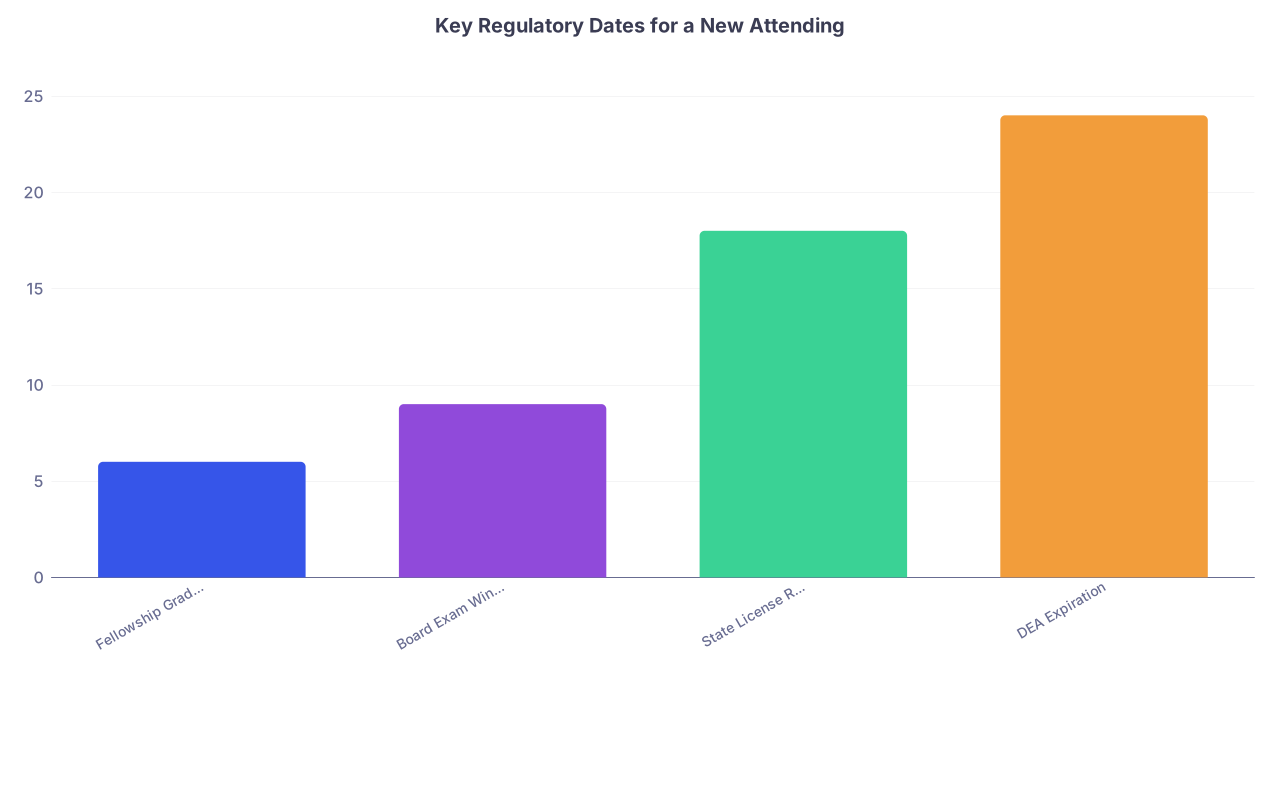
| Category | Value |
|---|---|
| Fellowship Graduation | 6 |
| Board Exam Window Start | 9 |
| State License Renewal | 18 |
| DEA Expiration | 24 |
(Values here are months from fellowship graduation — the point is the spacing, not the exact numbers.)
Step 2: Understand typical CME cycles
Most employers do one of three things with CME:
| CME Cycle Type | Typical Reset Point | Gotcha for New Attendings |
|---|---|---|
| Calendar Year | Jan 1 – Dec 31 | Start in July and get only half |
| Contract Year (Anniv.) | Start date + 12 mo | Pro-rated if you start mid-month |
| Fiscal Year | Varies (e.g., Jul 1) | Start just after reset and lose year |
Your goal is simple: avoid being hired right after a CME cycle resets if that means you get “pro‑rated crumbs” instead of a full benefit.
Ask recruiters, explicitly and early:
- “How is CME time and money structured — calendar year, contract year, or fiscal year?”
- “If I start on X date, what CME money and days will I have in my first 12 months?”
If the recruiter cannot answer that clearly, that’s a red flag.
9–6 Months Before Graduation: Shape Your Target Start Date Window
At this point you should be interviewing and starting to compare offers. This is where alignment decisions begin.
Step 3: Choose your ideal start quarter, not an exact date
For most U.S. fellows, fellowship ends June 30. The worst thing you can say is, “I can start any time after July 1.”
Instead, define a preferred 6–8 week window anchored to:
- Board exam timing
- License issuance
- CME reset date
Example thought process:
- You finish fellowship: June 30
- Board exam window: late August
- State license realistic issue date (if you start now): mid‑June to mid‑July
- Employer’s CME year: calendar year
Smart move: target August 15–September 15 as the start window instead of July 1.
Why?
- You can sit for boards before starting or right after with dedicated study time.
- You may negotiate full‑year CME for the remainder of the calendar year plus next year’s.
- You give credentialing teams enough time without frantic rush.
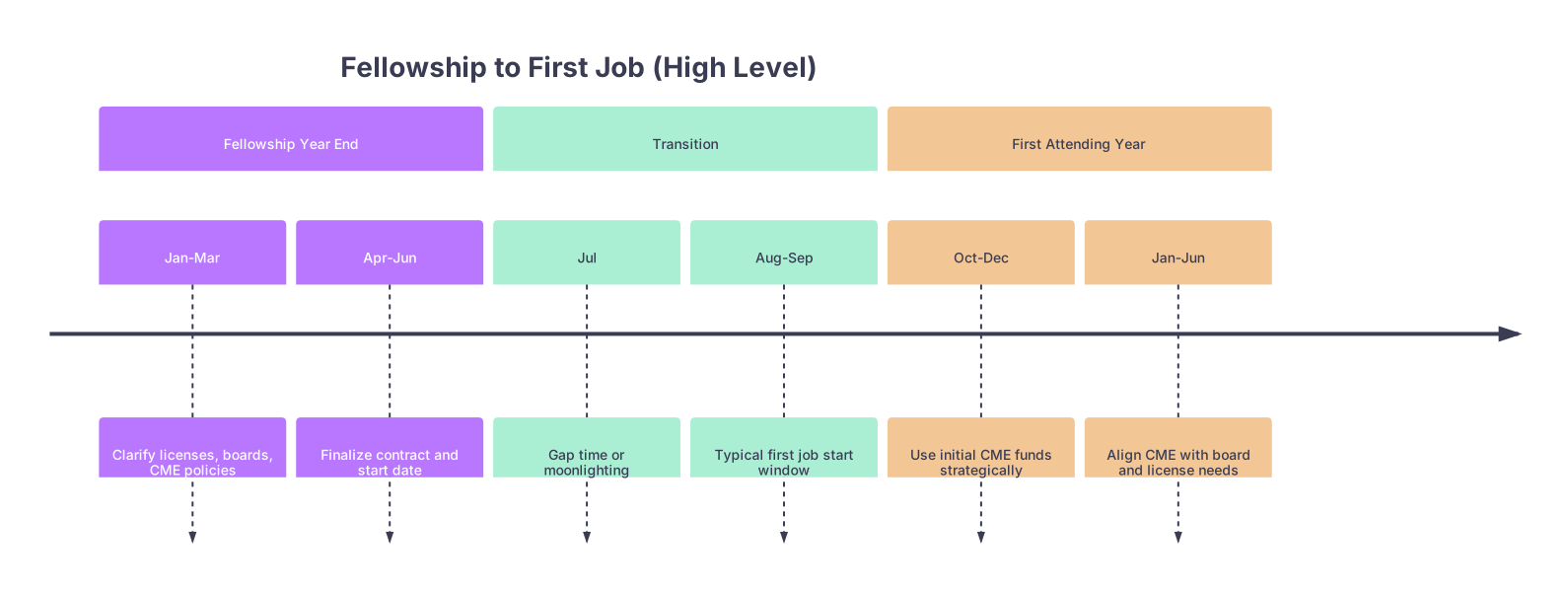
| Period | Event |
|---|---|
| Fellowship Year End - Jan-Mar | Clarify licenses, boards, CME policies |
| Fellowship Year End - Apr-Jun | Finalize contract and start date |
| Transition - Jul | Gap time or moonlighting |
| Transition - Aug-Sep | Typical first job start window |
| First Attending Year - Oct-Dec | Use initial CME funds strategically |
| First Attending Year - Jan-Jun | Align CME with board and license needs |
Step 4: Screen offers through a “CME and cycle” lens
When you have multiple offers, this is where people get distracted by salary and ignore structure. That is a mistake.
At this stage, for each offer, list:
- Proposed start window
- CME dollars and days
- How the CME cycle is defined
- Any mention of “pro‑rated” first year
You can literally create a 4‑row comparison. Something like this:
| Offer | CME $ / Year | CME Time | Cycle Type | First-Year Deal |
|---|---|---|---|---|
| A | $3,500 | 5 days | Calendar Year | Pro‑rated if start after July 1 |
| B | $5,000 | 7 days | Contract Year | Full amount from start date |
| C | $4,000 | 5 days | Fiscal (Jul 1) | No CME until next fiscal year |
Offer B is structurally better even if the salary is slightly lower, because your CME and schedule immediately function cleanly on a 12‑month cycle.
6–3 Months Before Graduation: Negotiate Start Date and CME Language
At this point you should be in contract negotiation. This is where you lock in dates that either support or sabotage your CME and regulatory obligations.
Step 5: Time your start date against CME cycle boundaries
Simple rule: start as close after a CME reset as you can, while securing full access to the cycle.
Common scenarios:
Calendar-year CME (Jan–Dec)
- Bad: Start December 15; get a token $500 for two weeks, then reset.
- Better: Start January 2; get full CME for the whole year.
- If they require a July/August start, push for full annual CME on Day 1 with no proration.
Fiscal-year CME (e.g., July–June)
- If you finish fellowship June 30 and they reset July 1, insist that your July 1 start includes the full new fiscal CME allotment, not pro‑rated.
- If they insist on pro‑rating, consider delaying until after the reset or negotiating extra funds in year one.
Contract-year CME (anniversary based)
- Align your contract start with your reality: board exam and license needs.
- Your “CME year” becomes start date to start date. Cleanest structure, usually.
Step 6: Fix the CME and license language in the contract
Verbal assurances mean nothing once you sign. You want explicit language like:
- “Physician shall be entitled to $5,000 in CME reimbursement and 5 days of paid CME leave per 12‑month period, not pro‑rated in the first contract year.”
- “For the first contract year, CME funds will be available in full upon employment start date.”
And on licensing:
- “Employer shall cover the cost of obtaining and maintaining required state medical license(s) and DEA registration as a separate line item from CME funds.”
Do not let them bury licensing and DEA fees inside CME. That is lazy and punishes you for basic regulatory requirements.
3 Months Before Graduation: Build Your First 18‑Month CME Plan
At this point you should have a signed contract and an approximate start date. Now you plan how you will use CME strategically, not reactively.
Step 7: Map CME to your board and license timelines
Grab a calendar and mark:
- Fellowship end
- Contract start
- CME reset date(s)
- Board exam
- License renewal deadlines
Now, sketch a rolling 18‑month CME plan:
- CME Year 0 (last year of fellowship): cheap or free board review resources; institutional CME if available.
- CME Year 1 (first 12 months of attending life):
- Budget a big chunk for board review course or question bank if you have not tested yet.
- Reserve funds for mandatory controlled substance or state‑specific courses before license renewal.
- Leave a little “flex” for a late-breaking conference or skill course.
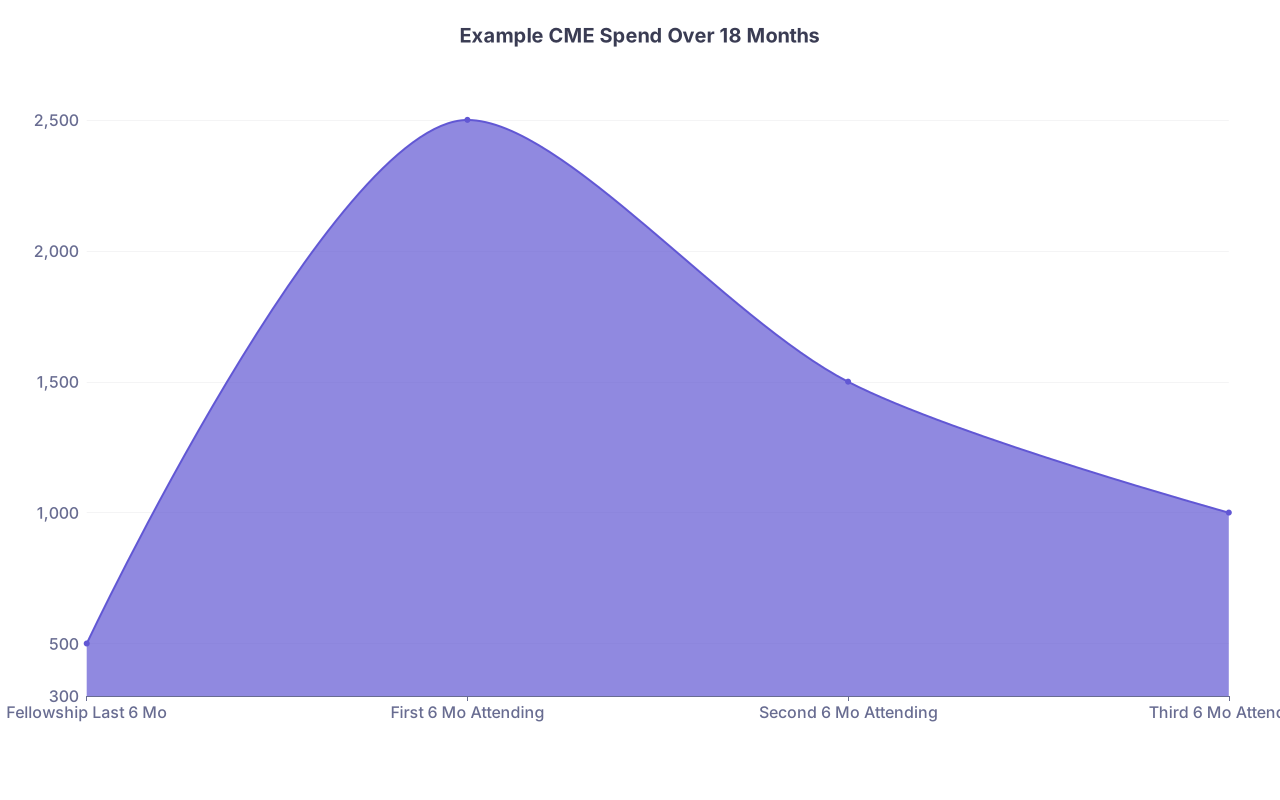
| Category | Value |
|---|---|
| Fellowship Last 6 Mo | 500 |
| First 6 Mo Attending | 2500 |
| Second 6 Mo Attending | 1500 |
| Third 6 Mo Attending | 1000 |
Step 8: Decide what CME you will not do
New attendings waste CME on things that look fun but do nothing for boards, licensure, or practice.
Hard filter:
- Does this activity help with:
- Board exam / MOC requirements,
- State‑mandated CME topics (opioids, implicit bias, etc.),
- Skills directly relevant to my job?
If no, it probably waits until you are stable and not burning cash on basic compliance.
0–3 Months After Starting: Execute the “First CME Cycle”
At this point you should be on payroll. This is where the cycle alignment either pays off or exposes mistakes.
Step 9: Confirm benefits and reset dates with HR in writing
Your first week or two:
- Ask HR/benefits:
- “What is my exact CME allowance and what dates does it cover?”
- “When does my next CME cycle begin and end?”
- “Do unused CME funds roll over? If yes, how long?”
Document this for yourself in a single email summary.
If what you hear contradicts what you negotiated, you push back immediately, not 9 months later when you try to book a course.

Step 10: Plan concrete CME events for the first cycle
In the first 3 months, you should:
- Identify your one or two major CME spends for the year:
- Board review course (live or virtual)
- Skill course (ultrasound, procedures, etc.)
- Major specialty society meeting, if it truly adds value
- Reserve:
- Travel days
- Clinic coverage
- Family responsibilities
Lock in at least one anchor CME event within your first cycle, or the year will get away from you.
3–12 Months After Starting: Align CME With Renewals and MOC
By now you should have your feet under you clinically. This is the danger zone where people ignore CME until panic mode.
Step 11: Tie CME credits directly to upcoming renewals
Look at what is expiring when:
- State license in 12–18 months?
- DEA in 2–3 years but with mandated opioid education?
- MOC points or specific practice assessment modules?
Use CME in this period to pre‑pay those obligations:
- If your state requires opioid prescribing CME every renewal cycle, knock that out in your first attending year using employer money.
- If your board has a time‑limited “knowledge check‑in” or longitudinal assessment, sign up and let those credits count.
Do not wait until the quarter before renewal to scramble for mandatory credits. Miserable way to live.
Step 12: Clean up leftover CME before the reset
At about 10 months into any CME cycle (contract year or calendar/fiscal), run a quick audit:
- Remaining CME dollars?
- Remaining CME days?
- Unmet mandated topics?
Then decide:
- Use remaining funds on:
- Question banks
- Online modules that fill state or board requirements
- A short, targeted course that genuinely benefits your practice
Do not let CME dollars expire while you pay out of pocket for some useless “required” course later.
Special Scenarios You Need to Time Correctly
Changing States or Holding Multiple Licenses
If you are moving states at fellowship graduation:
- Start new‑state license application 6–9 months before your planned start date.
- Use fellowship CME or institutional funds to cover any state‑mandated CMEs needed for initial licensure.
- Structure your contract so employer pays for:
- New state license
- Additional CME needed for that license
- DEA change or additional registration
Do not drain your first‑year CME funds validating licenses that should have been employer‑funded onboarding costs.
Visa Issues and Start Date Flexibility
If you are on a visa, your start date flexibility may be limited. That makes front‑end planning even more important:
- You may be forced into a July 1 or October 1 start. Fine. Then negotiate:
- Full CME allotment, no proration.
- Extra paid time for boards if your exam window falls awkwardly.
- Put this in writing. Your immigration timeline is not your fault; your contract can still adapt.
Academic vs Private vs Hospital Employed
Cycles differ:
- Academic centers often run on July–June fiscal years and may tie CME to department budget cycles. Lock down whether your first July 1 gives you full access immediately.
- Private groups may be more flexible but also more likely to treat CME as negotiable. Push for CME that starts on contract start and renews annually on that date.
- Hospital employed models often have standardized benefits. Your leverage is in understanding the system and choosing start dates, not in changing policy.

| Step | Description |
|---|---|
| Step 1 | Fellowship Graduation Date |
| Step 2 | Identify CME Cycle Type |
| Step 3 | Target Jan Start or Full Year CME |
| Step 4 | Start Just After Reset |
| Step 5 | Align with Board and License Needs |
| Step 6 | Negotiate No Proration in Year One |
| Step 7 | Build 18 Month CME and Renewal Plan |
Quick Reference: Ideal Timing Rules
Here is the distilled version, so you can sanity‑check any offer in five minutes.
| Item | Ideal Alignment |
|---|---|
| Start Date | Just after CME cycle reset |
| First CME Year | Full amount, explicitly non‑pro‑rated |
| Board Exam | 4–8 weeks before or after start, protected |
| License Renewal | Use CME 6–12 months before renewal |
| Contract Renewal | Review CME usage 2–3 months before anniversary |
FAQ (Exactly 3 Questions)
1. If the employer refuses to change the CME structure, is it still worth signing?
Sometimes yes, but go in eyes open. If the job is otherwise excellent, you can accept a suboptimal first‑year CME setup. Just adjust your personal budget to cover board review and required CMEs that the employer will not reasonably fund that first cycle. Then, push for better terms at your first contract renewal, when they have already invested in you.
2. How much gap time between fellowship and first job is reasonable for boards and CME?
Four to eight weeks is the sweet spot for most people. Less than four weeks and you are cramming exam prep into call and move‑in chaos. More than two months and credentialing, benefits, and income can get weird. Time your start to either give you a clean study block before boards or a protected period after starting, with CME‑funded review built in.
3. Can I use CME money before my official start date for board prep?
Usually no. Most systems will not reimburse anything dated before your employment start. The workaround is to schedule your major board review course or purchase your big‑ticket resources after your first official day on payroll, then use your own gap time prior to that for cheaper or previously acquired resources. If you want the course right before your start date, negotiate this explicitly and get written confirmation they will reimburse pre‑start expenses.
Open your calendar right now and mark three things: your fellowship end date, your anticipated board exam window, and your likely start month. Then, for every job you are considering, ask the recruiter one concrete question: “How will my CME money and days work in that first year, on those dates?”


