
The biggest mistake senior residents make about CME is pretending it’s a “future attending problem.” It is not. It is a final-year-of-residency problem that follows a very specific clock.
You can either control that clock now, or let it ambush you later with a license delay, a credentialing nightmare, and a panicked scramble for random online credits at 2 a.m. while you start your first attending job.
Here is the timeline that prevents that outcome.
Big Picture: The 24‑Month Window You Are Actually In
Before we drill month by month, understand the frame you are operating in.
Most of the key systems (state boards, specialty boards, hospitals) look backward over a fixed window when they ask about CME:
- Initial state license: often requires training verification + some CME (varies by state)
- First renewal: usually a 2‑year cycle with a defined CME requirement
- Board MOC / Continuous Certification: specialty‑specific, but you will be dropped immediately into a multi‑year cycle
| Requirement Type | Typical Amount | Time Window |
|---|---|---|
| State license renewal | 25–50 credits | Every 2 years |
| DEA / Opioids content | 2–8 credits | Per renewal cycle |
| Board MOC (core CME) | 25–50 credits | Yearly or 2‑year blocks |
| Hospital privileges | Often mirrors state | 2 years |
The trap: your final year of residency overlaps with the start of that CME window for many of these systems. Meaning: credits you earn now will often count toward:
- Your first license renewal
- Your early board MOC requirements
- Your hospital credentialing file
So the question is not “when do I start CME?” You already started. The question is “when do I start tracking CME like an attending?”
Answer: early in your final year. Here is what that looks like in real time.
PGY‑3/4 (Final Year) Overview: Quarter‑by‑Quarter Game Plan
I will assume a 4th year as “final year.” If you finish at PGY‑3 (FM, IM, peds some places), just shift this one year earlier.
We will break it into:
- Q1 – Early Final Year (July–September)
- Q2 – Midyear (October–December)
- Q3 – Match / Job Season (January–March)
- Q4 – Graduation Run‑Up (April–June)
Then I will zoom further into month‑by‑month for the high‑stakes windows.
Q1 (July–September): Flip the Switch From “Resident” to “Future Attending”
At this point, you should stop treating CME like free snacks at noon conference. Start treating it like currency you will need to show on paper.
July: Baseline and Rules Week
During July, you should:
Clarify your “destination state(s)” and boards.
- Where are you applying for your first job or fellowship?
- Which state medical board(s) will you need licensure in?
- Are you taking boards immediately after residency or delaying?
Look up concrete CME rules. No guessing.
Go to:- Your state medical board website (or Federation of State Medical Boards list)
- Your specialty board (ABIM, ABFM, ABS, ABEM, etc.)
- Any likely hiring system’s credentialing guidelines, if available
Create a simple one‑page summary. Not a spreadsheet masterpiece. Just:
- Total CME credits per cycle
- Time window (2 years, 3 years, annual)
- Required sub‑types: opioid prescribing, ethics, professionalism, risk management, state‑specific courses
Decide when your first license renewal will hit.
Many states:- Align renewal with your birth month or a fixed cycle date
- Will treat your residency completion date as the start of a truncated first cycle
Result: You might have 18–24 months from late PGY‑4 to accumulate credits. Your final year is part of that window.
At this point, you should have a sentence you can say out loud:
“I will need X credits by Month/Year, including Y credits in opioids/ethics/whatever.”
If you cannot say that yet, you are not ready to move on.
August: Set Up Your Tracking System
This is where people either get smart or get sloppy.
During August, you should:
- Pick one primary tracking method:
- A dedicated CME app (CMETracker, eeds, EthosCE, your system’s portal)
- A cloud folder + one master spreadsheet
- Standardize what you save for every activity:
- Certificate PDF (or screenshot)
- Agenda if no certificate is provided (for grand rounds, conferences)
- Notes about:
- Date
- Provider (ACCME‑accredited? Hospital? National society?)
- Number and type of credits
- Back up your tracking tool:
- Store in a personal cloud drive, not only hospital systems
- Email yourself the link
You want to be able to answer any future bureaucrat’s question with:
“Yes, I have the certificate. I can upload it right now.”
September: Start “Counting” Resident CME Intentionally
Now you stop being casual.
In September, you should:
- Start logging every qualifying activity:
- Grand rounds with formal CME
- Morbidity and mortality with CME credit
- Hospital‑approved online modules
- National society webinars
- Check your main educational meetings:
- Your national specialty meeting usually offers 20–30+ credits in a few days
- Decide this month if you will attend during the academic year
- Identify your gaps:
- Do you already have opioid prescribing content? If not, flag it.
- Does your state require child abuse, human trafficking, implicit bias, or suicidality training? Write these as TODO items.
By the end of Q1, you should:
- Have a tracking system in place
- Be logging credits
- Know which special topics you must hit before the end of internship plus first renewal
Q2 (October–December): Load Up On High‑Value CME, Stop Wasting Time
This is where you front‑load.
Residents who wait until they are attendings to start serious CME are the same ones paying $400 for some random “last minute 30 credits” package while on service, angry and exhausted. You can avoid that.
October: Map the Academic Year for CME Density
In October, you should:
- Look at your schedule from now through graduation:
- Lighter rotations? Electives? Clinic months?
- Interview month (for jobs/fellowships)?
- Slot CME‑heavy opportunities into those windows:
- National meeting (e.g., ACP, AAFP, ACOG, ATS, ACEP, etc.)
- Regional or state society meeting
- System quality improvement conference
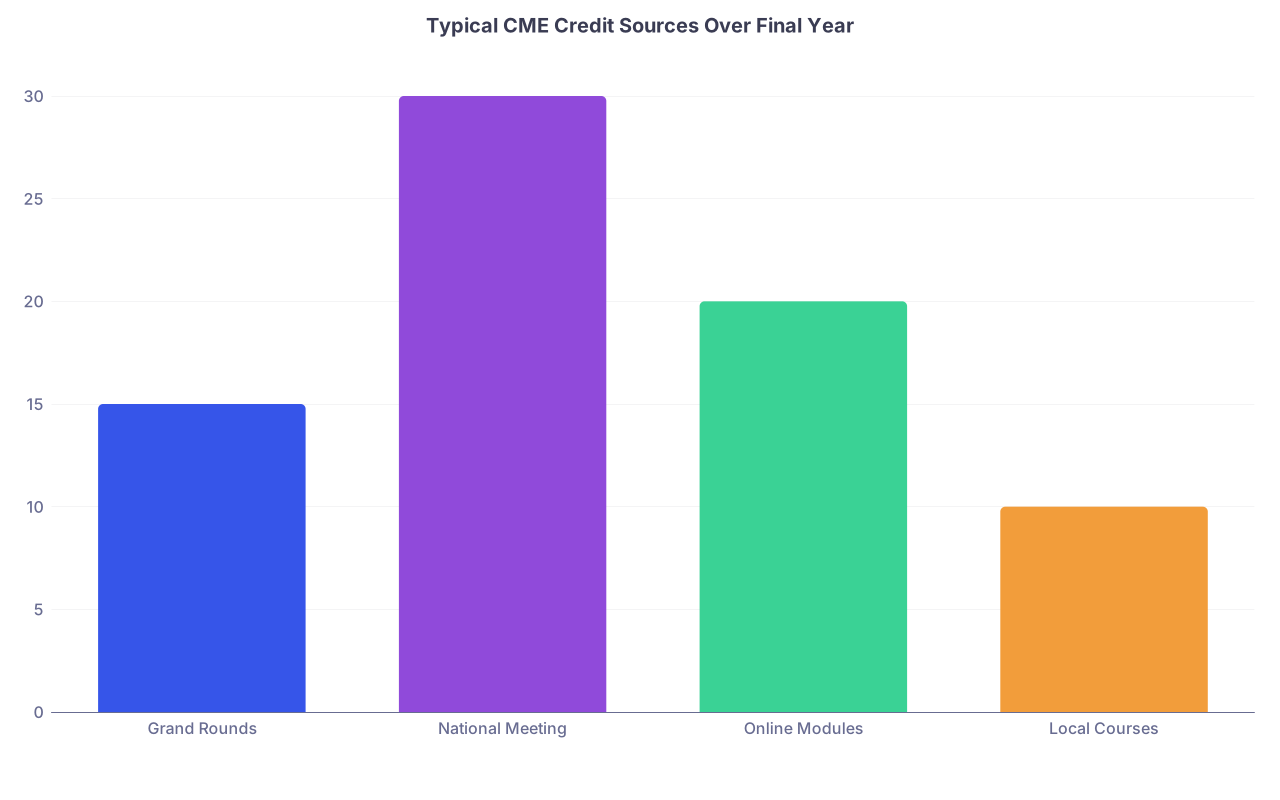
| Category | Value |
|---|---|
| Grand Rounds | 15 |
| National Meeting | 30 |
| Online Modules | 20 |
| Local Courses | 10 |
If you can attend one big meeting + consistent local/online CME, you will walk into attending life already at or near your first‑cycle requirement.
At this point, you should have a short list on your phone:
- Big meeting: which one, when, how many credits expected
- Minor sources: recurring conferences, online platforms you like (UpToDate CME, NEJM Knowledge+, specialty‑specific)
November: Identify Required “Weird” Courses
This is where people get burned.
Many states require topic‑specific hours:
- Opioid / controlled substance prescribing
- Pain management
- Domestic violence / child abuse
- HIV / infection control
- Cultural competency / implicit bias
- Suicide prevention
In November, you should:
- Make a checklist of required topics for each:
- State license
- DEA registration / renewal
- Hospital/health system you may join (often their own mandatory education)
- Find approved courses now:
- Through state medical society
- Through specialty society
- Through hospital risk management
Do not assume your usual online CME platform covers these in a way your state accepts. I have watched a new attending redo a full 3‑hour opioid CME because the first one was not on the state’s approved list.
December: Do One Required Long Course Before the New Year
Pick one annoying, multi‑hour requirement and finish it in December.
Examples:
- 3–8 hour opioid prescribing course
- 3–4 hour implicit bias or cultural competency module
- “Risk management” course required by some boards
At this point, you should:
- Have at least 15–30 credits logged in your system
- Have knocked out 1 major required topic course
Q3 (January–March): Job Offers, Credentialing, and License Applications
This is when CME suddenly becomes real. Institutions start asking for documentation. The clock accelerates.
January: Get Ready for Licensing Paperwork
In January, you should:
- Request or confirm:
- GME office plan for training verification letters
- Expected date when they will certify your completion
- Re‑confirm your target state(s) and the license type:
- Full license vs training/restricted license transition
- Any state‑specific first‑time CME requirements
Then ask:
“If I apply for my license in Month X, what is the earliest I will need to show CME?”
Some states do not require CME for initial license, only for the first renewal. Others want proof even at the start. Know which world you are in.
February: Detailed Count and Gap Analysis
This is where you act like you are already in your first renewal year.
In February, you should:
- Open your CME tracker and calculate:
- Total credits earned in last 12–18 months
- How many of those will count toward:
- State CME cycle
- Board MOC cycle
- Topic‑specific tallies (opioid, ethics, etc.)
- Identify any holes:
- Not enough total hours?
- Missing a specific required course?
- Short on live/in‑person credits if your board requires some?
You want a simple grid for yourself:
- Total credits: __ / requirement __
- Opioid/pain credits: __ / requirement __
- Other mandated topics: check marks or blanks
If blanks exist in February, do not sugarcoat it. Schedule the missing CME now.
March: Lock In CME Plans Before Graduation Chaos
March is when match season, job offer negotiations, and life chaos hit. You will not prioritize CME after this unless forced.
So in March, you should:
- Register for:
- Any remaining required courses
- Your national meeting if you have not already
- Map specific dates for finishing:
- Remaining topic‑specific CME
- A target number of general CME hours
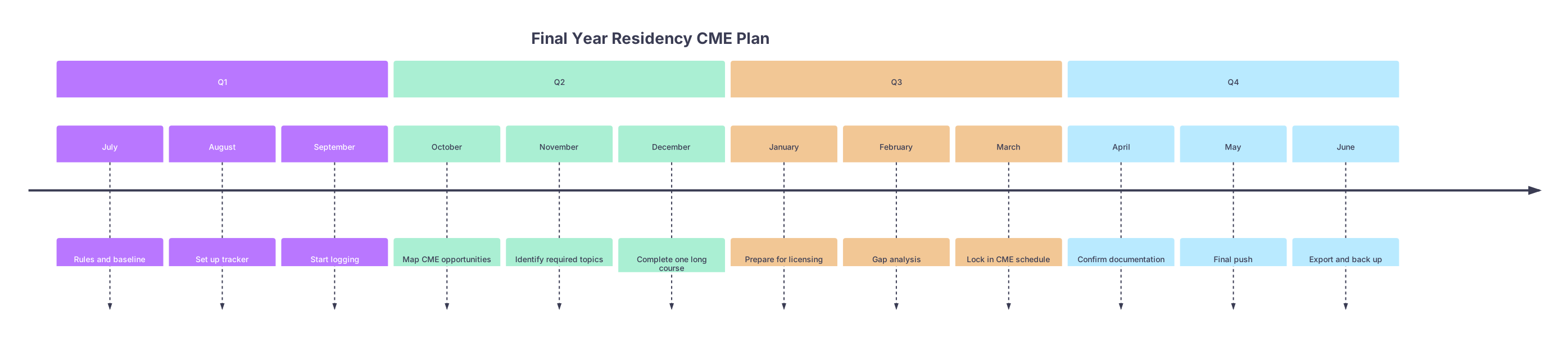
| Period | Event |
|---|---|
| Q1 - July | Rules and baseline |
| Q1 - August | Set up tracker |
| Q1 - September | Start logging |
| Q2 - October | Map CME opportunities |
| Q2 - November | Identify required topics |
| Q2 - December | Complete one long course |
| Q3 - January | Prepare for licensing |
| Q3 - February | Gap analysis |
| Q3 - March | Lock in CME schedule |
| Q4 - April | Confirm documentation |
| Q4 - May | Final push |
| Q4 - June | Export and back up |
At this point, you should already have a clear runway: you know exactly which CME you will do between now and 6–12 months post‑graduation.
Q4 (April–June): Graduation, Documentation, and Attending‑Level Tracking
This is where tracking matters more than volume. You have less time; you need cleaner records.
April: Clean the Data Before You Leave
In April, you should:
- Audit your CME tracker:
- No missing certificates
- No “TBD” fields for credit amounts
- Correct provider names and dates
- Download:
- Any hospital CME transcripts
- GME or institutional CME summaries
Your future self will not have access to old hospital logins. I have watched people beg former coworkers to dig through ancient learning management systems. Do not be that person.
May: Confirm What Will Transfer Into Your First Cycle
At this point, you are weeks from graduation.
In May, you should:
- Re‑check:
- State board rules for how far back CME can count
- Specialty board MOC rules for “pre‑certification” CME credit
- Tag credits in your tracker by cycle:
- “Counts toward first state renewal cycle”
- “Counts toward initial board MOC block”
- “Extra / not needed but documented”
This matters because some systems will let you apply “excess” CME forward. Others will not. Knowing the rules lets you prioritize.
June: Graduation Month – Do the Formal Export
During June, you should:
- Export your CME record into:
- One master PDF with certificates, in chronological order
- One summary spreadsheet (date, course, provider, credits, topic type)
- Store in:
- Personal cloud (Drive, Dropbox, iCloud, etc.)
- An encrypted USB if you like overkill
- Update your CV with:
- Any major CME courses and national meetings
- Clearly labeled “CME and Professional Development” section if relevant

At this point, you should be able to send:
- A complete CME packet to a state board
- A quick summary to a credentialing office
within a few minutes. Not after a night of hunting through old emails.
First 6–12 Months as an Attending: Week‑by‑Week Habits That Stick
The article is about your final year, but I would be irresponsible if I did not say this clearly: what you do in the first attending year will either make CME painless forever or miserable for decades.
First 4 Weeks in New Job
In your first month as an attending, you should:
- Ask credentialing or medical staff office:
- “How do we track CME here?”
- “Do you provide a system transcript?”
- Immediately add:
- Any orientation modules with CME credit
- Mandatory hospital courses that qualify
Then update your personal tracker to match their categories (ethics, risk, opioid, etc.) so you can reuse their numbers but keep your own copy.
Weekly Habit (10 Minutes)
Once per week (set a calendar reminder), you should:
- Log anything you did that week with CME:
- Grand rounds
- Online reading with CME (UpToDate, JAMA, etc.)
- Local conferences
- File any new certificates in your CME folder
Ten minutes. That is all. But if you skip this, it becomes a 10‑hour task during license renewal.
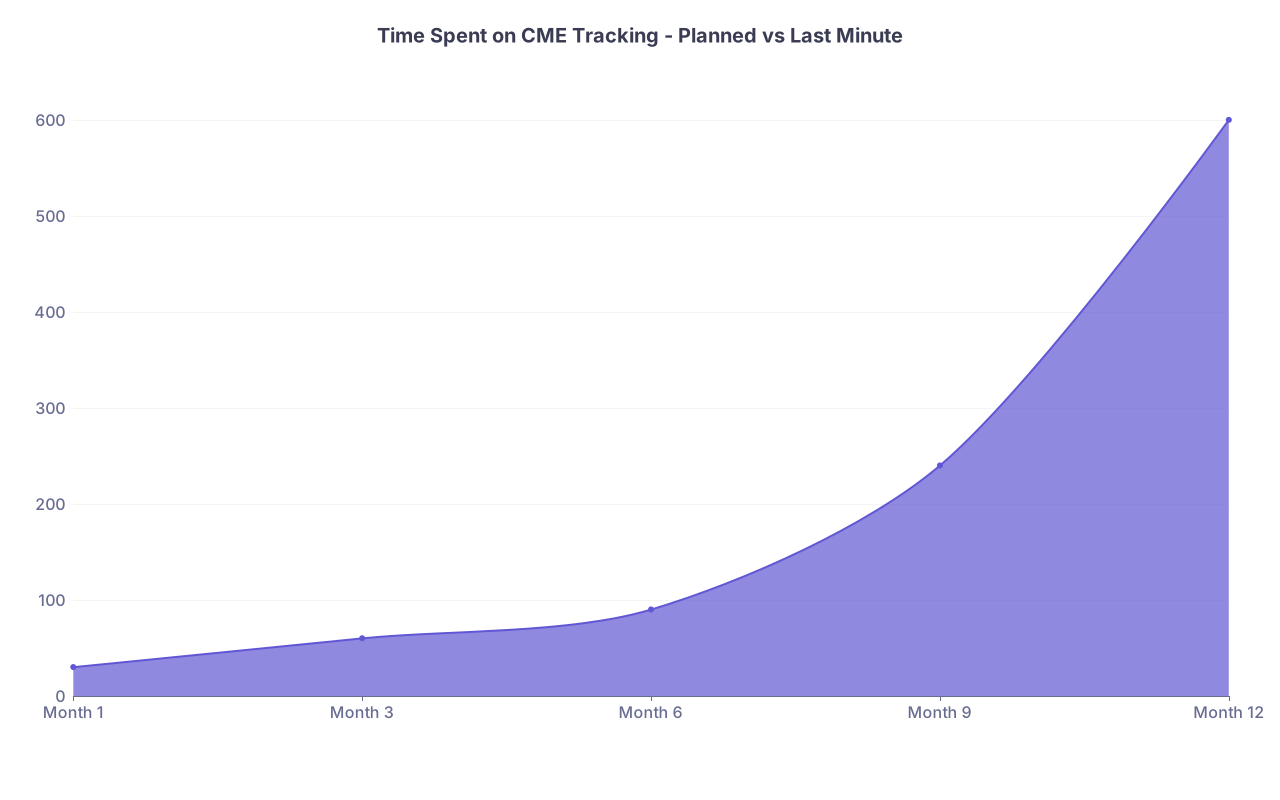
| Category | Value |
|---|---|
| Month 1 | 30 |
| Month 3 | 60 |
| Month 6 | 90 |
| Month 9 | 240 |
| Month 12 | 600 |
Common Pitfalls and How Your Timeline Avoids Them
You will see these play out among your co‑residents.
“I thought residency CME did not count.”
Wrong. A lot of it does. Your timeline:- Starts tracking in the first quarter of final year
- Ensures you capture grand rounds, conferences, and online modules that will count toward your first renewal cycle
“I did the wrong opioid course.”
State did not accept it. They redo it. Your timeline:- Forces a rules check in July and a topic course lookup in November
- Protects you from doing non‑approved content
“I lost all my certificates when I left residency.”
No access to the LMS; GME office slow to respond. Your timeline:- Requires data cleanup in April
- Exports a full personal archive before credentials get turned off
“Credentialing needs proof in 48 hours and I cannot find anything.”
Your timeline:- Ends with a June export and clear storage
- Makes you the calm one during onboarding, not the frantic one

Quick Recap: When to Take CME Seriously in Final Year
Three key points, no fluff:
Start tracking like an attending by early in your final year (July–September).
Set up a system, learn your state/board rules, and count every qualifying activity.Use the midyear (October–March) to front‑load high‑value CME and required topic courses.
Knock out opioids, ethics, and society meetings before graduation chaos and job onboarding.In the last quarter (April–June), clean, export, and back up your entire CME record.
Leave residency with a complete, portable archive so license applications and credentialing are boring, not crises.
Do this once with discipline in your final year, and CME will stay background noise instead of turning into an emergency every two years for the rest of your career.