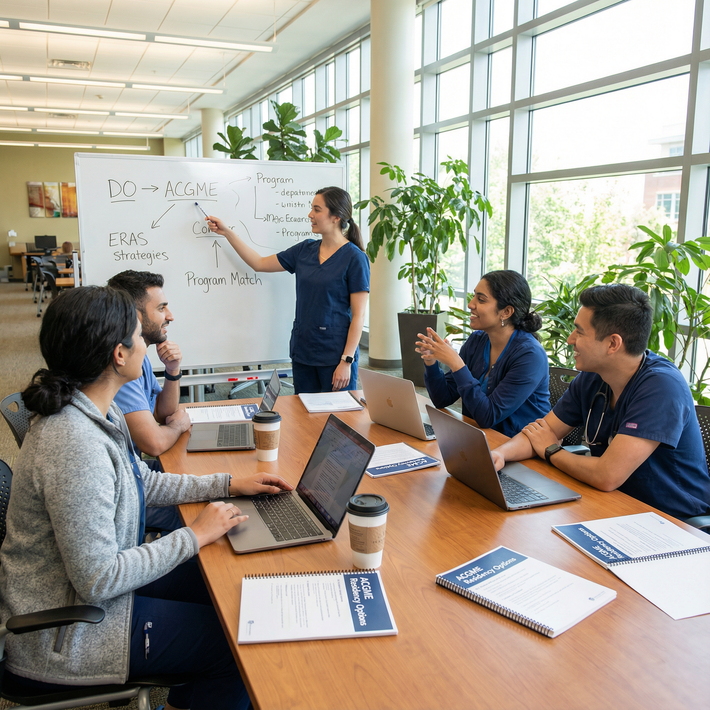
The biggest way DO students sabotage their match is by treating spring of MS3 like “just more rotations.” It’s not. It’s the launch window. Miss it, and your ACGME options shrink fast.
I’m going to walk you month-by-month and week-by-week through spring of third year specifically for DO students targeting ACGME programs: when to lock in sub-Is, when to ask for LORs, and how to not get buried by “we’re full” emails in June.
We’ll start at early January of MS3 and run you through to the first day of MS4.
Big Picture Timeline: What Has To Happen When
At this point you should understand the non-negotiables. For ACGME programs (especially competitive ones), these are the anchors:
- 1–2 strong ACGME letters from MD attendings in your target specialty
- 1 department chair letter in your specialty (often from a Sub-I)
- 1–2 sub-internships (“sub-Is”) at ACGME sites, ideally before September of MS4
- For DOs: a plan for COMLEX vs USMLE expectations at those sites
Here’s the rough reality window:
| Item | Ideal Window |
|---|---|
| Identify target specialty | Jan–Feb MS3 |
| Identify ACGME target sites | Jan–Feb MS3 |
| Request spring/summer LORs | Feb–May MS3 |
| VSLO/Visiting apps submitted | Mar–Apr MS3 (some earlier) |
| Home sub-I scheduled | May–Jun MS3 |
| Away sub-I months scheduled | May–Jul MS3 |
| Begin sub-I rotations | Jul–Sep MS4 |
Now let’s walk it chronologically.
January of MS3: Commit to a Direction and Build a Target List
In January, most third-years are still saying “I’m keeping an open mind.” That’s fine socially. But privately? You should be narrowing.
By mid-January you should…
Declare a working specialty plan.
Not a forever plan. A working plan. Examples:- Primary target: Internal Medicine; backup: FM
- Primary: EM; backup realistic: IM or FM
- Primary: Gen Surg; backup: Prelim / IM
Make a first-pass list of ACGME programs.
Focus on:- Regions you’d actually live in
- Places that have historically taken DOs
- Programs clearly stating USMLE vs COMLEX policies
Check:
- Program websites
- Residency Explorer / FREIDA
- Your school’s match list (where DOs like you matched)
Clarify exam expectations.
By end of January, you should know for your specialty:- Are most of your realistic ACGME targets OK with COMLEX only?
- Do your top 5–10 require USMLE for ranking or interview?
If you’re still on the fence between two specialties, fine. But do not let that indecision delay identifying which departments and attendings you might need letters from this spring.
February of MS3: Lock Your LOR Strategy and Rotation Order
February is where DO students fall behind MDs. MD schools often have structured timelines; DO schools vary wildly. You can’t rely on your admin office to drive this.
By early February you should…
Know how many letters you’ll need for your target specialty:
Most ACGME programs:- 3–4 total letters
- 2+ from your specialty (at least 1 from an academic/ACGME site)
- 1 can be from another specialty who really knows you
Identify specific attendings for potential LORs from rotations you’ve done already (fall/winter MS3):
- That IM attending you rounded with for 4 weeks at the ACGME hospital
- That EM doc who explicitly said, “You’re one of the better students we’ve had this year”
- The FM preceptor who saw you handle complex patients independently
Start a simple list:
- Name
- Specialty
- Institution (ACGME vs community)
- Rotation dates
- LOR potential: strong / medium / avoid
By late February you should…
Map out the rest of your MS3 rotations vs LOR needs:
- Need 2+ letters from IM? Then your spring IM rotation is not optional loafing time, it’s an audition block for letters.
- Need a surgery letter? The next surg rotation at an ACGME site is your shot.
Talk with your clinical education office about:
- When VSLO (or your visiting student system) opens
- Which sites your school already has contracts with
- Any DO–ACGME politics you should know (“Program X hasn’t taken DOs in a while”)
At this point you should have:
- A target specialty
- A rough “must have by August” LOR breakdown
- A list of 5–10 attendings you can potentially ask for letters by May–June
March of MS3: Sub-I Planning and ACGME Site Strategy
March is where timeline mistakes become permanent. A lot of ACGME programs open VSLO/VSAS around March–April and fill fast. DO students tend to be 2–4 weeks late. That’s lethal in competitive specialties.
First half of March: Decide where you need sub-Is
You’re aiming for:
- 1 home sub-I in your target specialty
- 1–2 away sub-Is at ACGME programs you’d seriously attend
If you’re IM-bound:
- Home IM sub-I July or August
- Away IM sub-I August or September
If you’re EM, surgery, OB/GYN, or ortho:
- Earlier is better. July/August are prime. Even September can be late depending on the specialty.
Second half of March: Start acting, not “researching”
By late March you should:
- Know which programs you’ll apply to for away sub-Is
- Have:
- List of required documents (CV, transcript, Step/COMLEX scores, immunizations)
- Target months for each away rotation
- Backup programs if first choices reject or waitlist you
And you need to accept this reality:
For a DO student at an ACGME-heavy program, your away sub-I is often your best chance to prove you belong. Treat those apps like a mini-ERAS.
April of MS3: Sub-I Applications and First Wave of LOR Requests
April is not “too early” to start asking for letters. It’s perfect—especially from attendings who saw you in the fall/winter.
Early April: Submit visiting student / away sub-I applications
Most students screw this up by waiting until “after I take COMLEX Level 1” or “after I know my Step score.” Don’t.
By early April you should:
- Have submitted VSLO/visiting applications to top-choice ACGME sites
- Have at least 1–2 backup programs per month you’re targeting
- Keep a simple tracker:
- Program
- Specialty
- Month requested
- Status: submitted / pending / waitlist / accepted / rejected
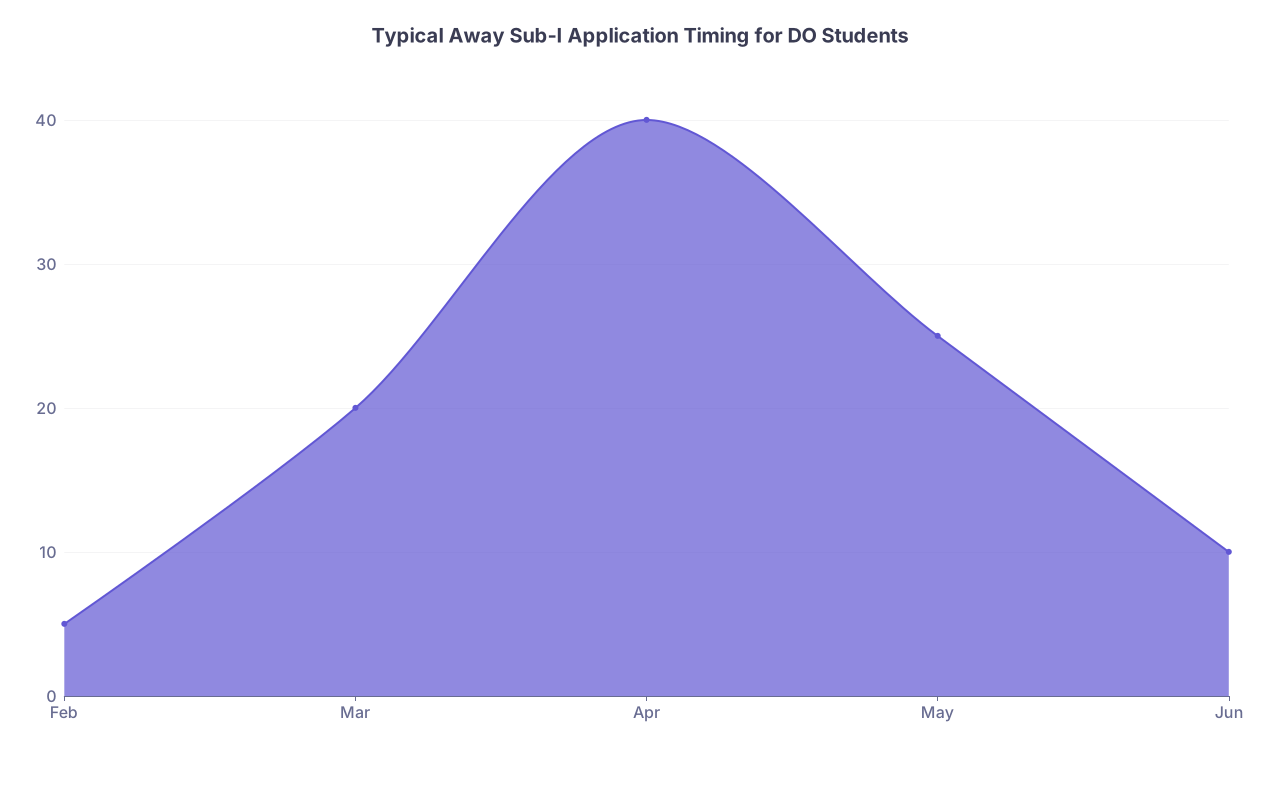
| Category | Value |
|---|---|
| Feb | 5 |
| Mar | 20 |
| Apr | 40 |
| May | 25 |
| Jun | 10 |
The peak rush is March–April. If you wait until June, you’re trying to grab scraps.
Mid–Late April: Start your first LOR asks
At this point you should start requesting letters from rotations that already ended, especially:
- ACGME IM attendings
- EM/surgery/OB/GYN attendings at academic sites
- Any attending who already told you “I’m happy to write you a letter”
How to ask (timeline-focused):
- Email first, then confirm in person if possible.
- Use a clear subject: “LOR request – [Your Name], DO MS3 – [Specialty] residency”
- In the email, specify:
- Target specialty and year (e.g., 2025–2026 match)
- That letters will be uploaded to ERAS in late summer
- Why you’re asking them specifically (mention a case or feedback)
- Attach: CV, brief paragraph about career goals, rotation dates
Then—this is where people go passive—
- Set a reminder in your calendar 4 weeks later to follow up if you haven’t gotten confirmation.
May of MS3: Finalize Sub-Is, Aggressively Collect LORs
May is clean-up month. You’ve probably started or finished one more core rotation. You’re possibly studying for COMLEX Level 1 or USMLE Step 1. You’re tired. This is when people let logistics slide. Do not.
By early May you should…
- Have at least 1 away sub-I offer or clear movement (or know you need backup programs ASAP)
- Have spoken with your home department in your chosen specialty about:
- Home sub-I options and months
- Any internal “chair’s letter” process
- Whether they expect you to do the home sub-I before away rotations
Mid-May: Full-court press on LORs
Here’s the brutal truth: a lot of attendings vanish in June–July (vacation, faculty moves, new interns). If you don’t get your letters in motion by late May, you’ll wait months.
By mid-May, at this point you should:
- Have asked for at least:
- 1 letter from your target specialty at an ACGME site
- 1 additional clinical letter (IM/FM/surg/EM) from a strong rotation
- Verified:
- Each letter writer knows how to use your school’s letter portal or ERAS process
- Your dean’s/letter office has their info on file if needed
Ideal May outcome:
- 2 letters requested and confirmed
- 1–2 more identified for early summer requests (e.g., from your May/June rotation if it goes well)
June of MS3: Final Core Rotations and Last-Minute Sub-I Fixes
June feels like chaos: maybe COMLEX/USMLE, last core rotations, tired residents, admin turnover. It’s also the last month before you cross the line into “MS4 applying this cycle.”
Early June: Confirm your MS4 schedule
By now, you need clarity:
- Sub-I months and locations confirmed
- Home sub-I: which month? (July/Aug/Sept)
- Away sub-I #1: confirmed month and housing plan
- Away sub-I #2: at least submitted and in review, with backups
If you still don’t have away rotations:
- Increase volume. Apply to more mid-tier and community ACGME sites that are DO-friendly.
- Talk to your school’s clinical office. They often know programs that are slow to fill or historically flexible with DOs.
Mid–Late June: LORs from spring rotations
At this point you should:
- Ask for letters immediately at the end of any strong May/June rotation:
- “I’ve really appreciated this month; would you feel comfortable writing a strong letter of recommendation for my [specialty] residency applications?”
- If they say yes:
- Get their institutional email
- Send a follow-up email within 24–48 hours with:
- CV
- Personal statement draft (even if rough)
- ERAS/letter upload instructions and deadlines (tell them you’d love it by August if possible)
You do not wait until August to ask. By then, they barely remember you.
July of MS4 (But Planned in Spring): Sub-Is Begin and LOR Deadlines Tighten
Technically this is MS4, but if you haven’t planned it in spring of MS3, you’re already behind.
On your first sub-I (July/August) you should…
- Day 1–3: Figure out who your likely letter writer will be (attending vs PD vs chair)
- Week 1: Make it clear through your performance that you’re there to match in this specialty
- Week 2: Ask for feedback early. If it’s positive, mentally tag that attending as your chair/flagship LOR.
End of each sub-I: You MUST ask for letters before you leave
Do not leave an ACGME sub-I without either:
- A committed letter writer
- Or a clear “no” so you know to pivot elsewhere
Ideal LOR set by end of September MS4:
- 1 home department / chair letter in specialty
- 1–2 additional specialty letters (ideally from ACGME academic sites)
- 1 strong medicine/family/other letter
Practical Weekly Checklist: March–June of MS3
Here’s how this actually looks week by week when done correctly.
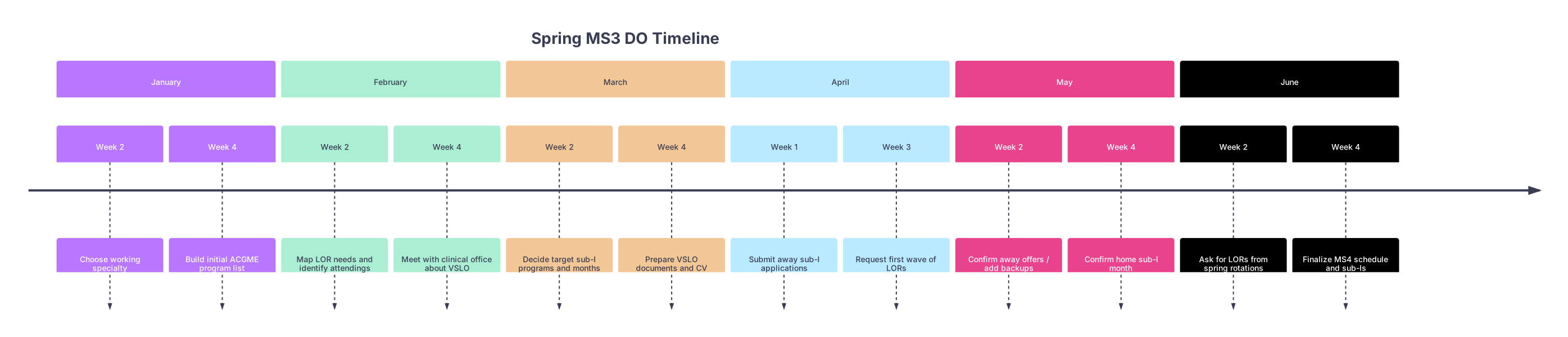
| Period | Event |
|---|---|
| January - Week 2 | Choose working specialty |
| January - Week 4 | Build initial ACGME program list |
| February - Week 2 | Map LOR needs and identify attendings |
| February - Week 4 | Meet with clinical office about VSLO |
| March - Week 2 | Decide target sub-I programs and months |
| March - Week 4 | Prepare VSLO documents and CV |
| April - Week 1 | Submit away sub-I applications |
| April - Week 3 | Request first wave of LORs |
| May - Week 2 | Confirm away offers / add backups |
| May - Week 4 | Confirm home sub-I month |
| June - Week 2 | Ask for LORs from spring rotations |
| June - Week 4 | Finalize MS4 schedule and sub-Is |
Use that as your skeleton. Then layer this weekly behavior:
Every week from March–June you should…
Track:
- Which attendings might be letter writers
- Which programs you’ve applied for away rotations
- Deadlines: VSLO, immunizations, physicals, drug screens
Spend 30–60 minutes on:
- Updating your CV
- Drafting/refining a basic personal statement paragraph
- Sending 1–2 follow-up emails on letters or rotation applications
DO-Specific ACGME Issues You Need to Handle in Spring
You’re not an MD. ACGME knows that. Some programs handle that well; some don’t.
COMLEX vs USMLE reality
By April you should have:
- A list of target programs and whether they:
- Accept COMLEX only
- “Prefer” USMLE (translation: you’ll be at a disadvantage without it)
- Require USMLE for ranking
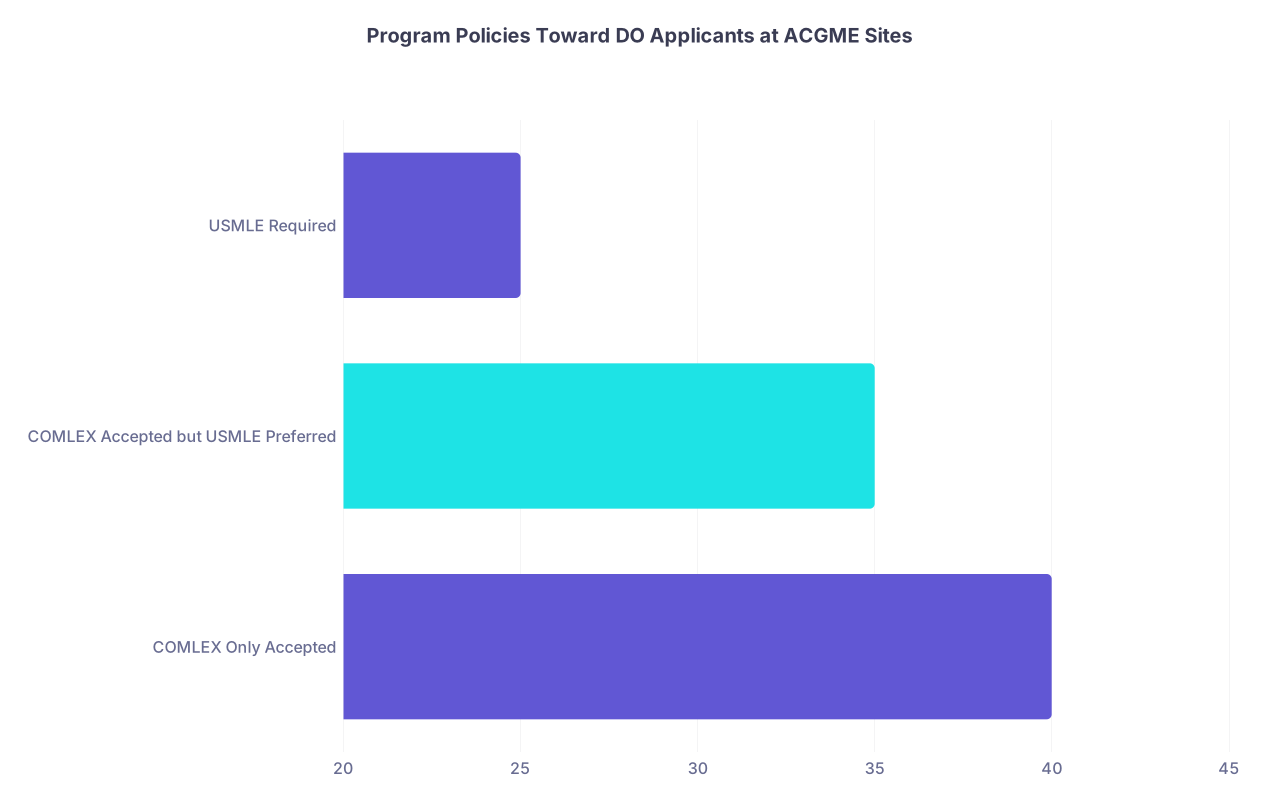
| Category | Value |
|---|---|
| COMLEX Only Accepted | 40 |
| COMLEX Accepted but USMLE Preferred | 35 |
| USMLE Required | 25 |
If most of your realistic targets are in the middle or bottom categories, that should shape your test strategy far earlier (often before spring). But spring is when you align your sub-I and LOR strategy with that reality:
- If you’re COMLEX-only, you must lean harder on:
- Strong sub-I performance at ACGME sites
- Explicit advocacy in your letters (“One of our top students this year”)
- If you have USMLE, you still need letters from people the PDs know and trust.
Using ACGME letters to offset DO bias
I’ve watched plenty of DOs match into IM, EM, surg, OB at solid ACGME places because their letters screamed “this student is as good as, or better than, our MDs.”
That doesn’t happen by accident.
In spring of MS3 you should be:
- Strategically choosing rotations where attendings work regularly with residents
- Positioning yourself near PDs, APDs, or core faculty who actually write letters that matter, not just “private practice doc who liked you”
Sample Spring LOR/Sub-I Timeline Snapshot
To make this concrete, here’s a typical “done right” snapshot for an MS3 DO targeting ACGME Internal Medicine:
| Time | Action |
|---|---|
| Jan | Decide on IM; list 20 ACGME IM programs |
| Feb | Identify 3 IM attendings for possible LORs |
| Early Mar | Decide on 2 away IM sub-Is (Aug, Sep) |
| Late Mar | Prepare VSLO docs, finalize CV |
| Early Apr | Submit VSLO to 4 sites + 2 backups |
| Late Apr | Request 1 IM LOR + 1 FM LOR |
| May | Confirm 1 away IM + home IM sub-I in July |
| June | Request LOR from strong May IM rotation |
By July 1, that student walks into MS4 with:
- 2 letters already requested and in progress
- 1 more letter request lined up from home IM sub-I
- All sub-Is scheduled at ACGME sites that like DOs
That’s where you want to be.
Visual: How Your Effort Should Shift Over Spring
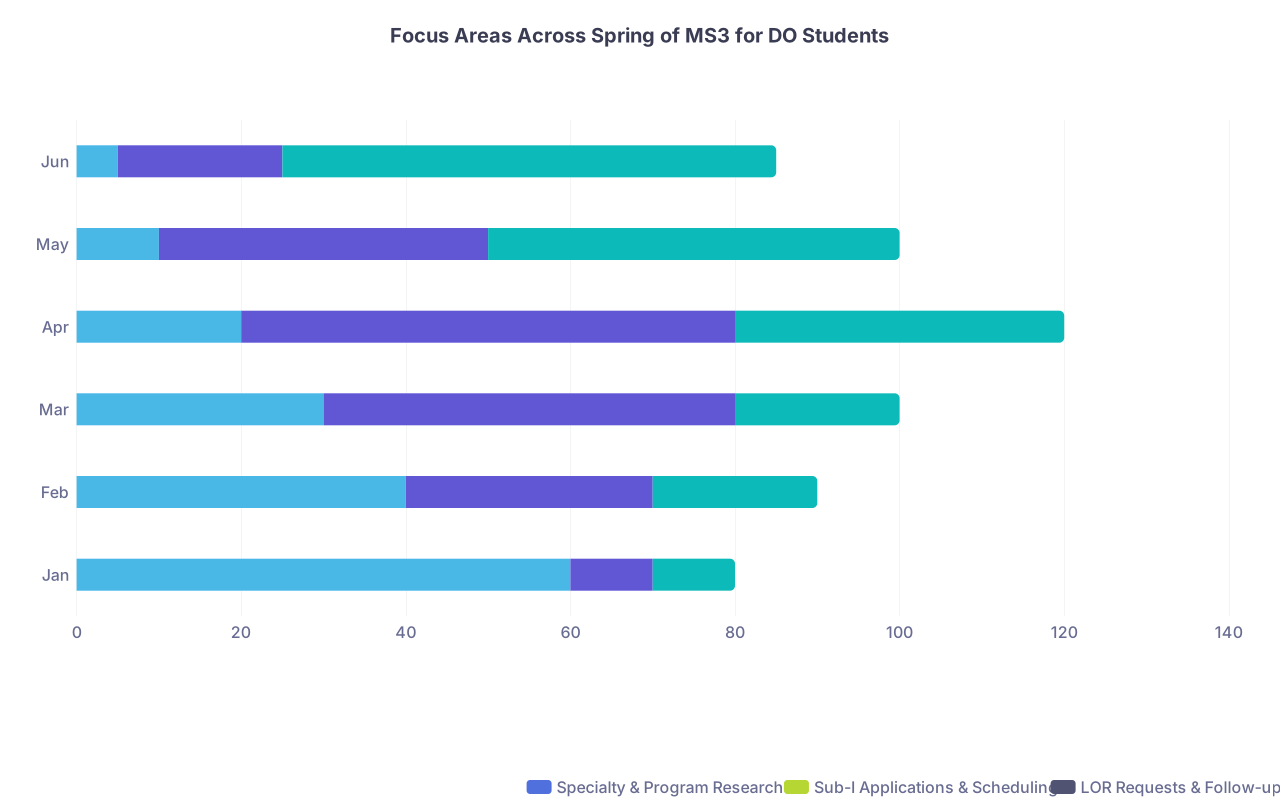
| Category | Specialty & Program Research | Sub-I Applications & Scheduling | LOR Requests & Follow-up |
|---|---|---|---|
| Jan | 60 | 10 | 10 |
| Feb | 40 | 30 | 20 |
| Mar | 30 | 50 | 20 |
| Apr | 20 | 60 | 40 |
| May | 10 | 40 | 50 |
| Jun | 5 | 20 | 60 |
Early spring: more thinking and researching. Late spring: all about action—applications, scheduling, letters.
Final Tight Summary
- Spring of MS3 is when DOs either secure or lose their leverage at ACGME programs. By March you should have a specialty, a target program list, and a sub-I plan. Not just vibes.
- Letters of recommendation are a spring and early summer job, not an August panic project. Ask at the end of strong rotations, especially at ACGME sites, and get 2–3 letters in motion by June.
- Sub-Is at ACGME sites fill early. March–April is your application window; May–June is backup and confirmation. If you’re still “figuring it out” in June, you’re already paying for that indecision.