

The way residents judge their own fellowship competitiveness is broken.
People use vibes, rumors, and one-off anecdotes instead of data and strategy. That’s how solid applicants talk themselves out of applying…and long-shot applicants waste a whole year chasing impossible lists.
Let me fix that for you.
You can absolutely get a clear, realistic answer to: “Am I actually competitive for my target fellowships?”
Not perfectly. But specific enough to make smart decisions, not emotional ones.
Step 1: Define “Competitive” Like a Grown-Up
You’re not asking, “Will I 100% match here?” That’s fantasy.
You’re asking three better questions:
- Do I clear this program’s basic screens?
- Once screened in, would I look reasonable in their interview pool?
- Do I have at least some hook: numbers, research, niche interest, or fit?
Think in tiers, not yes/no.
| Tier | What It Really Means |
|---|---|
| Safety | You’d be surprised if you got zero interviews |
| Target | Reasonable shot at several interviews |
| Reach | Possible, but you need something distinctive |
If your whole list is “reach,” you are not “ambitious.” You’re reckless.
Step 2: Start With the Hard Filters (Things You Can’t Hand-Wave)
Programs rarely say these out loud, but they act like hard filters anyway.
1. Exam performance (Step/Level + In-Training)
Here’s the blunt truth:
- Below-average exam scores do not automatically kill your chances,
but they do make top-5 type programs much harder unless you’re exceptional elsewhere. - Above-average scores alone do not get you big-name fellowships,
but they open the door enough for the rest of your app to matter.
Use this rough sanity check for competitive subspecialties (cards, GI, heme/onc, some surgery fellowships):
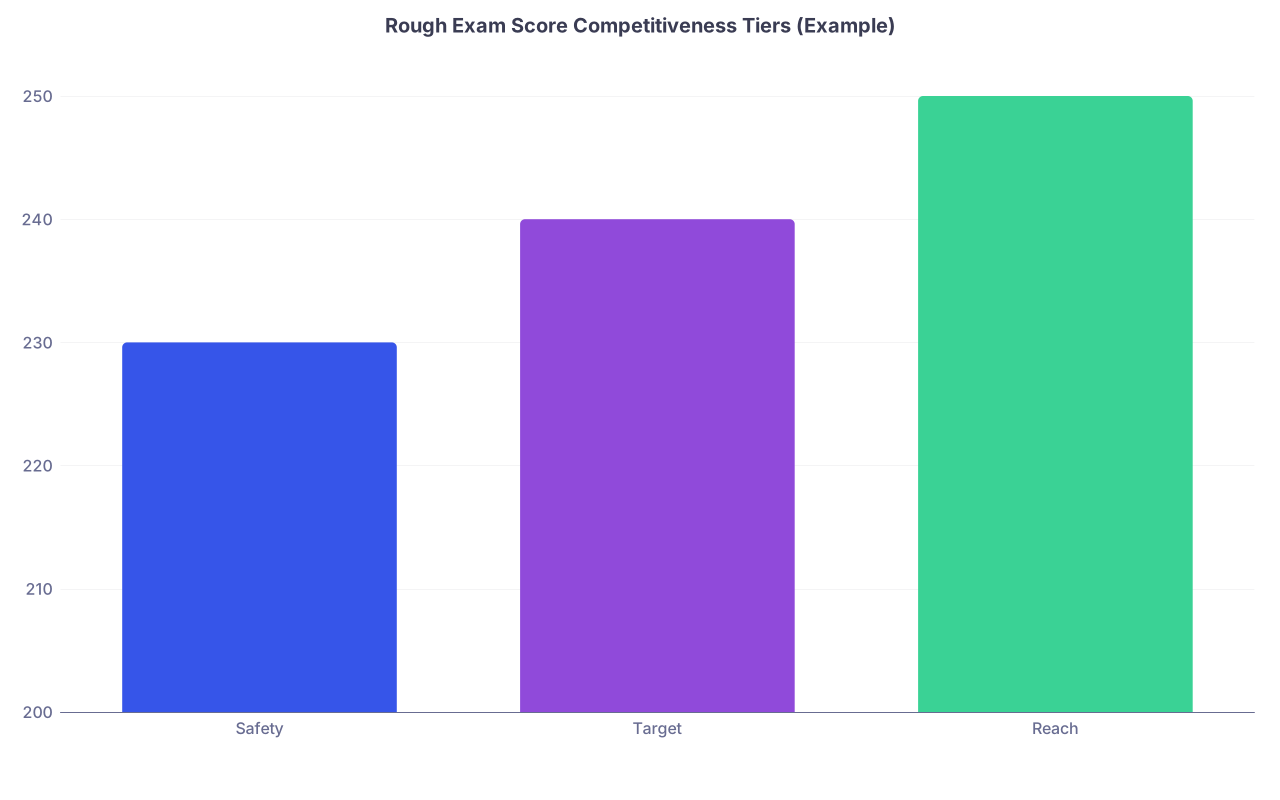
| Category | Value |
|---|---|
| Safety | 230 |
| Target | 240 |
| Reach | 250 |
Translate for your world:
- For highly competitive fellowships:
“Target” often ≈ within ~5–10 points of your residency program’s average matched fellow. - For less competitive areas (endocrine, nephrology, many hospitalist tracks):
the threshold is lower; clinical performance and letters matter more.
Find reality by:
- Asking your PD: “What’s the rough score range of our fellows in [specialty] the last few years?”
- Looking up NRMP/NRMP-style data for your specialty if available.
- Talking to recent grads who matched where you want to go.
If your scores are way below your home program’s recent matches for that field, that specific tier of programs becomes more “reach” than “target.”
2. Visa status / training background
Two harsh facts:
Some programs effectively don’t consider:
- Certain visas
- DO/IMG applicants
- People from small community programs
Some absolutely do—and they’re sometimes excellent training environments.
You’re competitive within the pool that programs actually review. That may change your target list mix, not your worth as a physician. But you need to know it early.
Action:
- Read program websites carefully for “we sponsor…” or “we do not sponsor…”
- Ask upper-levels with similar backgrounds where they actually got interviews (not just applied).
Step 3: Map Your Profile in Four Buckets
Once you’ve cleared the hard filters, competitiveness comes down to four big buckets:
- Clinical reputation
- Research/productivity
- Letters and mentors
- Fit / narrative
You do not need to be perfect in all four. You need to be clearly strong in at least two, and not terrible in the others.
1. Clinical Reputation: Are you the resident people trust?
This is the quiet currency of fellowships. Programs call each other. PDs talk.
Signals you’re strong here:
- You consistently get “above expectations” on evals, not just “meets.”
- Attendings ask you to precept, teach, or help with complex cases.
- You’re the resident co-residents ask to review tricky patients.
Red flags:
- Multiple professionalism flags.
- Repeated comments about poor reliability, documentation, or team behavior.
- Remediation for clinical performance.
Here’s how to get an honest read:
Ask your PD or APD directly—“On pure clinical performance, am I average, above average, or below average compared to residents who’ve matched X fellowship from our program?”
If they dodge the question, ask senior fellows who know the gossip.
2. Research/Productivity: Does your story match the field?
For competitive fellowships, this matters more than most residents want to admit.
You’re in good shape for research-heavy fields (cards, GI, heme/onc, critical care at big places) if:
- You have multiple abstracts/posters plus at least one paper (does not have to be first-author) in the specialty or closely related.
- You can clearly discuss what you did, what you found, and why it matters.
- A faculty member in that field sees you as “my mentee” and will say so.
You’re still viable at solid, mid-tier programs if:
- You have a couple of projects, maybe 1–2 posters, maybe a paper in progress.
- Your involvement was meaningful, not just data entry.
You’re at a disadvantage for top programs if:
- You have essentially zero scholarship and you’re applying in a research-heavy field.
- All your research is in a completely different area and you can’t connect the dots.

If you’re worried your research is light, reality-check it:
- Compare your CV to recent matched fellows’ online bios at your dream programs.
- Count: posters, oral presentations, peer-reviewed pubs in that field.
- Then categorize your research strength as: sparse / solid / strong / elite.
3. Letters & Mentors: Who will pick up the phone for you?
Letters are not just PDF files in ERAS. They’re conversation starters.
Programs ask each other:
- “If you had a spot, would you take them back as faculty?”
- “Were they top third of your residents?”
- “Are there any concerns you didn’t put in the letter?”
You’re competitive for higher-tier fellowships if:
- You have at least one letter from a recognizable name in the field
who knows you well and is willing to advocate outside the letter. - Your PD will go to bat for you and is genuinely enthusiastic, not lukewarm.
- You’ve had real mentorship—someone in the specialty is actively helping you target programs.
You’re at risk if:
- You’re scrambling in August for letters from attendings who barely know you.
- Your only “big name” contact has seen you twice on rounds.
- No one in your department has discussed a realistic program list with you.
Quick test:
Ask your main mentor: “If you were building my fellowship list, where would you expect me to get interviews?” Their answer is gold.
4. Fit & Narrative: Does your story make sense?
Programs are not just picking test scores. They’re building groups of fellows who:
- Actually want their program for good reasons
- Have clear plans that match what the program offers
(research track vs clinical heavy vs niche focus) - Fit their culture (academic vs community, procedural vs cognitive, etc.)
Where you’re strong:
- Your application clearly shows a consistent interest in the field: rotations, QI/research, electives, conferences.
- Your personal statement reads like one person with a specific story, not generic “I like complex patients and continuity.”
- Your program list actually matches your stated goals (don’t say you want heavy research and only apply to community programs).
Where people sabotage themselves:
- They say “I’m open to anything” when asked about career plans. Translation: no direction.
- They apply to programs that don’t match what they claim to want, and PDs can see that a mile away.
- They barely mention their concrete experiences in the field, focusing instead on childhood anecdotes.
Step 4: Compare Yourself to Real Data, Not Myths
You need external reference points, not just internal feelings.
Here’s what I tell residents to do:
Collect hard data from your own program.
Ask your PD or APD:- How many applied to [fellowship] each year?
- Roughly how many interviews did they get?
- Where did they match?
- What did the strongest vs weakest applicants typically look like?
Look up where people like you have matched.
Talk to:- Alumni from your program
- Residents at similar-caliber programs
- Fellows from your background (IMG/DO/etc.) in that specialty
Use that to build three columns of programs.
| Category | Number of Programs | Description |
|---|---|---|
| Reach | 5–8 | Top-tier or above your profile |
| Target | 10–15 | Reasonable based on prior matches |
| Safety | 5–8 | Slightly below your program’s usual match level |
If your PD looks at that list and winces, listen.
Step 5: A Simple Framework to Judge Your Competitiveness
Here’s the blunt scoring system I’ve used to reality-check applicants when we talk:
Rate yourself in each category from 1 to 4.
- Clinical: 1 = remediation; 4 = top 10% of your class
- Research: 1 = zero; 4 = multiple pubs + clear niche
- Exams: 1 = well below peers; 4 = clearly above average for your program
- Letters/Mentorship: 1 = generic letters; 4 = strong advocates
- Fit/Narrative: 1 = scattered, unfocused; 4 = coherent, aligned story
Now add:
- 16–20: You’re competitive at many strong programs; you should include several big names.
- 11–15: You’re competitive for a wide mid-range; top places are possible but mostly “reach.”
- 7–10: You need a very smart, targeted list and strong advocacy; focus on realistic and safety-heavy lists.
- ≤6: You can still match, but you must be ruthlessly realistic and probably broaden specialty or geographic expectations.
No, this is not science. But it’s better than “I feel okay, I guess.”
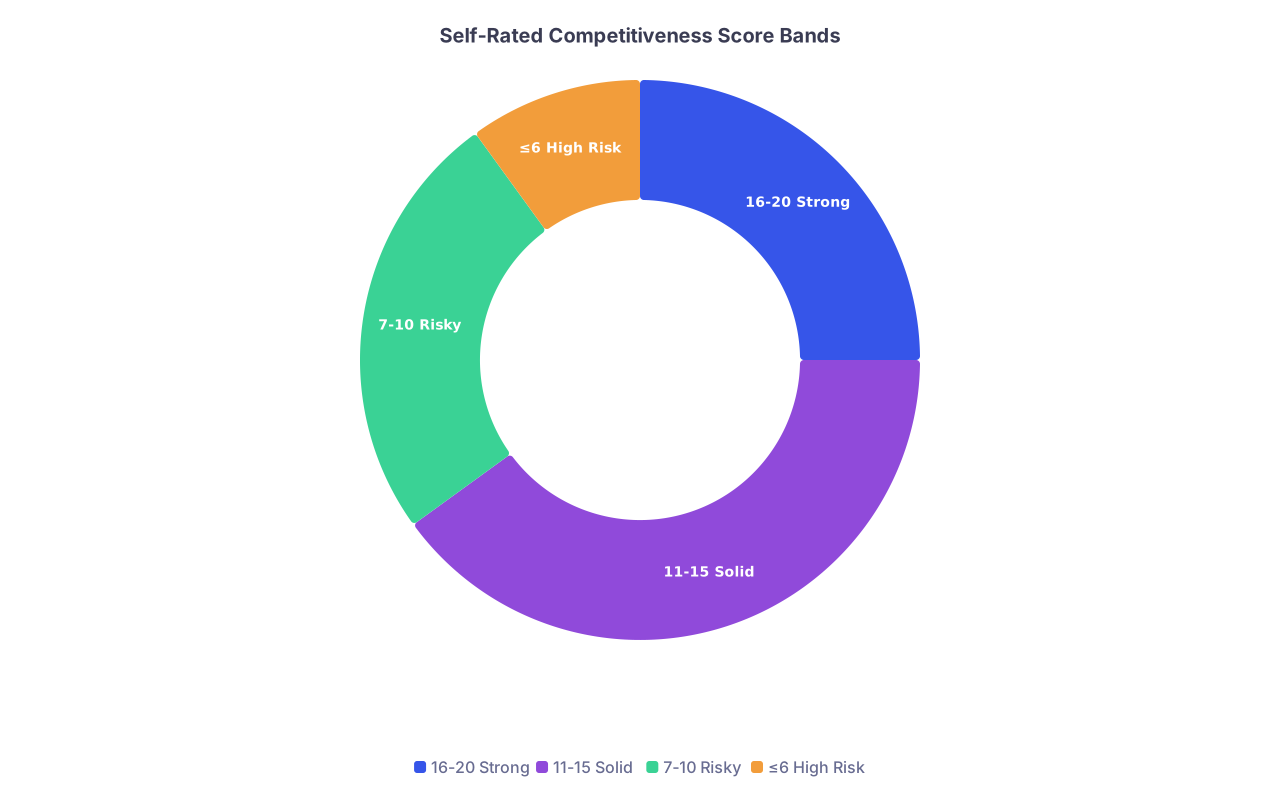
| Category | Value |
|---|---|
| 16-20 Strong | 25 |
| 11-15 Solid | 40 |
| 7-10 Risky | 25 |
| ≤6 High Risk | 10 |
Step 6: Use Your PD and Mentors Properly
Most residents underuse their PDs. Then get mad when the match doesn’t go how they wanted.
Here’s how to actually get value:
Go in with a draft program list already split into reach/target/safety.
Hand over your CV and ask three direct questions:
- “Where am I overestimating myself?”
- “Where am I undershooting?”
- “If you were me, how many programs and which tiers would you target?”
Follow up with:
“Would you feel comfortable calling any of these programs on my behalf if needed?”
Watch their body language on each name.
If your PD says things like “I think you could be considered there” about nearly every program, that’s not enthusiasm. That’s diplomacy. Adjust your list.

| Step | Description |
|---|---|
| Step 1 | Assess Exams and Visa |
| Step 2 | Focus on less competitive or visa friendly programs |
| Step 3 | Rate clinical, research, letters, fit |
| Step 4 | Score 16 to 20 |
| Step 5 | Score 11 to 15 |
| Step 6 | Score 7 to 10 or less |
| Step 7 | Include several top tier programs |
| Step 8 | Emphasize mid tier, few top tier |
| Step 9 | Heavy on realistic and safety programs |
| Step 10 | Review with PD and refine |
| Step 11 | Finalize application strategy |
| Step 12 | Pass basic screens |
Step 7: Warning Signs You’re Misjudging Your Competitiveness
I see the same mistakes every year:
- You ignore feedback like “cast a wide net” from your PD and only apply to brand-name places.
- You build your list around cities you like, not programs that like residents like you.
- You assume “I’m at a big-name residency, I’ll be fine,” despite mediocre performance and no research.
- On the other side: you’re from a solid but not famous program, with strong performance and good research, and you don’t apply anywhere ambitious.
If any of these sound like you, you’re probably not calibrated.

Step 8: What To Do If You’re Not As Competitive As You Want
You have options, even late in residency. Here’s the triage:
If you’re PGY-2 early:
- Double down on research in your chosen field
- Structure elective time in that specialty
- Get a clear narrative and mentors now
If you’re PGY-3 or late and gaps are big:
Reasonable plays:- One-year research fellowship in your target field
- Chief year to strengthen clinical/leadership narrative
- Broaden to less competitive fellowships or accept a different geographic range
If you’re applying this cycle and it’s too late to fix fundamentals:
- Apply to more programs than you originally planned
- Include more realistic and safety options
- Make sure letters and narrative are absolutely maximized
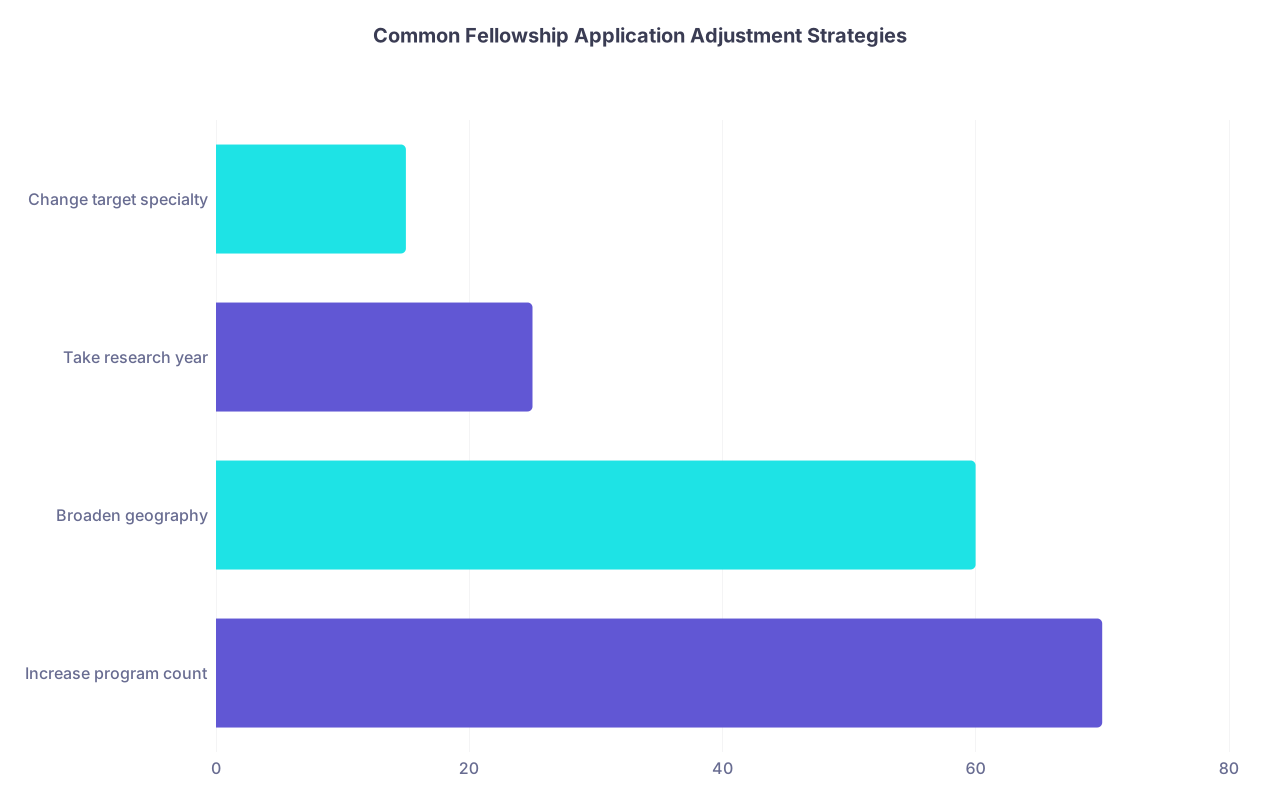
| Category | Value |
|---|---|
| Increase program count | 70 |
| Broaden geography | 60 |
| Take research year | 25 |
| Change target specialty | 15 |
None of this is glamorous. But it’s how people who weren’t obvious superstars still end up matched and happy.
FAQs
1. How many fellowship programs should I apply to if I’m “borderline” competitive?
If you’re truly borderline for your target field, you typically should apply to more than the average applicant. For competitive IM subspecialties (cards, GI, heme/onc), that often means 30–50+ programs, weighted heavily toward realistic and safety options. The right number depends on your specialty, background, and geography flexibility, but the principle is simple: if you’re not clearly strong, you buy options with volume.
2. I have average exam scores but strong research. Can I still aim high?
Yes, if your research is genuinely strong and clearly in the field. A resident with average scores but multiple solid publications in the specialty, who’s known by a respected investigator, is often more appealing to academic programs than a high-scorer with no scholarly track record. You’re still not “auto-in” at elite places, but you absolutely deserve some reach programs on your list.
3. How much does my residency program’s name really matter?
It matters, but less than residents think. Being from a well-known academic residency helps for that first glance and for PD-to-PD trust. But inside that, programs care far more about where you sit in your own class. A top 10–20% performer at a mid-tier university or strong community program often outcompetes a mediocre resident from a “big name” place. Name helps open doors; performance and advocacy decide if you walk through.
4. I’m an IMG/DO. Am I automatically non-competitive for top fellowships?
Not automatically, but the bar is higher and the path narrower. Look at actual current fellows—if a program has never had an IMG/DO fellow, that’s not where you build your expectations. Focus on places with a track record of taking applicants with your background, then stand out with excellent clinical performance, clear specialty commitment, and strong letters. A few top programs are IMG/DO friendly when the candidate is exceptional, but you cannot build your list around exceptions.
5. How do I know if my letters of recommendation are actually strong?
You can’t read them, but you can ask the right questions. When someone agrees to write, ask: “Would you feel comfortable writing a strong letter for me for [X fellowship]?” If anyone hesitates or downgrades to “supportive” or “positive,” do not use that letter as one of your core specialty letters. Also, pay attention to who volunteers to make calls on your behalf; those are your real advocates.
6. What if my PD is vague or not very helpful about my competitiveness?
Then you need a parallel mentorship track. Identify a faculty member in your chosen field who knows you well and ask them to walk through your CV and program list honestly. Talk to recent graduates who matched in that specialty from your program or similar ones. And be brutally honest with your own self-rating across clinical performance, research, exams, and narrative. Lack of clear guidance from a PD is frustrating, but it does not excuse going into the application cycle with a fantasy list.
Here’s what you should walk away with:
- Competitiveness is not a feeling; it’s a structured comparison of your profile to real outcomes.
- You don’t need to be perfect—just clearly strong in a couple of important buckets and realistic about the rest.
- A smart, tiered program list plus honest mentorship beats rumor-based “vibes” every single cycle.


