
The way most residents present complex cases in fellowship applications is clinically accurate and completely useless.
You are not writing a progress note. You are building an argument for why you belong in a subspecialty.
Let me break this down specifically.
What Program Directors Actually Want From “Complex Cases”
They are not impressed that:
- The patient was “very sick”
- The team “worked hard”
- The hospital was “resource limited”
They want to see how you think.
Complex cases in a fellowship portfolio are a proxy test for:
- Your clinical reasoning under uncertainty
- Your capacity to structure chaos
- Your self-awareness around risk, error, and system issues
- Your subspecialty identity and trajectory
If your case write‑ups read like “63-year-old male with…” and then a dump of hospital course, you are handing them documentation, not judgment.
Think of each case as a mini‑consult: focused, hypothesis‑driven, and clearly aligned with the fellowship you want.
Step 1: Choose the Right “Complex” Cases (Most People Fail Here)
The biggest mistake I see: residents choose cases that were emotionally intense but conceptually shallow.
Wrong kind of “complex”:
- Everything went wrong logistically, but the medical decision making was straightforward
- The patient had 18 comorbidities, but you just followed guidelines line by line
- The case is complex only because of social drama, not because you brought unique subspecialty‑relevant thinking
Right kind of “complex”:
- Diagnostic ambiguity with multiple plausible pathways where your reasoning mattered
- Management trade‑offs with no obvious “correct” answer, especially when evidence is weak or conflicting
- Intersections between subspecialties where you had to synthesize input and push for a plan
- Ethical or systems complexity where you identified and addressed a structural problem
If you are applying to cardiology, your “complex” case about a septic shock patient whose main drama was family disagreement over code status does nothing for you—unless you explicitly frame how it changed your cardiovascular thinking (for example, ECMO candidacy, myocardial depression in sepsis, end‑stage heart failure and goals of care).
You want 3–6 cases that, taken together, say:
- “This person thinks like a [future subspecialist] already.”
- “They have repeatedly been at the center of non‑routine clinical decision making.”
- “They understand both the medicine and the system.”
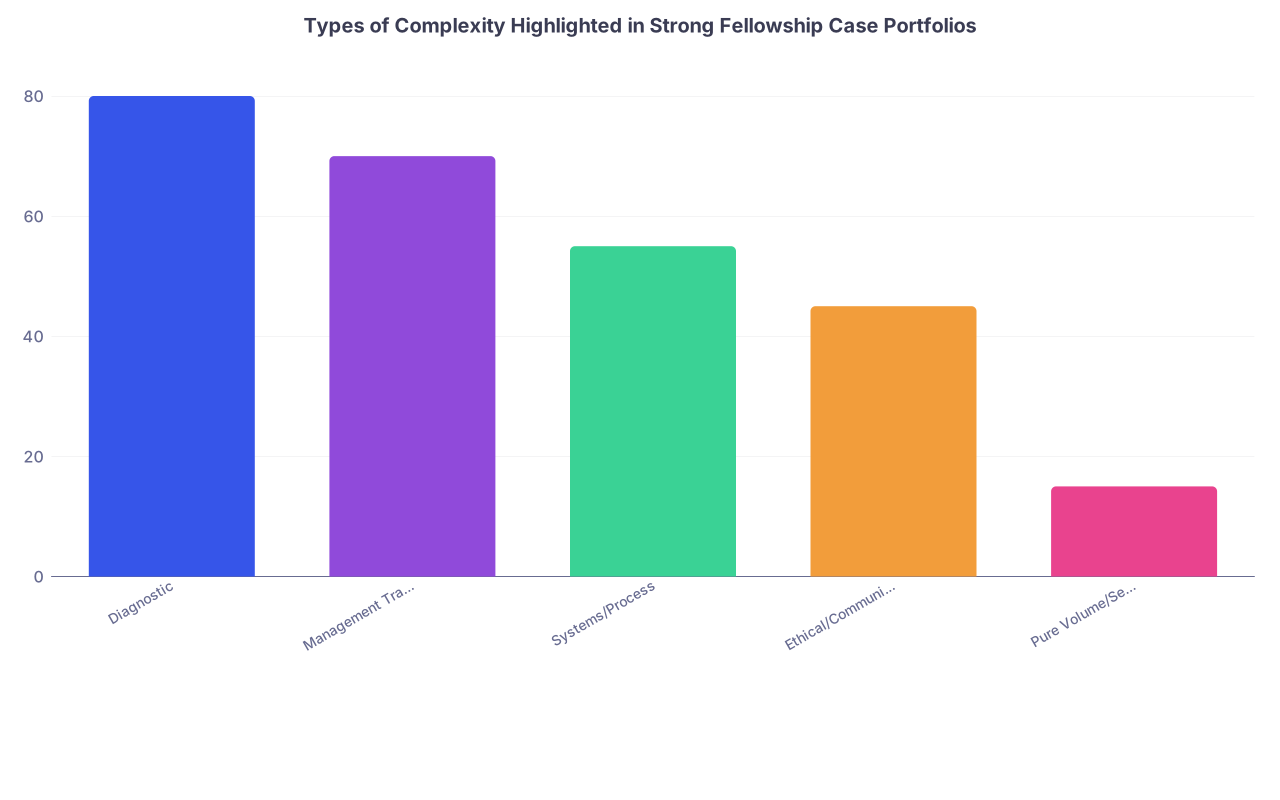
| Category | Value |
|---|---|
| Diagnostic | 80 |
| Management Trade-offs | 70 |
| Systems/Process | 55 |
| Ethical/Communication | 45 |
| Pure Volume/Severity | 15 |
Notice that last bar. Merely “sickest patient I ever saw” without structured reasoning is almost always overused and underwhelming.
Step 2: Use a Rigid, High‑Yield Structure (The 6‑Box Frame)
Fellowship PDs read quickly. If your case is not structured, they will not dig to find the insight.
I use a 6‑Box structure when I coach residents. It forces you to strip away fluff and surface thinking.
The six boxes:
- Clinical Snapshot (3–4 lines)
- The Core Question (1 clear sentence)
- Differential and Reasoning (short, prioritized)
- Decision Point and Justification
- Outcome and Reflection
- Subspecialty-Relevant Takeaway
1. Clinical Snapshot: Ruthlessly Focused
You are not writing the H&P. You are giving context.
Poor:
63-year-old male with history of hypertension, diabetes, hyperlipidemia, CKD stage 3, admitted with shortness of breath, orthopnea, lower extremity edema, 10-pound weight gain, progressive over two weeks…
Better:
A 63-year-old man with ischemic cardiomyopathy (EF 20%) on home dobutamine, CKD3, and recurrent admissions for decompensated heart failure presented with progressive dyspnea and hypotension after recent diuretic escalation.
Two rules:
- Include only data that matters for the later decision point
- State baseline functional status and trajectory in a phrase or two
2. The Core Question: One Sentence Or You Do Not Understand The Case
If you cannot compress the complexity into a single question, you are not ready to present it.
Examples:
- “Should we pursue emergent coronary angiography in a comatose post‑arrest patient with equivocal EKG changes and high bleeding risk?”
- “How aggressively should we immunosuppress an elderly patient with presumed ANCA vasculitis and concurrent septic shock?”
- “Is this acute liver injury due to autoimmune hepatitis, DILI, or ischemia, and what is the threshold for listing for transplant?”
That one sentence anchors everything. It also screams “I understand what was actually at stake.”
3. Differential and Reasoning: Prioritized, Not Exhaustive
This is where many residents regress into Step 2 mode—huge differentials, no weighting.
Do not list 14 possibilities. Show the 3–4 that mattered and how you distinguished between them.
Example (rheumatology‑relevant, not just memorized board buzzwords):
We considered three main etiologies for his rapidly progressive glomerulonephritis:
- Pauci‑immune vasculitis (given microscopic hematuria, RBC casts, elevated CRP, new neuropathic symptoms, and lack of immune complex deposition on preliminary IF)
- Anti‑GBM disease (fit the acute course but was less likely given lack of pulmonary hemorrhage and age profile)
- Immune complex GN from endocarditis (initially plausible with low‑grade fevers but less likely after multiple negative blood cultures and TEE)
Then add one or two key data points that actually tipped the scale. Not every lab value you ever sent.
4. Decision Point and Justification: Show Your Spine
What PDs are really reading for: “Can this person, as a fellow, take ownership and defend a plan in murky situations?”
Describe:
- The specific decision(s) you advocated for or co‑led
- The alternative paths reasonable clinicians considered
- Why you chose the path you did, explicitly tied to evidence, risk, and patient values
Example:
The central decision was whether to proceed with urgent angiography in the setting of severe thrombocytopenia (platelets 14K) and concern for intracranial bleed. Neurology recommended deferring cath until CT/MRI completed; cardiology argued that door‑to‑balloon time would critically impact salvageable myocardium.
I argued for immediate non‑contrast head CT with parallel cath lab activation, accepting a slight delay but avoiding a potentially catastrophic bleed on heparin. Head CT being negative, we proceeded to angiography within 80 minutes of arrival.
Then justify with one or two explicit anchors: major trials, guidelines, or risk calculus. Not in citation format, just “Data from X trial suggest…” to show you are not winging it.
5. Outcome and Reflection: No Hero Narratives
You are not the savior. You are a participant who learned something concrete.
Two traps:
- Spending too long on outcome details
- Over‑crediting yourself (“thanks to my decision…”)
Instead:
The patient underwent PCI with restoration of TIMI 3 flow but had persistent cardiogenic shock requiring VA‑ECMO. He was eventually bridged to LVAD, and I followed him longitudinally in our advanced HF clinic for six months.
In retrospect, the more important part of this case for me was not the cath timing but my early failure to recognize how much the patient’s prior experiences with “aggressive care” were shaping his preferences. I initially framed options in terms of survival; his wife repeatedly framed them in terms of not returning to a prolonged ICU course.
That is reflection. You show insight without self‑flagellation.
6. Subspecialty-Relevant Takeaway: Explicit, Not Implied
If you think the reviewer will “infer” the connection to the fellowship, you are giving them work. Do it for them.
For example, in a pulmonary/critical care application:
This case crystallized for me that advanced cardiogenic shock is as much about longitudinal relationship and timing of conversations as it is about devices. It pushed me toward wanting formal training in heart failure and critical care, where I can sit at the intersection of disease‑modifying interventions and complex goals‑of‑care work.
Name the skills, themes, or roles that fellowship will sharpen.
Step 3: Align Each Case With the Fellowship’s Core Identity
Stop treating cases as generic “clinical experiences.” For every case you include, ask: what does this say about me as a prospective [oncologist / nephrologist / cardiologist / GI fellow]?
Let me show you how to reframe the same case three ways.
Same Base Case, Three Different Fellowship Angles
Case: 45-year-old woman with SLE, severe pulmonary hypertension, and recurrent PE presenting with right heart failure and hypoxemia.
Pulm/CC angle:
- Core question: balancing escalation to IV prostanoid therapy versus intubation in decompensated right heart failure
- Focus: hemodynamics, ventilator risk with RV failure, timing of ECMO consult
Rheumatology angle:
- Core question: distinguishing SLE flare with vasculitis versus chronic irreversible pulmonary vascular disease affecting treatment intensity
- Focus: immunosuppression choice, biopsy vs empiric therapy, long‑term disease modification
Heme/Onc angle (thrombosis focus):
- Core question: management of recurrent VTE on therapeutic anticoagulation in the setting of possible antiphospholipid syndrome
- Focus: antiphospholipid workup, switch to warfarin vs DOAC, consideration of IVC filter
If you simply tell the story from the entire team’s perspective, you dilute your subspecialty narrative. You need to sharpen the lens.

Step 4: Integrate Systems and Team Dynamics Without Sounding Like a Hero or a Victim
PDs want fellows who can function in messy systems without burning out or burning bridges.
Complex cases are perfect for showing:
- How you identified a systems gap (handoffs, access, protocol flaws)
- How you worked across teams (surgery vs medicine, ICU vs floor, ED vs inpatient)
- How you managed conflict without theatrics
Bad version:
There was a lot of miscommunication between the ICU and the ED, and I had to step in and coordinate everything.
Better:
Initially, the ED team was hesitant to activate our sepsis pathway because the patient’s lactate was normal and they were more concerned about ACS. Our institutional protocol requires lactate elevation, which often delays antibiotics in sepsis with predominant cardiogenic picture.
I called the ICU fellow and together we agreed to start broad‑spectrum antibiotics and fluids while pursuing parallel cardiac workup, documenting the deviation from protocol. This case later formed the basis of a brief QI project updating our sepsis trigger criteria to include vasopressor requirement even with normal lactate.
Notice:
- You name the structural issue (protocol criteria, lactate‑based triggers)
- You show collaborative problem solving, not lone heroics
- You link to a concrete systems outcome (QI change)
If you have QI work or morbidity and mortality (M&M) involvement linked to the case, mention it. That is gold for fellowship applications.
Step 5: Calibrate Detail: Word Count and Clinical Granularity
Another place residents go wrong: either they write a novel, or they give such a thin sketch that the “complexity” is invisible.
As a rough guide:
| Document Type | Target Length per Case |
|---|---|
| Dedicated case write-up (PDF) | 800–1,200 words |
| Brief case summaries (CV addendum) | 200–300 words |
| Personal statement integration | 150–200 words |
| Interview talking point notes | 100–150 words |
Principle: the sicker the patient, the fewer raw data points you actually need to show complexity. You are not trying to re-create the chart.
Clinical detail that usually matters:
- Key physiologic parameters that shaped decisions (for example, PaO2/FiO2 ratio, MELD score, troponin trend)
- One or two critical imaging or biopsy findings
- Treatment doses only when they influence interpretation (for example, “on high‑dose vasopressors,” “maximal diuretics”)
Clinical detail that rarely matters for fellowship reviewers:
- Exact times of every intervention (unless time sensitivity is the central theme)
- Every medication in home med list
- All lab values with no commentary
If you are unsure whether to include a piece of data, ask: “Did this specifically change what we did or how I thought?” If not, cut it.
Step 6: Handle Bad Outcomes and Errors Honestly
Some of your most formative complex cases ended badly. Program directors know that. What they want to see is how you carry those cases in your practice.
I have seen stellar applications that included:
- A misdiagnosed spinal epidural abscess initially treated as musculoskeletal back pain
- A delayed recognition of neutropenic sepsis in a heme/onc patient
- A failed transplant where perioperative risks were underestimated
The key is framing.
Wrong approach:
- Blaming “the system” entirely
- Glorifying your guilt or anguish
- Pretending you single‑handedly fixed the underlying issue
Better framing template:
- State the adverse outcome plainly, without euphemism.
- Describe your role accurately (primary intern, night float, upper‑level, etc.).
- Identify 1–2 specific cognitive or system errors (anchoring, premature closure, flawed protocol).
- Describe what changed in your practice and, if applicable, in your unit/system.
Example (IM resident applying to ID):
A 54-year-old man with AML on induction chemotherapy presented with fever and abdominal pain. We initially attributed his pain to constipation and mucositis, anchoring on GI causes and discharging him after symptomatic improvement.
He returned 24 hours later in septic shock from typhlitis, requiring ICU admission. I was the admitting night float on his first ED visit and did not push for imaging, overly reassured by his transient clinical improvement.
Reviewing this case later with our ID team, I recognized how I had anchored on a benign explanation in a high‑risk host. Since then, I have systematically broadened my threshold for abdominal imaging and admission in neutropenic patients, and I helped add a brief “red flag checklist” to our ED triage note for oncology patients with abdominal symptoms.
That is accountability plus learning. Exactly what fellowship PDs want.
Step 7: Turn Cases Into a Coherent Portfolio, Not a Random Pile
Strong applicants do not just have “some good cases.” They have a portfolio with an arc.
You want your 3–6 featured cases to collectively highlight:
- Breadth within the subspecialty
- Progression in responsibility and sophistication
- Recurrent themes that match your stated interests
Here is how I would think about a balanced portfolio for, say, GI/hepatology:
- Case 1: Acute variceal bleed in cirrhosis with airway and hemodynamic complexity (ICU interface, procedures)
- Case 2: Indeterminate cholestatic injury with overlap autoimmune and drug‑induced features (diagnostic nuance, pathology collaboration)
- Case 3: NASH cirrhosis patient on transplant list with frailty and competing comorbidities (transplant selection ethics, long‑term care)
- Case 4: IBD flare with biologic failure and extraintestinal manifestations (chronic disease management, immunosuppression risk)
See the pattern: not four identical decompensated cirrhotics. You are showing the shape of your future practice.
Now, link the cases to your written materials:
- CV: brief summary lines (“Led diagnostic workup for…” “Primary manager for ICU course of…”)
- Personal statement: pull 1–2 of them as anchor narratives
- Portfolio PDF or supplemental document: include full 800–1,200 word versions

| Step | Description |
|---|---|
| Step 1 | Clinical Cases |
| Step 2 | Selected Complex Cases |
| Step 3 | Case Write ups |
| Step 4 | Personal Statement |
| Step 5 | CV Case Highlights |
| Step 6 | Interview Talking Points |
| Step 7 | Fellowship Program Impression |
When done well, a single case appears:
- As a one‑line bullet on your CV
- As a 2‑paragraph highlight in your personal statement
- As a full write‑up in an attached portfolio
- As a core story you tell in interviews
Repetition with increasing depth, not clutter.
Step 8: Prepare to Talk Through These Cases Like a Fellow, Not a Student
Writing is one thing. Defending in real time is another.
Fellowship interviews will often include some version of: “Tell me about a complex case that shaped your interest in [field].”
You need to be able to:
- Summarize the case in under 60 seconds
- Walk through your reasoning succinctly
- Answer “What would you do differently now?” without melodrama
- Connect it back to your future goals in that fellowship
A simple prep framework I give residents:
- 30 seconds: Clinical snapshot + core question
- 60 seconds: Your reasoning and key decision point
- 30 seconds: Outcome + what you learned + how it ties to fellowship
Practice out loud. With an attending in your target field, if possible. They will immediately tell you where your thinking sounds junior, superficial, or oddly defensive.
Also be ready for pushback:
- “I would have managed that differently. Why did you not do X?”
- “Did you consider Y?”
- “What if the patient had said Z?”
The worst response is a defensive monologue. The best: calm acknowledgment of uncertainty, explicit discussion of trade‑offs, and readiness to update your thinking.
Step 9: Common Patterns That Instantly Weaken a Complex Case
I will be blunt. I have seen these patterns tank otherwise strong applications.
Vague complexity
Phrases like “it was a very challenging case” with no specifics. If you say “complex,” show exactly where the complexity lay.Laundry-list differentials
Reciting every disease associated with a symptom. This is junior behavior. Fellows prioritize.No patient voice
You write like the patient was a pathophysiology puzzle, not a person with preferences. One or two sentences capturing their goals or fears make your judgment more mature.Timeline confusion
Jumping back and forth in time. You need a clean chronology around the decision point.Overstated role
Claiming ownership for decisions clearly above your pay grade. PDs read between the lines. Say “I advocated,” “I proposed,” “I discussed with my attending,” not “I decided to start ECMO.”Zero systems awareness
As if the case happened in a vacuum, with no protocols, resource constraints, or team dynamics. That is not how medicine works.No evolution
If all your cases show the same level of insight, it suggests you did not grow much during residency. Include at least one later case that demonstrates more sophisticated thinking than an early one.
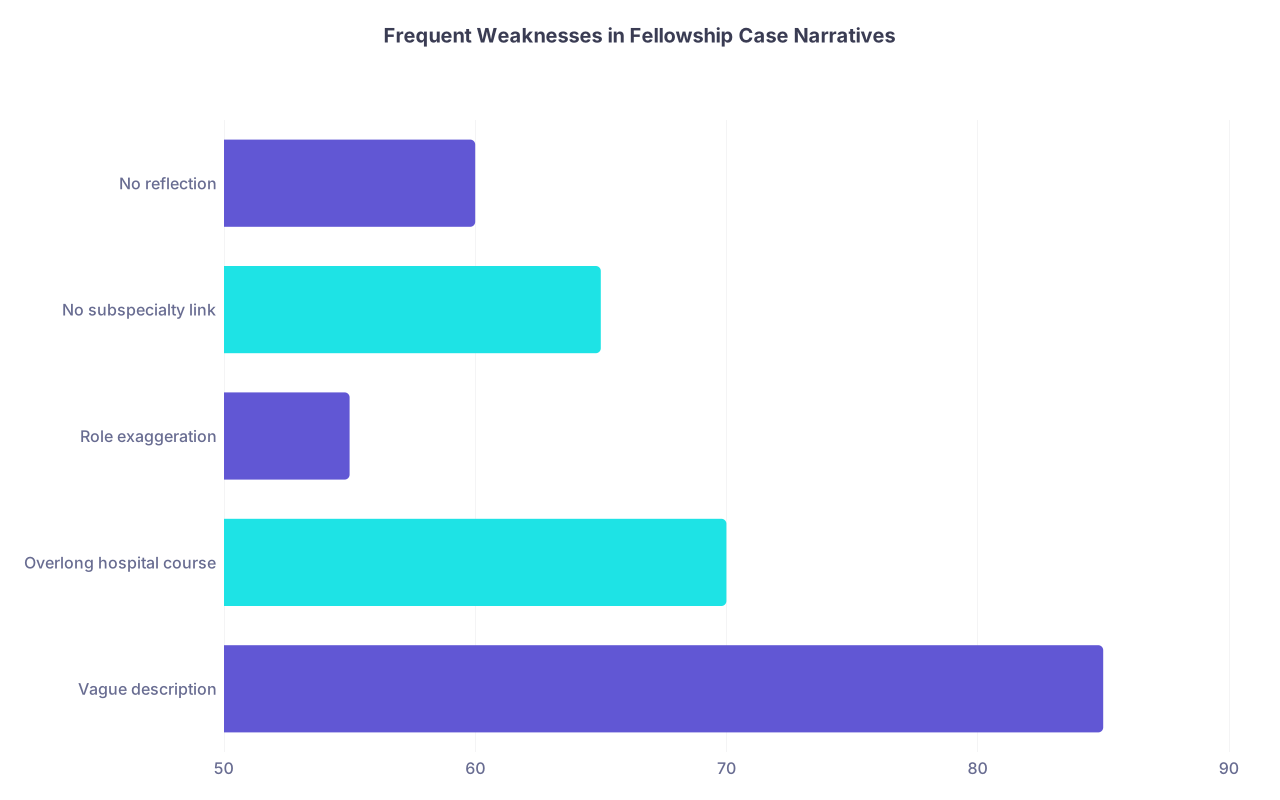
| Category | Value |
|---|---|
| Vague description | 85 |
| Overlong hospital course | 70 |
| Role exaggeration | 55 |
| No subspecialty link | 65 |
| No reflection | 60 |
Step 10: A Concrete Example of Reframing
Let me give you a quick before/after flavor.
Raw resident version (truncated)
I took care of a 72-year-old female with CHF, CKD, and COPD who came in with shortness of breath. She was admitted to the ICU for respiratory failure, ultimately intubated, and required vasopressors. We did a lot of workup including CT chest, echo, labs, and she was treated with diuretics, antibiotics, and steroids. She eventually improved and was extubated after 5 days. This case taught me about managing complex multi‑organ failure and working with a multidisciplinary team.
This is what I read constantly. It says almost nothing about you.
Reframed for a pulmonary/critical care application
A 72-year-old woman with severe COPD (FEV1 25% predicted), HFpEF, and CKD4 presented with acute hypercapnic respiratory failure and shock after three days of worsening dyspnea and home BiPAP non‑response.
The central question was whether to proceed with early intubation given worsening mental status or attempt maximized non‑invasive support to avoid a potentially prolonged and morbid ventilator course in the context of severe underlying lung disease.
On admission, she was somnolent but arousable, with pH 7.18, PaCO2 88 on BiPAP 18/8, FiO2 0.6, and MAP 58 on low‑dose norepinephrine. Our ICU attending initially leaned toward immediate intubation. I advocated for a brief trial of escalated non‑invasive support—higher inspiratory pressures, aggressive diuresis, and low‑dose opioids for dyspnea—based on prior episodes where she had narrowly avoided intubation and her documented fear of “never coming off the ventilator.”
We discussed the options with her and her daughter while she was still able to participate meaningfully, framing risks of intubation not only in terms of mortality but also in terms of functional outcome and potential need for trach. She clearly stated a preference to avoid intubation unless she lost the ability to interact with family.
Over the next six hours, with intensified non‑invasive support and careful hemodynamic management, her pH improved to 7.28 and vasopressor requirement decreased. She ultimately avoided intubation and was discharged home on optimized home BiPAP and palliative care follow‑up.
This case pushed me to integrate physiology, trajectory, and patient values in acute respiratory failure decisions. It solidified my interest in pulmonary and critical care as the space where we routinely balance life‑prolonging technology against the realities of chronic organ failure and quality of life.
Now the same clinical encounter actually argues for why you belong in a pulm/crit fellowship.
Three Things To Remember
- Complex cases are not stories about sick patients. They are demonstrations of how you think, decide, and reflect under pressure.
- Structure is non‑negotiable: snapshot, core question, reasoning, decision, outcome, subspecialty takeaway. If you hit those consistently, your portfolio will stand out.
- Your portfolio should have an arc. Individually strong cases are not enough; together they must paint you as someone already thinking like a future subspecialist, not just a resident who has “seen a lot.”