

The advice that “you should always choose prestige over location” for fellowship is wrong. But so is the advice to “always choose location and lifestyle.”
If you want a real answer, you need a framework. Not slogans.
The real question: What are you trying to buy with fellowship?
You are not just choosing where to spend 1–3 years. You are buying:
- A skill set
- A network
- A brand name (sometimes)
- A lifestyle during those years
- Future job options
Let’s start with the blunt version:
- If you’re aiming for a highly academic career in a competitive field → prestige usually matters more.
- If you’re aiming for a stable, well-paying, mostly clinical life in a specific city or region → location usually matters more.
- If you’re somewhere in between → you need to be ruthless about what you actually value, not what you think you “should” value.
But that’s oversimplified. Let’s break it down properly.
Step 1: Decide your likely career lane (even if you’re “not sure”)
You do not need a 20–year plan. You do need a 5–10 year direction. I usually put residents into 4 buckets:
| Career Lane | What Usually Matters More |
|---|---|
| Academic, research heavy | Prestige / mentorship |
| Academic, mostly clinical + teaching | Balanced, slight prestige |
| High-end private or hybrid practice | Skills, local reputation |
| Community-heavy, lifestyle focused | Location / fit |
If you honestly have no idea, read these and pick the one that sounds least bad:
“I want to publish, speak at conferences, maybe be program director or division chief one day.”
→ You are academic-leaning whether you admit it or not. Prestige and mentorship matter.“I like teaching and maybe some research, but I mainly want to be a strong clinician and have a decent life.”
→ You need a balanced program that will not crush your soul.“I want to get paid well, be clinically strong, maybe join a big private group or hybrid group, not live in the hospital.”
→ Your clinical training and the geographic network matter more than a fancy name.“I want control of my schedule, a good city/region, and to not burn out. I don’t care about being on guidelines or giving talks.”
→ Location and quality of life during fellowship should be at the top of your list.
If you skip this step and go straight to “ranking by vibe,” you’re gambling your future on whatever sold you best on interview day.
Step 2: Understand what “prestige” actually buys you
People throw “prestige” around like it’s magic. It is not. It does a few very specific things:
- Opens doors for academic jobs, especially early in your career
- Helps with competitive niches: advanced procedures, rare subspecialties, big-name centers
- Gives you built-in credibility when you’re junior and unproven
- Connects you with a network of faculty and alumni who get calls when jobs open
Where prestige really matters:
- You want a job at a large academic center (think: UCSF, MGH, Penn, Duke, MD Anderson, Mayo, etc.)
- You’re in a hyper-competitive subspecialty (structural heart, advanced IBD, complex spine, advanced endoscopy, transplant, etc.)
- You want to be heavily research-oriented (R01-level, major trials, guideline writing)
- You’re an international grad trying to break into the U.S. academic market
Where prestige is overrated:
- You want community or private practice in a saturated city where local relationships trump resume lines
- Your fellowship is in a field where jobs are plentiful and brand name is less relevant (many hospitalist tracks, some general IM fellowships, etc.)
- You’d be miserable in a high-prestige program that is malignant or totally misaligned with your values
Here’s how prestige vs outcome often plays out:
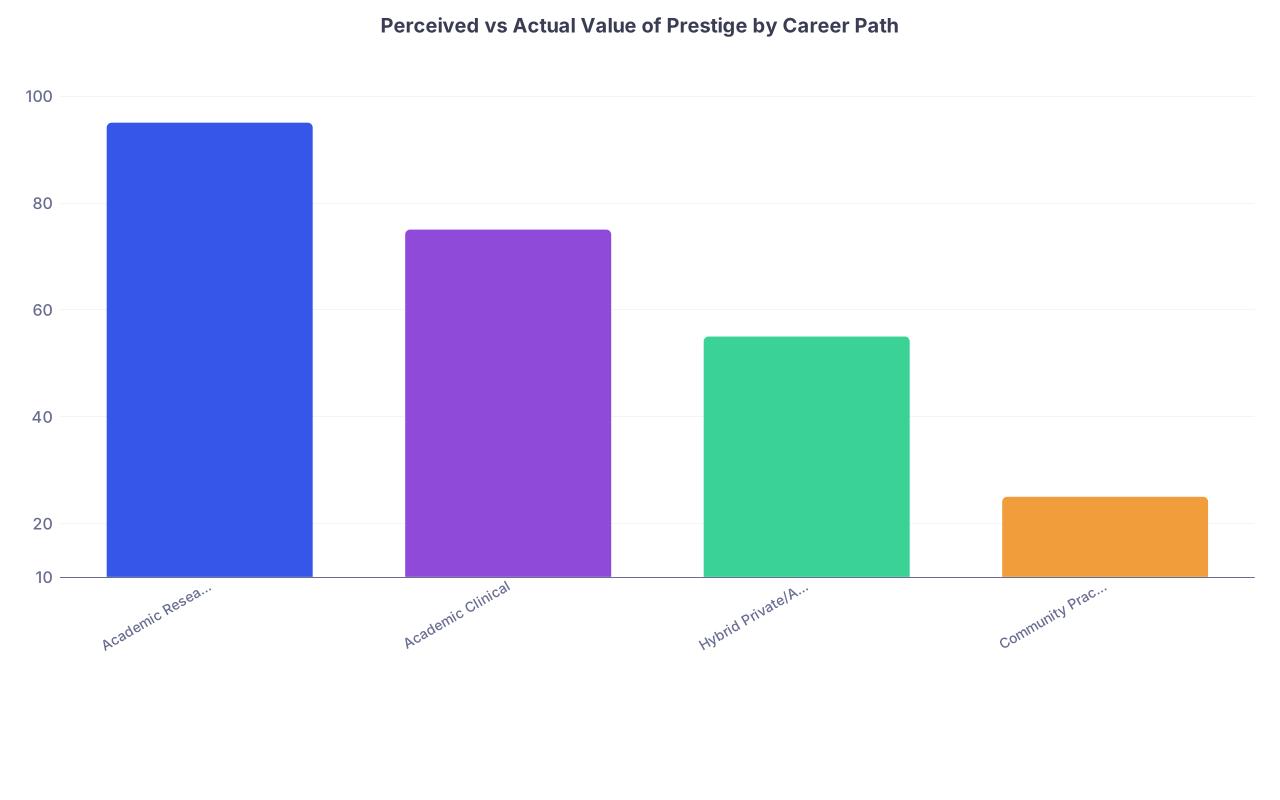
| Category | Value |
|---|---|
| Academic Research | 95 |
| Academic Clinical | 75 |
| Hybrid Private/Academic | 55 |
| Community Practice | 25 |
The punchline: prestige is a tool, not a religion. It’s powerful for some paths and almost irrelevant for others.
Step 3: What “location” actually means (and why it’s not just lifestyle fluff)
Location is not just beach vs snow.
Location affects:
- Your support system: partner, kids, family, friends
- Childcare, schools, partner’s job market
- Your mental health and burnout risk
- The job market after fellowship in that region
- Cost of living vs your fellow salary (which is… not great)
If you’re aiming to stay in a specific region long term, a fellowship there is often a massive advantage. You’re basically doing a 1–3 year audition:
- Local groups see you, work with you, and get comfortable hiring you
- You meet the people actually doing the hiring, not just reading your CV
- You understand the health systems, referral patterns, politics
For many fairly competitive but not insane subspecialties (cards, GI, pulm/crit, heme/onc in a lot of markets), this local exposure can matter more than being “the person from Big Name Program X” who is unknown in that region.
Step 4: The framework – how to actually rank your list
Here’s the practical part. Use a weighted scoring system. Not perfect, but better than vibes.
Step 4A: Define your weights
Rough starting point (adjust to your situation):
If you’re strongly academic-leaning:
- 40% training quality / prestige
- 30% mentorship / niche opportunities
- 20% location / support
- 10% lifestyle
If you’re clinical with some academic interest:
- 30% training quality
- 25% location / regional job market
- 25% mentorship / alumni network
- 20% lifestyle
If you’re mainly clinical / lifestyle-focused:
- 35% location / support system
- 30% training quality (you still need to be competent)
- 20% lifestyle / schedule
- 15% prestige / brand
Now actually rate each program (1–10) on:
- Clinical training depth/volume in your area
- Procedural exposure if relevant
- Research/academic support
- Reputation/brand in your chosen lane
- Location fit (family, spouse, region you want to end up in)
- Lifestyle (call, culture, malignant vs supportive)
Multiply, add, and see what rises to the top. The math is not the point; the forced clarity is.
Step 5: Deal with the classic trade‑off scenarios
Let me walk through the situations I see residents agonize over every year.
Scenario 1: Top-name fellowship in a city you hate vs mid-tier in a city you love
Choose the top-name program if:
- You’re truly academic-leaning
- The name will realistically change your first job options
- You do not have major family/health constraints that will implode in a hard environment
Choose the city you love if:
- You’re likely going community or private
- You already know you want to settle in that region
- Your partner’s career or your family situation makes the “prestige” city a serious problem
- You’re already on the edge of burnout and another 1–3 years in a miserable place will break you
Scenario 2: Famous program with toxic culture vs less-famous but very supportive program
Pick the supportive program almost every time.
I’ve watched people come out of “elite” but malignant fellowships completely burned out, questioning their choice of specialty, with fewer publications than they expected because they were barely surviving.
A strong but not “top-5” name plus excellent mentorship, real teaching, and non-miserable humans will carry you much further than a toxic brand name and three years of trauma.
Scenario 3: Small, local program with great job pipeline vs national name with no clear placement
If you know you want to stay in that specific region, the local program can be a powerhouse, even if no one outside your state has heard of it.
Your future group in that city does not care if Hopkins knows you. They care that Dr. Smith down the hall says, “This fellow was the best we’ve had in 10 years. Hire them.”
Visual: How your priorities should shift by goal
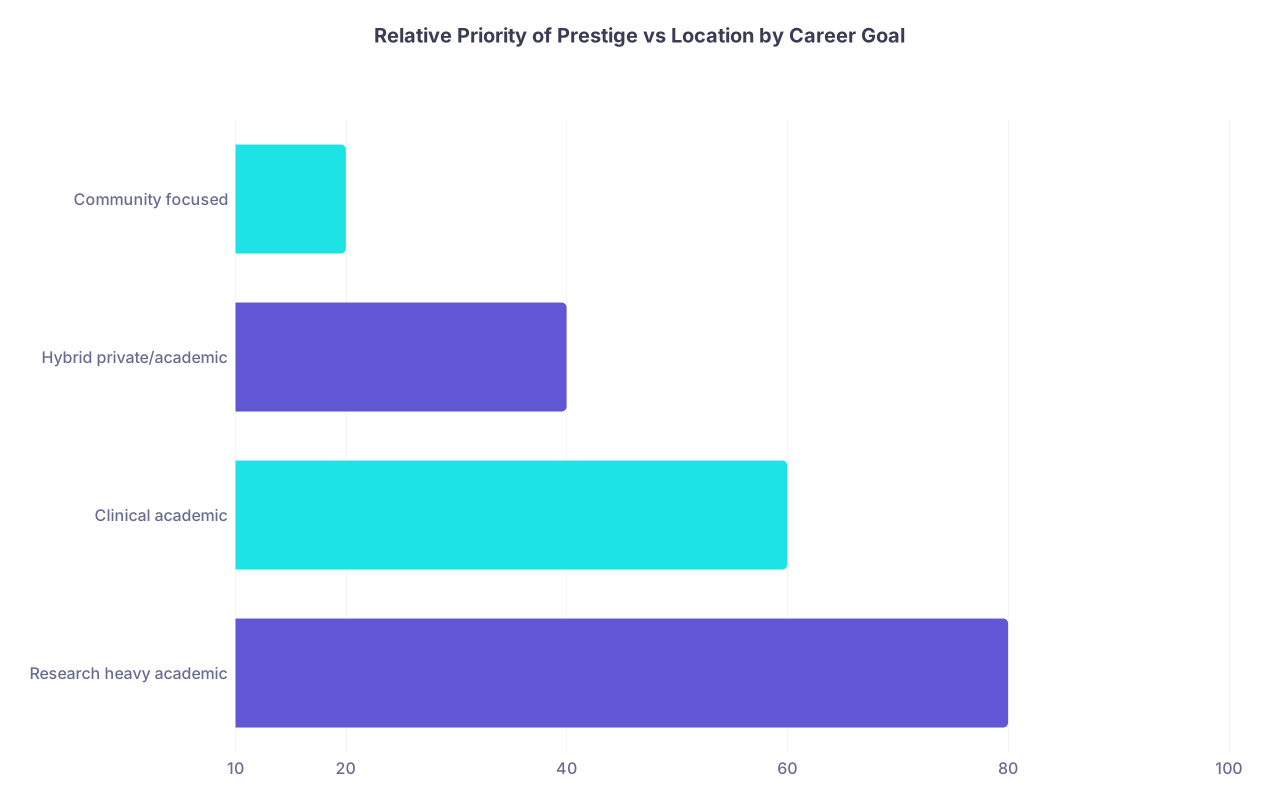
| Category | Value |
|---|---|
| Research heavy academic | 80 |
| Clinical academic | 60 |
| Hybrid private/academic | 40 |
| Community focused | 20 |
Read that as: how much prestige should matter out of 100. The rest is training quality, mentorship, location, and lifestyle.
Step 6: Watch out for these common mistakes
Here’s where people routinely screw this up:
Letting their ego rank the list
“I should want the biggest name.” No. You should want the program that best serves your actual goals and life.Ignoring partner and family reality
Saying “we’ll figure it out” about childcare, long-distance relationships, or spouse employment in a brutal city is how people end up miserable by December of PGY-4.Overestimating how much prestige matters for community jobs
In many markets, the hiring group barely differentiates between mid to high-tier academic places. They care more about references and how you performed.Underestimating the value of seeing the job market during fellowship
Being in the region you want to work allows informal conversations, moonlighting, and having your name known. That can beat a name brand in another state.Treating training quality as identical across all “prestigious” programs
Some big-name places are weak in specific niches. If you want advanced endoscopy but the famous program only lets one fellow do ERCP, that prestige is not buying you the skill set you think.
A simple decision flow
Use this as a quick sanity check:

| Step | Description |
|---|---|
| Step 1 | Start Ranking |
| Step 2 | Prioritize prestige and mentorship |
| Step 3 | Balance prestige and location |
| Step 4 | Prioritize programs in that region |
| Step 5 | Prioritize training quality and culture |
| Step 6 | Adjust for family and burnout risk |
| Step 7 | Finalize rank list |
| Step 8 | Want academic career? |
| Step 9 | Research heavy or clinical? |
| Step 10 | Specific region long term? |
If your final decision completely ignores your answer to the first two questions (academic vs not, region vs not), you’re probably rationalizing, not deciding.
Quick comparison: when location should beat prestige
| Situation | Choose Location If… |
|---|---|
| You have kids/partner with constraints | Support system and stability are at risk |
| You want to stay in one specific region | Fellowship city matches that region |
| You are leaning toward community practice | Local network trumps distant brand |
| You are close to burnout | High-stress prestigious option may break you |
| The prestigious program seems malignant | Culture is clearly toxic or unsupportive |
And yes, I’ve seen people ignore all five of those and regret it.
Final sanity check questions before you submit your list
Ask yourself:
- If these programs had no names attached and were just described by training, city, culture, and outcomes, which would I pick?
- If I matched at my #1 and my career stayed 80% clinical, would I regret not picking a better city or fit?
- If I matched at my #3 and later wanted a serious academic post, would I be shut out? Or just slightly inconvenienced?
- Am I choosing this program because it fits me, or because it impresses people I do not actually respect?
One more thing: most people reading this underestimate how fried they’ll be by the end of residency. If you’re already dragging, dismissing location and culture as “soft factors” is a good way to end up hating your day-to-day life, even in a prestigious place.
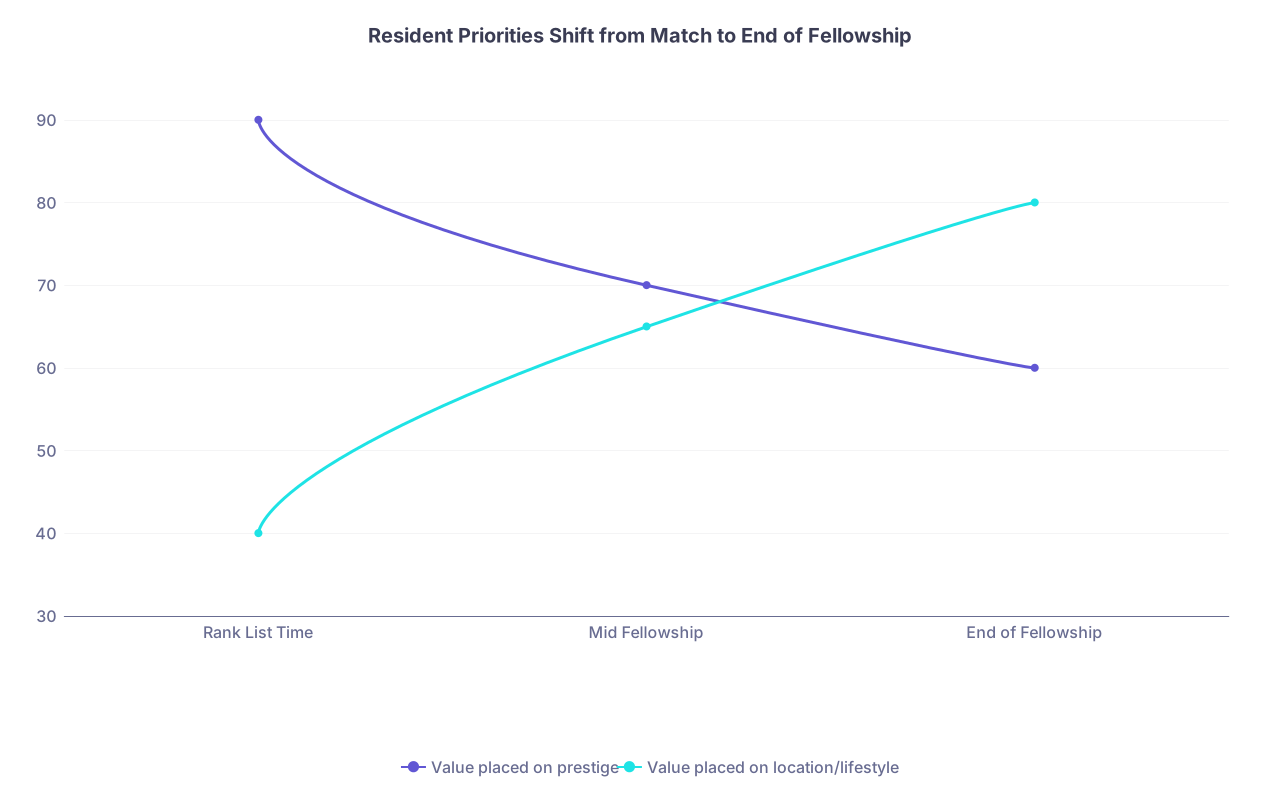
| Category | Value placed on prestige | Value placed on location/lifestyle |
|---|---|---|
| Rank List Time | 90 | 40 |
| Mid Fellowship | 70 | 65 |
| End of Fellowship | 60 | 80 |
That shift happens. I’ve watched it for years.
FAQs
1. If I want an academic job, is a non-top-tier fellowship a deal breaker?
No. It may narrow some doors, especially at ultra-elite centers, but plenty of people build academic careers from solid, mid-tier programs by doing good work, finding mentors, and being productive. You’ll just lean more on output and less on name recognition.
2. Does fellowship prestige matter for private practice cardiology, GI, or heme/onc?
It matters somewhat, mostly early on and mainly in competitive urban markets. But local relationships, your reputation as a fellow, and how strongly your attendings advocate for you often matter more than whether your program is ranked top 10 or top 30.
3. My dream program is in a city my partner hates. Should I still rank it first?
Only if you and your partner have had a very explicit, adult conversation about what that will mean for both of you—and both genuinely accept it. A “we’ll see” plan with a resentful partner is how breakups happen during fellowship.
4. How do I judge “training quality” vs just being dazzled by big names and fancy facilities?
Ask pointed questions: procedural numbers, graduated autonomy, where recent grads went, how often fellows get their first job choice, and whether fellows feel confident practicing independently. Talk to current fellows without faculty present. Listen closely to hesitation and half-answers.
5. I’m undecided between academic and community—how should I rank?
Favor strong, well-rounded programs in locations you’d be okay staying long term. You want solid clinical training, some research or QI opportunity, and a reputation that plays decently in both worlds. Avoid hyper-niche programs that lock you in when you’re not sure you want that.
6. Is it ever worth choosing a clearly malignant but super-elite program “just for the name”?
Generally, no. Chronic burnout, poor mentorship, and a toxic culture will stunt your growth more than the name will help your CV. Unless that program uniquely offers the exact niche you’re committed to—and you have high confidence you can withstand the environment—it’s usually not worth the personal cost.
Key points:
You’re not choosing “prestige vs location.” You’re choosing the combination of training, network, and life that best fits the career lane you actually want.
Be honest about your goals, your support system, and your tolerance for pain. Then let those answers—not ego or fear—drive how you rank your fellowships.


