How to Fund Your Global Health Volunteer Experience: Practical Strategies, Tips, and Resources
Global health opportunities—whether short-term electives, longer-term fellowships, or independent projects—can be transformative for medical students, residents, and early-career health professionals. You gain exposure to different health systems, contribute to meaningful health initiatives, and deepen your understanding of equity and ethics in care delivery.
Yet one reality often stands in the way: money.
Travel costs, program fees, and time away from paid work can make Global Health Volunteering feel financially out of reach. The good news is that with early planning, a clear budget, and a diversified approach to funding resources, many learners successfully support these experiences every year.
This guide breaks down what global health trips actually cost, where to find funding, and how to approach fundraising ethically and effectively—so you can focus on building skills and contributing responsibly to partner communities.
Understanding the True Costs of Global Health Volunteering
Before you start asking for funding, you need to know exactly what you’re asking for. Many applicants underestimate the total cost of global health experiences, which can undermine both budgeting and fundraising credibility.
Typical Cost Categories to Plan For
When planning a global health volunteer trip, consider these common expense categories:
Travel expenses
- International flights and possible regional flights
- Ground transportation (taxis, buses, shared rides, moto-taxis)
- Visa fees and border taxes
- Travel insurance and emergency evacuation coverage
Accommodation
- Guesthouses, hostels, or apartments
- Hospital/clinic-provided housing or student dormitories
- Homestays with local families
- Utilities, internet, and basic household items
Food and daily living expenses
- Groceries and meals out
- Drinking water and basic hygiene items
- Local SIM card and data plans
- Laundry and other everyday necessities
Program or placement fees
- Administrative and coordination fees
- On-site supervision or mentorship
- Language courses or cultural orientation
- Local program management and support staff
Health and safety
- Vaccinations and prophylactic medications (e.g., antimalarials)
- Pre-departure health checks
- Personal protective equipment (PPE) if not provided locally
Professional and project-related costs
- Licensing, registration, or institutional fees if applicable
- Research permits or IRB/ethics review, if doing research
- Supplies for teaching, quality improvement, or small-scale health initiatives
Opportunity costs
- Rent or loan payments at home
- Loss of income from reduced work hours
Setting a Realistic, Ethical Budget
A clear, line-item budget is essential—not only for your own planning, but also for transparency with donors and funding bodies.
Steps to build your budget:
Clarify the structure of your experience
- Are you participating in a structured global health program?
- Completing a clinical rotation or elective through your school?
- Joining an NGO project?
- Designing an independent research or quality improvement initiative?
Research local costs carefully
- Ask former volunteers or residents about actual daily expenses.
- Check cost-of-living indices or local guides.
- Clarify what your host organization does—and does not—cover.
Create conservative estimates
- Add a 10–20% buffer for unexpected costs (e.g., schedule changes, visa issues, health needs).
- Overestimate rather than underestimate when presenting your budget to funders.
Prioritize and justify each category
- Highlight which costs are essential (e.g., travel, housing, basic living expenses).
- Identify “optional but helpful” costs (e.g., extra supplies, side trips), which you may need to self-fund.
A transparent, well-organized budget not only guides your own planning; it also strengthens your funding applications and builds trust with donors.

Major Funding Options for Global Health Volunteer Experiences
Strong funding strategies rarely rely on a single source. Instead, consider layering multiple approaches: personal savings, institutional support, grants, and community fundraising.
1. Using Personal Savings Strategically
Personal savings demonstrate commitment and can be an important part of your funding mix.
Ways to build savings:
- Set up a dedicated “Global Health Fund” account and automate transfers each month.
- Take on short-term work (locum shifts, tutoring, research assistance, telehealth, weekend jobs).
- Reduce discretionary spending temporarily (dining out, subscriptions, nonessential travel).
Why personal savings matter:
- Many grant applications ask what contribution you’re making yourself.
- Even covering a portion (e.g., 20–30%) signals ownership and reduces your reliance on variable funding sources.
2. Grants, Fellowships, and Scholarships
Many institutions and organizations support Global Health through dedicated funding resources. These may fully or partially offset travel costs, accommodation, or program fees.
Academic and Institutional Funding
Start with your own institution:
Medical school or residency office of global health / international programs
- Travel awards for global health electives
- Small grants for student-led health initiatives or research
- Stipends for longer-term fellowships
Departments and specialty societies
- For example, departments of family medicine, internal medicine, pediatrics, surgery, or emergency medicine often fund learners’ global rotations aligned with departmental priorities.
University-wide funding
- Offices of international affairs
- Public health institutes
- Social entrepreneurship centers
Ask whether funding can cover:
- Flights
- Housing
- Daily stipends
- Project or research expenses
External Global Health Grants and Fellowships
In addition to your home institution, explore external organizations that support global health engagement:
Global Health Corps
- Offers structured one-year fellowships in Global Health leadership.
- Typically includes living stipend, health insurance, and travel costs.
Fulbright Program
- Supports U.S. citizens (and has parallel programs for other countries) for teaching, research, and public health projects abroad.
- Strong option for longer-term placements with a research or education component.
Professional and regional bodies
- For example: American Public Health Association (APHA) sections, specialty global health interest groups, national medical associations, or regional health networks may offer travel grants or small project funds.
Philanthropic foundations and education funds
- Examples similar in mission to the Zuro Education Fund: organizations that support educational and community-empowerment projects globally.
- These may fund small-scale interventions, educational workshops, or research that aligns with their mission.
When searching, use keywords like:
- “global health travel grant”
- “international medical elective funding”
- “public health overseas scholarship”
- “[your specialty] global health scholarship”
3. Crowdfunding and Online Campaigns
Crowdfunding can be powerful when done thoughtfully and ethically, especially if you can clearly communicate the anticipated impact of your work.
Common platforms:
- GoFundMe
- Indiegogo
- Fundly
- YouCaring (or similar platforms available in your region)
Best practices for an effective campaign:
Tell a clear, honest story
- Why global health matters to you professionally and personally.
- Where you are going and what you will be doing (as concretely as possible).
- How your presence supports—not replaces—local capacity and leadership.
Break down your budget
- List major categories (e.g., flights, housing, vaccines, program fees).
- Show donors how their contributions translate into real support.
Show impact beyond your trip
- Will you share lectures, develop educational materials, support ongoing health initiatives?
- Are you contributing to a long-term partnership between institutions?
Use visuals and updates
- Post short videos explaining your project.
- Share milestones: securing your placement, getting your visa, starting your rotation.
- After your return, update donors with a reflective summary and photos (respecting patient privacy and community dignity at all times).
4. Partnering with Organizations and NGOs
Many NGOs, non-profits, and mission-driven organizations either subsidize costs or help participants access funding.
Ways to leverage organizational partnerships:
Structured volunteer programs
- Some reputable global health organizations provide partial or full coverage for housing, in-country transport, or daily stipends.
- Health-focused NGOs may integrate trainees into existing health initiatives, research projects, or community-based programs.
Government programs
- Look for government-sponsored global health or international development initiatives.
- Ministries of health, international cooperation agencies, or public health units sometimes support short-term placements or exchange programs.
Long-term partnerships with your institution
- Many universities and residency programs maintain long-standing partnerships with specific sites.
- These relationships often have established funding pipelines, risk management systems, and shared priorities.
When evaluating an organization:
- Ask how they center local leadership and ensure ethical, sustainable engagement.
- Clarify what costs are covered and what is expected from you.
- Ensure there is appropriate supervision within your scope of training.
5. Corporate Sponsorships and Employer Support
If you are employed—either in healthcare or another sector—your workplace might support your global health experience.
Approaches to employer sponsorship:
Propose a skills-based volunteering plan
- Highlight how your participation aligns with corporate social responsibility or wellness initiatives.
- Describe what skills you will gain that can benefit your organization (e.g., cross-cultural communication, program management, leadership).
Explore existing CSR programs
- Many companies offer paid volunteer days, donation-matching, or direct sponsorship for employees engaged in community or global health work.
Offer to share your experience
- Suggest post-trip presentations, blog posts, or internal talks that highlight lessons learned in global health and how they relate to equity, leadership, or innovation.
6. Community-Based Fundraising Events
Local fundraising not only raises funds but also builds community awareness around global health issues.
Examples of community fundraising events:
Charity run, walk, or bike ride
- Participants collect pledges, with funds going towards your travel costs or specific health initiatives you will support.
Workshops or classes
- Teach CPR basics, first aid, yoga, language lessons, or exam prep.
- Charge a small fee that goes into your volunteer fund.
Benefit dinner or cultural night
- Collaborate with local restaurants or community members.
- Offer an educational talk on global health inequities and the health system of your host country.
Raffles and silent auctions
- Partner with local businesses to donate items or services.
- Frame the event around supporting sustainable global health initiatives, not just “sending you on a trip.”
Always be transparent about how funds will be used and, when possible, link part of the proceeds to tangible health initiatives or partner organizations, not just personal travel costs.
7. Leveraging Social Media and Storytelling
Thoughtful social media use can amplify your fundraising and build long-term support for global health work.
Use platforms like Instagram, LinkedIn, Facebook, or X to:
- Announce your project and funding goals.
- Share why Global Health and health equity matter to you.
- Provide periodic updates while avoiding exploitative or dehumanizing imagery.
Ethical considerations:
- Do not post identifiable patient information.
- Avoid “poverty porn” or images that sensationalize suffering.
- Focus on systems, partnerships, and resilience rather than only need.
8. Employer Matching Gifts and Donation Programs
If donors contribute to an established non-profit or through your institution, many employers may match their gifts.
- Ask your host organization or school if they can accept tax-deductible donations on your behalf.
- Provide donors with the organization’s tax ID and matching gift instructions.
- Encourage donors to submit your cause through their workplace giving portals.
9. Professional Associations and Networks
Professional societies in medicine, nursing, public health, pharmacy, and allied health often support early-career global engagement.
- Examples of useful networks:
- The American Public Health Association (APHA) and its Global Health section
- Specialty-specific global health groups (e.g., in pediatrics, surgery, EM)
- Online platforms like Global Health Network that help connect practitioners, share opportunities, and sometimes list funding resources.
Joining these organizations can open doors to:
- Conference travel awards with a global health component
- Small grants for student-led health projects
- Mentorship from experienced global health clinicians and researchers
Tips for Ethical and Effective Global Health Fundraising
Raising money for global health volunteering is not just about financial strategy; it is also about responsible representation and ethical engagement.
Be Transparent and Specific
- Share your detailed budget or at least major line items.
- Explain:
- What you will do.
- Who you will work with.
- How your presence aligns with local priorities and avoids “voluntourism.”
Transparency builds trust and reflects professional integrity.
Center Community Needs, Not Personal Adventure
When describing your trip:
- Emphasize local partnerships, existing health initiatives, and sustainable capacity-building.
- Avoid language that frames you as a “savior” or the central hero of the story.
- Acknowledge that you will learn from local colleagues and communities, not just “help” them.
Use Personal Stories Thoughtfully
Sharing your motivations—perhaps a patient encounter, coursework in Global Health, or a prior volunteer experience—can make your fundraising more compelling.
- Connect your story to long-term commitments (e.g., a career in rural health, infectious disease, primary care, or public health).
- Highlight how this experience fits into your professional development and ethical growth.
Show Gratitude and Accountability
- Thank donors promptly and personally when possible.
- Keep them updated before, during, and after your placement:
- Pre-departure: confirmation of your site and goals.
- Midway: reflections on what you are learning.
- Post-return: a summary report, talk, or written reflection.
Accountability today can turn one-time donors into long-term supporters of global health work.
Key Resources and Databases for Global Health Funding
In addition to the organizations mentioned above, consider:
Volunteer and program databases
- Idealist, GoAbroad, and VolunteerMatch often list funded or partially funded global health programs.
- Look for programs with clear supervision, ethical guidelines, and evidence of sustained collaboration with local partners.
Scholarship and funding search tools
- Fastweb, Scholarship.com, and institution-specific scholarship portals.
- Use filters for “health,” “international,” “public service,” or “global health.”
Global health centers and consortia
- Many universities host global health institutes that curate lists of external scholarships, fellowships, and travel grants.
- International consortia of health professional schools may offer exchange-based or joint funding opportunities.
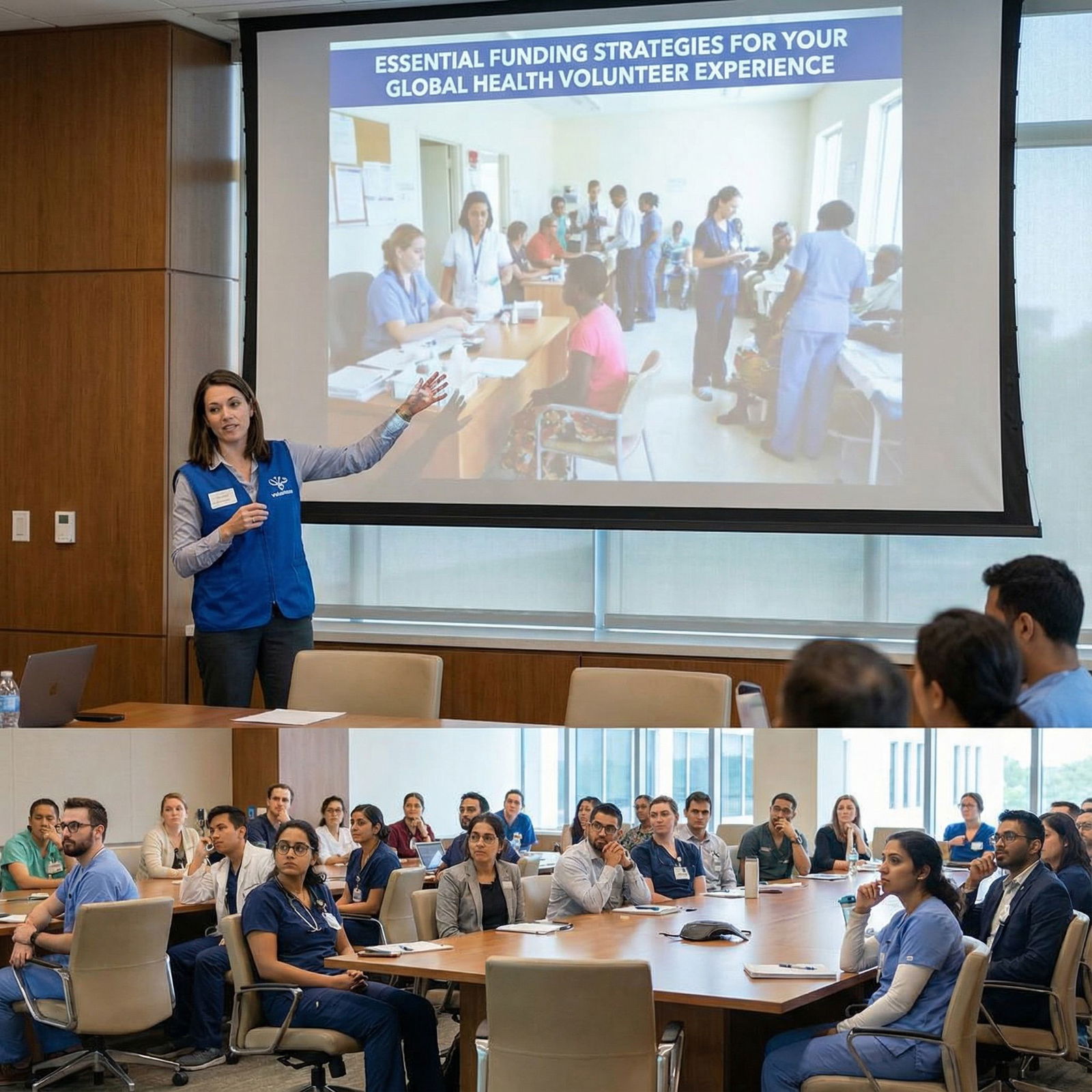
Frequently Asked Questions About Funding Global Health Volunteer Experiences
1. Can I apply for multiple scholarships or grants at the same time?
Yes. In fact, most successful applicants piece together funding from multiple sources—personal savings, institutional travel awards, external grants, and crowdfunding.
Be sure to:
- Carefully read eligibility requirements and restrictions for each award.
- Disclose other funding you’ve received or expect to receive.
- Avoid double-counting expenses; align your full budget with all funding sources.
Occasionally, awards may not be combinable (e.g., two full-stipend fellowships), so clarify these rules in advance.
2. How should I approach my employer or institution about funding?
Treat it like a professional proposal:
Prepare a concise one-page summary of:
- Your destination and host site.
- Your role and supervision.
- How this aligns with your employer’s or school’s mission and values.
- Specific funding requested and how it will be used.
Offer to:
- Present a post-trip seminar or grand rounds.
- Write a short report or blog for institutional communications.
- Share lessons learned about global health systems, equity, or quality improvement.
Demonstrate that this is not just a personal trip, but a professional development activity with benefits for your organization and patients.
3. Is it realistic to fund a global health experience solely through crowdfunding?
It can be done, but it’s not always predictable or advisable to rely on crowdfunding alone.
- Crowdfunding works best when:
- You have a strong personal network.
- You communicate clearly and ethically about your goals and the impact.
- You combine it with in-person engagement (talks, events, workshops).
Where possible, treat crowdfunding as one component of a broader funding strategy that includes institutional support, grants, and savings. This diversification reduces the risk of falling short close to your departure date.
4. Are there ways to earn academic or continuing education credit while volunteering?
Often, yes:
- Many medical schools and residency programs recognize supervised global health rotations as electives or selective courses.
- Some nursing, pharmacy, and public health programs offer academic credit for structured fieldwork or practica.
- Certain global health programs provide CME/CPD credit for pre-departure training or specific project components.
Confirm with:
- Your dean’s office, residency program director, or academic advisor.
- Your professional licensing body for CME/CPD rules.
Document your objectives, supervision, and activities thoroughly to support credit applications.
5. How can I share my volunteer experience in a way that is ethical and educational?
Thoughtful reflection and sharing can extend the impact of your global health work—if done responsibly.
Good ways to share include:
- Presentations to classmates, residents, or faculty.
- Blog posts, reflective essays, or podcast interviews.
- Community talks at local schools, faith communities, or civic organizations.
Ethical sharing guidelines:
- Protect patient privacy at all times.
- Avoid sensationalizing poverty or suffering.
- Highlight systems issues, structural determinants of health, and the expertise of local colleagues.
- Reflect honestly on your own learning, limitations, and how the experience will shape your future practice and advocacy.
Funding a global health volunteer experience takes planning, persistence, and creativity, but it is achievable for many trainees and professionals. By understanding your full costs, tapping into diverse funding resources, and approaching fundraising with humility and transparency, you can build a financially sustainable path to global health engagement—one that strengthens both your career and the communities you serve.