Introduction: How Volunteering Transforms Global Health and Personal Growth
Volunteering in global health is much more than a short-term service trip or a line on a CV. For many medical students, residents, and health professionals, it becomes a defining experience that shapes their clinical practice, ethical framework, and long-term commitment to equity. For communities, it can mean access to care, health education, and renewed hope—when done thoughtfully and in true partnership.
Across continents and contexts, volunteers contribute to:
- Direct patient care in underserved settings
- Community-based health education programs
- Public health initiatives and research
- Disaster response and mental health support
- Advocacy for more just health systems
This article revisits and expands on real volunteer stories—from rural Honduras to post-disaster Puerto Rico—to illustrate how effective volunteering can create authentic community impact. Along the way, it highlights practical lessons, common pitfalls, and strategies to ensure that your contributions as a volunteer are ethical, sustainable, and respectful.
Whether you are a pre-medical student, a resident contemplating an elective abroad, or a practicing clinician seeking meaningful global health engagement, these volunteer stories and reflections can guide your path.
Why People Volunteer: Motivations, Ethics, and Mindset
Understanding why you want to volunteer is the first ethical step in global health work. Motivation shapes behavior—and communities often sense whether you are there primarily to “help,” to “learn,” or to truly partner.
Core Motivations Behind Volunteering in Global Health
Common reasons people are drawn to global health volunteering include:
Desire to give back and reduce inequity
Many volunteers are moved by seeing stark health disparities—both locally and globally—and feel a moral obligation to use their training in service of those with limited access to care.Personal growth and perspective change
Immersing in a different health system and cultural context challenges assumptions, builds humility, and often reshapes one’s understanding of social determinants of health.Cultural exchange and relationship-building
Volunteering in global health is not a one-way act of giving; it involves listening, learning, and engaging in mutual exchange with communities, colleagues, and patients.Professional development and clinical skills
Medical students, residents, and allied health professionals may gain experience in resource-limited settings, public health project design, community-based research, and interdisciplinary teamwork.Exposure to global health systems and policy
Volunteers may see firsthand how health policies, infrastructure, and financing affect everyday care—and may return home inspired to engage in advocacy and system-level change.
The Ethical Lens: Avoiding “Voluntourism”
Motivation alone is not enough. Ethical volunteering requires:
- Appropriate scope of practice: Never performing tasks beyond your training and local regulations.
- Respect for local expertise: Recognizing that local clinicians and community health workers are the true experts in their context.
- Sustainability and continuity: Prioritizing programs that build local capacity rather than short-term, one-off interventions.
- Humility and reflexivity: Continuously examining your own assumptions, biases, and power dynamics.
When you combine altruism with humility, preparation, and partnership, volunteering becomes a powerful force for sustainable global health improvement—and for your own professional development.
Stories from the Field: Volunteering That Changes Communities
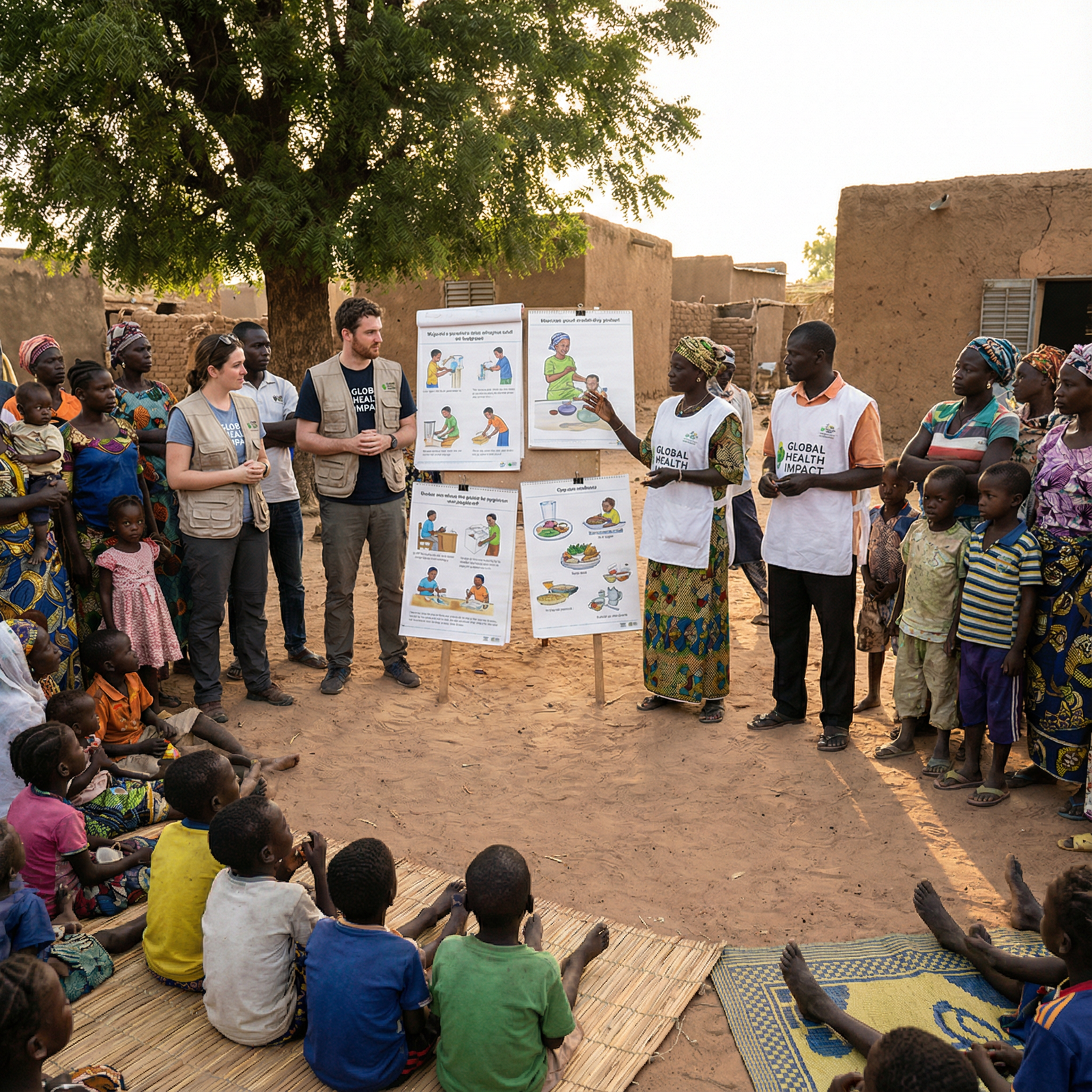
These volunteer stories illustrate the diverse forms global health volunteering can take—clinical, educational, public health, and mental health—and how each can contribute to community impact when thoughtfully designed.
Story 1: Bridging the Healthcare Gap in Rural Honduras
Context
During her summer break from medical school, Dr. Emily Carter joined a multidisciplinary medical mission to rural Honduras. The region had limited access to clinicians, inconsistent medication supply, and inadequate health education resources.
What Emily Encountered
On arrival, Emily was struck by:
- High prevalence of preventable conditions like diarrheal disease, skin infections, and uncontrolled hypertension
- Limited infrastructure for clean water and sanitation
- Widespread lack of health literacy due in part to poor access to health education
Setting up a temporary clinic, her team focused not only on acute care but also on health education and capacity building.
Key Volunteer Activities
- Clinical care within scope: Basic exams, treatment of common conditions, vaccinations, and triage for higher-level care when needed.
- Health education for families: Simple, pictorial handouts on hygiene, oral rehydration, safe water, and when to seek care.
- Collaboration with local health authorities: Planning to reinforce messages after the volunteers left.
Maria’s Story: Health Education as Prevention
Emily vividly recalls meeting Maria, a mother of three whose children suffered recurrent diarrheal illnesses. Through a careful history, Emily identified unsafe drinking water and poor sanitation as key contributors.
Together, they discussed:
- Boiling water and safe storage techniques
- Handwashing practices, particularly before food preparation and after using the bathroom
- Recognizing early signs of dehydration and using oral rehydration solutions
Instead of giving only medications, Emily focused on empowering Maria with knowledge and practical tools. Over the week, Maria returned with questions, and Emily saw her gradually become a resource for other mothers in the waiting area.
Lasting Impact
Emily’s team:
- Left behind tailored educational materials designed with local stakeholders
- Supported the creation of a community wellness committee to champion ongoing health education
- Collaborated with local nurses and community health workers to reinforce the messages
For Emily, the experience solidified a commitment to integrating patient education and community partnership into her future surgical practice. For the community, it catalyzed conversations around water, sanitation, and preventive care—extending well beyond the short presence of volunteers.
Story 2: Empowering Women and Maternal Health in Rural India
Context
Hannah Smith, trained in public health, joined an NGO in rural India focused on improving maternal health and reducing preventable maternal and neonatal deaths. She quickly learned that clinical access was only part of the challenge.
Barriers to Care
Hannah’s community surveys and focus groups revealed:
- Deeply rooted gender norms limiting women’s autonomy in seeking care
- Fear of stigma associated with pregnancy complications
- Low awareness of antenatal care, skilled birth attendance, and postpartum danger signs
- Limited involvement of male partners in maternal health decisions
Rather than implementing a pre-designed program, Hannah and her local colleagues listened and co-created interventions tailored to community realities.
Priya’s Story: From Reluctant Participant to Community Leader
Priya, pregnant with her second child, was initially skeptical of attending Hannah’s health workshops. Over time, as the sessions prioritized respectful dialogue and peer support, she began to open up.
Through interactive sessions on:
- Antenatal check-ups and supplements
- Birth preparedness and emergency plans
- Danger signs such as severe headache, bleeding, fever, or reduced fetal movement
- Postnatal care for both mother and baby
Priya gained knowledge and, crucially, confidence. She eventually began inviting other women, modeling how to ask questions and challenge misconceptions respectfully.
Within months, Priya evolved into a community health advocate, partnering with local midwives and accredited social health activists (ASHAs). She helped:
- Encourage women to seek skilled birth attendants
- Organize transportation plans for labor
- Share stories of safe deliveries to normalize facility-based care
Volunteer Lessons from Hannah’s Experience
Hannah’s story underscores key principles for impactful global health volunteering:
- Start with listening, not lecturing
- Partner with local organizations and community health workers
- Build leadership among community members (e.g., Priya) rather than centering yourself
- Recognize that empowerment and education often produce more durable change than short-term clinical care alone
Through sustained health education and empowerment, Hannah and her partners supported shifts in norms that affected not only individual pregnancies but the broader trajectory of women’s health in the village.
Story 3: Tackling Childhood Malnutrition in Uganda Through Education
Context
A team of medical students from the United Kingdom traveled to Uganda to support a local initiative addressing pediatric malnutrition. Their hosts—local clinicians and public health officers—emphasized that while food insecurity was a factor, knowledge gaps and misconceptions also played a role.
Designing “Nutrition Education for Kids”
Rather than setting up a parallel system, the students worked within existing structures: schools, community centers, and local health clinics. Together with local health workers, they co-developed a program focused on:
- Basics of nutrition and the importance of a balanced diet
- Using local, affordable foods to meet nutritional needs
- Simple recipes and cooking demonstrations
- Kitchen gardens and small-scale sustainable farming
They delivered content via:
- Storytelling, songs, and games for young children
- Interactive workshops with parents and caregivers
- Visual aids in local languages and familiar imagery
Community Impact and Measurable Outcomes
Over the following months, local partners documented:
- Increased variety in children’s diets, with more fruits, vegetables, and protein sources
- Parents reporting higher energy and school engagement among children
- Ongoing community interest in kitchen gardens and nutrition-focused parenting groups
Crucially, the local health team continued and adapted the program after the volunteers left—evidence of true capacity building and sustainability.
Volunteer Takeaways
The students learned that:
- Effective global health volunteering often looks like supporting existing local initiatives, not launching brand-new projects.
- Health education can be just as powerful as medication, particularly for chronic or preventable conditions like malnutrition.
- Long-term change requires local ownership and integration into community life.
Story 4: Disaster Relief and Mental Health Care in Puerto Rico
Context
After Hurricane Maria, Puerto Rico faced widespread destruction—not just of buildings and infrastructure, but of social networks and mental health. Dr. Mark Johnson, a psychiatrist, joined a coordinated disaster response effort to address the psychological aftermath.
Immediate Mental Health Needs
Mark and his team observed:
- High rates of acute stress reactions, anxiety, insomnia, and depressive symptoms
- Significant grief and trauma from loss of family, homes, and livelihoods
- Limited access to mental health professionals, especially in remote areas
Lucia’s Story: Healing Through Connection
In one remote community, Mark met Lucia, who had lost her home and most of her belongings. She felt overwhelmed, hopeless, and deeply isolated. Instead of pathologizing her reaction, Mark:
- Used psychological first aid—listening, validating, and normalizing her feelings
- Connected her with others in similar situations through group sessions
- Facilitated community-driven peer support groups, where members shared coping strategies and resources
Over time, Lucia transformed from a withdrawn survivor into an active participant and informal leader in the support group, helping new members feel seen and heard.
Building Sustainable Mental Health Support
Mark’s volunteer experience illustrates critical components of ethical disaster volunteering:
- Short-term: Provide trauma-informed care, psychological first aid, and crisis support.
- Long-term: Train local providers, community leaders, and lay health workers in basic mental health support and referral pathways.
- Collaborative: Work in coordination with local health systems, NGOs, and community organizations to avoid duplication and ensure continuity.
By the time Mark’s deployment ended, grassroots mental health support groups were functioning independently, integrating traditional coping practices with evidence-based strategies—a testament to community resilience and collaborative volunteering.
The Broader Impact of Volunteering: From Individual Encounters to System-Level Change
These volunteer stories demonstrate that volunteering in global health, when done well, can generate effects far beyond a single clinic day or workshop.
Strengthening Health Systems and Local Capacity
Volunteers can contribute to more resilient health systems by:
- Supporting training for local clinicians, nurses, and community health workers
- Collaborating on protocols, guidelines, and quality improvement projects
- Assisting with data collection, monitoring, and evaluation of programs
- Sharing technical expertise while respecting and amplifying local knowledge
The goal is not dependency on volunteers—but capacity building so that local teams are better equipped long after the volunteers leave.
Deepening Community Engagement and Trust
Volunteers often act as a bridge between communities and formal health structures by:
- Participating in community meetings and listening sessions
- Co-designing health education programs with community members
- Helping translate complex health information into locally relevant messages
- Modeling respectful, patient-centered care that builds trust
When communities feel heard and respected, they are more likely to engage with healthcare services, adhere to treatment, and participate in preventive programs.
Fostering Cultural Humility and Global Solidarity
For volunteers themselves, global health work is a powerful lesson in:
- Cultural humility: Recognizing you are a guest, not a savior, and allowing local norms and practices to guide your approach.
- Interconnectedness: Seeing how political, economic, and environmental forces shape health outcomes across borders.
- Long-term commitment: Many volunteers return home motivated to advocate for policies and practices that reduce inequities, from climate change mitigation to fair access to medications.
In this way, individual volunteer experiences can contribute to broader movements for global health equity and social justice.
Practical Guidance: Preparing for Ethical and Effective Volunteering
For students and trainees especially, preparation is essential to ensure your volunteering leads to meaningful community impact rather than unintended harm.
Before You Go: Questions to Ask and Steps to Take
Assess the organization
- Is there a long-term presence or local partner?
- Are roles and expectations clear and appropriate to your training?
- How do they ensure continuity of care after volunteers leave?
Clarify your scope of practice
- What will you be allowed—and not allowed—to do clinically?
- How is supervision structured? Who is responsible for clinical oversight?
Educate yourself
- Learn about the country’s health system, common conditions, and cultural norms.
- Review basic public health principles relevant to the setting (e.g., WASH, vaccination, maternal health, nutrition).
Reflect on your goals
- What do you hope to learn?
- How will you ensure that your learning does not compromise patient safety or local priorities?
While You’re There: Best Practices for Community Impact
- Listen more than you speak.
- Ask local staff how you can be most helpful.
- Prioritize health education and skills transfer over showcasing your own knowledge.
- Be transparent with patients about who you are (student vs physician, etc.).
- Document and hand over relevant information for continuity.
After You Return: Continuing the Work
Ethical volunteering does not end at the airport. After you return:
- Stay engaged with the partner organization if appropriate.
- Share your experience in ways that center the community, not yourself.
- Reflect critically: What went well? What would you do differently next time?
- Consider ongoing contributions—research, fundraising, advocacy, remote teaching, or future in-person collaboration.
Frequently Asked Questions About Volunteering in Global Health
1. How can I find reputable global health volunteering opportunities?
Look for organizations and programs that:
- Have long-term partnerships with local institutions (hospitals, NGOs, ministries of health).
- Clearly describe roles, supervision, and expectations.
- Emphasize capacity building, health education, and sustainability rather than short-term “mission trips” alone.
- Are transparent about finances and how volunteer fees are used.
Practical starting points include:
- Your medical school or residency global health office
- Professional societies (e.g., specialty-specific global health groups)
- Established NGOs focused on global health, maternal-child health, or disaster response
- Platforms like Idealist and VolunteerMatch, cross-referenced with your own due diligence
2. What skills and qualities are most important for global health volunteers?
Beyond clinical skills, successful volunteers typically demonstrate:
- Cultural sensitivity and humility
- Adaptability in resource-limited and changing environments
- Strong communication and teamwork abilities
- Willingness to learn from local colleagues
- Respect for boundaries and patient autonomy
- Basic understanding of public health and social determinants of health
For clinical roles, ensure your training level matches program needs and that appropriate supervision will be available.
3. Is volunteering in global health safe, and how can I reduce risks?
No setting is completely risk-free, but you can reduce personal and community risks by:
- Joining established programs with clear safety and security protocols
- Receiving recommended travel medicine consults and vaccinations
- Understanding local epidemiology (e.g., malaria, TB, dengue) and preventive measures
- Respecting local laws, cultural norms, and institutional policies
- Avoiding clinical tasks beyond your competence, which can harm patients and your own legal standing
Ask organizations for their safety policies, emergency plans, and insurance details before committing.
4. What costs are involved, and how can I afford to volunteer?
Expenses often include:
- Flights and local transportation
- Housing and meals
- Program or placement fees
- Travel health insurance and vaccinations
- Visa fees and local registration when applicable
Strategies to manage costs:
- Apply for global health scholarships or travel grants from your school, hospital, or professional societies.
- Participate in institutionally supported electives that may subsidize costs.
- Fundraise transparently, clearly explaining how funds will be used.
- Consider remote or local volunteering options if international travel is not feasible.
5. Can volunteering meaningfully help my career in healthcare?
Yes—when approached ethically and thoughtfully. Volunteering can:
- Deepen your understanding of global health, health systems, and social determinants of health
- Strengthen your skills in communication, adaptability, and interprofessional teamwork
- Inspire research projects, QI initiatives, or policy work
- Demonstrate sustained commitment to service and equity—qualities highly valued in residency and fellowship applications
However, residency programs increasingly look for substance over optics. Focus on meaningful involvement, reflection, and long-term engagement rather than a brief “medical mission” solely for your CV.
Volunteering in global health—rooted in humility, partnership, and evidence-based practice—can transform both communities and careers. By learning from real volunteer stories, preparing thoughtfully, and centering community needs, you can contribute to global health in ways that are both impactful and ethically grounded.