
The money in orthopedics is not evenly distributed.
A foot and ankle surgeon in a community hospital is not living in the same financial universe as a spine surgeon doing complex deformity at a large private group.
Let me break this down specifically: which orthopedic subspecialties actually pay the most, what those surgeons are doing all day, and what trade‑offs you sign up for in lifestyle, call, and training.
I am going to assume you already know what an ORIF is and that “arthroplasty” does not mean “scope of the knee.” I am not explaining basic ortho. This is about subspecialty income and case mix realities.
1. Overview: How Money Flows in Orthopedics
Revenue in orthopedic surgery is mostly driven by four things:
- Implant-heavy procedures (spine hardware, joint replacements, complex trauma).
- High RVU (work relative value unit) operations – long, complex, high-risk cases.
- Payer mix (commercial vs Medicare vs Medicaid vs workers’ comp).
- Practice structure (private vs employed vs academic; ownership in ASC or imaging).
Subspecialty choice interacts with all four. Spine, joints, sports, trauma, and hand can all make real money. But the flavor of that money varies a lot.
To put numbers in context, I will give broad, realistic ranges for established attendings in the U.S. (not first year out, not super-partner unicorns):
- Top-earning orthopedic subspecialties commonly land in the $900k–$1.5M+ range for high producers in private/large groups.
- Solid but less extreme subspecialties: $550k–$900k.
- Academic-heavy, niche, or low-implant fields: $350k–$600k.
You can find surveys that quote lower medians. Fine. Those include low‑volume, lifestyle‑heavy, or academic-heavy practices. I am focusing on what is realistically achievable if you actually push volume in private practice or a productive employed model.
2. Ranked Orthopedic Subspecialties by Revenue (Big Picture)
Here is the rough ranking for potential top‑end earning power, assuming:
- Adult practice
- U.S. setting
- 5–10+ years post-fellowship
- Reasonable volume and efficiency
| Rank | Subspecialty | Typical High-End Range (USD) |
|---|---|---|
| 1 | Spine | $1.0M–$1.8M+ |
| 2 | Adult Reconstruction (Joints) | $900k–$1.5M+ |
| 3 | Sports Medicine | $800k–$1.3M+ |
| 4 | Orthopedic Trauma | $700k–$1.2M+ |
| 5 | Hand & Upper Extremity | $600k–$1.1M+ |
| 6 | Foot & Ankle | $550k–$1.0M+ |
Below that, you have:
- Peds Ortho – usually lower pure surgeon income but sometimes cushioned by hospital support.
- Oncologic Ortho – highly specialized, often academic, not usually income-maximizing.
- Shoulder & Elbow (separate from sports in some pathways) – income similar to a strong sports or hand practice.
Now let us go one by one and talk case mix and what your day actually looks like.
3. Spine Surgery: Revenue King, Risk King
)](https://cdn.residencyadvisor.com/images/articles_svg/chart-approximate-spine-surgeon-annual-revenue-distribut-1596.svg "Approximate Spine Surgeon Annual Revenue Distribution by Practice Type")
| Category | Value |
|---|---|
| Academic | 650000 |
| Hospital-employed | 900000 |
| Private group | 1300000 |
| Entrepreneurial ([ASC ownership](https://residencyadvisor.com/resources/highest-paid-specialties/how-partners-decide-who-becomes-equity-track-in-high-paid-specialties)) | 1700000 |
Case mix profile
Typical high-volume adult spine surgeon week:
- Lumbar decompressions and fusions (single‑ and multi‑level)
- Cervical ACDFs, posterior cervical fusions
- Degenerative deformity corrections (scoliosis, kyphosis)
- Revision spine surgery
- Occasional tumor, infection, trauma (if not a Level 1 trauma center with another team)
Think 2–3 OR days, 2–3 clinic days, heavy imaging review, endless pre‑op conversations about risk and expectations.
Rough case split in a busy degenerative practice:
- 40–50% degenerative lumbar (stenosis, spondylolisthesis, radiculopathy)
- 25–35% cervical (radiculopathy, myelopathy)
- 10–20% complex deformity and revisions
- 5–10% other (trauma, tumor, infection, stimulator trials, etc.)
Why it pays so well:
- High RVU per case (major fusions, deformity)
- Hardware = big facility revenue → hospitals and ASCs pay to have you around
- Many cases are commercially insured working‑age patients with severe pain
- High opportunity for ASC ownership and co‑management agreements
The flip side:
- Malpractice risk is no joke. A bad outcome in spine can be devastating.
- Longer, exhausting cases. A T10‑pelvis deformity correction is not a “quick” anything.
- Complication management – DVT, infection, nonunion, adjacent segment disease, iatrogenic neurologic deficits.
- Clinic is emotionally heavy. Chronic pain, disability, litigation, workers’ comp.
Lifestyle reality:
You can make $1.5M+ if you are high‑volume, group‑owned ASC, strong referral network, and willing to grind. But you will absolutely earn every dollar.
4. Adult Reconstruction (Joints): High Volume, High Revenue, Predictable
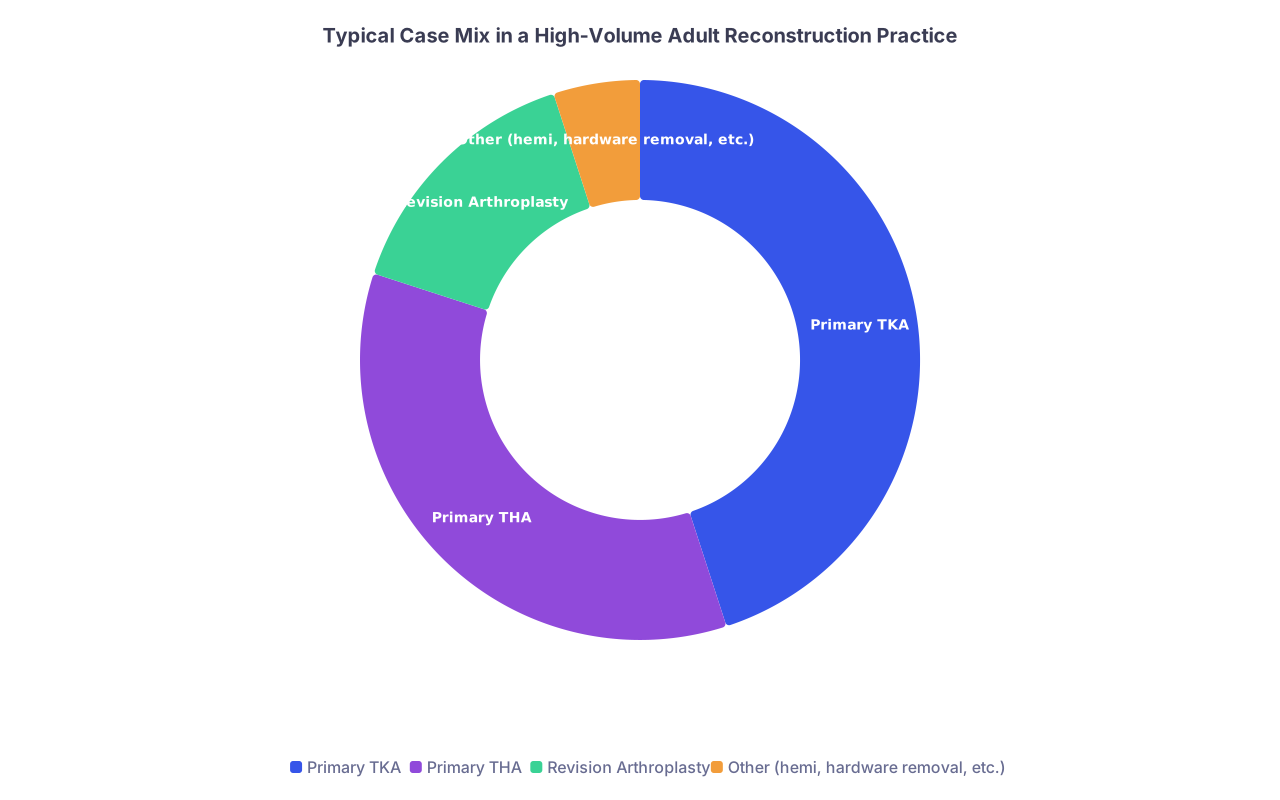
| Category | Value |
|---|---|
| Primary TKA | 45 |
| Primary THA | 35 |
| Revision Arthroplasty | 15 |
| Other (hemi, hardware removal, etc.) | 5 |
If spine is intensity plus risk, adult recon is intensity plus repetition.
Case mix profile
High-volume arthroplasty surgeon:
- 2–3 full OR days/week with stacked primary TKAs/THAs
- 1 day for multiprong revisions or complex cases
- 1–2 clinic days seeing pre‑ops and 3‑month / 1‑year follow‑ups
Case breakdown:
- 40–55% primary total knees
- 30–40% primary total hips (posterior, direct lateral, or DAA, pick your religion)
- 10–20% revisions (aseptic loosening, instability, infection)
- Small tail of unicompartmental knees, hemiarthroplasty, periprosthetic fracture repair
Why it prints money:
- Strong RVU per case, especially when efficient and consistent.
- Short, standardized cases once you are good: 45–60 min primaries in a well-oiled OR.
- Volume friendly – you can honestly do 8–12 joints in a day in the right setup.
- Heavy Medicare, but even Medicare joints at high volume generate big total income.
Arthroplasty is where the “factory model” of orthopedics lives. If you like:
- Standardization
- Team‑based efficiency
- Same cases over and over with incremental variation
You can build a very lucrative practice with relatively predictable hours. Early mornings, yes. But most joint surgeons are not closing skin at 11 pm unless they choose ridiculous block arrangements.
Risk and downside:
- Periprosthetic joint infection ruins everyone’s day (and your RVUs when you are doing multiple stages).
- Revisions are technical and cognitively demanding.
- Heavy Medicare means vulnerability to reimbursement cuts.
- Saturation in some markets – lots of joint surgeons chasing the same primary OA patients.
Financially though, adult recon is absolutely top-tier. It is the most “stable” high‑income path in orthopedics.
5. Sports Medicine: Broad Range, Very Practice-Dependent
Sports medicine is probably the most misunderstood orthopedic subspecialty financially. Instagram will have you believe everyone is doing UCL reconstructions on MLB pitchers and shouldering seven‑figure checks. Reality is: income is wildly sensitive to your case mix and practice type.
Case mix profile
Community sports surgeon with a strong practice:
- 30–40% knee arthroscopy (meniscal tears, chondroplasty, loose bodies)
- 20–30% ACL and multiligament reconstructions
- 20–30% shoulder (rotator cuff, labral repairs, instability, biceps pathology)
- 10–20% other: ankle scopes, small fractures, biceps tenodesis, etc.
High-end niche sports practice (team doc, high-level referrals):
- More complex ligamentous reconstruction
- Multilig ligament knees
- Shoulder instability in athletes
- High volume of “quick” scopes that add RVUs fast
Where money comes from:
- Volume. Short cases stack nicely.
- High commercial payer mix when you have younger patients, employer-based plans, and athletes.
- ASC ownership – scopes are perfect for ambulatory surgery centers.
Where money gets throttled:
- Flooded markets around big cities. Ten sports surgeons per zip code.
- Too many low-RVU scope cases and not enough higher complexity work.
- Heavy Medicaid/uninsured athlete populations.

Lifestyle quality can be excellent: lots of day surgery, relatively predictable hours, and fewer 2 am trauma add‑ons compared to general call. But if you are chasing professional team coverage, expect nights, weekends, travel, and a lot of essentially unpaid “prestige” work.
Financial ceiling: strong. A high‑volume sports surgeon with ASC equity and good payer mix can absolutely push into the $1M+ range. But unlike spine/joints, the floor is lower if you end up in an oversaturated, low‑volume, or low‑pay market.
6. Orthopedic Trauma: High RVUs, High Call, High Chaos
Trauma surgeons often do not market themselves as high earners, but when you actually look at the RVUs generated by real Level 1 trauma call with a wide referral base, the numbers can be serious.
Case mix profile
A busy trauma week could include:
- Intertrochanteric hip fractures (CMN, DHS)
- Femoral, tibial, humeral shaft fractures with nails/plates
- Periarticular fractures – distal femur, tibial plateau, pilon, distal radius, proximal humerus
- Pelvic and acetabular fractures (if you are pelvic-trained)
- Polytrauma, open fractures, mangled extremities, external fixation, staged reconstructions
Case mix roughly:
- 30–40% hip fractures and geriatric trauma
- 25–35% shaft fractures
- 20–30% periarticular / complex reconstructions
- 5–15% pelvis/acetabulum (if you do these)
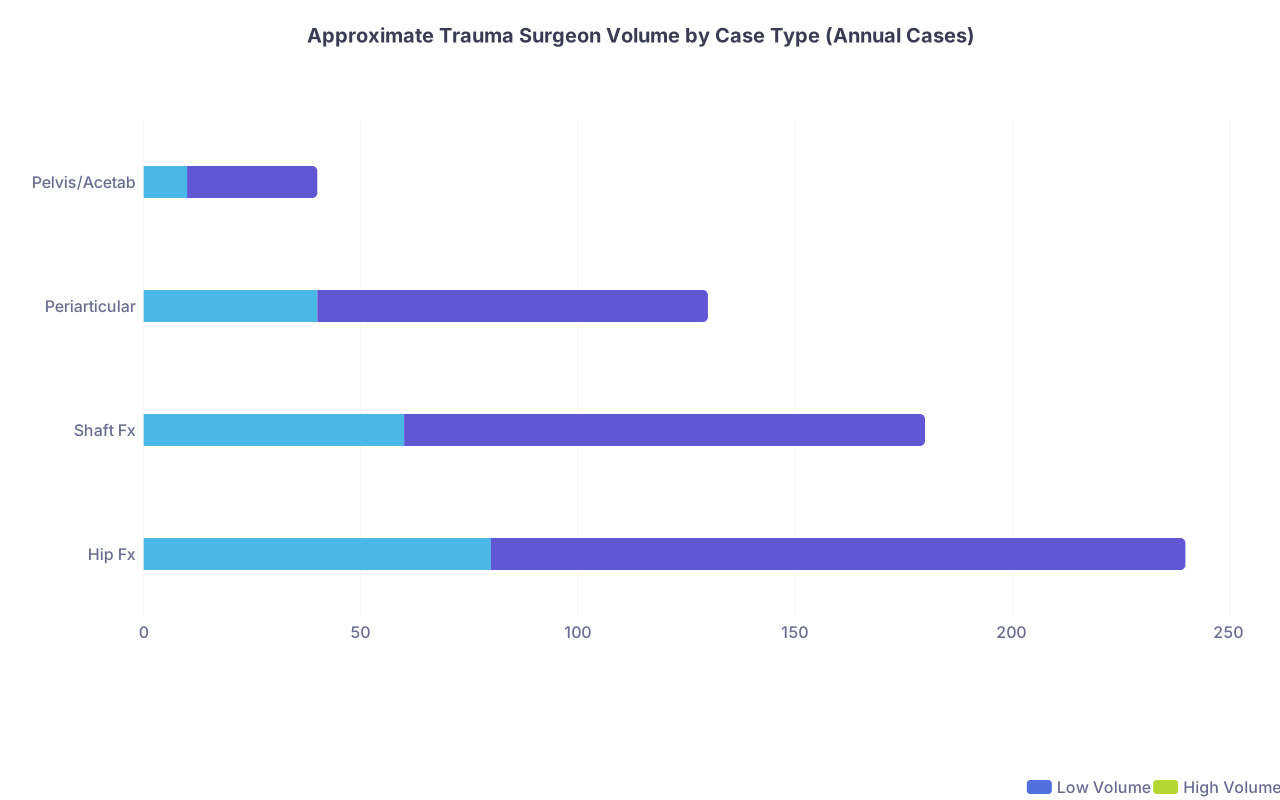
| Category | Low Volume | High Volume |
|---|---|---|
| Hip Fx | 80 | 160 |
| Shaft Fx | 60 | 120 |
| Periarticular | 40 | 90 |
| Pelvis/Acetab | 10 | 30 |
Why it pays:
- Every fracture fixation is RVU-heavy. Stack enough of them and the totals are big.
- Hospitals will subsidize trauma surgeons heavily because orthopedic trauma is core to Level 1/2 status and high-margin DRGs.
- Call stipends can be large in markets with few trauma-trained surgeons.
Why it burns people out:
- Unpredictable hours. You do not schedule 10 polytraumas in the OR at 10 am. They show up when they want.
- Long call stretches, weekend work, middle‑of‑the‑night open fractures.
- Higher infection, nonunion, and complication rates due to patient comorbidities and injury patterns.
- Documentation and billing are more painful when patients are uninsured, underinsured, or covered by workers’ comp.
If you want a structured, neat, 7‑to‑5 life, pure trauma is not it. But a hybrid practice (trauma plus elective) can give you serious earnings with some control: scheduled periarticular recon, revision trauma, deformity correction, plus a trauma call base.
Good trauma surgeons are in chronic shortage. That gives you leverage.
7. Hand & Upper Extremity: Underrated Revenue, High Technical Satisfaction
Many residents underestimate hand financially because they think “CTR and De Quervain’s.” That is part of it. But complex hand/upper extremity surgeons in the right practice can earn extremely well, with a shorter day and less physical wear than joints or spine.
Case mix profile
Hand & UE surgeon in private practice:
- 25–35% nerve decompressions (carpal tunnel, cubital tunnel)
- 20–30% tendon procedures (trigger finger, tendon repairs, tendon transfers)
- 15–25% fractures (distal radius, metacarpals, phalanges)
- 15–25% wrist/elbow arthroscopy, ligamentous repairs, instability
- 5–10% microvascular work, replantations (more in academic centers)
Typical day:
- Mines of quick cases: 10–15 min CTRs, 15–20 min trigger fingers, 30–45 min distal radius.
- A clinic full of EMG results, occupational therapy reports, and workers’ comp forms.
Financial levers:
- Volume: high case counts, many short cases, efficient ASC throughput.
- Commercial payer mix can be strong, especially with working‑age injury patterns.
- Good fit for ASC ownership models – everything is ambulatory friendly.

Downsides:
- Clinic can feel like an assembly line: numbness, tingling, work notes, forms.
- Reimbursements for some smaller procedures have been squeezed.
- Night call: in centers that send all hand trauma to the hand team, your nights can be brutal with replantations and mangling injuries. That is more an academic/urban trauma center phenomenon.
Income potential: solid. A high-volume hand surgeon with ASC share can hit $700k–$1M+ without the 3‑hour fusions or marathon revisions.
8. Foot & Ankle: Quietly Profitable When Built Correctly
Foot & ankle is not flashy, but it can be highly profitable and offers a mix of elective deformity correction and trauma.
Case mix profile
Foot & ankle surgeon in a balanced practice:
- 25–35% forefoot: bunions, hammertoes, MTP fusions
- 20–30% hindfoot fusions: subtalar, triple, ankle fusions
- 15–25% ankle fractures and lower extremity trauma
- 10–20% tendon transfers, flatfoot reconstructions, cavus corrections
- 5–10% miscellaneous (infection management, Charcot, small joint arthroscopy)
Where money shows up:
- High volume of shorter cases, especially forefoot, done in an ASC.
- Complex reconstructions with decent RVUs, though less than major joint or spine.
- Podiatrists will absorb some lower complexity work; surgeons who position themselves as complex recon experts can pull better payer mix and case mix.
Downsides:
- Market overlap with podiatry. Referral patterns matter a lot.
- Charcot and diabetic foot disease can be medically and emotionally draining.
- Less implant revenue compared to spine/joints, depending on how you operate.
In the right suburban or semi-rural market, a foot & ankle surgeon with strong referral relationships and ASC access can quietly clear $600–$900k with more predictable hours than trauma and less systemic burden than spine.
9. Academic vs Private vs Hospital-Employed: Same Subspecialty, Different Wallet
Your subspecialty is one axis. Your practice model is another, and it can swing income by 30–60% for the same case mix and skills.
| Model | Pros | Cons |
|---|---|---|
| Private Group | Highest ceiling, ASC equity | Business risk, admin headaches |
| Hospital-Employed | Stable salary + bonus, support | RVU caps, less autonomy |
| Academic | Teaching, research, prestige | Lowest pay, complex politics |
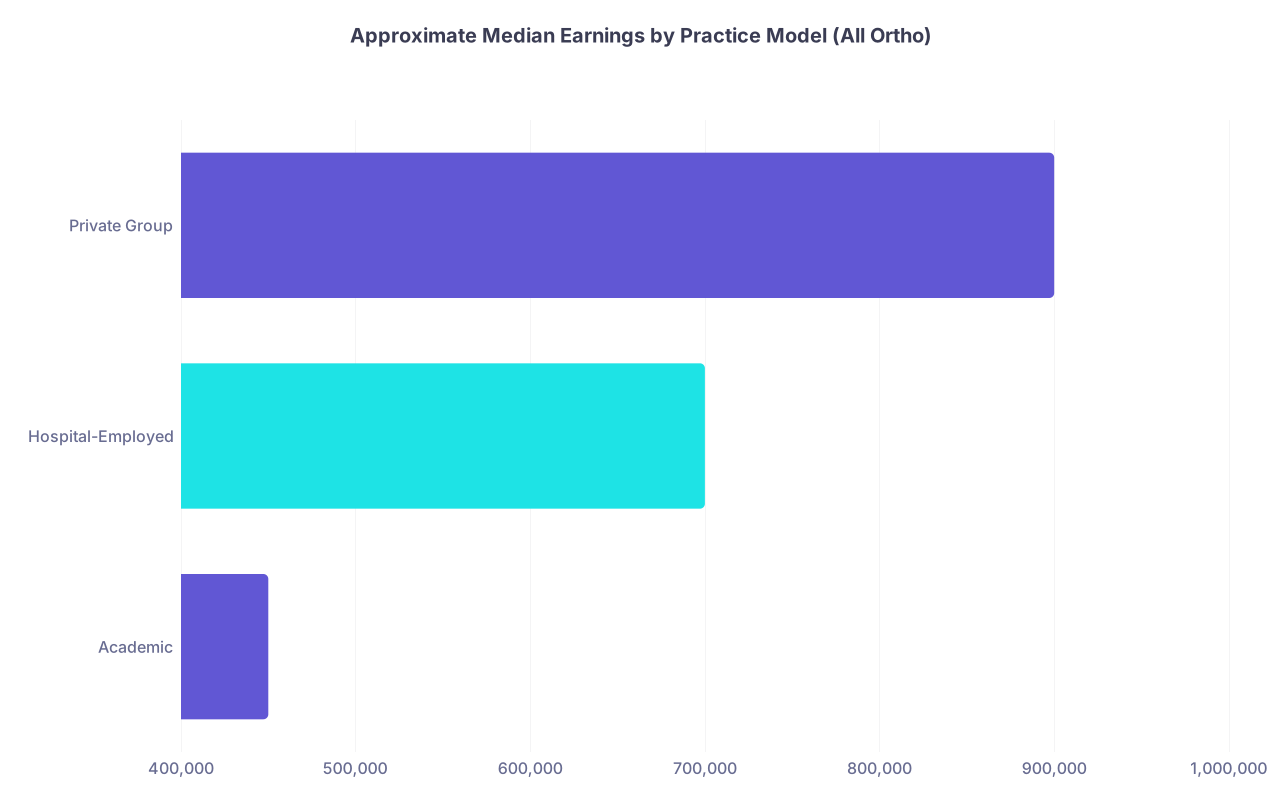
| Category | Value |
|---|---|
| Academic | 450000 |
| Hospital-Employed | 700000 |
| Private Group | 900000 |
Spine, joints, sports, and trauma all max out financially in a private or very aggressive hospital-employed RVU model, often with:
- ASC ownership
- Co-management agreements
- Imaging or PT integration (depending on Stark laws and local regulations)
If you are drawn to oncology or pediatrics, you are naturally pulled toward academic or large children’s hospitals, and the financial game is different. Still comfortable, but not top-tier.
10. Lifestyle, Call, and Burnout Risk by Subspecialty
Subspecialties that pay the most also carry the highest risk of burnout. The equation is not subtle.

| Step | Description |
|---|---|
| Step 1 | Spine |
| Step 2 | High Revenue |
| Step 3 | High Risk |
| Step 4 | High Burnout Risk |
| Step 5 | Adult Recon |
| Step 6 | High Volume |
| Step 7 | Predictable Hours |
| Step 8 | Sports |
| Step 9 | Variable Revenue |
| Step 10 | Good Lifestyle |
| Step 11 | Trauma |
| Step 12 | Unpredictable Hours |
| Step 13 | Hand |
| Step 14 | Moderate-High Revenue |
| Step 15 | Foot and Ankle |
Very simplified reality:
- Most intense, least predictable: Trauma, complex spine.
- High volume but more structured: Joints, elective spine.
- Balanced lifestyle potential: Sports, hand, foot & ankle, depending on call.
- Most predictable daytime work: Hand and adult recon, in well-structured practices.
The important thing: money is one axis. Sustainability is another. Spine at 35 with no kids and unlimited stamina is not the same as spine at 55 with sleep issues and medicolegal scars.
11. How Case Mix Actually Evolves Over Your Career
You do not control your case mix fully, especially early on. I have seen this pattern repeatedly:
Years 1–3:
You take everything. Trauma call, random referrals, some bread‑and‑butter for your subspecialty. You are building volume and reputation, not cherry-picking cases.Years 4–7:
You begin to shape your practice: stop doing the lowest-pay, highest-headache stuff (certain workers’ comp, chronic pain trainwrecks), lean into your high-revenue operations.Years 8+: You can increasingly say no. Drop weekend sports coverage. Take fewer high-risk spine revisions or pelvic cases if you want. Or double down if you actually like them and the money.
The smart move is to understand where your subspecialty’s money comes from and engineer your mix gradually. You will not walk into a job doing eight primary joints a day or nothing but one-level ACDFs and multilevel degenerative scoliosis. It takes deliberate shaping.
FAQ (Exactly 6 Questions)
1. Which orthopedic subspecialty has the absolute highest earning potential?
Adult spine surgery, particularly degenerative and deformity in a high-volume private practice or large group with ASC ownership, generally has the highest ceiling. A high-output spine surgeon with strong referral networks, good payer mix, and ancillary ownership can exceed $1.5M annually. The tradeoff is high medicolegal risk, physically and mentally demanding cases, and a higher burnout rate.
2. If I want strong income but more predictable hours, which subspecialty makes sense?
Adult reconstruction (hip and knee arthroplasty) is the best blend of high income and relatively predictable daytime work. High-volume arthroplasty surgeons can run very efficient OR days with mostly scheduled primaries and a minority of complex revisions. Call still exists, especially for hip fractures and periprosthetic fractures, but compared to trauma or complex spine, nights and weekends are more controllable.
3. Is sports medicine actually a good financial choice, or is it overrated?
Financially, sports medicine is highly variable. In a saturated urban market with many sports surgeons and heavy Medicaid, income can be modest compared to joints or spine. In a well-positioned private practice with ASC equity, strong primary care and PT referrals, and a largely commercial payer base, sports can be extremely lucrative. The key is not “team doc glamour” but high-volume, efficient arthroscopy and ligament reconstruction with good reimbursement.
4. How does orthopedic trauma compare financially and lifestyle-wise to other subspecialties?
Trauma can generate very high RVUs and strong incomes, especially in Level 1 centers and hospital-employed models with call stipends and subsidies. However, the lifestyle is chaotic: unpredictable nights, weekends, complex polytrauma, and significant emotional and cognitive load. Trauma makes sense if you like acute care, complex decision making, and are willing to accept irregular hours in exchange for strong financial and clinical impact.
5. Are hand and foot & ankle surgery lower-paying “backup” options?
Not at all, if the practice model is right. Hand and foot & ankle both support high volume in ASCs, have many ambulatory procedures, and often serve working-age, commercially insured populations. A well-run hand or foot & ankle practice with ASC ownership can hit $600k–$1M+ without the heavy physical and emotional intensity of major spine or trauma. Where they lag is in saturated markets or when case mix is dominated by low-paying injury or chronic disease patterns.
6. How much does academic vs private practice matter compared to subspecialty choice for income?
It matters a lot. A spine or joint surgeon in a heavily academic environment may earn less than a hand or sports surgeon in a private group with ASC ownership and a strong RVU contract. In general, academic settings pay the least, hospital-employed are in the middle with more stability, and private groups (especially with ancillaries) have the highest earning potential. Subspecialty choice sets your ceiling; practice model determines how close you get to it.
Key points:
- Spine and adult joints are the consistent revenue leaders, with sports, trauma, hand, and foot & ankle all capable of high incomes in the right practice structure.
- Case mix and practice model (ASC, payer mix, RVU contract) matter just as much as the name of your fellowship.