
Last winter, I sat in a closed-door ranking meeting for a high-end interventional cardiology fellowship. One of the senior partners looked at a file, snorted, and said, “Great letters, nice research… this guy’s never going to bill. Pass.” The chief fellow laughed, but the program director did not. He just moved the folder to the bottom of the pile.
You think fellowship selection is about “future leaders,” “academic promise,” and “commitment to the specialty.” That’s the brochure version. When you walk into the big-money fellowships—interventional cards, EP, ortho subspecialties, spine, plastics, derm cosmetics, IR, advanced GI—there’s another lens directors are quietly using: Who is going to become a high earner that protects or grows this program’s brand and business?
Let me walk you through what they actually look for, because it’s not what the official criteria say.
The Unspoken Truth: Money Is in the Room
No one will put this in writing, but every high-earning fellowship program lives in tension between “academic mission” and “RVUs, referrals, and downstream revenue.” You see it in the hallway conversations after the formal interviews.
Here’s the mindset behind closed doors:
- Every graduating fellow is a walking future revenue stream.
- Programs want fellows who will either:
- Become high-volume proceduralists who bring patients back to their training institution, or
- Become regional/national “names” that elevate the fellowship brand, which in turn attracts more referrers, more patients, and more funding.
So when directors say, “We want someone who will be successful,” what some of them really mean is, “We want someone who will be busy, influential, and profitable.”
They do not rank applicants thinking, “Will this person be personally rich?” They think, “Will this person become the type of doctor that makes a practice, hospital, or service line a lot of money?” Those traits line up very cleanly.
The Profiles Directors Use to Predict Future High Earners
There are three broad “future high earner” profiles fellowship directors recognize instantly. They might not verbalize it this way, but I’ve heard versions of this in dozens of meetings.

1. The Volume Monster
Interventional cardiology, ortho joints, spine, EP, IR, advanced GI—these programs salivate over this type.
What it looks like on paper and in person:
- Heavy procedural exposure in residency with honest, high case logs
- Comments in letters like:
- “She is always asking for cases, even at 2 a.m.”
- “He volunteers for add-on cases when others defer.”
- Residents who pre-round early, stay late, and do not whine about Q3–Q4 call
- Evidence that they enjoy the grind: phrases like “loves being in the lab” or “thrives in high-volume settings.”
Directors think: this is someone who will quickly ramp up after fellowship, who won’t be scared of a packed OR schedule or taking extra call for additional income.
The volume monster does not need to be the smartest in the room. Just relentless, efficient, and reliable. Programs know that this is exactly the kind of person who ends up doing 700 scopes a year, 400+ caths, or is double-booked in two ORs.
2. The Brand-Builder
More common in plastics, derm (cosmetics side), sports ortho, some IR and advanced endoscopy.
On the surface, this applicant can look “non-traditional”: strong social presence, personal website, sometimes entrepreneurial projects. Faculty split on them—older, academic-purist attendings roll their eyes; younger private-practice-savvy attendings lean forward.
Signs of a brand-builder:
- Has already built something:
- A following on Instagram/TikTok/YouTube in aesthetics, fitness, or health
- A clinic “system” they designed
- A niche expertise (complex revision joints, high-level athletes, aesthetic niche)
- Letters describing them as “innovative,” “always thinking about practice systems or patient experience,” not just “hard worker.”
- They ask fellowship directors questions about:
- Practice models, referral networks, private vs employed pay structures
- Cash-pay opportunities, out-of-network dynamics, industrial or team contracts
Program directors know: these are the people who become “the name” in a city. The ones referring doctors think of first. The ones who fill conference rooms when they speak. That brings cases back to the institution and keeps their fellowship “elite” on paper.
3. The Institutional Loyalist
Academic high-end fellowships—EP, structural heart, transplant, advanced endoscopy—love these. They’re not always the highest personal earners, but they are high producers locked into an academic or quasi-academic machine that makes a lot of money.
You’ll see:
- MD/PhD or serious research track
- Strong mentorship bonds with specific faculty at the same institution
- Clear desire to stay on as junior faculty or in the same health system
- Letters from the division chief that read like they’re already negotiating a future hire
For a director, a loyalist is gold. Train them, keep them, plug them into your service line, and 2–3 years later they’re a semi-autonomous high-volume attending whose RVUs and research both credit the department. High financial yield with less recruitment risk.
The Traits That Scream “Future High Earner” (Even If Nobody Admits It)
Let’s talk about the specific behaviors and signals that make a director quietly nudge your file up the rank list when they’re thinking about future earning capacity.
| Dimension | Low Earner Signal | High Earner Signal |
|---|---|---|
| Volume | Minimal case logs | Aggressively high case logs |
| Efficiency | Often behind on notes | Consistently ahead of workload |
| Risk tolerance | Avoids complex cases | Seeks appropriately tough cases |
| Business sense | No idea about compensation | Asks smart questions about models |
| Follow-up | Poor clinic habits | Obsessed with building continuity |
1. Comfort With Volume and Chaos
Programs know exactly which fellows drown when they hit real practice: those who crumble when the list hits 40 patients or the add-on cases start stacking.
Signals directors look for:
- Rotations where you handled:
- Busy trauma call (for ortho/spine)
- Heavy cath/EP or IR call
- High-volume GI or endoscopy days without melting down
- Comments in letters like:
- “Never complains about workload”
- “Remains calm even when the board is packed”
- During interviews, talking about:
- How you optimized throughput
- How you learned to run two rooms, or pre-round strategically, or prep cases ahead
Busy, resilient fellows become busy, resilient attendings. Busy, resilient attendings—especially in procedure-heavy specialties—become high earners. Programs know that.
2. Procedural Hunger (Not Just Comfort)
A lot of residents can tolerate procedures. High earners usually chase them.
Directors notice:
- You show excitement, not just competence, when you describe cases:
- “We got an add-on dissection at 4 p.m. and I begged to scrub in.”
- “I’d finish clinic notes early so I could go to the lab.”
- You did electives that increase scope and billable range:
- Interventional fellows seeking complex peripheral, structural, devices
- Ortho residents seeking trauma, revisions, complex deformity
- IR residents leaning into oncology, complex venous, high-margin procedures
I’ve seen applications where two candidates had similar board scores and similar letters. The one whose letters said “always first to the lab” beat the one described as “very reliable on the wards” every single time for high-earning fellowships.
3. Time and Efficiency Discipline
You want an ugly truth? Programs know that the resident who can’t keep up with documentation and discharges as a PGY-4 is going to leave money on the table as an attending. Inefficiency is expensive.
Directors pay attention to:
- Whether you were ever on “performance improvement” for documentation
- How attendings describe your ability to:
- Close charts
- Turn over rooms
- Move through clinic without bottlenecks
- Your answer when they ask: “How do you manage your time on a busy day?”
High earners typically:
- Develop early systems: templates, macros, structured pre-op/pre-procedure workflows
- Delegate intelligently to staff
- Don’t get lost in non-billable academic busywork—unless it strategically moves their career
Nobody will say, “We ranked her higher because she’ll generate more RVUs.” But I’ve watched people get bumped down because faculty said, “He’s always behind. Great guy. But he just can’t keep up.”
The Business-Savvy Fellow: The Director’s Secret Favorite
This is the piece nobody teaches you in residency and almost no one will say out loud.
Directors quietly love applicants who demonstrate early business literacy without coming off as mercenaries.
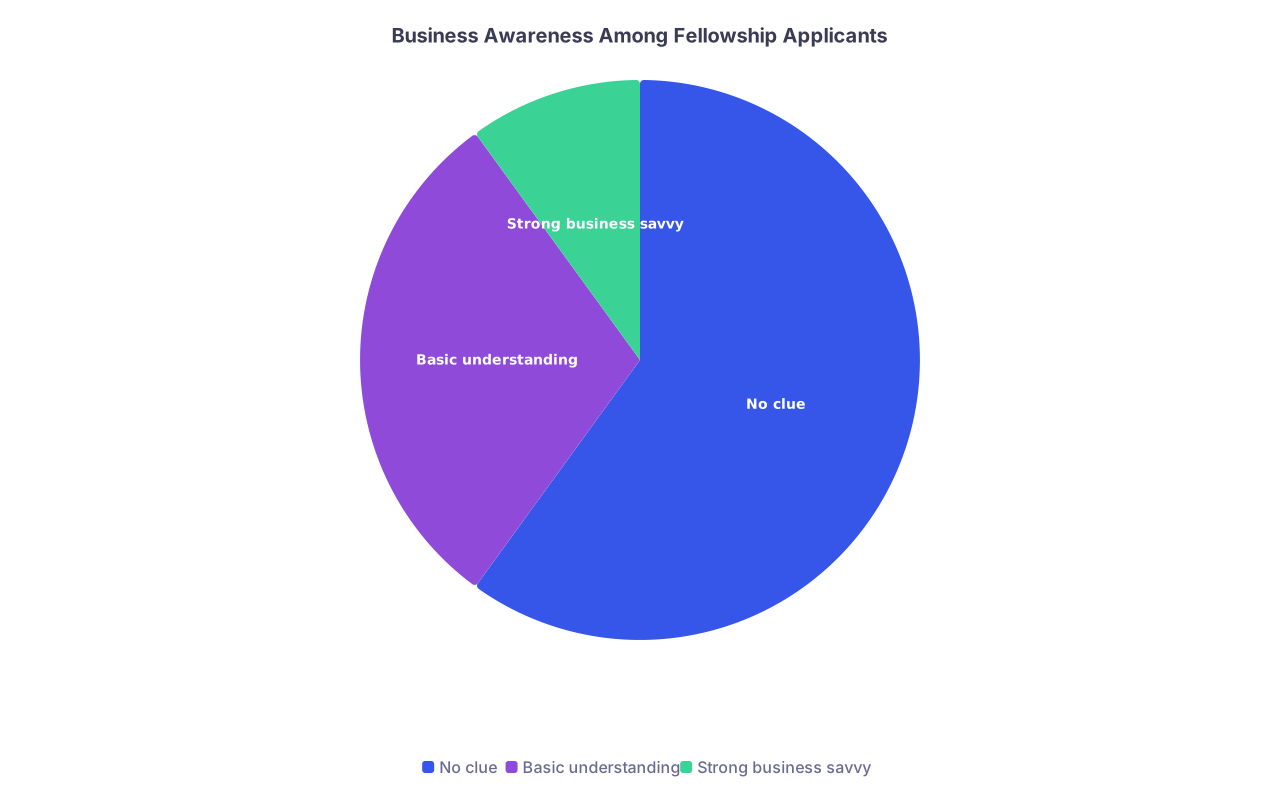
| Category | Value |
|---|---|
| No clue | 60 |
| Basic understanding | 30 |
| Strong business savvy | 10 |
When interviewers debrief, you’ll hear things like:
- “She actually understands employed vs partnership models. She’s been paying attention.”
- “He asked really smart questions about payer mix and service line strategy.”
- “She’s thinking like someone who will build something, not just show up to work.”
What this looks like from your side:
You do not walk into an interview saying, “How do I maximize income?” That’s amateur hour. Instead, you ask:
- “How are your graduates distributing between academic and private practice?”
- “What kind of case mix do they have in their first jobs?”
- “How long does it take them to build a full schedule?”
- “What’s the referral pattern like—do your grads tend to retain referrals from this region?”
Behind those “innocent” questions, the director hears: This person is already thinking like a practice-builder and understands that volume, case mix, and referral patterns drive earning potential.
High earners learn early that:
- Not all wRVUs are equal in payer mix
- Not all high-volume clinics are profitable
- Complex niche procedures may pay less per hour than bread-and-butter work—or vice versa, depending on specialty and setting
The fellow who starts understanding that during training is the one who ends up negotiating better, choosing better jobs, and building practices that reflect that knowledge. Programs want that person wearing their fellowship on their chest.
How Directors Actually Sort You: The Real Criteria Stack
They’ll tell you they’re weighing research, letters, interviews, and scores. They are. But inside high-paying subspecialties, the mental weighting shifts.
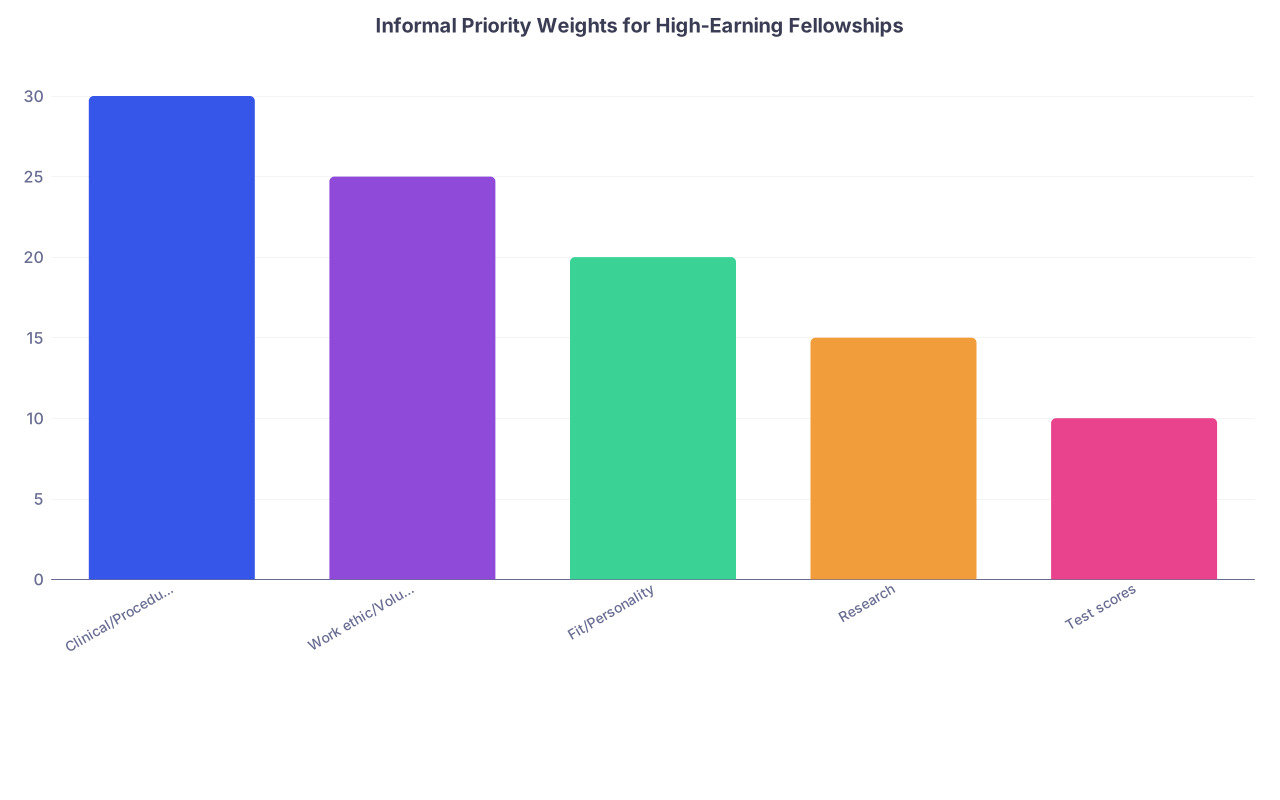
| Category | Value |
|---|---|
| Clinical/Procedural ability | 30 |
| Work ethic/Volume tolerance | 25 |
| Fit/Personality | 20 |
| Research | 15 |
| Test scores | 10 |
The unofficial hierarchy, as I’ve seen it played out:
Can this person do complex procedures safely and independently?
- If no, they’re out. High-earning subspecialties live and die on outcomes. Bad outcomes kill referral streams and reputation.
Will this person work? Really work?
- “Is this a 9-to-5 person, or will they actually lean into call, late cases, busy seasons?” Busy fellows become busy attendings.
Will patients and referrers like and trust them?
- Future high earners usually have strong interpersonal skills. GPs and other specialists don’t send complex, well-paying cases to people they find difficult.
Will they represent us well in the market?
- “Would I be proud to say this is our fellow when they’re on a podium, a billboard, or quoted in the local news?”
Extras: research, test scores, degrees
- These help in tie-breakers, or for academic branding. But in a pure money-heavy subspecialty, they are not #1.
What You Can Do in Residency to Signal “Future High Earner”
Let’s get practical. You can’t change your Step scores or where you trained, but you can change how directors perceive your future trajectory.
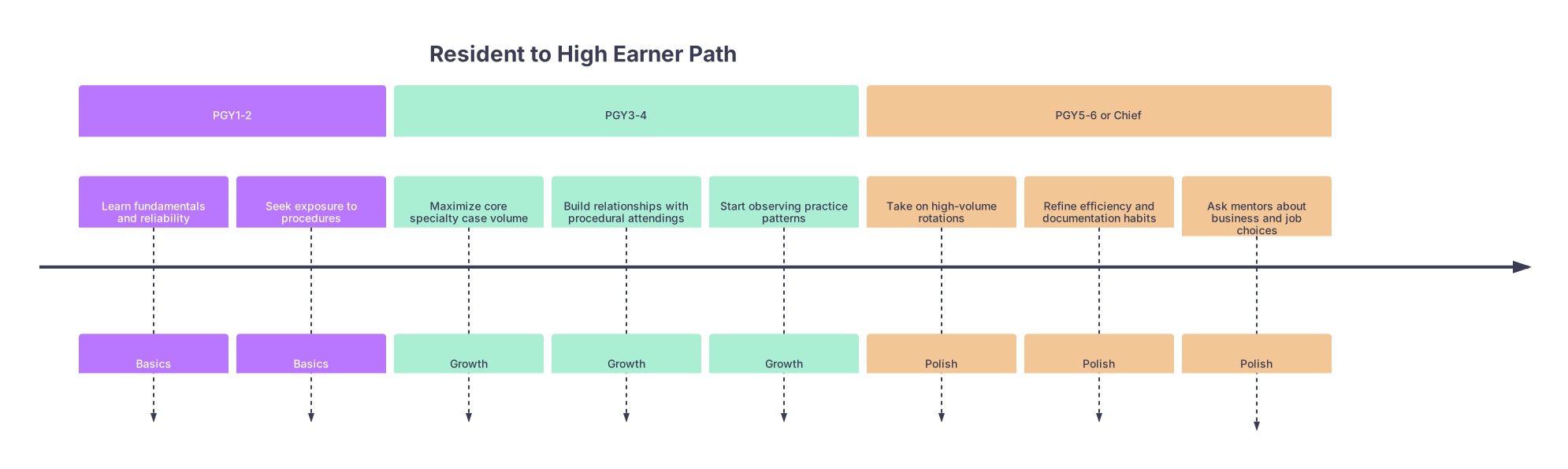
| Period | Event |
|---|---|
| PGY1-2 - Learn fundamentals and reliability | Basics |
| PGY1-2 - Seek exposure to procedures | Basics |
| PGY3-4 - Maximize core specialty case volume | Growth |
| PGY3-4 - Build relationships with procedural attendings | Growth |
| PGY3-4 - Start observing practice patterns | Growth |
| PGY5-6 or Chief - Take on high-volume rotations | Polish |
| PGY5-6 or Chief - Refine efficiency and documentation habits | Polish |
| PGY5-6 or Chief - Ask mentors about business and job choices | Polish |
1. Choose Rotations Strategically
Stop treating rotations like checkboxes. If you’re targeting interventional, EP, IR, ortho joints/spine, plastics, derm, advanced GI, you should be:
- Front-loading rotations that get you procedural comfort
- Returning to high-volume services late in residency so your last impressions are “this person is operating/doing cases at a fellow level”
- Asking to be on the call schedule that exposes you to real complexity and night/weekend volume
2. Build a Reputation for Relentless Reliability
I’ve watched borderline candidates get ranked high because every attending said the same thing: “If something needs to get done, give it to her.”
For you, that means:
- Showing up early on procedural days and being ready—labs checked, imaging reviewed
- Offering to stay and help close, finish cases, or see late add-ons
- Never disappearing during crunch time. Busy fellowships equate disappearing residents with low-earning, low-volume future attendings.
3. Cultivate One or Two Key Mentors in Your Target Subspecialty
This is not about needing “strong letters” in the generic sense. It’s about getting letters from attendings who themselves are high-volume, high-earning, or program-influential.
Directors read between the lines:
- A glowing letter from a known volume monster in interventional cardiology carries a subtext: “This resident can keep up with me.”
- A detailed letter from a successful private-practice plastic surgeon that stresses your work ethic and patient draw says: “This one will thrive in the real world.”
You want mentors who can say, credibly, “I’d hire this person.”
The Trap: Looking “Too Money-Driven”
There’s a line you absolutely do not cross.

Directors do not want someone who:
- Talks incessantly about compensation during interviews
- Dismisses academic work, teaching, or call as “not worth it”
- Has an attitude of entitlement around lifestyle while applying to high-intensity fellowships
They want future high earners, but they also want people who won’t burn bridges, trash the brand, or leave a trail of angry colleagues and staff.
You need to project three things simultaneously:
- Ambition: You’re clearly driven, you like being busy, you’re competitive in a healthy way.
- Professionalism: You respect the academic and patient-care missions and don’t reduce everything to money.
- Curiosity about systems: You ask questions that show you understand that practice structure, referral patterns, and case mix matter—without saying “How much will I make?”
When in doubt, frame your questions and comments around:
- “Scope of practice”
- “Case mix and autonomy”
- “How graduates build their practice”
Everyone in the room understands what that really means. You do not have to say the word “income” once.
Example: How Directors Talk About Two Identical Applicants
To make this real, here’s the type of discussion I’ve actually heard for interventional and ortho fellowships.
Applicant A
- Strong research, decent procedural numbers, quiet in the lab
- Interview: talks about “balance,” “long-term academic career,” “avoiding burnout,” asks a lot about call burden limits
Applicant B
- Similar scores, slightly higher case logs
- Letters: “Never turns down a case,” “Patients love him,” “Clinic and lab volume never fazed him”
- Interview: talks about “getting very comfortable with high-volume independent practice,” asks about “how grads build up a referring base,” “what mix of cases they see in years 1–3”
Ranking meeting summary:
- About A: “Solid, but I’m not sure he wants the grind this program demands.”
- About B: “This guy will be busy wherever he lands. He’ll use everything we teach him.”
And you know exactly who ends up ranked higher.
FAQ: What Fellowship Directors Actually Look For in Future High Earners
1. Do fellowship directors literally sit around predicting who will make the most money?
Not in those words. They sit around asking who will be busiest, most independent, and most impactful in practice. In procedural, high-RVU specialties, those questions are essentially proxies for earning potential. The financial angle usually shows up as, “Will this person build a strong practice and represent our program well?” Revenue is baked into that.
2. Is research still important if I want a high-earning procedural fellowship?
It helps, especially at brand-name academic centers, but it’s not the main predictor of future high earnings. Research gets you in the door at competitive places and can signal discipline and niche interest. Once you’re being seriously considered, your procedural skill, work ethic, and how you’ll function in a busy practice matter more for both ranking and your eventual earning trajectory.
3. How do I show business savvy without looking crass or money-obsessed?
Ask about practice structure, case mix, and referral patterns, not salaries. For example: “How quickly do your graduates build a full schedule?” or “What kinds of practices do your grads join, and what case mix do they usually end up with?” Those questions are sophisticated and appropriate. They signal you understand the real world without sounding transactional.
4. I’m not naturally a “volume monster.” Can I still be seen as a future high earner?
Yes, if you compensate with efficiency, niche value, and relationship-building. Some high earners aren’t the highest-volume proceduralists; they’re the ones doing complex, high-value work for a loyal referral base. But if you want to be taken seriously in high-paying procedural fellowships, you do need to show that you can handle busy services without falling apart. You can’t be volume-averse and expect to be viewed as a future top earner.
5. What one change should I make this year to improve how fellowship directors see my future potential?
Pick one high-volume rotation aligned with your target fellowship and attack it. Show up early, never turn down cases, stay late without complaint, and make sure the key attendings walk away saying, “I’d trust this resident with my service.” That one block can rewrite your narrative in the letters and hallway conversations that actually decide your fate.
With this lens in your head, you’re no longer guessing what directors mean when they say “we’re looking for people who will be successful in practice.” You know they’re reading your file and your interview for signs of future volume, influence, and real-world savvy.
The next step is simple, but not easy: align your current behavior—on rotations, with mentors, in interviews—with the kind of doctor you actually plan to be 5–10 years from now. Because once fellowship is over, nobody’s writing letters for you anymore. Your practice, and your earnings, start and stop with how you’ve trained yourself to work.