
It’s 6:30 p.m. You’ve just finished a brutal ICU call month and you’re staring at your loans in your budgeting app. You know you want a high-earning specialty. But you’re also watching news about AI, telehealth, private equity, and Medicare cuts, and you’re wondering: Which of the high-paying fields is actually safe for the next 20–30 years?
Let me be direct: some “big money” specialties today are sitting on a shaky foundation. Others are annoyingly stable and likely to stay that way, even as reimbursement and technology shift.
This is the breakdown you actually need: not just “who earns the most now,” but who’s likely to keep earning well when payment models, AI, and consolidation hit full force.
The 3 Forces That Make (or Break) Long-Term Income
Before choosing a field for “resilience,” you need to understand what actually threatens income.
1. Automation & AI risk
Ask: Can software or midlevels do a big chunk of this without you?
Procedural fields with:
- High cognitive + high technical complexity
- High risk if things go wrong
- Immediate, in-person decision making
…are harder to replace.
Fields with:
- Template-based notes
- Standardized diagnostics
- Limited real-time hands-on work
…are absolutely on AI’s hit list.
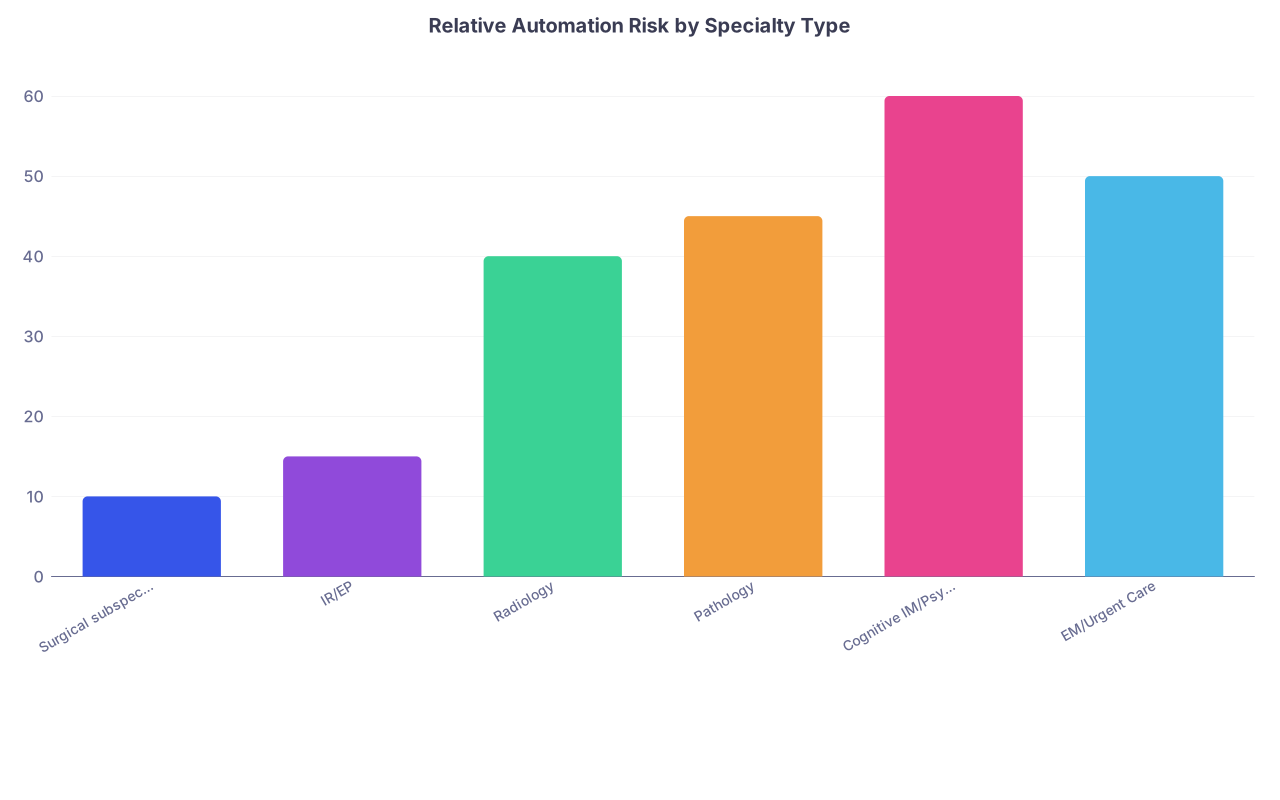
| Category | Value |
|---|---|
| Surgical subspecialty | 10 |
| IR/EP | 15 |
| Radiology | 40 |
| Pathology | 45 |
| Cognitive IM/Psych | 60 |
| EM/Urgent Care | 50 |
(0 = low risk, 100 = high risk, directional not literal numbers.)
2. Reimbursement & payer leverage
Is your income:
- Heavily fee-for-service with lots of easily-denied codes? Risky.
- Bundled or salary-based via large systems? More stable, but ceiling may be lower.
- Tied to emergencies, oncology, or complex procedures payers can’t delay? That’s better.
Specialties tightly tied to:
- Emergency care
- Cancer
- Organ failure
- High-cost complex surgery
…tend to keep leverage, because delaying or cheaping out has catastrophic downstream costs.
3. Substitution & scope creep
Who can realistically be trained to eat your lunch?
- Is there a midlevel pipeline (NP/PA/CRNA/etc.) already expanding in your space?
- Can other specialties swallow your procedures or clinic volume?
- Do hospital systems see you as “must have” or “nice to have”?
You want:
- Skills that take years to master
- High malpractice risk if done poorly
- Strong board and credentialing controls
That combination slows substitution.
Most Resilient High-Earning Fields: The Short List
Here’s where I’d put my bet if I were an MS2/MS3 thinking 30-year career, not just first attending paycheck.
1. Neurosurgery
High pay, high risk, and almost impossible to commoditize.
Why it’s resilient:
- Complexity barrier: 7+ years of residency, plus often fellowship. No midlevel or quick-training pathway is coming close.
- Low AI risk: Imaging will get smarter, but someone still has to open the skull, manage the cord, handle intra-op catastrophes, and make nuanced surgical decisions.
- Demand drivers: Aging population = more spine disease, more tumors, more degenerative conditions. Traumas aren’t going away either.
Pressure points:
- Spine reimbursement may get squeezed.
- RVU pressure and hospital employment will continue.
- Lifestyle is rough; burnout risk is real.
Verdict:
If you’re actually wired for it and can handle the training, neurosurgery sits near the top for income durability.
2. Interventional Cardiology & Structural Heart
Not just “cards.” Specifically the procedural apex: PCI, structural, complex coronary.
Why it’s resilient:
- High acuity: STEMIs, cardiogenic shock, severe valvular disease. Nobody’s replacing that with telehealth.
- Tech-heavy but physician-centered: New devices (TAVR, MitraClip, left atrial appendage devices) make the field more valuable, not less.
- Aging & obesity epidemics: Cardiovascular disease isn’t shrinking. If anything, demand is getting worse.
Where there’s risk:
- Routine cards clinic is very substitutable.
- Primary prevention, lipid management, stable angina work? Can be shifted to general IM or APPs.
- RVU treadmill and hospital employment dominate; private-practice mega incomes are less common.
Verdict:
If you stay on the interventional/structural side, you’ll likely ride a long wave of high, if exhausting, earning power.
3. Orthopedic Surgery (Especially Joint, Spine, Trauma, Sports in Strong Markets)
Ortho is already a top-paying specialty. The question is: does it hold?
Why it’s resilient:
- Mechanical + hands-on: Someone has to fix the fracture, replace the joint, or repair the ACL. Robotics helps but doesn’t replace.
- Demographics: Aging + obesity = more joints, more degenerative changes, more fractures from falls.
- Procedure-based revenue: Orthopedic procedures will always be a high-ticket item for hospitals and surgery centers; they fight to keep these surgeons happy.
Where it can hurt:
- Elective sports in oversaturated markets can see downward pressure and lifestyle clinics crowding.
- Some joint work may see lower per-case payment over time.
- APPs can offload clinic, but they’re not replacing major OR cases anytime soon.
Verdict:
Among the surgical big earners, ortho is very resilient, especially if you’re in a region with strong commercial insurance and aging populations.
4. Interventional Radiology (IR) – With a Caveat
IR looks very good long-term, but only if you’re actually doing full-scope IR, not just lines and biopsies.
Why it’s resilient:
- Versatile toolbox: Oncologic interventions, complex vascular work, embolizations, pain procedures, emergent bleeds. That’s sticky and high-value.
- Cross-specialty dependence: Surgeons, oncologists, hospitalists all need IR; hospitals don’t see IR as optional.
- Tech-enhanced, not tech-replaced: Better imaging = more procedures IR can safely own, not fewer.
Risks:
- Anything “simple” (paracentesis, thoracentesis, basic lines) is vulnerable to APPs or hospitalists.
- Turf battles with vascular surgery, cardiology, neurosurgery in some areas.
- Radiology as a whole faces strong AI pressure; diagnostic-only careers look shakier than IR.
Verdict:
If you want high pay + procedure-driven + future-proof, full-scope IR is a strong bet. Just don’t build your career on easy, delegable procedures.
5. ENT (Otolaryngology) and Urology – The Quietly Strong Plays
They’re not always at the very top of salary lists like neurosurgery or ortho, but they consistently sit in the high-earning tier with good durability.
Why ENT is resilient:
- Mixed practice: Bread-and-butter cases (tonsils, sinus surgery, tubes) plus complex head & neck cancer, airway, otology.
- Multi-age demand: Kids + adults = continuous pipeline.
- Procedures hard to substitute: Head and neck anatomy + critical structures = high risk to “cheap out” on training.
Why Urology is resilient:
- Demographics: BPH, prostate cancer, kidney stones, incontinence — all aging-population problems.
- Oncology + procedures: Cancer + urgent issues (stones, retention) will always require in-person intervention.
- Tech growth zone: Robotics, laser lithotripsy, endourology — tech helps urologists, it doesn’t replace them.
Verdict:
Both ENT and Urology are high-earning, broadly needed, and relatively future-safe compared with many other fields.
6. Oncology (Medical and Radiation) – High Risk, High Stickiness
Onc isn’t at the absolute top of income charts everywhere, but many oncologists and radiation oncologists earn very well and will stay necessary.
Why it’s resilient:
- Growing demand: Aging + better screening + more survivorship means more patients living longer with cancer or precancer.
- Complex decision-making: Regimens, toxicity management, evolving targeted therapies — not template medicine.
- Emotionally and ethically high stakes: Families and systems want “the cancer doctor,” not a chatbot, making final calls.
Risks:
- Radiation oncology has had some market saturation and job-tightness issues in certain regions.
- Oncology is expensive for payers; there will be extreme pressure to reduce costs, shift to pathways, and standardize.
Verdict:
If you can handle the emotional weight, oncology is sticky — people will always pay for cancer care. It’s more about work structure shifting than being replaced.
Fields With High Pay Today But Real Long-Term Exposure
You asked about resilience, not just pay. Some big-earning areas are walking into a buzzsaw.
1. Diagnostic Radiology (Non-Interventional)
I’m not saying “radiology is dead.” That’s wrong. But:
- AI will eat a meaningful share of low-complexity reads.
- Telerad + corporates are already pushing salaries and autonomy down in some markets.
- It’s easy for systems to centralize and outsource parts of this work.
High-end, niche, or subspecialty rads will remain valuable. Bread-and-butter, volume-based reading looks a lot less safe 20–30 years out.
2. Pathology
Same story:
- Digital pathology + AI pattern recognition are already here.
- Big labs and corporate consolidation reduce bargaining power.
- Very hard for patients to “see” or advocate for you; you’re invisible to the public.
There will always be pathologists. But the leverage and income ceiling? I don’t love the trajectory compared with similarly long training in other fields.
3. Purely Cognitive, Outpatient Specialties at the High-End
Think:
- Some GI practices mostly doing scopes in high-paying markets
- High-end dermatology cosmetics (but this is more entrepreneurial risk than AI risk)
- High consultative IM subspecialties that don’t own big procedures
If your value is mainly cognitive and outpatient, AI + midlevels + protocolization will chip away. The more your procedures are optional or lifestyle-focused, the more you’re tied to consumer cash flow and local economics.
How Different High-Earning Fields Compare on Resilience
| Specialty | Current Pay Tier | AI/Automation Risk | Substitution Risk | Long-Term Resilience |
|---|---|---|---|---|
| Neurosurgery | Very High | Very Low | Very Low | Excellent |
| Interventional Cards | Very High | Low | Low–Moderate | Strong |
| Orthopedic Surgery | Very High | Very Low | Low | Strong |
| Interventional Radiology | High–Very High | Low | Moderate | Strong if full-scope |
| ENT / Urology | High | Low | Low | Strong |
| Diagnostic Radiology | High | High | Moderate | Moderate–Uncertain |
Practical Framework: How You Should Actually Choose
You’re not a spreadsheet. You’re a human who has to live this.
Here’s the decision framework I’d use if I were in your shoes:

| Step | Description |
|---|---|
| Step 1 | Want high earning |
| Step 2 | Neurosurgery or Ortho |
| Step 3 | ENT or Urology |
| Step 4 | Interventional Radiology or Interventional Cards |
| Step 5 | Consider Onc or Subspecialty Cards |
| Step 6 | Can tolerate long, intense training |
| Step 7 | Like operating and procedures |
| Step 8 | Comfortable with some income risk |
| Step 9 | Comfortable with blood, trauma, long cases |
Then sanity-check your choice against these three questions:
Is this field heavily procedural with real, non-elective demand?
If yes, that’s resilience.Can an NP/PA realistically do 60–70% of what this specialist does?
If yes, run.Does this specialty solve problems mostly for old, sick, or high-risk patients?
Those are the ones payers and society can’t afford to ignore.
Don’t Ignore Geography and Employment Model
Same specialty. Very different future, depending on where and how you practice.
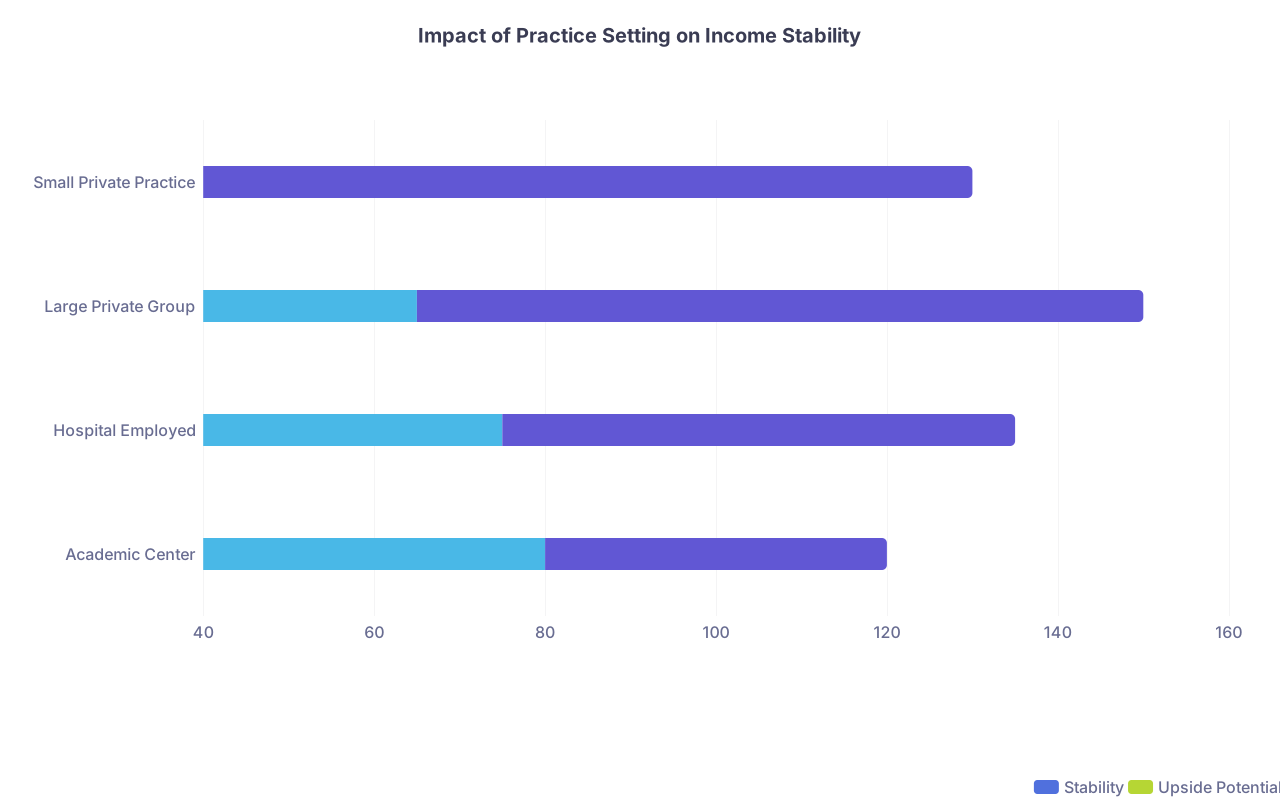
| Category | Stability | Upside Potential |
|---|---|---|
| Academic Center | 80 | 40 |
| Hospital Employed | 75 | 60 |
| Large Private Group | 65 | 85 |
| Small Private Practice | 40 | 90 |
- Academic: Most stable, lower ceiling, more insulated from market chaos.
- Hospital-employed: Good stability, but subject to system policies and RVU games.
- Large private groups: Can negotiate and adapt, but subject to mergers and PE.
- Small private practice: Highest risk and upside; regulatory and payer changes hit hardest.
Future resilience isn’t just what you do. It’s also where and under whom you do it.
The Bottom Line: So Which Fields Win?
If you want high earnings and strong resilience to future market change, these are the most defensible bets:
- Neurosurgery
- Orthopedic surgery (especially joints, spine, trauma)
- Interventional cardiology / structural heart
- Full-scope interventional radiology
- ENT and Urology
- Oncology (med onc/rad onc) for a slightly different, but still strong, profile
They’re all:
- Procedure-heavy
- High-stakes
- Hard to automate
- Hard to hand off to cheaper labor
You’ll still feel reimbursement pressure. You’ll still deal with bureaucracy. No field is immune. But if you’re choosing a long, brutal training path, it makes sense to choose one that can fight back against future headwinds.

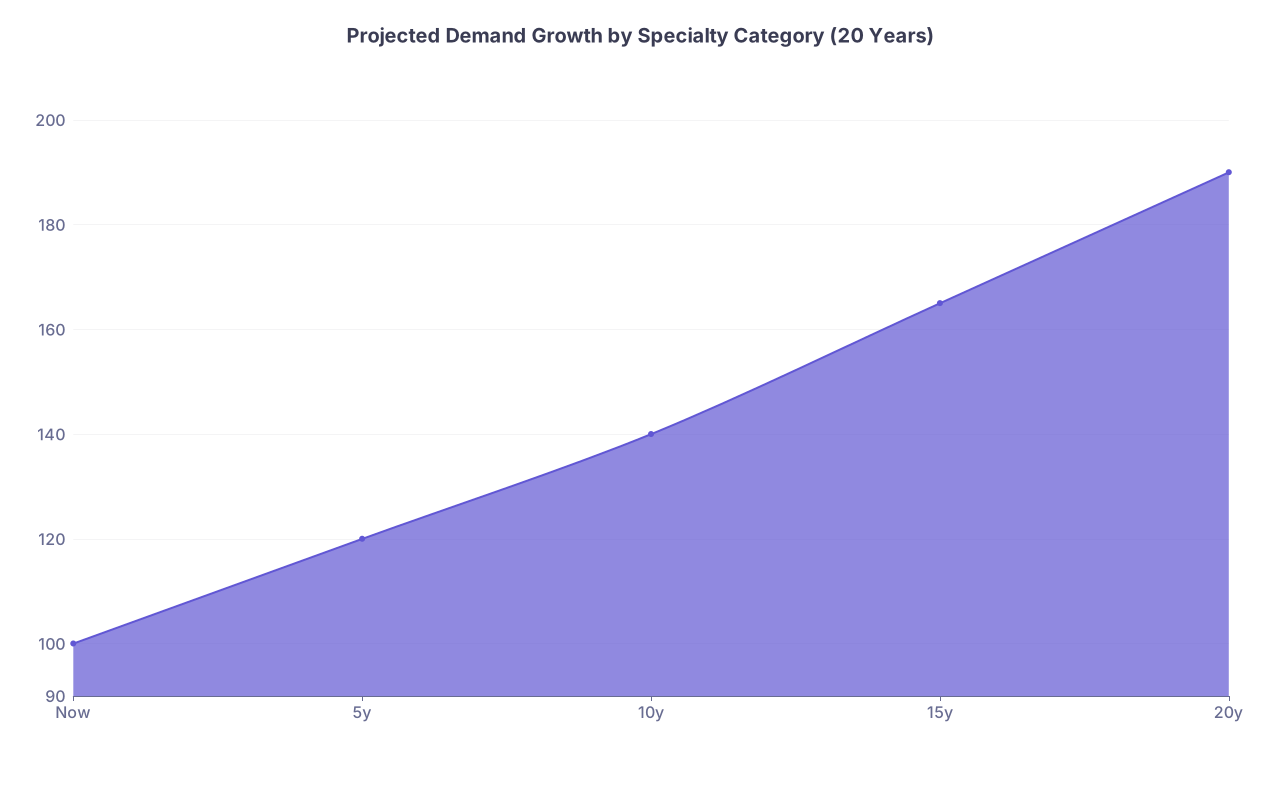
| Category | Value |
|---|---|
| Now | 100 |
| 5y | 120 |
| 10y | 140 |
| 15y | 165 |
| 20y | 190 |

FAQ (Exactly 6 Questions)
1. Is it smart to choose a specialty mainly based on future income resilience?
It’s rational to factor it in, but it can’t be your only filter. Training for neurosurgery or interventional cardiology when you hate the work is career suicide, no matter how “resilient” the income is. Use resilience as a tiebreaker between fields you already like, not as the sole driver.
2. Are surgical subspecialties always safer than non-surgical fields?
Not automatically, but they start with a big advantage: hands-on, high-skill procedures are harder to automate or delegate. Some non-surgical fields like oncology also have strong staying power. But if you’re purely cognitive and outpatient, you’re more exposed to AI, midlevels, and protocol-driven care.
3. Is radiology still a good choice given AI?
Radiology will still exist and many rads will do fine. But compared with similarly long, competitive training in something like IR, ortho, or neurosurg, classic diagnostic-only radiology has more income and bargaining-power risk. If you choose rads, I’d lean into subspecialization, procedures, or niches that AI will struggle with.
4. How much should I worry about midlevels taking over my specialty?
You should absolutely pay attention to it. If a large chunk of your specialty’s routine work can be protocolized, and there’s already an NP/PA pipeline in that space, your long-term leverage drops. That’s why I favor fields where midlevels can support but not replace you — complex surgery, high-stakes procedures, cancer care, and so on.
5. Does academic medicine protect income better than private practice?
Academics generally trade top-end salary for stability. You’re shielded from some direct market swings, but you’ll earn less than a high-performing private specialist in a good market. For resilience, academic neurosurgery is safer than solo private neurosurgery in a shrinking town — but the gap is smaller than you think in big, integrated systems.
6. If I’m early in med school and unsure, what should I do now?
Shadow across types: one high-acuity procedural field (e.g., ortho, neurosurg), one interventional but image-guided (IR, interventional cards), and one high-complexity cognitive field (onc, ICU). Ask attendings how their practice and pay have changed in 10–15 years. Then be ruthless: cross off anything you wouldn’t tolerate on your worst day. Among what’s left, lean toward the specialties that are procedural, essential, and hard to automate.
Key takeaways:
- The most resilient high-earning fields are heavily procedural, high-stakes, and hard to automate or delegate.
- Neurosurgery, ortho, interventional cards, IR, ENT, urology, and oncology all sit on relatively strong long-term ground.
- Don’t chase pay alone — use resilience as a tiebreaker among specialties you can actually see yourself doing at 3 a.m. in your 50s.