
Academic physicians can match (and occasionally beat) private pay—but only in specific specialties, in specific markets, with specific side income. Most will never get close.
If you’re looking for a clean, universal “yes” or “no,” you’re going to be disappointed. The better question is: in your specialty, at your career stage, with your risk tolerance and side-income potential, how close can you realistically get to private practice money while staying in academics?
Let’s break it down like an attending who’s already seen this movie 100 times.
The Short Answer: Who Can Actually Match Private Pay?
Here’s the blunt version:
Yes, it’s possible (sometimes) in:
- Surgical subspecialties (ortho, neurosurgery, ENT, plastics, urology)
- Interventional fields (cards, GI, IR, some pain)
- Radiology (with leadership/admin, or heavy telerad moonlighting)
- Certain dermatology setups (especially with cosmetic side work)
Very unlikely in:
- Primary care (IM, FM, peds)
- Hospitalist medicine (unless you’re doing significant outside moonlighting)
- Psychiatry (academic pay is usually way under private)
- Most “cognitive” specialties (endocrine, rheum, ID, geri, heme-only in many markets)
In most fields, academic base pay trails private by 30–60%. You can close some of that gap with:
- Bonus-heavy comp plans
- Administrative roles
- Grants/funding
- Consulting/industry work
- Extensive moonlighting
But that last 10–30%? For many, it never fully closes.
| Category | Value |
|---|---|
| Primary Care | 50 |
| Hospitalist | 40 |
| Surgical Subspecialty | 25 |
| Interventional | 20 |
| Radiology | 30 |
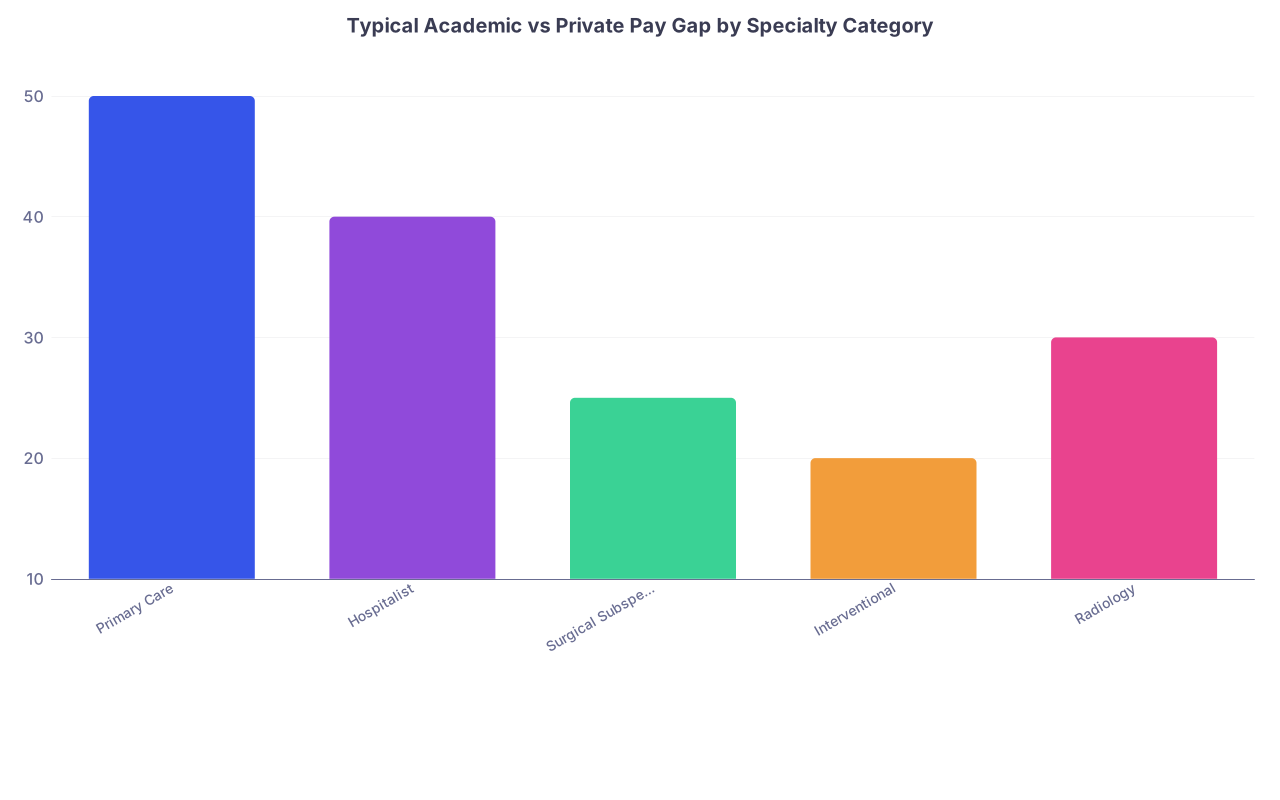
Values above are rough “% less than private” for base comp in academics. I’ve seen worse; I’ve rarely seen dramatically better.
How Academic Pay is Actually Built (And Why It Lags)
Before comparing, you need to understand the pieces:
- Base salary – usually lower than private.
- Productivity bonus – RVU-based or collections-based; caps are common.
- Academic/teaching stipends – small to moderate (often $5–20k).
- Admin roles – division chief, program director, etc. (can be $20–100k+).
- Research funding – protected time (good for life, bad for pure clinical income).
- Benefits – often stronger than private (retirement match, tuition benefits, etc.).
Private practice flips the emphasis:
- Higher base or at least higher total potential
- Fewer caps
- Direct link between work and income
- Often weaker or less standardized benefits
So to even approach private pay, an academic physician usually has to:
- Be in a specialty that generates a lot of revenue per hour
- Be in a high-paying region or competitive market
- Hit aggressive productivity targets
- Add admin, side work, or niche procedures
If you’re in academic ID seeing 12 patients in clinic twice a week with 60% protected time… you’re not matching private. Not even close.
By Specialty: Where Academics Can Compete
1. Surgical Subspecialties
This is where academics has the best shot at matching private pay—on the right terms.
Think:
- Orthopedic surgery (sports, spine, joints)
- Neurosurgery
- ENT (especially otology, rhinology, oncologic)
- Urology
- Plastics (reconstruction-heavy in academics, but some cosmetic on the side)
Why they can sometimes match:
- High RVU procedures
- Complex cases that only big centers can offer (bringing in referrals and prestige)
- Strong leverage for recruitment (many hospitals need these people)
- Leadership roles often added on top
What it looks like in reality:
| Factor | Academic Ortho Surgeon | Private Ortho Surgeon |
|---|---|---|
| Base Salary | $450–650k | $400–600k (lower early, rises later) |
| Bonus Potential | $150–400k (often capped) | $300k–1M+ (depending on volume/ownership) |
| Admin Roles | +$30–100k | Usually minimal, unless partner |
| Total Top-End Potential | ~$800k–1M+ (busy, admin, no cap) | $700k–2M+ (partner, high volume) |
You can see the pattern: a well-structured academic job in a surgical subspecialty can land you in the lower to mid ranges of private practice earnings, sometimes right up against it—especially if:
- You’re early- to mid-career
- You value stability over huge partner upside
- You’re in a high-cost, competitive metro where private groups aren’t wildly ahead
Where you still usually lose in academics:
- Ownership-level profit share
- Ancillary income (ASC, imaging center, etc.)
- Extreme high-end incomes
But yes, for a lot of surgeons, practically speaking, academic money can feel close enough that lifestyle, prestige, and case mix tip the scales.
2. Interventional Specialties
Now we’re talking:
- Interventional cardiology
- GI with heavy procedures
- Interventional radiology
- Some pain practices
- EP (electrophysiology)
Hospitals hate losing these people. They move revenue. So academic centers will push higher to keep them.
Typical pattern:
- Base salary somewhat below private
- Solid RVU incentives
- Call pay
- Sometimes “incentive pools” for service-line growth
If an interventional cardiologist in academics is:
- Doing high volumes
- Taking plenty of call
- In a competitive market
- Has maybe a section chief or service director title
…they can absolutely land in the same ballpark as many employed private cardiologists.
But again—the gap at the top remains. The private group partner siphoning off cath lab, imaging, and ownership upside can pull far ahead over time. You’ll rarely see an academic IC making the absolute top-end private numbers.
3. Radiology & Anesthesiology
These two are interesting.
Radiology
Academic radiologists can do reasonably well when:
- They’re in subspecialties (neuro, IR, MSK)
- They’re willing to read high volumes
- They add teleradiology moonlighting (often at night/weekends)
I’ve watched academic radiologists stack income like this:
- Academic base + clinical incentive: decent but below private
- Night/weekend telerad (remote, from home): serious extra money
When you add it all, some academic rads get surprisingly close to private incomes, especially if they’re okay sacrificing some lifestyle with off-hour work.
Anesthesiology
Anesthesia in academics usually lags private a bit more, especially with:
- Lower OR volume
- More teaching time
- Lower stipends vs private groups managing entire ORs
But again, with:
- Anesthesia leadership (director of periop, chair, etc.)
- Extra moonlighting (pain, outside OR coverage)
- Strategic market (big city, high cost of living)
You can close the gap somewhat, though matching full private group partner money is still uncommon.
Where Academics Almost Never Match Private Pay
Let’s be blunt here. These fields almost always take a financial haircut in academics that you’ll feel:
- Internal medicine (general)
- Family medicine
- Pediatrics (especially general peds)
- Hospitalist medicine
- Psychiatry
- Endocrinology, rheumatology, geriatrics
- Infectious disease
- Hematology-only practices in many institutions
Why they lag hard:
- Lower reimbursement per RVU
- More “mission-driven” institutional mindset
- Heavier emphasis on teaching and research
- Systems that simply do not prioritize maximizing clinical revenue
| Category | Value |
|---|---|
| Primary Care | 220 |
| Hospitalist | 280 |
| Psychiatry | 260 |
| Subspecialty IM (endo/rheum/ID) | 300 |
| Surgical Subspecialty | 650 |
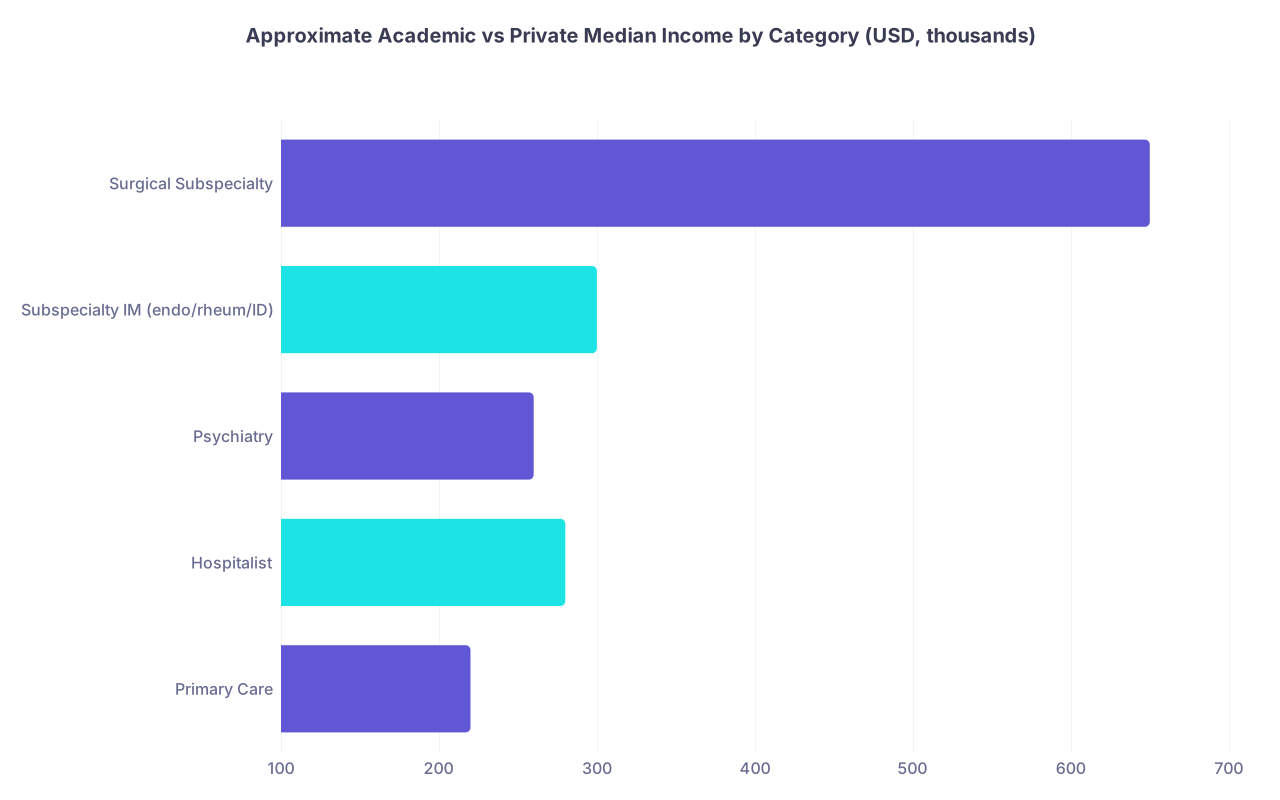
Those numbers are directional, not gospel, but the pattern is consistent:
- Private primary care and psych can blow past those medians with direct-pay, concierge, or high-volume models.
- Academic settings rarely adjust to match that upside.
If you’re choosing academic hospitalist medicine over a high-paying 7-on/7-off gig, you’re probably consciously deciding to take a 20–40% cut for lifestyle, location, or teaching/research.
And that’s fine—as long as you’re not telling yourself a fantasy that “I’ll find a way to make the same as private.” You almost certainly won’t.
The Real Equalizer: Side Income and Hybrid Roles
Now, here’s the nuance most residents don’t see until they’re out a few years: income is increasingly multi-stream. Academic vs private is just your base platform.
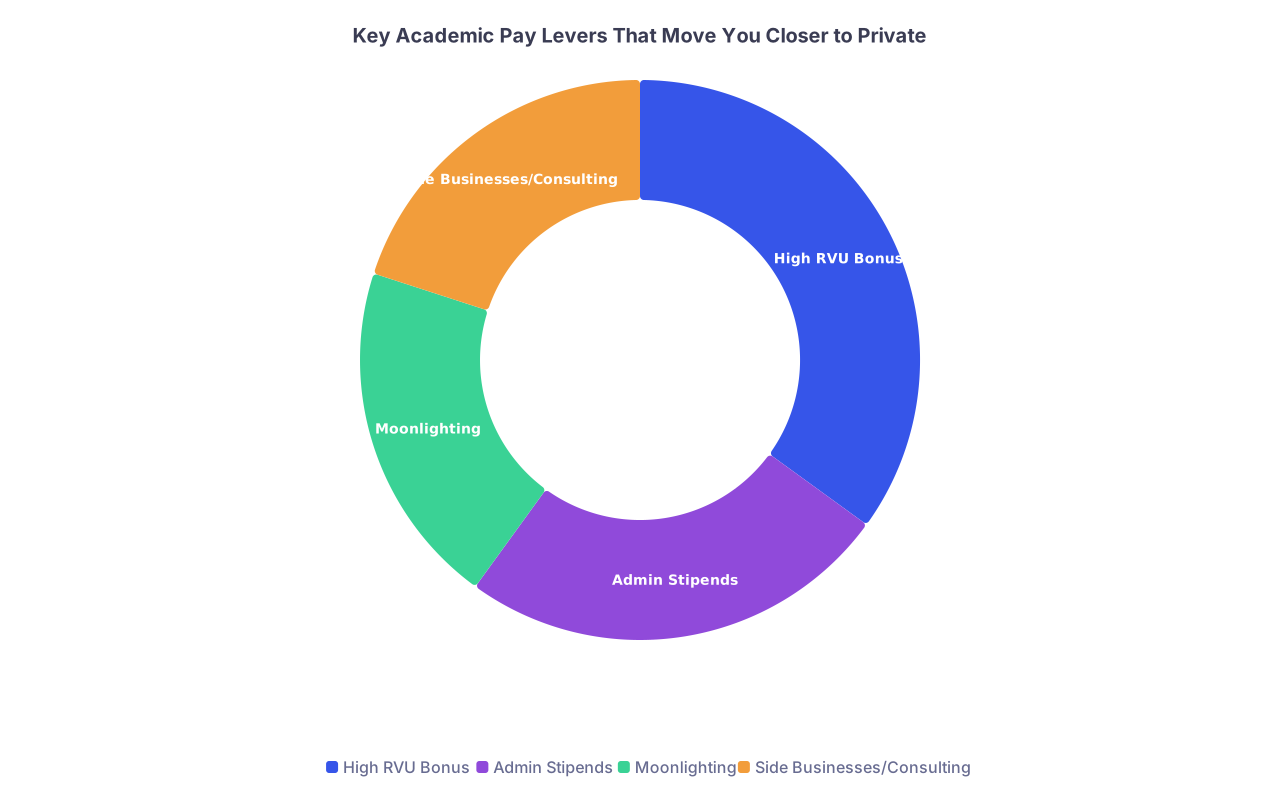
Things that can move an academic doc closer to private money:
Admin titles
Program director, clerkship director, associate chair, vice chair, service line leader. These can add anywhere from $20k to $150k+ depending on scope.Consulting / industry
Speaking, advisory boards, device/pharma consulting, protocol development.Non-clinical businesses
Real estate, online education, telemedicine startups, coaching, niche services. I’ve watched multiple academic docs quietly out-earn both their colleagues and many private docs through this route.High-value moonlighting
ED coverage, ICU night shifts, telerad, locums in rural sites.
In other words:
You might never match a private surgeon’s pure clinical collections inside an academic department. But your total life income can land in a similar zone if you’re deliberate and entrepreneurial.
Decision Framework: Should You Even Try to Match Private Pay in Academics?
Here’s the thought process I’d use if you were my resident asking this in my office.

| Step | Description |
|---|---|
| Step 1 | Choose Specialty |
| Step 2 | Compare Academic vs Private Pay |
| Step 3 | Accept pay gap as tradeoff |
| Step 4 | Leans Private or Hybrid |
| Step 5 | Academics can work |
| Step 6 | Academics with side income |
| Step 7 | Private or employed non-academic |
| Step 8 | High-earning field? |
| Step 9 | Need top 10 percent income? |
| Step 10 | Love teaching/research? |
Key questions:
Is your specialty even in the “maybe can match” bucket?
If not, stop wasting energy fantasizing about equal pay. Decide if the tradeoff is worth it.Do you truly care about squeezing every last dollar?
If you’re the kind of person who will always wonder “What if I went private?” you might end up resentful in academics.Are you willing to work more or differently to close the gap?
Extra call, admin roles, side gigs. If you want 9–5, minimal call, and academic prestige, you’re trading income. Period.Does your target institution actually pay competitively?
Not all academic centers are equal. Some “academic-affiliated” systems pay essentially community rates with light academic duties. Those are gold.

Red Flags in Academic Offers If You Care About Income
If your goal is to approach private pay, watch for these traps:
- Heavy protected time with no extra comp (10–20% is fine, 50–70% kills earning power)
- No RVU or productivity bonus structure
- Hard low caps on bonuses that don’t reflect high-volume potential
- “You’ll make more with time” but zero clarity on how
- Refusal to discuss top earners’ ranges in your division
- “We’re a mission-driven institution” used as code for “we pay under market”
On the flip side, good signs if you want academic pay to be competitive:
- Clear RVU-based or collections-based bonus
- Realistic RVU targets (not fantasy numbers no one hits)
- Transparency about top earners and how they got there
- Established moonlighting opportunities inside the system
- Admin roles built into the offer with defined stipends
- Willingness to negotiate (sign-on, relocation, retention)
| Category | Value |
|---|---|
| High RVU Bonus | 35 |
| Admin Stipends | 25 |
| Moonlighting | 20 |
| Side Businesses/Consulting | 20 |
Specialty-Specific Takeaways (Quick Hits)
Let me just say it straight for a few common areas:
Ortho / Neurosurg / Urology / ENT / Plastics
Yes, you can get reasonably close with the right job. You’ll probably trail the top private earners, but you may be comfortable enough not to care.Interventional Cards / GI / IR / EP
Academics can be financially solid. Private usually wins at the extreme high end. Early and mid-career, the gap can be smaller than you think.Radiology
Academic plus aggressive telerad moonlighting can get surprisingly close to some private setups. Still, big private groups often win long-term.Anesthesia
Academics typically pays less. With leadership and side work, you can be “comfortable high-income,” but rarely at the absolute top of private partner ranges.Hospitalist / Primary Care / Psych / Subspecialty IM
Assume academic is a choice to earn less. You can still live very well, but you’re picking lifestyle/mission over maximum income. Be honest with yourself about that.

FAQ: Academic vs Private Pay Reality Check
1. Can an academic physician ever out-earn a private practice physician?
Yes, but it’s the exception, not the rule. It usually happens when:
- The private doc is in a low-paying or poorly run practice
- The academic doc is in a high-paying surgical/interventional field with admin roles and side income
- The academic institution pays at the very top of the academic range in a high-cost market
But if you compare top private earners to top academic earners in the same specialty, private almost always wins.
2. Which specialties have the smallest pay gap between academic and private?
Usually:
- Surgical subspecialties (ortho, neurosurg, ENT, urology, plastics)
- Interventional fields (cards, GI, IR, EP)
- Some radiology groups in high-cost metros
In these, you can see academic total comp within maybe 10–30% of typical private earnings for many physicians, especially early- to mid-career.
3. Do academic physicians ever get partnership or ownership income?
Rarely in the traditional private sense. Academic docs usually:
- Don’t own the hospital or ASC
- Don’t get direct profit share from imaging centers or labs
However, some hybrid models or faculty-affiliated groups blur the lines, where you’re technically faculty but function more like a private group with some academic duties. Those jobs can be very competitive financially.
4. How much does research actually pay in academics?
Directly? Usually not much.
- Grants may buy your time (salary support), not big bonuses.
- You might keep your full salary with a lot of protected time, which effectively lowers your clinical RVU burden.
The financial payoff of research is more indirect: promotion, reputation, leadership positions, and better outside consulting opportunities. If your goal is maximum short-term clinical income, heavy research time usually hurts, not helps.
5. Can moonlighting really close the gap for academic docs?
It can narrow it, yes.
- Hospitalist shifts, ICU coverage, ED shifts, telerad, locums can add $30k–200k+ depending on how aggressive you are.
But you’re trading time and lifestyle. If you use moonlighting just to chase private-level pay, you might end up working more than your private peers for similar or slightly less income.
6. Are benefits really that much better in academics?
Sometimes, and it matters.
- Strong retirement matches (e.g., 10–12% of salary)
- University tuition benefits for kids
- More predictable PTO, parental leave, and sick policies
If you’re comparing purely cash compensation, private usually wins. If you include benefits and retirement, the gap shrinks a little, but rarely flips entirely.
7. Bottom line: if I care a lot about money, should I avoid academics?
If top-end income is a major priority for you, yes—lean toward private or hybrid models.
If you:
- Love teaching
- Want residents and complex cases
- Crave the university/hospital culture
Then academics can absolutely make sense. Just go in with your eyes open: in most specialties, you’re choosing some mix of purpose, prestige, and lifestyle over maximum earnings, and you’ll almost never fully match what an equally driven private colleague can pull in.

Key takeaways:
- Only certain high-earning specialties in the right markets can get academic pay realistically close to private—usually still short of top private partner money.
- Side income, admin roles, and smart job selection matter more than labels alone; “academic vs private” is just the starting point, not the whole story.