
The highest-earning attendings are not the smartest clinicians. They’re the ones who understood early that medicine is a business and learned how to negotiate like sharks in white coats.
Let me walk you through what they actually teach their own trainees behind closed doors—what they’d never say on a podium at Grand Rounds because HR, compliance, and the CMO would lose their minds.
We’re talking radiology, ortho, neurosurgery, derm, GI, cardiology, anesthesia, plastics—the highest paid specialties. The rules are different in these fields. And the attendings who clear seven figures consistently do not play the game the way you’ve been told.
The First Secret: You Are Either Revenue or Overhead
In high‑earning specialties, every negotiation starts from one brutal truth: administrators see you as a revenue line or an expense line. They don’t care about “mission” when they’re in budget meetings. They care about RVUs, downstream revenue, and payer mix.
I’ve sat in those meetings.
A CFO once looked at a neurosurgery candidate’s offer and said, “If he can do 400 cases a year, I don’t care if we pay him 1.2 million. The margin still works.” That’s how they think. Volume and margin. Not “is this fair for a new attending?”
So the first thing the top paid attendings teach their residents is this:
You do not negotiate as a person.
You negotiate as a profit center.
That means before you ever open your mouth about salary, you need to know roughly what you’re worth to them. High earners literally teach their fellows how to do back-of-the-napkin hospital math:
- Ortho joint replacement? What’s the global RVU plus facility fees plus post‑op rehab volume?
- Cardiology? Cath lab charges, imaging, device implants, downstream clinic and meds.
- GI? Endoscopy volume, facility fees, pathology, hospital admissions.
- Anesthesia? OR time billed, case mix, hospital dependency on coverage.
They’re not doing this for fun. They’re doing it because when they say, “Look, one of my lists generates around $X in net revenue per day,” it reframes the conversation from “please pay me more” to “this is the return you’re getting.”
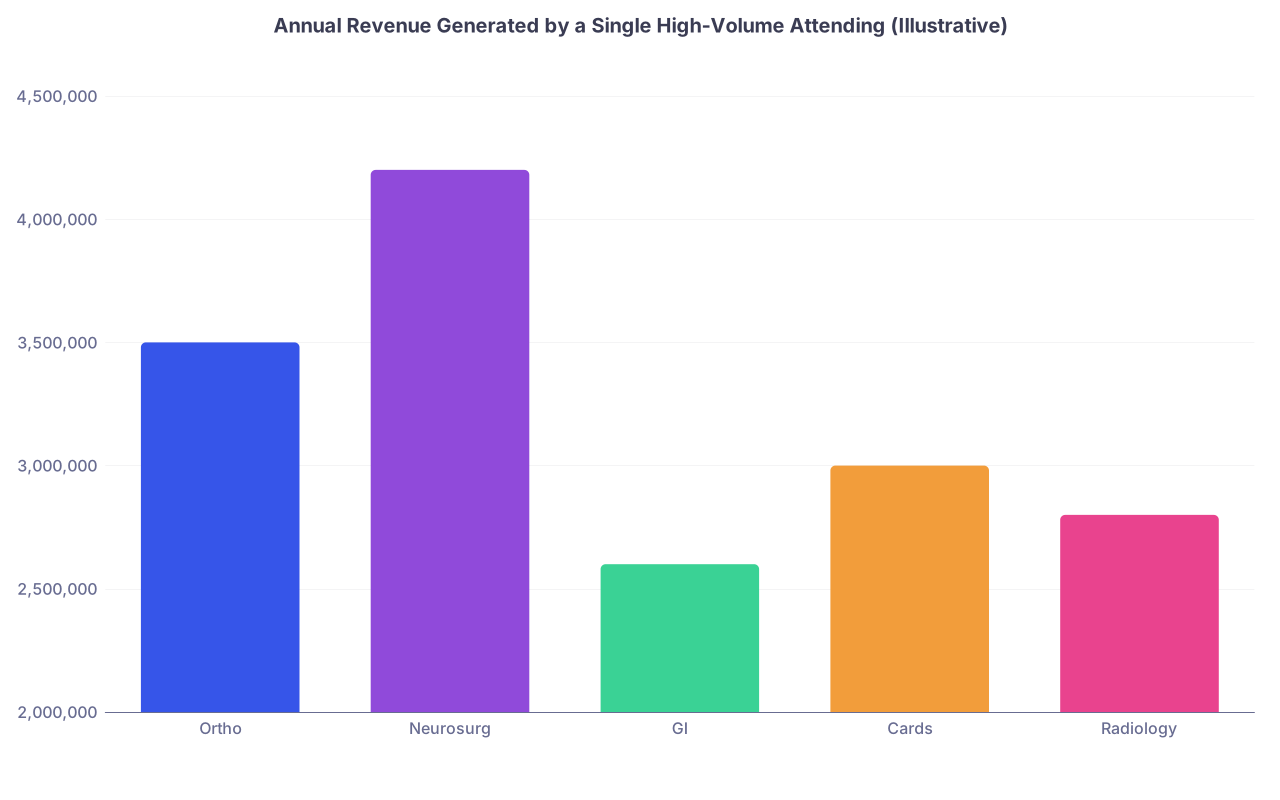
| Category | Value |
|---|---|
| Ortho | 3500000 |
| Neurosurg | 4200000 |
| GI | 2600000 |
| Cards | 3000000 |
| Radiology | 2800000 |
You don’t need perfect numbers. You just need to understand the scale. Because once you realize you’re generating millions, asking for another $50–100k doesn’t feel “greedy.” It feels like rounding error.
And that’s exactly how the best negotiators treat it.
Why Most Residents Get Underpaid for 5+ Years
Residents in top specialties usually do one of two dumb things:
- They treat their first job as “an extended fellowship” and accept a lowball “starter rate.”
- They’re so terrified of not getting any job that they accept the first offer without pushing back.
Your high-earning attendings laugh at that. Quietly. In their offices.
They know the first contract you sign sets a psychological anchor—for you and for your future employers. If your first attending job is 350k when market is 500–600k, you will spend the next 5–7 years clawing your way up. Every raise will be “a big bump from where you started,” while still under market.
The attendings who protect their trainees from that mistake say two blunt things:
- “Do not be the cheap hire. They won’t respect you and they won’t keep you.”
- “The right places do not walk away because you asked a serious question. The wrong ones should.”
In ortho, neurosurg, GI, cardiology, anesthesia, and radiology, demand is real. You have leverage. But only if you act like it.
How Top Attendings Actually Review Contracts with Their Trainees
I’ve watched this scene more times than I can count:
Fellow walks into attending’s office with a thick packet.
Attending closes the door, glances through it, and their expression shifts from neutral to “what the hell is this?”
They’re not looking at the base number first. That’s what you think matters. It’s not.
They zoom in on:
- RVU thresholds and conversion factor
- Non‑compete radius and duration
- Call expectations and “extra” call pay
- Partnership track details (private groups)
- Ownership or buy‑in terms (ancillary services, ASC, imaging)
- Termination clauses (without cause notice periods)
Let me give you a real pattern:
Radiology fellow gets an offer: 450k base, “standard” RVU bonus, partnership in 3 years.
A naive fellow thinks: 450k sounds great. Partnership sounds nice. Done.
A high-earning attending flips to the partnership section first, sees:
- Buy-in: “Fair market value determined by the board”
- No formula for how profits are distributed
- Non-compete of 30 miles for 2 years
The attending looks at the fellow and says: “This could be a 7‑figure partnership or a trap. If the partners are billing $1M+ personally and you come in at 450k for 3 years while they pocket the surplus, you’re subsidizing them—and they can decide to jack up the buy-in later.”
That’s the piece most residents never see. The richest attendings are usually not rich off the base salary printed on that first page. They’re rich off partnership distributions, ASC ownership, imaging center equity, and call stipends.
| Item | Trainee Focuses On | High Earner Focuses On |
|---|---|---|
| Base Salary | Primary | Secondary |
| RVU Thresholds | Ignores | Critical |
| Partnership Terms | Hand-waves | Critical |
| Non-Compete | Skims | Critical |
| Call Expectations | Vague idea | Critical |
| Equity/Ownership | Confused by | Critical |
If your mentor isn’t walking you line-by-line through those sections, you’re flying blind.
The Script They Use When They Push Back
Here’s something you will never see in a generic “physician contract” webinar: the actual phrases attendings use when they counter.
They are calm. Matter‑of‑fact. Not apologetic.
When a hospital sends a lowball offer to a high‑demand neurosurgeon, the surgeon doesn’t say, “Um, could we maybe do a little better?” They say things like:
“I’ve reviewed the offer, and I’m very interested in the position, but based on current market data for neurosurgery in similar markets and the case mix you’ve described, this base and RVU structure don’t reflect what I know I can generate for the hospital.”
Then they get specific:
“I’m comfortable with the RVU expectations, but at a conversion factor of $42 instead of $50, the effective compensation per unit of work is well below median. If we can get to a $50–55 conversion factor and adjust the RVU target down by 10–15%, I think we’re in a reasonable range.”
You think that kind of ask is “too aggressive”? Your attendings don’t.
In ortho, I’ve seen guys say, straight-faced:
“With my current volume, I bring 3–4 million a year in facility revenue alone. I’m not asking for anything crazy. I’m asking to be treated in line with the value I’m bringing in. A base in the 700s with upside to 900+ is appropriate here.”
And guess what? They often get it. Because the CFO already ran those numbers and knows the margins work.
RVUs: The Trap and the Weapon
Here’s the dirty secret about RVU-based comp in high-earning specialties: it’s designed to look generous while quietly capping what you’ll actually make your first 2–3 years.
High earners teach their trainees to ask exactly three questions:
- What were the RVUs generated by the last person in this role over the past 2–3 years?
- How many RVUs do the top earners in my specialty generate here?
- What’s the real capacity—OR blocks, lab time, scanner access, clinic support?
They know administration will handwave and say, “Oh yes, the upside is tremendous, you can easily exceed your base.” So they cut through that by asking for data.
If a GI practice offers a big RVU upside but can only give you 2 days a week in the endo suite, your “upside” is fantasy.
If orthopedics offers huge bonus potential but gives you garbage block times—Friday afternoons, inconsistent rooms—you’re screwed.
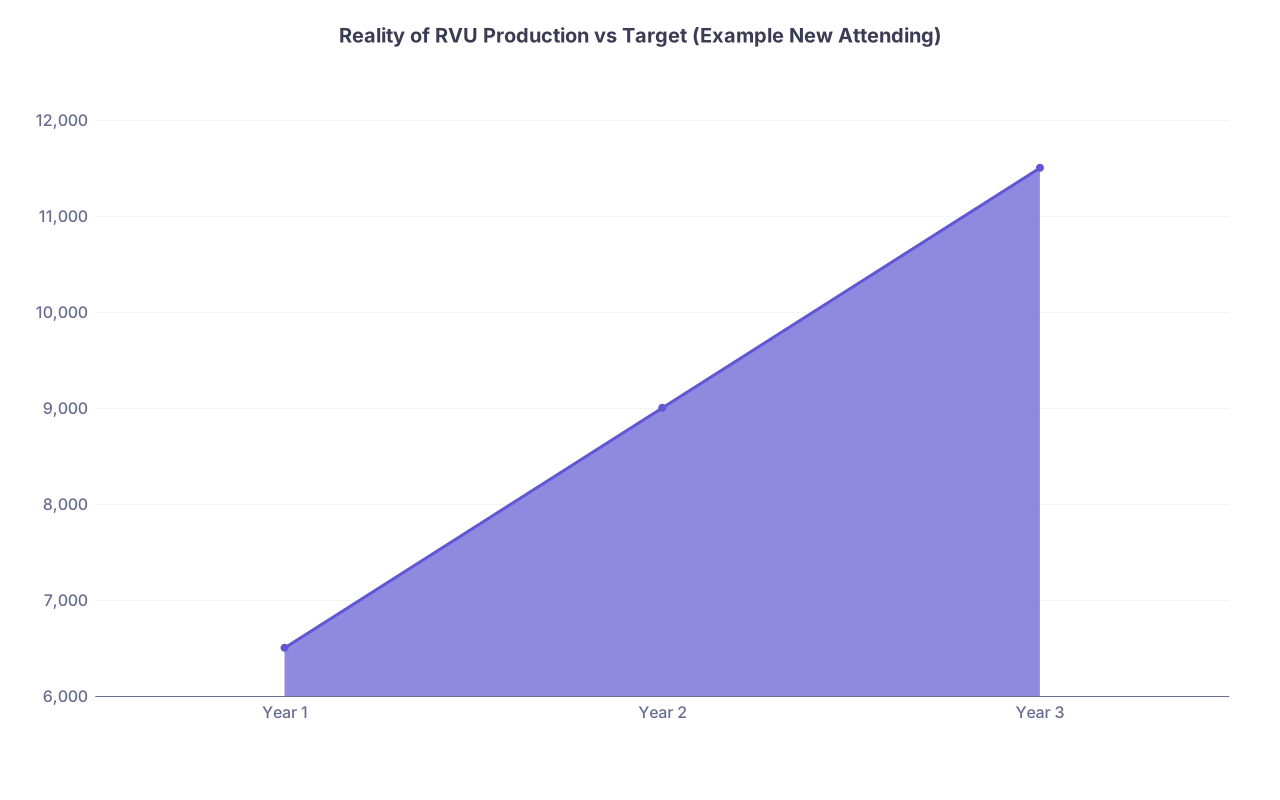
| Category | Value |
|---|---|
| Year 1 | 6500 |
| Year 2 | 9000 |
| Year 3 | 11500 |
Meanwhile the RVU targets might be 9000, 11,000, 13,000. You barely hit threshold in year 2, and your “bonus” is peanuts.
The attendings who actually care about their trainees tell them bluntly:
“If they won’t show you real RVU data and resource limitations, they’re hiding something. Either the volumes aren’t there, or you’ll be fighting partners for cases.”
You negotiate RVUs by:
- Lowering the thresholds
- Raising the conversion factor
- Clarifying what counts toward RVUs (clinic vs procedures vs hospital work)
- Locking these numbers in writing for at least 2–3 years
Non‑Competes: The Clause that Can Wreck Your Life
Most residents skim non‑competes like they’re boilerplate. The highest-earning attendings treat them like dynamite.
I’ve seen a vascular surgeon stuck driving 2 hours each way because his non‑compete banned him from practicing within 50 miles of a large metro area. He signed it as a fellow, thinking, “I’ll never leave.” Two years later, the group collapsed. He couldn’t work where his kids went to school.
Your best‑paid attendings tell their trainees very simply:
“You do not sign a 30‑mile, 2‑year non‑compete in a saturated metro unless the compensation and partnership upside are so ridiculous that you’re willing to gamble your family’s geography on it. And even then, get it reviewed.”
They’ll push for:
- Smaller radius, especially in large cities (5–10 miles instead of 30)
- Shorter duration (6–12 months, not 2 years)
- Clear carve‑outs: academic work, telemedicine, moonlighting, etc.
If the employer won’t budge at all? Many of the high earners walk away. They know their skills travel.

| Step | Description |
|---|---|
| Step 1 | Review Non-Compete |
| Step 2 | Ask to Reduce Radius |
| Step 3 | Ask to Shorten Duration |
| Step 4 | Negotiate Carve-outs |
| Step 5 | Consider Accepting |
| Step 6 | High Risk - Consider Walking |
| Step 7 | Radius Reasonable |
| Step 8 | Duration Reasonable |
| Step 9 | Carve-outs Included |
| Step 10 | Employer Flexible |
They’re playing the long game. You should too.
Private Practice vs Hospital: Where the Real Money Hides
In the highest-paid specialties, the most quietly wealthy people are almost never pure W‑2 hospital employees. They’re the ones who used their first few years to get into ownership positions.
Your attendings know this. Listen carefully when they talk about “the group” or “the center.”
Orthopedics:
The joint replacement surgeon who owns a piece of the surgery center and the PT facility? His “salary” might be 600–800k, but his actual income crosses seven figures from distributions.
GI:
The doc who has equity in the endoscopy center and the pathology lab laughs at your 450k “competitive” base. Their comp is often 2–3x that once partnership matures.
Radiology:
Private groups with ownership in imaging centers are printing money. The corporate model is trying to squeeze this, but there are still legacy groups doing extremely well.

Your training program will rarely explain this in detail. It makes academics look even worse on paper. So the attendings who care will pull you aside and spell it out:
“If you’re going to do private, don’t optimize for first-year base. Optimize for the quality and transparency of the partnership and ownership path.”
They’ll tell you to ask:
- How many partners are there now?
- How many associates?
- What’s the realistic timeline to full partnership, and has anyone been delayed or denied? Why?
- What’s the expected income at full partnership over the past 3–5 years?
- What’s the buy‑in formula? Is it fixed or can they ‘revalue’ it later?
You’re not asking for charity. You’re checking if you’re stepping into a machine that prints money for senior partners while dangling vague promises in front of you.
The “Walk-Away Muscle” High Earners Have and You Don’t
Here’s the biggest behavioral difference I see between seven-figure attendings and nervous new grads:
High earners will walk.
They will look at a 550k offer with bad non‑competes, insane call, and murky partnership—and they’ll say, “No thanks.” Even if it’s the only offer on the table right now.
You, as a resident, are scared. You feel like if you don’t sign something by November, you’ve failed. Programs exploit that.
Your attendings know the market cycles. They know positions open because someone retired, someone left, someone got fired, a new service line was added. They’ve seen colleagues move and double their comp just by switching systems or regions.
So when they teach their trainees to negotiate, they say this clearly:
“You need to be psychologically willing to walk, or you have no leverage. If you can’t imagine saying no, they can smell it.”
This doesn’t mean being arrogant. It means being prepared:
- Have multiple irons in the fire. Don’t stop interviewing because one place “feels right.”
- Extend your timeline if needed. A 3–6 month delay in starting is nothing over a 30‑year career.
- Be honest with yourself: is your fear about money, or about ego and matching classmates’ timelines?
One of the best pieces of advice I’ve heard an interventional cardiology attending tell his fellow:
“Would you rather sign fast and regret it for 5 years, or sign slow and be happy for 20?”
You already know the right answer. You just need someone to say it out loud.
How High-Earning Attendings Tell You to Prepare in Residency
Most residents wait until PGY‑4/5 or fellowship to think about any of this. That’s how you end up desperate and uninformed.
The attendings who care start prepping their trainees early:
- They have them scrub in with private practice docs and ask about real numbers off the record.
- They show them MGMA/AMGA data and explain that “median” comp is not the ceiling.
- They encourage them to do at least one elective month with a high‑functioning private group or high‑RVU hospital doc to see what real productivity looks like.
They’ll also tell you to:
- Track your own procedural and case numbers aggressively. It’s ammunition later.
- Keep a running log of feedback and strengths—this becomes your “value story” in interviews.
- Pay attention to which attendings seem mysteriously wealthy. Ask them (privately, respectfully) how their comp is structured, not just what the top-line number is.
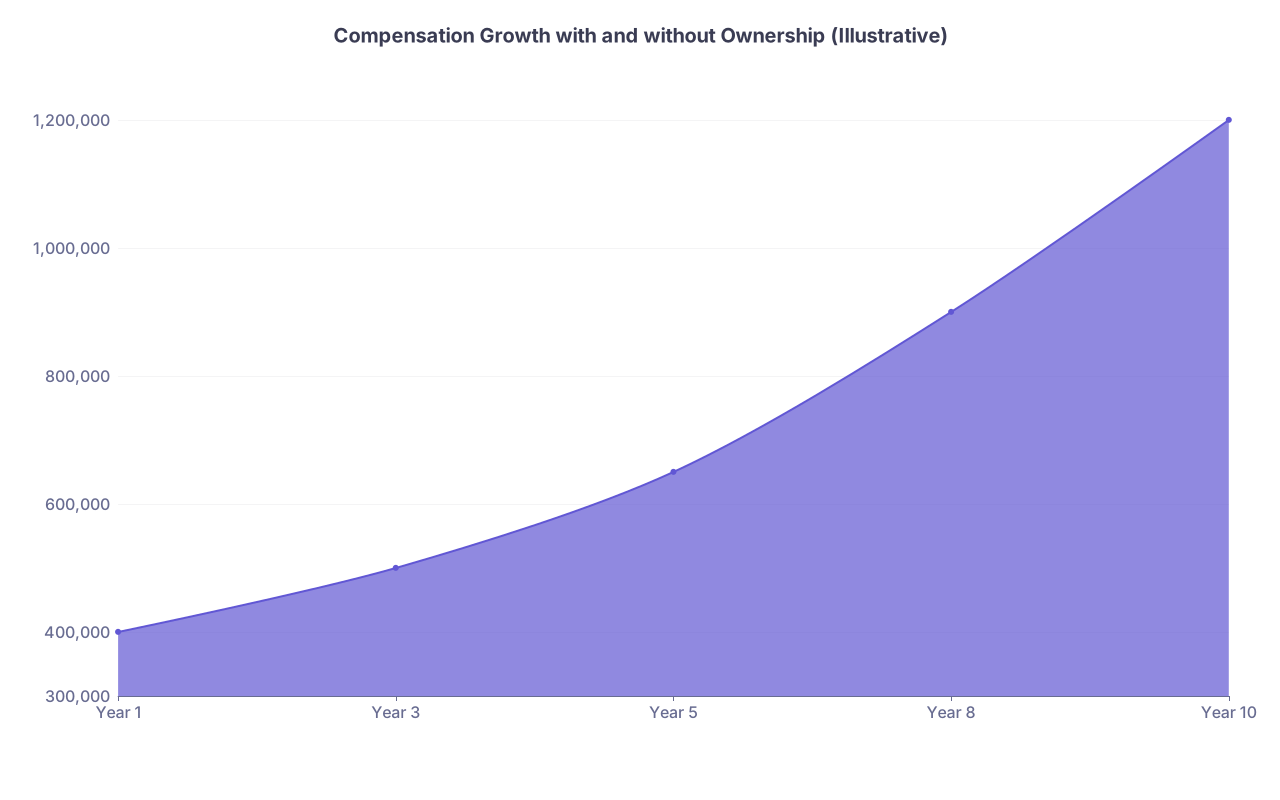
| Category | Value |
|---|---|
| Year 1 | 400000 |
| Year 3 | 500000 |
| Year 5 | 650000 |
| Year 8 | 900000 |
| Year 10 | 1200000 |
That curve is what you’re aiming at. Base plus smart structure plus ownership. Not a “good enough” first-year W‑2 number.
Tactical Moves You Can Use on Your Very First Offer
Let’s get concrete. When that first contract hits your inbox, here’s what the attendings who play at a high level tell their trainees to actually do.
First: do not respond immediately. You’re not ordering DoorDash. You say:
“Thank you for sending this over. I’m very interested in the position. I’d like to review this in detail and get back to you within about 10–14 days with any questions.”
Then you:
- Get it reviewed by someone who knows physician contracts. Not your uncle who’s a real estate lawyer.
- Sit with a mentor in your specialty who understands current comp norms.
- Mark anything that’s unclear or that feels off—especially around compensation structure, call, non‑compete, partnership, and termination.
When you come back, you don’t give them a laundry list of 27 changes. You target the 3–5 that actually matter.
For a high‑earning specialty, those usually are:
- Base salary and/or RVU thresholds + conversion
- Non‑compete radius/duration
- Call expectations and compensation
- Partnership timeline and buy‑in clarity (if private)
You frame it like this:
“I’m enthusiastic about the clinical work and the team. There are a few areas where I think we can get closer to current market standards and expectations, particularly for [your specialty]. If we can make progress on these points, I’d feel very comfortable moving forward.”
Then you outline specific, reasonable changes. Not “Pay me double.” More like:
- Increasing base from 450 to 525–550 with same RVU thresholds
- Lowering RVU threshold by 10–15% with similar conversion factor
- Reducing non‑compete from 30 miles / 2 years to 10 miles / 1 year
- Clarifying partnership income range and fixing buy‑in formula
You don’t need to “win” everything. You just need to move the structure from “exploitative” to “fair and with upside.”
The Last Thing Your Attendings Won’t Say Out Loud
They won’t say this in a conference room, but they say it in hallway conversations at 9 p.m.:
“Hospitals, big systems, private equity—they’re not your friends. They will happily underpay you if you let them. Nobody is coming to save you. You either learn this game or you get used.”
The highest-earning attendings are not magical. They learned the rules early—usually from someone who pulled them aside the way I’m doing with you now—and they stopped acting like medicine was separate from money.
You can be an excellent physician and still refuse to be naïve. Those are not mutually exclusive.
Years from now, you won’t remember the exact RVU threshold or whether your first base was 450 or 500. You’ll remember whether you felt trapped or free. Whether you signed from fear or from a position of real understanding.
Choose the second one.